
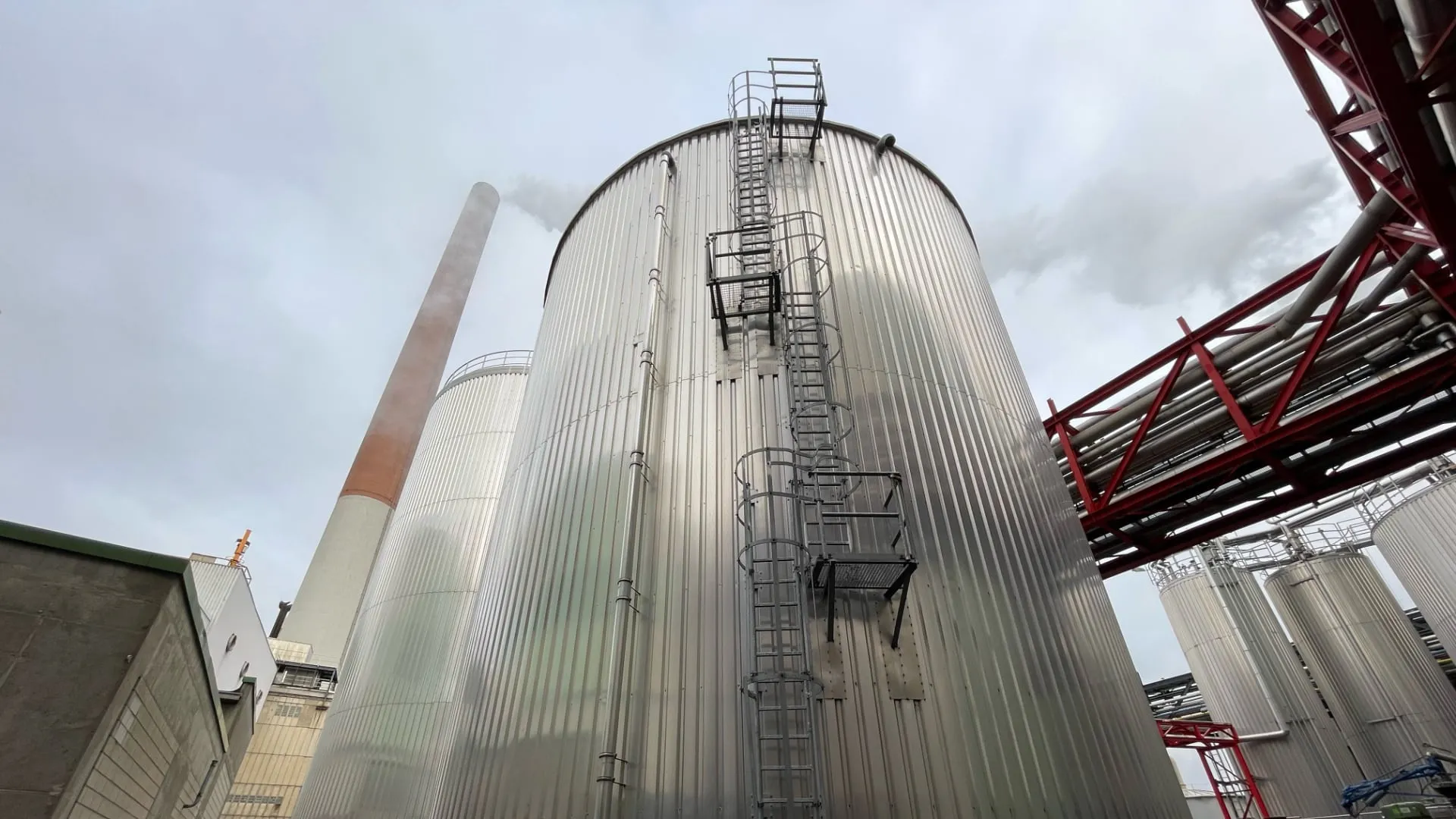
The 7 Most Common Defects in Sprinkler Tanks
Damage patterns, causes and modern inspection methods without draining. Every automatic fire protection system is only as good as its fire water supply. Kopterflug inspects sprinkler tanks with ROV underwater drones – without emptying, without shutdown of the fire protection system. Since 2017.
- VdS CEA 4001 (German fire protection standard) – inspection required every 5 years
- ROV inspection without draining – fire protection remains operational
- Up to 70% cost savings vs. classical emptying inspection
Sprinkler Tanks: The Core of Every Fire Protection System
Every automatic fire protection system is only as good as its fire water supply. Sprinkler tanks – whether as free-standing steel tanks or buried vessels – are permanently under operating pressure and exposed to corrosion, sediments and biological processes.
The VdS CEA 4001 prescribes inspection intervals of 5 years for Germany. FM Global Standards require similar inspection cycles for internationally operating companies. In practice, serious defects often appear already after 10 years of operation – frequently at locations that classically are only accessible through complete draining.
Modern underwater drones (ROVs) solve this problem: they inspect the underwater area of the tank in the filled state – without draining, without shutdown of the fire protection system, with 4K video documentation.

Defects 1–4: The Most Common Damage Patterns
These four damage patterns occur on almost all sprinkler tanks older than 10 years. Early detection is crucial – undetected defects can endanger the fire water supply in a fire emergency.
Defect 1: Damage in the Water Change Zone (Wasserwechselzone)
The water change zone is the area around the water surface – it is alternately wetted and dried with every weekly pump test. Over the years this causes cracks, spalling and coating damage that quickly leads to corrosion pitting in steel tanks. Underwater drones can specifically inspect this critical zone without lowering the water level.
Defect 2: Abrasion Damage from Sediments in Pipes
Sediments accumulate on the tank floor and are drawn into the pipelines and pump units during pump tests. The abrasive effect of sand and suspended particles damages pump housings, pipe connections and inlet pipes. Without regular sediment monitoring, consequential damage arises requiring costly repairs. The ROV detects deposits early.
Defect 3: Algae Growth and Biogenic Corrosion
In free-standing tanks with light exposure and nutrient-rich water, algae growth develops. The metabolic products of algae act as organic acid on metal surfaces and considerably accelerate corrosion. Affected are particularly pipes, pipe brackets and vessel walls. Early detection via ROV enables targeted cleaning before structural damage develops.
Defect 4: Defective Pipe Brackets from Corrosion
Pipe brackets and clamps made from non-stainless material corrode completely within a few years of continuous water contact. If a bracket breaks, pipes can fall uncontrolled into the tank and cause further damage. The ROV identifies corroded brackets systematically – well before failure occurs.
Defects 5–7: Structural and Operational Risks
In addition to the common corrosion damage, three further damage patterns occur that have direct impacts on the functionality of the fire protection system.
Defect 5: Cracks in the Liner
Free-standing steel tanks are often equipped with a liner (foil lining) that seals the water against the steel shell. Mechanical loading, ageing or water pressure can cause cracks – the tank loses water, the fire water supply drops. ROV inspections capture the entire liner inner surface without draining and detect even the smallest cracks.
Defect 6: Severe Corrosion on Pipes and Anti-Vortex Plates
Pipelines and anti-vortex plates (Antiwirbelplatten) stand permanently in water. The oxygen introduced with every pump test considerably accelerates corrosion. Inadequate corrosion protection measures or chemical water contamination compound the problem. Regular ROV documentation allows timely initiation of repair measures.
Defect 7: Foreign Objects in the Tank
Lost tools, torn-off clamps, pipe fragments or material from leaking inspection hatches can block pumps and pipes. Foreign objects are a frequently underestimated risk. The ROV detects and documents foreign objects – with appropriate gripper equipment, smaller objects can also be recovered directly.
Inspection Without Draining: The ROV Advantage
Classical sprinkler tank inspection requires complete draining, complex ventilation and recommissioning – the fire protection system is out of operation for several days. Underwater drones (ROVs) inspect the underwater area in the filled state.



Standards and Inspection Intervals: VdS CEA 4001 and FM Global
Sprinkler tanks are subject to clear normative requirements for inspection. The two most important standards are binding in Germany and internationally.
VdS CEA 4001 (Germany)
The VdS CEA 4001 (Richtlinien für Sprinkleranlagen: guidelines for sprinkler systems) prescribes inspection intervals of 5 years for sprinkler systems and their water supply in Germany. It covers visual inspection of the tank, examination of pipelines, fittings, pumps and water quality. Violations can lead to cancellation or restriction of insurance coverage.
FM Global Standards (International)
For companies with FM Global insurance, similar inspection cycles apply with a strong focus on documented evidence. FM Global recognises ROV inspection reports with 4K video documentation – a decisive advantage over purely visual inspection.
Practice: Severe Defects After 10 Years
Although the 5-year rhythm is legally required, practice shows that critical damage such as liner cracks, completely corroded pipe brackets and deep-reaching coating damage frequently occurs only after 10+ years of operation. Those who inspect and document earlier recognise the damage progression – and can intervene in a targeted and cost-effective way.
Your Contacts

Related Services
- ROV & Underwater Inspection – When the drone cannot dive – ROV for water-filled confined spaces.
- Tank Inspection – Professional tank inspection with drone – inside and outside without scaffolding.
- Confined Spaces Inspection – Safe inspection of confined spaces without human entry.
- Fire Protection & Sprinkler Systems – Drone inspection for fire protection infrastructure.
- Industrial Drone Inspection – Comprehensive drone inspection for all industrial sectors.
- Recurring Inspection per BetrSichV – Drones as tools for recurring inspections per German Industrial Safety Regulation.
Frequently Asked Questions
Why do sprinkler tanks show increased defects after several years?
Sprinkler tanks are permanently filled with water and stressed weekly through pump tests. Constant contact with oxygen and water accelerates corrosion. Sediments, algae growth and the mechanical loading from pump operation cause cumulative damage that can reach critical proportions after approximately 10 years of operation.
What is the water change zone and why is it particularly at risk?
The water change zone (Wasserwechselzone) is the area around the water surface that is alternately wetted and dried with every pump test. This interplay considerably stresses coatings and metal surfaces and leads to cracks, spalling and accelerated corrosion – often before other areas of the tank are significantly damaged.
How does algae growth affect the sprinkler tank?
Algae form when there is light exposure and nutrient-rich water. Their metabolic products act as organic acid on metal surfaces and considerably accelerate corrosion on pipes, pipe brackets and tank walls. Biogenic corrosion from algae is a frequently underestimated damage mechanism in free-standing steel tanks.
What is understood by abrasion damage from sediments?
Fine sediments such as sand and suspended particles accumulate on the tank floor. With every pump test they are set in motion and drawn into the pipelines and pump units. The abrasive effect of these particles damages pump housings, seals and pipe connections – similar to sandpaper on metal surfaces.
What risks arise from defective pipe brackets?
Pipe brackets made from non-stainless material corrode completely under continuous water contact. If a bracket breaks, pipelines can fall into the tank, cause further damage or block pumps. In the worst case, the fire water supply is impaired in a fire emergency.
Why are cracks in the liner so critical?
The liner seals the tank and retains the fire water supply. Cracks cause water to seep into the ground or between liner and steel shell – the usable water supply decreases. In a fire emergency the required fire water volume is then missing. At the same time, the steel shell corrodes when water penetrates between liner and steel.
How does an underwater drone (ROV) help with sprinkler tank inspection?
The ROV dives into the filled tank and inspects tank floor, underwater area of the shell, pipe connections, pipe brackets, anti-vortex plates and sediments with 4K camera and strong LED illumination. It documents all 7 typical defect patterns comprehensively – without draining the tank and without human entry.
Must the sprinkler tank be taken out of service for ROV inspection?
No – this is the decisive advantage. The ROV inspects in the filled state. The fire protection system remains operational throughout the entire inspection. Only the pump is not activated for the duration of the inspection. Draining is only required if the tank floor needs to be measured in the dry state (e.g. for UT wall thickness measurement).
How often should a sprinkler tank be inspected per VdS CEA 4001?
The VdS CEA 4001 prescribes inspection intervals of 5 years in Germany. FM Global Standards require similar inspection cycles. Given the damage progressions observed in practice, we recommend keeping to the inspections punctually and documenting them – complete evidence protects in insurance claims.
What advantages does ROV inspection have over classical inspection with draining?
The ROV inspection saves time (4–8 hours instead of several days), costs (up to 70% savings versus draining, ventilation, diver and recommissioning) and keeps the fire protection system operational. Complete 4K video documentation is accepted by VdS, FM Global and insurers. No confined space entry, no complex permits, no interruption of operations.
Get in Touch
Need sprinkler tank inspection without draining? Fill out the form – we'll get back to you within 24 hours.