
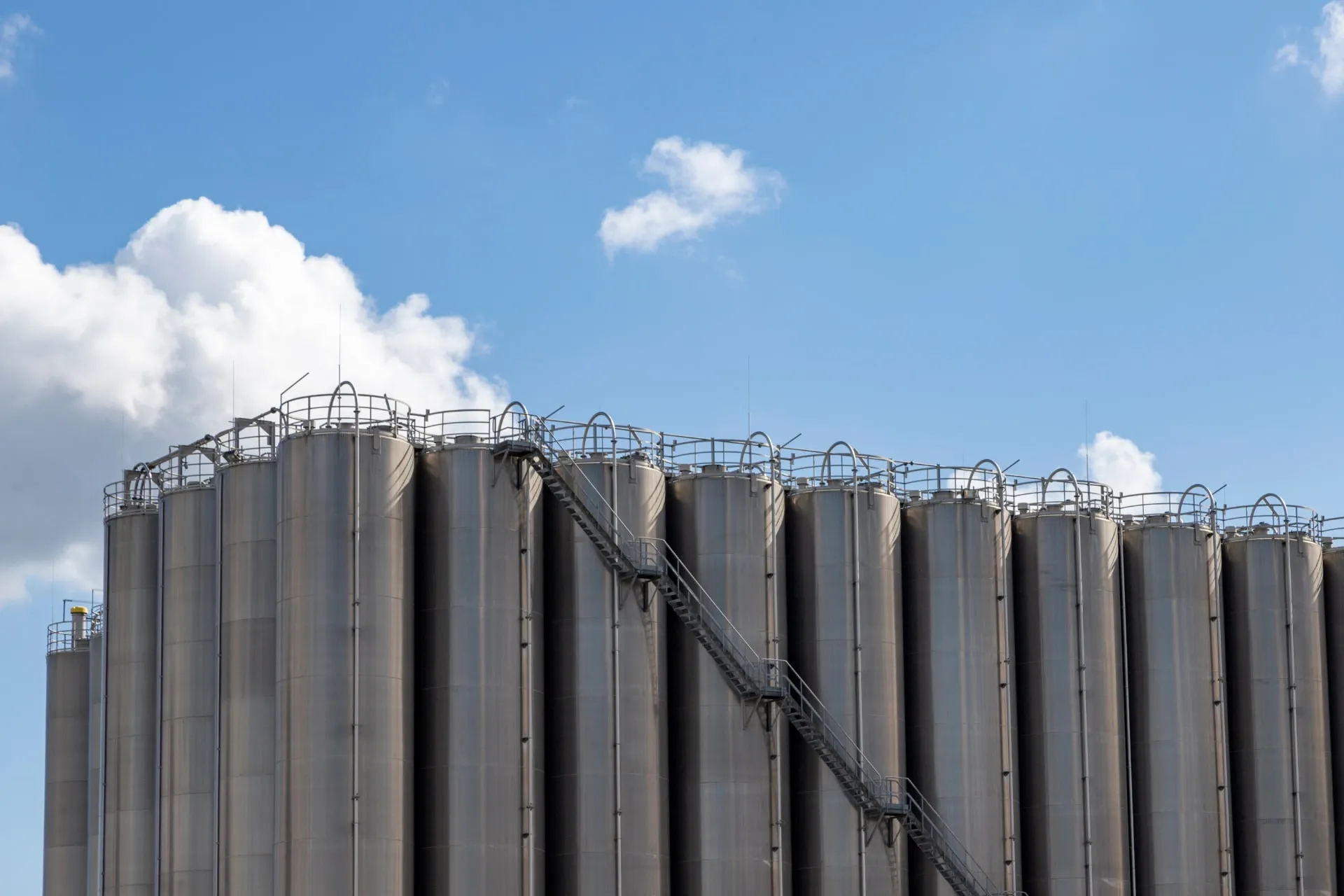
Drone Inspection – Food Industry – WITHOUT Human Entry, WITHOUT Scaffolding, HACCP-compliant
Kopterflug inspects grain silos, warehouses, maltings and process plants in the food and agricultural industry – without human entry, without scaffolding, compliant with HACCP (Hazard Analysis and Critical Control Points). Certified pilots with industry experience since 2017, operating across Germany.
- HACCP-compliant deployment – risk-assessed and coordinated with your QM team
- No human entry – no fall risk, no dust exposure, no rescue chain
- 4K + LiDAR – structural inspection and volume measurement in one flight
- Multiple silos per day – drastically shorter inspection time per asset
What We Inspect in the Food Industry
The food and agricultural industry operates large storage structures and process plants under strict hygiene requirements. We inspect all relevant assets – without human entry:


Our Services
- Confined Spaces Inspection: Grain silos, warehouses, maltings, dryers – wherever human entry is dangerous or laborious
- 4K + LiDAR: Visual inspection in the highest quality and 3D point clouds for wall measurement, fill-level determination and digital twins
- No scaffolding, no climbers, no human entry: Drastically reduced inspection times and costs – multiple silos per deployment day instead of one per day
- Professional documentation: Detailed inspection reports with 4K footage, 3D models and systematic findings overview
Safe Inspection Under Hygiene Requirements
The food and agricultural industry operates grain silos, warehouses, maltings and dryers that must be regularly checked for structural damage, corrosion and product residues. Strict hygiene requirements apply simultaneously – inspection methods must not jeopardise product safety.
Classical inspections of grain silos require human entry into confined, dark spaces with dust exposure and fall risk. Per silo, conventional methods can take several hours – with safety measures, scaffolding or rope access. With dozens of silos, time and costs add up considerably.
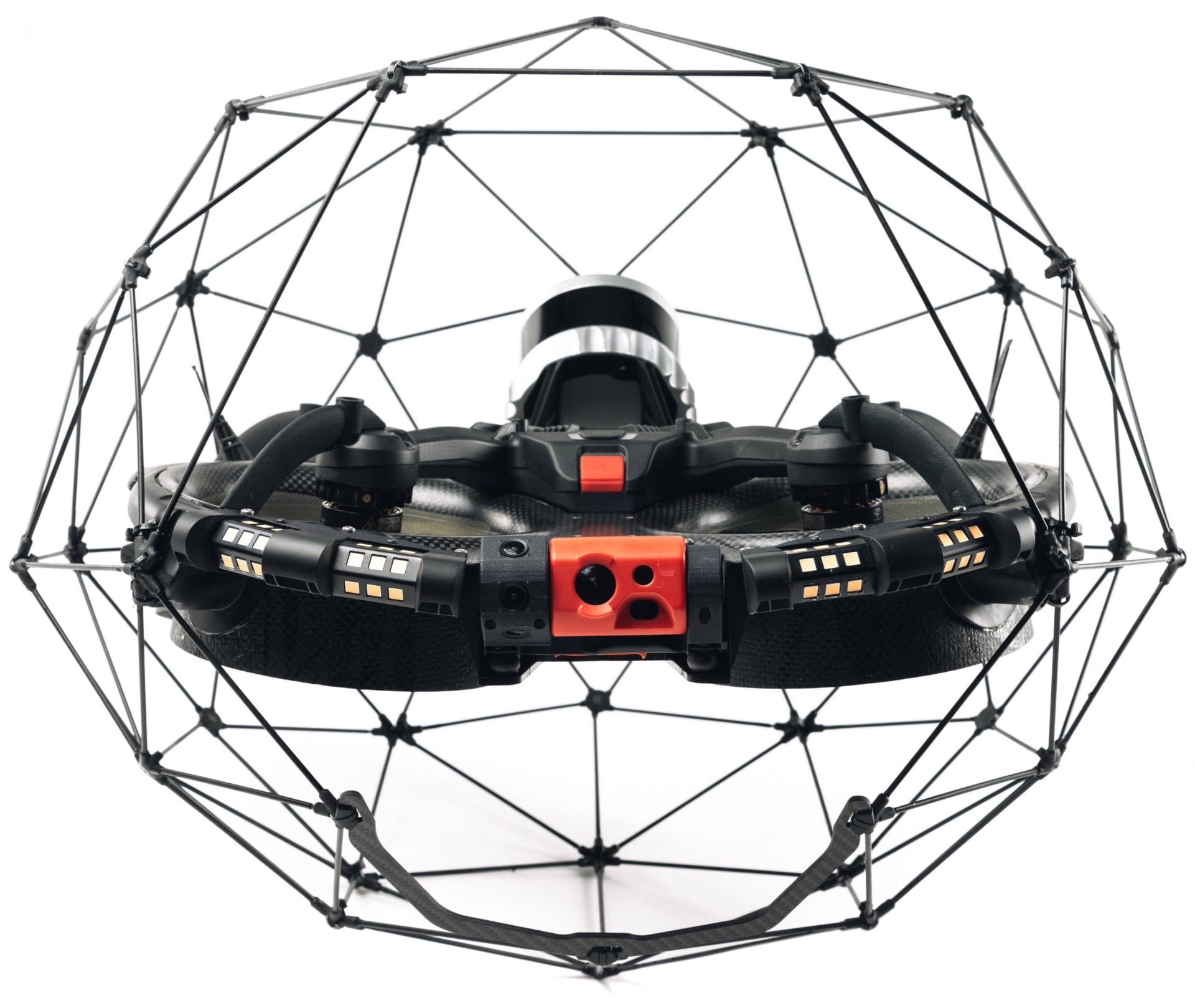
The Flyability ELIOS 3 flies into silos, warehouses and process plants – without human entry, without scaffolding. 4K video documents structural damage and corrosion; LiDAR captures geometry and enables fill-level determination at decimetre accuracy. The deployment is coordinated with your QM team in advance and integrated risk-based into your HACCP system.
What We Document
| Area | What We Check | Why It Matters |
|---|---|---|
| Container walls, linings & surfaces | Corrosion, lining damage, cracks, surface roughness, deposits and coating defects | Damaged surfaces can be sources of contamination. Early detection prevents product losses. |
| Silo roof & access areas | Roof leaks, access ladder condition, wall connections, vent openings | Roof leaks allow moisture ingress – mould growth, product loss, structural damage. |
| Discharge systems & installed components | Deflector plates, discharge aids, conveyors – wear, deposits, missing components | Damaged discharge systems cause irregular or blocked material flow. |
| HVAC systems & ventilation ducts | Duct surfaces, deposits, damage, insulation, dampers | HVAC systems are the backbone of room air quality. Deposits can be particle sources. |
Challenges in the Food Industry
- Human entry into silos = high risk. Fall risk, dust exposure, oxygen deficiency in grain silos. Rescue chain required. ELIOS 3 flies in – your team stays outside.
- Dozens of silos = days of inspection time. Conventional inspection takes hours per silo. With large facilities with dozens of silos, costs add up.
- Hygiene & product safety. Inspection methods must not jeopardise product safety. The drone is deployed cleanly, leaves no scaffolding material and requires no personnel in the silo.
- Dust explosion hazard (ATEX). Fine organic dusts (flour, sugar, starch) are highly explosive. Every inspection requires strict ATEX measures. Note: ELIOS 3 is not ATEX-certified – deployment only in emptied and cleaned silos without hazardous dust concentration.
- Bridging & caking in the silo. Product sticks to walls or forms bridges – discharge becomes irregular or blocked. Drones make critical areas visible early.
- Mould & moisture damage. Condensation or leaks lead to mould formation and quality loss. 4K inspection detects critical zones early.
- Documentation for audits & certifications. IFS, BRC, HACCP – traceable documentation is mandatory. Structured image data supports audits.
Typical Inspections in the Food Industry
| Asset | Sensors | Typical Findings |
|---|---|---|
| Grain & feed silos | Visual, LiDAR, Thermography | Corrosion, wall penetrations, missing hardware, roof leaks, product residues |
| Warehouses & cold stores | Visual, LiDAR, Thermography | Structural damage to beams, insulation defects, moisture, roof leaks, corrosion |
| Process vessels, malt silos & brew kettles | Visual, LiDAR | Corrosion, coating damage, deposits, lining wear, structural deformations |
| Dryers & conveying systems | Visual, LiDAR, Thermography | Wear, material adhesions, corrosion, bearing overheating, structural damage |
| Dust filters, cyclones & extraction systems | Visual, Thermography | Deposits (dust layers), blockages, leaks, thermal anomalies, corrosion |
| Elevators & vertical conveying systems | Visual | Material adhesions, wear on buckets, misalignments, foreign objects, blockages |
| Pneumatic conveying lines & large pipes | Visual, LiDAR | Caking, cross-section reduction, deposits, abrasion wear, corrosion |
| Mills, screw housings & crushers | Visual | Wear on impact surfaces, material deposits, foreign objects, structural damage |
| Sugar, flour & powder silos | Visual, LiDAR | Caking, bridging, product crusting, corrosion, structural damage |
| Refrigeration & freezing plants | Thermography, Visual | Ice build-up, air leaks, inefficient cooling, moisture, insulation defects |
| Roof spaces & ceiling areas | Visual, Thermography | Condensation, mould potential, leaks, loose components, corrosion |
| Wastewater plants (ROV) | ROV Visual | Fat/sludge deposits, corrosion, blockages, structural damage |
| Conveyor belt undersides & transfer points | Visual | Product accumulations, hygiene problems, mechanical wear, foreign objects |
Your Benefits as a Food Company
- No human entry: No inspection entry, no fall risk, no respiratory protection. Your personnel stay safely outside.
- Drastically shorter inspection time: Instead of hours per silo with conventional methods – significantly shorter inspection time with a drone. Multiple silos per day possible.
- No scaffolding: Inspection of silo interior walls, roofs and warehouses without scaffolding or elevated work platform. Considerable cost saving.
- Precise documentation: 4K footage, LiDAR 3D models – objective data foundation for maintenance decisions. Digitally archived and comparable.
- Cost saving up to 80%: Compared to conventional methods (scaffolding, rope access, inspection entry), total costs per inspection can be significantly reduced.
- Hygienic & risk-assessed: No personnel, no scaffolding, no foreign material in the inspection area. The drone is pre-cleaned; deployment is risk-assessed within your HACCP system and coordinated with your QA team.
Inspection Process in the Food Industry
- Initial consultation: We discuss the plant, number of silos/assets, access routes and your inspection requirements. Free preliminary clarification.
- Scheduling & quotation: You receive a transparent quotation. Together we plan the deployment – coordinated with your production cycles.
- On-site inspection: We arrive with ELIOS 3 and inspect silos, warehouses, process plants. Live feed for your specialists. At least two on site.
- Evaluation & inspection report: Detailed report with 4K footage, 3D models and systematic findings overview. Revision-proof archiving.
Our Team
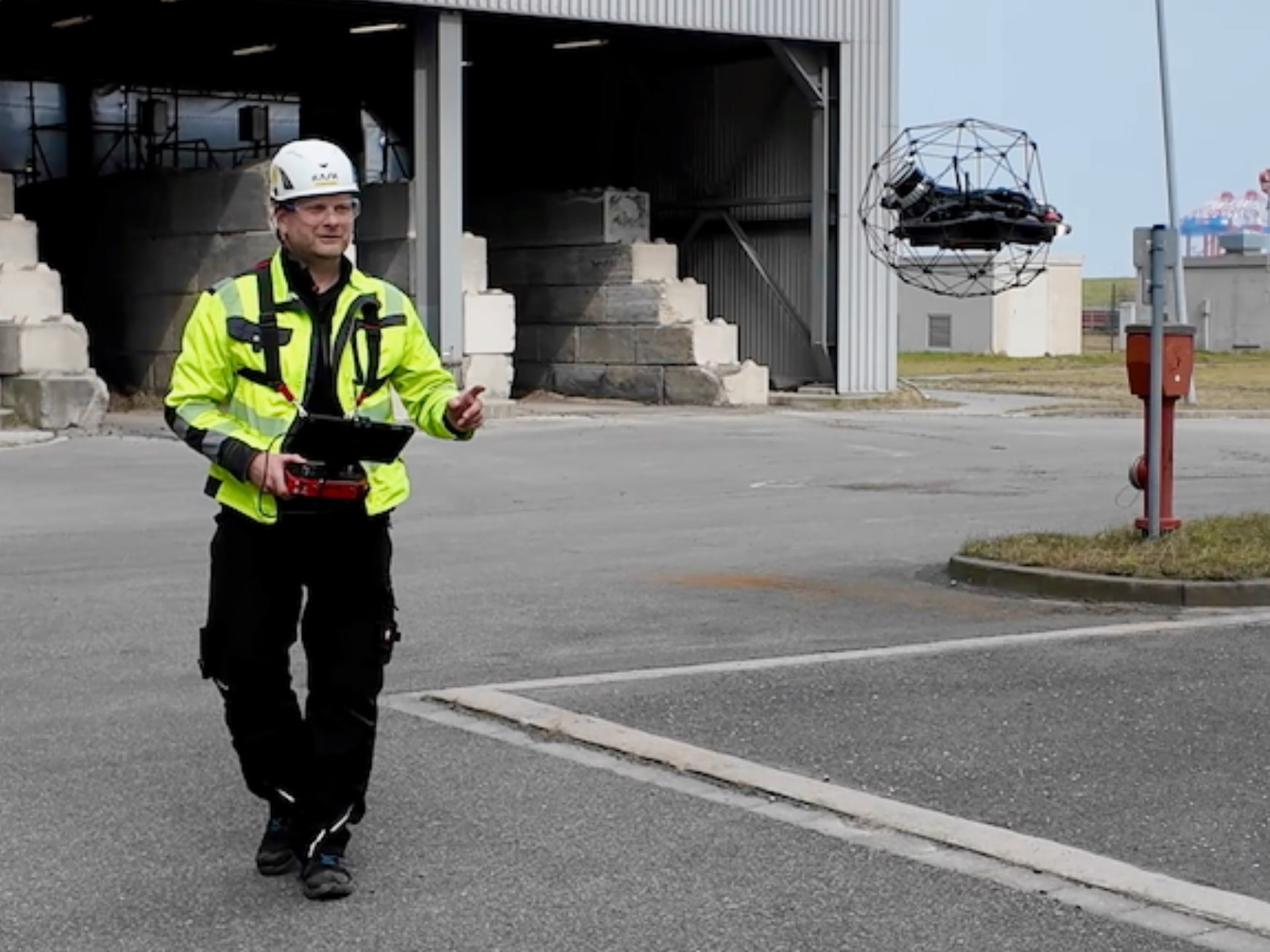
Experience in silo inspections and industrial environments. We understand the special requirements of the food industry – hygiene, efficiency with large silo inventories, precise documentation.
 Christian
Founder & Drone Pilot
Christian
Founder & Drone Pilot
 Karsten
Project Manager
Karsten
Project Manager
 Philipp
Founder, Mission Planning & Logistics
Philipp
Founder, Mission Planning & Logistics
 Juliana
Drone Pilot
Juliana
Drone Pilot
 Stephan
Mission Planning & Logistics
Stephan
Mission Planning & Logistics
Related Services
- Silo Inspection – Structural check, deposits and lining damage in silos without human entry.
- Confined Spaces Inspection – Confined spaces without human entry – ELIOS 3 for all confined-space assets.
- Tank Inspection – Interior walls, floors, weld seams and coatings in tanks without inspection entry.
- Underwater Inspection (ROV) – ROV inspection of wastewater treatment plants without draining.
- Chemical Industry – Reactors, columns, process vessels in contaminated and corrosive environments.
- Flyability ELIOS 3 – The collision-safe indoor drone with 4K, LiDAR and thermography in detail.
Frequently Asked Questions: Drone Inspection in the Food Industry
Is drone inspection in the food industry HACCP-compliant?
A drone inspection in the food industry can be HACCP-compliant if it is risk-assessed and integrated into the existing hygiene concept of the operation. Decisive factors are: deployment timing (typically at shutdown or empty vessel), distance to the product, cleaning measures before deployment and release by quality assurance. The drone is deployed as a contact-free inspection tool – no personnel enters the area, no foreign material is introduced. The HACCP assessment lies with the operator; we coordinate the deployment in advance with your QM team.
How is the contamination risk from the drone assessed?
The risk is not blanket-excluded but assessed and minimised. Relevant aspects: possible particle movement from rotor airflow, surface materials of the drone (carbon/Kevlar cage, plastic), deployment duration and distance to product, and hygiene status of the drone before deployment. In practice the risk is significantly lower than with conventional methods involving human entry, scaffolding or rope access.
Must the drone be cleaned before deployment?
Yes. Before every deployment in food-adjacent environments, the drone is cleaned and disinfected where required – adapted to the requirements of the respective operation and area. Type and scope of cleaning are coordinated in advance with your QM team and documented.
Is there a risk from the drone making material contact with food?
Since the drone generally has no direct contact with the product, the focus is not on food contact certification but on avoiding introductions (particles, dust, residues). The deployment is planned so that no direct product contact occurs – typically in empty or stationary condition, with sufficient distance from residual products.
Can a drone capture fill levels in silos?
Yes. With LiDAR, 3D point clouds of the silo interior geometry can be captured, from which fill volume and fill levels can be derived. Achievable accuracy is typically in the decimetre range depending on silo geometry, dust load, surface properties and data processing quality.
Which defects can be identified in silos and vessels?
Clearly identifiable: deposits and product residues on walls and installed components, corrosion and coating damage, cracks or mechanical deformations, blockages and bridging, and missing or damaged installed parts. Very fine material defects (e.g. micro-cracks in coatings under 0.5 mm) cannot always be reliably assessed visually.
Is the camera quality sufficient for hygiene-relevant assessments?
In practice yes – for most relevant findings. The ELIOS 3 records in 4K Ultra HD and has 16,000 lumen LED lighting that illuminates even dark silos and cavities evenly. Practically relevant anomalies such as corrosion, deposits and cracks can be reliably documented.
Can thermography be usefully deployed in food operations?
Yes, particularly for detecting temperature anomalies, moisture problems and condensation, and insulation defects in cold stores and warehouses. For thermography a sufficient temperature difference between the investigated area and its surroundings is required. It is especially valuable at cold store roofs, wall penetrations and HVAC systems.
How long does a drone inspection in the food industry take – e.g. a silo or vessel?
A medium grain silo (height 15–25 m, diameter 5–8 m) can typically be fully documented in 20–45 minutes – incl. setup and data saving. In practice, multiple silos per day are realistic, which compared to conventional inspection entry (often hours per silo) represents a considerable time advantage.
Must cleaning or release of the area take place after the inspection?
This is operation-specific and depends on your HACCP concept. Depending on the plant and product, the following may be required: a visual check of the area after the flight, targeted cleaning (e.g. if dust was stirred up), or a formal QA release before recommissioning. We coordinate the procedure in advance with your QM team.
How are inspection results documented?
Typical deliverables: 4K video and individual images from the flight with marked anomalies, a structured inspection report with findings overview and brief descriptions, and optionally 3D point clouds (LiDAR). Report format can be aligned with your internal documentation structures on request.
Are inspection data suitable for audits – IFS, BRC, FSSC 22000, internal audits?
Yes, if structurally, traceably and reproducibly documented – which is our standard procedure. Drone inspection data serves as reliable visual evidence and decision basis for maintenance and quality assurance. They complement traceable asset documentation and form a solid basis for audit preparation.
Can inspections be repeated and compared over time?
Yes. Through documented flight areas, saved trajectories and 3D point clouds, follow-up inspections can be performed reproducibly. In direct comparison of two inspections, it is visible where corrosion has spread, deposits have changed or structural damage has grown. This enables a condition-based maintenance approach.
What happens if the drone hits a wall in the silo or vessel?
Indoor drones like the ELIOS 3 are designed for confined environments and tolerate light wall contact – the collision protection cage is explicitly constructed for confined spaces. Heavy collisions or loss of controllability lead to immediate abort. In the event of failure in the silo, a safety line is possible to recover the drone.
Can the drone be deployed in damp or dusty environments?
Yes, deployment is possible in both environments. The ELIOS 3 is rated to IP44-equivalent (splash-proof). Heavy dust or dense moisture veils can, however, restrict visibility and impair image quality. For very high dust load, we recommend minimising residual stocks and dust stirring-up.
Is the drone also suitable for large warehouses and hard-to-reach roof areas?
Yes, warehouses and large roof areas are an ideal deployment field. The drone reaches beam structures, roof interior surfaces, technical installations at great height and hard-to-reach corner areas – without scaffolding, without elevated work platform, without blocking warehouse operations. Thermography shows insulation defects, roof leaks and condensation problems.
How much is the shutdown reduced compared to conventional inspection methods?
A silo that requires half a day with conventional inspection entry can be fully documented by drone in 30–45 minutes. A factor of 3–5× shorter inspection time is realistic in practice. This depends on the specific asset and operational processes.
Who may carry out such inspections – is a special authorisation required?
For indoor drone deployments in commercial and industrial areas, no specific aviation authorisation is required (no UAS operator registration for pure indoor flights). Decisive are experience in handling indoor drones in confined, complex environments, understanding of the hygiene and process requirements of the operation, and a coordinated safety and deployment concept.
Are there practical examples from the food and agricultural industry?
Yes. We are happy to describe our own references from the food and agricultural industry directly. Flyability additionally documents case studies from silos, tanks and comparable plants where indoor drones were superior in safety, accessibility and inspection time. Contact us via the enquiry form.
How often should drone inspections be carried out in the food industry?
This depends on plant age, product and usage intensity, previous anomalies, and internal inspection plans and audit requirements. In practice, a condition-based approach is often chosen: critical assets such as silos with known corrosion problems more frequently, unremarkable standard plants at longer intervals. The drone is particularly well suited as a cost-effective, recurring visual check.
Must the plant be taken out of service for a drone inspection in the food industry?
In most cases no – this is one of the central advantages. Silos and vessels must be emptied for interior inspection but do not need to be completely taken out of service. External plants (roof areas, external silos, cooling systems) can be inspected at full operation with the DJI Matrice 30T. For sensitive production areas we plan the deployment in existing shutdown windows together with your production manager.
What data do we receive after a drone inspection in the food industry?
Standard deliverables: 4K video and individual images with marked anomalies, a structured inspection report with findings overview and brief descriptions, and optionally 3D point clouds (LiDAR) for wall measurement and fill-level determination. Documentation is structured, traceable and suitable for IFS, BRC or FSSC 22000 audits.
Get in Touch
Questions about drone inspection in the food industry or a quote for your plant? Fill out the form and we will get back to you within 24 hours.