
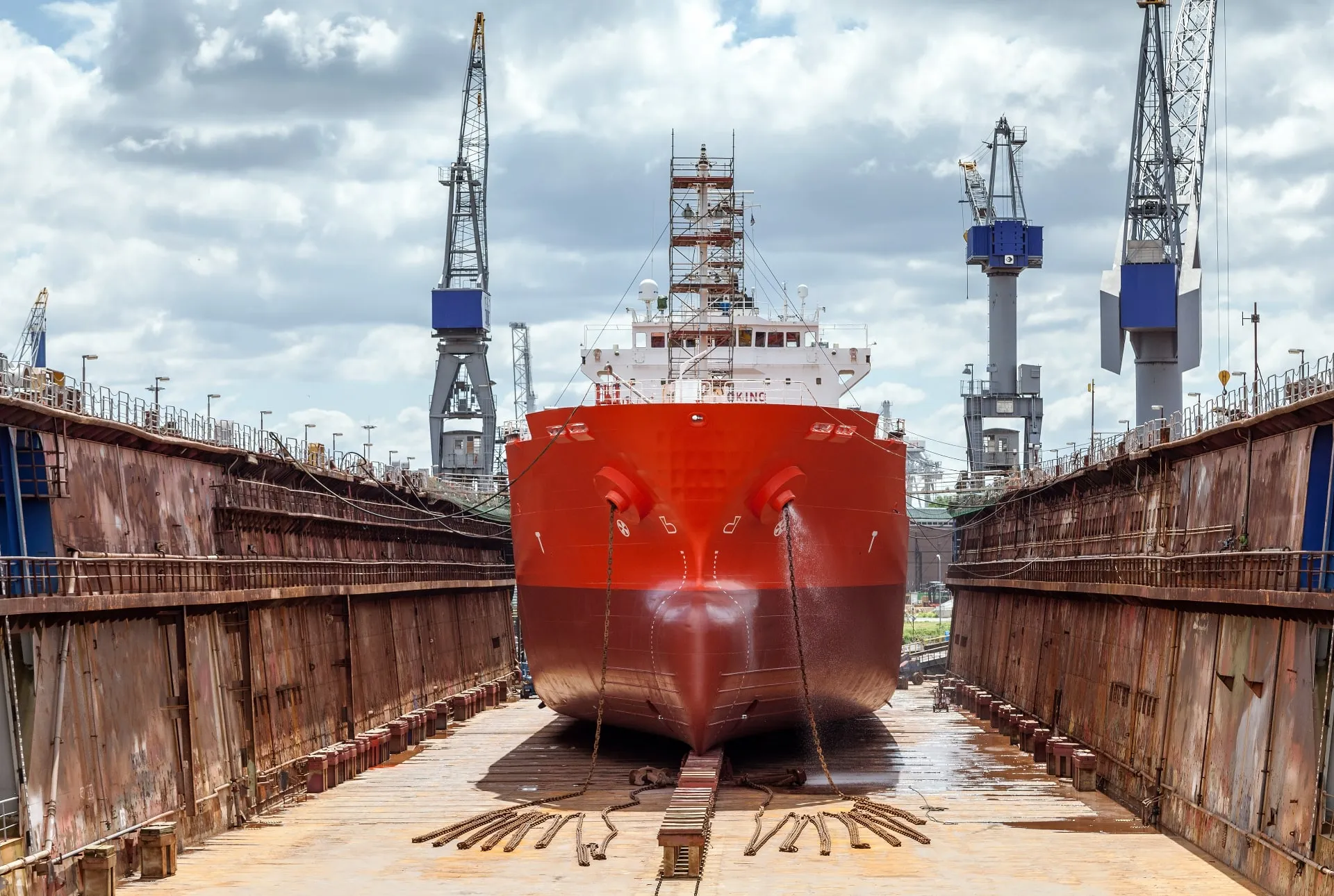
Ship Inspection by Drone – WITHOUT Human Entry, WITHOUT Dry Dock
Kopterflug inspects ballast tanks, cargo holds, double bottoms and void spaces on ships and offshore structures using the Flyability ELIOS 3 – without personnel entry, without scaffolding, without dry-docking. The drone flies in, your crew stays outside. Since 2017.
- No human entry into hazardous confined spaces
- 4K + Thermography + LiDAR in a single flight
- Documentation aligned with SOLAS / IMO / IACS ESP – data basis for your surveyors
- Drastically reduced port stays – hours instead of weeks
What We Inspect on Ships
Ships and special-purpose vessels contain difficult-to-access cavities that require regular inspection. We inspect all safety-critical assets – without human entry:



Our Solution: ELIOS 3 for Maritime Inspection
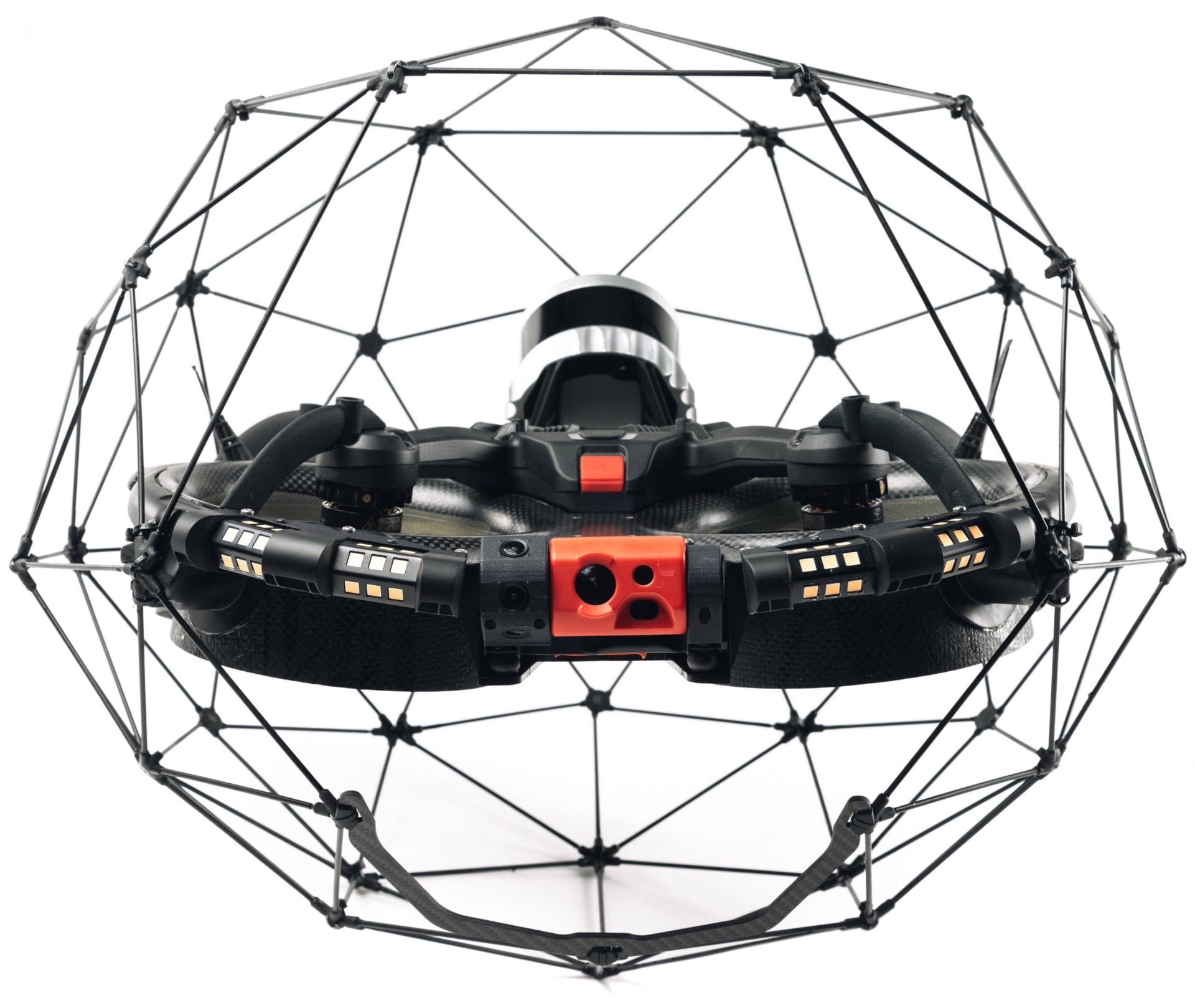
The ELIOS 3 with its collision-safe carbon cage – built for confined spaces on ships.
Ballast tanks, cargo holds, double bottoms, void spaces – ships and special-purpose vessels are among the most demanding inspection environments. Seawater aggressively attacks steel structures and coatings; access is via narrow manholes (from 50 cm); and in enclosed spaces, oxygen deficiency, H&sub2;S or inert gas atmospheres present serious hazards. Conventional entry per DGUV requires rescue chains, respiratory protection and extensive scaffolding – combined with long port stays and significant costs.
The Flyability ELIOS 3 was developed precisely for such Confined Spaces: collision-protected, GPS-independent, with 4K camera, thermography and LiDAR. At Kopterflug, we have been deploying the ELIOS 3 in maritime environments since 2017 – on bulk carriers, container ships, tankers, Ro-Ro ferries and offshore structures.
- Maritime Confined Spaces: ballast tanks & cargo holds by drone
- Ballast tanks, cargo holds, double bottoms, void spaces – without human entry
- 4K + Thermography + LiDAR for comprehensive condition documentation
- Documentation aligned with SOLAS / IMO / IACS ESP – data basis for your surveyors
What the Drone Documents
We fly the ELIOS 3 into the areas to be inspected on your vessel and systematically document all safety-relevant structures. Technical assessment is carried out by your surveyors, classification society inspectors and technical experts – we provide the data:
Ballast Tanks
4K footage of corrosion, coating breakdown, cracks, weld damage and deformations on stiffeners, bulkheads and tank tops. Thermography for detecting moisture ingress and thermal anomalies.
- Sensors: Visual, thermography, LiDAR
- Typical findings: Coating breakdown, corrosion, pitting, weld damage, structural deformations, sediment deposits
Ballast tanks are subject to permanent seawater contact and strict inspection requirements under the IACS Enhanced Survey Programme (ESP). The ELIOS 3 documents the full condition – your surveyors and class inspectors evaluate whether repairs or recoating are required.
Cargo Holds & Cargo Holds
Condition of bulkheads, hatch coaming connections, cell guides (container ships), tank tops, transverse frames and coatings. Documentation of corrosion, cracks, deformations and cargo residues.
- Sensors: Visual, LiDAR, thermography
- Typical findings: Corrosion, residues, bulkhead damage, frame deformations, cell guide damage
Double Bottoms & Void Spaces
Corrosion on floors, longitudinals and bottom plating. Coating damage, leaks, sediment deposits, condition of manhole covers and drainage systems.
- Sensors: Visual, LiDAR
- Typical findings: Corrosion on floors, coating damage, leaks, sediment deposits
Fresh Water & Fuel Tanks
Coating condition (coating breakdown), corrosion, sediments, deposits, contamination traces, condition of stiffeners and welds in potable water tanks, heavy oil tanks and lubricant tanks.
- Sensors: Visual, thermography, LiDAR
- Typical findings: Coating breakdown, corrosion, sediments, contamination traces, weld damage
You receive a detailed inspection report for your vessel – with 4K images, thermography evaluation, LiDAR point cloud and 3D model (with colorization for visual clarity). Data basis for SOLAS / IMO / IACS ESP – your surveyors and class inspectors assess the findings.
Challenges in Maritime Inspection
Ballast tanks, cargo holds, double bottoms – confined spaces, corrosion risk, hazardous gases. Conventional entry requires weeks of preparation, DGUV measures, rescue chains and enormous risk. The ELIOS 3 inspects in hours – without human entry, with 4K + LiDAR + thermography.




Typical Maritime Applications
1. Ballast Tank Inspection (IACS ESP)
The Enhanced Survey Programme (ESP) requires detailed inspections of all ballast tanks. ELIOS 3 documents corrosion, coating damage and structural integrity – without entry, as a data basis for SOLAS/IMO requirements.
- Sensors: Visual, LiDAR, thermography
- Typical findings: Coating breakdown, corrosion, pitting, weld damage, structural deformations, sediment deposits
2. Cargo Hold Inspection After Voyage
Bulk carriers after bulk cargo transport: check corrosion, residues, bulkhead integrity. Container ships: document cell guides, structural damage, fire protection.
- Sensors: Visual, LiDAR, thermography
- Typical findings: Corrosion, residues, bulkhead damage, frame deformations, cell guide damage
3. Double Bottom & Void Space Checks
Hard-to-access cavities, pump rooms, cofferdam areas – inspected without human entry. Identify corrosion, leaks, deposits.
- Sensors: Visual, LiDAR
- Typical findings: Corrosion on floors, coating damage, leaks, sediment deposits
4. Fresh Water & Fuel Tanks
Potable water tanks per DIN 50930, heavy oil tanks, lubricant containers – document corrosion and sediments. Without human entry, in dry tanks.
- Sensors: Visual, LiDAR, thermography
- Typical findings: Coating breakdown, corrosion, sediments, contamination traces, weld damage
5. Underwater Hull & Harbour Basin (ROV)
Hull, rudder, propeller and keel section without dry dock – ROV inspection to 200 m depth. Marine growth assessment, anode checks and UWILD surveys.
- System: Chasing M2 Pro Max ROV
- Typical findings: Marine growth, anode corrosion, hull damage, propeller damage, rudder damage
6. Funnels & Exhaust Systems
Inspection of chimneys and exhaust ducts for soot deposits, corrosion and hotspots after shutdown.
- Sensors: Visual, thermography
- Typical findings: Soot deposits, corrosion, hotspots, wall damage
Your Benefits with Maritime Drone Inspection
- Drastically reduced port stays: Hours instead of weeks – no elaborate entry preparation, no rescue chains, no scaffolding.
- Maximum safety for crew: No human entry into toxic, oxygen-deficient areas – the ELIOS 3 takes the risk.
- Precise corrosion documentation: 4K footage shows the smallest coating damage; LiDAR (centimetre range) captures geometry and deformations.
- Documentation aligned with SOLAS / IMO / IACS ESP: Detailed inspection reports as a structured data basis for your surveyors and class inspectors.
- Up to 70–80% cost savings: No scaffolding, no rescue teams, minimal port stay – drastically reduced costs.
- Deployable worldwide: Nationwide and internationally – we come to your vessel, whatever the port.
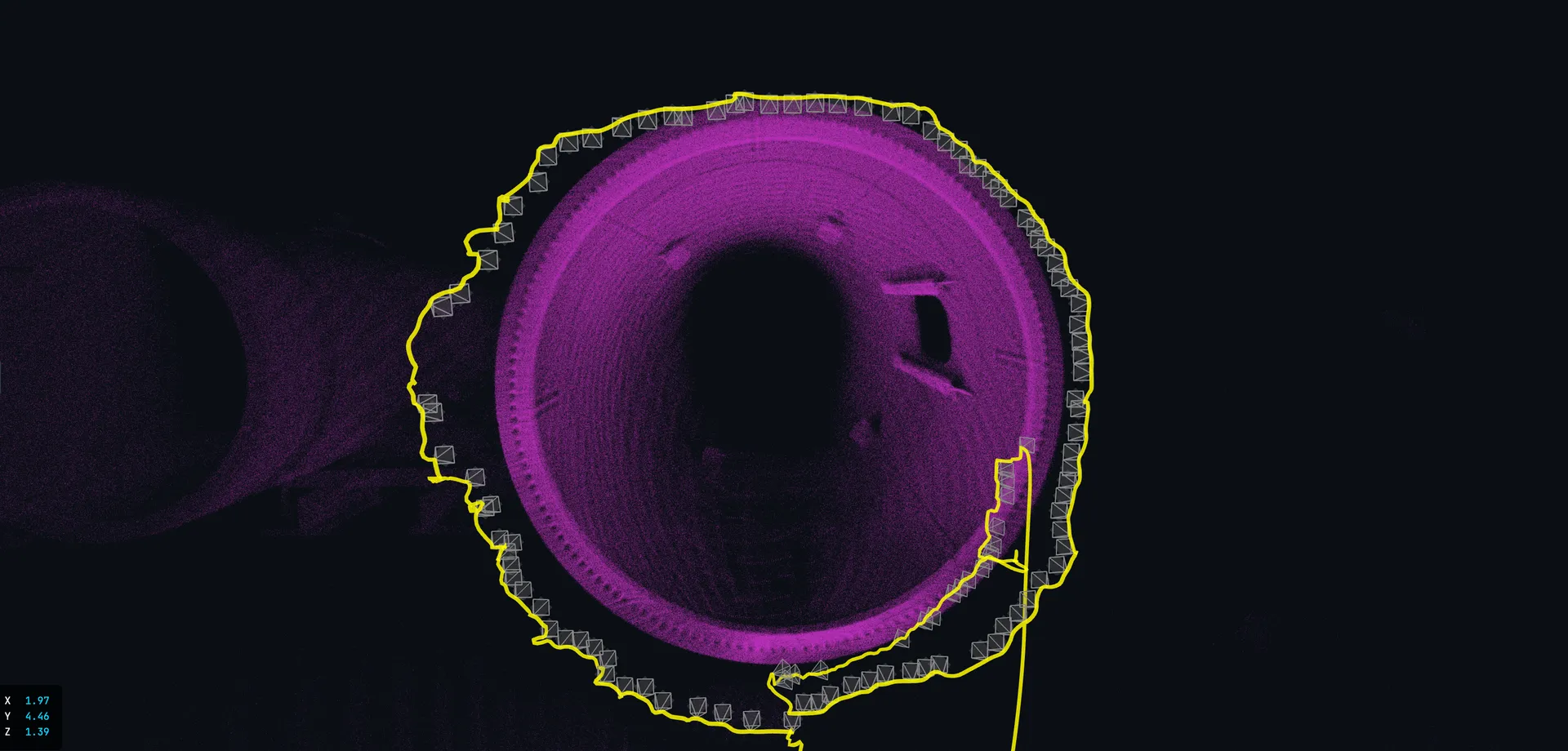
LiDAR 3D point cloud from the ELIOS 3 – centimetre-accurate geometry data for documentation and trend analysis.
Complementary Systems for Ship Inspection
The ELIOS 3 inspects tanks and void spaces. The Chasing M2 Pro Max handles the underwater hull. The DJI Matrice 30T supplements for superstructures and deck areas.


Inspection Process
Step 1: Preliminary Phone Consultation
We discuss vessel type, areas to be inspected (ballast tanks, cargo holds), access routes, potential hazardous substances (inert gas, H&sub2;S) and your inspection requirements (IACS ESP, classification society).
Step 2: Proposal & Scheduling
You receive a fixed-price proposal including on-site time, report scope and sensors. We coordinate with your port and classification society.
Step 3: On-Site Inspection
We arrive at your vessel with the ELIOS 3 and inspect ballast tanks, cargo holds and double bottoms. Live feed for your crew or classification society. Minimum two-person team on site.
Step 4: Report & 3D Model
4K videos, thermography footage, 3D model (with colorization for visual clarity), findings aligned with SOLAS / IMO / IACS. Systematically archived for comparison in future inspection cycles.
Your Contacts
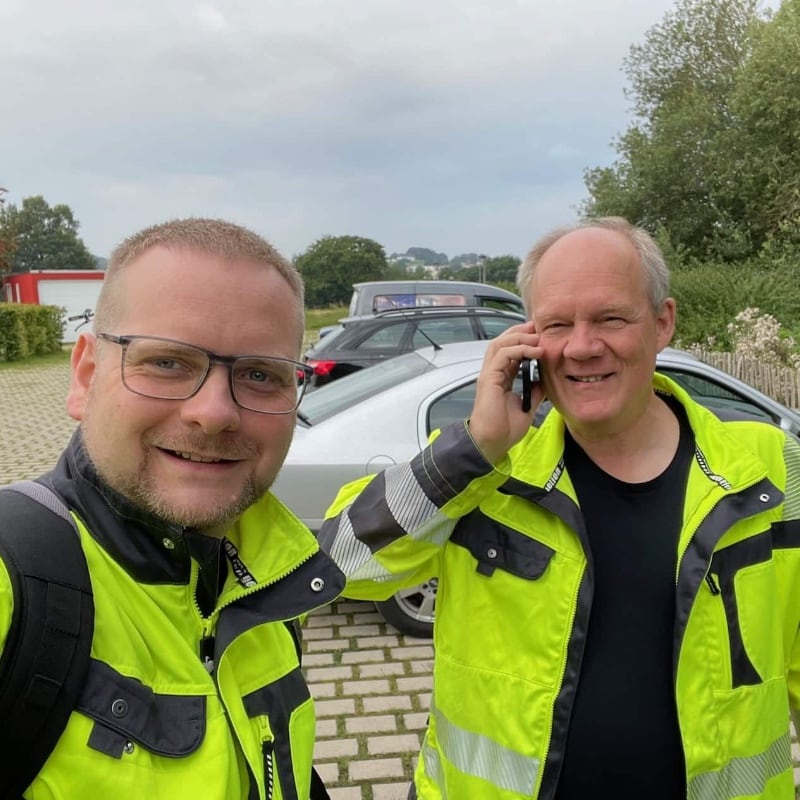
The Kopterflug team – specialised in confined space inspections since 2017, including maritime environments.
Our team has been specialised in confined space inspections since 2017. The two-person team is our standard – for individual assignments we also work in teams of three. Close cooperation with classification societies and shipyards.
- Dipl. Wirt.-Ing. für Seeverkehr (FH) Juliana Engelke – Maritime specialist and drone pilot
- Christian Engelke – Founder and drone pilot
- Dipl.-Ing. Karsten Lehrke – Project Manager
- Philipp – Founder, operations planning & logistics
- Stephan – Operations planning & logistics
Related Services
- Underwater Inspection (ROV) – Ship hulls, propellers and inlet openings underwater by ROV without divers.
- Confined Spaces Inspection – Ballast tanks, cargo tanks and narrow ship compartments without human entry.
- Tank Inspection – Cargo and ballast tanks checked for corrosion, coating damage and cracks.
- Infrastructure Inspection – Port facilities, piers and quay structures – condition survey by drone.
- Condition Documentation – Classification-compliant findings documentation: 4K video, findings list and PDF report.
- Flyability ELIOS 3 – The collision-safe indoor drone – technology, sensors and application limits in detail.
Frequently Asked Questions about Maritime Drone Inspection
Can the ELIOS 3 fly in ship tanks and cargo holds?
Yes, the Flyability ELIOS 3 was developed specifically for Confined Spaces and is ideal for maritime environments. The collision-protection cage enables safe flight in ballast tanks, cargo holds, double bottoms and void spaces. It navigates GPS-independently via SLAM and fits through manholes from 50 cm diameter.
How does a drone inspection on a ship work?
We come aboard with our equipment while the vessel is in port. The ELIOS 3 is deployed via existing manholes into ballast tanks, cargo holds or void spaces. Surveyors and crew can follow the flight via live feed in real time. The inspection requires no scaffolding and no rescue chain.
What damage is typically found during ship inspection?
The most common findings are coating breakdown, corrosion (particularly seawater corrosion), pitting, weld damage, structural deformations and sediment deposits. The 4K camera captures damage at close range – the LiDAR 3D model additionally allows precise measurement of deformations and wall thickness changes.
Which areas does ship drone inspection cover?
We inspect ballast tanks, cargo holds, double bottoms, void spaces, pump rooms, fresh water tanks and fuel tanks. In principle, the ELIOS 3 can fly any dry or empty space accessible via an opening from 50 cm. For water-filled tanks, we use underwater ROVs as an alternative.
Does the vessel need to be in dry dock?
No, dry-docking is not required. The ELIOS 3 inspects ballast tanks, cargo holds and cavities while the vessel is in port. This drastically reduces port stays compared to conventional entry with scaffolding and rescue chains.
What data do we receive after the ship inspection?
You receive 4K video footage, high-resolution images of all finding locations and optionally LiDAR 3D point clouds (accuracy in the centimetre range) for surveying and a digital twin. The documentation covers corrosion condition, coating breakdown, structural deformations and weld damage – prepared for your classification society or shipyard.
How does drone inspection compare to rope access on ships?
Drone inspection is faster, safer and more cost-effective. Conventional rope access in ballast tanks requires rescue chains, respiratory protection, scaffolding and significant port time. The ELIOS 3 inspects without human entry in hours instead of days – with up to 70–80% cost savings.
Can inspections be carried out during a port call?
Yes, this is the standard case. We carry out inspections during regular port stays – often in parallel with loading or unloading operations. The ELIOS 3 requires minimal preparation and can inspect multiple tanks or spaces in a single deployment day. Your vessel gets back to sea sooner.
Are drone inspections accepted by classification societies?
Drones provide an excellent visual data basis for surveyors – high-resolution, structured and fully documented. In practice they are frequently used as a supplement to the survey: the surveyor monitors the flight via live feed, makes decisions based on the data, but does not need to enter the tank personally. Whether and how the data is recognised within a specific classification process depends on the classification society, vessel type and survey type – we clarify this with you in advance.
Does a ballast tank need to be cleaned or inerted before inspection?
This depends on the tank's condition and operational requirements. The drone can fly in tanks that are not fully cleaned but are dry. Importantly: the drone does not replace safety clearances, gas-free measurements or required preparation steps – these remain mandatory. The advantage is that the labour-intensive scaffolding and DGUV entry preparation is eliminated.
How does LiDAR help in maritime inspections?
LiDAR enables 3D capture of tank structures, bulkheads and floors in the centimetre range. Deformations, distortions and geometry changes can be precisely documented and directly compared in follow-up flights. This is particularly valuable for trend analysis across multiple inspection cycles.
Can thermography detect moisture or leaks in ship tanks?
Yes, as a supplementary method. Thermography visualises temperature differences – for example with moisture ingress, condensation or insulation issues in double bottoms and void spaces. It is an indicator method and does not replace further testing, but provides valuable pointers to areas requiring closer examination.
What happens if the drone contacts a structure in a ballast tank?
The ELIOS 3 is built specifically for narrow spaces with stiffeners, bulkheads and complex structures. The carbon protective cage absorbs light collisions; the drone stabilises autonomously. In the event of a flip it returns to normal orientation independently. The cage and the drone's low mass ensure that structural surfaces are not damaged.
Is the inspection data directly usable by surveyors?
Yes – this is the core principle of our work. We deliver the data that surveyors and class inspectors need for their assessment: 4K footage of all relevant locations, LiDAR 3D models and thermography data. The surveyor can follow the flight via live feed and request additional passes. Technical assessment always remains with the surveyor – we provide the data basis for well-founded decisions.
Are there access limits for drones on ships?
Yes. The ELIOS 3 requires an opening of at least DN 600 to enter a tank or cavity. Very small manholes can be an obstacle. We check the access situation in advance with you based on vessel plans and manhole documentation.
Can sediment and rust deposits be detected?
Yes, both visually and geometrically. Sediment deposits on tank floors, rust layers and build-up on walls are clearly visible in 4K footage. LiDAR can additionally capture volumes and deposit heights. We document deposits and sediments in tanks and containers systematically.
Can maritime inspections be repeated and compared?
Yes – and this is one of the greatest long-term benefits. Geo-referenced LiDAR data allows follow-up inspections to be directly compared with earlier conditions. Corrosion progress, coating breakdown and structural changes become traceable and documentable across multiple inspection cycles. This supports proactive maintenance planning.
Are there references for ship and maritime drone inspection?
Yes. Our own work in the maritime sector is described on this page. Flyability documents inspections on FPSO facilities and in ship tanks at flyability.com – FPSO Inspection. These show the typical deployment area – ballast tanks, process vessels, hard-to-access structures – in which we are also active.
Get in Touch
Questions about maritime drone inspection or need a quote for your vessel? Fill out the form below and we'll get back to you within 24 hours.