
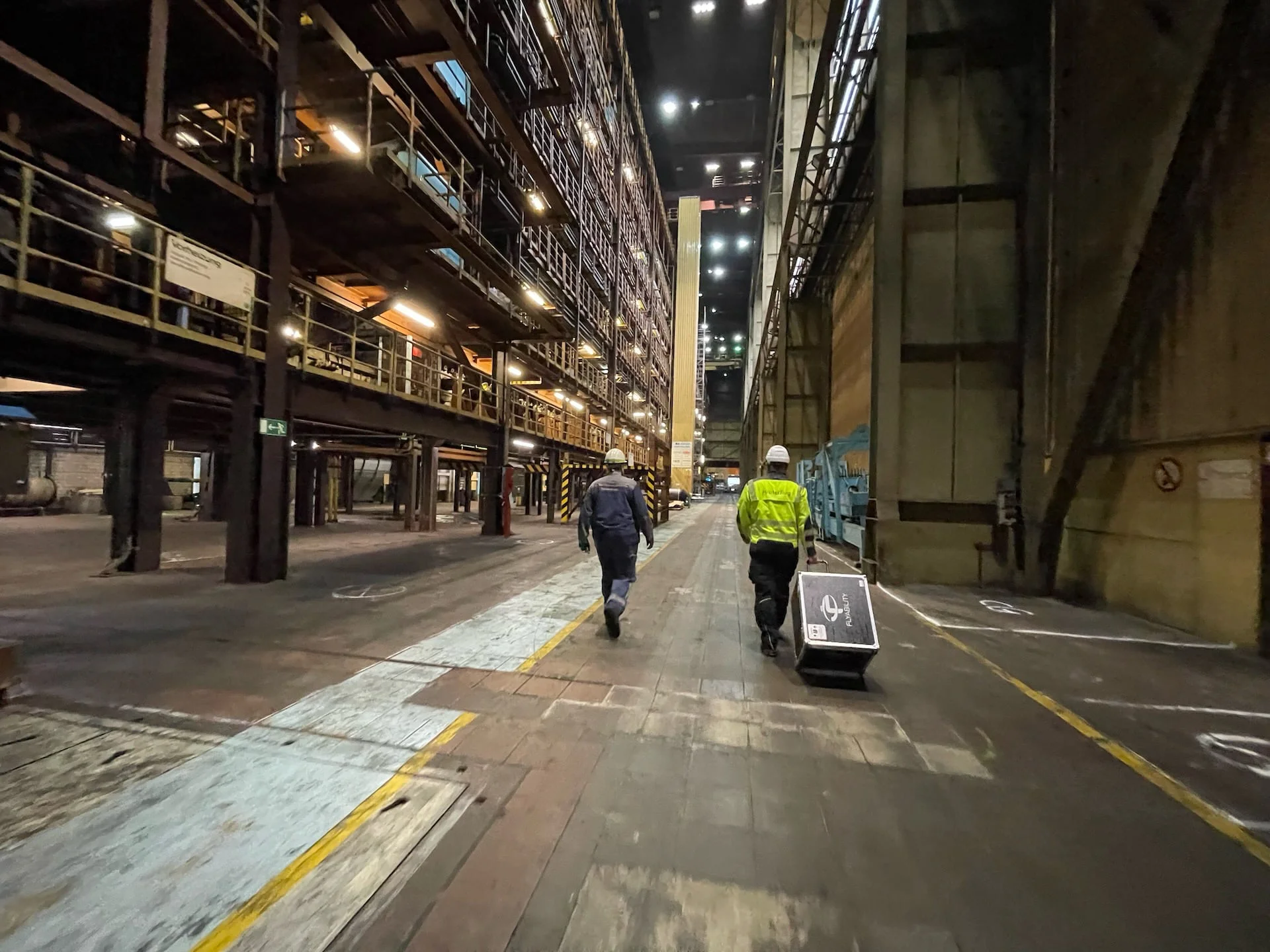
Kopterflug – Remote Inspections for Industrial Facilities
We fly where humans don’t belong. Precise condition data for tanks, boilers, silos and confined spaces – without human entry, without scaffolding, without production shutdown. Operating since 2017.
- Industrial drone inspection (Drohneninspektion) since 2017
- Zero human entry into confined and hazardous spaces
- 4K + Thermography + LiDAR – documented, technically usable data
About Kopterflug
Some assets haven’t seen a human inspector in years – if at all. Tanks (Tanks), boilers (Kessel), chimneys (Schornsteine), silos (Silos): spaces that operators need to know about, but should never send people into.
Kopterflug was founded in 2017 for exactly that purpose. Not to take pictures, but to deliver answers. Precise. Documented. Technically usable.
Since then, we have completed hundreds of industrial deployments across Germany and Europe. Power plant boilers that no one had seen from the inside in decades. High flares (Hochfackeln) in refineries. Ballast tanks at sea. Chimneys where no climbing team would be sent.
Our drones are tools – what matters is understanding what the data means for your asset.
Request a deployment assessment
The Team Behind Kopterflug
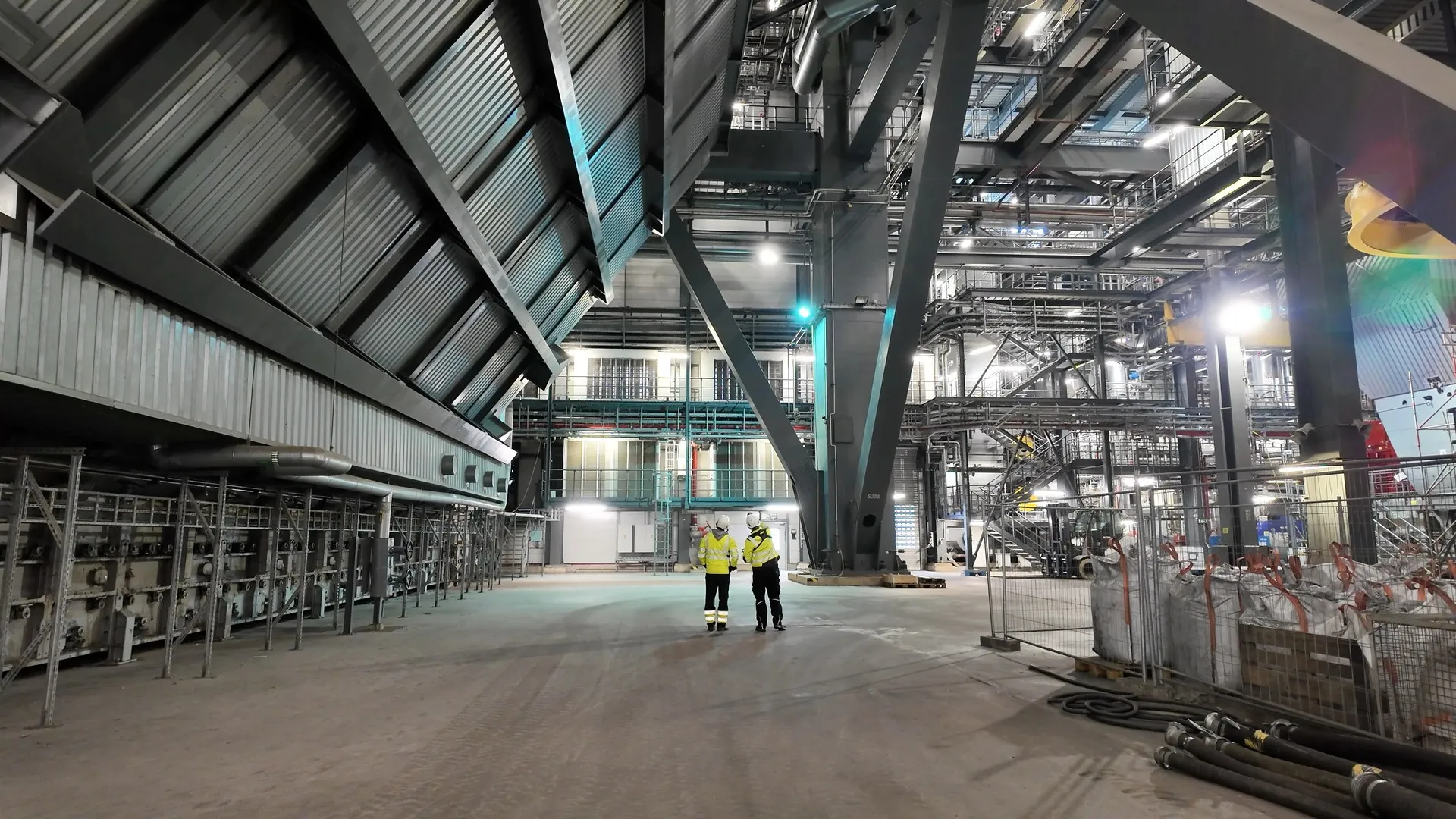
Christian Engelke in a power plant boiler house – documenting what used to require scaffolding.
In 2017 it started with a simple question: why should people enter hazardous areas of industrial facilities when there are better ways?
Today we operate as a practised team of pilots (Piloten), technicians (Techniker) and deployment planners (Einsatzplaner). Every mission runs with two people: pilot and assistant, with clearly defined roles and coordinated execution. No improvisation on site.
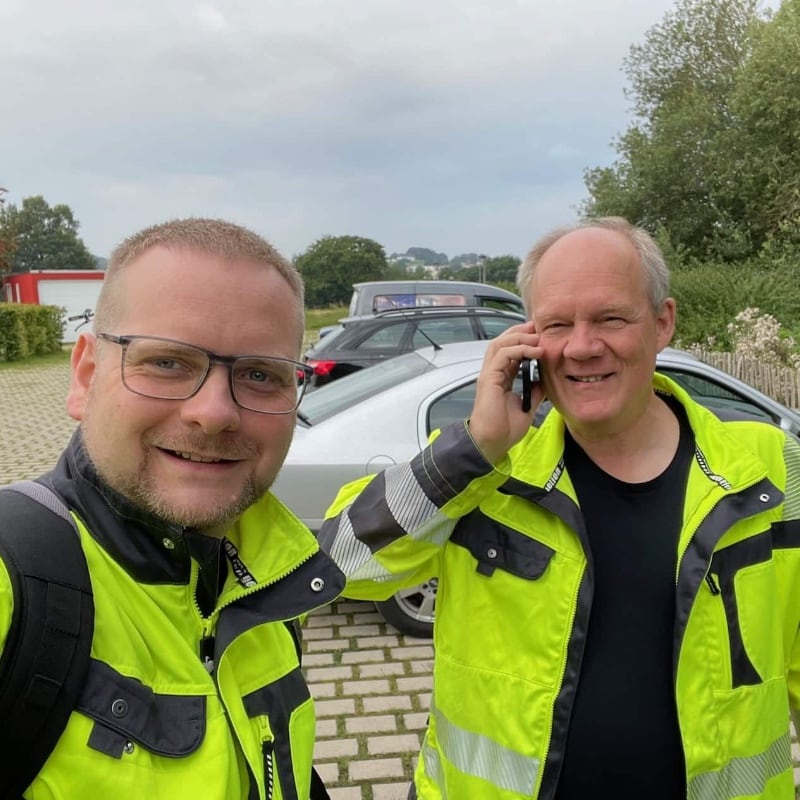
Christian Engelke and Dipl.-Ing. Karsten Lehrke – your direct contacts for industrial drone inspection projects.
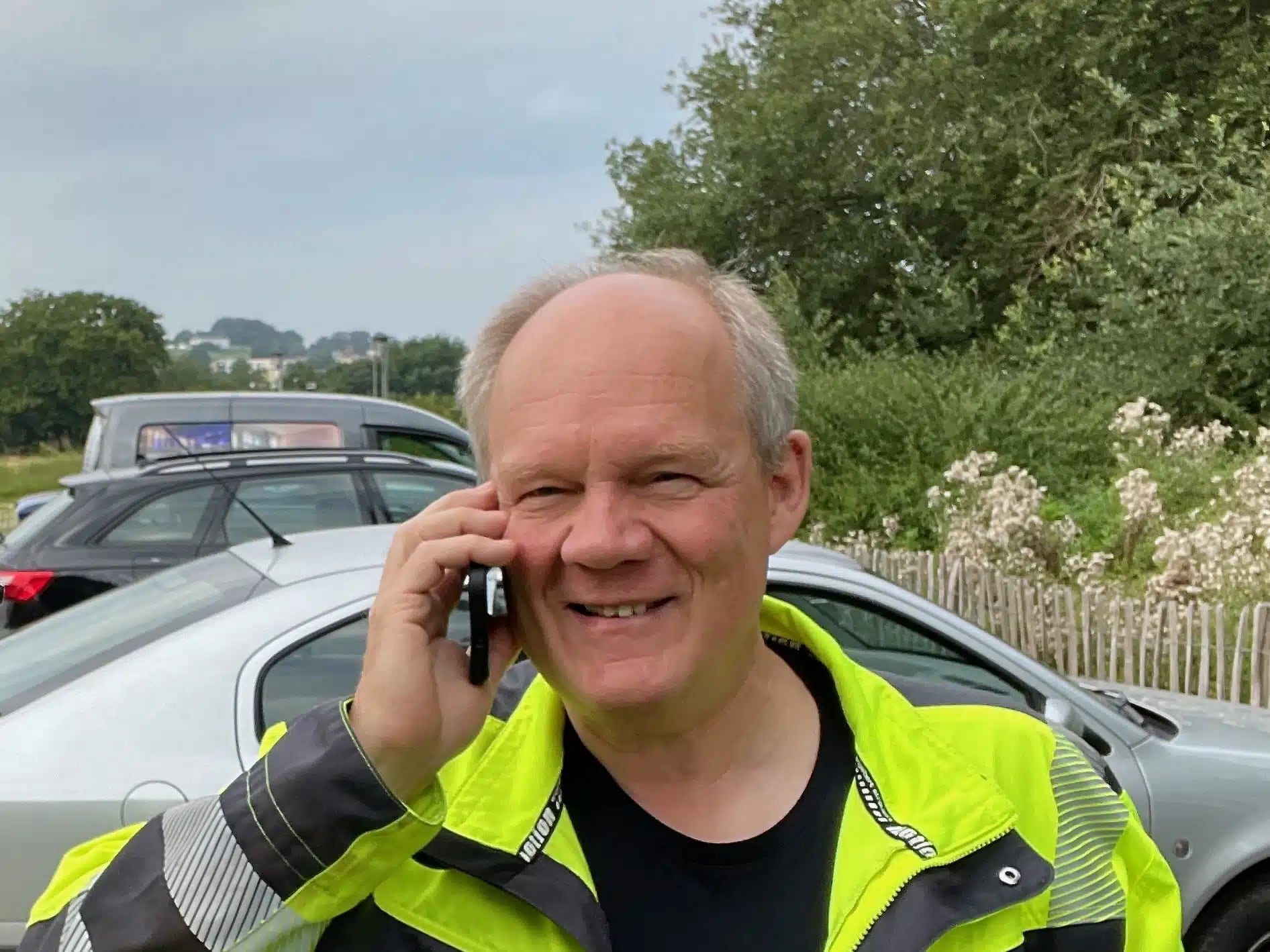
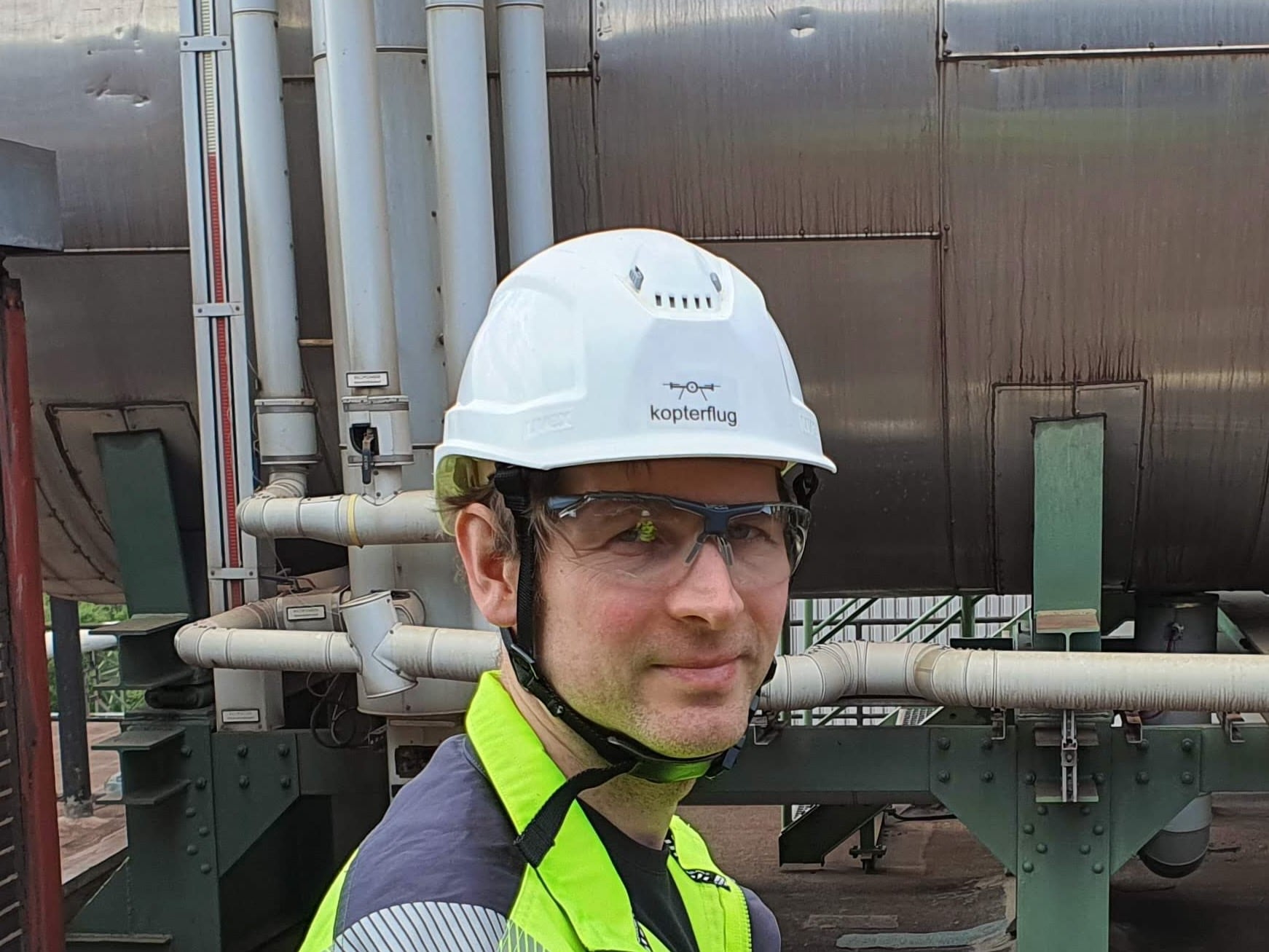
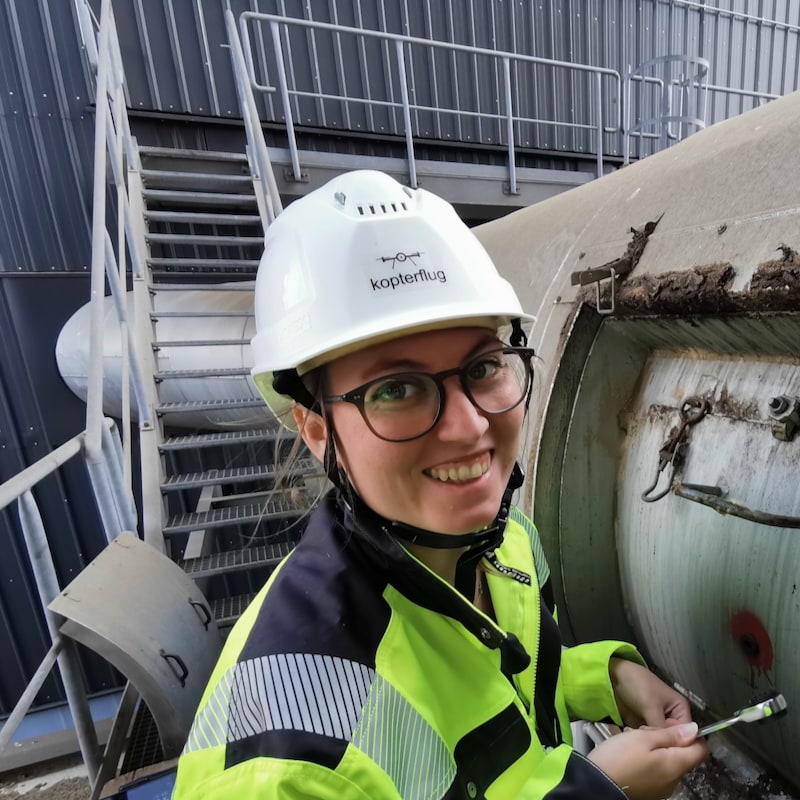
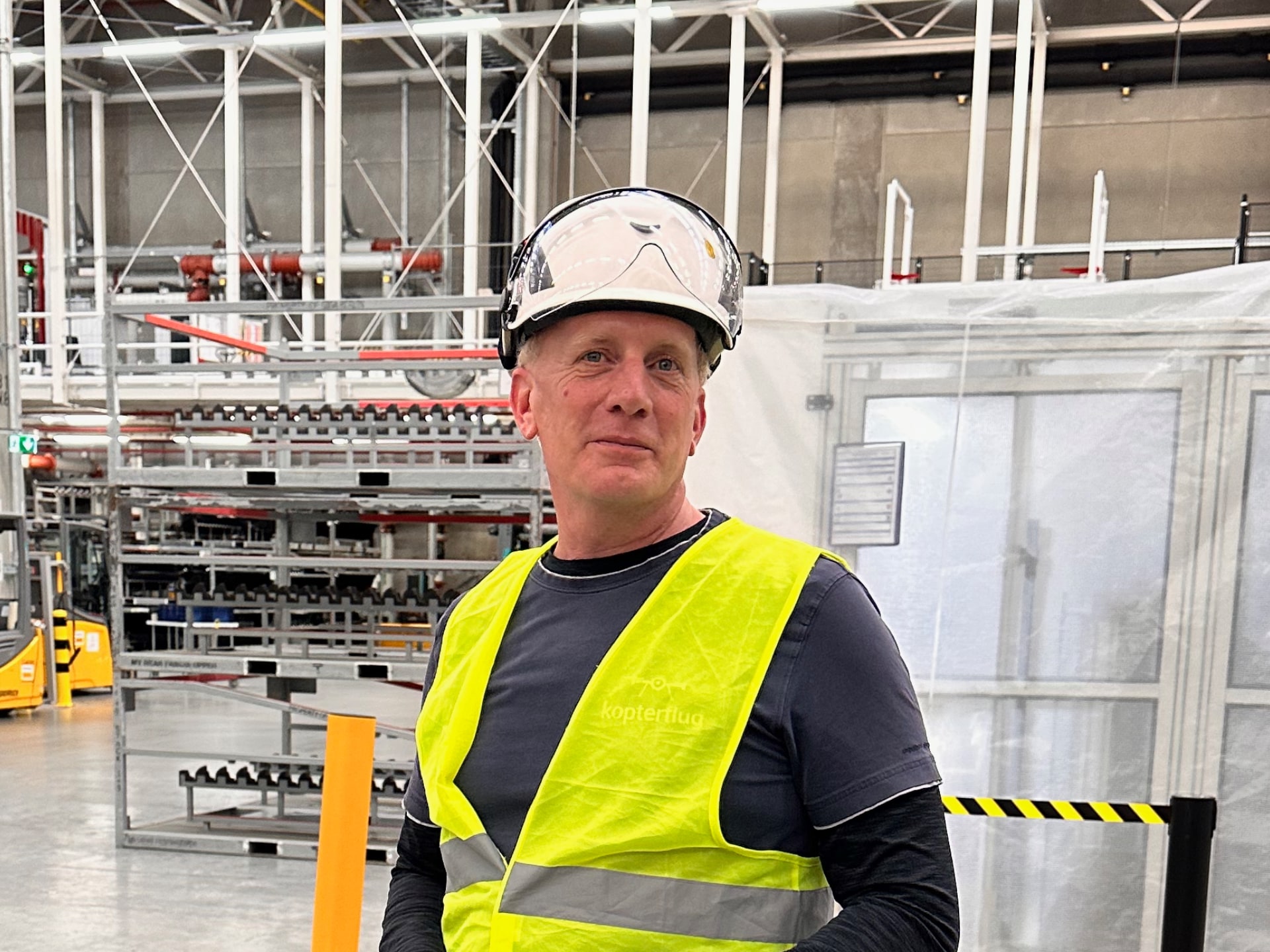
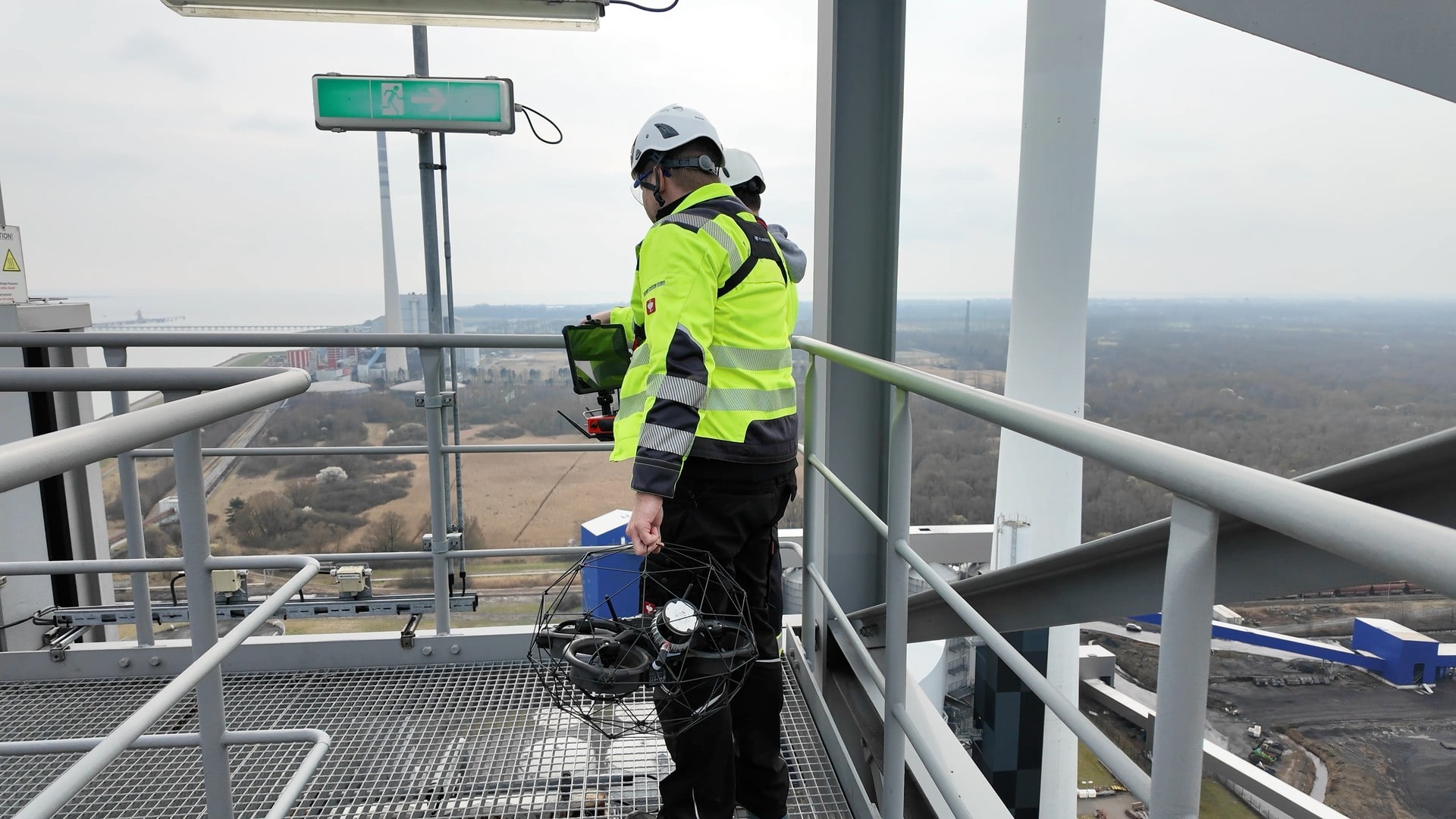
Kopterflug team on a boiler house roof – every deployment with two specialists, pilot and assistant.
What We Actually Find
What we regularly encounter: corrosion damage (Korrosionsschäden) at weld seams, cracks (Risse) in concrete or steel, sediment deposits (Sedimentablagerungen) at tank floors – findings that have been growing unseen since the last inspection. Not because they were small, but because they were simply invisible without entry.
Typical findings across our deployments:
- Corrosion at weld seams (Korrosion an Schweißnähten) – especially in tanks and boilers exposed to process media
- Pitting and surface corrosion (Lochfraß) – on tank floors and internal surfaces
- Cracks in concrete and steel (Risse in Beton oder Stahl) – in chimneys, silos and vessel walls
- Sediment and deposit buildup (Ablagerungen) – at tank floors, silo cones and pipe sections
- Coating damage (Beschichtungsschäden) – detachment, blistering, undercut corrosion
- Thermal anomalies (Thermische Anomalien) – hotspots, leaks and refractory wear detected by thermography
- Geometric deformation (Verformung) – measured via LiDAR point cloud, comparable across inspection cycles
Our Role in the Inspection Process
We do not replace certified inspectors (Gutachter). TÜV, DEKRA or authorised inspectors (zugelassene Sachverständige) assess the condition of your asset. We document it: completely, traceably, technically usable.
In practice this means: we fly the inspection, capture 4K video, thermography and LiDAR data, and deliver a structured findings report (Befundbericht) with positional reference – not raw, uncontextualised video. The certified inspector then works from that data foundation.
This separation of roles is intentional. It keeps our data objective and gives inspectors exactly the information they need to make their assessment – without having to enter the space themselves.
Our Tool: The ELIOS 3
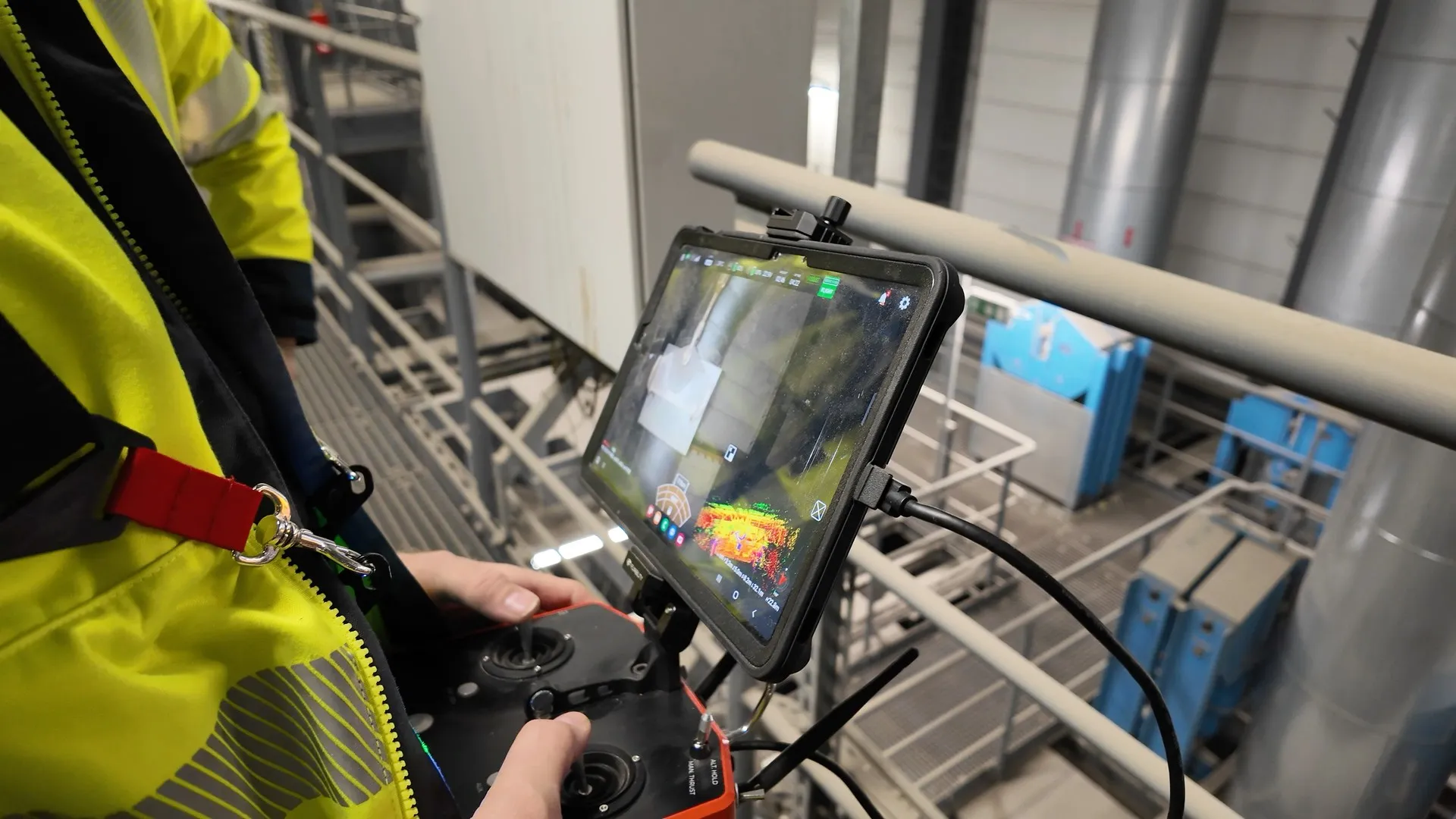
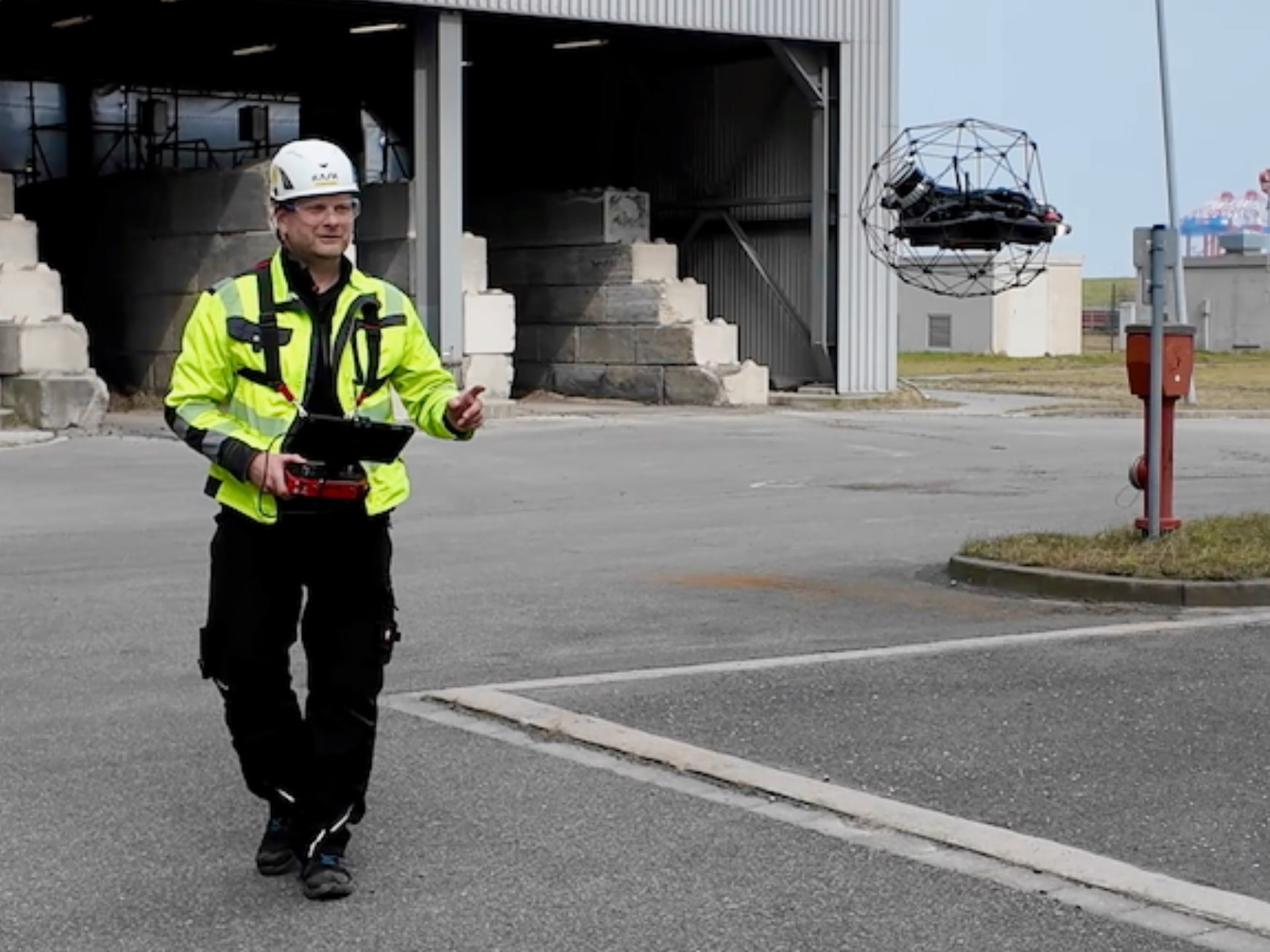
Operating the Flyability ELIOS 3 (Drohne) – GPS-free navigation inside tanks, boilers and confined spaces.
Our primary system for interior and confined space inspections is the Flyability ELIOS 3 – a GPS-free, collision-safe indoor drone built specifically for industrial confined spaces.
- GPS-free SLAM navigation: Stable flights in tanks, boilers (Kessel), silos and shafts – even without light or GPS signal
- Collision-safe protective cage: Wall contact without crash – practical minimum entry from approx. DN 600
- 4K + Thermography + LiDAR: Full sensor suite in a single flight – visual findings, thermal anomalies and 3D geometry
- Zero human entry: No confined space entry (Absturzsicherung), no rescue chain (Rettungskette), no personal risk
Full technical specifications and capabilities of the ELIOS 3 →
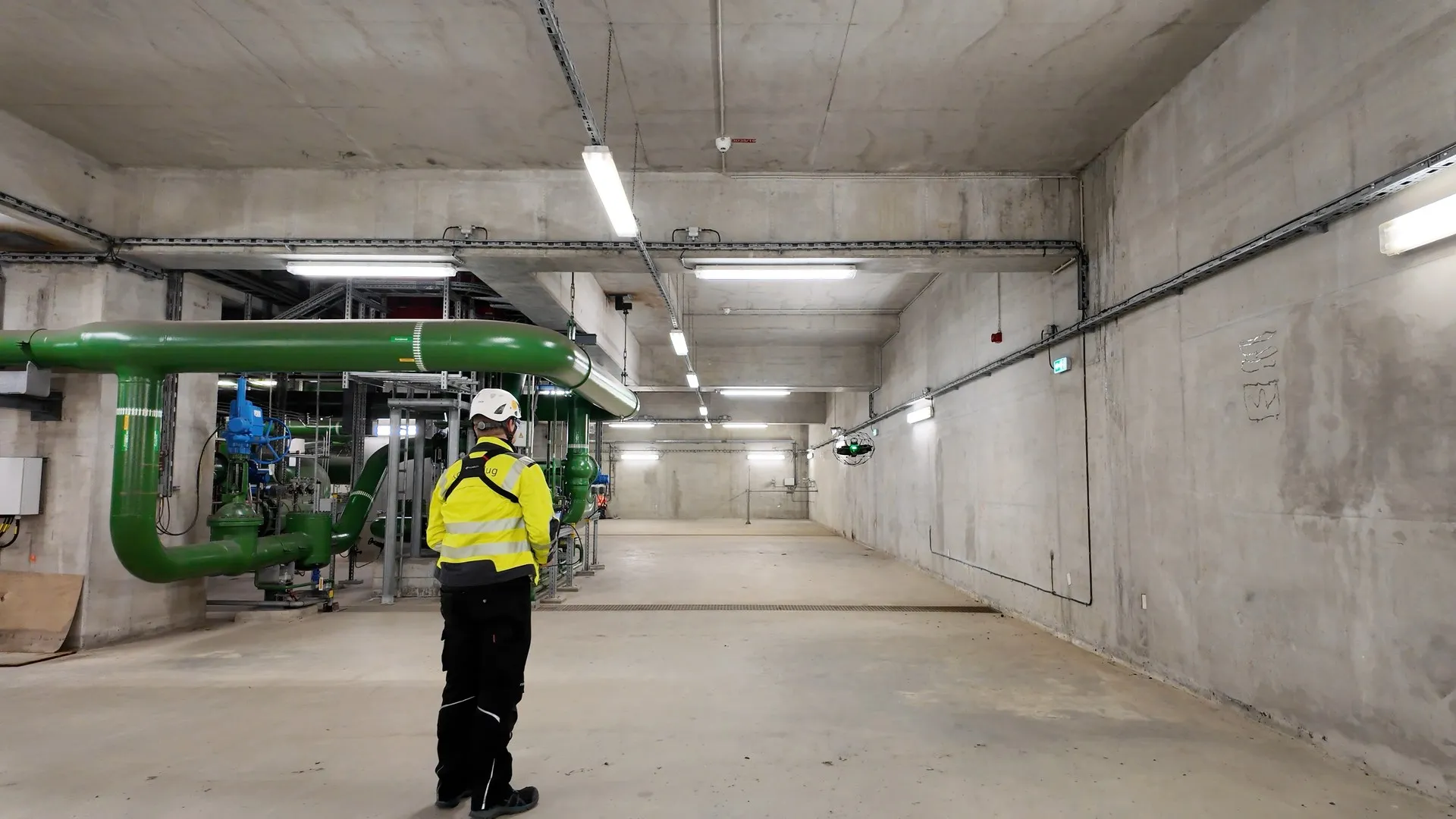
LiDAR mapping (Vermessung) with the ELIOS 3 – centimeter-accurate 3D point clouds for geometry and digital twins.
A Selection of Our Customers and Partners
Since 2017, Kopterflug has worked with some of Germany’s and Europe’s leading industrial operators – from power generation and petrochemicals to automotive, logistics and food production.









Frequently Asked Questions
What is Kopterflug?
Inspectomatic GmbH is a German company based in Bremen, founded in 2017. We specialise in remote inspections of industrial facilities using advanced drones – primarily the Flyability ELIOS 3 – in tanks, boilers, silos, chimneys and other hard-to-reach confined spaces.
What does “Drohnenfirma” mean?
Drohnenfirma is the German word for “drone company”. In the industry, Drohnendienstleister (drone service provider) and Drohnenservice (drone service) are also used. Kopterflug is not a general-purpose drone company – we specialise exclusively in industrial inspections of confined and hazardous spaces.
Which facilities does Kopterflug inspect?
Our core competence covers: tanks (storage and process tanks in chemical, petrochemical and water supply), boilers (steam boilers and pressure vessels per BetrSichV), silos (cement, chemicals, agriculture), chimneys (industrial chimneys and flue gas ducts), and confined spaces in general – anywhere human entry is dangerous or impractical.
What are “Confined Spaces” and “Personeneinstieg”?
Confined Spaces are enclosed, hard-to-access areas with limited entry. Personeneinstieg (literally: “person entry”) is the German term for physically entering such a space. This requires respiratory protection, a rescue chain and special safety procedures under DGUV (German statutory accident insurance regulations). With drones, this can often be avoided entirely.
What does Kopterflug deliver – and what don’t you do?
We deliver: precise condition data in the form of 4K video and images, thermographic analysis, LiDAR 3D point clouds and structured findings lists with positional reference. We do not replace certified inspectors (TÜV, DEKRA etc.) – but we provide the documentation basis they use for their assessment.
Does Kopterflug only operate in Germany?
Primarily in Germany, but we have completed deployments across Europe. We go where the facility is – contact us to clarify logistics and possibilities for your location.
What does an inspection cost?
The cost depends on facility type, size, access conditions, sensor configuration and travel distance. We don’t publish standard prices – contact us with a brief description of your facility and we’ll get back to you promptly with an assessment.
What are TÜV and DEKRA?
TÜV (Technischer Überwachungsverein) and DEKRA are German organisations for technical inspection and certification – comparable to notified bodies or accredited inspection agencies in other countries. For pressure vessels and industrial facilities in Germany, they are zugelassene Überwachungsstellen (approved inspection bodies) that certify and document the safety condition of installations. Kopterflug’s data serves as the foundation for their assessments.
What is BetrSichV?
The Betriebssicherheitsverordnung (BetrSichV) is the German Industrial Safety Regulation governing the inspection and maintenance of work equipment and installations – including pressure vessels and boilers. Inspections conducted with Kopterflug’s data support BetrSichV documentation and findings lists for certified inspectors.
Does Kopterflug sell drones?
Kopterflug is primarily an inspection service provider – not a dealer. We can advise on equipment selection and configuration and connect you with suitable supply sources, but our core business is conducting the inspections for you.
Get in Touch
Have a specific asset in mind? Want to know if drone inspection is the right approach for your situation? Fill out the form and we will respond within 24 hours.