
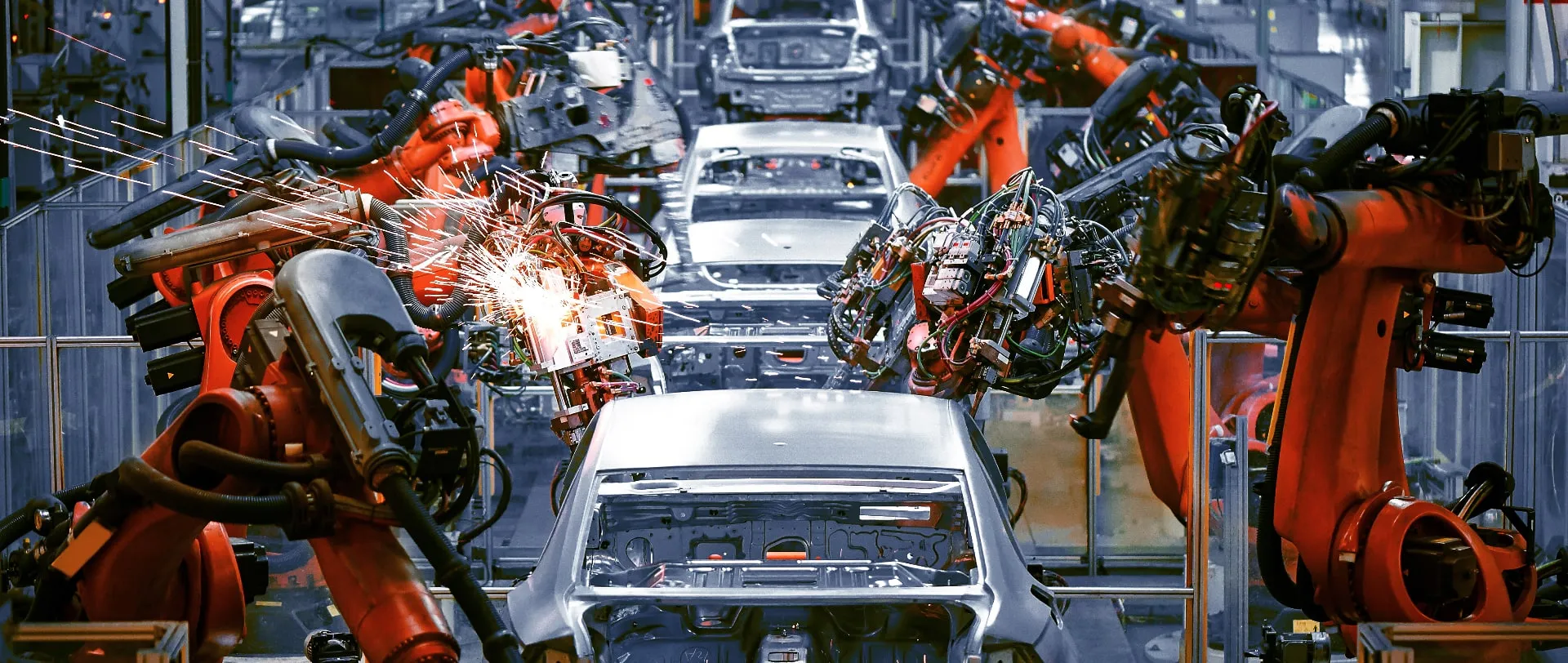
Drone Inspection Automotive – Without Production Downtime, Without Scaffolding
Automotive production halls are critical infrastructure. Fire suppression systems, smoke extraction and building services must be inspected regularly – without stopping the production line. We fly during live operations.
- Smoke extractors, sprinkler systems, pipework – documented during live production
- Sprinkler tanks inspected from the inside without draining – fire protection stays active
- 4K + Thermography + LiDAR in a single deployment
What We Inspect in Automotive Plants
Automotive production halls have high demands on fire protection, building services and infrastructure. We inspect all safety-relevant systems – without operational disruption:


Services at a Glance
- Fire protection inspection without downtime: Smoke extractors, sprinkler heads, sprinkler tanks – fully documented during live production
- Building services & infrastructure: Pipework, hall structure, roof construction – detect corrosion, leaks, structural damage early
- 4K + Thermography + LiDAR: Visual documentation, thermography for leaks and hotspots, 3D survey for digital building documentation
- Audit-proof inspection report: Structured documentation as evidence for fire safety officer, expert assessors and insurers
Automotive Plants: Inspection Without Production Shutdown
Production halls in the automotive industry run around the clock – downtime costs quickly run to five-figure sums per hour. At the same time, fire suppression systems, smoke extractors and building services must be regularly checked. With conventional methods that means: aerial work platforms, scaffolding, production interruptions.
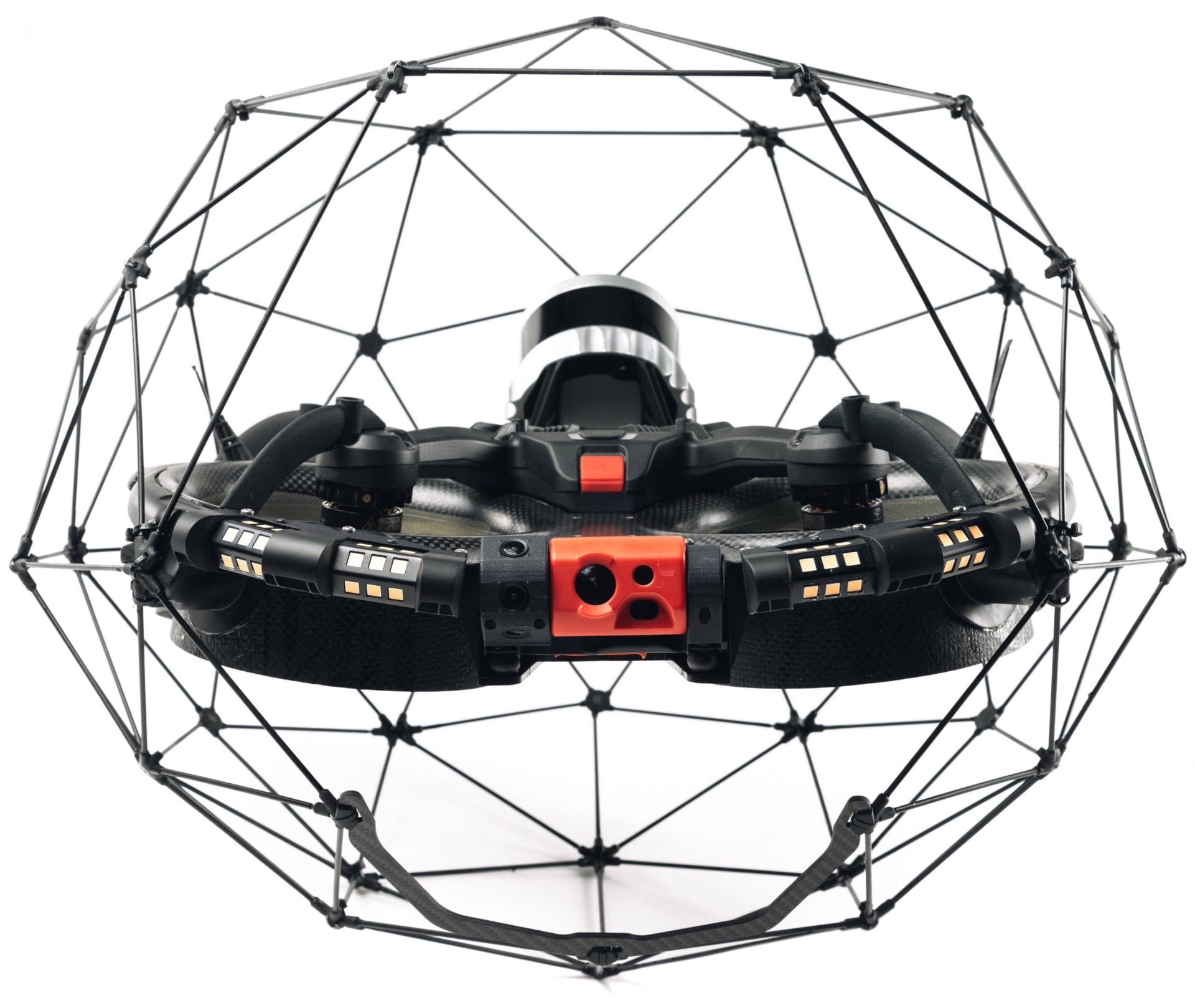
With the Flyability ELIOS 3 we inspect smoke extractors, sprinkler heads, pipework and hall structures during live operation. The drone flies silently through the hall, documents every area in 4K and delivers complete evidence for your inspection records – without a single production interruption.
Sprinkler tanks we inspect with the ELIOS 3 from the inside, without draining and without taking fire protection out of service. External areas – facades, roof plant, external pipework – we capture with the DJI Matrice 30T from a safe distance using 200× zoom and thermography.
What We Document in Automotive Halls
We fly systematically through your production hall and document all safety-relevant systems. Technical assessment is carried out by your fire safety officers and expert assessors – we deliver the data:
Smoke Extractors & RWA Systems
What we inspect: 4K documentation of smoke extraction dampers, opening mechanisms, duct connections and brackets. Visual inspection for corrosion, mechanical damage and foreign-body blockages.
Why it matters: Failed smoke extractors in a fire can cost lives and are a legally mandated inspection obligation. Complete photographic documentation is evidence for your fire safety officer and insurer.
How we do it: The ELIOS 3 flies at hall heights up to 20+ m and documents every smoke extractor up close – without aerial platform, without production downtime.
Sprinkler Heads & Distribution Pipework
What we inspect: Condition of individual sprinkler heads for corrosion, mechanical damage and blockages. Visual inspection of distribution lines and brackets for coating damage and deformation.
Why it matters: Defective sprinkler heads fail to activate in a fire or react too slowly – with potentially fatal consequences. Regular documentation is part of the fire protection inspection obligation under DIN 14489 / VdS.
How we do it: The ELIOS 3 flies systematically row by row through the hall – every sprinkler head individually documented. Complete coverage of large hall areas in a few hours, without interrupting operations.
Sprinkler Tanks & Fire Water Vessels
What we inspect: Internal inspection for wall and floor corrosion, deposits, structural damage and condition of fittings (dip tubes, dipsticks, float balls). Documentation without tank draining.
Why it matters: Corrosion inside the sprinkler tank can contaminate the extinguishing agent and damage pipework. Inspection without draining saves weeks of downtime – fire protection remains fully active during inspection.
Pipework & Supply Infrastructure
What we inspect: External corrosion on media, compressed air and cooling water lines, condition of brackets and hangers, flanged joints for leaks (thermography), coating damage.
Why it matters: Defective pipework in production halls can lead to production failures, contamination and property damage. Thermographic early diagnosis detects leaks before they become visible.
You receive a detailed inspection report with 4K photographic documentation of all inspected systems, thermography evaluation and a structured findings report for your fire safety officer. Audit-proof archived – as evidence for insurers, authorities and ZÜS (notified body).
The Challenge in Automotive Plants
Production halls run round the clock – conventional inspection methods force exactly what no operator wants: downtime.
- Aerial work platforms block production: Hall heights of 20+ m are conventionally only accessible with aerial platforms. These block production areas, interrupt material flow and cost on average several hours of production time.
- Sprinkler tanks: draining = fire protection out of service: Conventional internal inspection requires draining. While the tank is empty, fire protection is unavailable – an unacceptable risk in live production environments.
- Incomplete documentation with manual inspection: Manual visual inspection of sprinkler heads, smoke extractors and pipework is selective and not reproducible. For ZÜS, insurers and authorities, however, complete evidence is mandatory.
- Production disruption through access equipment: Scaffolding and aerial platforms block not just floor space but entire production sections. Conveyor systems, robot lines and traffic routes are disrupted.
- High coordination effort in the running plant: Cordons, safety releases, coordination with production and logistics – every deployment is complex and ties up internal resources.
- Inspection only possible outside production hours: Many inspections are carried out in night shifts or shutdowns – increasing costs and extending maintenance windows.
- Large halls = limited visibility: Hall structures, beams, pipework and cable trays at heights of 20+ m are often not fully visible. Problems remain undetected for a long time.
Typical Deployment Scenarios in Automotive Plants
From the press shop to the paint shop – we inspect all areas of an automotive plant:
| Area | Sensors | Typical Findings |
|---|---|---|
| Production Halls & Press Shops | Visual, Thermography | Corroded smoke extraction dampers, damaged sprinkler heads, corrosion on steel structure, leaks on media pipes |
| Paint Shops & Clean Rooms | Visual, Thermography | Deposits in extraction ducts, corrosion in humid environment, functionality of fire protection dampers |
| Sprinkler Tanks & Fire Suppression | Visual, Thermography | Internal corrosion, deposits, damage to dip tube and fittings, leaks |
| Drying Ovens & Curing Ovens | Visual, Thermography, LiDAR | Deposits on heating elements, damaged insulation, conveyor wear, hotspots in burner zone |
| Assembly Lines & Underfloor Areas | Visual | Foreign objects in conveyors, contamination in robot cells, mechanical defects |
| Facades & External Plant | Visual, Thermography | Facade corrosion, roof damage, CUI, leaks on external lines |
| Hall Roofs, Smoke Extractors & Structure | Visual, Thermography | Defective RWA dampers, corrosion on steel structure, roof leaks, heat losses, moisture damage |
| Sprinkler Lines & Ceiling Networks | Visual | Pipeline corrosion, damaged or covered sprinkler heads, incorrect spacing, deposits |
| Extraction & Exhaust Ducts | Visual, Thermography | Deposits (brake dust, grinding residues), corrosion, mechanical wear |
| Media Bridges & Supply Lines | Visual, Thermography | Leaks (compressed air, water), CUI, heat losses, loose brackets |
| Underfloor Ducts & Service Shafts | Visual, LiDAR | Water and oil deposits, corrosion, damaged lines, foreign objects |
| High-Bay Warehouse & Logistics Areas | Visual | Damaged rack uprights, deformation, corrosion on load-bearing structures |
Your Advantages



How the Automotive Inspection Works
Step 01: Needs Assessment
We discuss which systems need to be inspected – fire protection, building services, sprinkler tanks – and which inspection records you require.
Step 02: Coordination with Your Plant
Coordination with your safety and maintenance team: access areas, shift times, safety briefings. No complex confined space entry concept required.
Step 03: Inspection During Production
Our two-person team flies systematically through your hall – while production runs. Live feed for your fire safety officer or expert assessor on site.
Step 04: Inspection Report & Handover
Structured report with 4K photographic documentation of all findings, thermography evaluation and action recommendations – audit-proof archived.
Standards & Compliance
Our automotive inspections support compliance with all relevant fire protection and inspection obligations:
- DIN 14489 / VdS CEA 4001: Inspection obligations for sprinkler systems. Our 4K photographic documentation provides audit-proof evidence for recurring inspections.
- BetrSichV (German Industrial Safety Regulation): Inspection obligations for work equipment and monitored installations. Our documentation is suitable as a data basis for expert assessors.
- DGUV / Occupational Safety: No human entry into confined spaces, no fall risk at hall heights. Drone deployment can avoid human entry and thus much of the DGUV confined space logistics.
- Plant Release & Safety Concept: Coordination with your HSE team, hazard assessment and clear operating limits before every deployment.
Our Team
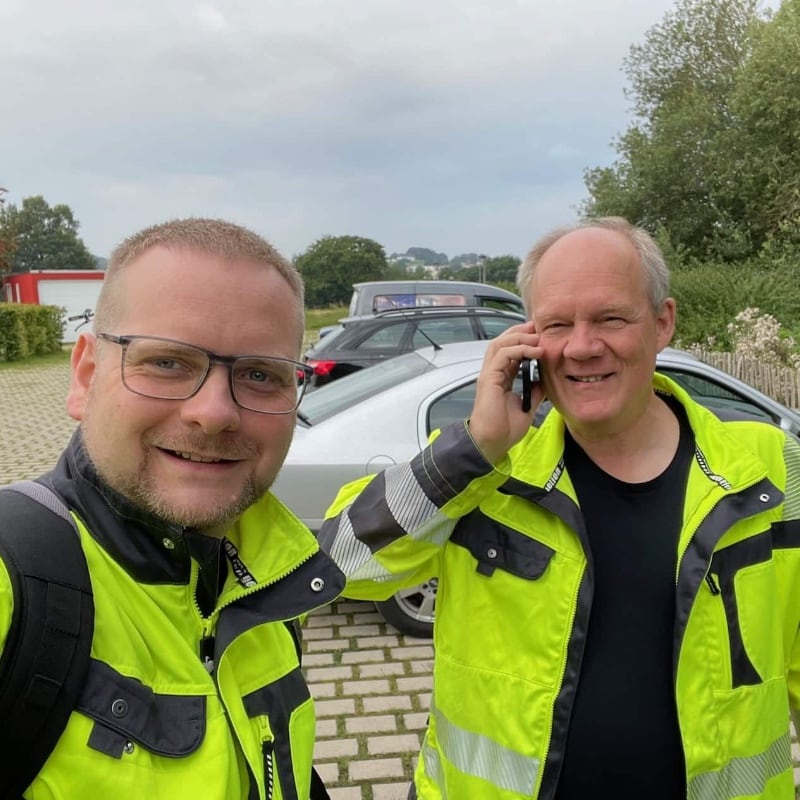
Christian Engelke and Dipl.-Ing. Karsten Lehrke – your contacts for automotive drone inspection.
Since 2017 we have been carrying out drone inspections in industrial and production installations – with experience from numerous inspections in automotive plants, power stations and process industries. We know the special requirements for safety, coordination and documentation in live production environments.
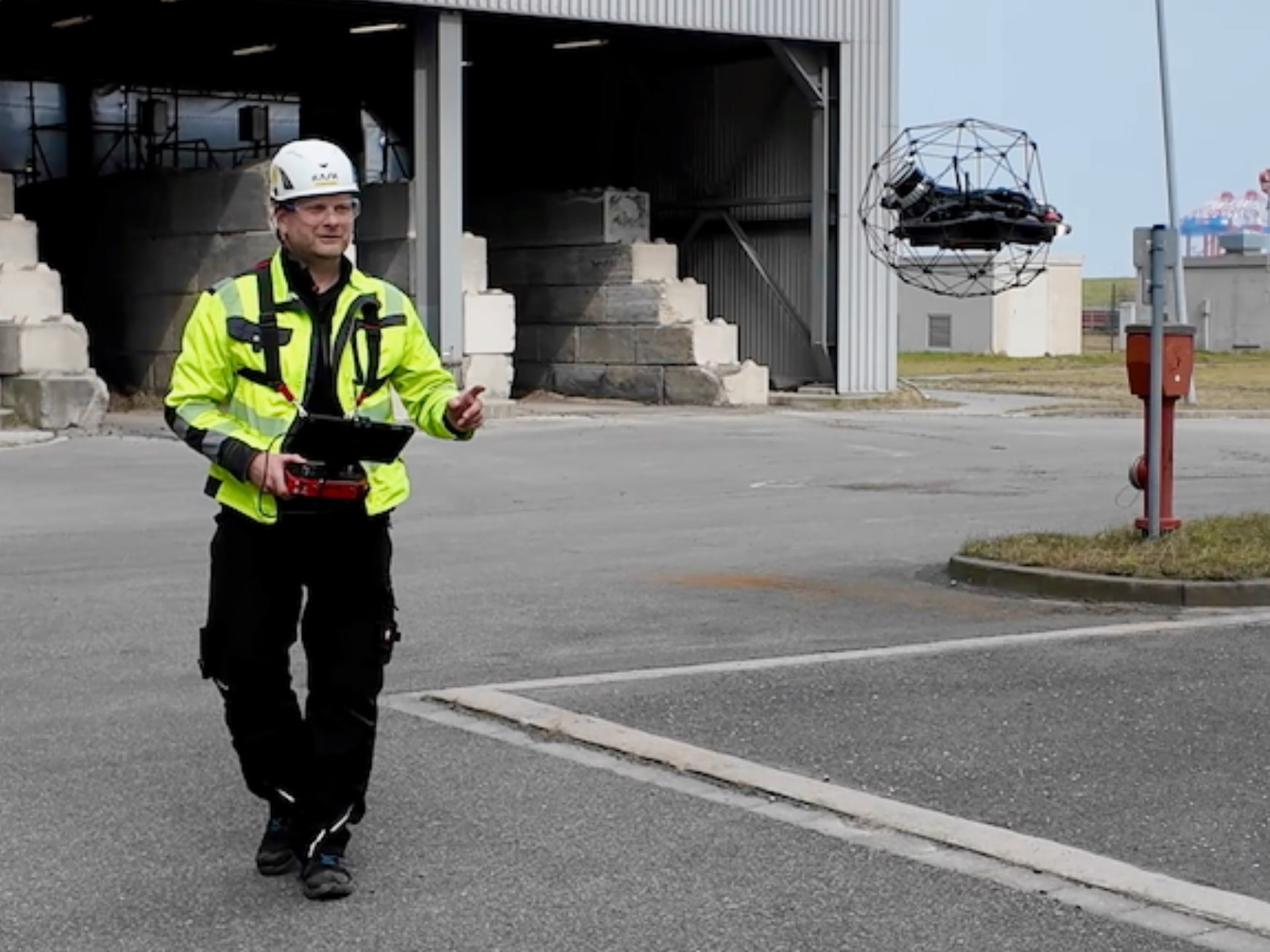 Christian
Founder & Drone Pilot
Christian
Founder & Drone Pilot
 Karsten
Project Manager
Karsten
Project Manager
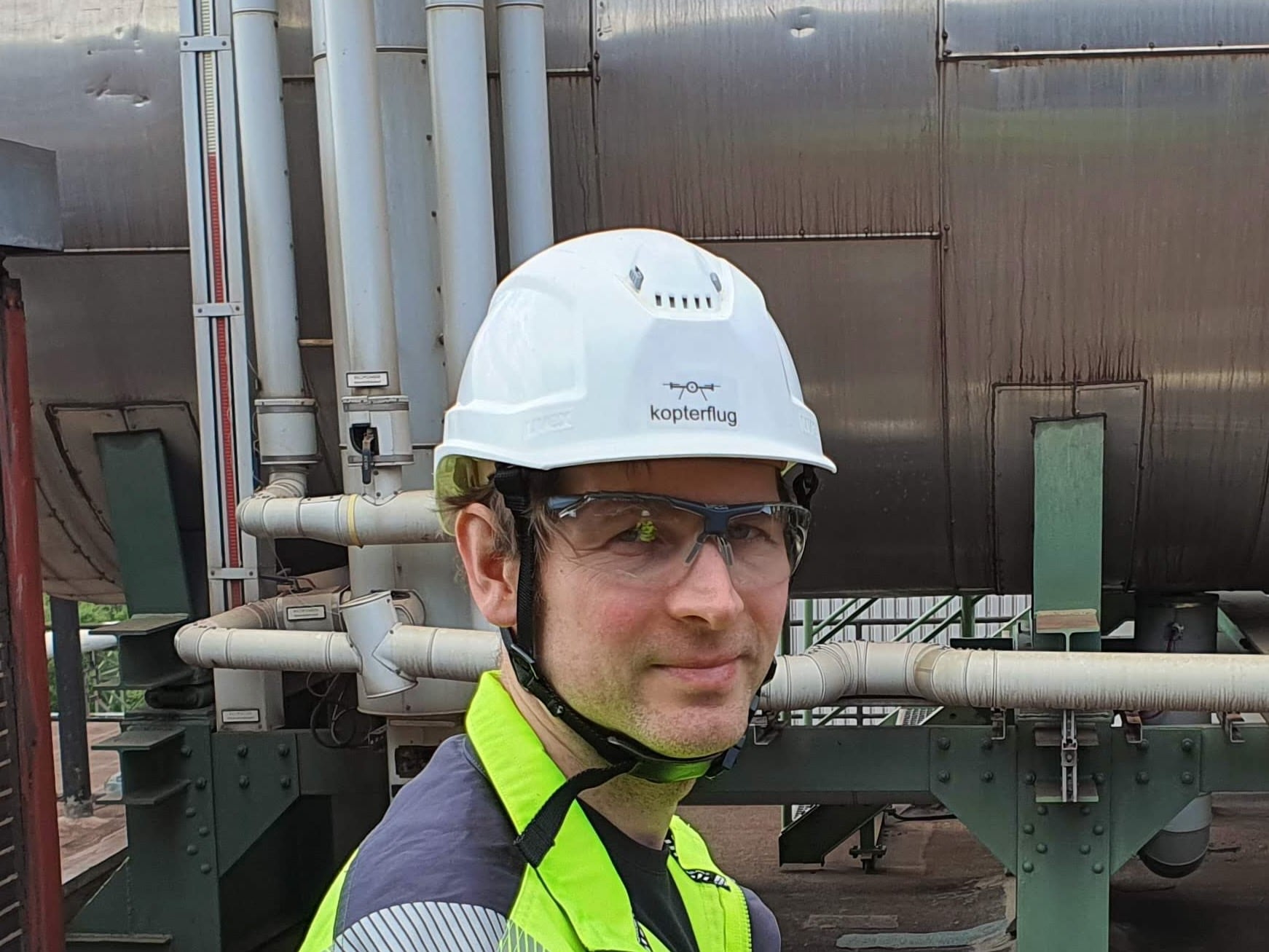 Philipp
Founder, Mission Planning & Logistics
Philipp
Founder, Mission Planning & Logistics
 Juliana
Drone Pilot
Juliana
Drone Pilot
 Stephan
Mission Planning & Logistics
Stephan
Mission Planning & Logistics
Related Services
- High-Bay Warehouse Inspection – High-bay warehouses and storage structures in automotive logistics without aerial lift.
- Infrastructure Inspection – Production halls, structures and industrial buildings – condition assessment by drone.
- Boiler Inspection – Steam boilers and drying ovens in paint shops – inspection without operational disruption.
- LiDAR Survey – 3D as-built documentation for conversion and expansion planning.
- Condition Documentation – 4K video, findings list and PDF report – standards-compliant documentation for insurer and TÜV.
- Costs & Effort – Inspection without production downtime – why drones are the more economical solution.
Frequently Asked Questions
Can a drone inspection be carried out in an automotive plant without stopping production?
Yes, indoor flights in halls are generally not subject to standard UAS airspace regulations in the EU. In practice that doesn't mean simply starting to fly: the key factors are operator authorisation, hazard assessment, clear operating limits and a coordinated safety concept with the plant, HSE and maintenance teams.
What permits are required for drone flight in an automotive production hall?
For purely indoor deployments, no classic aviation permit-to-fly is usually required. Typically necessary are: plant authorisation, hazard assessment, possibly approval from occupational safety and fire protection, coordinated restricted or protected zones and an operational deployment plan. As soon as a deployment takes place partly or fully outdoors, the usual UAS rules apply with operator registration and further requirements depending on the scenario.
Does the automotive plant need to be shut down for the drone inspection?
No – that is the central advantage of automotive drone inspection. Smoke extractors, sprinkler heads and pipework are documented during live operation. Sprinkler tanks can also be inspected without draining – fire protection remains fully active. More on sprinkler tank inspection without draining.
How long does an automotive drone inspection take in a production plant?
Duration depends on hall size, systems to be documented and accessibility. Typical deployments take between half a day and two days – for a fire protection survey with smoke extractors and sprinkler heads often shorter. We create a deployment plan in advance and coordinate shift times and flight windows with your plant.
What damage does the drone detect in automotive plants?
Typical findings: corrosion on smoke extraction dampers and sprinkler heads, deposits and mechanical damage to fire suppression systems, leaks and CUI (corrosion under insulation) on pipework via thermography, and structural damage to the hall framework. Technical assessment is carried out by your expert assessors – we deliver the complete 4K documentation.
Does drone inspection in automotive plants completely replace scaffolding or aerial work platforms?
Yes – for inspection of hall heights up to 20+ m. The drone fully replaces scaffolding and aerial platforms as an access means. It does not replace the expert assessor but provides a significantly better data basis than a manual visual inspection from floor level. Fire safety officers, ZÜS or insurance assessors can use the 4K photographic documentation directly for their evaluation.
Is drone inspection in automotive plants compatible with DGUV and BetrSichV?
Yes. No human entry into confined spaces, no fall risk at hall heights of 20+ m – drone deployment can avoid human entry and thus much of the DGUV confined space logistics. The BetrSichV (German Industrial Safety Regulation) defines inspection obligations for work equipment and monitored installations; our 4K documentation is suitable as a data basis for expert assessors. We document sprinkler systems in accordance with DIN 14489 / VdS CEA 4001.
What data do we receive after a drone inspection of our automotive plant?
You receive a structured inspection report with 4K photographic documentation of all inspected systems, thermography evaluation for leaks and hotspots, georeferenced findings map (if a hall plan is available), optional LiDAR 3D model and action recommendations. All data is audit-proof archived – as evidence for fire safety officers, ZÜS, insurers and authorities.
What happens if the drone collides with a robot, AGV or component?
The risk can be significantly reduced, but never to zero. In production halls it is managed primarily through flight corridors, temporarily secured zones, low flight speed, visual line-of-sight operation, protected drone systems and careful deployment planning. Particularly critical are dynamic areas with robots, automated guided vehicles, cranes, air currents and reflective structures.
Which drone types are recommended for safe indoor operation in production halls?
For production halls, propeller-protected indoor drones (cage-type) are generally the best choice. They are more robust in light contact situations, can be guided closer to structures and are better suited for dark, GPS-denied environments than conventional open camera drones.
Can a drone check whether smoke extractors are functional?
Partly yes. A drone is very well suited to documenting condition, accessibility, contamination, obvious damage, obstructions or misalignment. It does not automatically replace a complete functional test of the mechanism – for that, depending on the system, a targeted trigger test, control system check or technical maintenance may be required. The drone is primarily a very efficient visual inspection tool.
How does a drone verify whether sprinkler heads are clear, corrosion-free and correctly aligned?
The drone flies systematically through the relevant zones and delivers close-up images of sprinkler heads and their surroundings. This allows checking whether sprinklers are covered, contaminated, corroded or obviously misaligned. For reliable results, sufficient proximity, stable lighting and a documented image workflow are needed. Dismantling or internal functional testing is not replaced by the drone.
Can the drone detect leaks or condensation on pipework?
Yes, often – especially where leaks are visible, for example through drip formation, moisture traces, rust streaks, efflorescence, dirt adhesion or shiny surfaces. Very small leaks are not always detectable with certainty. Thermography or a supplementary on-site check can be useful here, depending on medium, temperature difference and surface accessibility.
What camera resolution and lighting is needed to reliably detect damage at 15–25 m hall height?
Resolution alone is not decisive. More important are short range, sufficient illumination, stable flight attitude and a sensor that delivers usable images even in low light. In practice: the 15–25 m hall height is not the problem, but whether the drone can get close enough to the target object. For small defects, good close-up vision with strong lighting is more important than more pixels.
Is thermography used for inspection of building services and pipework?
Yes, thermography can be useful – but targeted, not blanket. It helps above all with notable temperature patterns, for example heat losses, unusually warm components, missing insulation or moisture indications. It is not the best method for every type of corrosion or damage; it often supplements rather than replaces visual inspection.
How close does the drone need to fly to components to deliver good results?
As close as is safe. For reliable assessments, a drone must usually get significantly closer than can be achieved from the hall floor – often into the close-up rather than long-range zone. The exact distance depends on object size, lighting, camera angle and safety margins. With protected indoor drones, controlled close-up flights near ceilings and fittings are typically quite practicable.
What happens if the drone disrupts production – through noise, shadow or triggering a safety device?
That is why deployment is coordinated in advance. Typical measures include clear abort criteria, defined no-fly zones, a contact person in the plant and the ability to immediately end the flight. Sensitive areas are either excluded, flown at off-peak times or only inspected after separate authorisation. The goal is for the inspection to affect production as little as possible.
Do I receive results live or only as a report afterwards?
Both are possible. As a rule, the client can watch live on a monitor while all relevant image data is simultaneously recorded. A clean report with marked findings, screenshots and context follows after evaluation. This gives immediate transparency on site while still providing reliable documentation afterwards.
In what format do I receive the inspection results?
Typically: video, individual images, marked findings and a structured report. In production halls there are usually no GPS positions – localisation therefore uses hall axes, grids, field designations, equipment numbers or other reference points in the plant. Orthophoto-like overviews are possible depending on the object, but not meaningful or necessary in every production hall.
Do drone recordings satisfy the requirements of insurers, fire protection authorities and expert assessors?
Often yes, as reliable visual documentation – especially when recordings are cleanly localised, dated and documented in a traceable way. They do not automatically replace every formal inspection, maintenance or expert assessor service. In many cases drone data is a very good basis for maintenance, fire protection documentation and follow-up of findings.
Can drones also reach hard-to-access spots behind presses or above paint booths?
Yes, that is exactly where indoor drones demonstrate their strengths – as long as sufficient safety clearance and a safe approach are possible. Particularly suitable are hard-to-see areas at height, above fittings or in technically dense hall zones. Limits exist with extremely tight clearances, very strong air movement, hot areas or where the operator does not grant flight clearance for safety reasons.
Does Kopterflug personnel need to be on site during the drone flight?
Our team must be on site; an indoor deployment does not run unattended. Whether the plant otherwise continues normally depends on the area. In many zones production can continue; in sensitive areas, local coordination, brief safety measures or defined flight windows are required.
What happens in the event of a technical defect – is there an emergency concept?
A professional deployment requires an emergency concept. This typically includes pre-deployment checks, defined abort rules, safe take-off and landing zones, a clear battery strategy and secured flight areas. Whether additional safety nets or special protective measures are sensible depends on the deployment location. The key is that the procedure is coordinated with the plant in advance.
How often do you recommend drone inspections for smoke extractors, sprinklers and building services in an automotive plant?
This depends on plant age, contamination level, production environment, insurer requirements, internal inspection plans and historical damage patterns. A risk-based approach is generally sensible: critical or heavily loaded areas more frequently, uneventful areas at longer intervals. Drone inspection is particularly well suited as a recurring visual check between formal maintenance and expert assessor inspections.
Get in Touch
Questions about drone inspection in your automotive plant, or need a quote? Fill out the form – we'll respond within 24 hours.