
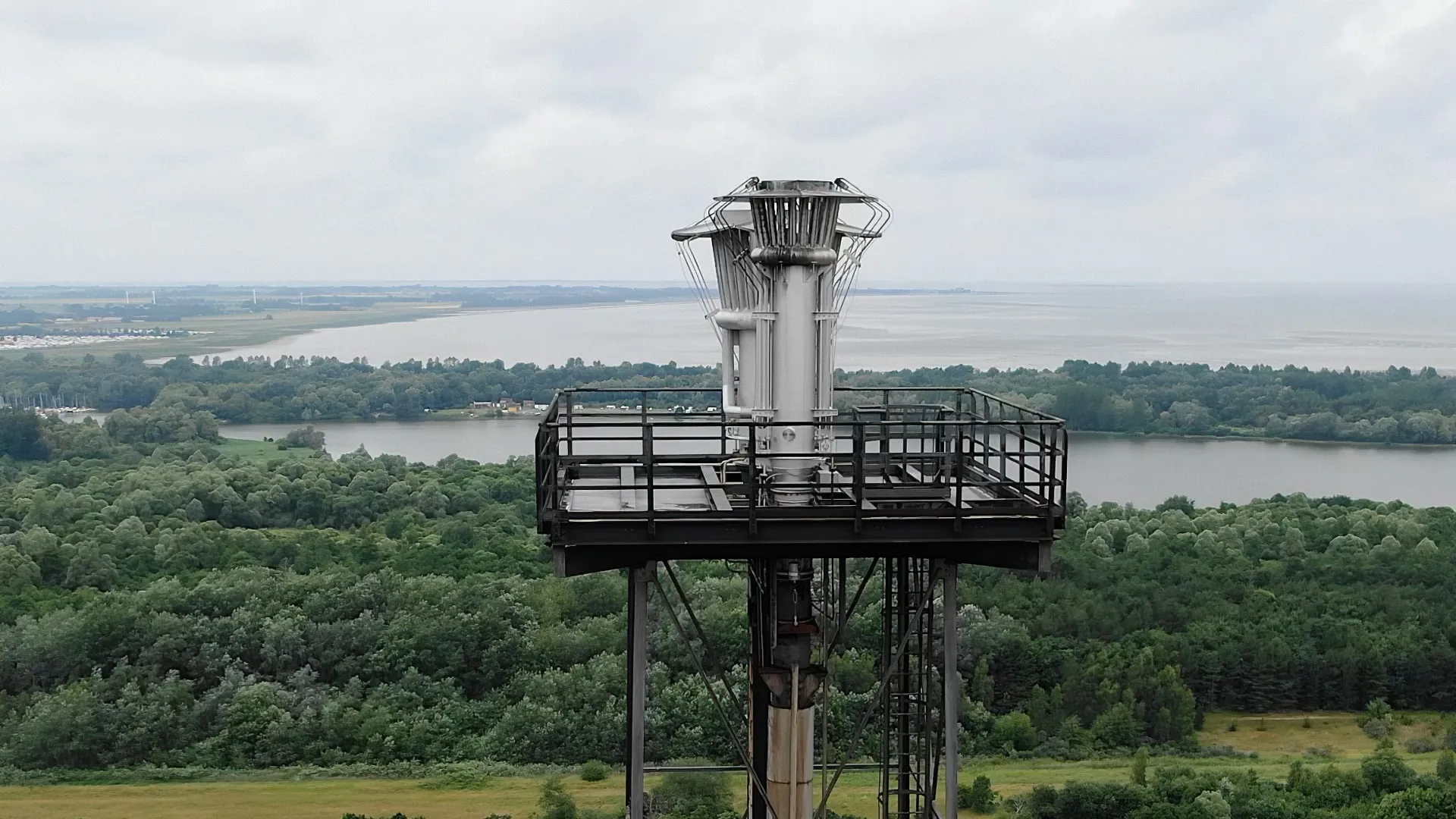
Flare Stack Inspection by Drone – WITHOUT Scaffolding, WITHOUT Shutdown
Kopterflug inspects flares and flare stacks with the DJI Matrice 30T: 200x zoom and radiometric thermography from a safe distance – at full operation, without scaffolding, without shutdown. Refineries, chemical parks, oil & gas – nationwide.
- Inspection during live operation – no shutdown, no hot-work permit required
- 200x hybrid zoom + radiometric thermography from safe standoff distance
- Structured findings report as basis for your maintenance planners
Flare Inspection by Drone: Safe, Precise, Without Shutdown
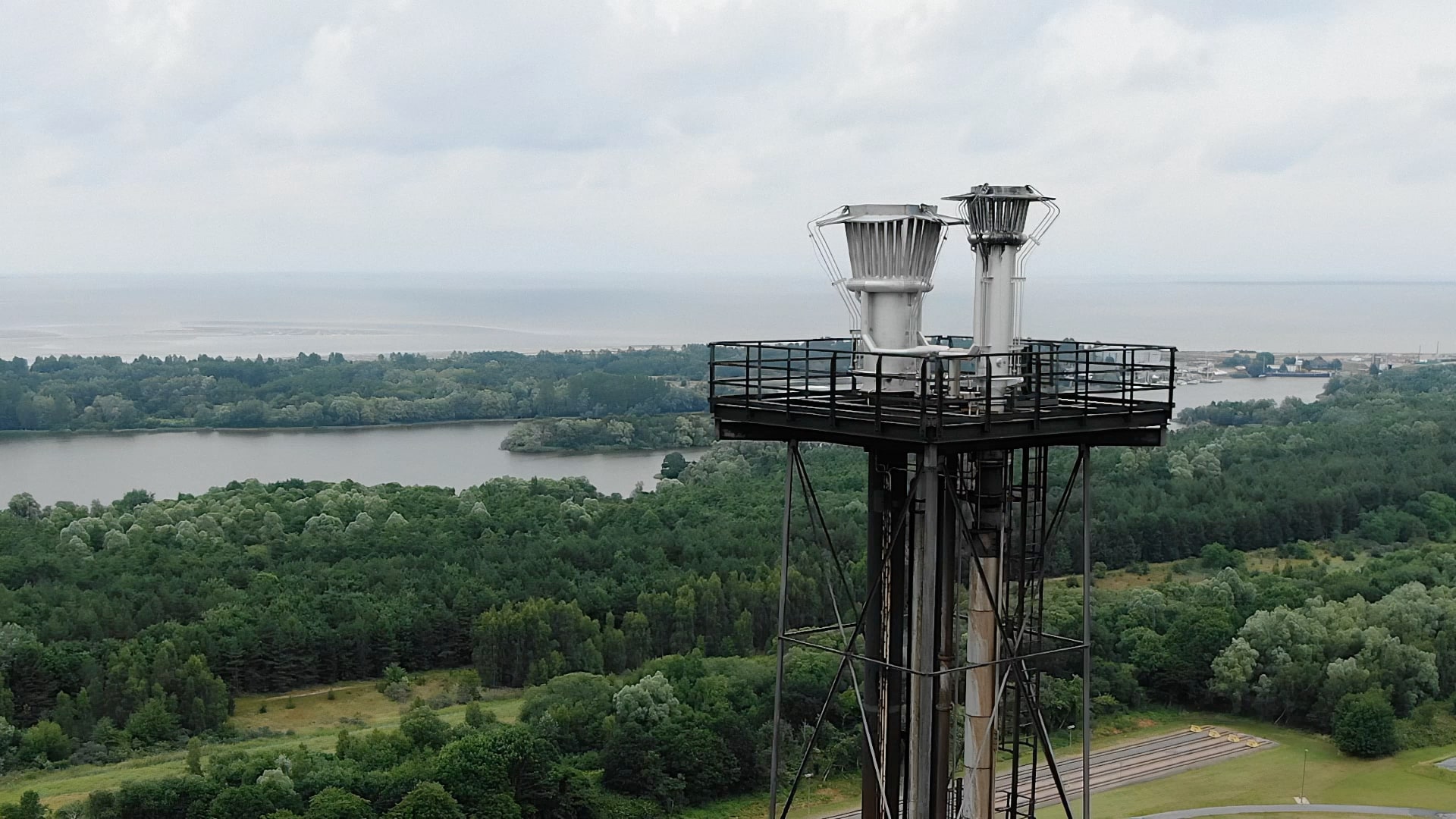
Flare stack inspection with the DJI M30T – 200x zoom delivers close-up detail from a safe distance.
Flares and flare stacks are safety-critical components in refineries, chemical parks and oil & gas facilities. They are exposed to extreme loads: heat, corrosion, wind and thermal cycles. Classical inspections require scaffolding on 50–100 m structures – typically only possible during a turnaround.
At Kopterflug, we inspect flares and flare stacks with the DJI Matrice 30T: 200x hybrid zoom for visual close-ups and radiometric thermography for burner performance and temperature distribution – all from a safe distance during live operation.
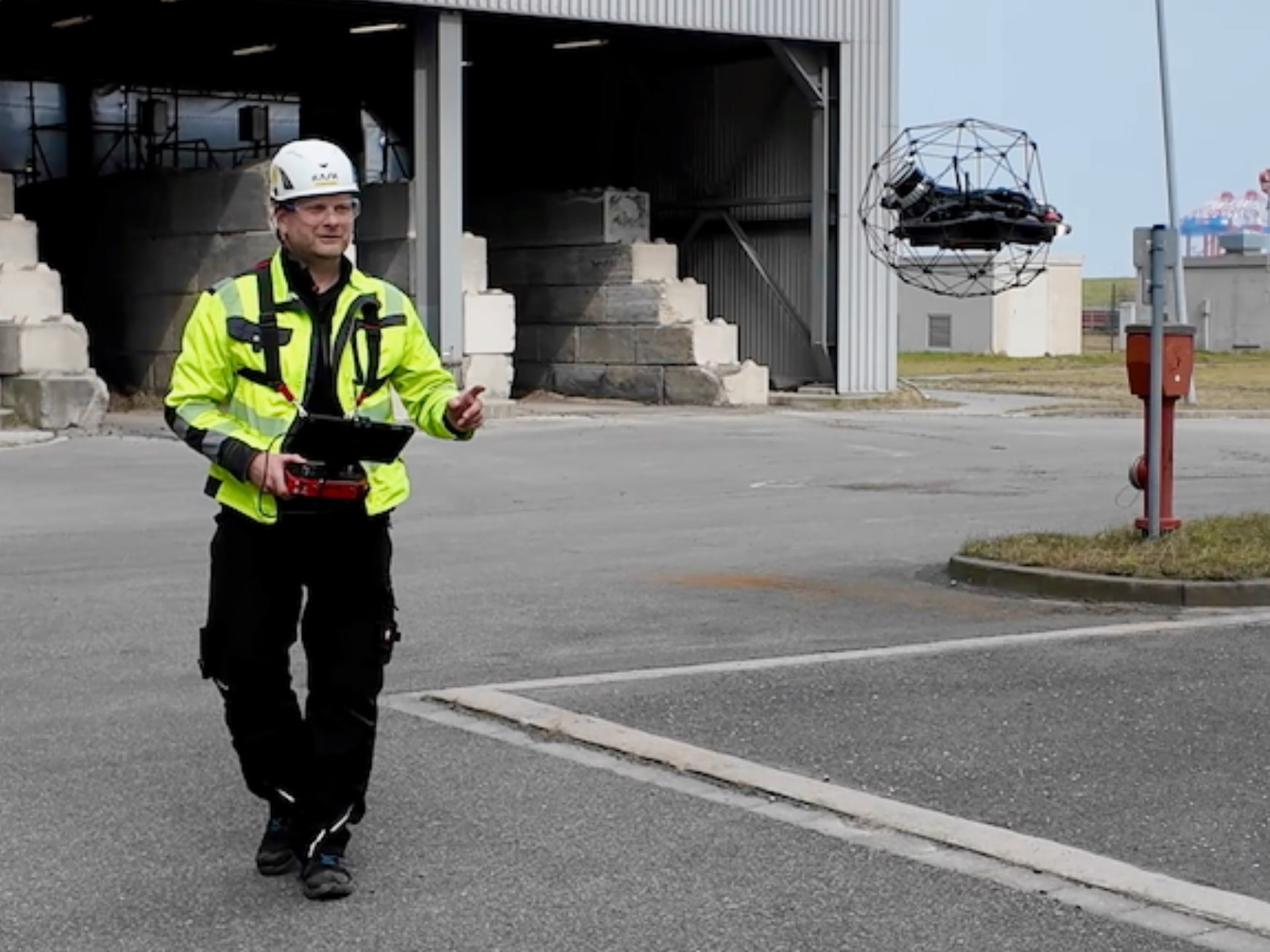
This is a purely external inspection. The ELIOS 3 is not used for flares – the temperatures and heights require an outdoor drone with powerful zoom and thermography from a safe distance.
Challenges in Flare Inspections
- Scaffolding at extreme heights = enormous costs: Scaffolding on an 80 m flare stack takes weeks, costs six-figure sums and is often only possible during a turnaround. Drones inspect the same flare in hours.
- Damage stays hidden until turnaround: Without drones, flares are typically only inspected every 3–5 years. Corrosion, cracks and refractory damage go undetected in between – with the risk of uncontrolled emissions or structural failure.
- Extreme conditions = high safety risk: Heat, flames, toxic gases and extreme heights make flare inspections among the most dangerous work in the process industry. Drones inspect from a safe distance – your team stays on the ground.
- Thermal turbulence and wind: Hot exhaust gases create strong updrafts and eddies – this leads to unstable flight conditions and can restrict approach to critical areas.
- ATEX zones and explosion protection: Flares are often located in potentially explosive areas. This restricts the drone type and operating radius, requiring closer coordination with the plant HSE team.
- Limited detection of internal damage: Drones deliver excellent results for external condition assessment. Wall thickness measurements, internal lining inspection and concealed damage under insulation are not possible – supplementary methods remain necessary.
What We Document at Flare Inspections
We fly the DJI M30T at a safe distance around your flare installation and systematically document all safety-relevant areas:
| Area | What we check | Why it matters |
|---|---|---|
| Flare Tip (Burner) | Condition of burner nozzles, wear, deformation, material loss, flame holders, pilot light | A damaged tip causes incomplete combustion, increased emissions and potential flame flashback |
| Refractory Lining & Heat Protection | Condition of refractory lining, cracks, delaminations, missing sections | Damaged lining leads to overheating of the steel structure and accelerated corrosion |
| Flare Tower & Support Structure | Corrosion on the shaft, welds, platforms, ladders, flanges, coating damage | Structural weakening of a 50–100 m flare is a significant safety risk |
| Guy Wires, Wind Shields & Steam Injection | Condition of guy wires, wind shields, steam/water injection nozzles | Defective guy wires endanger stability; blocked steam nozzles increase visible emissions |
| Base, Inlet & Piping | Corrosion and mechanical damage at foot ring, foundation anchors, flanges, process lines | Corrosion in ground-level areas and at flanges often invisible from ground level |
At the end we deliver a detailed inspection report with 4K footage of the entire flare installation, thermography maps with temperature distribution, damage classification and action recommendations.
Services & Equipment
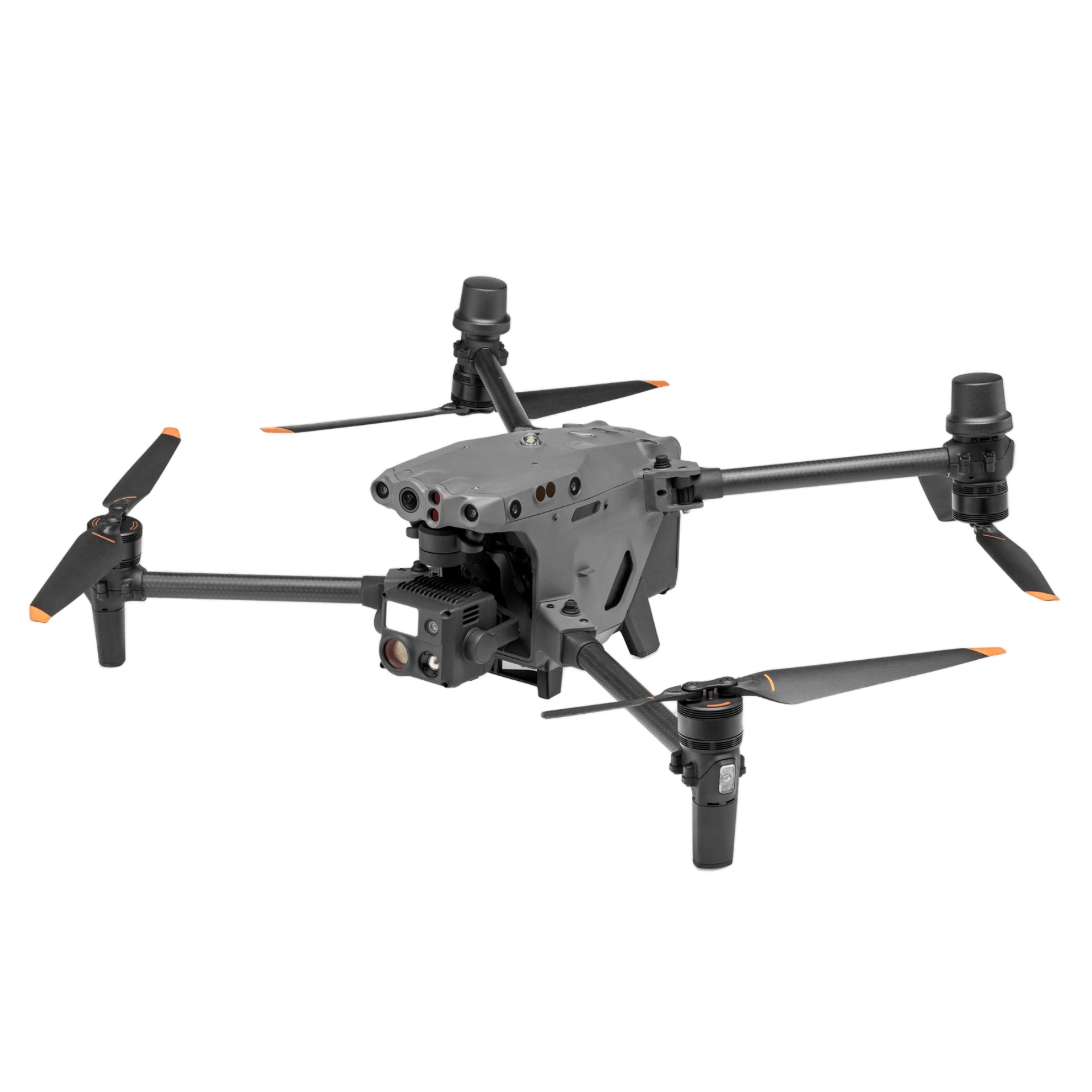
The DJI M30T – primary system for flare head and flame zone inspection during live operation.
- Visual inspection with 200x zoom: The 200x hybrid zoom delivers close-up detail of the burner tip and flare structure from a safe distance, even during live operation.
- Radiometric thermography: Thermal imaging captures temperature distribution at burner, refractory lining and support structure. Anomalies become immediately visible.
- Pilot light monitoring: Visual and thermographic verification of the pilot light – is it functioning reliably? Is the flame stable?
- Structural condition assessment: Systematic documentation of corrosion, coating damage, welds and guy wires – from foundation to flare tip.
- API 537 & ATEX-compliant documentation: Inspection reports per API Standard 537 for Flare Systems. 4K footage with finding localization as basis for maintenance decisions.
Flare Types We Inspect

We also inspect horizontal/inclined flares and offshore/boom-mounted flares – the latter on request and after individual coordination due to increased logistics effort.
Classical vs. Drone Flare Inspection
| Aspect | Classical | Drone |
|---|---|---|
| Shutdown required | Mandatory | Inspection during live operation |
| Access | Scaffolding on flare tower (50–100 m) | Flyover, no scaffolding |
| Time | 4–8 weeks | 1–2 days |
| Thermography | From below, telephoto lens | Close-up at the flare head |
| Documentation | Photos + sketches | 4K + thermography + LiDAR |
Benefits of Drone Flare Inspection
- No scaffolding at extreme heights: Inspect 50–100 m flares without scaffolding, lifting platforms or industrial climbers. Weeks of setup time and six-figure costs are eliminated.
- Thermography during live operation: Radiometric thermal imaging of burner performance, refractory condition and temperature distribution – exactly when the flare is in operation.
- No safety risk for personnel: No work at height on active flares, no hot-work permit for the inspection. Your team stays on the ground, the drone takes over.
- Complete 4K documentation: 200x zoom delivers close-ups of every weld, every nozzle, every guy wire. Systematically documented and reproducible.
- Up to 80% cheaper: No scaffolding, no turnaround window required, no cordoning effort. Flare inspection at a fraction of the cost of classical methods.
- More frequent inspection intervals: Instead of only every 3–5 years during a turnaround: drone inspections make annual or semi-annual checks economically viable.
How the Flare Inspection Works
Step 1: Initial Consultation & Feasibility Analysis
We analyse your flare installation: type, height, operating status, wind conditions, flight restrictions. We assess feasibility and advise you at no charge.
Step 2: Scheduling & Quotation
You receive a transparent quote. Together we plan the deployment – coordinated with your plant operations. No shutdown required, but wind conditions are taken into account.
Step 3: On-Site Inspection
Our pilot and assistant fly systematically around your flare installation – from foundation to burner tip. 200x zoom for visual details, thermography for temperature distribution. If required, with your experts on site.
Step 4: Evaluation & Inspection Report
You receive a detailed report with 4K footage, thermography maps, damage classification and action recommendations. A solid basis for your maintenance planning.
Your Contacts for Flare Inspection

Christian Engelke and Dipl.-Ing. Karsten Lehrke – your direct contacts for flare inspection projects.
Christian
Founder & Drone Pilot

Karsten
Project Manager
Philipp
Founder, Mission Planning & Logistics
Juliana
Drone Pilot
Stephan
Mission Planning & Logistics
Since 2017, we have been inspecting industrial installations with drones. For flares we deploy the DJI Matrice 30T – 200x zoom and radiometric thermography from a safe distance to the active flame. We deliver the data, your maintenance team makes the decisions.
Related Services
- Oil & Gas Drone Inspection – Overview of all inspection services for refineries, chemical parks and oil & gas facilities.
- Chimney Inspection – Industrial chimneys and flue gas ducts – interior and exterior inspection without climbing teams.
- Condition Documentation – Structured findings reports for your maintenance planners and experts.
- Industrial Drone Inspection – Overview of all inspection services.
Frequently Asked Questions
How does drone inspection differ from the classical method?
Classical: scaffolding (weeks, six-figure costs), shutdown, hot-work permit, industrial climbers. By drone: arrival, flight, documentation in one day – without scaffolding, without shutdown, without risk at height. The drone also delivers thermography data that is often not captured by the classical method.
Which drone is used for flare inspections?
We deploy the DJI Matrice 30T – with 200x hybrid zoom and radiometric thermography. The M30T is an outdoor drone with IP55 weather protection that delivers close-up detail of the flare tip from a safe distance. The Flyability ELIOS 3 is not used for flares – the extreme temperatures and heights require a powerful outdoor drone.
What exactly is inspected during a flare drone inspection?
We systematically document: burner tip (wear, deformation, material loss), refractory lining (cracks, delaminations), pilot light (function), flare tower (corrosion, welds, coating), wind shields and steam injection nozzles, guy wires and foundations.
Can the flare remain in operation during inspection?
Yes – this is one of the greatest advantages of drone inspection. The M30T inspects from a safe distance to the active flame. No shutdown is required, no hot-work permit for the inspection and no turnaround window. Thermography even delivers more meaningful data during live operation, as the temperature distribution at the burner can be analysed.
How safe is the drone deployment at flare inspections?
The deployment is carried out with a defined safety distance from the flame and coordinated mission planning. We take into account wind and turbulence conditions, thermal updrafts and your plant's operating requirements. In unfavourable conditions we fly in sections or adjust the flight route – if in doubt, the deployment is rescheduled.
Is deployment in ATEX zones possible?
The systems deployed are not ATEX-certified. Flight therefore takes place outside critical Ex zones – in close coordination with your HSE team. In many cases the flare structure itself is inspectable from outside without entering the Ex zone. The exact demarcation is clarified in advance.
How close does the drone fly to the flame?
The M30T always maintains a safe distance from the active flame. The 200x hybrid zoom enables close-up footage from a great distance – it is not necessary to approach the flame or radiant heat. The exact flight distance is determined before each deployment based on flare type, wind direction and operating status.
What does thermography add to flare inspection?
Thermography makes visible what is invisible visually: overheating, uneven combustion, anomalies at insulation and refractory, as well as thermal anomalies at steam and air injection systems. Problems are detected before they become visible externally or lead to failures.
How high can flares be inspected?
Typically up to approximately 100 m height, depending on weather conditions also beyond. Zoom and thermal sensors enable close-up footage from a safe distance – the drone does not need to fly all the way to the flare tip to fully capture the relevant areas.
Can internal damage also be detected?
No – the drone delivers an external inspection. Wall thickness measurements, internal lining inspection and concealed damage under insulation are not possible. For these questions, supplementary methods such as UT measurements or walk-throughs during turnarounds are required.
Which flare types can be inspected?
We inspect elevated flares, ground flares, enclosed ground flares, steam- and air-assisted systems, and horizontal/inclined flares. Offshore and boom-mounted flares are possible in principle but are only carried out on request and after individual coordination due to increased logistics effort.
Can guyed elevated flares also be inspected?
Yes – guyed flares (guy-wire flares) are a typical use case. The M30T documents both the flare structure and the condition of the guy wires, turnbuckles and anchorages. Defects in the guy wires are safety-critical and are systematically captured during every inspection.
How often should flares be inspected?
Industry practice: visual inspections every 1–3 years and a comprehensive inspection during the turnaround (every 3–5 years). Drone inspections make more frequent intervals economically viable – annual or semi-annual checks are achievable without scaffolding costs and shutdown.
What data is delivered after a flare inspection?
We deliver 4K footage of the entire flare installation (foundation to tip), radiometric thermography maps with temperature values and marked anomalies, damage classification with position data and a summary inspection report with action recommendations for your maintenance planning.
Which standards apply to drone flare inspection?
The key international standard for flare systems is API 537 (Flare Details for General Refinery and Petrochemical Service). In practice, drone inspections are increasingly accepted normatively – particularly for condition assessment and maintenance planning between turnarounds. They do not in every case replace classical inspection methods or assessment by experts.
How does the commissioning process work?
After a brief discussion of installation, flare type, height and location you receive a feasibility assessment and a quote. We coordinate scheduling, safety clearances and coordination with your plant operations – the effort on your side is minimal.
How much does a flare inspection by drone cost compared to scaffolding?
A drone inspection of the flare typically costs 70–90% less than the classical method with scaffolding or crane. Scaffolding alone generates six-figure costs just for erection and dismantling – plus production losses from the required shutdown and weeks of lead time. The drone inspection is usually completed in a single day, without shutdown and without construction measures. → More at Drone inspection costs.
Can the drone inspection be integrated into the turnaround?
Yes – the drone inspection can be carried out both during live operation and during a planned turnaround. Before the turnaround it delivers a current condition assessment, on the basis of which repair scopes and material orders can be planned precisely. During the turnaround it supplements the ground-based inspection, for example for hard-to-reach sections at the flare head. This way turnaround durations are shortened and unplanned extensions are avoided.
How resistant is the drone to the radiant heat of the flare?
The DJI Matrice 30T is designed for deployment in challenging conditions but has no special heat protection certification. The flight is therefore planned so that the drone always operates outside the critical radiation zone. The 200x hybrid zoom makes it possible to capture close-up footage in high resolution even from a great distance. Wind direction and thermal updrafts are systematically taken into account during flight planning.
What typical damage at flare heads does the drone detect?
Via zoom and thermography we detect: material loss and deformation of the burner tip, cracks and delaminations of the refractory lining, blocked or damaged steam injection nozzles, corrosion at the wind shield, and thermal anomalies indicating uneven combustion or internal damage. Many of these findings are not visible from the ground with the naked eye.
Is a flare inspection by drone also possible at offshore installations?
In principle yes – offshore flares on platforms and FPSOs can be inspected by drone. However, the deployment requires additional coordination regarding logistics, safety clearances, helicopter operations and weather windows. We carry out offshore flare inspections on request and after individual feasibility assessment – contact us early so we can plan the deployment properly.
How is the refractory lining of the flare tip assessed?
Thermography reveals temperature differences on the exterior that indicate damage to the internal refractory lining – such as missing or detached segments, cracks or moisture ingress. Areas with noticeably elevated surface temperature suggest reduced insulation performance. These findings are documented in the inspection report with position data and action recommendations, so that targeted repairs can be scheduled for the next turnaround.
Get in Touch
Have questions about flare inspection by drone or need a quote for your project? Fill out the form below and we’ll get back to you within 24 hours.