
High-Bay Warehouse Inspection by Drone – WITHOUT RBG Traversal, Supporting DIN EN 15635
Kopterflug inspects high-bay warehouses with the Flyability ELIOS 3: 4K footage with 0.2 mm/pixel resolution and LiDAR 3D model – without dangerous RBG traversal, without height workers, supporting DIN EN 15635. Logistics, industry, cold storage – nationwide.
- Zero risk of falls – no personnel at height in the rack aisles
- 4K + LiDAR 3D model for exact damage localization in the rack
- DIN EN 15635 & DGUV-compliant documentation for your inspectors
High-Bay Warehouse Inspection with Drone: Safe Inspection Without RBG Traversal
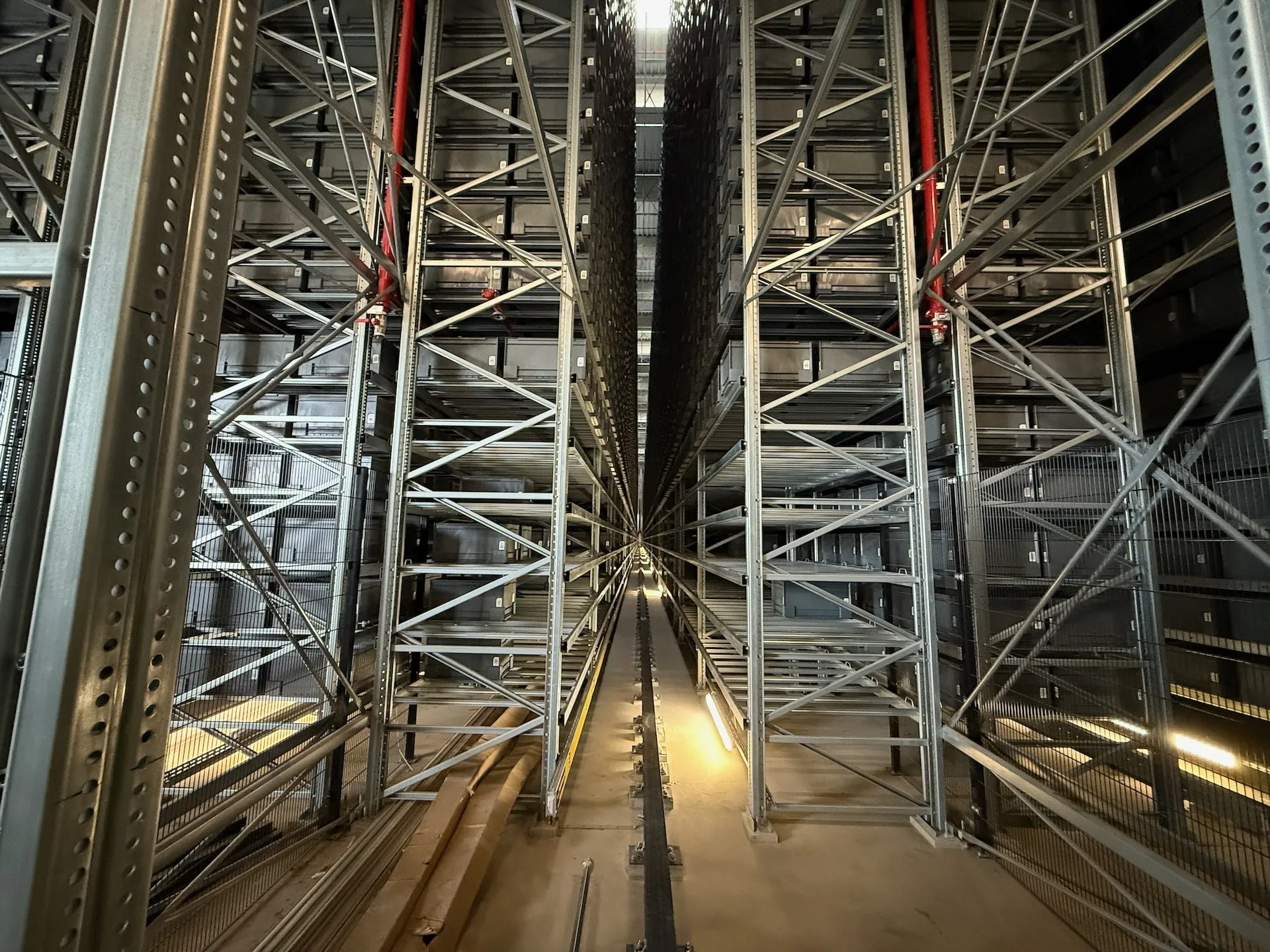
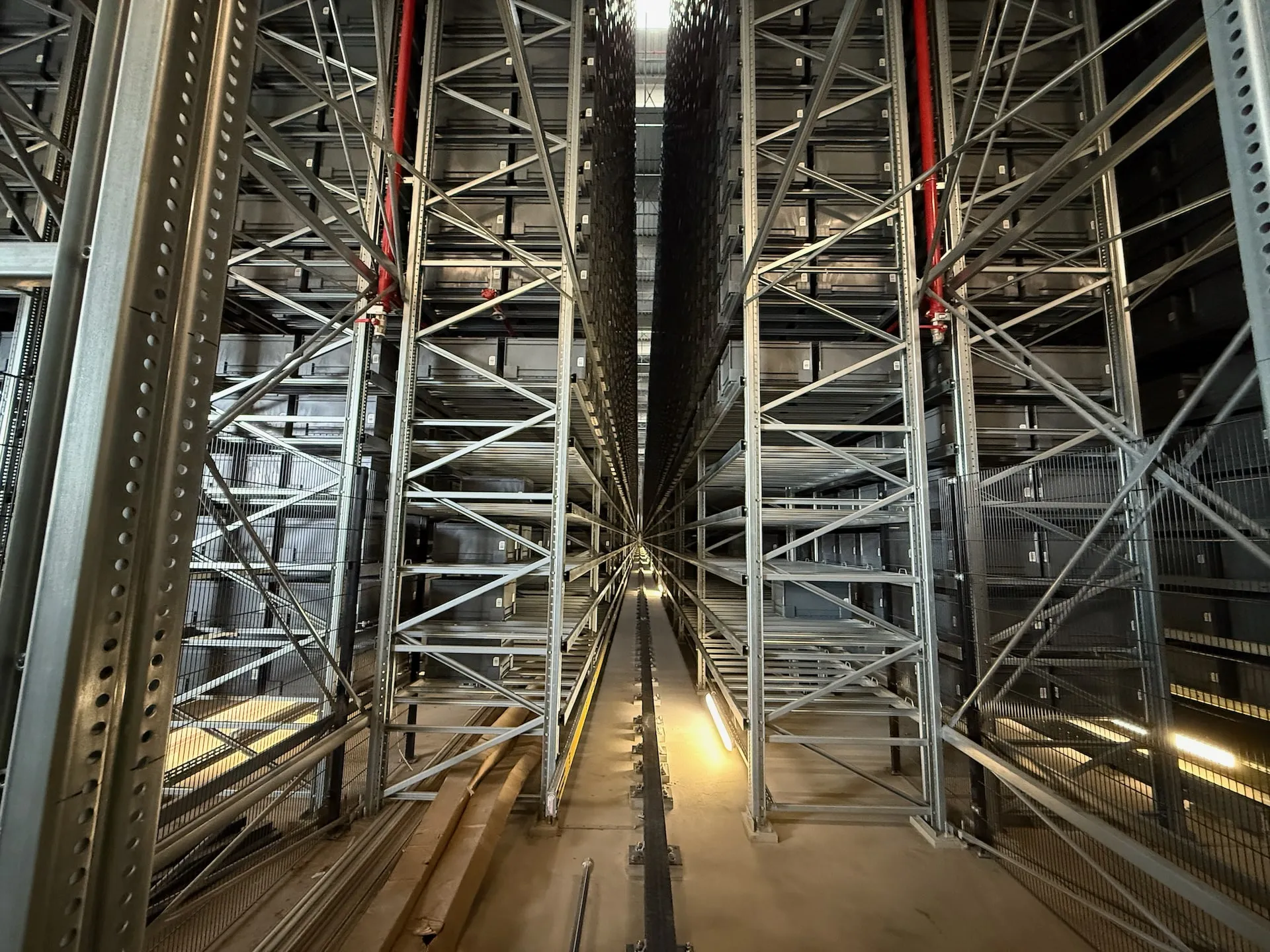
The ELIOS 3 flies through the rack aisles – both sides, full height, without any personnel at risk.
At Kopterflug we are specialists in drone inspections with the Flyability ELIOS 3. We support logistics companies, industry, warehouse operators and inspection associations in inspecting high-bay warehouses per DIN EN 15635 – without RBG traversal, without risk to personnel, during ongoing operations.
High-bay warehouses are often 20–40 m high, with narrow rack aisles and hard-to-access areas. Our ELIOS 3 inspections help you identify damage such as deformations to uprights, cracks, bolt damage, corrosion and impact damage early – avoiding unplanned failures. We deliver high-resolution 4K footage and LiDAR 3D models – your inspectors and experts assess the findings per DIN EN 15635.
Challenges in High-Bay Warehouse Inspections
- High safety risk with RBG traversal: 20–40 m height, narrow rack aisles, fall hazard from rack operating equipment, crush risk. The ELIOS 3 flies through the aisles – no personnel at height required.
- Enormous time and production losses: Manual traversal requires partial or complete shutdown of warehouse operations. Drone inspection usually takes place during ongoing operations and is often completed in hours or a day.
- DIN EN 15635: Weekly + Annual: Racking inspection per DIN EN 15635 requires weekly visual checks and annual expert inspection. The drone dramatically accelerates the annual inspection – reproducible, complete, during operation.
- Lighting and visibility problems in aisles: Many high-bay warehouses are poorly lit in upper areas. The ELIOS 3 brings its own 16,000 lumen lighting and reveals cracks, deformations and missing bolts even in darkness.
- High coordination effort: Elevated platform scheduling, aisle cordoning, PPE provision, safety briefings, coordination with works council – classical inspections are bureaucratic and time-intensive. Drones need an internal clearance and a pilot.
- Difficult documentation and traceability: Manual inspections often produce handwritten records with imprecise location data. The drone delivers position-referenced 4K photos and videos plus a LiDAR 3D model.
What the ELIOS 3 Documents in High-Bay Warehouse Inspections
| Area | What we document | Why it matters |
|---|---|---|
| Rack uprights & posts | 4K footage of deformations, cracks, corrosion, impact damage, deformations at load-bearing uprights | Damaged uprights can cause collapse of the entire racking system. DIN 15635 requires regular inspection. |
| Beams & cross-members | Detailed footage of deformations, cracks, overload damage, corrosion, weld problems | Overloaded or damaged beams can break and drop pallets. We deliver data for your technical assessment per FEM 10.2.02. |
| Bolts, hooks & locking mechanisms | Condition of safety bolts, beam hooks, locking pins, missing parts, age-related damage | Missing or damaged bolts/hooks are a frequent cause of racking damage. DIN 15635 requires inspection of these safety-critical parts. |
| Impact protection & floor fixings | Damage to impact protection systems, floor fixing damage, settlement, floor cracks | Damaged impact protection and loose floor fixings can endanger stability of the entire racking. |
| Diagonal braces & frame stabilisation | Condition of diagonal struts, cross-braces, screw connections and frame connections over the entire rack height | Loose or missing diagonal braces reduce frame stiffness significantly. DIN EN 15635 explicitly requires inspection of these connections. |
Services & Equipment
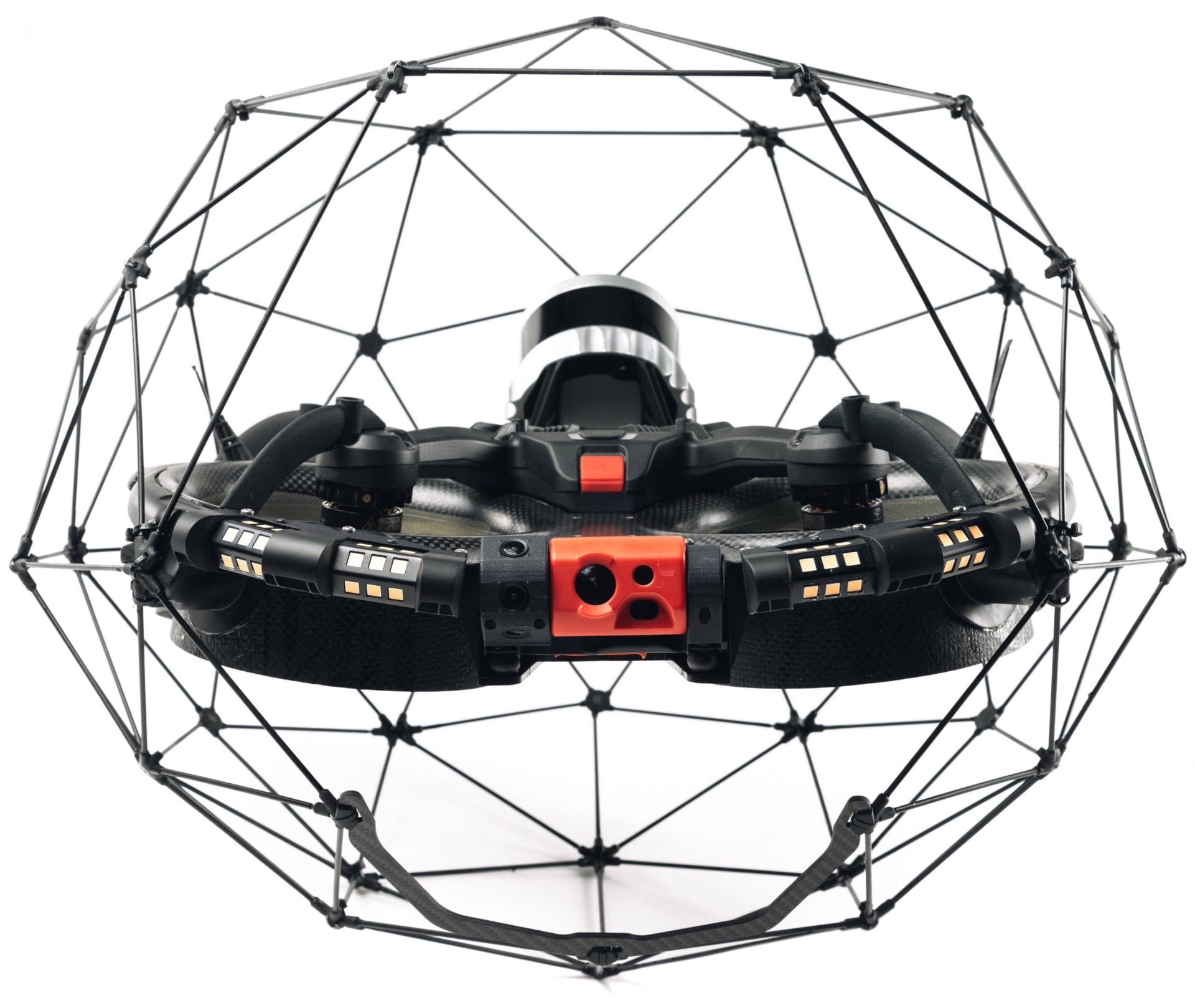
The ELIOS 3 with its collision-safe carbon cage – designed for narrow rack aisles and full rack heights.
- Racking inspection per DIN EN 15635: We accelerate the annual expert inspection dramatically – supporting your qualified inspector with complete documentation data.
- 4K + LiDAR 3D model: High-resolution 4K footage (0.2 mm/pixel) + dimensionally accurate 3D model of the entire racking. Exact localization of damage.
- All racking types: Logistics warehouses, cold storage, cleanroom warehouses, heavy-duty racking, hazardous goods warehouses, HBW silos, mobile racking, drive-in and flow-through racks, automated small parts warehouses (AKL)
- DGUV & FEM-compliant documentation: Detailed inspection reports per DGUV Rule 108-007 (storage equipment) and FEM 10.2.02 (racking inspection) for your inspectors and experts.
Warehouse Types We Inspect


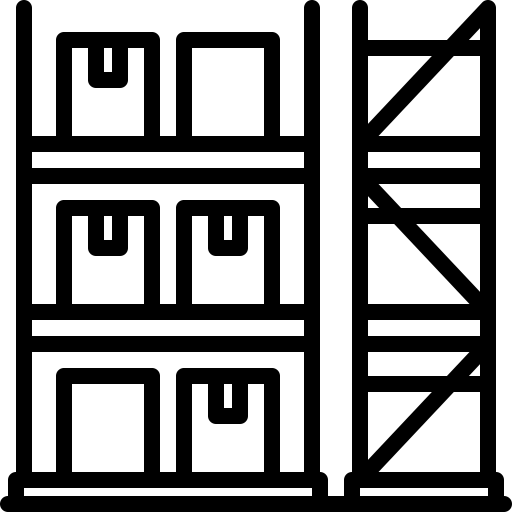
Classical vs. Drone High-Bay Warehouse Inspection
| Aspect | Classical (RBG traversal / elevated platform / height workers) | Drone (ELIOS 3) |
|---|---|---|
| Safety risk | Fall hazard at 20–40 m, crush risk from RBG | Zero risk – no personnel at height |
| Operations shutdown | Partial or full – aisles must be closed | Only inspected aisle temporarily cordoned |
| Time | Days to weeks for large installations | Multiple aisles per day |
| Resolution | Handheld camera, limited angles | 4K with 0.2 mm/pixel from close range |
| 3D model | Not possible | LiDAR 3D model of complete racking |
| Documentation | Handwritten notes, few photos | Position-referenced 4K + LiDAR data |
Benefits of Drone High-Bay Warehouse Inspection
- Zero fall risk: No personnel required at height in the rack aisles. The ELIOS 3 flies through the aisles, your team stays safely on the ground.
- Efficient racking inspection: Complete inspection of multiple aisles per day – dramatically faster than classical RBG traversal methods.
- Up to 80% cost saving: No RBG traversal, no elevated platforms, no height workers. Significant cost savings compared to classical methods.
- LiDAR 3D model: Precise 3D model for exact deformation measurements – reproducible for year-on-year comparisons.
- 0.2 mm/pixel resolution: 4K footage at close range – even fine cracks, bolt damage and corrosion are clearly visible.
- DIN EN 15635 & DGUV compliant: Documentation prepared for your inspectors and experts per DIN EN 15635, DGUV Rule 108-007 and FEM 10.2.02.
How the High-Bay Warehouse Inspection Works
Step 1: Initial Consultation & Warehouse Assessment
We assess your warehouse: rack height, aisle widths, number of aisles, specific inspection requirements per DIN EN 15635. We advise you at no charge on which areas are priority.
Step 2: Scheduling & Quotation
You receive a transparent fixed-price quote. We plan the deployment – coordinated with your warehouse operations and, if needed, your rack inspector.
Step 3: On-Site Inspection
Our pilot flies systematically through your rack aisles – both sides, full height, from base plate to top beam. 4K footage for visual documentation, LiDAR for 3D model and deformation measurement.
Step 4: Evaluation & Inspection Report
You receive a detailed report with 4K footage, LiDAR 3D model, systematic damage overview with rack position assignments. Documentation per DIN EN 15635, DGUV Rule 108-007 and FEM 10.2.02.
Your Contacts for High-Bay Warehouse Inspection
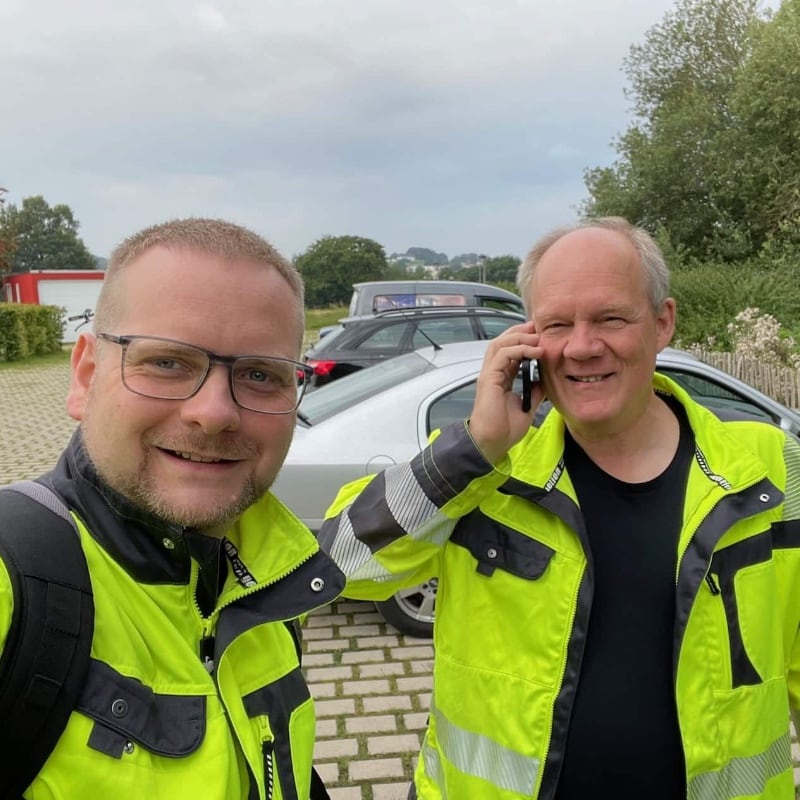
Christian Engelke and Dipl.-Ing. Karsten Lehrke – your direct contacts for high-bay warehouse inspection projects.
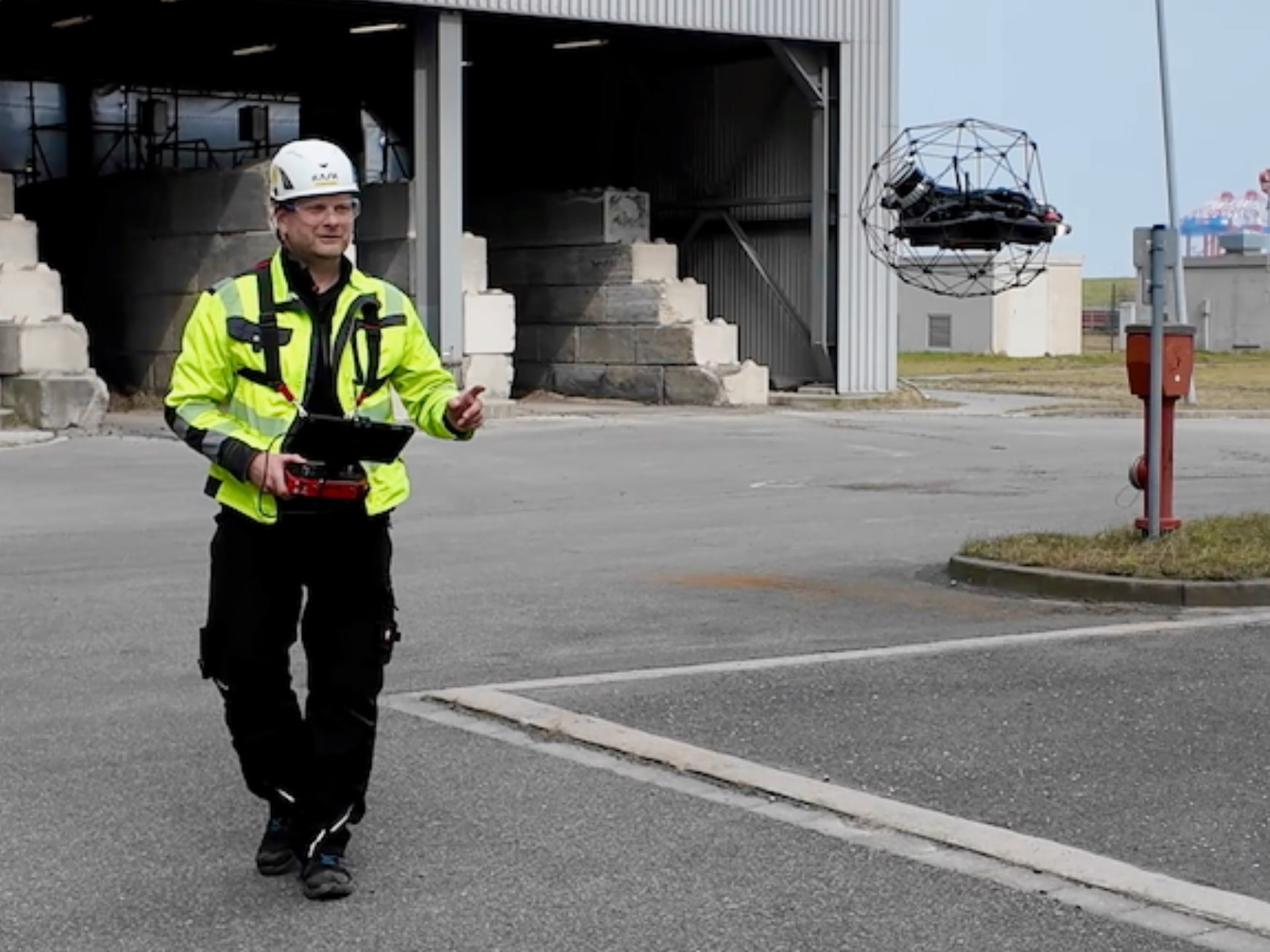
Christian
Founder & Drone Pilot

Karsten
Project Manager
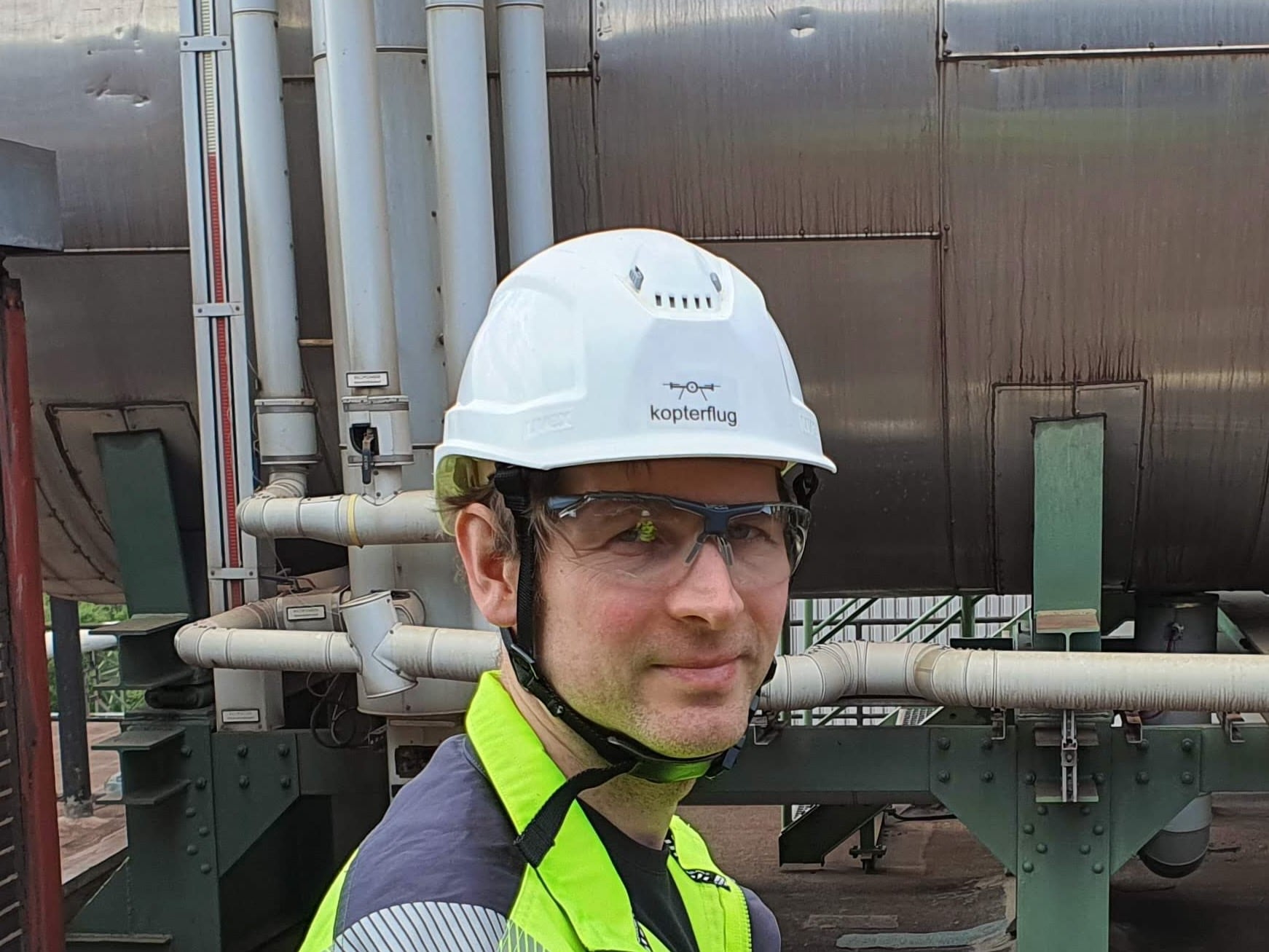
Philipp
Founder, Mission Planning & Logistics
Juliana
Drone Pilot
Stephan
Mission Planning & Logistics
Since 2017, we have been inspecting industrial installations with drones. We support logistics companies, industry and warehouse operators with ELIOS 3 inspections – supporting DIN EN 15635 documentation.
Related Services
- Confined Spaces Inspection – ELIOS 3 for tanks, boilers, silos and shafts without human entry.
- Industrial LiDAR Survey – 3D point clouds for geometry capture, deformation analysis and digital twins.
- Industrial Drone Inspection – Overview of all inspection services.
Frequently Asked Questions
Can drone documentation serve as a basis for the DIN EN 15635 inspection?
Yes – with one prerequisite: the drone delivers the required image and measurement data; the assessment and damage classification (green/yellow/red) is still performed by a qualified inspector. We deliver the data, your inspector makes the assessment.
Can the ELIOS 3 actually fly through narrow rack aisles?
Yes. The ELIOS 3 is specifically designed for confined environments with its protective cage. It navigates safely through rack aisles from approx. 1.2 m width – even at great heights. The cage protects the drone and prevents damage to the racking.
Is lighting in dark warehouse areas a problem?
No. The ELIOS 3 has its own 16,000 lumen lighting – even dark rack areas, upper levels and poorly lit aisles are fully captured. This is a clear advantage over handheld cameras.
What happens if the drone touches the racking?
The ELIOS 3 is collision-protected – its carbon protective cage is specifically designed for confined spaces with obstacles. Light contact with rack struts or uprights typically does not affect the flight. No racking damage is expected from brief contact – the drone's mass and energy are too low for significant impact.
Are difficult-to-access areas also captured?
Yes – that is the decisive advantage. Upper cross-beams, diagonal braces, rear column areas and base plates are fully documentable – areas that are often inaccessible or unsafe to reach in classical inspections.
What damage is detectable in high-bay warehouse inspection?
Typical findings: deformations and impact damage to uprights and beams, cracks and weld defects, missing or loose bolts and hooks, corrosion, deflection and damage to floor fixings.
How precisely does the drone detect damage to rack uprights?
The ELIOS 3 delivers 4K footage with 0.2 mm/pixel resolution at close range. Deformations, cracks, corrosion, impact damage and missing bolts are clearly detectable. Additionally, LiDAR measures deformations with centimetre accuracy.
Is there a 3D model of the warehouse?
Yes, on request. The LiDAR-based 3D model enables precise location of damage, reproducible deformation measurements and traceable documentation across multiple inspection cycles.
How is documentation done after the inspection?
You receive structured image and video data with clear assignment of each finding to the rack position, optionally supplemented by LiDAR 3D data. All results are traceably documented and prepared so that your inspector can assess them directly.
Must the warehouse be shut down for inspection?
Generally not completely. The inspected rack aisle must be cordoned off during the flight – adjacent aisles can continue operating. In automated warehouses (AKL) we coordinate individually with your operations team.
How long does a high-bay warehouse inspection by drone take?
Typically we inspect several rack aisles per day – both sides, full height. This is significantly faster than classical RBG traversals, which in large installations can take weeks.
How high can high-bay warehouses be inspected?
Typically up to 35–40 m height. For larger installations the inspection is carried out in sections with battery changes – the GPS-independent SLAM navigation of the ELIOS 3 functions throughout.
Does inspection also work in cold storage warehouses?
Yes with limitations. At temperatures close to 0°C the ELIOS 3 can be used without restriction. At deep-freeze temperatures below −10°C flight time is greatly reduced – deployments are possible but only in sections or with individual coordination.
Does drone inspection replace the DIN EN 15635 racking inspection?
No. The drone does not replace the inspector but supports them. We deliver the high-resolution data (4K footage, LiDAR 3D model), which your rack inspector or expert uses as assessment basis. The formal inspection responsibility remains with the qualified inspector.
Can you coordinate the inspection with our rack inspector?
Yes – this is actually our recommended procedure. We coordinate in advance with your inspector or expert so that the documentation precisely meets their requirements. On request the inspector can be present during the flight.
Are permits required for drone operation in the warehouse?
Not under aviation law – drone flights in buildings are not subject to aviation law and require no official permits. Internally we naturally coordinate the deployment with your safety officer and relevant departments in advance.
Is thermography possible in high-bay warehouse inspection?
Optionally yes. Thermography can be useful for specific questions – for example structural anomalies or temperature differences in temperature-controlled areas. We clarify in advance whether it makes sense for your specific installation.
How often should a high-bay warehouse inspection by drone be conducted?
At least annually to support the expert inspection per DIN EN 15635. For warehouses with high throughput, heavy loads or frequent forklift movements we recommend more frequent intervals.
What does a high-bay warehouse inspection by drone cost?
Costs depend on warehouse size, number of aisles and rack height. Compared to the classical method (RBG traversal, elevated platforms, height workers) you save considerably with drone inspection. We prepare a transparent fixed-price quote on the basis of your information.
Get in Touch
Have questions about high-bay warehouse inspection by drone or need a quote? Fill out the form below and we’ll get back to you within 24 hours.