
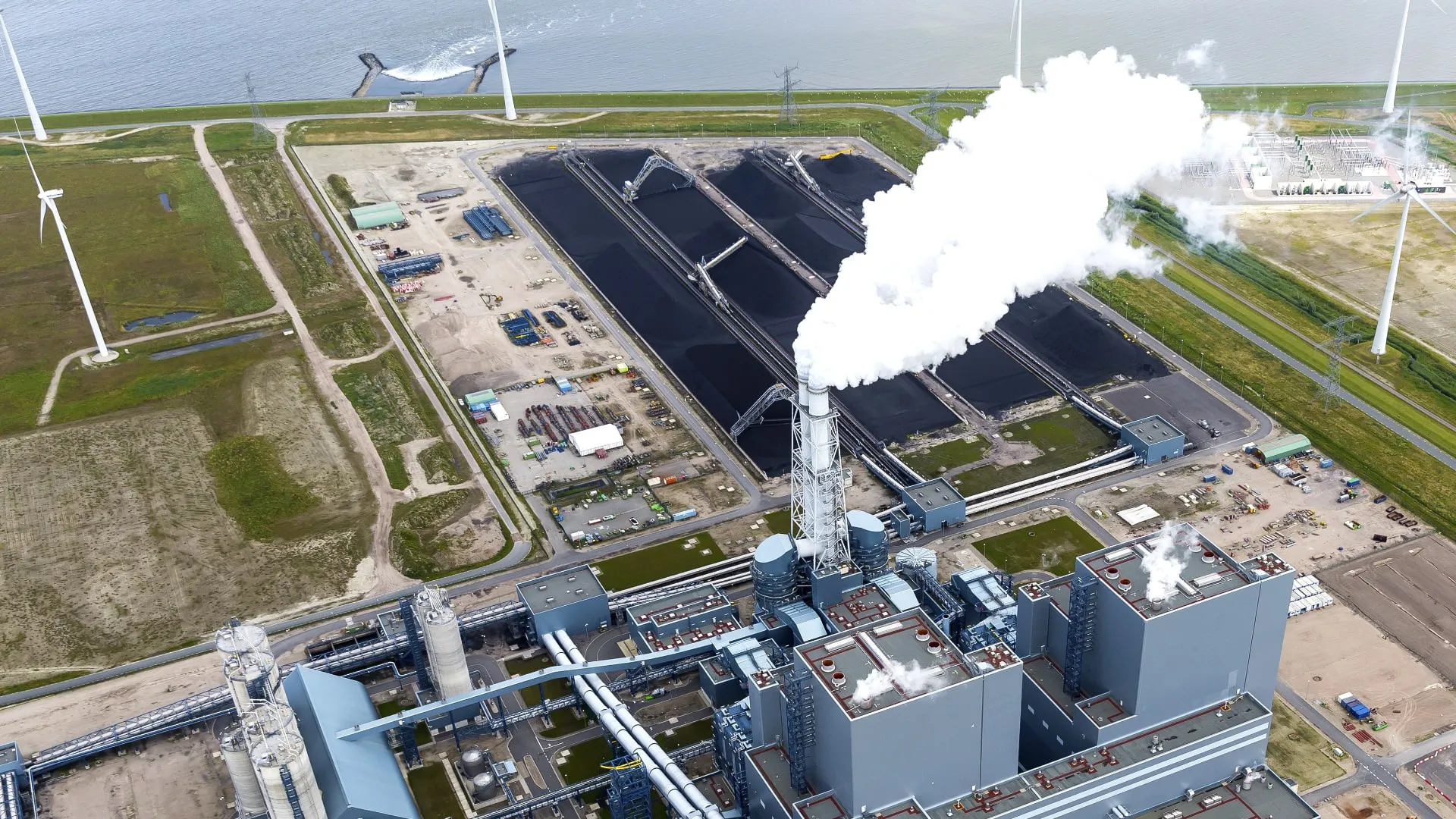
Power Plant Drone Inspection – NO Scaffolding, NO Human Entry, Inside & Outside
Kopterflug inspects power plants with the Flyability ELIOS 3 – boilers (Kessel), chimneys (Schornsteine), heat-recovery steam generators (Abhitzekessel), flue-gas ducts and cooling towers. No scaffolding, no confined-space entry: inspection in hours instead of weeks. LiDAR + 4K + Thermography, aligned with EN 12952, BetrSichV and the 1. BImSchV (German emission-control regulation).
- No scaffolding – drone enters through existing access openings (from DN 600)
- No human entry – no confined-space entry per DGUV Rule 113-004, no rescue chain
- 4K + Thermography + LiDAR in a single flight
- Documentation aligned with EN 12952, BetrSichV and 1. BImSchV
Power Plant Inspection by Drone: Fast Data, Short Downtimes
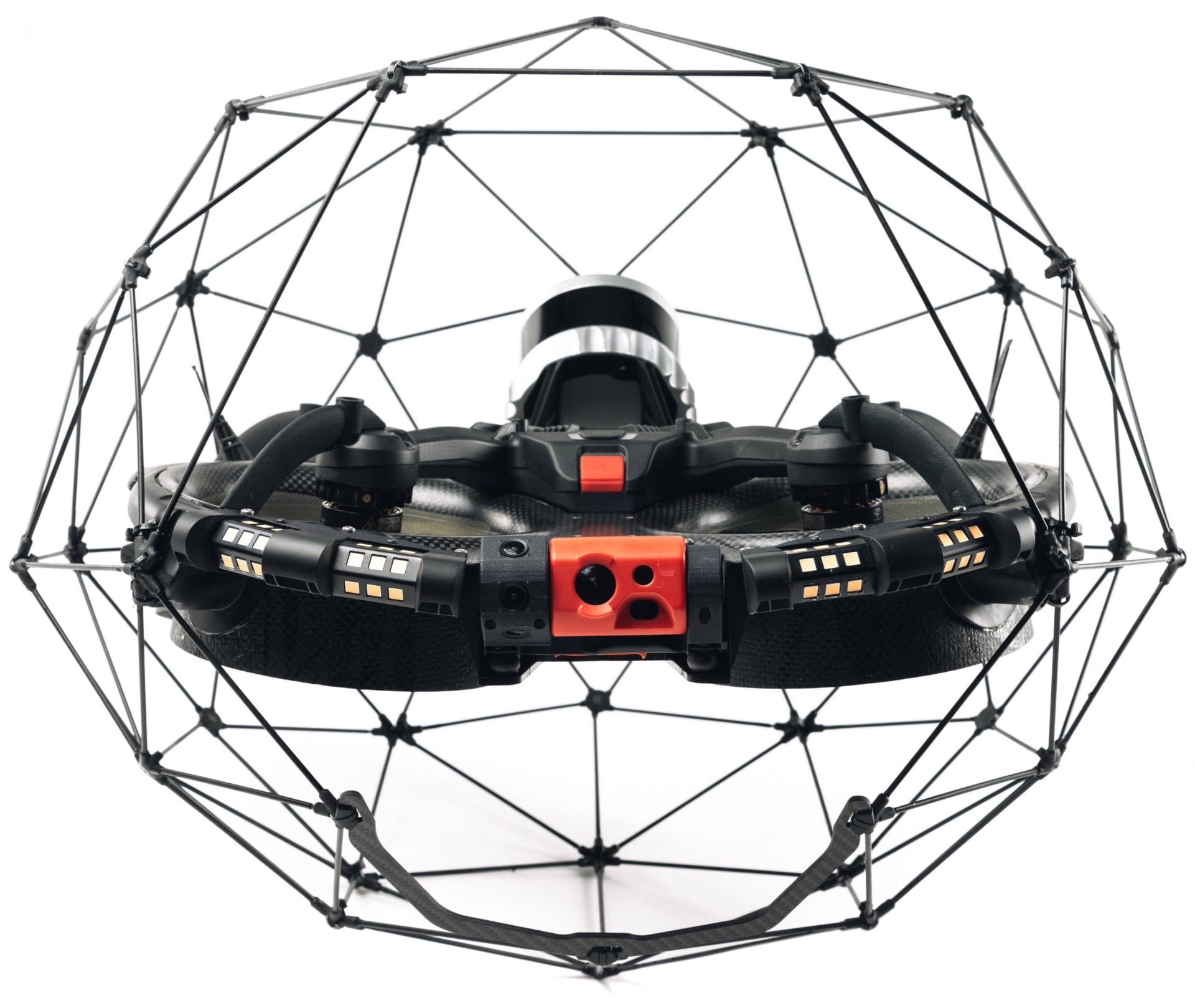
The Flyability ELIOS 3 with its collision-safe carbon cage – designed for complex boiler and flue-gas geometries.
In power plants, every hour of downtime counts. At the same time, boiler passes (Kesselzüge), chimneys, heat exchangers and flue-gas ducts are typically only reachable via scaffolding, rope access or human entry – methods that are not only expensive but needlessly extend maintenance windows. With the Flyability ELIOS 3, most safety-critical interior spaces can be inspected in a fraction of the time.
The collision-safe drone navigates GPS-independently through boiler passes, steam drums, chimneys and flue-gas ducts, delivering 4K video, radiometric thermography and optionally centimetre-accurate LiDAR data – without scaffolding, without human entry, after the installation has cooled to below 50 °C. For interior spaces with complex geometry or long vertical runs we deploy the Tether Power Unit, enabling unlimited flight time via ground power supply.
Typical findings in power plants that we inspect for: erosion and high-temperature corrosion on evaporator tubes (Verdampferrohre) and superheaters (Überhitzer), cracks and spalling in refractory linings (feuerfeste Auskleidungen) after thermal cycling, sulphurous attack (Versottung) and material damage in chimneys, and deposits in flue-gas passes and economisers (Economizer). Thermographic measurements complement visual documentation for hotspot analysis and insulation damage.
All technical assessment and safety decisions rest with your boiler experts, TÜV inspectors and DEKRA certifiers – we deliver the data foundation: structured 4K documentation, thermography reports and LiDAR point clouds that integrate into your existing maintenance documentation.
What We Inspect in Power Plants
Power plants have highly complex assets that require regular inspection. We inspect all safety-critical components – without scaffolding, without human entry:



The Challenges in Power Plants
Boilers, chimneys, combustion chambers – hot, dark, hard to access. Human entry requires DGUV measures, weeks of scaffolding and enormous downtime. The ELIOS 3 inspects in hours – without human entry, with 4K + Thermography + LiDAR.







Technology in Use for Power Plant Inspections
Depending on the task, we deploy the Flyability ELIOS 3, DJI M30T or handheld LiDAR – for complete inspection from boilers to cooling towers.

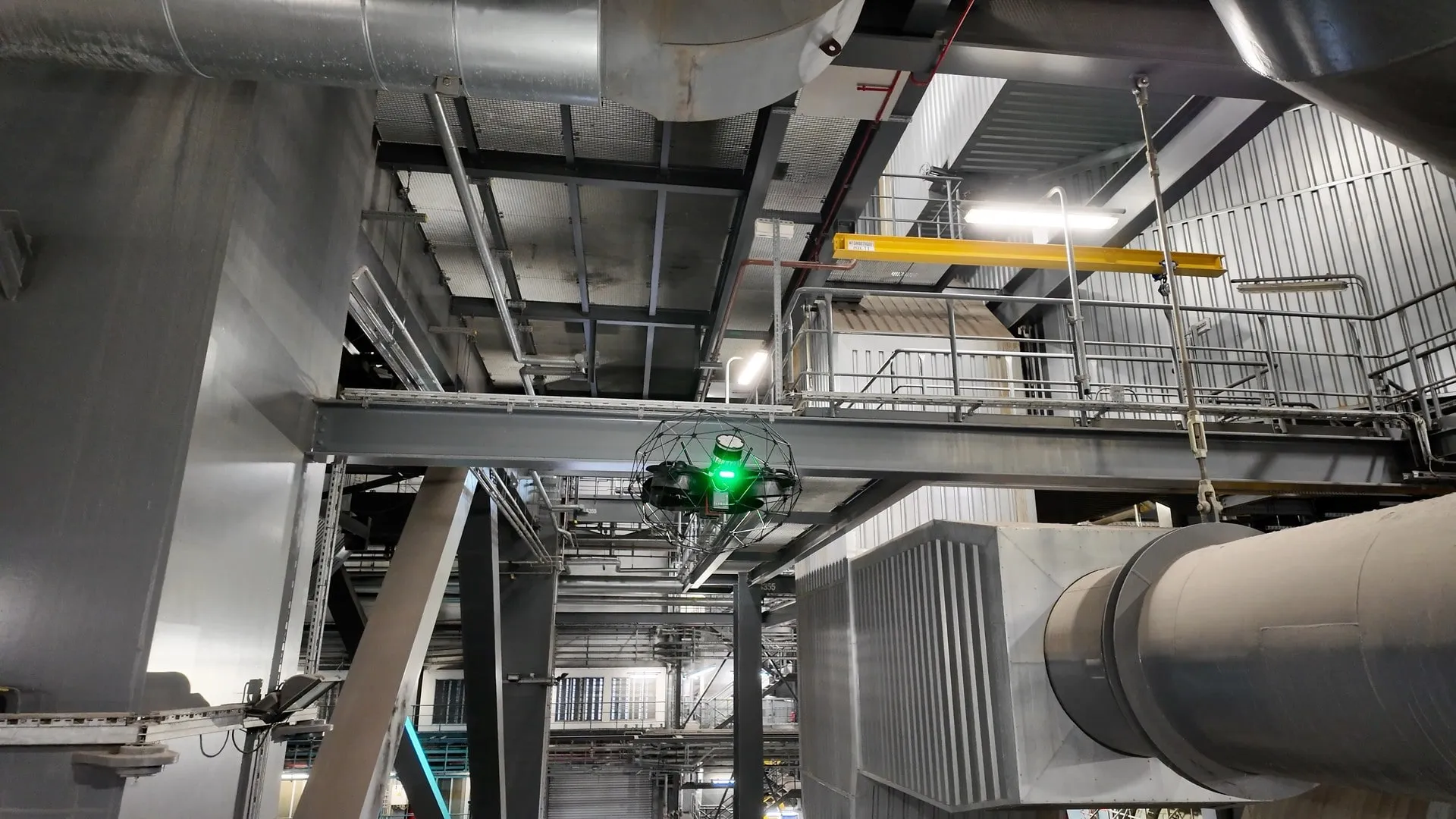
The ELIOS 3 in the interior of a power plant – GPS-free navigation, 4K and thermography in one flight.
What We Document in Power Plant Inspections
We fly the ELIOS 3 into your boiler installation and systematically document all safety-relevant areas. Technical assessment is carried out by your boiler experts and inspection engineers – we deliver the data:
Boilers, Boiler Passes & Furnace Spaces
What we check: Erosion and corrosion on evaporator tubes (Verdampferrohre), condition of refractory linings, superheaters (Überhitzer) and reheaters (Zwischenerhitzer), weld seams and tube connections.
Why it matters: Boiler interiors are the most safety-critical areas – tube-wall thinning, lining damage and weld defects must be documented before every re-commissioning. Conventional inspection via scaffolding takes weeks.
How we do it: ELIOS 3 flies systematically through boilers and passes – 4K camera from close range, thermography for hotspots and insulation damage, LiDAR for geometry deviations at tube walls.
Chimneys & Flue-Gas Ducts (Schornsteine & Abgaskanäle)
What we check: Wall corrosion, sulphurous attack (Versottung), cracks in liner pipes (Futterrohr), lining damage, condition of expansion joints and internals.
Why it matters: Chimneys are subject to the 1. BImSchV and must be regularly checked for load-bearing capacity and leak-tightness. Conventional internal inspection via rope access is complex and expensive at 50–300 m height.
How we do it: ELIOS 3 with Tether Power Unit for unlimited flight time – LiDAR documents plumb deviations and wall geometry, colourisation visualises corrosion areas.
Heat Exchangers, Air Pre-Heaters & Economisers
What we check: Ash and soot deposits, corrosion on tube bundles, dew-point corrosion (Taupunktkorrosion), leaks at seals and connections.
Why it matters: Deposits and corrosion in heat exchangers significantly reduce efficiency. Dew-point corrosion at the economiser is one of the most common wear causes in power plants.
How we do it: Thermography identifies hotspots and areas with reduced heat transfer – 4K documentation of tube bundles and dividing walls from close range.
Tanks, Vessels & Water-Side Spaces
What we check: Corrosion, sediment deposits, coating integrity, condition of internals and nozzles in boiler feed-water tanks, condensate tanks and cooling towers.
Why it matters: Feed-water and condensate vessels are pressure equipment per BetrSichV – corrosion and wall thinning must be regularly documented to ensure re-commissioning approval.
How we do it: ELIOS 3 inspects drained vessels completely – thermography complements visual documentation for moist wall areas and insulation damage.
Cooling Tower Areas & Hard-to-Access Interior Structures
What we check: Condition of packing fills (Füllkörper), water distributors, load-bearing structures and basin floors; corrosion and biological growth.
Why it matters: Cooling towers are indispensable for power plant operation – damage to packing fills and load-bearing structures is classically only documentable with high scaffolding effort. The drone captures even high-level areas without climbing equipment.
How we do it: ELIOS 3 navigates into the cooling tower interior – high-capacity battery for extended flights; LiDAR documents structural deformations and geometric deviations.
Steel Structures, Platforms & Elevated Plant Components
What we check: Corrosion, cracks and deformations on steel structures, walkways, support frames and pipe supports.
Why it matters: Elevated steel components are barely reachable during live operation – corrosion and fatigue cracks are often only discovered at the next revision when damage is already advanced.
How we do it: DJI M30T (exterior) and ELIOS 3 (tight interior areas) together – thermography documents hotspots at bearing and connection points; LiDAR captures structural geometry.
At the end we hand over a detailed inspection report with 4K images, thermography evaluation and optionally LiDAR point clouds – documented per EN 12952 (water-tube boilers), 1. BImSchV (chimneys) and BetrSichV requirements. Your boiler experts and inspectors assess the findings and decide on measures.
Typical Inspections in Power Plants
With the Flyability ELIOS 3 we inspect safety-critical assets – precisely, safely and with minimal downtime. Downtime costs thousands of euros per hour – we reduce inspections from days/weeks to hours. Up to approx. 80% cost savings:
| Asset | Sensors | Typical Findings |
|---|---|---|
| Boilers, Kettles, Evaporators & Superheaters | Visual, LiDAR, Thermography, UT (wall thickness) | Erosion of refractory linings, masonry cracks, heating surface corrosion, wall thinning, deposits |
| Chimneys & Flue-Gas Ducts | Visual, LiDAR, Thermography | Corrosion, masonry cracks, deposits, insulation damage, structural deformations |
| Heat-Recovery Steam Generators (Abhitzekessel / HRSG) | Visual, LiDAR, Thermography | Fouling, corrosion, mechanical damage, erosion |
| Turbine Surrounds & Ducts | Visual, LiDAR | Corrosion, mechanical damage, deposits |
| Cooling Towers (interior) | Visual, LiDAR, Thermography | Corrosion, packing wear, biological growth, structural damage, moisture ingress |
| Penstocks (hydro power) | Visual, LiDAR | Cracks, spalling, exposed rebar, erosion, seepage, concrete voids |
| Condensers | Visual, LiDAR, UT (wall thickness) | Lining corrosion, leaks, pipe cracks, deposits, structural damage |
| Flue-Gas Desulphurisation Plants (FGD / REA) | Visual, LiDAR, Thermography | Acid-medium corrosion, coating damage, cracks, deposits, structural damage at spray nozzles |
| Economisers & Air Pre-Heaters | Visual, LiDAR, Thermography | Heating-surface erosion, dew-point corrosion, deposits, tube blockage, thermal damage |
| Cooling-Water Channels & Penstocks | Visual, LiDAR | Cracks, spalling, exposed rebar, erosion, seepage, voids |
| Water Structures (intake & embankment-crossing structures) | ROV Visual, ROV Thermography | Cracks, spalling, scour, sediment deposits, seepage, biofouling |
| Flue-Gas Passes & Inter-Heating-Surface Spaces | Visual, LiDAR | Deposits / slagging, local corrosion, blockages, flow problems |
| Combustion Chambers & Furnace Ceiling Areas | Visual, Thermography | Suspension damage, cracks in refractory zones, hotspots, material fatigue |
| Coal & Biomass Silos / Bunkers | Visual, LiDAR | Bridging, spontaneous-combustion risks, deposits, structural damage |
| FGD Detail Areas (spray levels & nozzle arrays) | Visual, LiDAR | Blocked nozzles, uneven distribution, corrosion, deposits |
| DeNOx Plants / SCR Reactors | Visual | Blockage, dust deposits, damaged catalysts, flow problems |
| Fans – Interior Housing | Visual | Deposits, wear, blade damage, imbalance-inducing build-up |
| Bypass & Switching Dampers | Visual | Deposits, corrosion, bearing and sealing-face wear, mechanical damage |
| Ash Hoppers & Bottom-Ash Systems | Visual | Deposits, blockages, wear, structural damage |
| Gypsum Stores & By-Product Bunkers (FGD) | Visual, LiDAR | Encrustation, moisture problems, structural loads, deposits |
| Pipe Bridges & Media Runs (interior areas) | Visual, Thermography | CUI (Corrosion Under Insulation), leaks, loose fittings, heat losses |
Inspection Videos
ELIOS 3 Inspection of Burners in a Coal-Fired Power Plant
ELIOS 3 Inspection of an Absorber in an FGD Plant (REA)
ELIOS 3 Inspection of an Economiser in a Power Plant
ELIOS 3 Inspection of a Cold Condensate Tank (KAKO)
ELIOS 3 Inspection of a Condenser in a Coal-Fired Power Plant
ELIOS 3 Inspection of a Cooling Tower
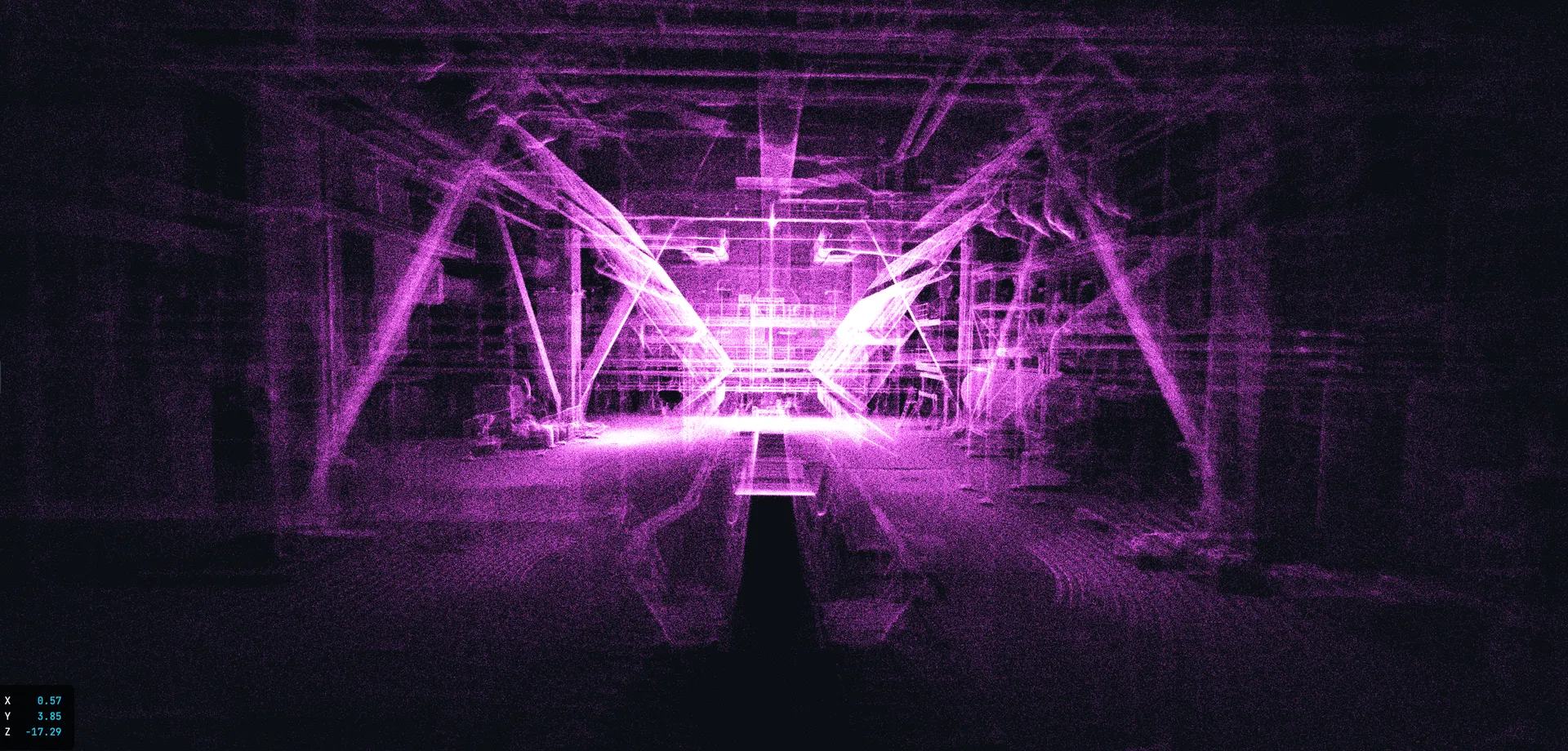
LiDAR 3D point cloud of a power plant boiler house – centimetre-accurate geometry data for documentation and digital twins.
Your Benefits as a Power Plant Operator
- No human entry: No DGUV confined-space entry (Befahrung) required. No safety watch, no breathing apparatus, no rescue chain. Drastically reduced risk.
- Non-contact inspection – no secondary damage: Every crawl-through risks worsening existing damage – loose parts, brittle linings. The drone works without contact – no additional loading on the installation.
- Thermography: hotspots & insulation damage reliably detected: Insulation damage, leaks, overheated areas – visible with the thermal camera. 4K + LiDAR deliver a 3D twin for precise planning.
- Shared decision basis for all stakeholders: Unclear images and subjective assessments often lead to disputes between operator, certifier and maintenance. 4K video and 3D model create a shared, objective decision basis.
- No scaffolding: Scaffolding for boiler or chimney inspection is completely eliminated. Save weeks of lead time and substantial costs.
- Minimal downtime: Inspection in a few hours instead of weeks. Maintenance windows are optimally used – more time for real maintenance.
- Precise documentation: 3D models, thermal maps, 4K video – no more subjective crawl-through reports. Sound decision basis for maintenance planning.
- Cost savings of up to 80%: Compared with conventional inspection methods (scaffolding, climbers, crawl-through entry), you save up to 80% of total costs.
- DGUV-compliant: Our inspections fulfil DGUV requirements for confined spaces. No human entry = no risk.
How an Inspection Works
Step 1: Initial Consultation (free)
We analyse your requirements and advise you free of charge on all technical and organisational questions.
Step 2: Scheduling & Quotation
You receive a transparent quotation. Together we plan the timing, access and safety concept.
Step 3: On-Site Inspection
We carry out the inspection with state-of-the-art drone technology – usually within a few hours.
Step 4: Evaluation & Inspection Report
You receive a detailed report with 4K footage, 3D models, thermography analyses and a systematic findings overview.
Major Power Plant Operators
Beyond the major operators there is a large number of other energy companies, municipal utilities (Stadtwerke) and wind and solar operators that make a substantial contribution to energy supply. Our inspections are deployed in many different types of installation – from boilers, chimneys and pipelines to water-bearing systems and ancillary installations. We work independently of any manufacturer or operator and adapt our inspection procedures individually to each installation.
Your Contacts for Power Plant Inspections
Years of experience in complex industrial environments. We understand the requirements of power plant operators – tight maintenance windows, the highest safety standards, precise documentation.
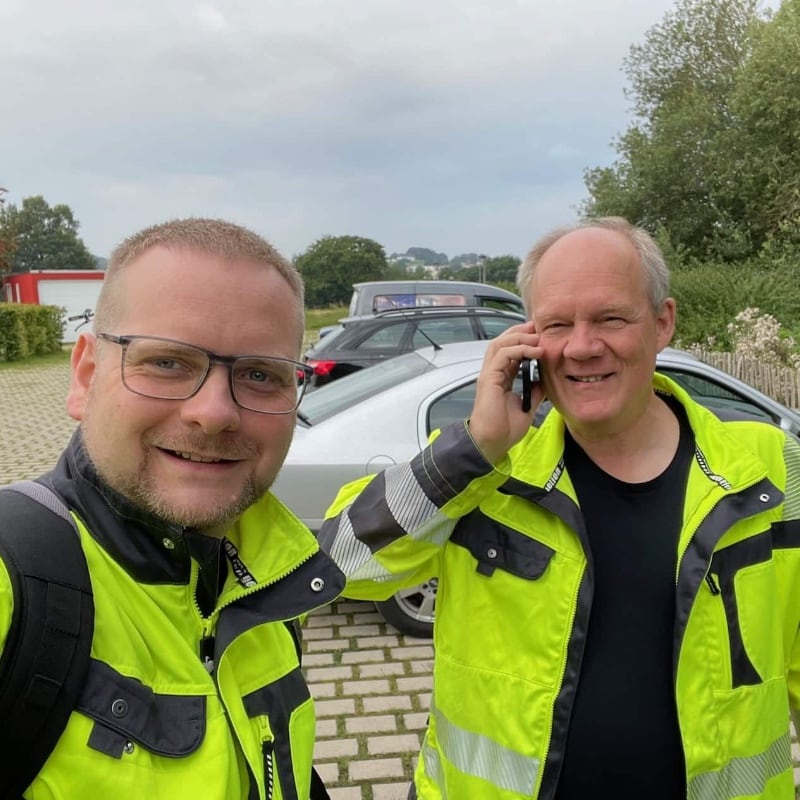
Christian Engelke and Dipl.-Ing. Karsten Lehrke – your direct contacts for power plant inspection projects.
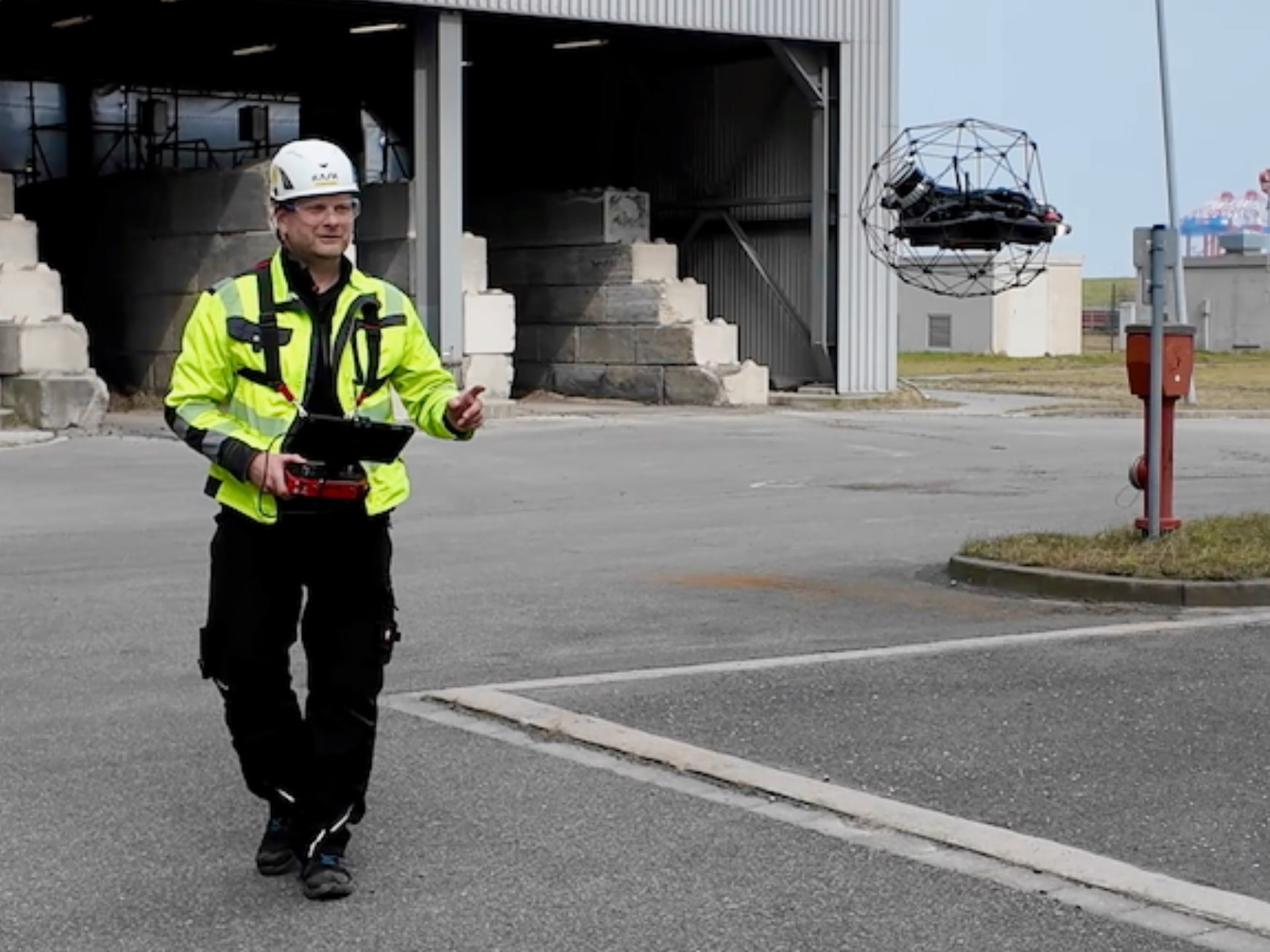 Christian Engelke
Founder & Drone Pilot
Christian Engelke
Founder & Drone Pilot
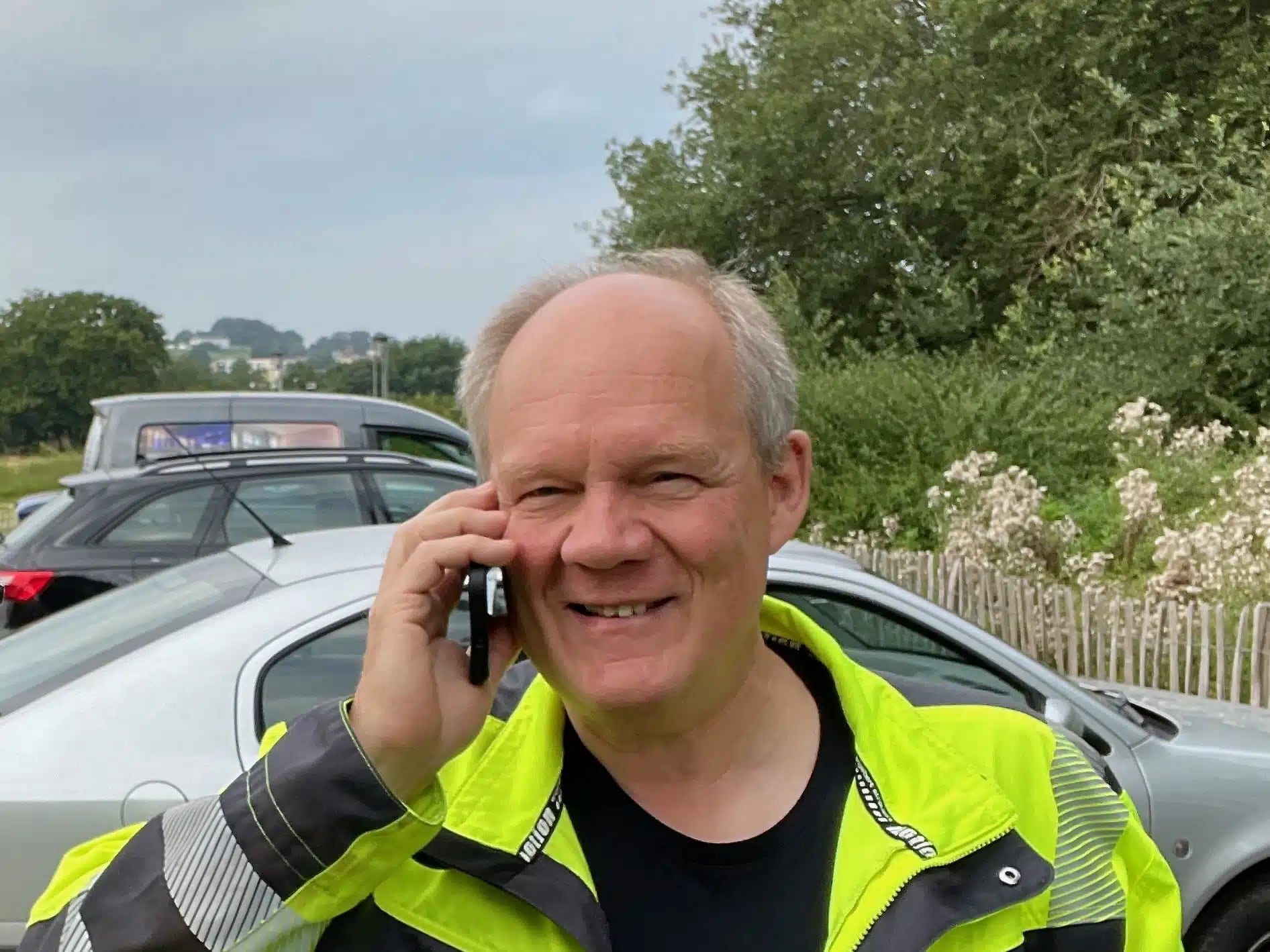 Karsten Lehrke
Project Manager
Karsten Lehrke
Project Manager
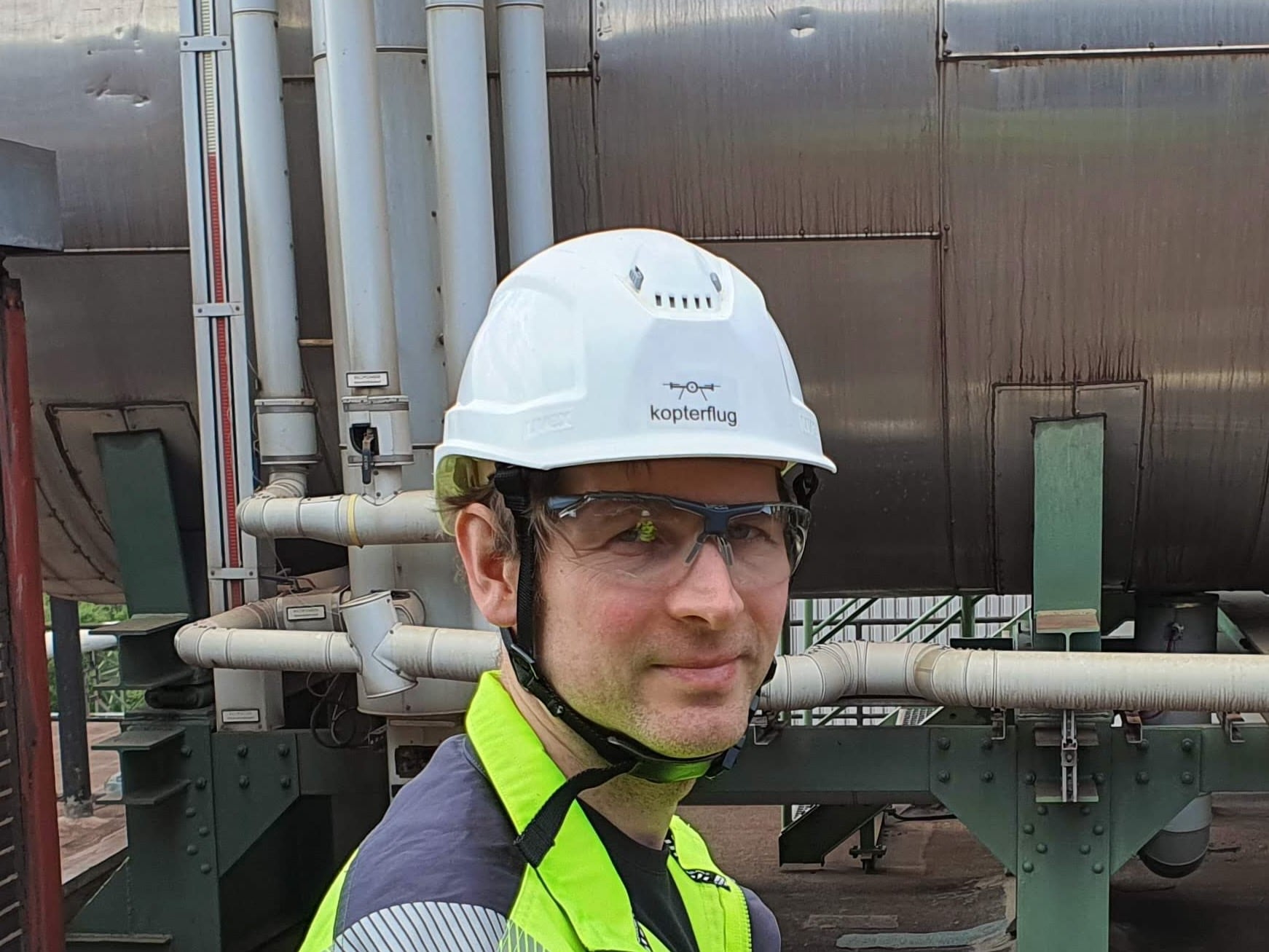 Philipp
Founder, Operations Planning & Logistics
Philipp
Founder, Operations Planning & Logistics
 Juliana
Drone Pilot
Juliana
Drone Pilot
 Stephan
Operations Planning & Logistics
Stephan
Operations Planning & Logistics
Related Services
- Cooling Tower Inspection – Natural-draught and cell coolers by drone – M30T outside during operation, ELIOS 3 for internals.
- Boiler Inspection – Steam boilers, heat-recovery steam generators and combustion chambers – 4K + LiDAR without scaffolding.
- Chimney Inspection – Tall structures inspected from the inside – without scaffolding and without rope access.
- Confined Spaces Inspection – Tight spaces without human entry – ELIOS 3 for all confined-space objects.
- Flyability ELIOS 3 – The collision-safe indoor drone with 4K, LiDAR and thermography in detail.
- Industrial LiDAR Survey – 3D point clouds for BIM, digital twins and as-built documentation.
Frequently Asked Questions about Power Plant Inspections
Which power plant components can be inspected with the ELIOS 3?
We inspect boilers (water-tube and fire-tube boilers / Wasserrohr- und Flammrohrkessel), chimneys, flue-gas ducts, economisers, condensers, cooling towers, combustion chambers and other hard-to-access components. The ELIOS 3 fits through standard manholes (Mannlöcher) and navigates autonomously in GPS-free environments.
Does the boiler need to be cooled down for inspection?
Yes. The ELIOS 3 has a maximum operating temperature of 50 °C. Boilers, combustion chambers and flue-gas ducts must be cooled to ambient temperature before inspection. We coordinate deployment with your shutdown plan (Stillstandsplan) – ideally during planned revisions (Revisionen).
Which standards are relevant for power plant inspections?
For power plants the key standards are BetrSichV (monitoring-duty installations), EN 12952 (water-tube boilers), DGUV Rule 113-004 (work in vessels and confined spaces / Arbeiten in Behältern und engen Räumen) and the 1. BImSchV (chimneys and flue-gas installations). Our documentation is structured so that certified inspectors can use it directly for recurring inspections.
Do DGUV confined-space-entry measures lapse when a drone is used for power plant inspection?
In many cases yes. Since no human entry into the boiler or chimney is required, the extensive measures under DGUV Rule 113-004 lapse: no gas measurement inside, no safety watch in the vessel, no breathing apparatus. Gas measurements at the access point and basic safety measures are nonetheless required.
How does the inspection work during a power plant revision?
We coordinate early with your revision planner (Revisionsplaner) and integrate the drone deployment into the shutdown plan. Our team is typically two people on site – pilot and assistant – sometimes three for larger orders. Inspection of individual components usually takes a few hours. We work in parallel with other revision activities.
Can the ELIOS 3 also fly vertically through chimneys?
Yes. The ELIOS 3 flies vertically through chimneys and documents the inner wall over its full height – masonry (Ausmauerung), corrosion, cracks, sulphurous attack (Versottung). The protective cage shields the drone when it contacts the chimney wall. Chimneys must be cooled and out of service.
What data do we receive after a power plant inspection?
You receive a detailed inspection report with 4K video footage, individual images of all findings, optionally a LiDAR 3D point cloud for measurement and digital twin, and thermography images where required. The documentation is structured so that your certified inspectors can use it directly for assessment.
Do you work with TÜV or DEKRA on power plant inspections?
Yes. We have many years of experience working with TÜV, DEKRA and other inspection bodies on power plant inspections. We coordinate inspection scope and documentation in advance with the responsible inspector. The certified inspector can be on site during the deployment and assess the live images directly.
Does the drone replace the conventional boiler inspection by certified inspectors?
No – and that is not a disadvantage but a clear division of roles. The drone replaces dangerous human entry and the time-consuming scaffolding. The certified inspector continues to assess the findings and make decisions – on the basis of significantly better data: 4K footage from close range, LiDAR 3D models and thermography images instead of subjective hand sketches.
Can water-tube boilers (Wasserrohrkessel) be fully captured by drone?
Yes. The ELIOS 3 flies through the boiler interior and documents evaporator tubes (Verdampferrohre), superheaters (Überhitzer), economisers and refractory linings in 4K – including hard-to-access areas at ceilings and rear walls that are often only partially captured in conventional crawl-through inspections. Typical findings are corrosion, ash deposits, tube damage and erosion.
Can thermography detect damage in the boiler?
Yes, as a complementary method. The ELIOS 3 thermography camera makes temperature differences visible – for example at hotspots, insulation problems or thermal anomalies at heating surfaces. Thermography is an indication method: it shows where a closer look makes sense, but it does not replace further assessment by the certified inspector.
How does LiDAR help with power plant inspection?
LiDAR enables complete 3D capture of the boiler interior, flue-gas ducts and chimneys with centimetre-range accuracy. This gives the pilot spatial orientation even in large, dark vessels and provides certified inspectors with a true-to-scale 3D model for finding localisation. In follow-up flights, changes can be directly compared.
Does the boiler need to be completely cleaned before inspection?
Not necessarily. The ELIOS 3 can be deployed even when deposits, fly ash and residues are present – often the drone delivers precisely then the most valuable information about build-up and contamination patterns. Operational safety requirements (cooling, gas-free measurement, release) remain binding. We coordinate the prerequisites with your team in advance.
Can heat-recovery steam generators (Abhitzekessel / HRSG) be inspected by drone?
Yes. Heat-recovery steam generators in combined-cycle (GuD) plants are among our typical applications: tube bundles, internals, bypass dampers and contaminated areas can be fully documented without scaffolding and without human entry.
How much does drone inspection reduce downtime at power plants?
The advantage lies primarily in the elimination of scaffolding erection (days to weeks), reduced access logistics and shorter inspection duration itself. In practice, drone inspection is significantly faster than conventional methods – the concrete effect depends on installation, condition and scope.
What happens if the drone touches internals in the boiler?
The ELIOS 3 is specifically designed for tight spaces with pipes, stiffeners and complex internals. The carbon protective cage absorbs light collisions; the drone stabilises autonomously. If it flips, it returns independently to normal attitude – without crashing.
Is the drone suitable for cooling towers (Kühlturm)?
Yes – both inside and outside. Inside, the ELIOS 3 inspects packing fills, concrete walls and internal structures without rope access or scaffolding. Outside, the DJI Matrice 30T captures cracks, spalling, rebar damage and heat losses on the outer wall with 200× zoom and thermography – during live operation, without a mobile elevated work platform (MEWP).
Can power plant inspections be repeated and compared?
Yes – that is a key advantage of the structured approach. Geo-referenced LiDAR 3D data and systematic image series enable direct comparison between revision cycles: corrosion progress, deposit increase and geometry changes become measurable across several shutdowns. This supports condition-based maintenance planning.
Can erosion or deposits in the boiler be detected?
Yes, and this is one of the strongest application areas for the drone. Ash build-up (Ascheanbackungen), tube and wall erosion and slag deposits in combustion chambers can be clearly documented in close-range 4K footage – including localisation in the 3D model.
Are there real references from power plant inspections?
Yes. Our own services are shown under Boiler Inspection, Chimney Inspection and Power Plant Inspection. Flyability documents boiler inspections under Drone Boiler Inspections and power generation cases under Power Generation.
Can the M30T inspect power plant exterior areas during live operation?
Yes. The DJI Matrice 30T is our exterior drone for power plants. With 200× hybrid zoom and radiometric thermography it documents boiler-house outer walls, flue-gas ducts, pipe bridges and cooling tower outer walls from a safe distance – without a MEWP, without scaffolding, during live operation. CUI (Corrosion Under Insulation) on exterior pipework is made visible thermographically without opening the insulation.
Where does drone inspection in power plants reach its limits?
Not every plant area is equally well suited for a drone. Steam and residual moisture in boiler areas shortly after shutdown significantly impair image quality. Strong airflows in chimneys can restrict flight stability. Magnetic fields near generators and large motors influence sensor systems. Very tight passages below 50 cm are also not passable for the ELIOS 3. And: a visual drone inspection does not replace metrologically verified materials testing. What it delivers is a sound initial assessment that shows where further testing is worthwhile – and where it is not.
How does drone inspection fit into our existing inspection concept?
Drone inspection delivers the greatest benefit as a component in your existing maintenance and inspection concept – not as an isolated single measure. Typical integration: as a pre-inspection before planned revisions, to show where a closer look is needed. As an intermediate inspection between regular inspection intervals per BetrSichV and EN 12952. Or as a documentation basis for your inspection records. We align scope and objectives with your maintenance team in advance.
Can thermography be used during live operation – without shutdown?
Yes – and that is a major advantage. With the DJI Matrice 30T we capture thermal anomalies at exterior areas without shutdown and without personnel on site: insulation losses at steam and process lines, temperature anomalies at transformers and switchgear, leaking valves and flanges, and CUI (Corrosion Under Insulation) at hard-to-access locations. This saves downtime and significantly reduces coordination effort.
What matters when evaluating inspection data?
The quality of a drone inspection is not measured by flight time or number of images – but by whether the data leads to a usable finding. Raw footage alone is not an inspection. Only the classification by specialists with plant knowledge turns images into reliable findings: is a discolouration on a pipe insulation relevant? Is a crack in the concrete wall structurally critical? We do not deliver an uncommented flood of data, but structured findings reports with severity, localisation and recommended action – directly usable for your maintenance planning and certified inspector review.
Get in Touch
Have questions about power plant inspection or need a quote for your installation? Fill in the form below and we will get back to you within 24 hours.