
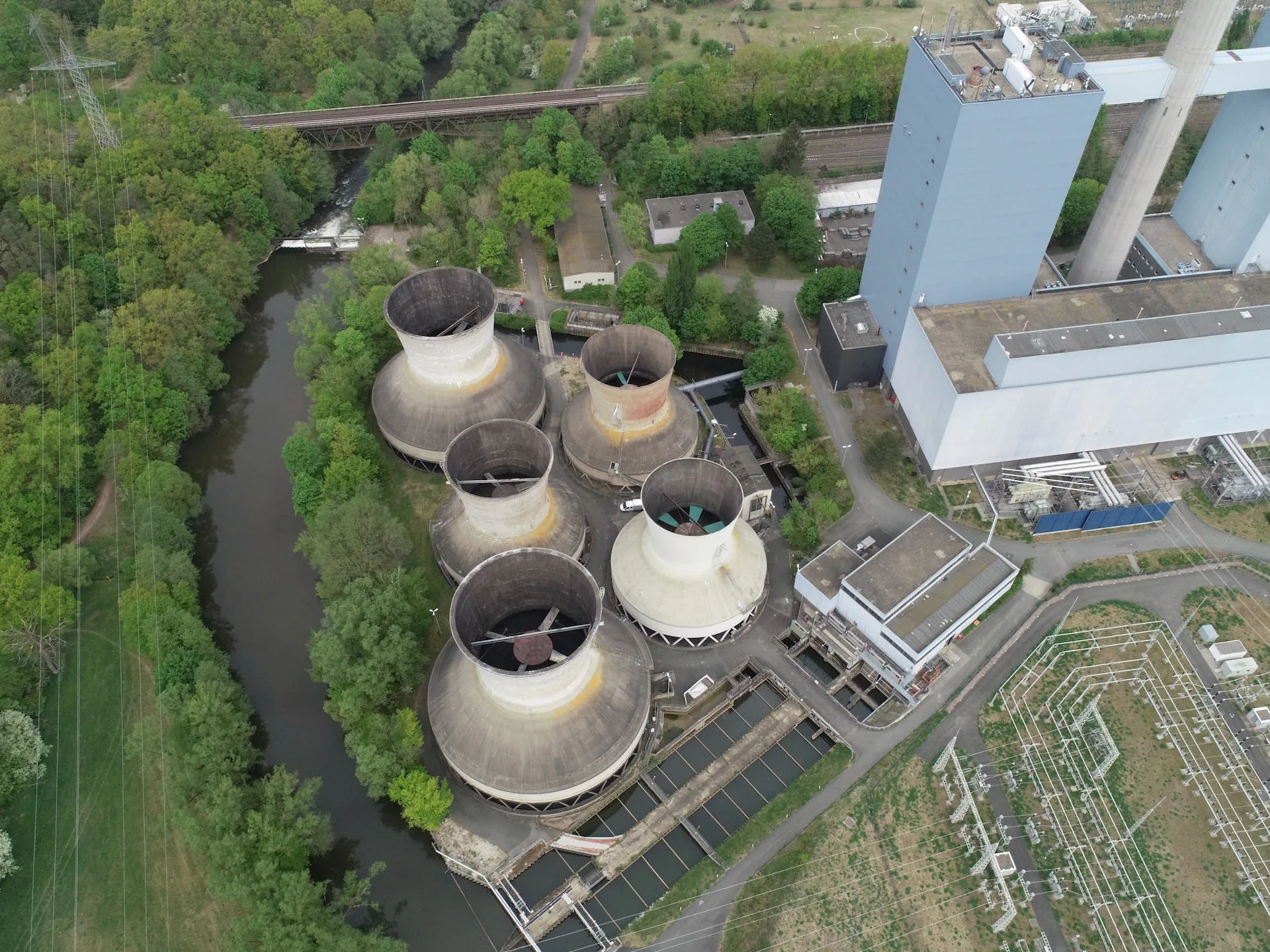
Cooling Tower Inspection by Drone – WITHOUT Scaffolding, WITHOUT Human Entry
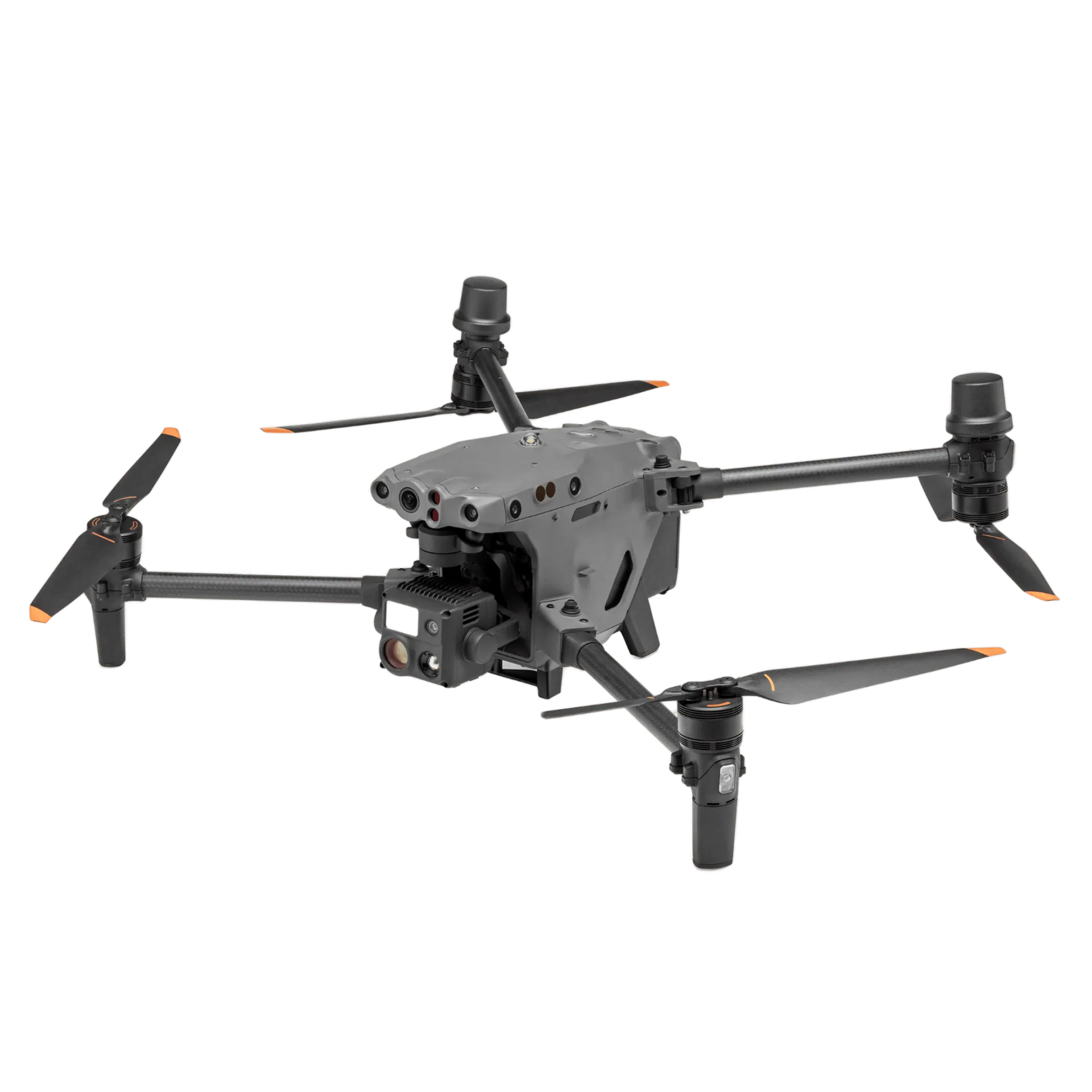
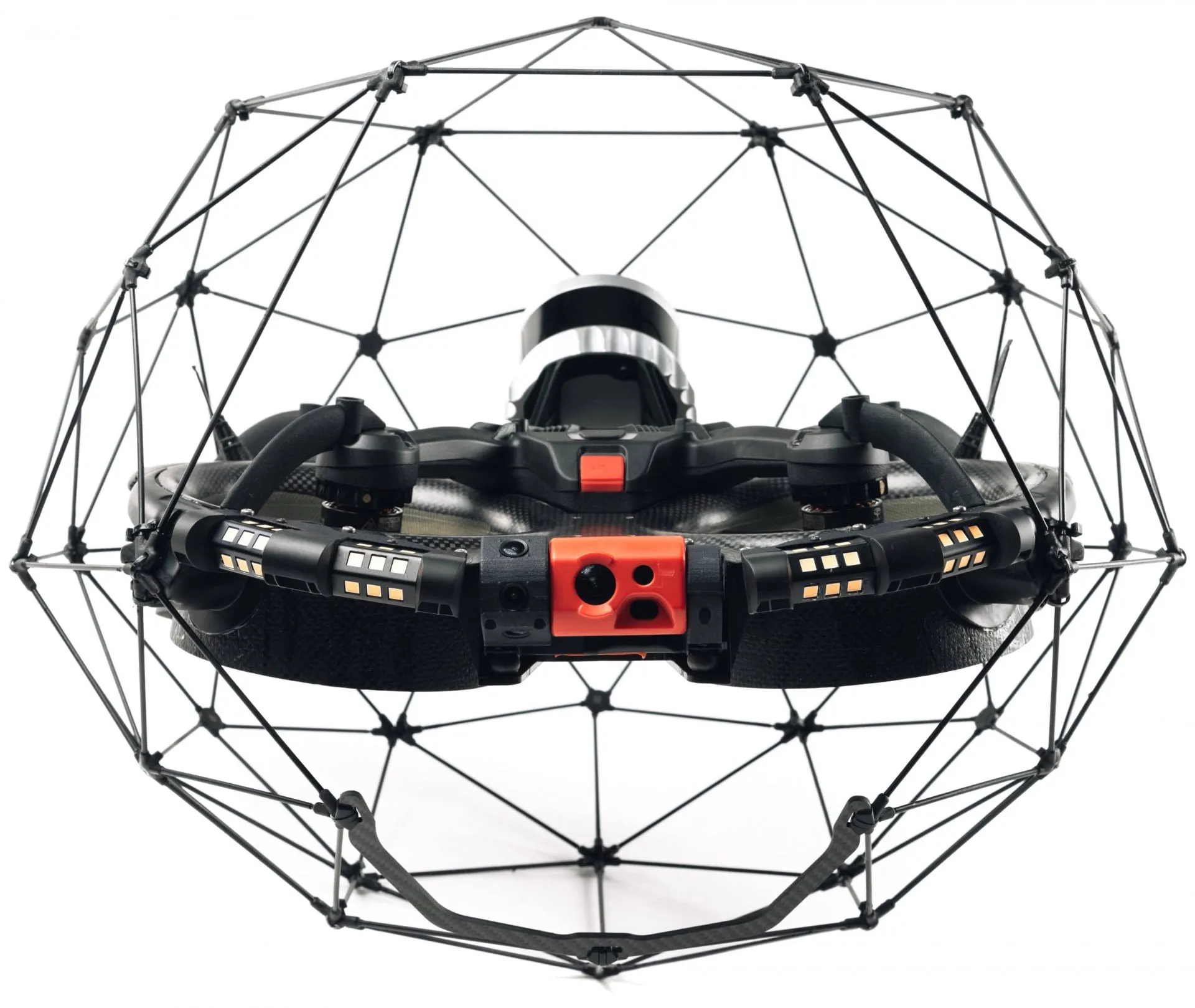
Kopterflug uses a hybrid approach for cooling tower inspection: the DJI M30T (200× zoom + thermography) for the concrete shell at full operation – the ELIOS 3 (4K + LiDAR + thermography) for the interior and installed components. One deployment, complete condition picture, nationwide across Germany.
- Exterior inspection at full operation – no shutdown required
- Interior inspection without scaffolding – no six-figure erection costs
- Zero human entry – ELIOS 3 flies in, your team stays outside
- LiDAR 3D model for structural engineers and expert witnesses
Hybrid Approach: DJI M30T + ELIOS 3
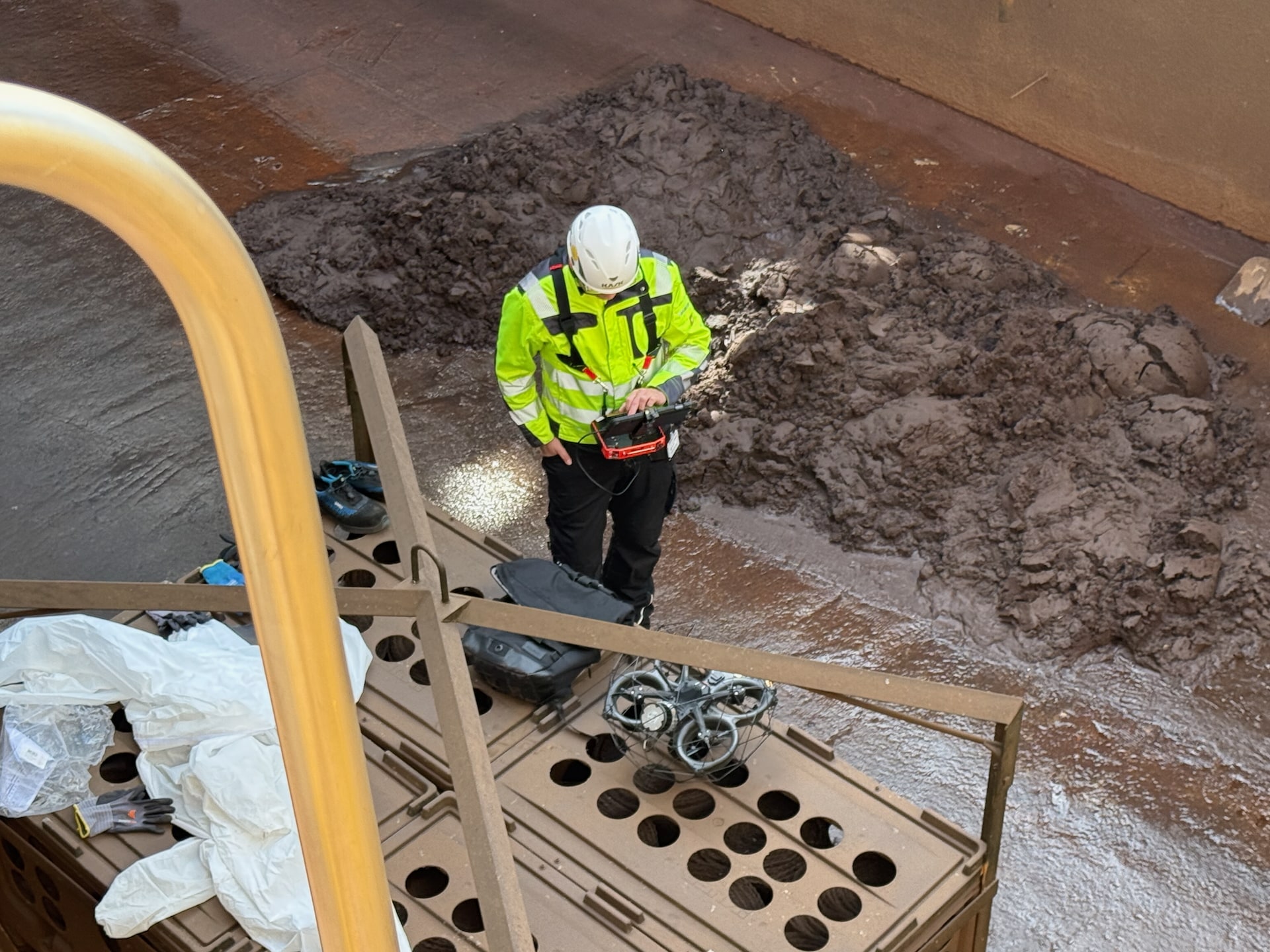
ELIOS 3 in use at cooling tower basin inspection – without human entry, without draining.
Our services for cooling tower inspection – exterior and interior:
- Exterior inspection with DJI M30T (no shutdown): 200× hybrid zoom and radiometric thermography document the concrete shell, crown and support structure at full operation. No shutdown, no scaffolding.
- Interior inspection with ELIOS 3 (Zero Human Entry): Collision-safe indoor drone covers installed components, cooling packs, drift eliminators, water distribution and the inner shell – without human entry.
- LiDAR 3D scan & digital twin: The ELIOS 3 LiDAR captures the complete interior geometry: shell deformations, ovality, damage localisation in 3D space for structural engineers and expert witnesses.
- Thermography – efficiency and damage analysis: Radiometric thermal camera detects blocked cooling packs, moisture ingress, heat losses and thermal anomalies on the concrete shell – interior and exterior.
Systems Deployed – Cooling Tower Inspection
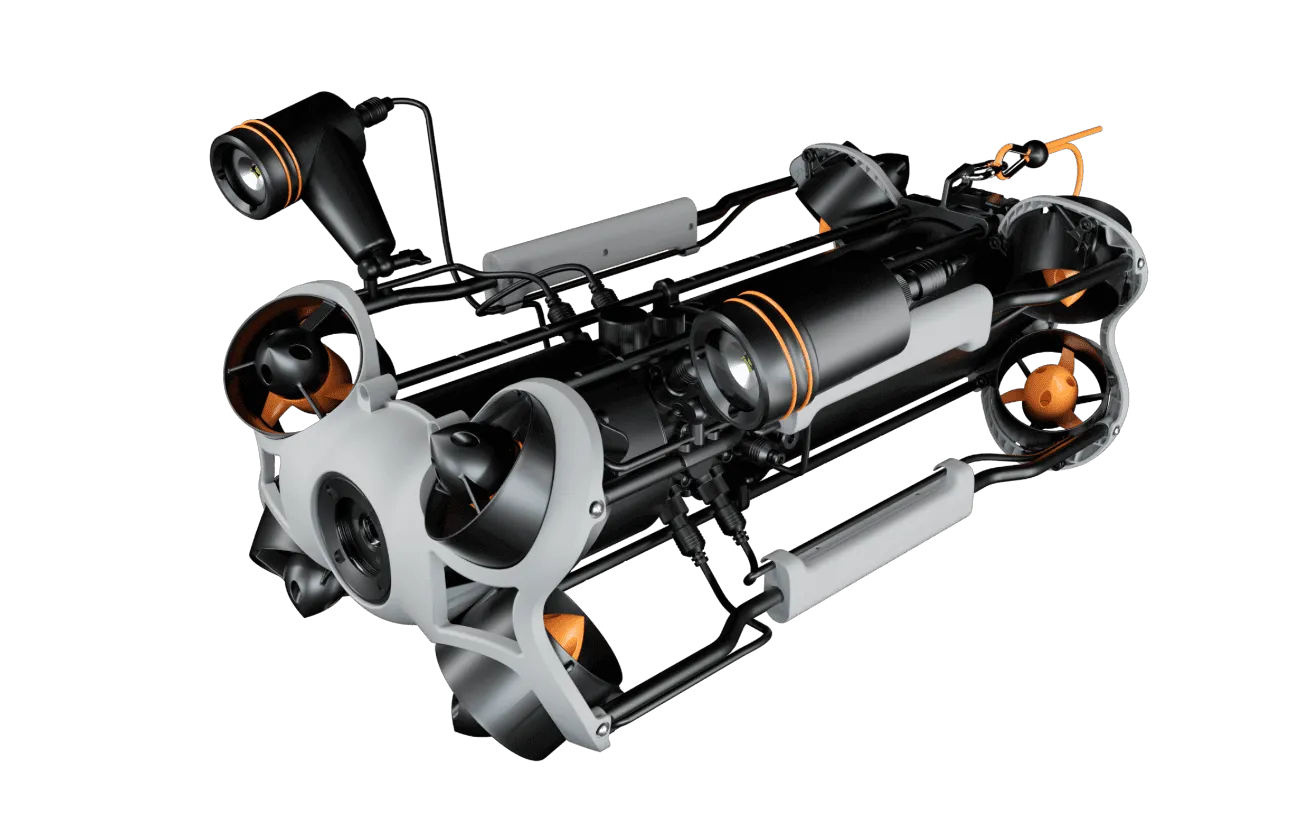
DJI M30T for the concrete shell from outside, ELIOS 3 for installed components and interior areas, Chasing M2 Pro Max (ROV) for the basin without draining.
Why the Hybrid Approach is the Only Sensible Solution
Cooling towers rank among the geometrically most demanding and hazardous inspection assets in the energy and process industries. A natural-draft cooling tower (Naturzugkühlturm) can exceed 150 metres in height – interior scaffolding alone costs six-figure sums and takes weeks. Installed components such as drift eliminators, cooling packs and water distribution systems are classically almost inaccessible.
At Kopterflug we therefore employ a hybrid approach with two specialised drones: The DJI Matrice 30T inspects the concrete shell, crown and support ring from outside – during live operation, no shutdown required. The Flyability ELIOS 3 flies inside the cooling tower: installed components, cooling packs, water distribution and the inner shell are fully captured with 4K, LiDAR and thermography.
The result: A complete condition picture of the cooling tower – no scaffolding, no human entry, no weeks-long shutdown. LiDAR 3D data gives structural engineers and expert witnesses the foundation for reliable condition assessments and repeat inspections over years.
What We Document During Cooling Tower Inspection
With the hybrid approach of DJI M30T (exterior) and ELIOS 3 (interior) we capture all safety- and maintenance-relevant areas of your cooling tower:
| Area | What We Check | How We Do It |
|---|---|---|
| Concrete shell – exterior | Cracks, spalling, exposed reinforcement, carbonation damage, frost damage, coating condition, crown edge | DJI M30T with 200× zoom and radiometric thermography – systematic flight from base to crown, at full operation without shutdown |
| Cooling packs & drift eliminators | Blockages, lime deposits, biofilm, algae, deformations, mechanical damage, missing segments | ELIOS 3 with 4K camera and 16,000 lumen lighting – coverage of all installed-component levels, close-ups of every section |
| Water distribution & spray nozzles | Defective or blocked nozzles, scale, damage to distribution channels and pipes, uneven water distribution | ELIOS 3 flies over and between distribution channels – each nozzle captured visually, thermography shows distribution anomalies |
| Concrete shell – interior | Shell cracks, map cracking, spalling, leaks, moisture behind the shell, reinforcement corrosion | ELIOS 3 with 4K camera and thermography documents the entire inner shell – LiDAR captures deformations at millimetre scale |
| Support ring & load-bearing structure | Corrosion on concrete columns and steel supports, concrete damage, deflections, mechanical damage to the load-bearing structure | M30T for the exterior view of the support ring, ELIOS 3 for the interior – LiDAR detects deformations and tilts |
| Collection basin & floor area | Cracks in the concrete basin, deposits, corrosion, condition of water connections and drainage systems | ELIOS 3 flies over the collection basin and documents cracks, deposits and all connections from a safe distance |
At the end you receive a detailed inspection report with 4K footage, thermography maps, LiDAR 3D model with localised findings and damage classification. Your structural engineers and expert witnesses receive reliable data for condition assessment per VGB – without scaffolding, without weeks of shutdown.
Challenges of Cooling Tower Inspection
- Interior scaffolding: six-figure costs. Scaffolding inside a natural-draft cooling tower costs €100,000 or more, takes weeks and requires a lengthy shutdown. The ELIOS 3 replaces this effort with a targeted drone flight.
- Hard-to-reach installed components. Drift eliminators, cooling packs and water distribution systems are classically accessible only from above or via expensive rope-access systems.
- Moisture, steam and restricted visibility. At full operation, dense steam prevents meaningful interior inspection. Only at shutdown is a complete visual inspection possible – the drone plans the deployment accordingly.
- Concrete damage up to 150 m height. Cracks, spalling and exposed reinforcement at the crown of a natural-draft tower are simply unreachable for ground-based inspectors. The M30T delivers close-ups of every metre via 200× zoom.
- Long shutdowns = high production losses. Every hour of cooling tower shutdown burdens production. The M30T exterior inspection requires no shutdown – the ELIOS 3 interior inspection reduces it to the minimum.
- VGB standards and expert witness requirements. Condition assessment per VGB-S-610-00 and VGB-R 612 (German cooling tower standards) demands reliable data. Whether the drone is accepted as the sole inspection instrument is decided by the expert witness on a project-specific basis – we deliver the foundation.
Cooling Tower Types We Inspect

Conventional Cooling Tower Inspection vs. Drone
| Aspect | Conventional | Drone |
|---|---|---|
| Exterior inspection | Rope access, elevated work platform | DJI M30T at full operation |
| Interior inspection | Scaffolding (€100,000+, weeks) | ELIOS 3, no scaffolding |
| Shutdown required? | Yes – for interior and exterior | Exterior: no. Interior: minimal |
| Time required | Weeks to months | 1–3 days |
| Installed components accessible? | Limited, sometimes not at all | Fully accessible with ELIOS 3 |
| Documentation | Photos, sketches | 4K + LiDAR 3D + thermography |
Benefits of Drone Inspection for Cooling Towers
- No interior scaffolding: Six-figure scaffolding costs and weeks-long erection times are eliminated. The ELIOS 3 inspects the entire interior without scaffolding.
- Exterior inspection at full operation: The DJI M30T inspects the concrete shell and crown at full operation. No shutdown for exterior inspection – no production losses.
- LiDAR 3D for structural engineers: The digital twin enables geometry measurement, shell deformation analysis and reproducible repeat inspections over years.
- Zero Human Entry: No human entry into damp, confined and potentially hazardous interiors. The drone takes over – your team stays outside.
- Reproducible repeat inspections: Stored flight paths and 3D reference models enable time comparisons: how has the damage changed since the last inspection?
- Minimal shutdown: Interior inspection with ELIOS 3 takes hours rather than weeks. Shutdown times are drastically reduced – even for natural-draft towers.
- Full coverage of all areas: Concrete shell, installed components, cooling packs, water distribution, support ring – together M30T and ELIOS 3 capture areas that are classically inaccessible.
Cooling Tower Basin: Underwater Inspection with ROV
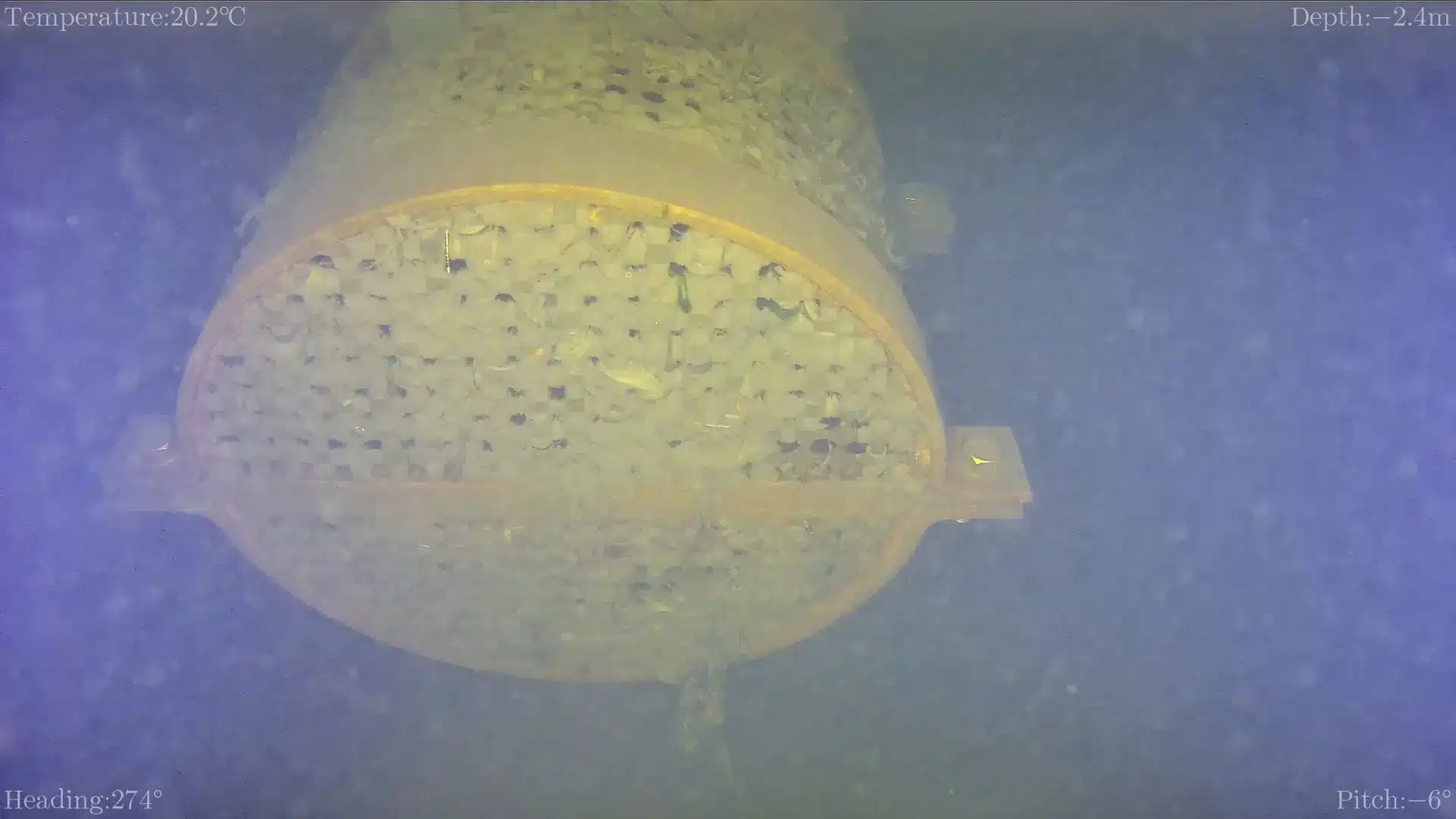
Intake area of the cooling tower basin – ROV inspection without draining.
The collection basin (Kühlturmtasse) is one of the most heavily stressed areas of a cooling tower – and classically almost impossible to inspect while water remains in the basin. With our ROV Chasing M2 Pro Max we inspect basin floors, installed components and intake screens without draining, without divers, without operational interruption.
- Basin floor & walls: Cracks, deposits, corrosion and concrete damage – fully documented without draining.
- Sedimentation & deposits: Sludge, lime deposits and biofilm on the basin floor: the ROV documents volume and distribution – the foundation for cleaning planning.
- Intake screens & inlets: Condition of intake screens and inlet openings: blockages, corrosion, missing or defective screens – without divers and without operational interruption.
- Submerged installed components: Support structures, pipe connections and installed components below the waterline are visually captured and checked for damage.
Combination possible: ELIOS 3 for the air space of the cooling tower basin, ROV for the filled underwater area – complete basin check in one deployment.
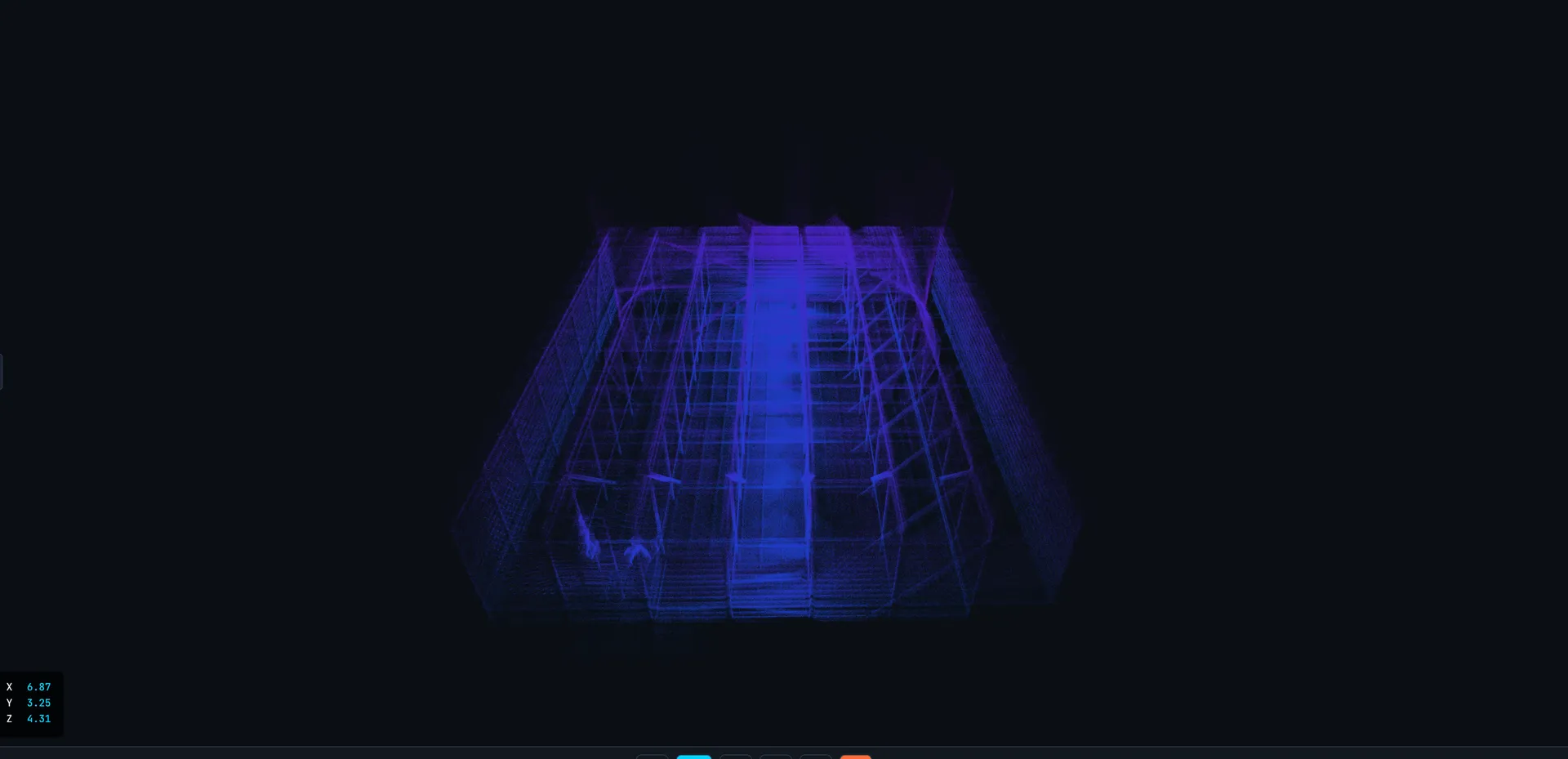
LiDAR 3D point cloud of a cooling tower interior – centimetre-accurate geometry data for documentation and digital twins.
Cooling Tower Inspection Process
- Initial consultation & feasibility analysis: We analyse your cooling tower: type, height, diameter, installed-component structure, last inspection, known damage. Coordinate shutdown planning, develop safety concept – free of charge.
- Scheduling & quotation: Transparent quotation for exterior and/or interior inspection. Coordination with your plant operations: exterior possible at any time, interior during planned shutdown.
- Exterior inspection (DJI M30T): Systematic coverage of the concrete shell at full operation: shell surface from base to crown, support ring exterior. 200× zoom for close-ups, thermography for moisture analysis.
- Interior inspection (ELIOS 3): Coverage of all interior areas during shutdown: collection basin, installed-component level, water distribution, cooling packs, support ring interior, inner shell. 4K + LiDAR + thermography in one flight.
- Data evaluation & 3D model: Evaluation in Flyability Inspector: 3D model with colour texture, damage marking in 3D space, crack width measurement, comparison with earlier scans. Thermography evaluation for both drones.
- Inspection report: Detailed report with localised findings, damage classification per VGB (German cooling tower standards) and recommendations for action. Export as PDF, .las/.e57 (3D), .mp4 – for expert witnesses, structural engineers and operators.
Our Team
Since 2017 we have been inspecting cooling towers with drones – natural-draft, fan-assisted and cell coolers. For the exterior we deploy the DJI Matrice 30T, for the interior the Flyability ELIOS 3. We deliver the data; your structural engineers and expert witnesses make the decisions.
 Christian
Founder & Drone Pilot
Christian
Founder & Drone Pilot
 Karsten
Project Manager
Karsten
Project Manager
 Philipp
Founder, Mission Planning & Logistics
Philipp
Founder, Mission Planning & Logistics
 Juliana
Drone Pilot
Juliana
Drone Pilot
 Stephan
Mission Planning & Logistics
Stephan
Mission Planning & Logistics
Related Services
- Power Plant Inspection – Complete power plant inspection: boilers, chimneys, cooling towers and pipelines.
- Chimney Inspection – Inspect tall structures from the inside – without scaffolding and without rope access.
- Boiler Inspection – Steam boilers, waste-heat boilers and combustion chambers – 4K + LiDAR without scaffolding.
- Confined Spaces Inspection – Confined spaces without human entry – ELIOS 3 for all confined-space assets.
- Chemical Industry – Cooling circuits, reactors, columns and process vessels in the chemical industry.
- Flyability ELIOS 3 – The collision-safe indoor drone with 4K, LiDAR and thermography in detail.
Frequently Asked Questions: Cooling Tower Inspection by Drone
Which drones are used for cooling tower inspections?
We deploy two drones: the DJI Matrice 30T for exterior inspection (concrete shell, crown, support ring) with 200× zoom and radiometric thermography – at full operation, no shutdown required. The Flyability ELIOS 3 for interior inspection (installed components, cooling packs, water distribution, inner shell) with 4K, LiDAR and thermography.
Can the exterior inspection take place at full operation?
Yes – the exterior inspection with the DJI M30T requires no shutdown. The drone flies at a safe distance around the cooling tower and documents the concrete shell via 200× zoom and thermography. Only the interior inspection with the ELIOS 3 requires a shutdown so that steam and moisture do not impair visibility.
Can the drone fly in the damp interior of a cooling tower?
The ELIOS 3 is IP44-rated (splash-proof) and operates reliably in shut-down cooling towers with residual moisture. At active operation with heavy steam, visibility is too restricted – we recommend deployment at shutdown or at significantly reduced load.
Is the ELIOS 3 suitable for small GRP cell coolers?
Yes. The ELIOS 3 is approx. 50×45 cm and manoeuvres in tight cell-cooler structures too. For very narrow cooling packs (< 60 cm gap) we clarify feasibility in advance based on your plant data.
Does the drone detect cracks in the concrete shell?
Yes – the ELIOS 3 4K camera with 16,000 lumen lighting makes cracks, spalling and exposed reinforcement on the inner shell visible. Externally, the DJI M30T also detects cracks and spalling via 200× zoom. For classification per DIN EN 1504 a specialist evaluation is additionally required.
What does a cooling tower drone inspection cost?
Costs depend on type, size and inspection scope. In general, drone inspection is a fraction of scaffolding costs. The exterior inspection alone is particularly cost-efficient since no shutdown is needed. We produce a project-specific quote after a free feasibility check.
Which standards apply to cooling tower inspection?
Relevant standards include VGB-S-610-00 (cooling tower concrete construction), VGB-R 612 (installed components), DIN EN 13084 and the BetrSichV (German Industrial Safety Ordinance). Whether drone inspection is accepted as the sole inspection instrument is decided by the responsible expert witness on a project-specific basis. We deliver the documentation as the foundation for their assessment.
Does the drone deliver a digital twin of the cooling tower?
Yes – the ELIOS 3 LiDAR sensor captures the complete interior geometry as a 3D point cloud. The result is a digital twin for structural engineers and expert witnesses: shell deformations, ovality, damage localisation in 3D space, comparison with earlier scans. Export as .las/.e57 for BIM systems.
How long does a complete cooling tower drone inspection take?
The actual flight time for the exterior inspection is 30–60 minutes depending on tower size. The interior inspection with the ELIOS 3 typically takes 1–3 hours including battery changes. Overall, a complete inspection is usually finished within one working day – compared to several weeks for conventional scaffolding-based inspection.
What are the advantages of drone inspection over conventional scaffolding inspection?
Drone inspection eliminates scaffolding erection (cost, time, accident risk) and drastically reduces downtime. It also delivers gap-free photo documentation and optionally a 3D digital twin via LiDAR. For the exterior inspection, no shutdown is required at all since the DJI M30T flies during full operation.
How often should a cooling tower be inspected?
The VGB guideline recommends visual inspections every 1–2 years and in-depth inspections every 5–6 years. In practice, the interval depends on condition, age and operating conditions. Thanks to the low cost of drone inspection, shorter intervals pay off – detecting damage early avoids expensive follow-up repairs.
What types of damage can be detected on cooling towers by drone?
Typical findings include concrete spalling, cracks, carbonation, exposed reinforcement, corrosion on internals, damaged cooling packs, lime deposits, leaks in the water distribution system and shell deformations. The combination of 4K camera, 200× zoom and thermography captures both visible and thermally conspicuous damage.
Is a permit required for drone flights at a cooling tower?
As a licensed drone operator with an EU remote pilot certificate (A2) and operational authorisation under OPEN/SPECIFIC, we take care of all aviation permits. At power plant sites in restricted flight zones (e.g. near airports or nuclear power plants), we apply for the required special permit well in advance of the deployment.
How is safety ensured during the drone inspection?
The ELIOS 3 is equipped with a protective cage and cannot be damaged on collision – it poses no risk to the plant or to personnel. For the exterior inspection with the DJI M30T, a safety perimeter is established on the ground. All pilots are trained in accordance with UVV (German accident prevention regulations) and the respective site safety rules.
Can the drone inspect natural-draft cooling towers over 100 m tall?
Yes. The DJI M30T reaches altitudes above 200 m and fully inspects even the largest natural-draft cooling towers from outside. The ELIOS 3 flies inside along the shell and internals – height is not a limiting factor thanks to GPS-independent navigation. We have experience with towers up to 180 m in height.
What documentation do I receive after the inspection?
You receive a detailed inspection report with geo-referenced 4K photos, thermography images and a damage assessment with location plan. Optionally we deliver a 3D point cloud (LiDAR), an ortho-mosaic of the shell surface and a comparison with earlier inspection data. All data is provided in standard formats (PDF, JPG, .las, .e57).
Can thermography detect leaks in a cooling tower?
Yes – the radiometric thermography of the DJI M30T detects temperature anomalies on the exterior that indicate leaks, missing insulation or moisture ingress. Inside, the ELIOS 3 supplements the analysis with its thermal camera. This makes hidden damage visible that would not be detectable with the naked eye.
Is drone inspection also suitable for hybrid cooling towers?
Yes. Hybrid cooling towers (combination of wet and dry cooling) have additional internals such as heat-exchanger lamellae and louvres. The ELIOS 3 navigates safely between these structures thanks to its protective cage and real-time LiDAR scan. The DJI M30T checks the outer shell and louvres for mechanical damage and deformations.
Does drone inspection fully replace conventional inspection?
Drone inspection delivers complete visual and thermographic documentation and covers the majority of the visual inspection scope. For certain material tests (e.g. rebound hammer, core drilling, chloride analysis), spot access is still required. The drone precisely identifies the locations where these samples should be taken – saving considerable scaffolding costs.
How are inspection results compared with earlier surveys?
Through geo-referenced documentation and LiDAR scanning, we can systematically compare inspection results with earlier data. Crack patterns, spalling and deformations are precisely located in the 3D model so that damage progression over time is traceable. This trend analysis significantly supports your maintenance planning.
Can the supports and foundation of a cooling tower also be inspected?
Yes. The DJI M30T captures the entire support ring and foundation from outside via 200× zoom and thermography. The ELIOS 3 can additionally fly along the supports from inside and document cracks, concrete spalling or reinforcement corrosion in hard-to-reach areas. The support ring is structurally critical and particularly benefits from regular inspection.
How quickly can a cooling tower inspection be carried out?
For planned revisions we recommend a lead time of 2–4 weeks for preparation and permits. In urgent cases (e.g. after storm damage or unplanned findings) we are deployment-ready within 48–72 hours. We are available throughout Germany and align with your revision windows.
Get in Touch
Questions about cooling tower inspection or a quote for your project? Fill out the form and we will get back to you within 24 hours.