
7 Facts About Material Fatigue – and Why Early Inspections Are Decisive
Fatigue fractures (Ermüdungsbrüche) before they cause failures – with NDT (non-destructive testing) and drone inspections. Over 70% of all structural failures in industry are fatigue fractures. Most could have been prevented through early inspection.
- Over 70% of all structural failures are fatigue fractures
- Beach marks and striations (Rastlinien und Schwingstreifen) as characteristic indicators
- Visual testing + NDT: Early detection through drone + follow-up testing
Material Fatigue: The Hidden Danger in Industrial Plants
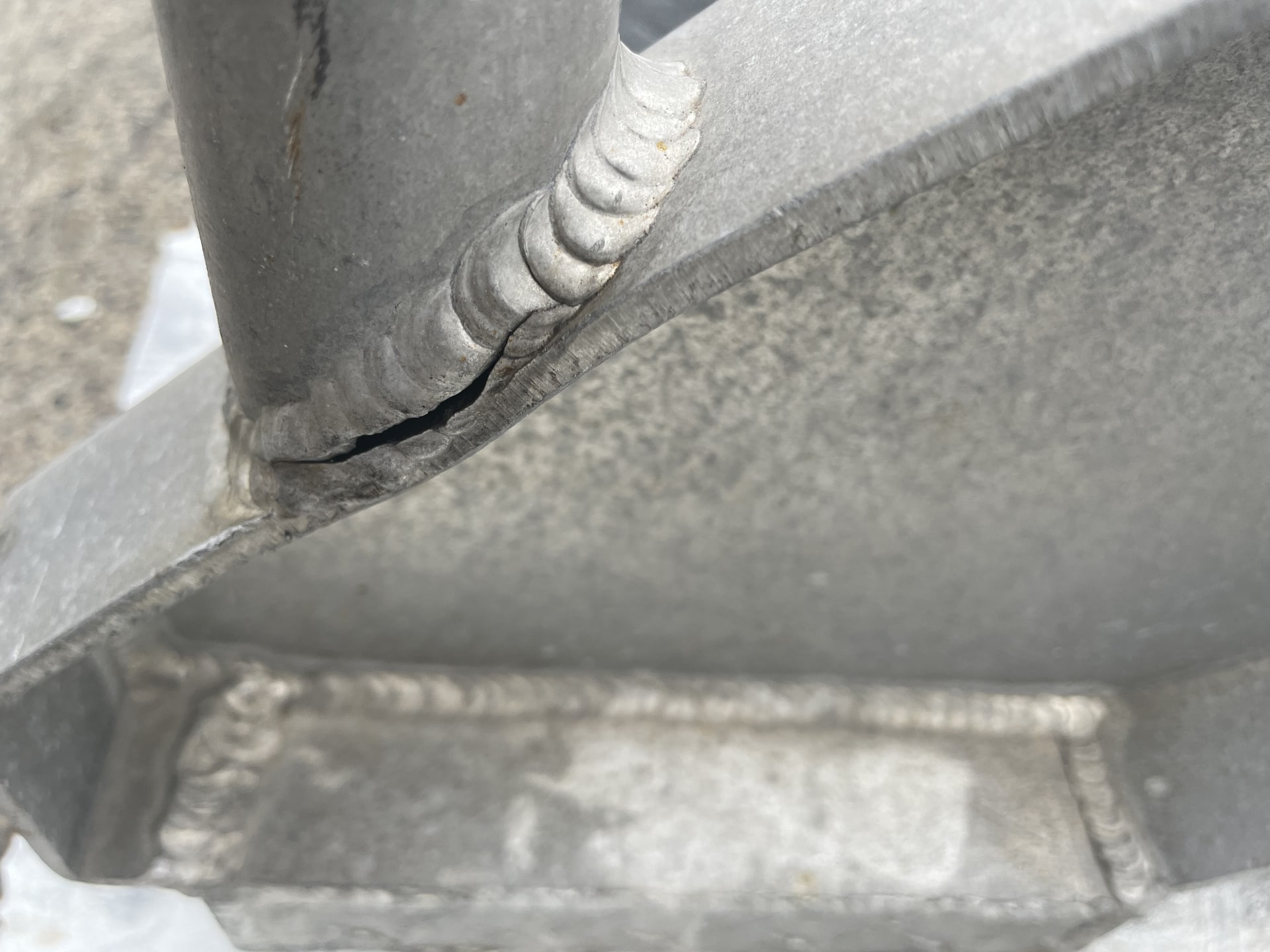
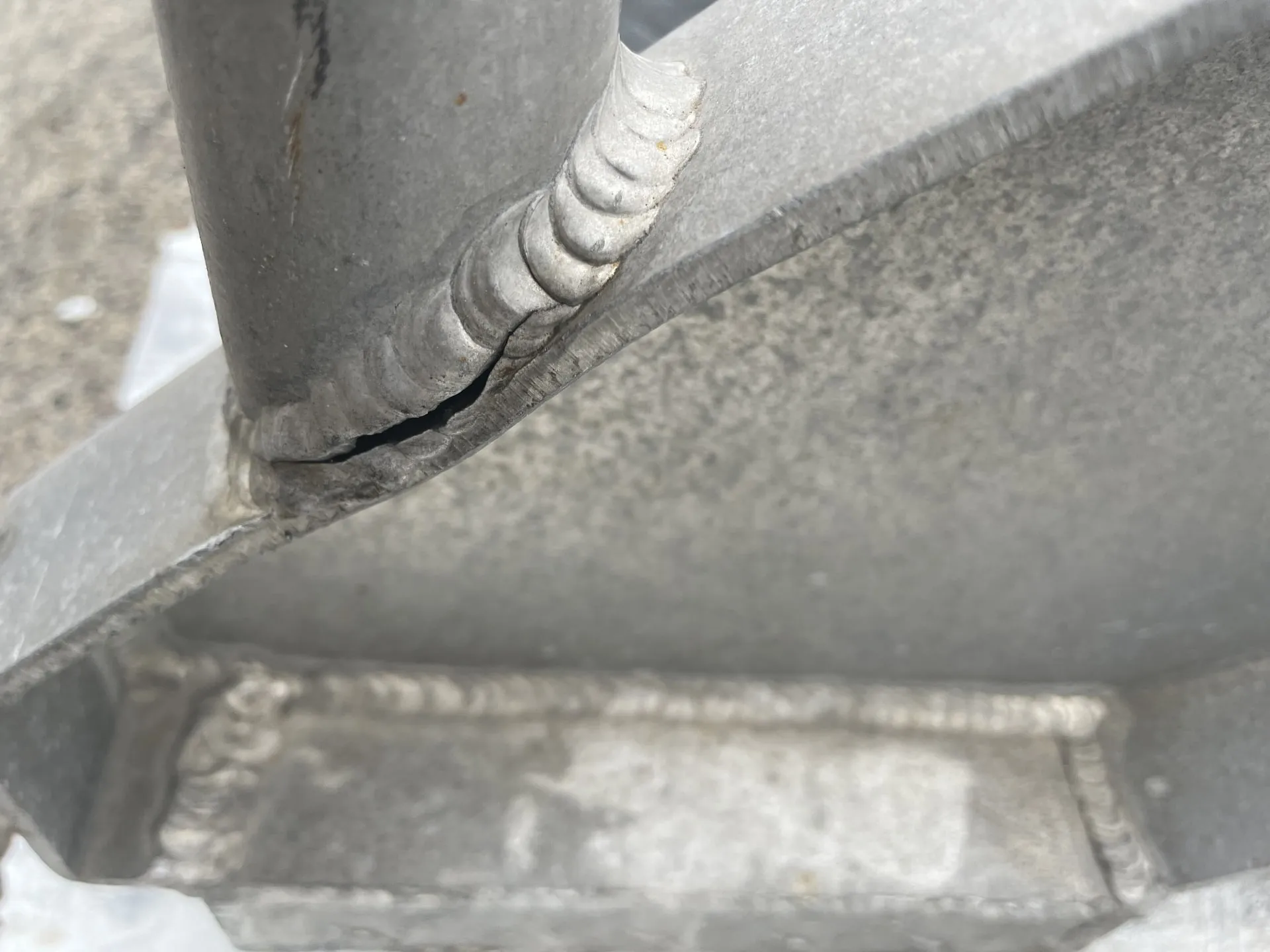
Fatigue crack on a metallic surface – with beach marks (Rastlinien) as characteristic damage pattern indicating fracture progression.
Material fatigue (Materialermüdung) weakens machines and structures unnoticed: cyclic loading creates micro-cracks that without regular inspection lead to sudden failure. Non-destructive testing (NDT / ZfP: Zerstörungsfreie Prüfung) and drone inspections with the Flyability ELIOS 3 detect these damages early – even in hard-to-reach areas such as boilers, reactors and shafts.
Our expertise since 2017: Hundreds of plants examined for material fatigue. Early detection is the key to avoiding unplanned failures.



7 Facts about Material Fatigue at a Glance
| Fact | Key Statement | Drone Contribution |
|---|---|---|
| 1. Cyclic Loading | Below yield strength, progressive micro-crack formation | ELIOS 3 for regular visual testing (VT) |
| 2. 70% of Failures | Most structural failures are fatigue fractures | Preventive instead of reactive; 80% cheaper than emergency |
| 3. Beach Marks & Striations | Characteristic fracture surface patterns | 4K images for detailed analysis; basis for follow-up NDT |
| 4. Late Visibility | Micro-cracks only visible at critical size | Frequent inspections for early detection; trend analysis |
| 5. Safety-Critical Industries | Power plants, chemical industry, mining, oil & gas | Confined-space capable; no human entry required |
| 6. NDT Is the Key | Visual testing + UT + MT + PT for complete monitoring | Drone as VT tool; thermography for hotspots; LiDAR for 3D |
| 7. Preventive Measures | Geometry, surface treatment, material selection | Comparison inspections over years; LiDAR for deformation |
Fact 1: Cyclic Loading Below the Strength Limit
Material fatigue is a complex phenomenon caused by repeated cyclic loading below the yield strength (Streckgrenze) of the material. These loads lead to progressive damage of the material microstructure, manifested in the formation of micro-cracks.
With every load cycle, these micro-cracks enlarge successively until they reach a critical size leading to component failure. Unlike plastic deformations, no immediate deformations occur with material fatigue, making the damage difficult to detect in the early stage. The accumulated damage can lead to sudden catastrophic fracture if not detected early.
Inspection solution with drones: The ELIOS 3 enables regular visual inspections (VT) even at hard-to-reach areas such as boiler inner walls, reactors or shafts. Through frequent inspections, crack progressions can be documented and maintenance intervals optimised.
Fact 2: Over 70% of All Structural Failures Are Fatigue Fractures
Studies show that more than 70% of structural failures in machines and technical components are attributable to fatigue fractures. These fatigue fractures frequently arise under conditions that are regarded as non-critical in normal operation – which is why early detection of micro-cracks and inspection of these components is of decisive importance.
Economic dimension: Unplanned failures from fatigue fractures cost industry billions of euros annually – preventive inspections are considerably cheaper than emergency repairs.
- Rotating machine components: Crankshafts, gearboxes, gears and bearings under permanent alternating loads
- Power plant components: Turbine blades, pipelines and boiler components under pressure and temperature
- Reactors & pressure vessels: Chemical reactors with cyclic temperature and pressure loads
Fact 3: Beach Marks and Striations as Recognition Features
Fractography (Fraktografie) – the science of fracture analysis – provides characteristic identifying features of fatigue fractures:
- Beach marks (Rastlinien): Shell-like patterns on the fracture surface showing crack progression over time. Created by intermittent crack advance under cyclic loading.
- Striations (Schwingstreifen): Fine furrows running perpendicular to the crack propagation direction, providing information about the number of load cycles.
- Crack origin: The initiation point of fatigue is typically at a stress concentration – notch, weld seam, surface defect.
Inspection solution: High-resolution drone images already enable visual pre-detection of surface cracks before they are examined in detail through further NDT methods (ultrasound, magnetic particle testing).
Fact 4: Visible Damage Only at Advanced Stage
One of the greatest problems with material fatigue is the invisibility of the early damage phases. Micro-cracks initially form at the microscopic level and remain invisible during the initial phases of crack growth. Only when the crack has reached a critical size do visible signs such as surface cracks or deformations become apparent – at this point the component is often already severely weakened.
Practical inspection strategy:
- Visual testing (VT) with drones: Frequent, cost-effective monitoring with the ELIOS 3 – detects surface cracks from approximately 0.5 mm
- Detailed NDT upon findings: Upon findings: ultrasound (UT), magnetic particle testing (MT) or penetrant testing (PT) for precise analysis
- Continuous documentation: Comparison of inspection data over years for trend analysis – the key to early detection
Fact 5: Safety-Critical Industries Require Regular Inspections
Material fatigue represents a particular challenge in safety-critical industries such as power generation, chemical industry, mining and oil & gas. Human life and operational safety depend on structural integrity – regular NDT and drone inspections are indispensable.
- Power plants: Turbines, boilers and pipelines under cyclic pressure and temperature loads
- Chemical industry: Reactors and pressure vessels with permanent temperature cycles and chemical stress
- Mining: Conveying systems and steel structures under permanent sustained load and vibration
- Oil & gas: Offshore platforms and pipelines under extreme alternating loads from waves and pressure
Fact 6: Non-Destructive Testing (NDT) Is the Key
NDT/ZfP (Zerstörungsfreie Prüfung) offers a decisive advantage in detecting material fatigue: it monitors the condition of components without damaging them. Modern drone inspections play an increasingly important role, particularly in hard-to-reach or dangerous environments.




Fact 7: Preventive Measures Significantly Extend Service Life
To reduce the risk of material fatigue, preventive measures are increasingly used in design:
- Geometric optimisation: Rounded transitions, no abrupt cross-section changes, flowing form transitions against stress concentrations
- Surface treatments: Shot peening (Kugelstrahlen), hardening and polishing create compressive residual stresses and remove surface defects
- Material selection: Higher-strength alloys with better fatigue resistance and avoidance of material inhomogeneities
Even optimally designed components are subject to fatigue – therefore regular inspections remain indispensable. Comparison inspections over years with LiDAR-3D enable objective deformation analysis and data-based maintenance planning.
Conclusion: Early Inspection Prevents Catastrophic Failures
The ELIOS 3 enables regular visual inspections even at hard-to-reach locations – boiler inner walls, reactors, shafts, tanks and pipelines. In combination with NDT methods (UT, MT, PT), a seamless inspection concept for material fatigue results.
Your Contacts

Related Services
- Industrial Drone Inspection – Professional drone inspections for all industrial plants.
- Confined Spaces Inspection – Inspections in confined spaces without hazardous human entry.
- Flyability ELIOS 3 – The indoor inspection drone for all confined space applications.
- Boiler Inspection – Steam boilers and pressure vessels – findings for certified inspectors.
- Tank Inspection – Safe inspection of storage tanks and pressure vessels.
- Industrial LiDAR Survey – 3D point clouds for geometry and deformation analysis.
Frequently Asked Questions
Why is early detection of material fatigue important?
Early detection of material fatigue (Materialermüdung) secures the integrity of structures and plants and can prevent accidents. Over 70% of all structural failures are fatigue fractures – many could have been prevented. Early detection through regular inspections enables targeted maintenance before catastrophic failures occur.
Which drone technology is particularly suitable for detecting material fatigue?
The Flyability ELIOS 3 is ideal for confined spaces: 4K camera with 16,000 lumen LED illumination for high-resolution visual inspections (VT), optional thermography for hidden damage detection, LiDAR for 3D documentation and deformation analysis, and GPS-independent LiDAR-SLAM navigation for confined spaces without light.
What visual signs indicate material fatigue?
Visual signs of advanced material fatigue: surface cracks (often starting from notches or weld seams), beach marks (Rastlinien) on fracture surfaces (shell-like patterns), discolouration around cracks (oxidation), surface deformations near cracks, and corrosion products at crack tips. Micro-cracks in early stages are not visible to the naked eye – hence the importance of sensitive inspection methods.
How do machine learning algorithms contribute to detecting material fatigue?
AI-supported image analysis is increasingly used: automatic crack detection in drone images, classification of crack types and severity, comparison with historical data for trend analysis, predictive fatigue detection through pattern recognition. The Inspector 5 software from Flyability already integrates AI-supported damage detection.
What role does 3D modelling play in documenting material fatigue?
LiDAR-3D models from the ELIOS 3 enable: precise measurement of deformations and distortions, comparison of inspections over years from exactly the same position, measurable documentation of crack progression in millimetres, and the basis for digital twins for ongoing monitoring.
How do inspectors plan an efficient drone inspection for detecting material fatigue?
Our inspection planning comprises: 1. Pre-discussion: clarification of critical areas, loading history, known problems. 2. Flight planning: definition of inspection route, special attention on high-stress areas (weld seams, notches, transitions). 3. Systematic execution: complete area coverage with documented flight paths. 4. Data analysis: findings classification and recommendations for follow-up NDT testing.
What challenges exist in detecting material fatigue with drones?
Challenges and our solutions: Smallest micro-cracks in early stage often invisible → frequent inspections for early detection of progression. Illumination in dark confined spaces → ELIOS 3: 16,000 lumen LED illumination. Limited visual access → LiDAR-SLAM navigation in tight spaces. Distinction from other damage types → experienced inspectors with technical background since 2017.
How is data quality ensured in material fatigue inspection?
Quality assurance at multiple levels: calibrated inspection systems (ELIOS 3), experienced operators with manufacturer certification, systematic inspection plans per standards (DIN EN ISO 17637 for VT, DIN EN ISO 9712 for NDT personnel qualification), structured findings reports with 4K screenshots and position references, and comparison with previous inspections for trend analysis.
Get in Touch
Need inspection for material fatigue in your plants? Fill out the form – we'll get back to you within 24 hours.