
Drones in Industrial Inspection – Flyability ELIOS 3 & DJI M30T
Safe, fast and cost-effective industrial inspection with the Flyability ELIOS 3 and DJI Matrice 30T – energy, chemicals, oil & gas. Operating since 2017.
- No scaffolding, no personnel entry – 4K, thermography, LiDAR
- 60–80% cost savings vs. conventional methods
- Digital twin (Digitaler Zwilling) for long-term condition monitoring
1. Industries & Applications that Benefit from Drone Inspection
Drone inspections cover numerous sectors. Each area benefits from specific advantages in efficiency and safety.

2. Advantages of Drone Inspection in Industry
Typical cost savings: 60–80% compared to traditional methods.

3. Technology & Equipment
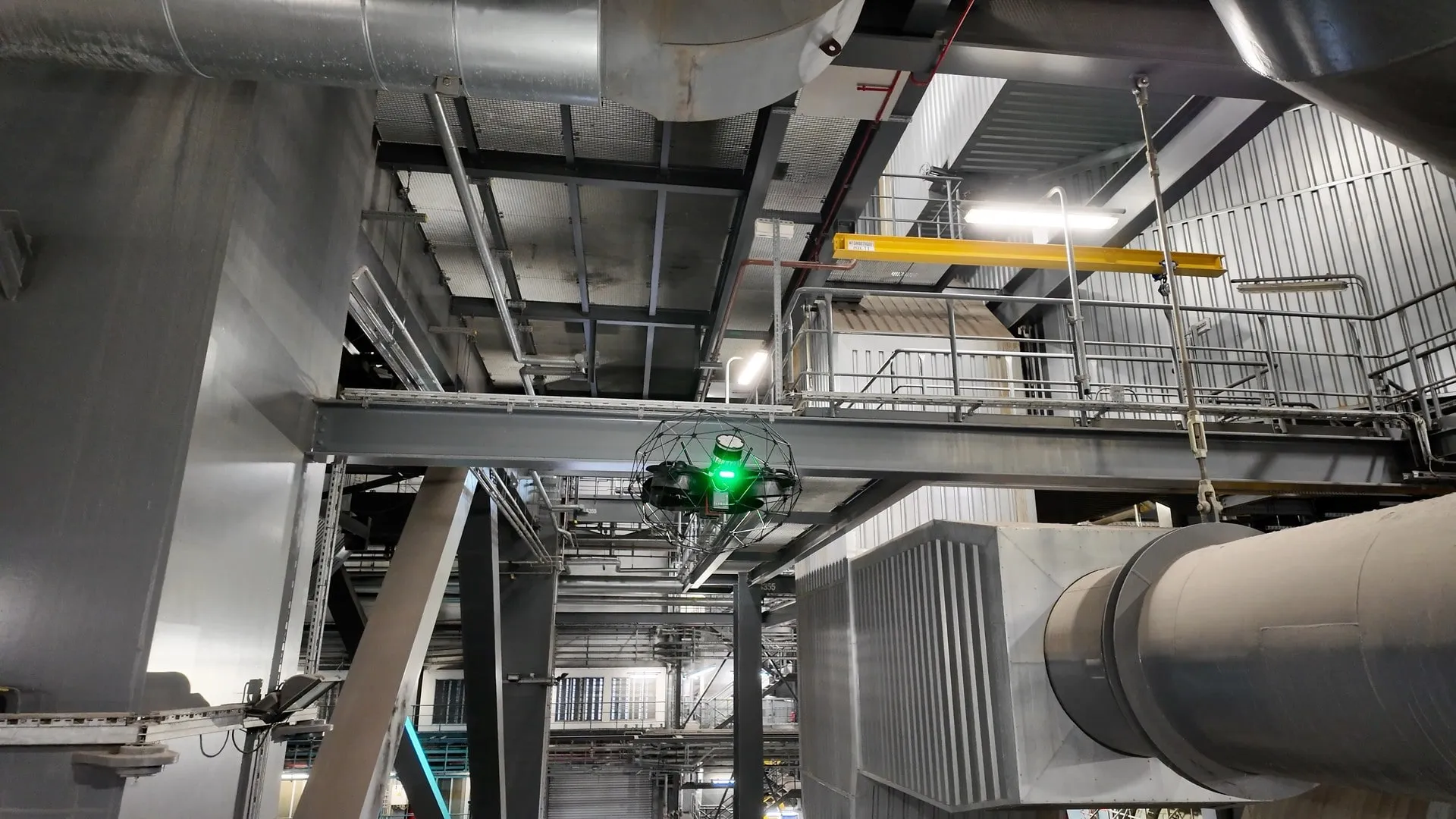
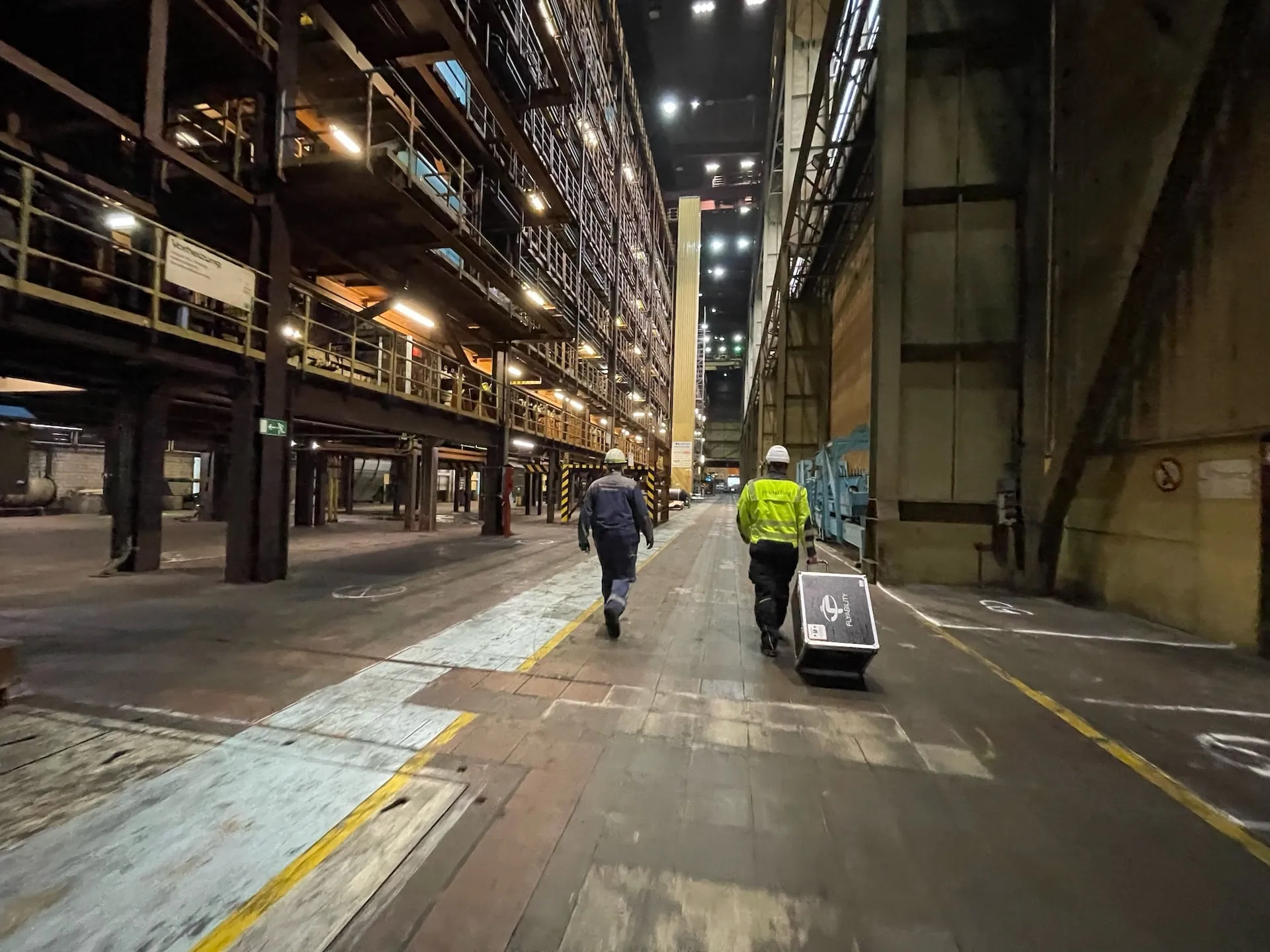
ELIOS 3 in a power plant boiler interior – 4K documentation without scaffolding, without human entry.
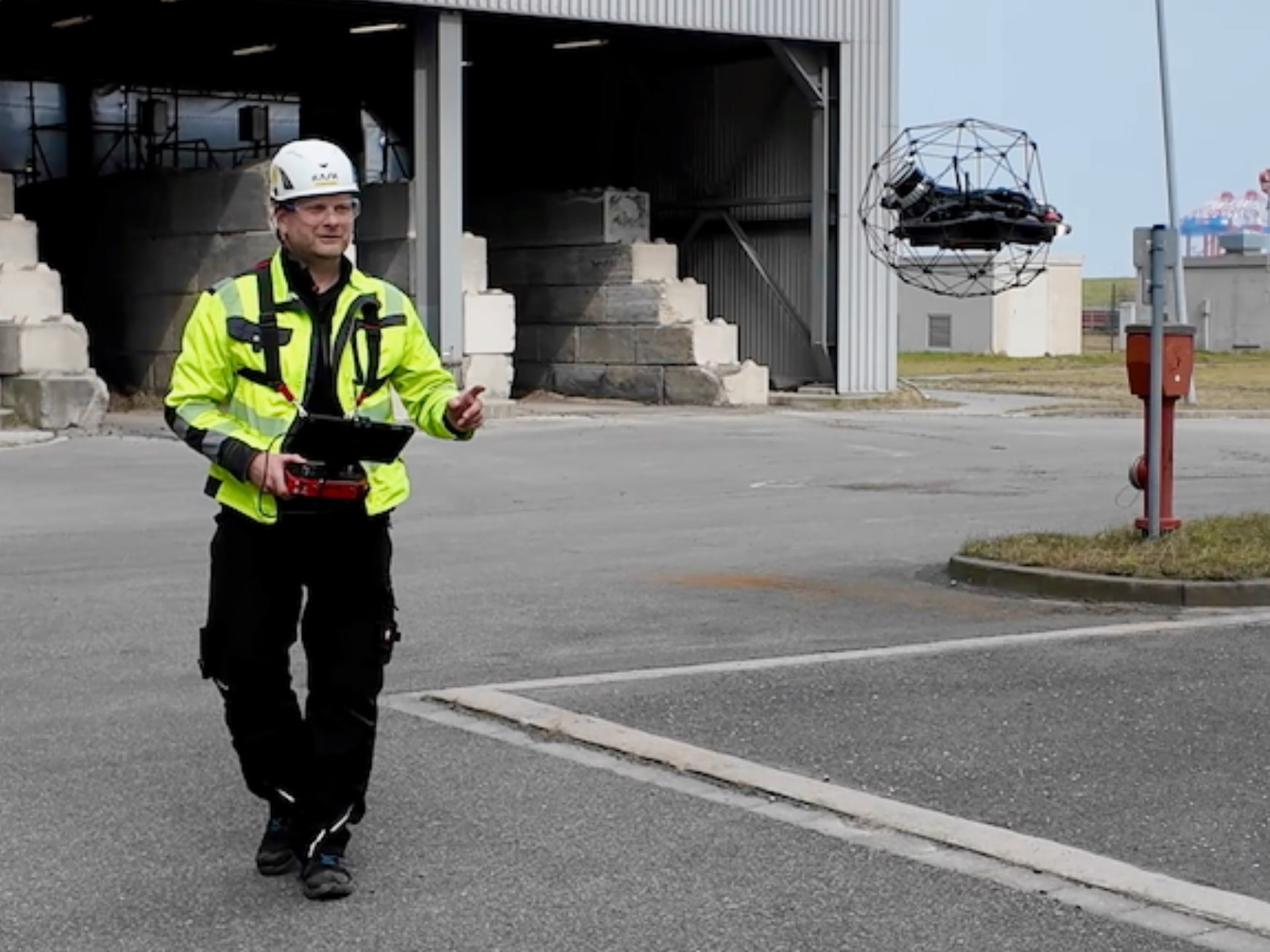
Flyability ELIOS 3 (Confined Spaces): collision-protected, 4K + LiDAR + thermography, 16,000 lumen LED, GPS-independent. For tanks, boilers, reactors, shafts.
DJI Matrice 30T (Outdoor): 200x hybrid zoom, radiometric thermography, IP55, up to 41 min flight time. For pipe bridges, chimneys, wind turbines, solar parks.
4. Data Capture & Analysis – From Raw Footage to Inspection Report
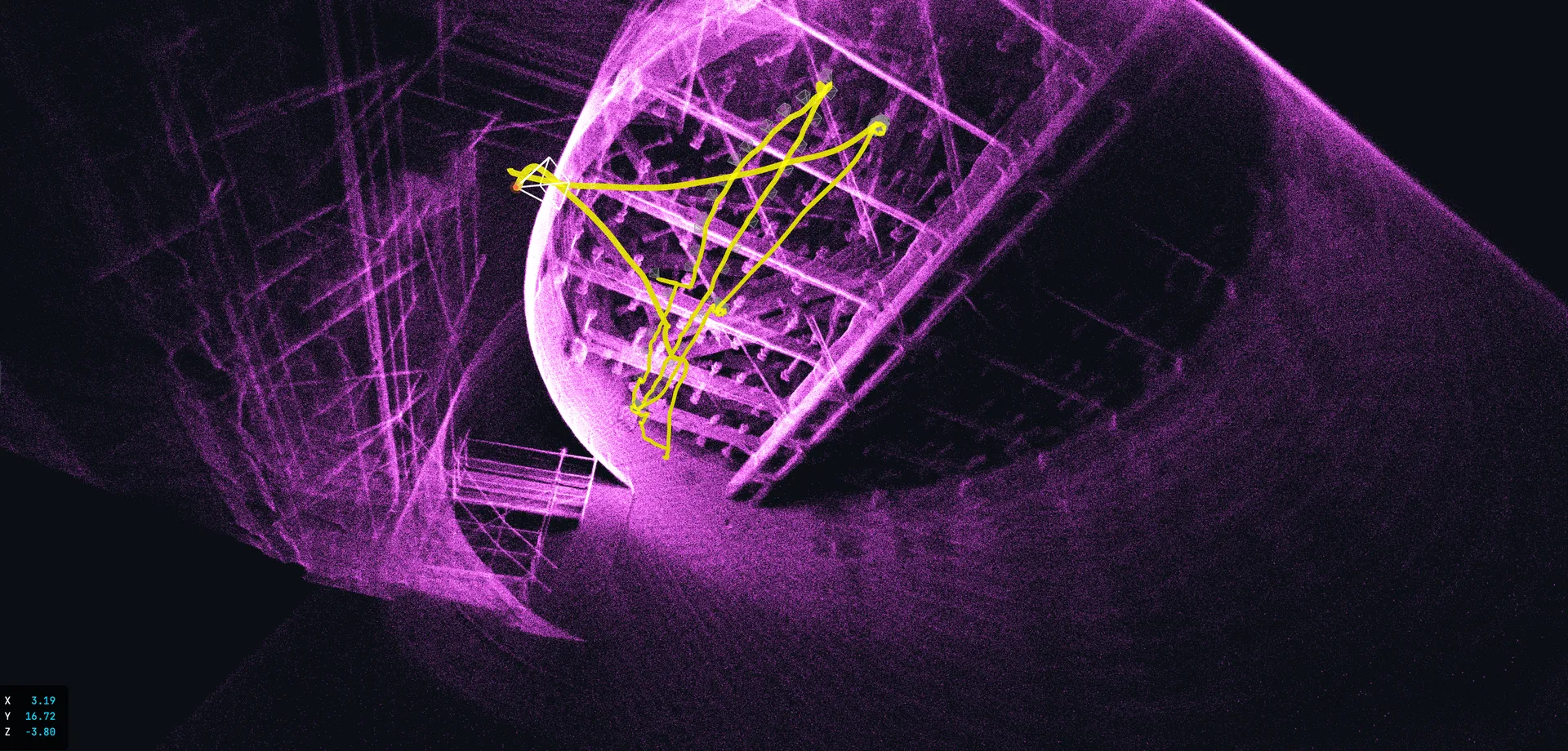
LiDAR 3D point cloud of a power plant absorber – centimetre-accurate geometry documentation for maintenance planning.

5. Special Applications & Industry-Specific Advantages

6. Challenges & Safety Aspects
What to observe for drone inspections:
Outdoor (M30T): Weather-dependent – wind up to 12 m/s, IP55 (light rain), flight time up to 41 min. In storm or heavy rain, deployment is postponed.
Indoor (ELIOS 3): Weather-independent. GPS-independent LiDAR-SLAM navigation for tanks, shafts and underground assets. Multiple batteries for longer inspections.
Permits: The EU Drone Regulation applies only to outdoor flights. Indoor inspections do not require a drone pilot licence. Liability insurance and risk assessment (Gefährdungsbeurteilung) are required in any case.
7. Future Technologies
The next generation of drone inspection:
Companies that adopt drone technology early can optimise their maintenance strategy and gain competitive advantages. We support you – since 2017, nationwide across Germany.
Talk Directly to Our Team
As drone pilots since 2017, we have accompanied the development from simple camera drones to highly specialised inspection systems like the ELIOS 3. We give you an honest, experience-based assessment.
 Christian Engelke
Managing Director & Chief Pilot
Christian Engelke
Managing Director & Chief Pilot
 Karsten Lehrke
Dipl.-Ing., Senior Inspector
Karsten Lehrke
Dipl.-Ing., Senior Inspector
 Philipp
Drone Pilot & Inspector
Philipp
Drone Pilot & Inspector
 Juliana
Project Coordination
Juliana
Project Coordination
 Stephan
Drone Pilot & Inspector
Stephan
Drone Pilot & Inspector
Related Services
- Industrial Inspection Overview – Professional drone inspection for industrial plants of all sectors and sizes.
- Confined Spaces Inspection – Safe inspection of tight spaces without personnel entry with the ELIOS 3.
- Flyability ELIOS 3 – Collision-protected indoor drone for the most demanding inspection tasks.
- Tank Inspection (Tankinspektion) – Drone-assisted inspection of tanks and vessels without personnel entry.
- Energy & Power Plants (Energie & Kraftwerke) – Boiler, turbine and power plant inspection with minimal downtime.
- Oil & Gas Inspection – Inspection of refineries, pipelines and offshore plants by drone.
Frequently Asked Questions: Drones in Industrial Inspection
What are the advantages of drone inspection vs. traditional methods?
Drones offer a safer, faster and more cost-effective alternative: no endangerment of staff (no height risk, no confined spaces), 60–80% cost savings (no scaffolding, no elevated work platforms), drastically reduced inspection time (hours instead of days/weeks), inspection possible during live operation, precise and comprehensive data (4K, thermography, LiDAR), digital long-term documentation for trend analyses.
Which drone models are best suited for industrial inspection?
Depending on application: Flyability ELIOS 3 for confined spaces (tanks, boilers, reactors, shafts) – collision-protected, 4K camera, LiDAR, optional thermography. DJI Matrice 30T for outdoor inspections (pipe bridges, chimneys, wind turbines, solar parks) – zoom camera up to 200x, radiometric infrared camera, IP55 protection. We deploy both systems depending on requirements.
In which industrial sectors are drones most frequently used?
Main deployment areas: energy (power plants, wind, solar, high voltage), oil & gas (refineries, pipelines, offshore platforms), chemical industry (reactors, tanks, pipelines), infrastructure (bridges, tunnels, dams), production facilities (chimneys, tanks, boilers), mining (shafts, conveying systems). Wherever access is difficult or dangerous, drones offer advantages.
Can drones work in tight or GPS-denied environments?
Yes – specialised drones like the Flyability ELIOS 3 are designed exactly for this: LiDAR-SLAM navigation (GPS-independent), visual odometry for precise position determination, real-time mapping of the environment, collision-protected for tight spaces (fits through openings from 50 × 50 cm), 16,000 lumen LED lighting for dark environments. Standard outdoor drones do NOT work indoors – specialised confined-space drones are essential.
How do drone inspections contribute to safety?
Drones eliminate personnel risks: no height work risk, no entry into confined spaces (20 hazards eliminated), no exposure to toxic or explosive atmospheres, no electrical hazard at high-voltage lines, no weather risk (offshore, mountains). The inspection team stays in a safe environment – the drone takes on the risk.
What kind of data can drones capture during inspections?
Comprehensive data capture: 4K–6K video (high-resolution visual documentation), high-resolution photos, thermography (temperature anomalies, CUI detection), LiDAR 3D point clouds (measurement, deformation analysis), zoom shots (up to 200x with M30T), optional gas sensor for flammable gases (LEL), UT payload (wall thickness measurement). All data digitally archivable for trend analyses.
Are drone inspections cost-effective?
Yes – significant cost savings: 60–80% cheaper than traditional methods, no scaffolding (often €10,000–50,000 saved), no elevated work platforms or crane hire, minimal downtime (inspection during live operation), low personnel requirement (2 inspectors instead of 5–15), ROI often after 2–5 deployments. Long-term: preventive maintenance saves emergency repairs (these are 10x more expensive).
How quickly can drone inspections be carried out?
Drastically reduced inspection time: preparation hours instead of days/weeks (no scaffolding). Overall on-site effort depends on plant size and complexity, but is significantly less than with conventional methods. For emergencies: short-notice availability possible. Precise figures after clarification of your boundary conditions.
What legal requirements apply to drone inspections in industry?
Important: the EU Drone Regulation applies only to outdoor airspace. Indoor inspections with the ELIOS 3 require neither an operating licence nor a drone pilot licence. For outdoor deployments (e.g. DJI M30T): EU drone pilot licence, liability insurance, for special deployments additional permits (night flights, >120m altitude). Occupational safety: risk assessment, BetrSichV compliance. We fulfil all legal requirements since 2017.
How does drone technology support preventive maintenance strategies?
Drones enable data-based preventive maintenance: more frequent inspections possible (cost-effective), early detection of damage (before it becomes critical), trend analysis through digital long-term documentation, precise maintenance planning (based on actual condition), digital twin for simulation and monitoring, AI-assisted damage prediction (predictive maintenance). Result: from reactive to proactive maintenance = cost savings and higher plant availability.
Ready to Elevate Your Inspections?
Contact us for a free consultation. Operating since 2017 – nationwide across Germany.