
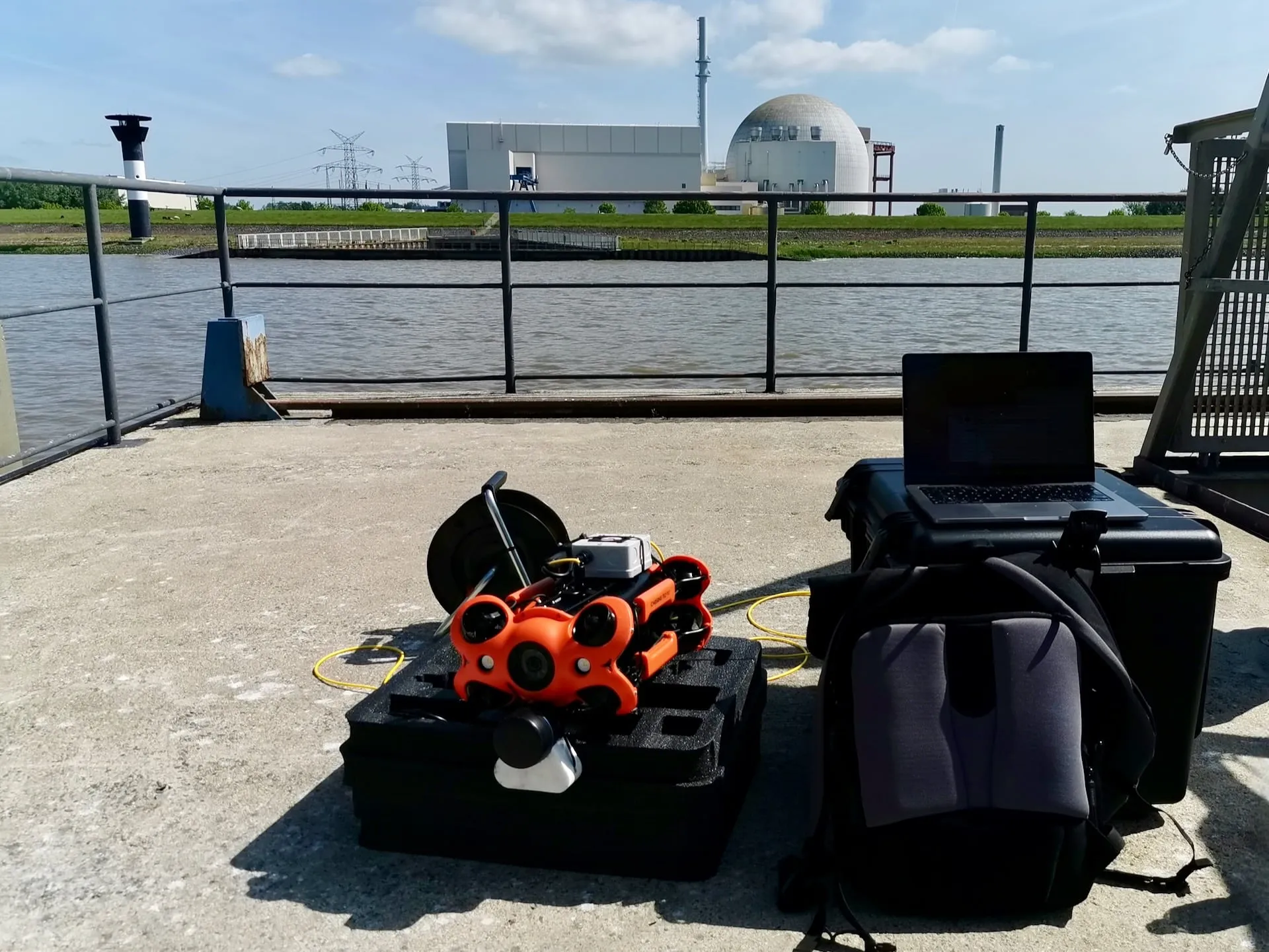
Nuclear Power Plant Decommissioning – Why Drones & ROVs Are Now the Key
Even after removal of the fuel assemblies, parts of the plant remain radioactively contaminated. The Flyability Elios 3 inspects contaminated pipe systems, reactor pressure vessels and shafts by remote control – 0 mSv radiation exposure for personnel. ROVs complement for underwater areas such as spent fuel pools and cooling water systems.
- 0 mSv for personnel – remote-controlled inspection instead of human entry, ALARA principle
- LiDAR 3D surveying – centimetre-accurate models for dismantling planning
- ROV for underwater – spent fuel pools and cooling water systems without divers
- Seamless documentation – for authorities and licensing procedures per AtG, StrlSchV
Key Challenges in Nuclear Power Plant Decommissioning
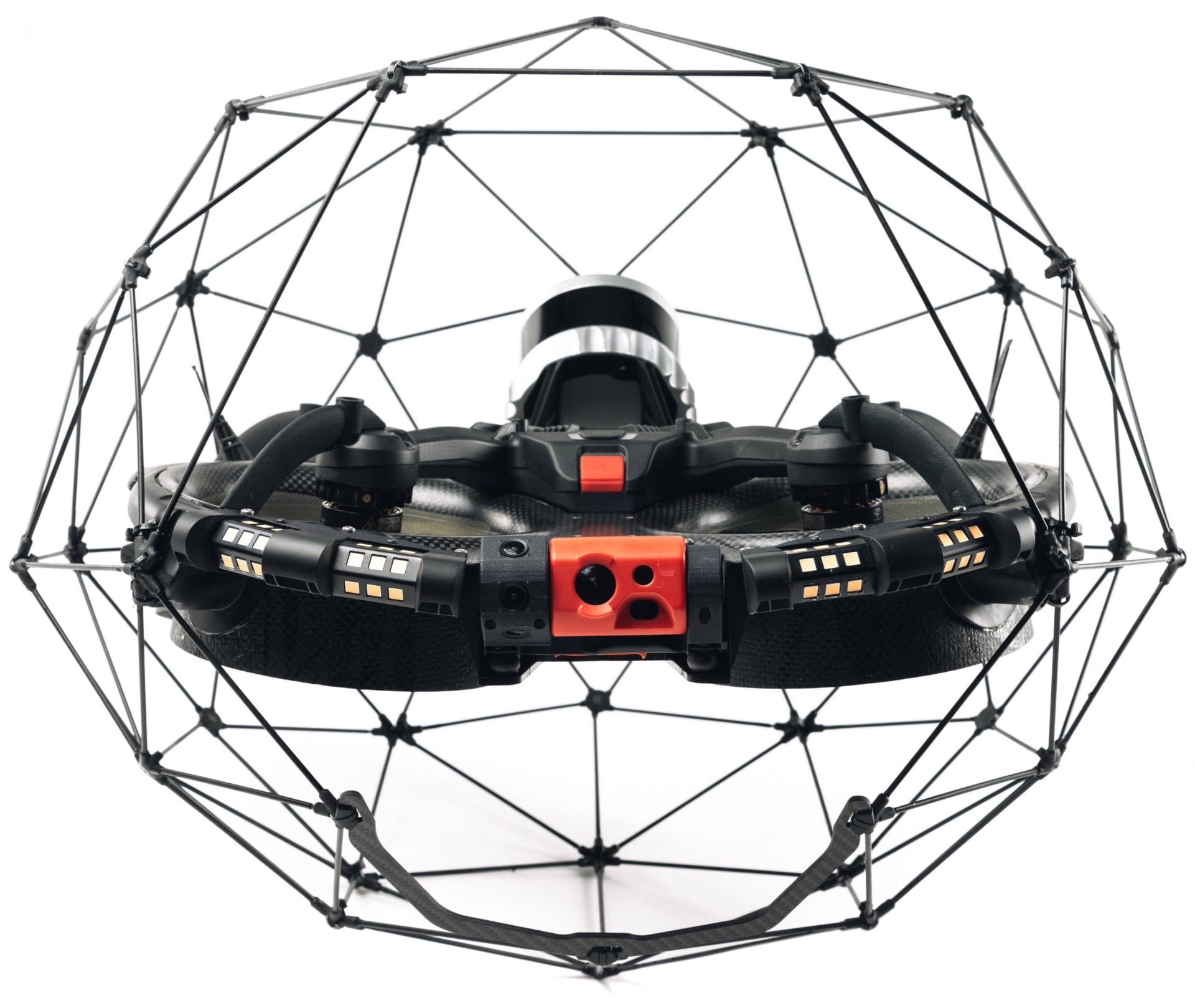
Flyability Elios 3 – collision-protected for deployment in contaminated areas of nuclear power plants
The decommissioning of nuclear power plants is one of the most complex technical challenges of our time. Even after removal of the fuel assemblies, parts of the plant remain radioactively contaminated. The Flyability Elios 3 inspects contaminated pipe systems, reactor pressure vessels and shafts by remote control. ROVs complement for underwater areas such as spent fuel pools and cooling water systems.
Remote-controlled inspection instead of human entry: 0 mSv radiation exposure for personnel – ALARA principle consistently applied.



Legal Framework and Decommissioning Strategies
The Atomgesetz (AtG § 7 Abs. 3) obliges operators to immediately decommission after shutdown – until complete clearance of the site. Additionally applicable: Strahlenschutzverordnung (StrlSchV), Atomrechtliche Entsorgungsverordnung (AtEV) and state-specific regulations.
Direct decommissioning (direkter Rückbau) is the preferred strategy:
- Phase 1: Post-operational phase (2–5 years): Removal of fuel assemblies, decontamination of systems, preparation for dismantling. Drones/ROVs: Initial inspection, condition recording, contamination mapping.
- Phase 2: Dismantling of activated components (5–10 years): Dismantling of the reactor pressure vessel, removal of primary circuits, decommissioning of contaminated systems. Drones/ROVs: 3D surveying for dismantling planning, radiation measurements, progress documentation.
- Phase 3: Dismantling of building structures (5–10 years): Removal of containment, decommissioning of auxiliary systems, demolition of conventional building sections. Drones/ROVs: Documentation and quality assurance.
- Phase 4: Clearance phase (2–3 years): Clearance measurements of all surfaces and buildings, soil investigations, final acceptance by authorities and clearance for alternative use. Total duration: 15–25 years.
Deployment of the Flyability Elios 3 and Modern ROVs
The Flyability Elios 3 is an indoor drone developed specifically for inspections in confined, hazardous and contaminated areas. Modern ROVs complement it for the inspection of underwater structures in nuclear power plants, such as spent fuel pools or cooling water reservoirs.
Traditionally: 1–5 mSv radiation exposure per inspection through human entry. With drone/ROV: 0 mSv. Across hundreds of inspections over the decommissioning lifetime: massive dose saving per the ALARA principle.



Deployment in Pipe Systems
Piping systems in nuclear power plants are often contaminated and difficult to access. The Elios 3 inspects pipework from approx. 120 cm diameter internally – smaller lines are documented externally or via access points.
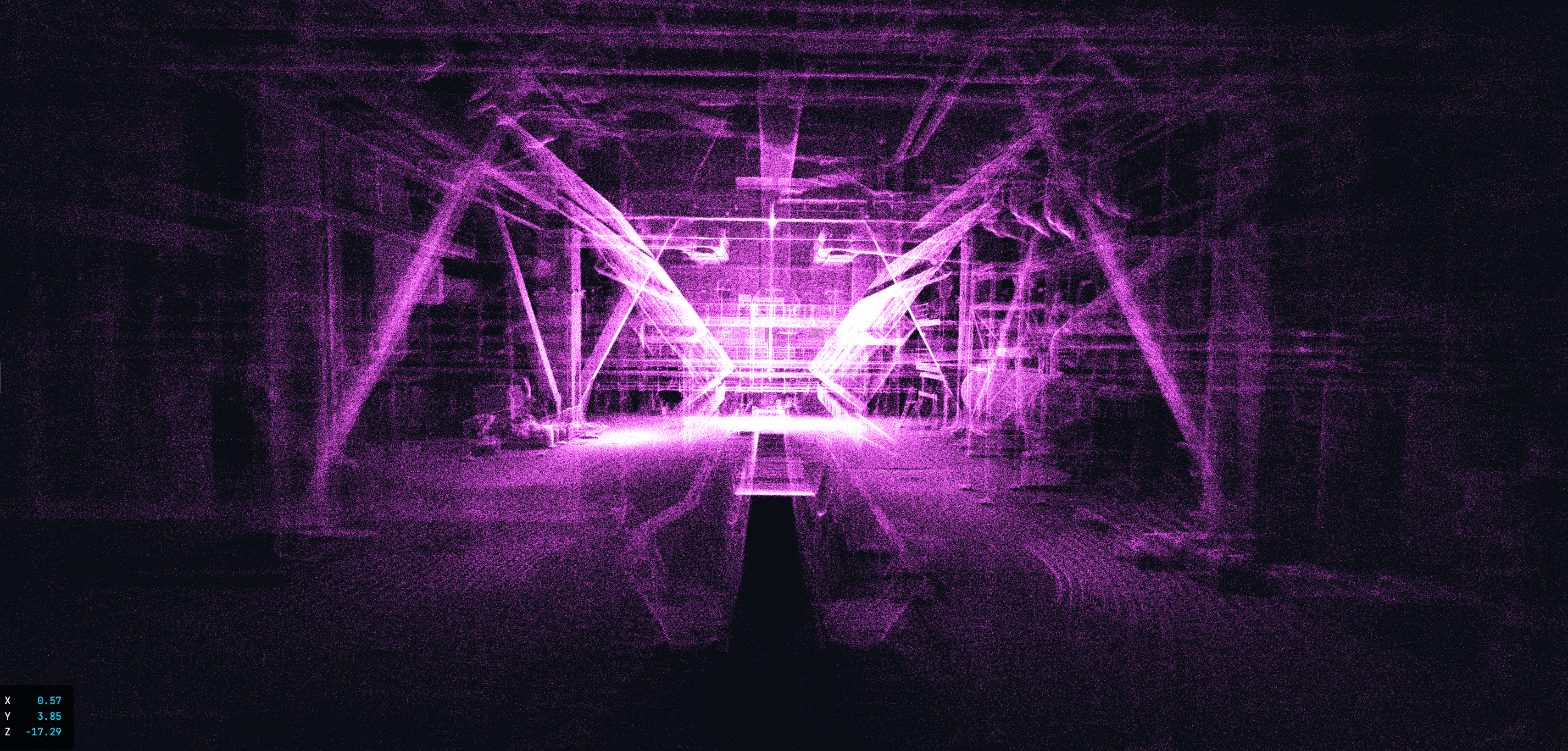
- Mapping & 3D Surveying: LiDAR scan of the pipe routing with branches, fittings and welds. Result: precise 3D models for optimal cut-point planning and minimal contaminated waste.
- Radiation Measurement (optional): Gamma detector mounted on drone/ROV: systematic dose rate measurement, georeferenced 3D contamination map, identification of hotspots for targeted decontamination.
- Access Planning: Visual inspection and assessment of all potential access points in combination with radiation data. Result: minimised personnel dose, shortened decommissioning time.
Substantial cost savings: drone/ROV inspection of piping systems is many times cheaper than traditional methods involving scaffolding and human entry.
Tanks, Structures and Underwater Areas
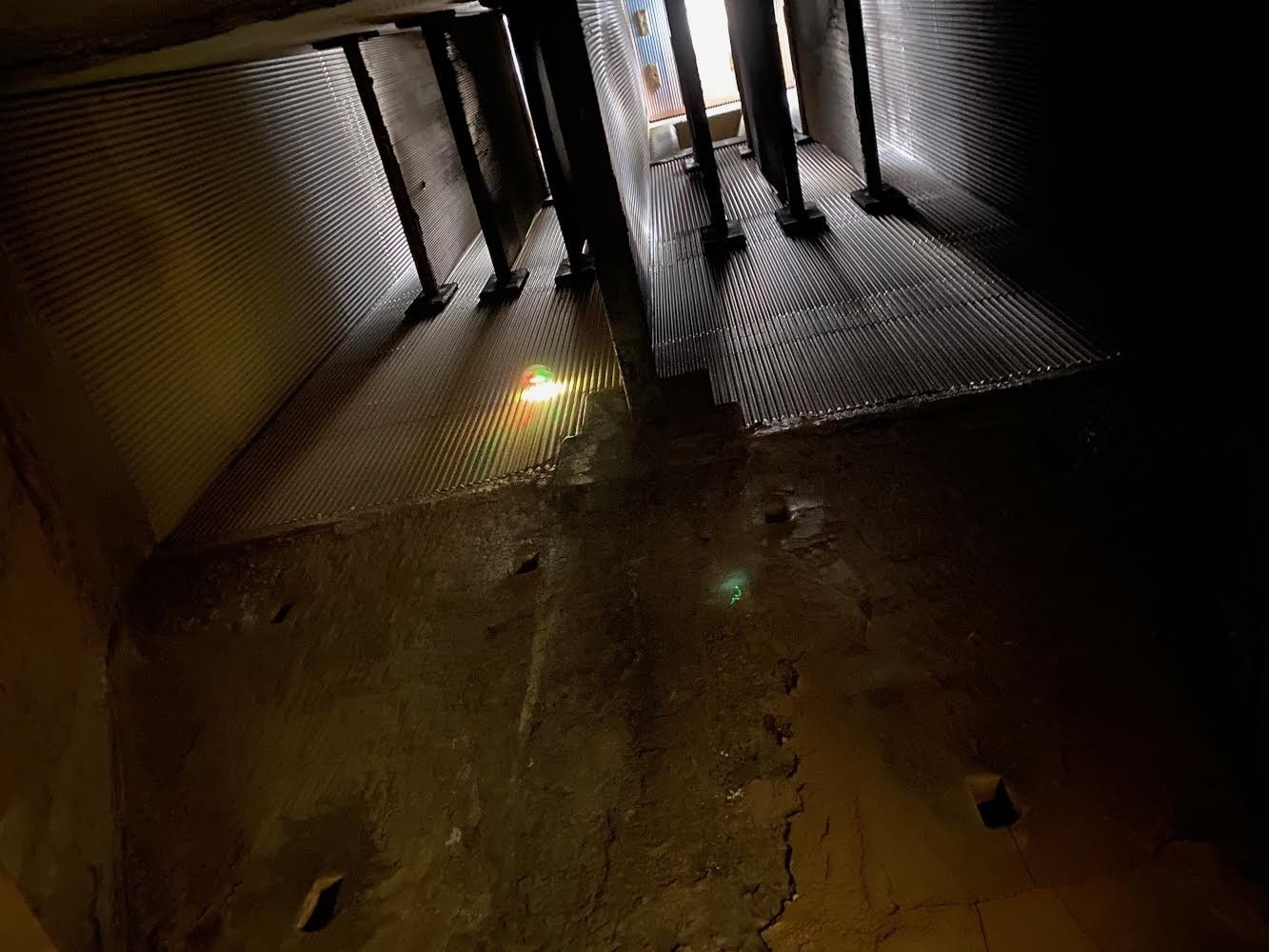
The Elios 3 enters reactor pressure vessels (typically 20 m height, 5 m diameter) through manholes or nozzles. LiDAR scan and 4K camera deliver precise 3D models for dismantling planning – optionally supplemented by radiation sensors for contamination mapping. ROVs take over inspection of spent fuel pools and cooling water systems with sonar and camera.


Documentation for Authorities and Licensing
Seamless documentation is essential for nuclear power plant decommissioning. The Atomgesetz and Strahlenschutzverordnung require continuous documentation of all decommissioning steps for authorities and oversight bodies.
- Continuous Progress Monitoring: Regular drone/ROV inspections (monthly, quarterly) with photographic documentation, comparison with planning data and archiving for long-term documentation.
- Creation of Digital Twins: High-precision 3D surveying of all relevant areas with LiDAR, integration into BIM systems (Building Information Modelling) and simulation of decommissioning processes.
- Regulatory Documentation: Seamless traceability for BASE, state authorities, TÜV and GRS. All decommissioning steps documented photographically/by video; radiation measurements archived.
- Long-term Archiving: Digital data available over decades; knowledge preservation across generations; lessons learned as basis for future decommissioning projects.
Time saving in documentation: 50–70% compared to traditional manual methods – at significantly higher quality through 3D models, higher resolutions and repeatable measurements.
Sustainability and Innovation in Decommissioning



Key advantages in brief: Massive reduction of radiation exposure (ALARA), significant time and cost savings on inspections, and seamless documentation for all regulatory requirements.
Your Contact
Project Manager
“The decommissioning of nuclear power plants is a generational task with the highest demands on safety and documentation. With the Flyability Elios 3 and modern ROVs we can inspect areas that were previously only accessible at great risk and high radiation exposure. The combination of 4K camera, LiDAR and optional radiation sensors delivers data that makes decommissioning not only safer but also more economical.”
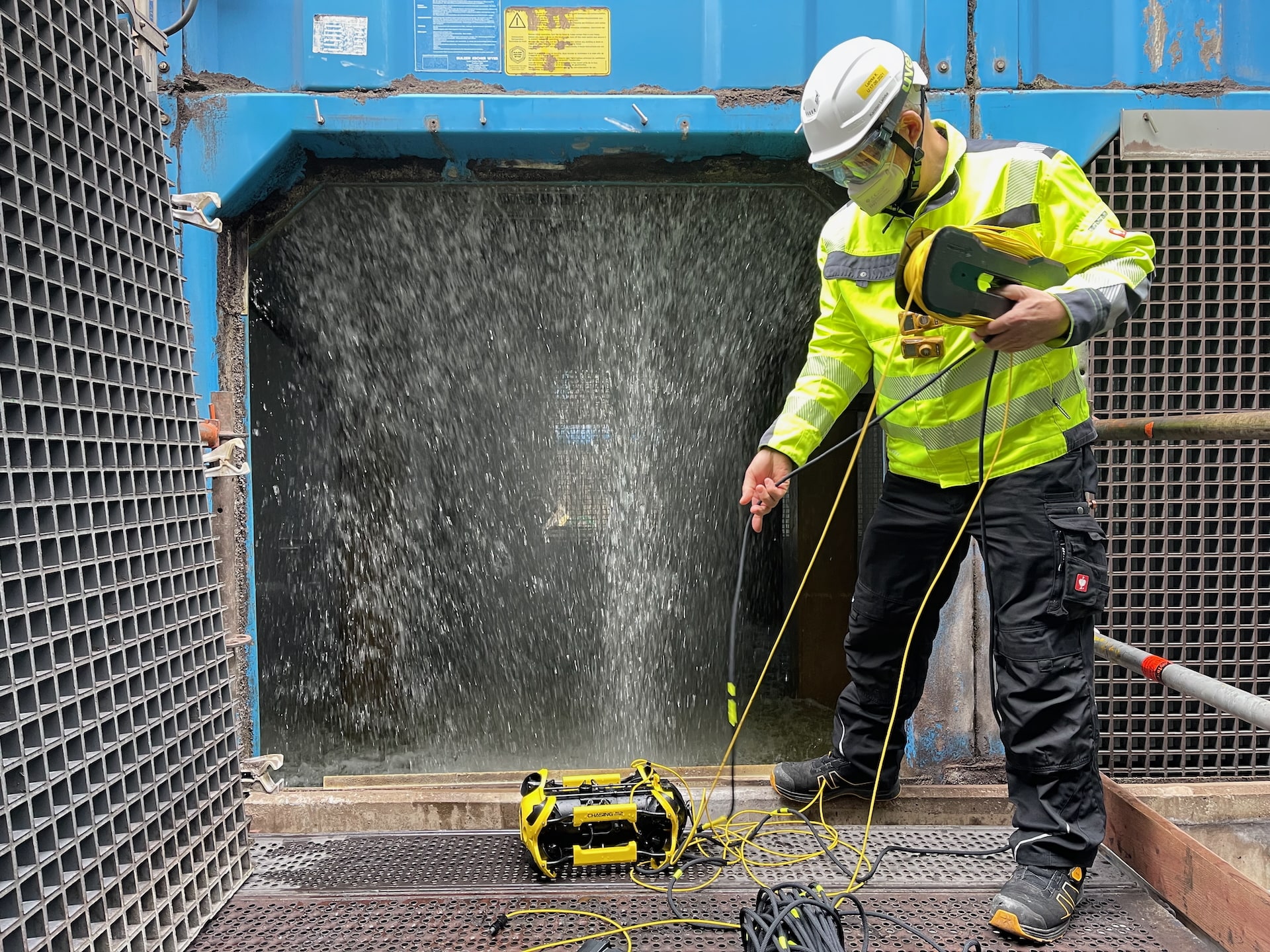
Karsten Lehrke with underwater drone – ROV deployment in nuclear facilities
Related Services
- Nuclear & Atomic Power – Drone inspection in nuclear facilities with minimal radiation exposure
- Confined Spaces Inspection – Safe inspection of confined spaces without human entry
- Flyability ELIOS 3 – The collision-safe indoor drone for confined spaces and industrial plants
- Tank Inspection – Professional tank inspection with drone – inside and outside without scaffolding
- Power Plant Inspection – Drone inspection for power plants, turbines and energy generation facilities
- Industrial Inspection – Holistic drone inspection for all industries and plant types
Frequently Asked Questions: Drone Deployment in NPP Decommissioning
- What advantages does drone deployment offer in nuclear power plant decommissioning?
- Massive advantages in all areas: 1. Safety: significant reduction of radiation exposure (ALARA principle), no human entry into contaminated areas. 2. Efficiency: fast and precise inspection of hard-to-reach areas – days rather than weeks. 3. Cost: substantial savings by eliminating scaffolding, draining and laborious safety measures. 4. Documentation: seamless traceability through 4K video, LiDAR 3D models and optional radiation measurements.
- How do you ensure the safety of the drone in contaminated areas?
- Multi-layer safety measures: 1. Technology: Flyability Elios 3 is collision-protected, GPS-independent LiDAR-SLAM navigation, IP44 protection against dust and contamination. 2. Decontamination: After deployment the drone is decontaminated (mechanically or chemically), clearance measurement before reuse. 3. Single-use operation possible: in highly contaminated areas the drone can be deployed as a single-use device – still significantly cheaper than human entry with DGUV measures. 4. Remote control: operator at safe distance, no radiation exposure for personnel.
- What data can you capture during an inspection?
- Comprehensive multi-sensor data capture: 1. Visual data: 4K videos and high-resolution photos (16,000 lumen LED for dark areas). 2. 3D surveying: LiDAR point clouds with ±5 cm accuracy (3D models for dismantling planning, volume calculations, deformation analysis). 3. Thermography (optional): detection of temperature anomalies, leaks, insulation issues. 4. Radiation measurements (optional): gamma detectors for contamination mapping, hotspot identification, waste categorisation. 5. Sonar (for ROVs): navigation in poor visibility, sediment thickness measurement, object detection. All data georeferenced, archived, prepared for authorities.
- How quickly can you carry out a deployment?
- Significantly faster than conventional methods: preparation, inspection and evaluation depend on complexity, size and contamination level of the area. Drone/ROV inspections are typically completed within a few days – conventional methods (scaffolding, DGUV measures, human entry) often take weeks. Time saving: 60–80%.
- What lead time do you need for a deployment?
- Depending on complexity: standard inspections require adequate lead time for approvals, safety concept, radiation protection planning and coordination with the operator. Complex inspections (e.g. reactor pressure vessel) require additional approvals and detailed planning. For urgent damage events accelerated deployments are possible. We recommend early contact for optimal planning.
- Can drones really be deployed in all areas of a nuclear power plant?
- Almost all areas are accessible. Suitable for: reactor pressure vessels (after fuel assembly removal), pipework (from approx. 50 cm diameter), steam generators, condensers, shafts and ducts, building structures, spent fuel pools (ROV), cooling water systems (ROV). Limited suitability: very narrow pipes (<50 cm diameter) require special miniature ROVs; very high-dose areas with activated fuel assemblies (radiation damage to electronics possible – single-use or special radiation hardening). Not suitable: areas with active fuel assemblies (radiation dose too high for electronics). Overall: 80–90% of all decommissioning areas are inspectable with drones/ROVs.
- Is the drone reusable after deployment in contaminated areas?
- Yes, in most cases. Decontamination methods: mechanical (wiping, brushing), chemical (special decontamination agents) or ultrasound bath. After decontamination the drone is clearance-measured – if successfully cleared: reuse without restrictions; with residual activity: storage or disposal. In highly contaminated areas single-use operation is planned – still considerably cheaper than human entry with DGUV measures.
- What approvals are required for drone deployments in nuclear power plants?
- Extensive approvals are necessary: 1. Aviation law: the EU drone regulation applies only to outdoor flights – indoor deployments (Elios 3) are approval-free. For outdoor: EU drone pilot certificate, liability insurance. 2. Nuclear law: approval from the responsible nuclear regulatory authority (state authority), integration into the shutdown/decommissioning licence per § 7 Abs. 3 AtG, radiation protection concept, safety analysis. 3. Internal: operator clearance, integration into occupational safety concept, coordination with radiation protection. We support you: preparation of all required documents, coordination with authorities and operator, experience with approval procedures since 2017.
- How is the quality of inspection data ensured?
- Multi-layer quality assurance: 1. Technology: high-resolution 4K cameras, precise LiDAR (±5 cm), calibrated sensors, redundant systems. 2. Procedures: standardised inspection protocols, multiple overflights of critical areas, plausibility checks, comparison with CAD data. 3. Evaluation: experienced inspectors since 2017, peer review procedures, AI-supported damage detection (additionally), standards-compliant reporting. 4. Documentation: complete raw data archiving, traceable evaluation processes, seamless documentation for authorities.
- What cost savings are realistic through the use of drones and ROVs?
- Savings on multiple levels: 1. Per inspection: drone/ROV inspection is many times cheaper than conventional methods involving scaffolding, DGUV measures and personnel deployment. 2. Optimised decontamination: targeted decontamination rather than blanket measures reduces radioactive waste volumes and disposal costs substantially. 3. Accelerated decommissioning duration: optimised planning through 3D data shortens the total project duration. The ROI of drone/ROV investment is typically achieved after just a few deployments.
- How does Kopterflug concretely deploy drones and ROVs in nuclear power plant decommissioning?
- Kopterflug carries out drone and ROV inspections in all phases of nuclear power plant decommissioning – from initial condition recording in the post-operational phase to documentation in the clearance phase. Typical procedure: coordination with operator and radiation protection, preparation of safety concept, carrying out the inspection with Flyability Elios 3 (air areas) and ROV (water areas), then standards-compliant evaluation and reporting for authorities. All data are georeferenced and archived – reproducible over the entire decommissioning duration.
Contact – Nuclear Power Plant Decommissioning Enquiry
Concrete consultation on drone and ROV deployment in nuclear facilities. Free initial consultation – experienced since 2017, nationwide in operation.