
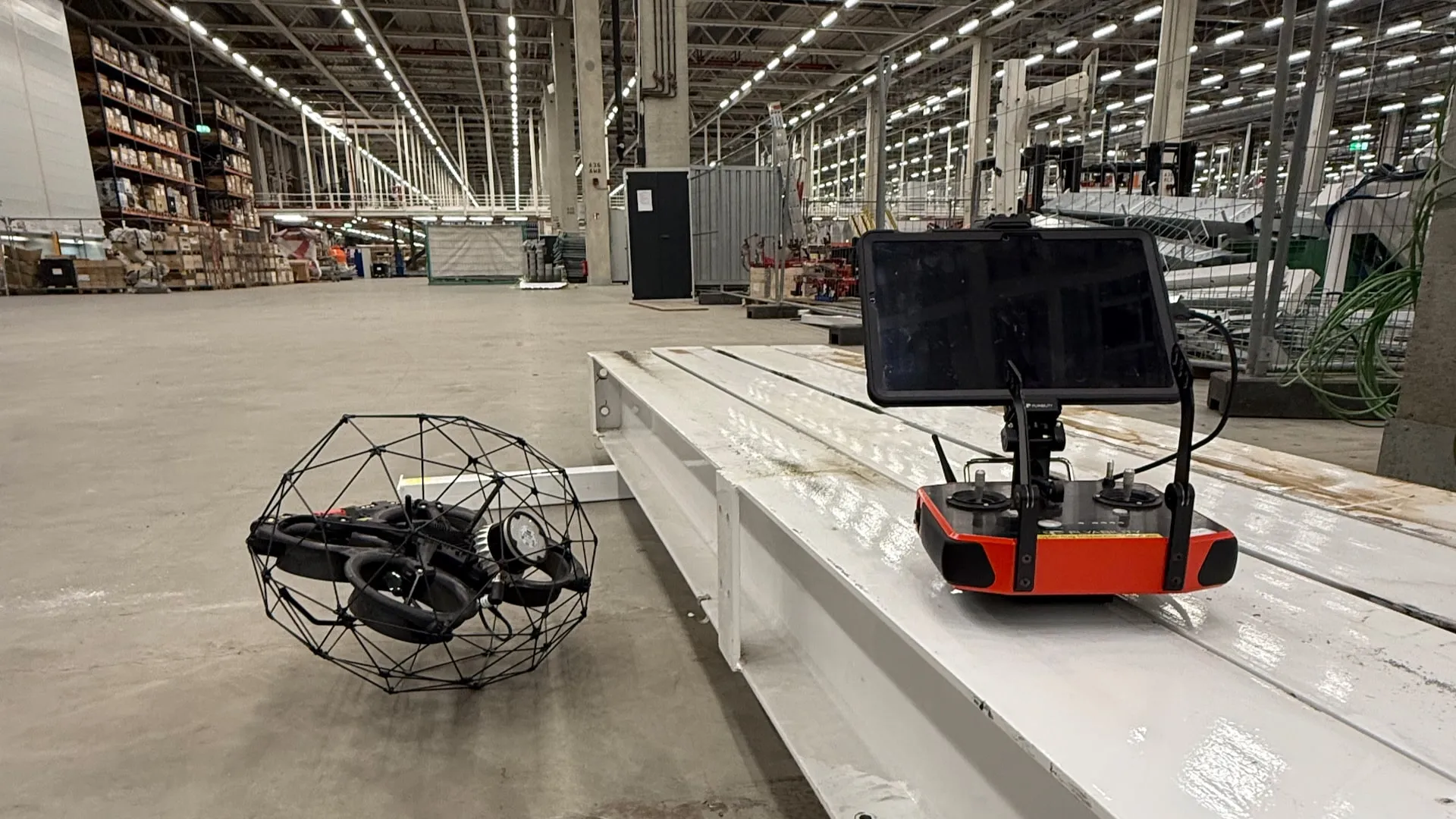
Industrial Inspection by Drone – Safe, Fast, DGUV-Compliant
Kopterflug inspects tanks, boilers, chimneys, pipelines, silos and flares by drone – without scaffolding, without human entry, DGUV-compliant. With the Flyability ELIOS 3, DJI Matrice 30T and LiDAR since 2017.
- No human entry into hazardous areas
- Downtime in hours instead of weeks
- 4K + Thermography + LiDAR in a single deployment
- Cost savings up to 80% vs. scaffolding and rope access
What We Inspect – and How
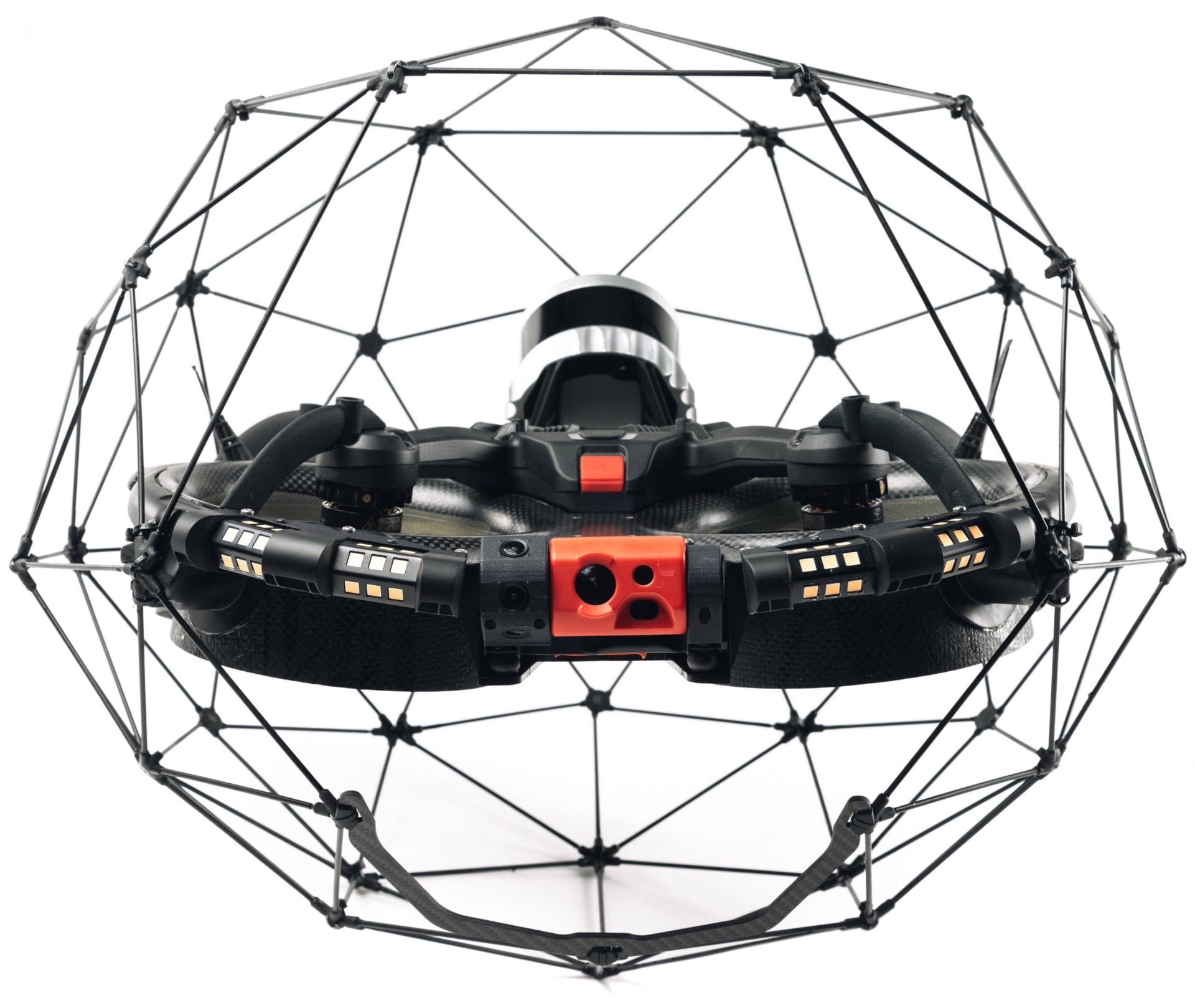
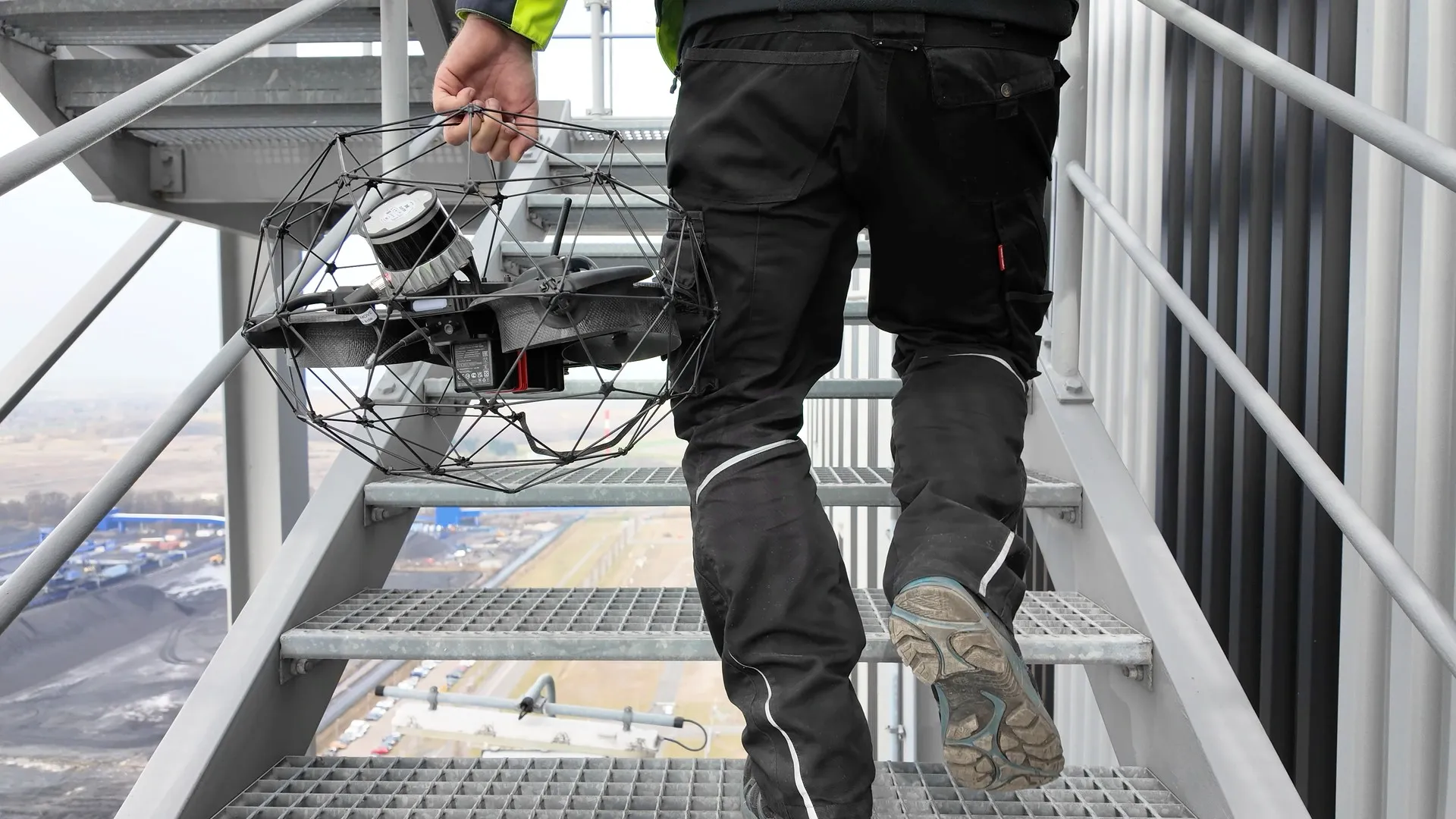
The ELIOS 3 inspects confined spaces without human entry – tanks, boilers, silos and columns.
We deploy drones where conventional inspection is expensive, hazardous or impossible. Our core capabilities:

Industrial Inspection by Drone – Across All Sectors
Whether chemicals, energy or heavy industry – wherever assets are safety-critical and hard to access, our drones are deployed. Industries we regularly work in:
Technology: Flyability ELIOS 3 + DJI Matrice 30T + LiDAR
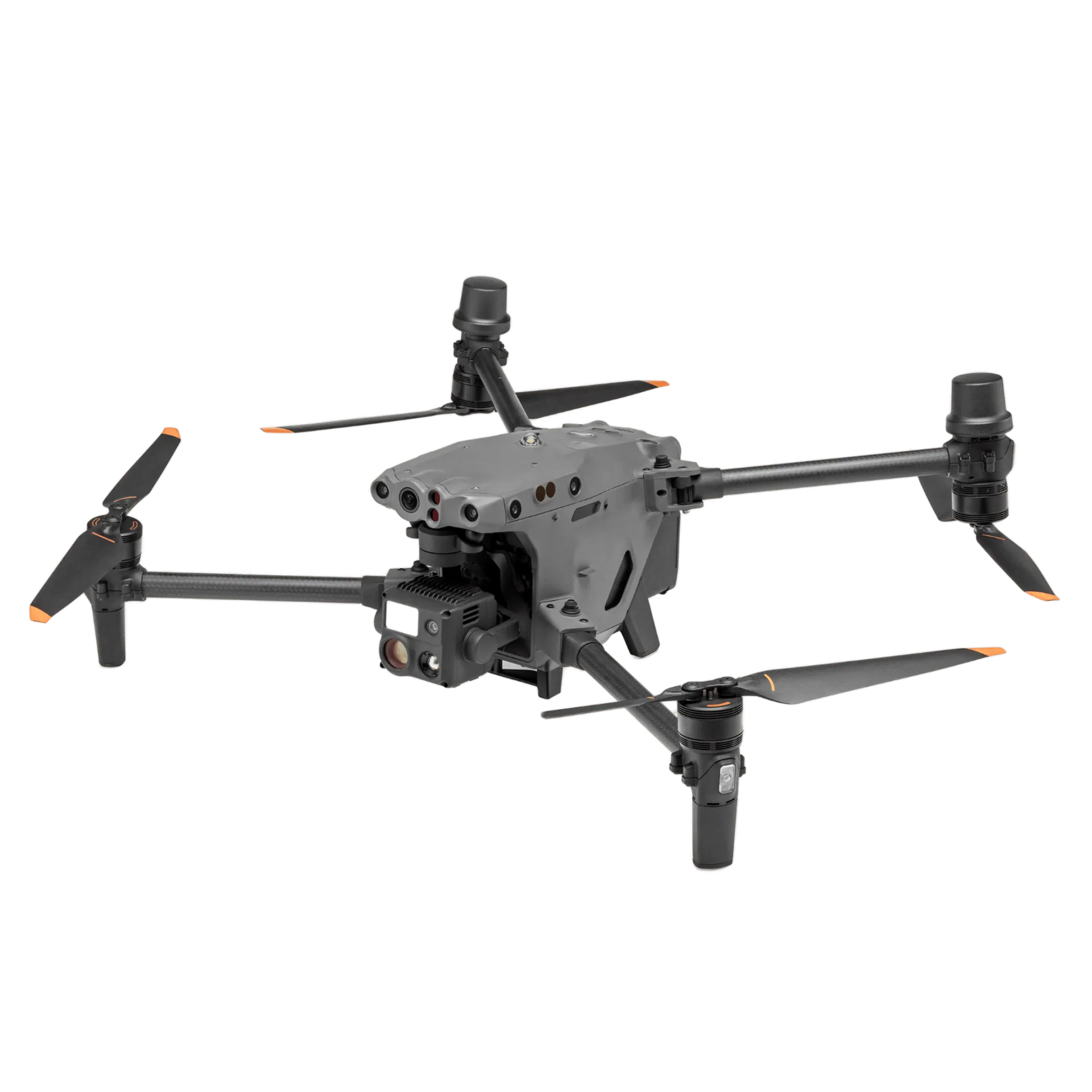
We combine the most powerful inspection systems – for interiors, exterior structures and underwater areas. One point of contact for the entire installation.



Complementary Systems for Complete Asset Coverage
The ELIOS 3 inspects confined spaces and interiors. The M30T handles exterior structures. The Chasing M2 Pro Max covers underwater areas. Together we cover every industrial installation completely.
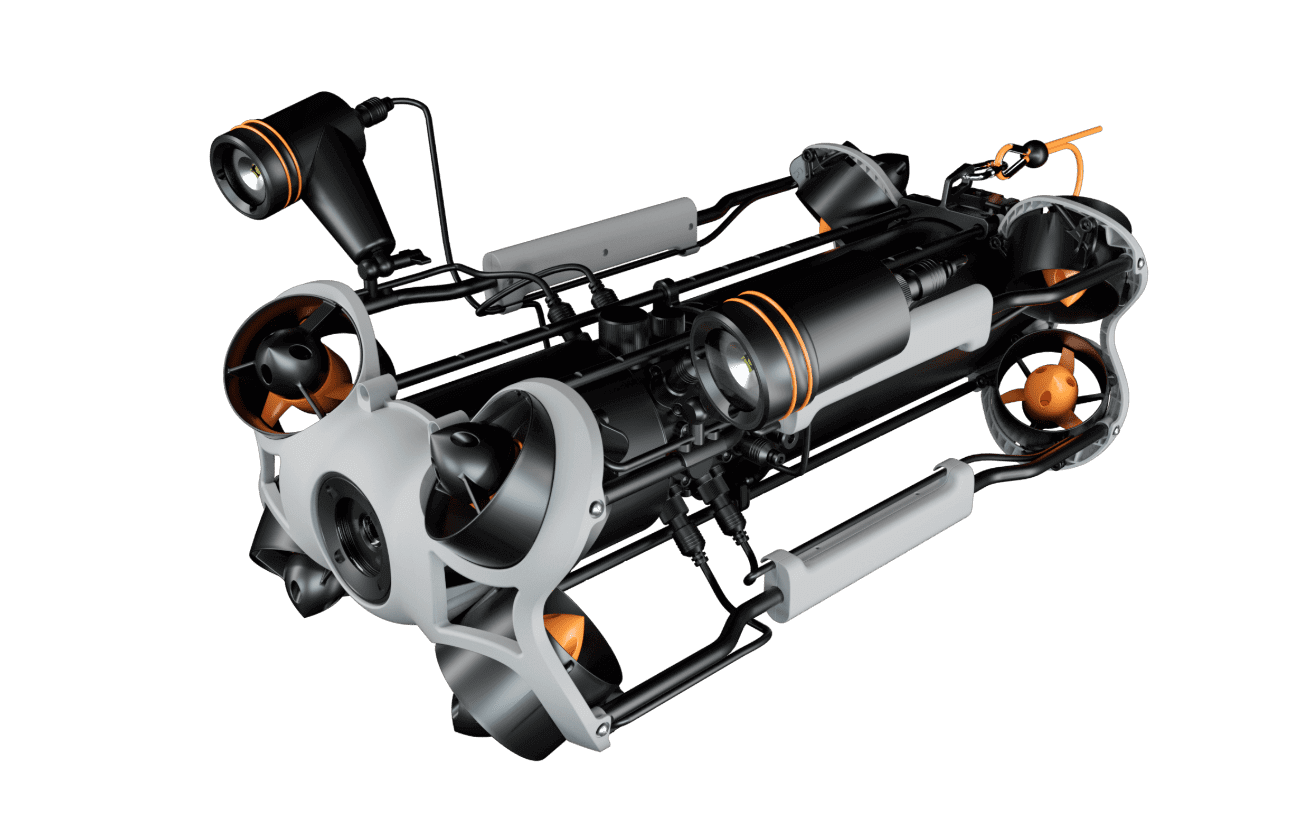
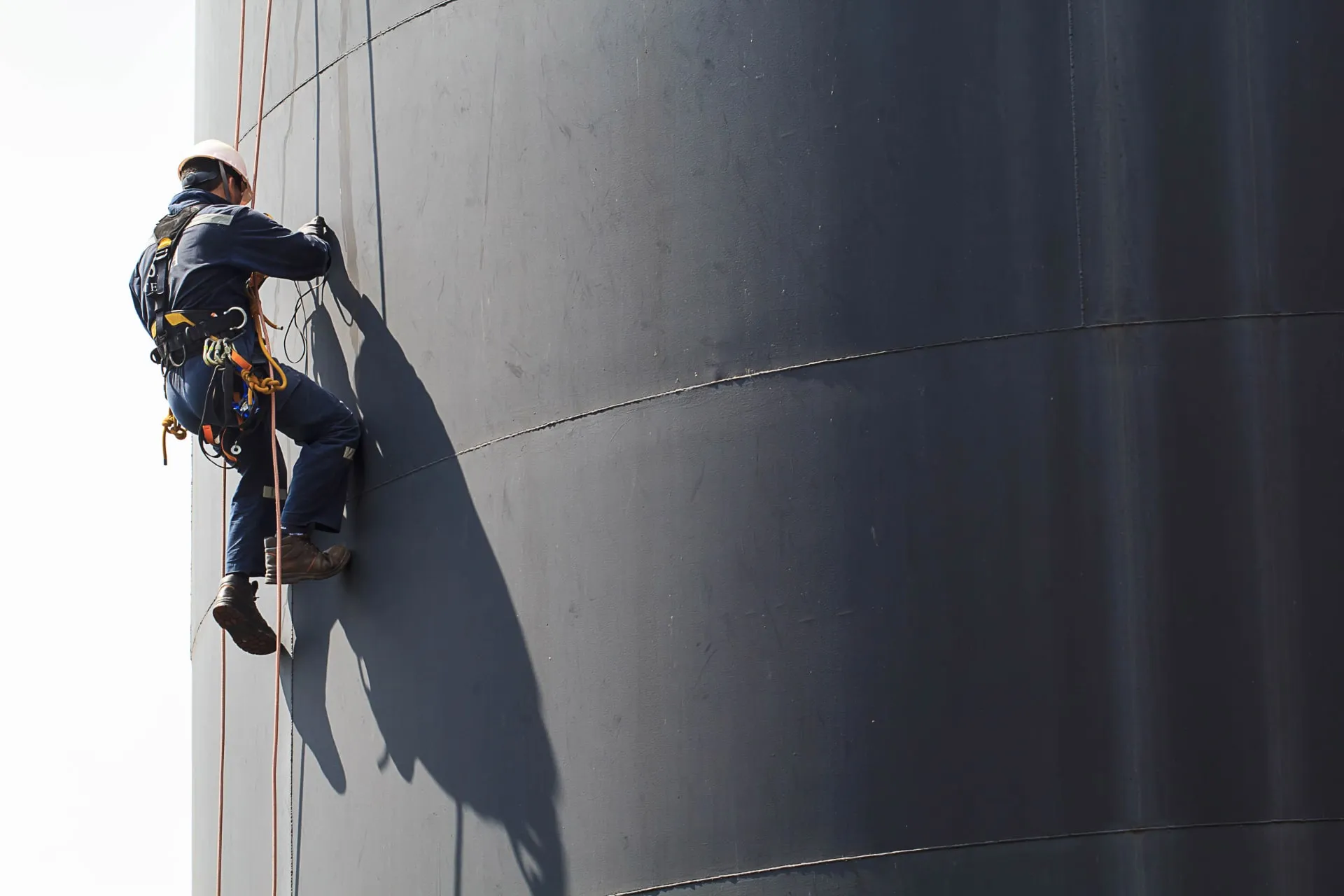
Conventional inspection costs weeks. Drone inspection costs hours.
Why Drone-Based Industrial Inspection?


Industrial Inspection by Drone vs. Conventional Methods
| Conventional (Scaffolding / Climbers) | Drone | |
|---|---|---|
| Human entry | Required – DGUV confined space entry, rescue chain, respiratory protection | No entry – no rescue team, no confined space procedures |
| Access preparation | Scaffolding, aerial work platform or rope access | Direct fly-in – no scaffolding, no climbers |
| Downtime | 2–4 weeks lead time + execution | Often less than 1 day |
| Planning | Weeks of planning: permits, scaffolding contractor, safety concepts | Coordination within days |
| Documentation | Photos by technician, subjective assessment, incomplete coverage | 4K full survey, thermography, LiDAR – georeferenced and reproducible |
| Cost | Scaffolding + climbers + personnel + downtime = high total cost | Up to 80% savings vs. conventional methods |
LiDAR makes geometry visible – precise, reproducible, comparable.
Inspection Process – Step by Step
-
Initial Consultation & Requirements Analysis
We discuss your installation, the assets to be inspected, access situation and requirements together – free of charge and without obligation.
-
Quote & Scheduling
You receive a transparent quote. We align the date, safety concept and access arrangements with your maintenance windows.
-
On-Site Inspection
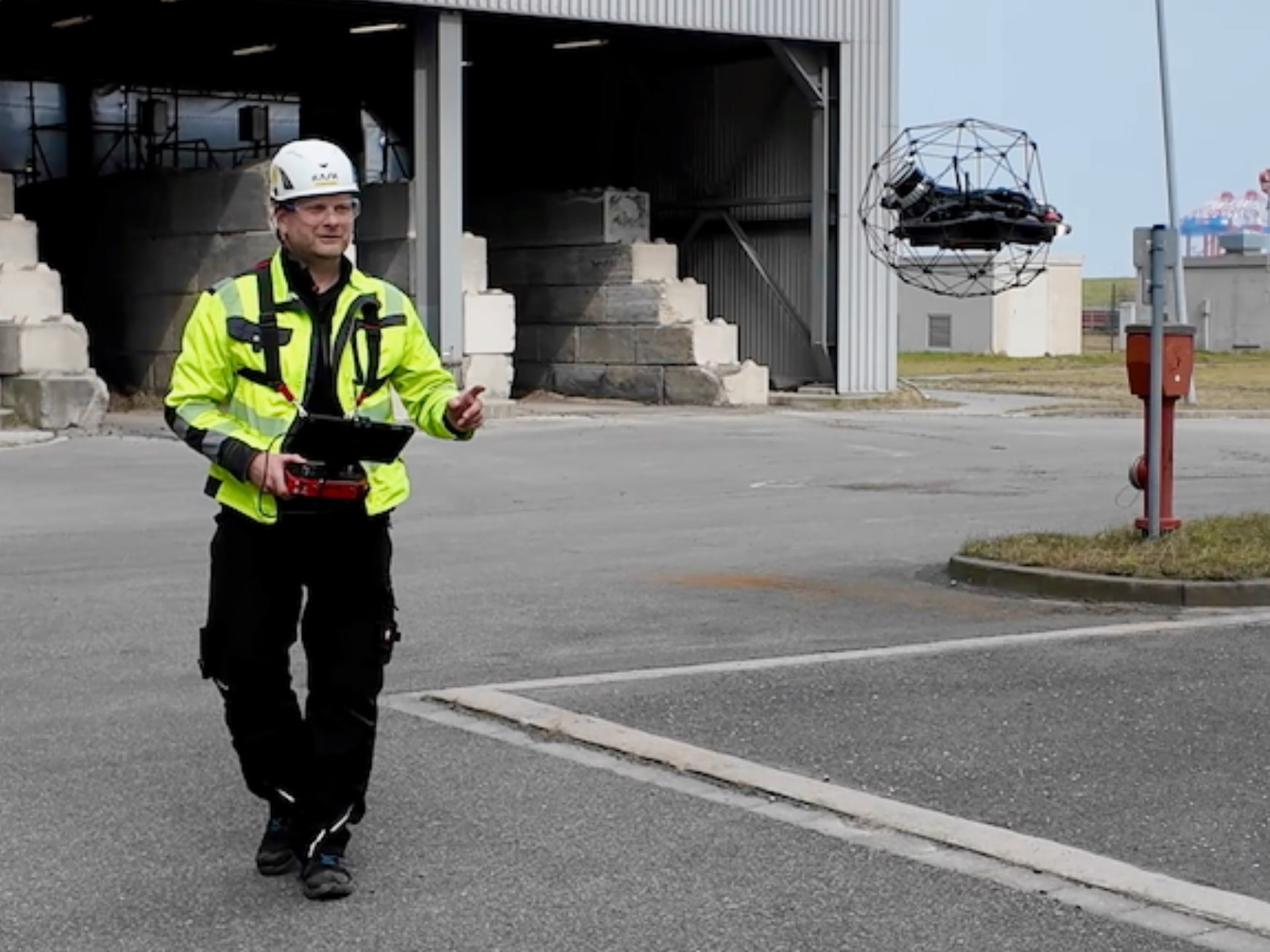
Our two-person team carries out the inspection – pilot and assistant with a dedicated safety concept. Usually completed within a few hours.
-
Analysis & Inspection Report
You receive a structured report with 4K footage, thermography analysis, 3D point clouds and a systematic findings overview.
Our Team
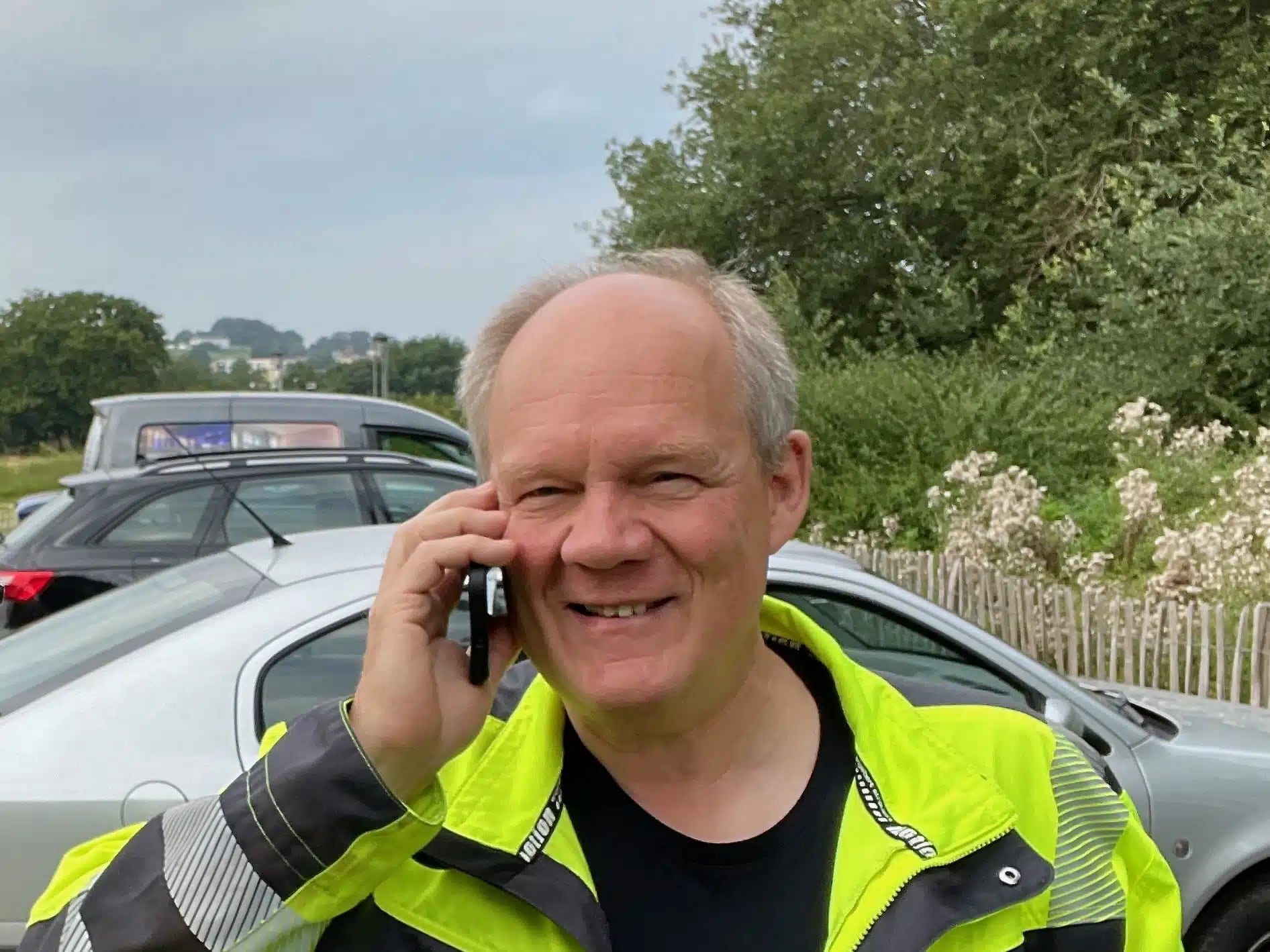
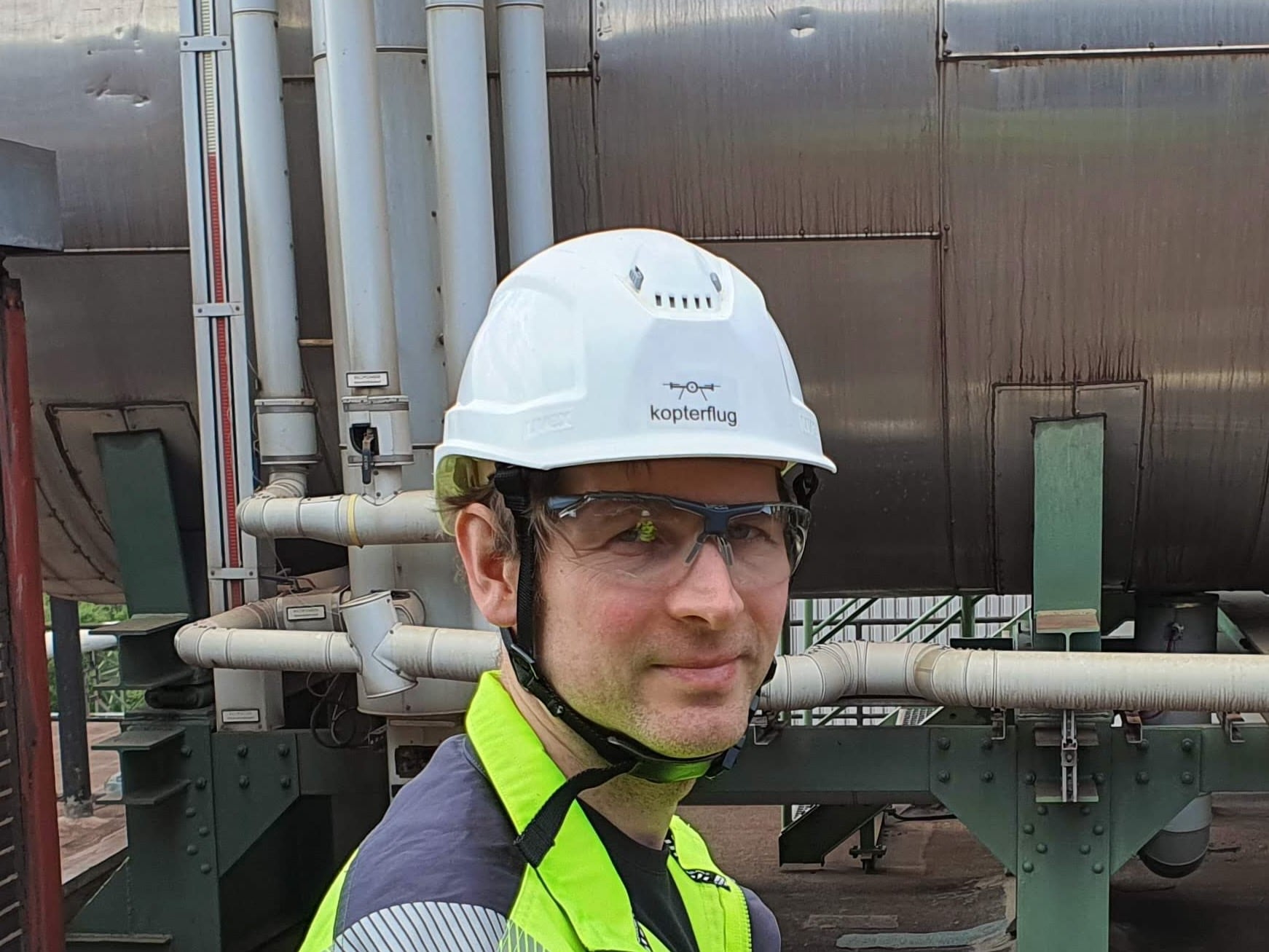
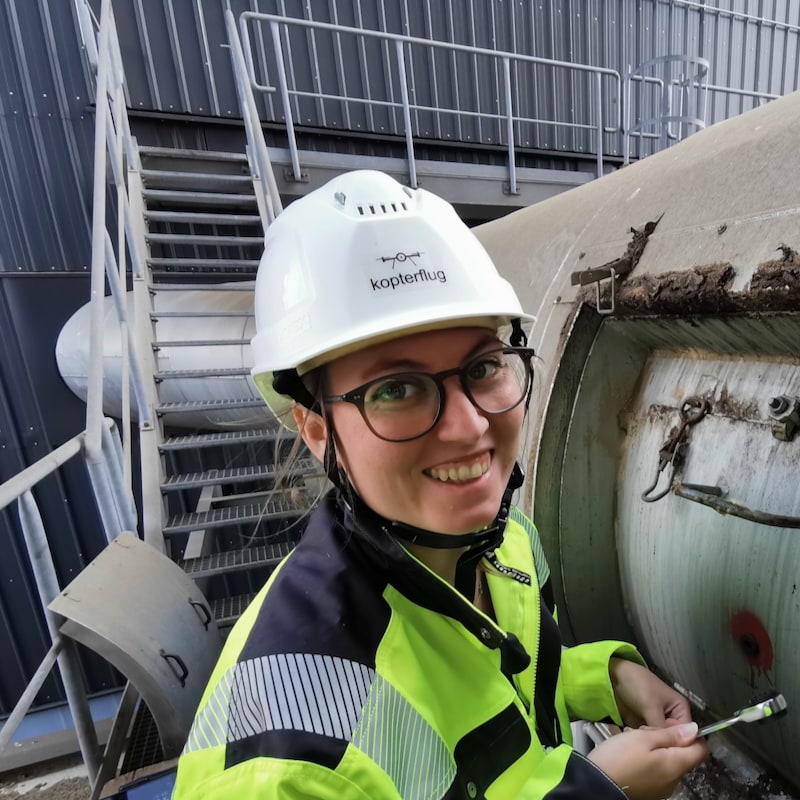
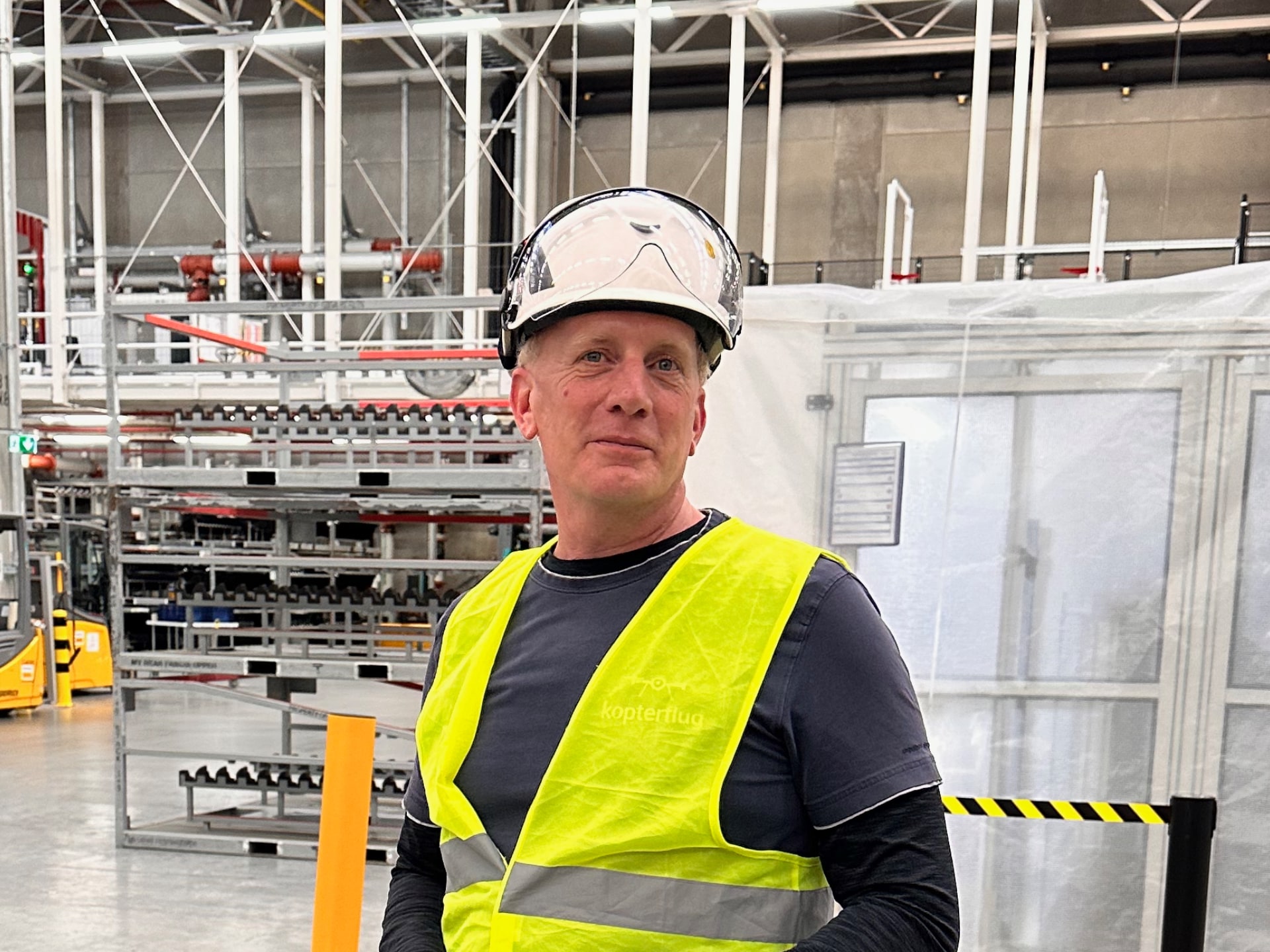
Christian Engelke, Dipl.-Ing. Karsten Lehrke and our inspection team – deployed for industry since 2017. Hundreds of inspected installations, zero human entries into hazardous areas. We know the workflows, the standards and the requirements of modern industrial operations.
Related Services & Topics
Further inspection solutions for your industrial installation:
- Drone Inspection (Overview) – Technology focus: Flyability ELIOS 3, Matrice 30T, LiDAR and thermography in detail.
- Confined Spaces Inspection – Tight, hazardous interiors without human entry – Kopterflug's core business.
- LiDAR Survey – Precise 3D point clouds for asset planning, digital twins and condition-based maintenance.
- Tank Inspection – Interior walls, floors, coatings – without confined space entry, without DGUV overhead.
- Flyability ELIOS 3 – The heart of our inspection – technical details, sensor package and deployment limits.
- Condition Documentation – Structured damage and condition capture as the basis for maintenance planning.
Frequently Asked Questions
Can inspections be carried out without human entry?
Yes – with the Flyability ELIOS 3 we inspect tanks, boilers, refractory linings, industrial furnaces, shafts and other confined spaces without human entry. The drone is fully collision-safe via a carbon protective cage and takes on the risk – your personnel remain safe. No DGUV confined space entry, no rescue chains, significantly reduced risk for your staff.
What does an industrial drone inspection cost?
Costs depend on asset size, complexity and individual requirements. Compared to conventional inspection with scaffolding, rope access or complex confined space entry procedures, savings of up to 80% are possible – primarily through eliminating access equipment and shorter downtime. Contact us for a project-specific quote.
What are the advantages of the ELIOS 3 over conventional methods?
Average ~80% cost savings: No scaffolding, no draining, no confined space team. Drastically reduced downtime: Hours instead of weeks. Maximum safety: No human entry required, significantly reduced risk. Precise data: 4K + LiDAR (centimetre-range) + thermography. Standards-compliant: BetrSichV, DGUV, EN 12952, API 653. Available throughout Germany, fast scheduling.
How long does an industrial drone inspection take?
The on-site inspection duration varies depending on installation size, access situation and the sensor package deployed. A pure 4K video inspection is completed significantly faster than a combined deployment with LiDAR 3D surveying and thermography – the latter requires more flight passes and higher resolution. In most cases, total effort is still significantly less than conventional methods with scaffolding or confined space entry. Precise figures are possible only after clarifying your specific conditions – contact us and we'll assess your particular case.
Are your inspections standards-compliant?
Our inspections are aligned with the relevant standards of industrial inspection: BetrSichV (documentation for monitored assets), DGUV Rule 113-004 (confined spaces without human entry), EN 12952 (water-tube boilers), 1. BImSchV (chimneys), API 653 (tanks), DIN EN 15635 (high-bay warehouses). Important: The responsible certified inspector decides on the acceptance of the method. Our documentation is structured to meet the requirements of inspection organisations and insurers.
Which drones does Kopterflug deploy?
We deploy different systems depending on the task: Flyability ELIOS 3 for interiors and confined spaces (collision-protected, LiDAR, thermography, GPS-independent navigation), DJI Matrice 30T for exterior inspections (zoom, thermography, long range) and underwater drones (ROV) for filled tanks and underwater areas. What matters is not the drone but the right technology for the specific task.
Why does Kopterflug work in two-person teams?
The two-person team is our standard: one certified pilot controls the drone, a second monitors live feed, safety and documentation. This ensures maximum control, safe workflows and smooth deployment – even in tight or complex installations. DGUV requires a safety watchperson for work in confined spaces – our two-person team fulfils this requirement automatically, without you needing to assign your own personnel.
In which regions do you offer inspections?
We operate throughout Germany – from north to south, east to west. With many years of experience (since 2017) and hundreds of inspected installations, we know the challenges of a wide variety of industrial sites. Contact us for fast scheduling – we align dates flexibly with your shutdown and maintenance plan.
What are the most common findings the drone detects?
In boilers: Erosion of refractory linings, corrosion on evaporator tubes, hotspots on superheaters, weld seam damage. In tanks: Floor corrosion, wall thinning, coating damage, weld seam corrosion. In chimneys: Masonry erosion, liner cracks, sooting, leaks. In columns: Wear on internals, liner damage, packing defects. In high-bay warehouses: Impact damage, deformations, bolt damage.
What is the ELIOS 3 not suitable for?
The ELIOS 3 is not an all-purpose drone. It is specialised for confined, dark, GPS-denied interior spaces. We are not a generic drone company and do not carry out weddings, events, pure aerial photography, property photos, or pure exterior inspections (except as a supplement, e.g. chimneys). Our focus is on confined spaces, hazardous interiors and hybrid applications. We do not provide expert assessments – only data and documentation. Technical evaluation is performed by your experts, TUV or DEKRA.
Why choose Kopterflug?
Specialised since 2017 in confined space inspections. Our team (Christian Engelke, Dipl.-Ing. Karsten Lehrke, Philipp, Juliana, Stephan) always works in a two-person team for maximum safety. Latest technology: ELIOS 3 (with 2025/2026 upgrades), underwater ROVs, outdoor drones. Available throughout Germany, fast scheduling. Hundreds of inspected installations. Close cooperation with TUV/DEKRA. Partner, not substitute – your experts evaluate, we deliver the data.
How quickly can a deployment be scheduled?
Significantly faster than conventional access equipment. No scaffolding, no long lead times for safety measures. If your installation is accessible and gas-free measured, we are typically on site within a few working days. For planned revisions, we recommend early scheduling to make optimal use of the revision window.
Can the drone fly in closed vessels without GPS?
Yes. The ELIOS 3 navigates via SLAM technology (Simultaneous Localization and Mapping) entirely GPS-independent. It was specifically developed for closed metal structures such as tanks, boilers and columns, and creates a 3D map of the environment during flight.
Which asset types can be inspected by drone?
We inspect tanks, boilers, pressure vessels, chimneys, silos, columns, pipe bridges, flares, high-bay warehouses, rotary kilns, ballast tanks and many other industrial assets. In principle, drone inspection is suitable wherever conventional access methods are expensive, time-consuming or hazardous.
Can the inspection be carried out during live operation?
Exterior inspections with the DJI Matrice 30T can in many cases be carried out during live operation – for example at pipe bridges, facades or flares. For interior inspections of tanks and vessels, the asset generally needs to be out of service, but without the elaborate preparation required for conventional entry.
What documentation do I receive after the inspection?
You receive a structured inspection report with 4K images, thermography analyses, systematic findings overview and – when LiDAR is deployed – 3D point clouds. All findings are georeferenced and position-documented, so they can feed directly into your maintenance planning.
What is LiDAR and how is it used in inspection?
LiDAR (Light Detection and Ranging) is a laser-based surveying method that generates precise 3D point clouds. During industrial inspection, we use it to capture asset geometries, deformations and wall thickness changes. The data form the basis for digital twins and enable reproducible comparative inspections over years.
What does confined spaces inspection mean?
Confined spaces are narrow, hard-to-access and potentially hazardous areas – such as tanks, boilers, shafts or columns. Classically, inspecting these requires extensive safety measures (DGUV, breathing apparatus, rescue chain). With the ELIOS 3, the drone flies into the space instead, while personnel remain safely outside.
In which industries is drone inspection used?
We regularly operate in the chemical industry, power plants, the oil and gas industry, heavy industry, water management, the cement industry, the maritime sector, and the automotive and logistics industry. In principle, drone inspection is suitable for any industry with safety-critical, hard-to-access assets.
How does thermography work in drone inspection?
The drone carries a radiometric thermal camera that precisely measures temperature differences on surfaces. This allows us to detect hotspots, insulation defects, leaks and corrosion under insulation (CUI) at an early stage – without dismantling and without touching the asset.
Is the Flyability ELIOS 3 explosion-protected?
The ELIOS 3 is designed for deployment in ATEX Zone 1 and Zone 2 environments and holds the corresponding certification. It can therefore be used in areas where explosive gas mixtures may occur – for example in tanks in the chemical industry or oil and gas processing.
Can inspection results be compared across years?
Yes. The ELIOS 3 stores flight paths and 3D maps so that follow-up inspections can be flown on exactly the same routes. This makes damage progression measurable and reproducible over months and years – the basis for a condition-based maintenance strategy.
What requirements must the operator fulfil for the drone deployment?
The operator provides the operational release and access to the asset. For interior inspections, the vessel must be depressurised and – depending on asset type – emptied. A risk assessment is prepared jointly. Scaffolding, rescue chain or breathing apparatus are not required.
What happens if the drone crashes or gets stuck in a vessel?
The ELIOS 3 features a robust protective cage that absorbs collisions and prevents getting stuck. Even in the event of a total failure, the drone remains in the vessel – it is light enough to be recovered without human entry. In over a thousand documented deployments, the system has proven extremely reliable.
Does drone inspection replace the recurring inspection under BetrSichV?
Drone inspection provides the visual documentation and condition data required for the recurring inspection under the German Industrial Safety Ordinance (BetrSichV). The formal inspection itself remains the responsibility of the authorised inspection body (e.g. TÜV, DEKRA). Our reports are structured to serve directly as the basis for these inspections.
Get in Touch
Have questions about industrial drone inspection or need a quote for your project? Fill out the form below and we'll get back to you within 24 hours.
Since 2017 deployed for industry. Hundreds of inspected installations. Throughout Germany. Without a single human entry into hazardous areas.