
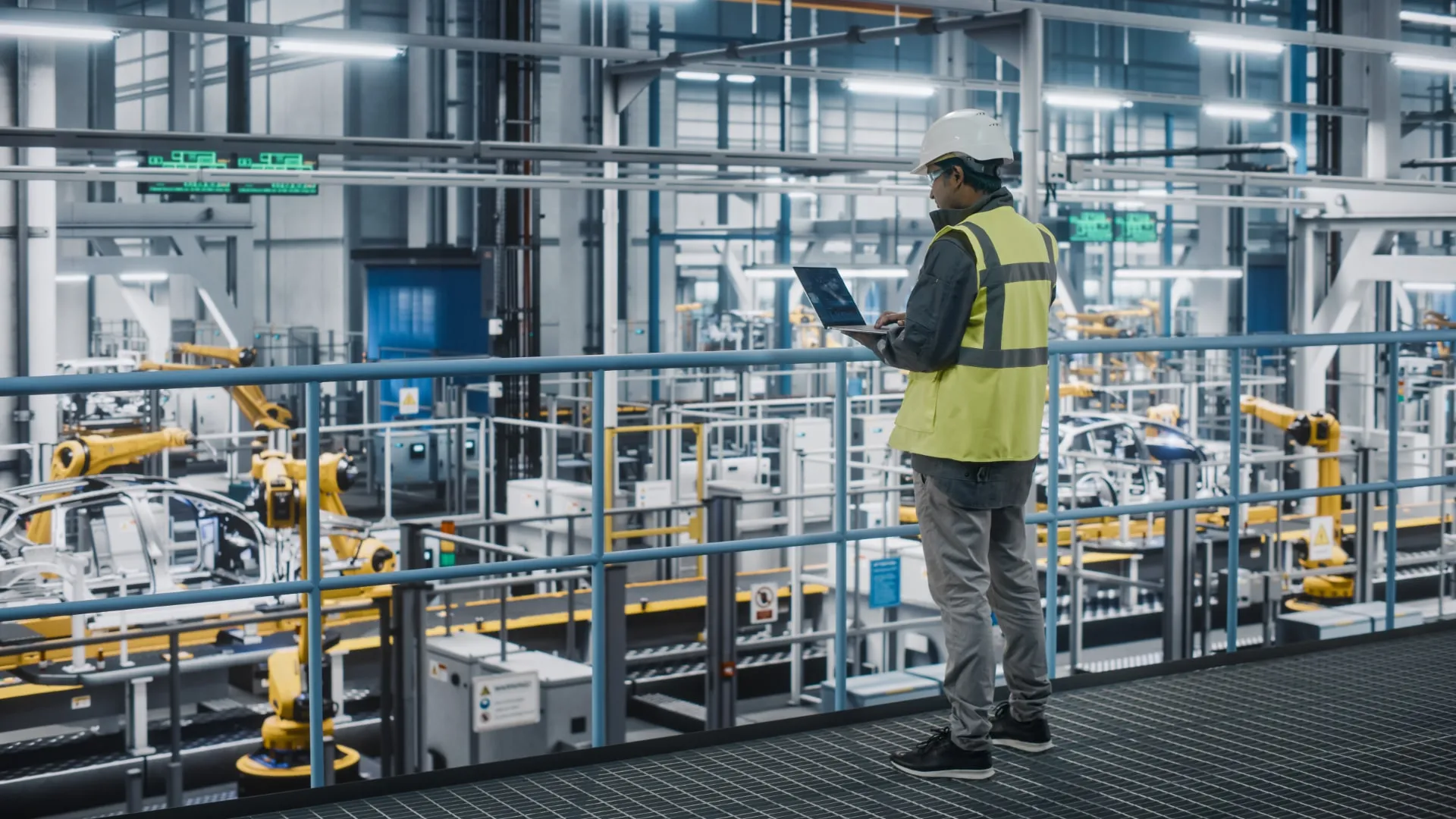
5 Reasons Why Preventive Maintenance with Drones Prevents Costly Failures
Unplanned plant shutdowns are the nightmare of every industrial operation. The Flyability ELIOS 3 enables predictive maintenance without complex preparations – faster, safer, up to 80% more cost-efficient than classical methods. Since 2017.
- Predictive maintenance (Predictive Maintenance / Präventive Instandhaltung) through drone inspections
- Up to 80% cost savings versus scaffolding and confined space entry
- No scaffolding, no cranes, no confined space entry
Preventive Maintenance Rethought: How Drones Improve Inspections
Unplanned plant failures are the nightmare of every industrial operation: they stop production, cause high costs and often require complex emergency measures. Traditional inspections mean scaffolding, cranes or risky surveys of confined spaces – time-consuming and costly.
The solution: drone inspections with the Flyability ELIOS 3. Innovative drone technology creates a remedy here: it enables predictive maintenance without complex preparations. With targeted drone inspections, you detect wear early and avoid costly production failures – without gas-free measurements or dangerous surveys.
Our experience since 2017: We have been conducting preventive drone inspections in hundreds of industrial plants since 2017 – initially with the ELIOS 1 and 2, today with the ELIOS 3. Our expertise shows: these 5 factors make the decisive difference between reactive and predictive maintenance.
5 Reasons at a Glance
| Reason | Drone Advantage | Practical Impact |
|---|---|---|
| 1. Fast Inspections | Ready in minutes instead of weeks of scaffolding | More frequent inspections = earlier detection |
| 2. Comprehensive Data | 4K + LiDAR + Thermography in one flight | Data-based maintenance instead of guesswork |
| 3. No Equipment | No scaffolding (€10,000–50,000 saved), no cranes | Even short-notice inspections possible |
| 4. Maximum Safety | Zero Human Entry, no DGUV confined space entry | No personnel risk in any area |
| 5. Cost Efficiency | Up to 80% cheaper, minimal downtime | Inspections become economically viable more often |
1. Fast Inspections at Hard-to-Reach Locations
The Flyability ELIOS 3 can fly to the most remote locations within plants in the shortest time, without complex preparations such as cranes, scaffolding or gas-free measurements. This enables inspections without long lead times and avoids shutdowns.
Time advantage in practice: Instead of days of scaffolding construction, the ELIOS 3 is ready within minutes. An inspection that previously required weeks of preparation now takes only a few hours. This speed is decisive for preventive maintenance – you can inspect more frequently and detect damage earlier.
- Tank roofs & boilers: Inspection of tank roofs and boiler interiors without scaffolding
- Pipelines & chimneys: Elevated pipelines and chimneys quickly and safely inspected
- Shafts & channels: Narrow shafts and channels reachable without human entry
- Welds & internals: Hard-to-reach weld seams and areas behind internals documented
2. Comprehensive Data Capture in a Single Flight
The drone captures high-precision images, videos and LiDAR scans in a single flight. This gives you comprehensive data for assessing your plant's condition without requiring multiple attempts or complex access.
Data-based maintenance planning: This comprehensive data capture enables data-based decisions instead of guesswork. You see exactly where maintenance is necessary and can prioritise and plan maintenance measures – the basis for genuine preventive maintenance.
- 4K video: High-resolution visual documentation of all inspected surfaces
- LiDAR-3D point clouds: Precise measurement and deformation analysis in one flight
- Thermography (optional): Detection of hotspots and hidden corrosion via thermal imaging
- Detail images: High-resolution photos of critical areas for detailed analysis
3. No Additional Equipment Such as Cranes or Aerial Platforms
Thanks to the drone's flexibility and manoeuvrability, expensive and bulky equipment such as cranes or aerial platforms is unnecessary. The ELIOS 3 can easily inspect elevated structures like cranes, vessels or pipelines without deploying complex auxiliary equipment.
Cost comparison:
| Criterion | Conventional Inspection | Drone Inspection (ELIOS 3) |
|---|---|---|
| Scaffolding costs | €10,000–50,000 | None |
| Downtime costs | €50,000–500,000/day | Minimal (hours) |
| Preparation time | 3–8 weeks | Hours |
| Personnel | 5–15 persons | 2 inspectors |
| Human entry | Yes (confined space) | No (Zero Entry) |
| Repeatability | Complex (new scaffolding) | Simple (any time) |
| Total cost | High | Up to 80% cheaper |
4. Reduction of Hazards for Employees
The drone can safely enter and inspect even dangerous or hard-to-reach areas such as tanks, confined spaces or heavily loaded industrial plants. This minimises the risk for employees, as no direct access is required any more.
- No human entry: No confined space entry – the drone assumes the risk
- No height work: No fall hazard during inspections at elevation
- No gas exposure: No exposure to toxic gases or oxygen deficiency
- No DGUV entry (Befahrung): DGUV entry measures, rescue chains and safety standby persons are eliminated
5. Time & Cost Efficiency
The long-term cost-benefit calculation clearly favours preventive drone inspections: preventive maintenance with drones is not a cost factor – it is an investment that pays off 5 to 10 times over.
- Up to 80% less cost: Drastically reduced maintenance costs through elimination of scaffolding, cranes and downtime
- Maximum safety: No human entry into confined spaces – the drone assumes the risk
- Extended service life: Early damage detection significantly extends plant service life
- No unplanned failures: Predictive maintenance prevents costly production stoppages
Conclusion: Preventive Maintenance with Drones as a Competitive Advantage
Intelligent drone inspections are fundamentally transforming preventive maintenance in industry. The ELIOS 3 enables high-precision inspections without scaffolding or cranes – even in hard-to-reach areas. Our drone technology delivers detailed analysis data for predictive maintenance and maximises plant availability.
"Preventive maintenance today means more than just regular servicing. With the ELIOS 3 we can inspect plants so frequently that we can precisely track damage development. Instead of waiting for something to break, our clients act proactively – saving millions and preventing unplanned failures." – Dipl.-Ing. Karsten Lehrke, Project Manager, Kopterflug
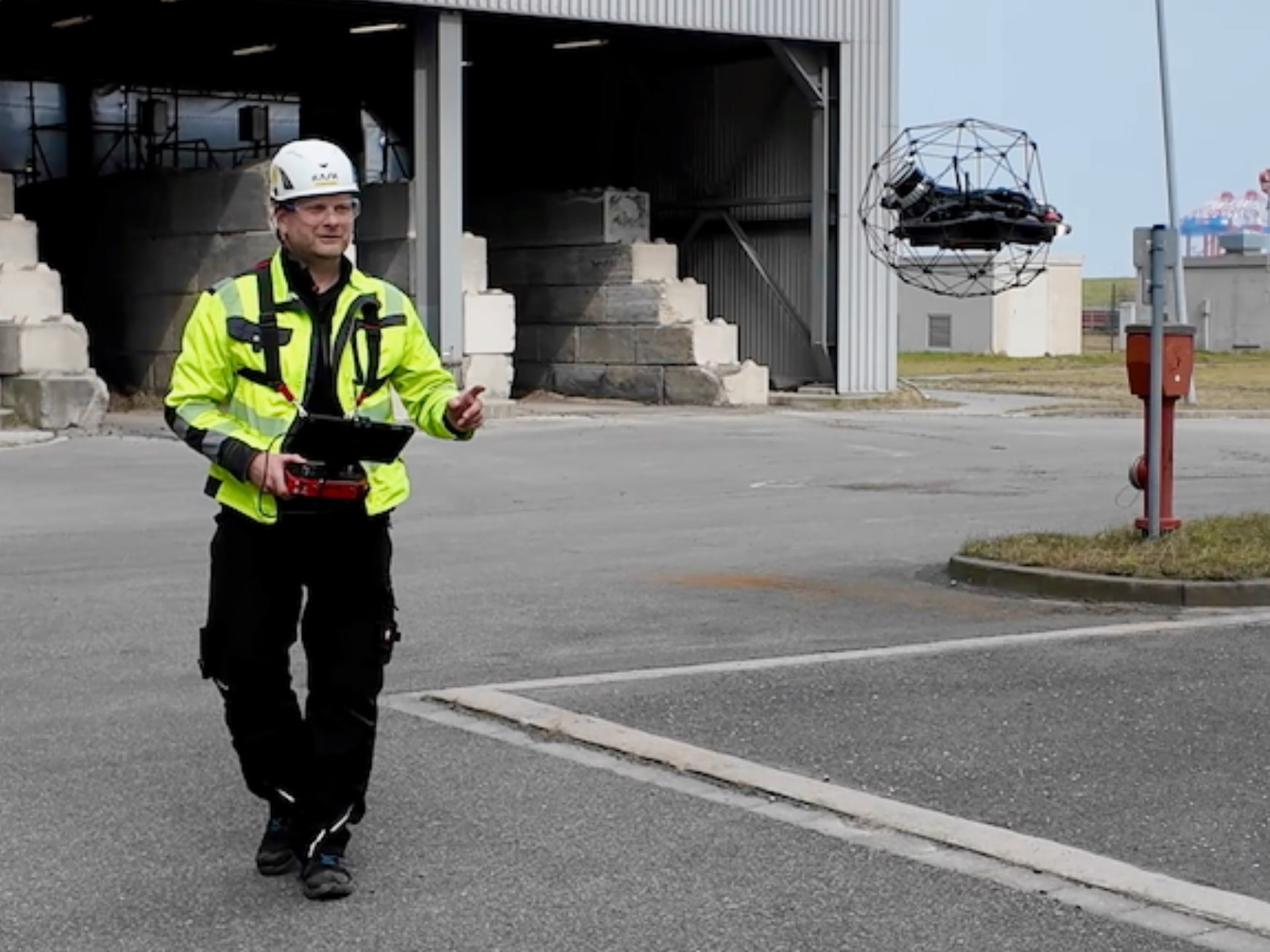
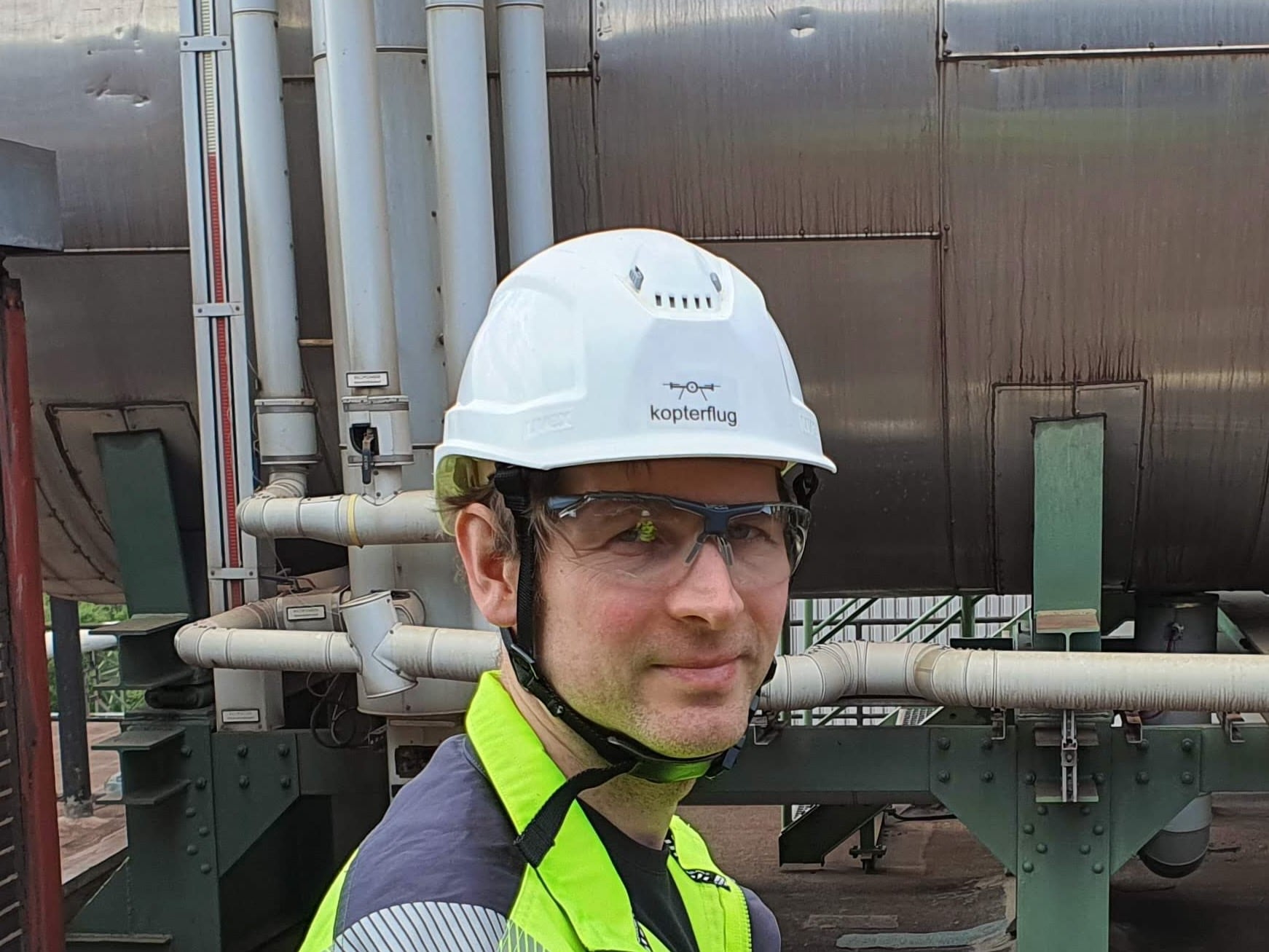
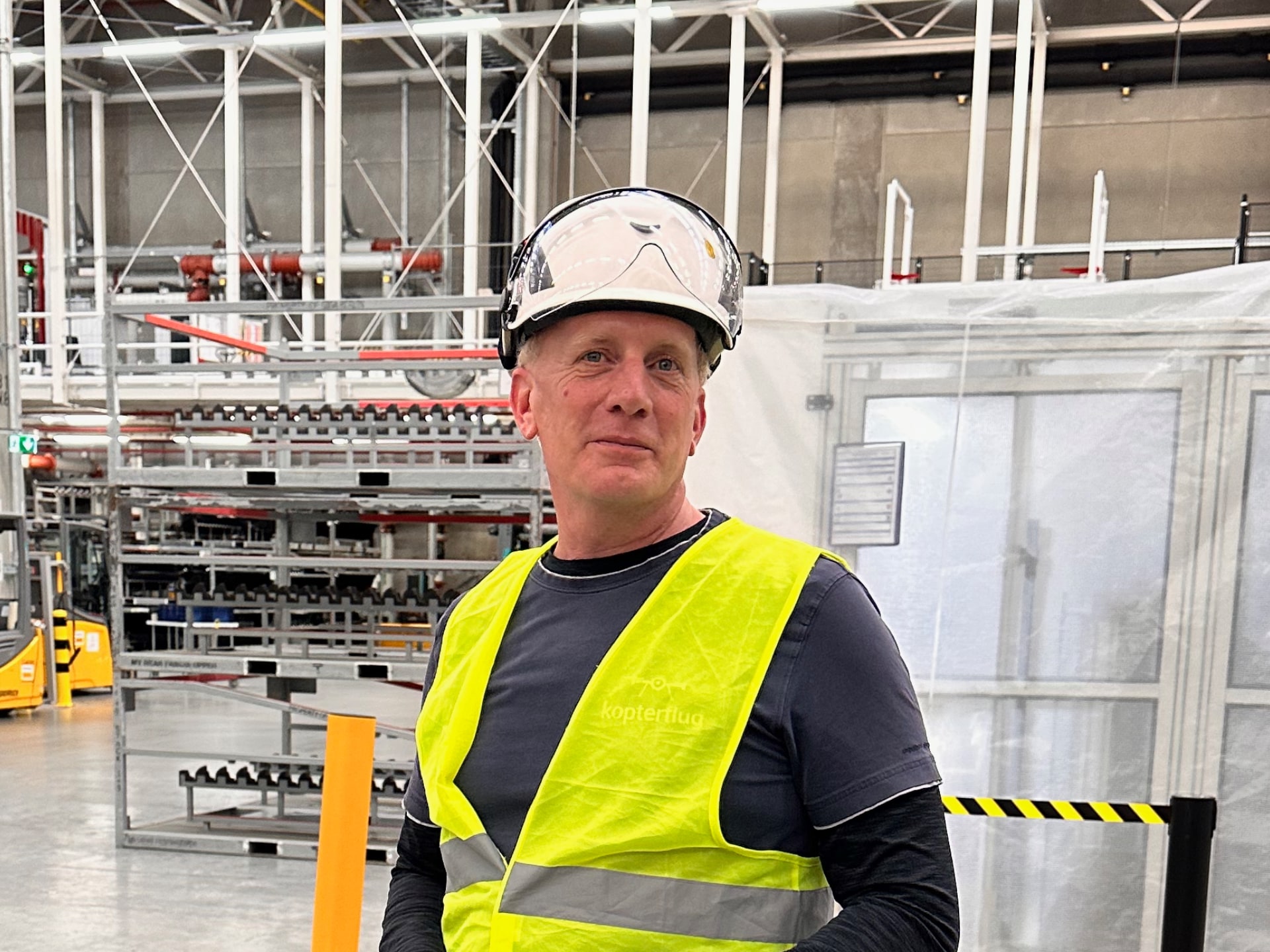
Your Contacts

Related Services
- Industrial Drone Inspection – Professional drone inspections for all industrial plants and sectors.
- Confined Spaces Inspection – Inspections in confined spaces without hazardous human entry.
- Flyability ELIOS 3 – Modern indoor drone technology for confined space inspections.
- Tank Inspection – Safe inspection of storage tanks and pressure vessels without human entry.
- Boiler Inspection – Drone-assisted inspection of boilers and heat exchangers.
- Industrial LiDAR Survey – 3D point clouds for geometry, documentation and digital twins.
Frequently Asked Questions
What does drone inspection in industry mean?
Drone inspection refers to the systematic examination of industrial plants using special inspection drones such as the Flyability ELIOS 3. These capture damage, corrosion and wear on industrial plants – without scaffolding, without human entry into dangerous areas. Predictive maintenance (Predictive Maintenance, also Präventive Instandhaltung in German) uses this data for proactive maintenance planning.
What advantages does industrial drone inspection offer?
Key advantages: up to 80% cost savings versus classical methods, drastically reduced downtime, no human entry into confined spaces, comprehensive data capture (4K video, LiDAR-3D, thermography), repeatable inspections for trend analysis, and the basis for genuine predictive maintenance.
Where are drone inspections used in industry?
Typical deployment areas: tanks and pressure vessels, power plant boilers and chimneys, reactors and columns in the chemical industry, mining shafts, silos and high-bay warehouses, pipeline systems, cooling towers, storage and production halls, crane runways and conveyor systems.
What does an industrial drone inspection cost?
Costs depend on plant size and complexity. In most cases up to 80% cheaper than classical methods with scaffolding, since there are no scaffolding costs, minimal downtime and fewer personnel required. Contact us for a project-specific quote.
How does a professional drone inspection proceed?
1. Pre-discussion and clarification of requirements. 2. On-site inspection (duration depending on plant size and complexity). 3. Data evaluation and analysis. 4. Detailed inspection report with 4K videos, 3D models and findings list. 5. Recommendations for maintenance measures and NDT follow-up testing if necessary.
What technology is used for industrial drone inspections?
The Flyability ELIOS 3 combines: 4K camera for high-resolution visual inspection, LiDAR-SLAM for GPS-independent navigation and 3D measurement, 16,000 lumen LED illumination, optional thermography for hidden damage detection. For exterior inspections, the DJI M30T with 200x zoom and radiometric thermography is used.
Are drone inspections suitable for all industrial plants?
The ELIOS 3 was specifically developed for confined spaces: tanks, boilers, reactors, shafts, chimneys, silos. Compact enough for openings from 50 cm, collision-safe, GPS-independent. Not suitable for: ATEX zones without prior gas-free measurement, plants above 50°C operating temperature, and as a substitute for NDT methods (UT, MT, PT).
What qualifications does an industrial drone inspector need?
Our inspectors hold: EU drone licence (for outdoor deployments), Flyability ELIOS 3 manufacturer training, years of experience in industrial environments since 2017, knowledge of relevant standards (DGUV 113-004, BetrSichV, DIN EN ISO 17637), and technical background for findings assessment.
How safe are drone inspections in industry?
Drone inspections are significantly safer than conventional methods: no human entry into dangerous areas, no fall hazard, no exposure to toxic gases. The ELIOS 3 is collision-safe – wall contact does not lead to a crash. Safety is our top priority in every deployment.
How is industrial drone inspection developing?
Trend towards more automation: AI-supported damage detection, autonomous flight planning, UT payload for thickness measurement. More and more companies are switching to preventive drone inspections instead of reactive maintenance – the transition from reactive to predictive maintenance (Predictive Maintenance) is in full swing.
Get in Touch
Would you like to switch from reactive to preventive maintenance? Fill out the form – we'll get back to you within 24 hours.