
ATEX & Drone: Inspection in Hazardous Areas – Honestly Explained
The ELIOS 3 is NOT ATEX-certified. How drone inspection still works safely – via gas-free measurement and release. Practical experience since 2017 in oil & gas, chemical and petrochemical plants.
- ELIOS 3 not ATEX-certified – honest communication, no misleading marketing
- Standard procedure: gas-free measurement + release = safe drone deployment
- Zero Human Entry – the key advantage remains after gas-free measurement
The Most Important Question First: Is the ELIOS 3 ATEX-Certified?
No. The Flyability ELIOS 3 is not ATEX/IECEx-certified and may not be deployed in active explosive atmospheres.
This initially sounds like an exclusion criterion for oil & gas, chemical and petrochemical plants – but in practice it often is not. Because: the vast majority of inspections take place after gas-free measurement and release. The confined space is measured gas-free, ventilated and released in advance – only then does the drone fly.
In this article we explain honestly:
- When the ELIOS 3 can be deployed in Ex-relevant plants
- Which preconditions must be met
- Where the limits lie
Note: This article is for general information purposes only and does not replace legal advice. Inspectomatic GmbH accepts no liability for the accuracy, completeness and currency of the information. The current versions of the regulations on gesetze-im-internet.de and baua.de are always authoritative.
What Does ATEX Mean in Practice?
ATEX (Atmosphères Explosibles) encompasses two EU directives:
- Product directive 2014/34/EU: Requirements for equipment in Ex areas
- Operating directive 1999/92/EC (ATEX 137): Operator obligations for protection of workers
Relevant for drones: As long as an explosive atmosphere is present or possible, the ELIOS 3 may not be deployed. The key lies in gas-free measurement and release.



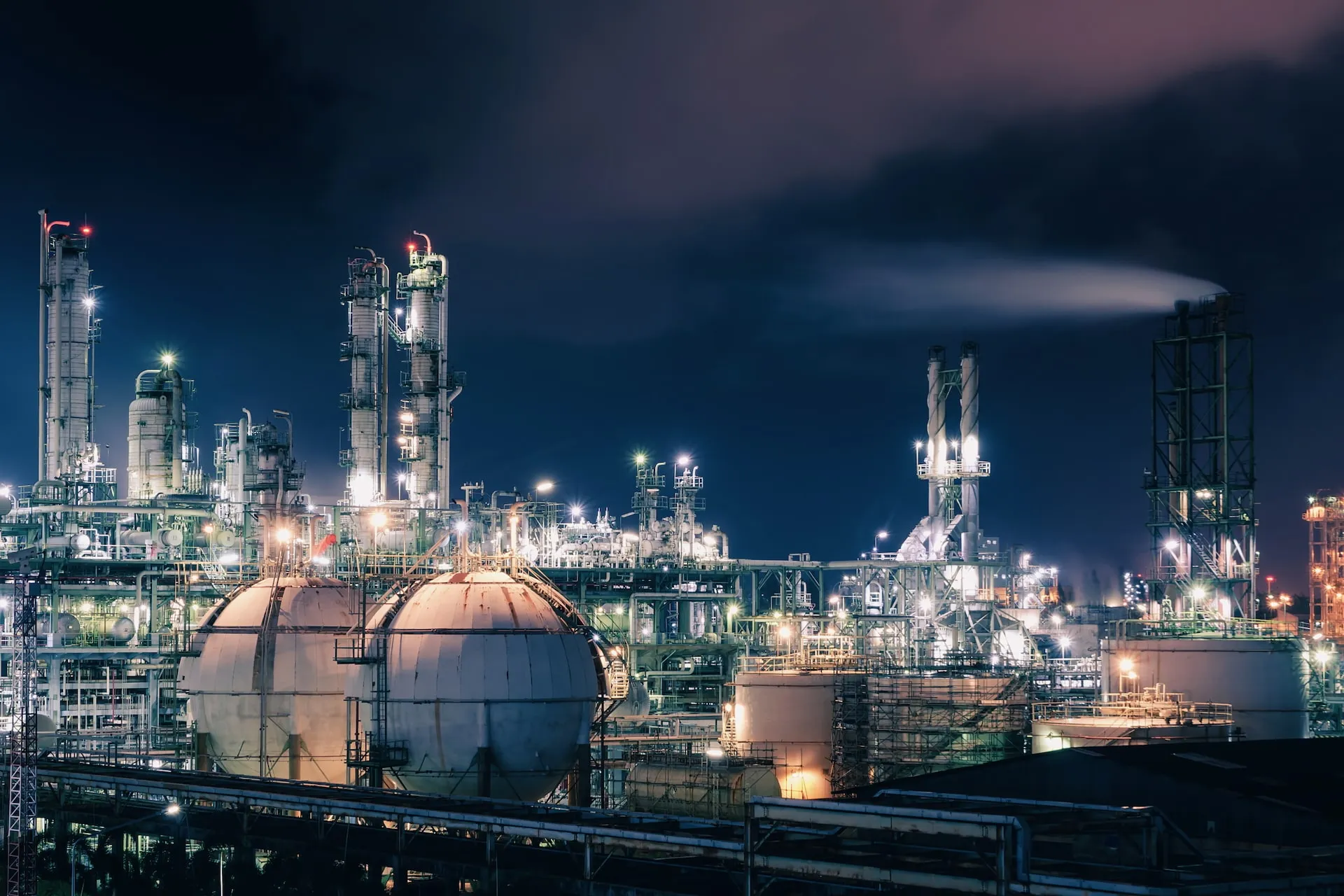
Petrochemical plant – drone inspection is possible after gas-free measurement and written release.
How Drone Inspection Works in Ex Plants
The standard process for safe drone deployment in Ex-relevant plants – and the crucial point: no human needs to enter after the gas-free measurement.
Step 1: Plant Preparation
Plant is shut down and emptied (depending on scope). Purging/inerting where required. Ventilation of the confined space.
Step 2: Gas-Free Measurement
Measurement of the atmosphere: O₂, LEL (lower explosive limit), H₂S, CO and other substances. By qualified personnel with calibrated gas measurement equipment. Measurement values are documented.
Step 3: Release by Plant Responsible
Written release (permit, work permit). LEL < 10% of the lower explosive limit (LEL). O₂ in normal range (20.9% ±1%).
Step 4: Drone Deployment
ELIOS 3 is introduced through the manhole. Inspection with 4K, LiDAR, thermography. Continuous atmosphere monitoring during the entire flight.
Important: This procedure is standard practice for EVERY confined space entry – even without a drone. The difference: no human needs to enter after the gas-free measurement.
When It Works – and When It Doesn’t
Drone deployable after gas-free measurement:
- Tanks after emptying and ventilation
- Boilers after cooling and ventilation
- Columns and reactors after inerting
- Silos after emptying
- Chimneys (generally no Ex issue)
- Shafts and channels after ventilation
Drone NOT deployable:
- Actively filled tanks with flammable media (LEL > 10%)
- Rooms with unavoidable gas development during inspection
- Areas where gas-free measurement is not possible
- Situations where the operator does not grant release
Grey area:
Partially filled tanks with non-flammable media (water, brine) can often be flown – gas-free measurement of the gas space is still required.
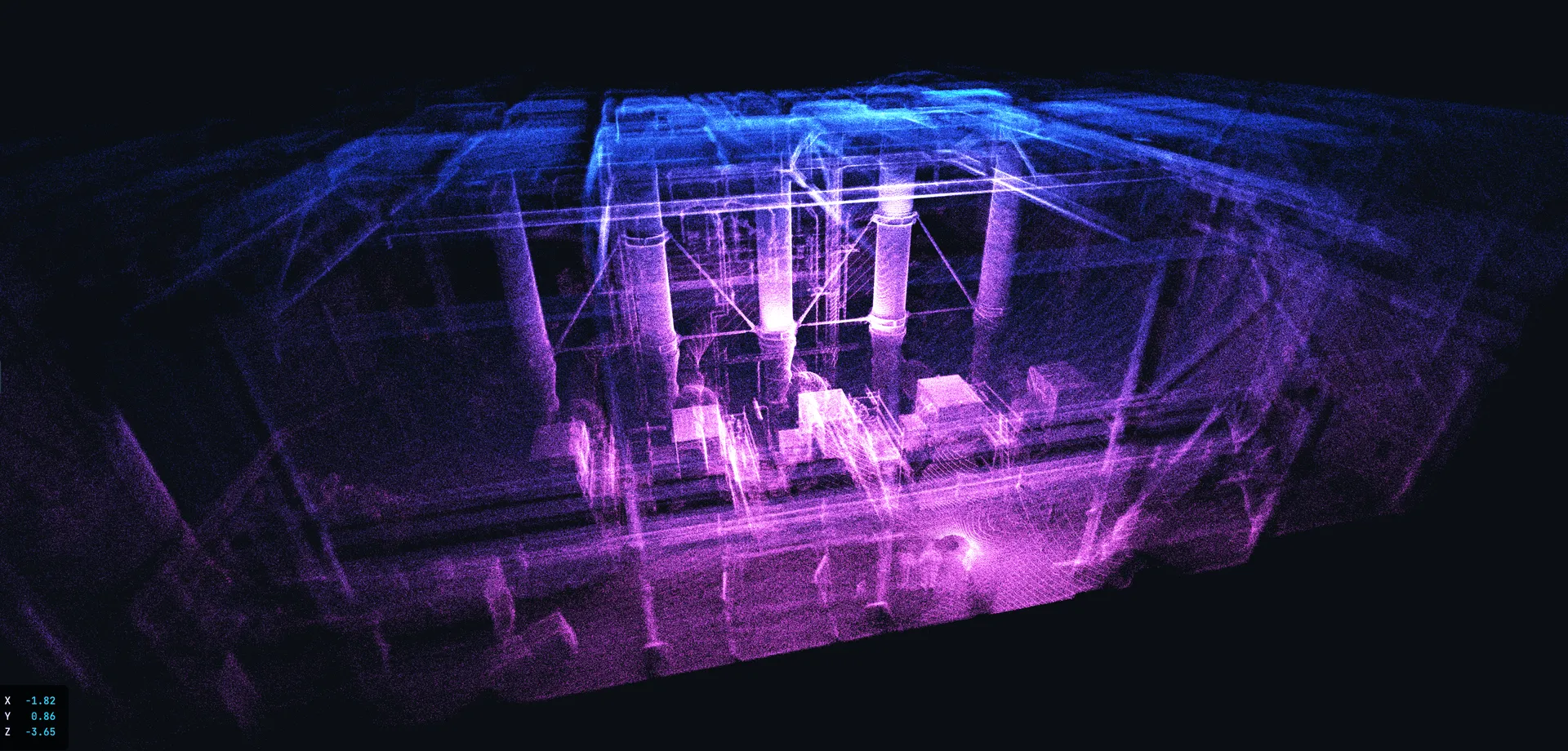
LiDAR 3D scan of pipelines in an Ex-relevant area – after gas-free measurement and release.
ATEX Drones: Do They Exist?
There are efforts to develop ATEX-certified drones. As of 2026, a few prototypes and niche products are available – but none with the performance of the ELIOS 3 (LiDAR, 4K, thermography, protective cage, SLAM).
Our assessment: For the vast majority of industrial inspection scenarios, the route via gas-free measurement + release + ELIOS 3 is more practical and more productive than a capability-reduced ATEX drone. Our experience from hundreds of deployments since 2017 confirms this.
| Criterion | ATEX-certified drone | ELIOS 3 (after gas-free measurement) |
|---|---|---|
| Deployment in active Ex atmosphere | Yes | No (gas-free measurement required) |
| LiDAR 3D scanning | No (too energy-intensive) | Yes |
| 4K camera | Limited | Yes (+ 16,000 lumens) |
| Thermography | No | Yes |
| Flight time | Severely limited | Full flight time |
| Protective cage | No | Yes (carbon fibre) |
| SLAM navigation | No | Yes (FlyAware Engine) |
| Market maturity (as of 2026) | Prototypes/niche | Hundreds of deployments since 2017 |
Summary: Honest Instead of ATEX Marketing
We could claim the ELIOS 3 is “suitable for Ex areas” – that would be misleading. Instead we communicate honestly:
- The ELIOS 3 is not ATEX-certified
- Deployment in Ex plants takes place after gas-free measurement and release
- This procedure is standard practice for all confined space work
- The decisive advantage remains: Zero Human Entry – no human needs to enter after the gas-free measurement
- The sensor combination (4K, LiDAR, thermography) is currently not available as an ATEX-certified product at comparable quality
Your Contacts for ATEX Questions
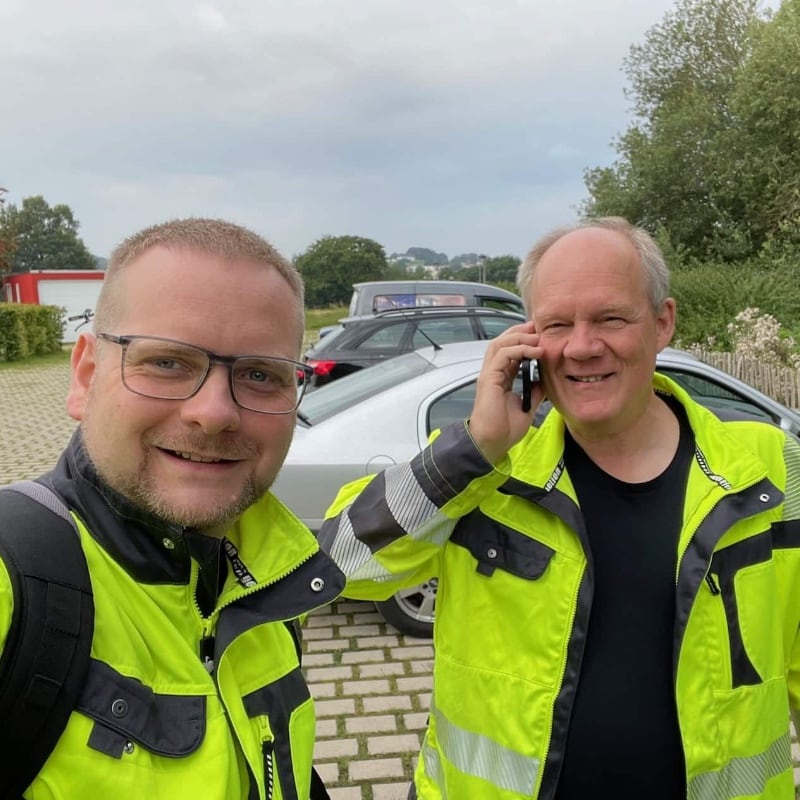
Dipl.-Ing. Karsten Lehrke and Christian Engelke – your direct contacts for Ex-relevant inspection projects.
If you would like to discuss a specific plant or scenario, contact us – we clarify feasibility and the required measures.
Related Services
- Oil & Gas Inspection – Drone inspection in refineries and oil-gas plants after gas-free measurement.
- Chemical Industry – Safe inspection of chemical plants with explosion-hazardous areas.
- Confined Spaces Inspection – Inspection of confined spaces without human entry in Ex-relevant plants.
- Tank Inspection – Tanks after emptying and gas-free measurement safely inspected by drone.
- Flyability ELIOS 3 – Technical details on the ELIOS 3 drone for confined space inspections.
- Silo Inspection – Silos and storage vessels safely inspected by drone after emptying.
Frequently Asked Questions: ATEX & Drone Inspection
May I deploy the ELIOS 3 in an oil tank?
Yes – after emptying, ventilation and gas-free measurement (LEL < 10% LEL). The tank must be released for drone deployment by the plant responsible. In an actively filled oil tank with explosive atmosphere: No.
Who is responsible for gas-free measurement?
The operator/plant responsible is responsible for gas-free measurement and release. We work closely with the on-site safety officers and document the release as part of our inspection protocol.
Are there ATEX-certified alternatives to the ELIOS 3?
As of 2026 there are some ATEX-certified drone prototypes, but none with comparable sensor equipment (LiDAR, 4K, thermography, protective cage). For most industrial inspection scenarios, the combination of gas-free measurement + ELIOS 3 is the more capable solution.
What is the ELIOS 3 gas sensor payload?
The optional gas sensor payload allows the ELIOS 3 to continuously monitor gas concentrations during flight and withdraw if thresholds are exceeded. This provides an additional safety layer even in already-released areas – particularly relevant in larger confined spaces where gas concentrations can vary by location.
What documentation is required for Ex plant inspection?
Standard documentation for any confined space work: gas-free measurement protocol with measured values (O₂, LEL, toxic gases), written release/work permit by the plant responsible, emergency plan and communication concept between pilot, spotter and plant personnel, and the drone inspection report with 4K video, LiDAR point cloud and finding documentation.
Get in Touch
Have questions about ATEX and drone inspection, or need an assessment for your Ex plant? Fill out the form below and we’ll get back to you within 24 hours.