
Drone vs. Scaffolding vs. Rope Access: Which Inspection Method Fits?
Costs, duration, safety, data quality – an honest comparison from practice. We have been conducting drone inspections since 2017. In this comparison we are honest: the drone is superior in many scenarios, but not in all.
- Costs: up to 60–90% savings vs. full scaffolding
- Safety: Zero Human Entry – no confined space entry, no fall risk
- Data quality: 4K + LiDAR 3D + thermography vs. manual notes
When is the Drone Better – and When Not?
Every inspection faces the same question: How do I reach the damage spot? Scaffolding, rope access, aerial work platform or drone – each method has strengths and limits.
We have been conducting drone inspections since 2017 – initially with the ELIOS 1 and 2, today with the Flyability ELIOS 3. In this comparison we are honest: the drone is superior in many scenarios, but not in all. Whoever needs to perform manual repairs on-site still needs physical access.
This article helps you choose the right method for your application – or the optimal combination (hybrid inspection).
1. Costs: Drone vs. Scaffolding vs. Rope Access


For pure condition assessment (VT, thermography, surveying) the drone is the most economical option in many cases. For repair needs: hybrid inspection.
2. Duration: From Weeks to Hours
Evaluation and report creation takes additional time for all methods. The drone advantage: data is digital and already georeferenced, which accelerates evaluation.
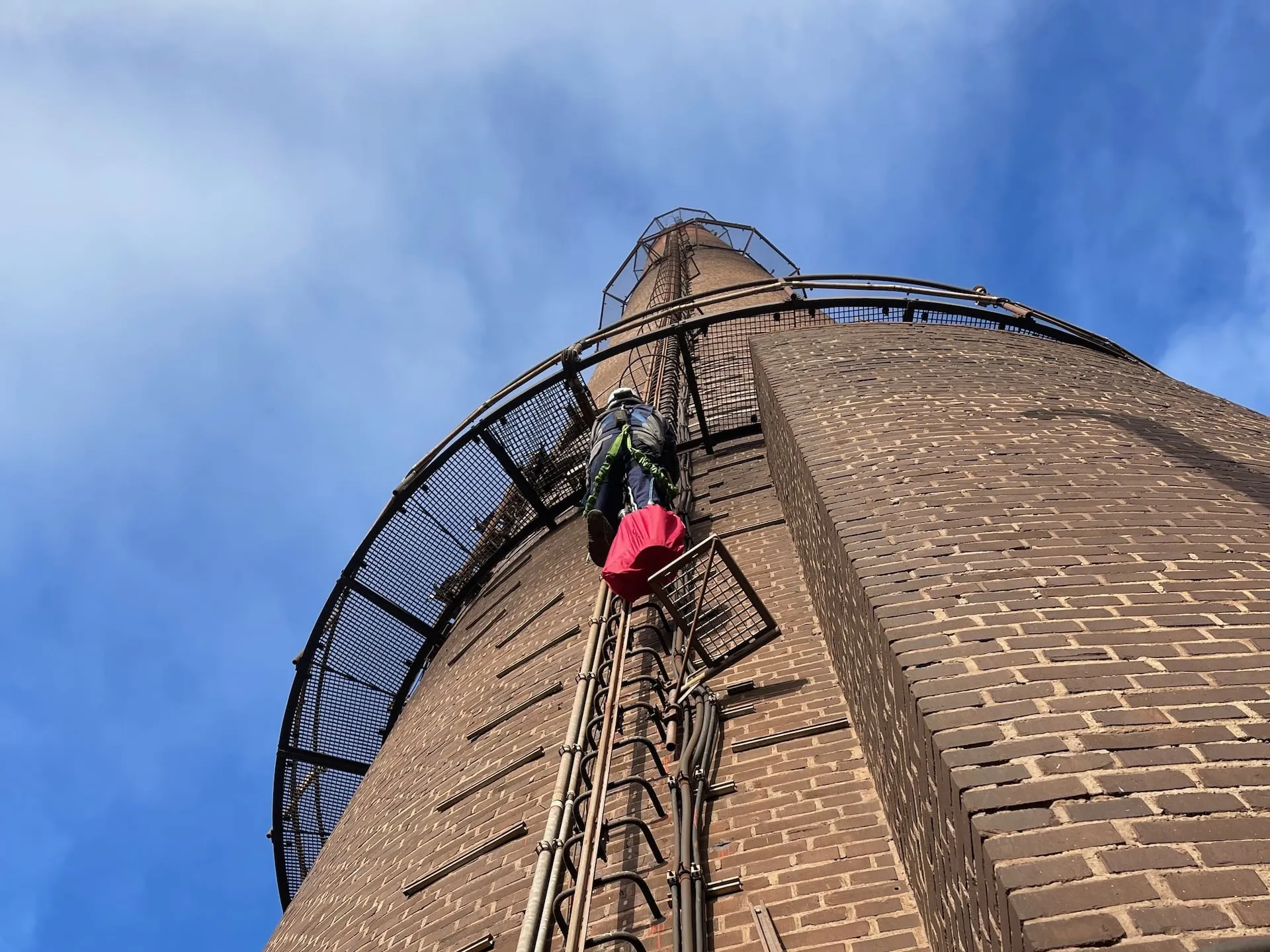
Rope access (Seilzugang) at a chimney inspection – skilled, but limited in documentation depth and repeatability.
3. Safety: Zero Entry as the Decisive Advantage
Here lies the greatest advantage of the drone: No human needs to enter the confined space.


Zero Human Entry: the greatest safety advantage of drone inspection. Less exposure = less risk = less liability.
4. Data Quality: Subjective vs. Digital
Scaffolding / Rope Access:
- Documentation: photos (phone/camera), handwritten notes, sketches
- Surveying: manual (tape measure, laser distance meter)
- Reproducibility: low (next inspection = different person, different perspective)
- 3D model: not available
Drone (ELIOS 3):
- Documentation: 4K video/photo (3840×2160, 30 fps), georeferenced
- Surveying: LiDAR 3D point cloud (centimetre precision), volume, geometry
- Thermography: radiometric (absolute temperature values), CUI detection
- Reproducibility: high (saved flight paths, 3D maps)
- Colorization: coloured 3D models for intuitive finding assessment
- Output: .las/.e57 (CAD/BIM-compatible), PDF report with finding list
The drone delivers more objective, measurable and reproducible data. Particularly for damage progression monitoring over years this is a decisive advantage.
5. Application Area: Where Each Method Wins

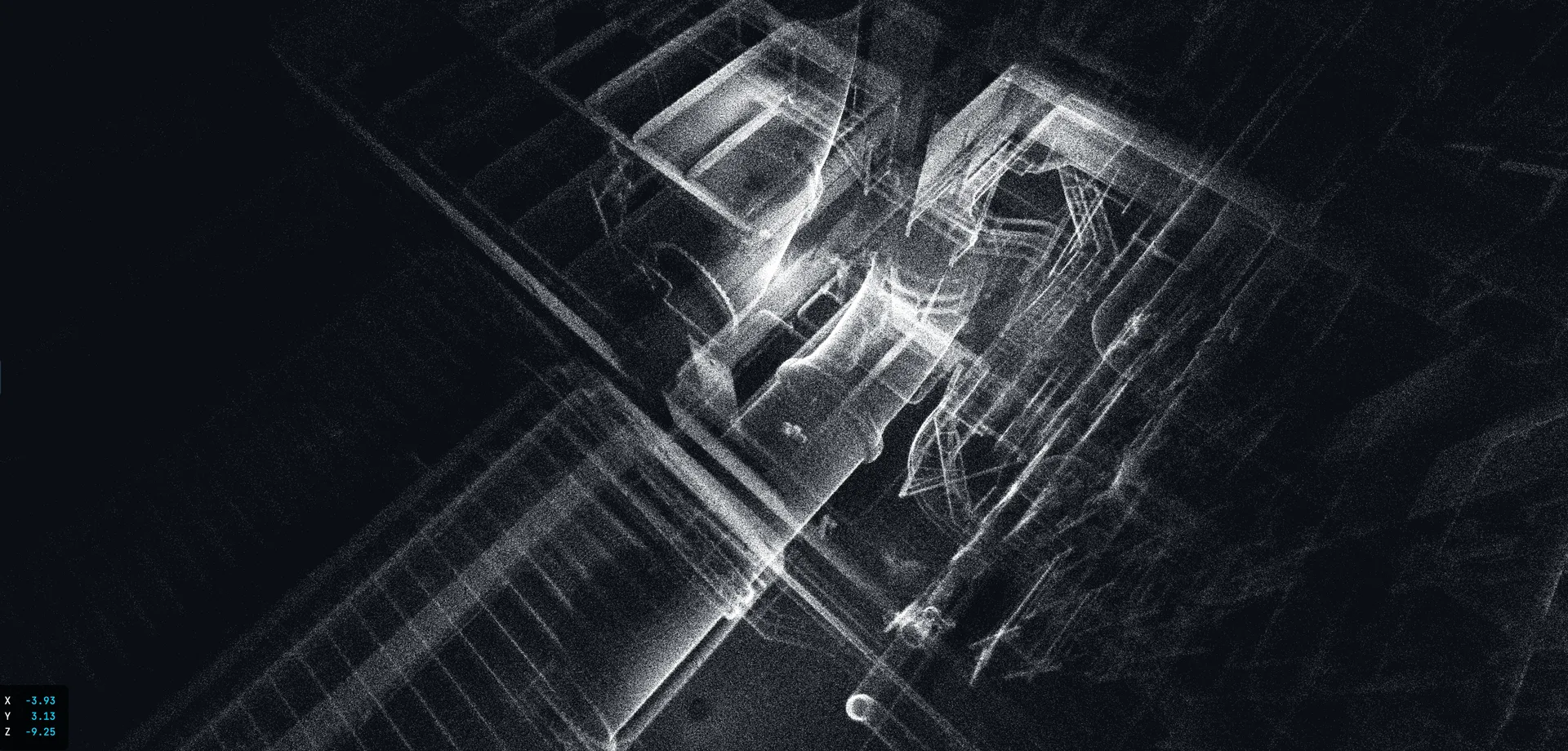
LiDAR 3D scan of power station pipelines – the data quality difference compared to manual scaffold inspection is fundamental.
6. Comparison Table at a Glance
| Criterion | Scaffolding | Rope Access | Drone (ELIOS 3) |
|---|---|---|---|
| Costs | High (5–6 figures) | Medium | Low–Medium |
| Duration | Weeks | Days | Hours–Days |
| Safety (personnel) | Highly exposed | Exposed | Zero Entry |
| Data quality | Subjective/manual | Subjective/manual | 4K + LiDAR + Thermography |
| Reproducibility | Low | Low | High (saved paths) |
| Repair possible | Yes | Yes | No (inspection only) |
| Confined space suitable | Limited | Limited | Optimal |
| Operational interruption | Long | Medium | Minimal |
7. When We Do NOT Recommend a Drone
Honesty creates trust. We do not recommend drone inspection when:

Conclusion: Drone as First Choice – with Judgement
For pure condition assessment in confined spaces the drone is superior in most cases: faster, cheaper, safer, better data.
The hybrid inspection (drone + targeted human intervention) is the future model: the drone identifies where and what, the human intervenes only where truly necessary.

Your Contacts
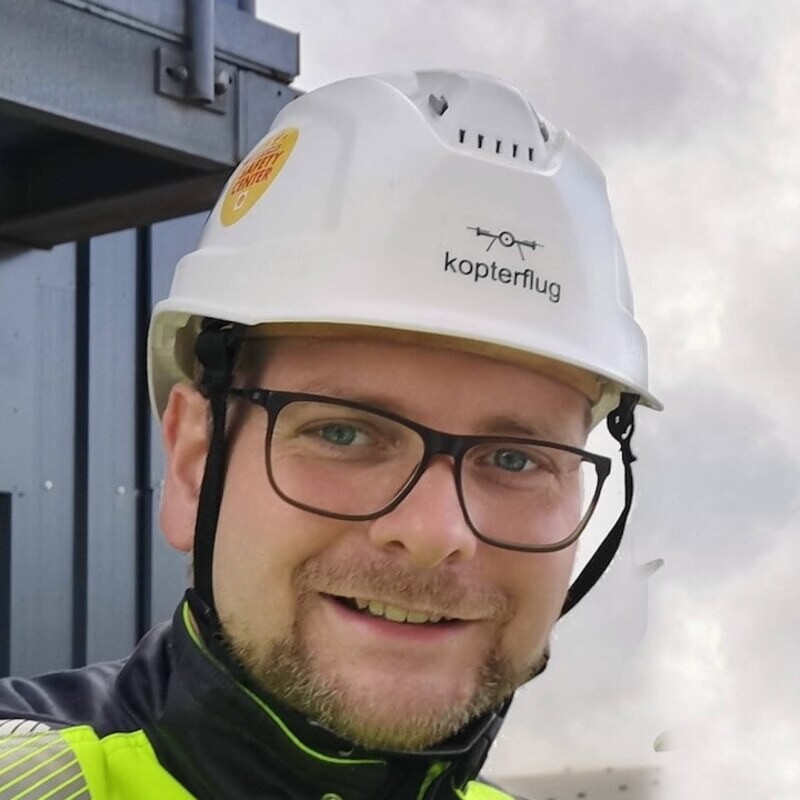
Christian Engelke – your direct contact for honest method comparison.
We advise honestly – and only recommend the drone when it really is the best solution. Speak with us.
Related Services
- Confined Spaces Inspection – Confined spaces inspected safely without scaffolding and human entry.
- Flyability ELIOS 3 – The alternative to scaffolding and rope access for confined space inspections.
- Tank Inspection – Tank interior inspection by drone instead of complex scaffolding.
- Industrial Inspection – Comprehensive industrial inspection with the most modern drone technology.
- Chimney Inspection – Chimneys inspected without scaffolding or rope access by drone.
- Boiler Inspection – Boilers safely and cost-efficiently inspected without scaffolding.
Frequently Asked Questions about the Method Comparison
Can the drone completely replace scaffolding?
For pure inspection and documentation: in many cases yes. For repairs (welding, coating, mounting): no – physical access is still needed for that. The optimal solution is often hybrid inspection: drone for screening, human only where action is needed.
How much cheaper is the drone really?
Depends on the comparison scenario. Compared to full scaffolding for large plants, savings of 60–90% are not uncommon. Compared to rope access the cost advantage is smaller, but data quality (LiDAR, thermography) is significantly higher. We don’t quote blanket figures – we’re happy to calculate your specific case.
Do certification bodies accept drone data?
Acceptance is steadily growing. Many certification bodies (TÜV, DEKRA, DNV and others) already work with drone-assisted inspection data. Important: each certification body decides independently whether and to what extent it accepts drone inspection data as an inspection basis. We clarify this in advance with the relevant bodies.
What is hybrid inspection?
Hybrid inspection combines drone initial inspection with targeted human intervention. The drone identifies and localises damage points (4K, LiDAR, thermography) – the human intervenes only where repair or tactile testing is required. Result: up to 80% less human deployment in hazardous areas.
Is rope access (Seilzugang) better than a drone for chimneys?
For inspection only: the drone is typically faster, cheaper and delivers better data (4K + LiDAR vs. photos and notes). For repairs on the chimney (pointing, lining, equipment mounting): rope access is still necessary. For a combined approach – drone identifies where repair is needed, rope access team works only there – the hybrid model gives the best result.
How does drone inspection reduce liability?
Zero Human Entry means: no confined space entry, no fall risk, no rescue chain obligation. Fewer people in hazardous areas = fewer incidents = lower liability. Additionally: drone documentation (4K, LiDAR, georeferenced finding list) is significantly more objective and traceable than manual inspection reports – relevant for insurance documentation and legal disputes.
Can the drone also fly in high structures like chimneys >100 m?
The DJI M30T can document the external shell of chimneys at any height – limited only by signal range (typically 5–7 km) and legal regulations (in Germany >120 m flight altitude requires a special permit). For the chimney interior the ELIOS 3 flies vertically from the base – the flight range inside the chimney is sufficient for most industrial chimneys (typically up to 150–200 m depending on geometry).
Get in Touch
Not sure which inspection method fits your plant? Fill out the form below and we’ll get back to you within 24 hours with an honest assessment.