
Drone Inspection: Benefits for Industrial Plants
Time savings, safety and cost efficiency with the Flyability ELIOS 3. Up to 80% time saved, no scaffolding, no human entry into confined spaces – with better documentation quality than conventional methods.
Drone Inspection vs. Conventional Methods
Conventional inspection methods are reaching their limits. Scaffolding erection takes weeks, human entry into confined spaces is life-threatening, rope access is expensive and time-consuming. During active operations these methods are often not feasible at all – and for large plant parks with dozens of tanks or boilers, costs explode.
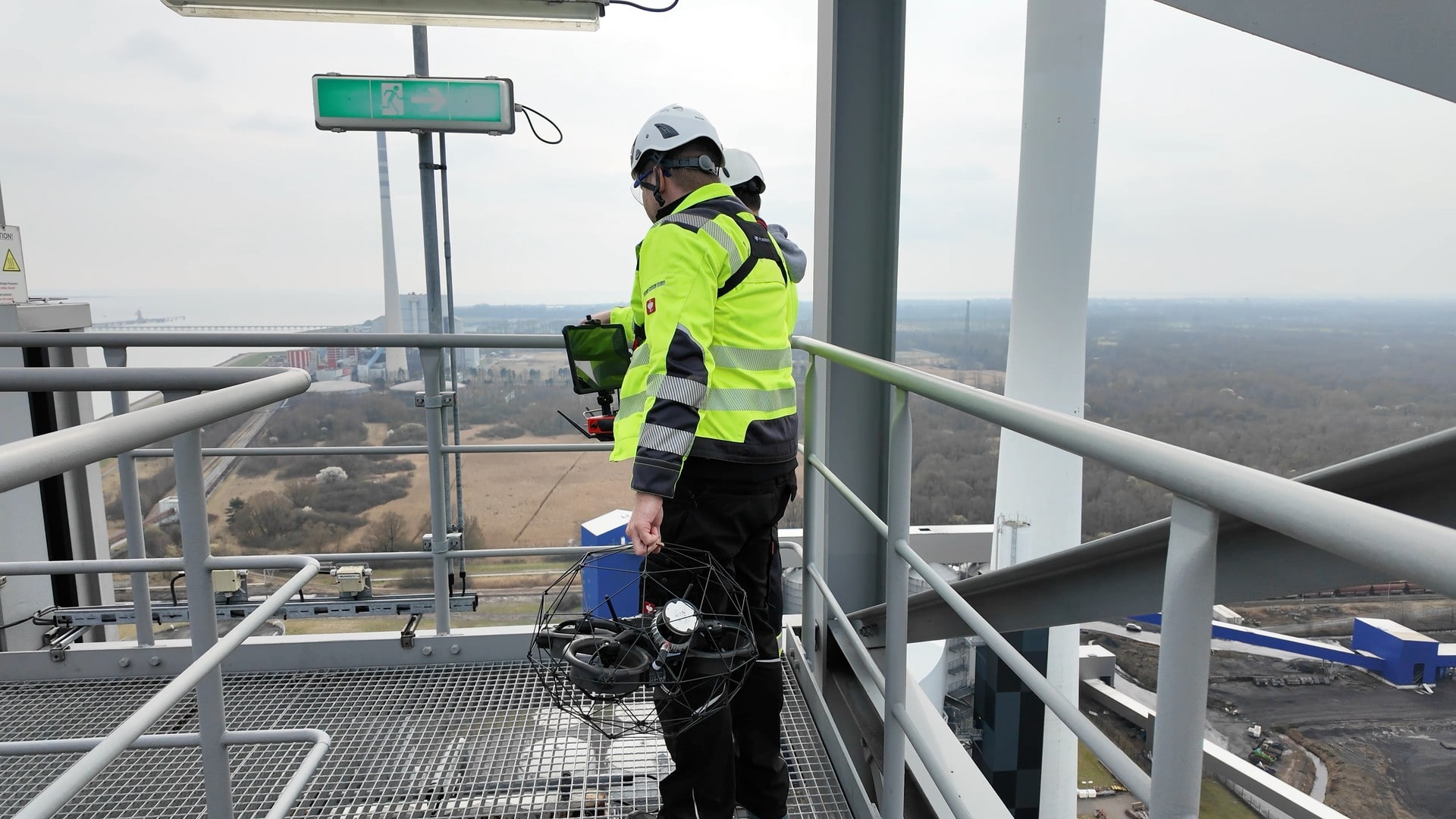
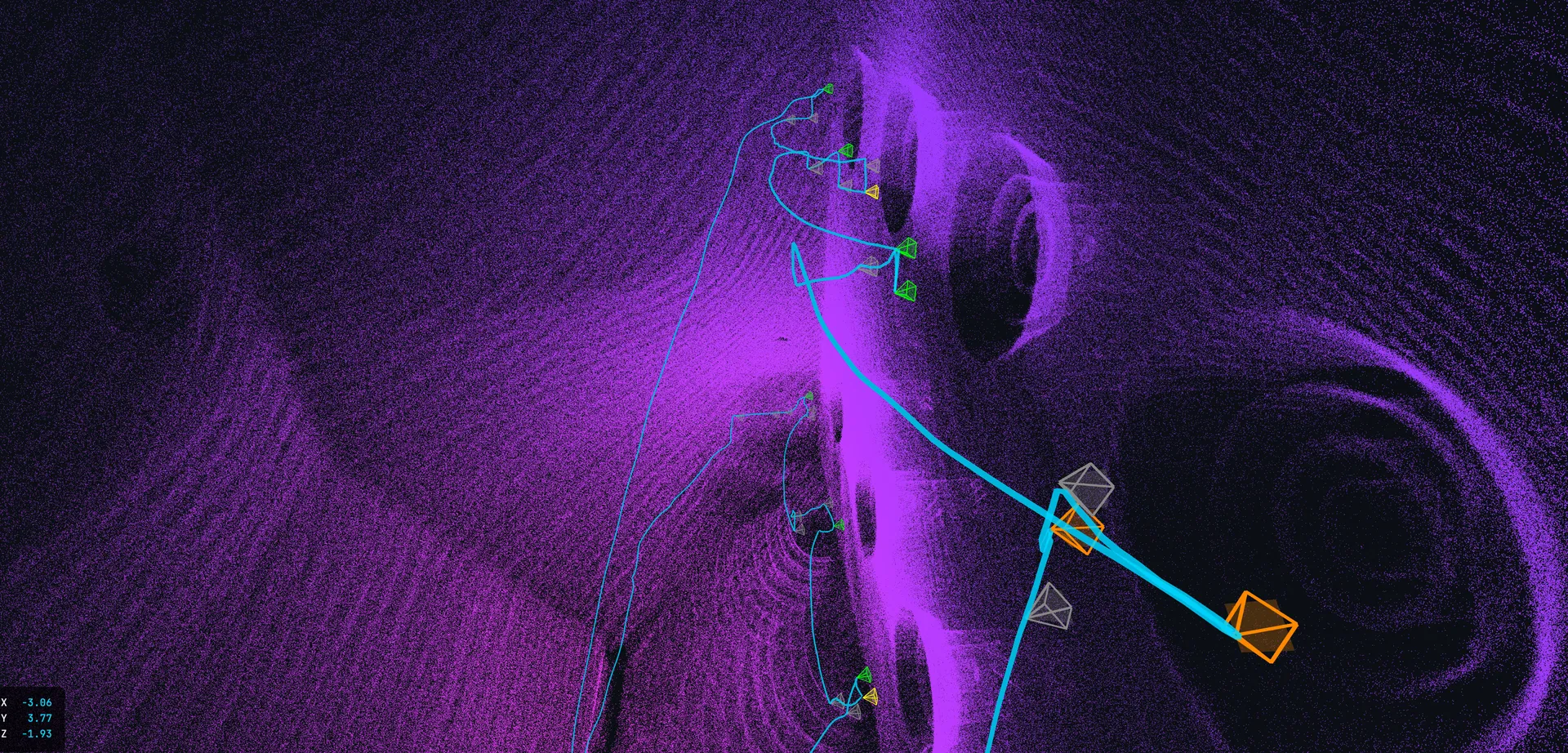
The solution: drone inspection. The Flyability ELIOS 3 inspects confined, dark industrial plants GPS-independently and collision-safely – tanks, boilers, reactors, shafts, chimneys. 4K camera, LiDAR 3D survey and optional thermography deliver in hours data that classically required weeks. The DJI M30T complements this for exterior inspections of pipe bridges, facades and rooftops with 200x zoom and radiometric thermography.
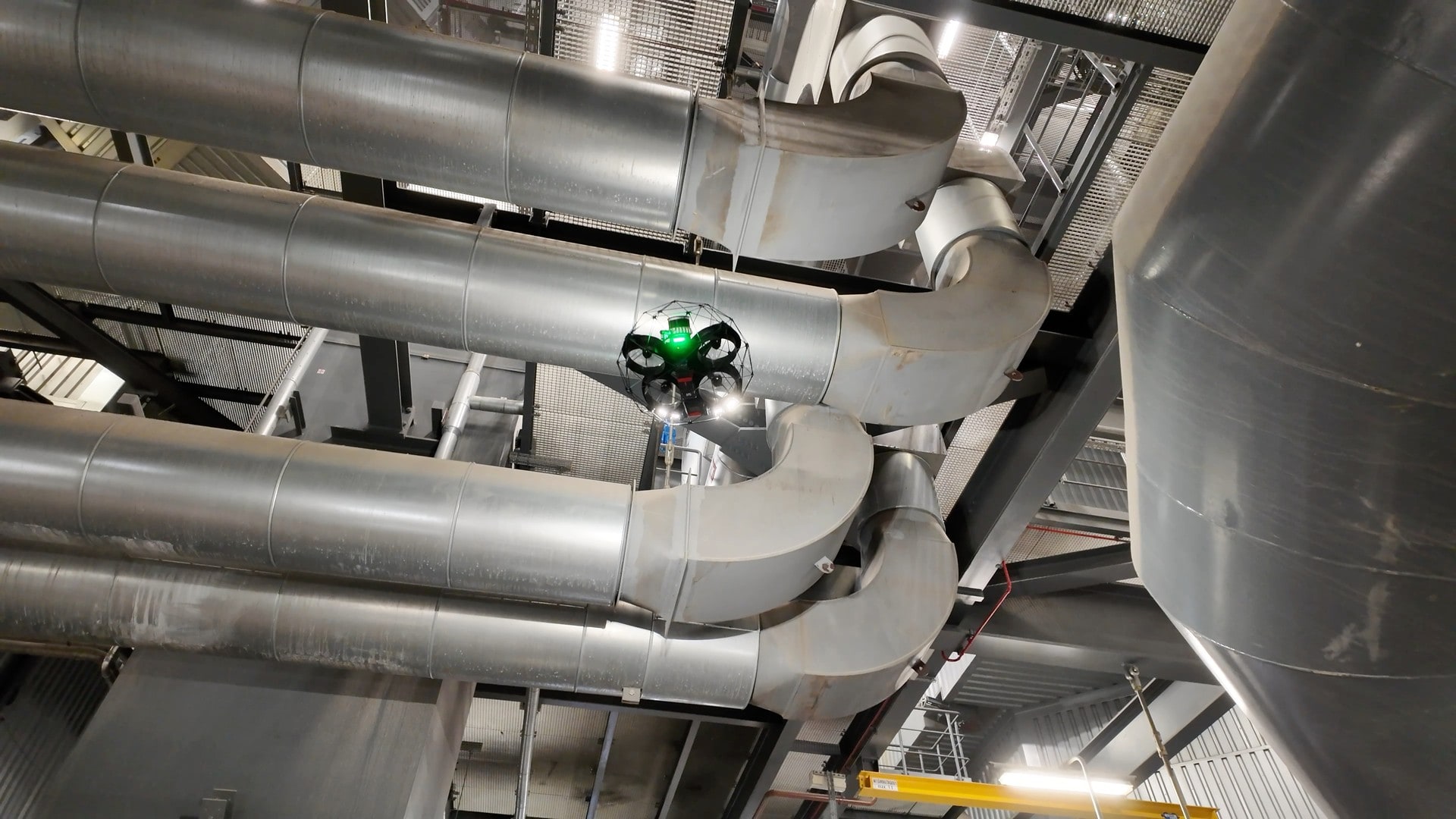
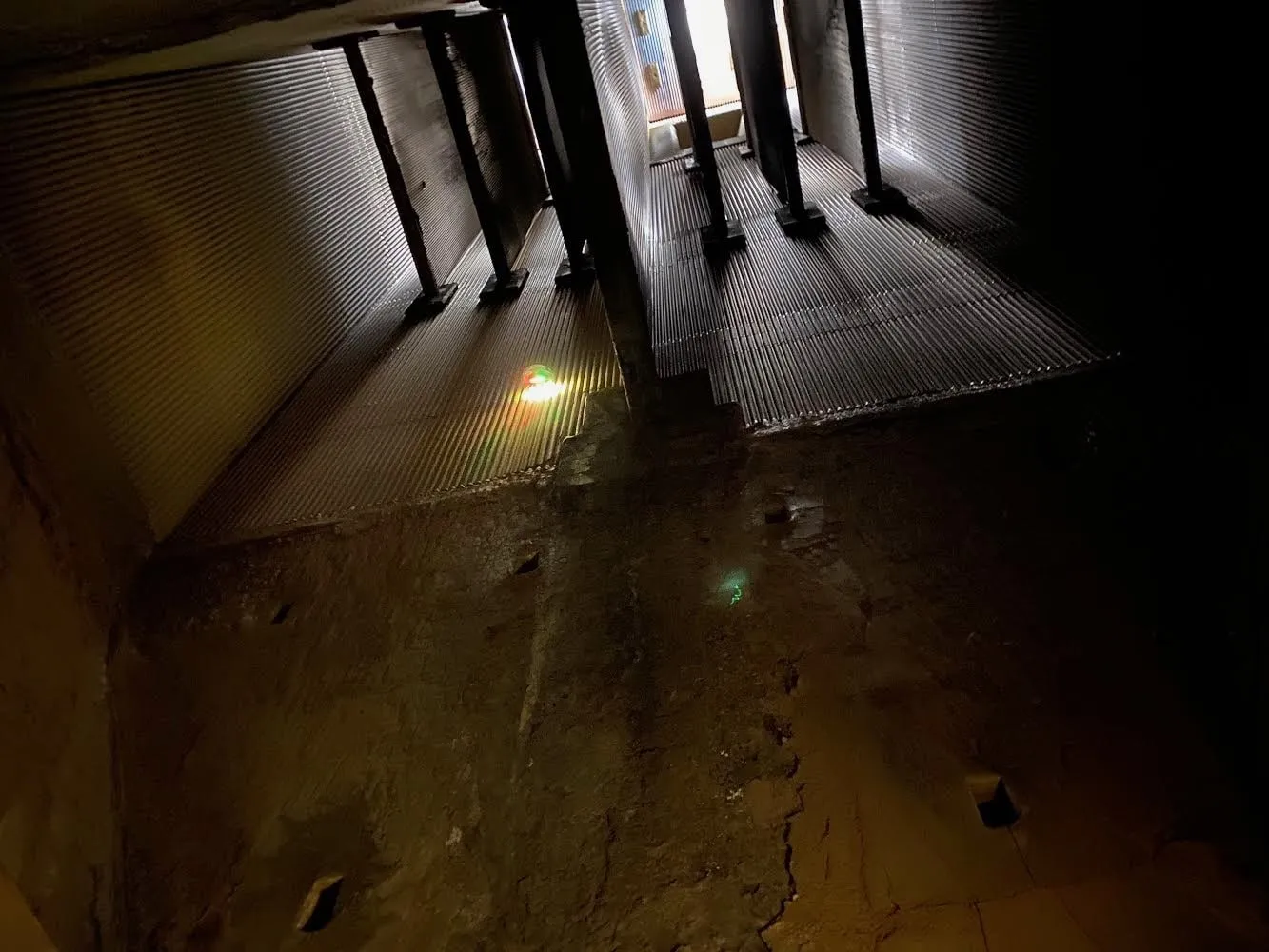
The Flyability ELIOS 3 during inspection of an ash pipeline – no scaffolding required.
Up to 80% time savings, drastically reduced costs and maximum safety for your personnel.
The 8 Key Benefits of Drone Inspection



Time Savings in Detail
Conventional inspection with scaffolding: 5–8 weeks
The biggest time drain is not the actual inspection – but the lead-up: scaffolding procurement, DGUV confined space concept, permits, safety guards, PPE procurement, coordination with the operator and possibly regulatory inspectors. Then the scaffolding itself goes up, the plant is shut down. Only then does the actual inspection begin.
- Planning & Approval (2–4 weeks): Commission scaffolding, prepare DGUV confined space concept, permits, safety guards, PPE. Coordinate shutdown date, possibly book ZÜS appointment (waiting queue up to 6 weeks).
- Scaffolding erection & dismantling (5–10 days): 3–7 days erection, 2–3 days dismantling. Complete production shutdown. For tanks: empty, clean, inertise – before and after inspection. Costs: €15,000–60,000 for scaffolding and confined space logistics alone.
- Inspection & documentation (2–5 days): Manual visual inspection. Results subjective, hard to reproduce, no 3D data. Spatial reference for comparison with prior-year findings is often missing.


70–80% time savings with simultaneously higher documentation quality through 4K, LiDAR and thermography.
Time Comparison by Asset Type: Real Numbers
What this means in practice – by asset type. These comparison values are based on our project experience since 2017 and reflect typical values – not marketing promises:
| Asset Type | Conventional | Drone | Time Savings |
|---|---|---|---|
| Tank (1,000 m⊃) | 3–5 days (scaffolding + entry) | 4–8 hours | approx. 80% |
| Boiler (large steam generator) | 2–4 weeks (cool-down + scaffolding) | 1–2 days | approx. 75% |
| Chimney (50 m) | 5–10 days (climbers + rope team) | 4–6 hours | approx. 85% |
| Silo (500 m⊃) | 2–3 days (scaffolding + entry) | 2–4 hours | approx. 75% |
| High-bay warehouse (5,000 m⊃) | 2–4 days (elevated platform + crane) | 4–8 hours | approx. 70% |
| Pipe bridge (100 m) | 3–7 days (scaffolding or climbers) | 4–8 hours (external) + 1 day | approx. 65% |
Cost example – tank inspection (1,000 m⊃): Scaffolding and conventional confined space entry typically cost €15,000–40,000 – plus production downtime. Drone inspection comes in at €2,500–6,000. Production downtime – often the biggest cost driver – is largely eliminated or reduced to a few hours.
For a single medium-sized tank (1,000 m⊃) the typical saving is €12,000–35,000 compared to conventional scaffolding. Including production downtime, this figure multiplies.
Typical Use Cases


From the Expert
“The biggest time saving comes not from the flying itself, but from eliminating scaffolding erection and the complex DGUV confined space entry procedures. What used to take weeks, we now complete with the ELIOS 3 in hours – with better documentation.”
Related Services
- Industrial Inspection – Professional drone inspection for industrial plants across all sectors.
- Confined Space Inspection – Safe inspection of confined spaces without human entry with the ELIOS 3.
- Flyability ELIOS 3 – Collision-safe indoor drone for hard-to-reach areas.
- Tank Inspection – Drone-assisted tank inspection without human entry and scaffolding.
- Chimney Inspection – Condition survey of chimneys and flue gas ducts without climbers.
- High-Bay Warehouse Inspection – Rack inspection per DIN EN 15635 without operational interruption.
Your Contacts
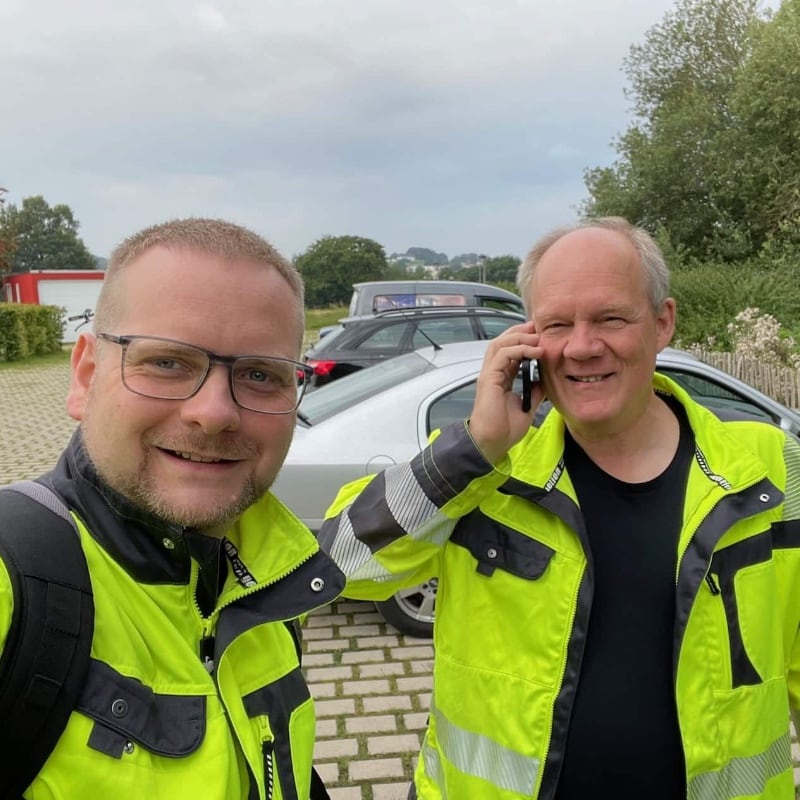
Christian Engelke and Dipl.-Ing. Karsten Lehrke – your direct contacts for drone inspection consultations.
Since 2017 we have been carrying out drone inspections for industrial plants across Germany. Contact us for a free consultation – we show you how much time and cost you can save.
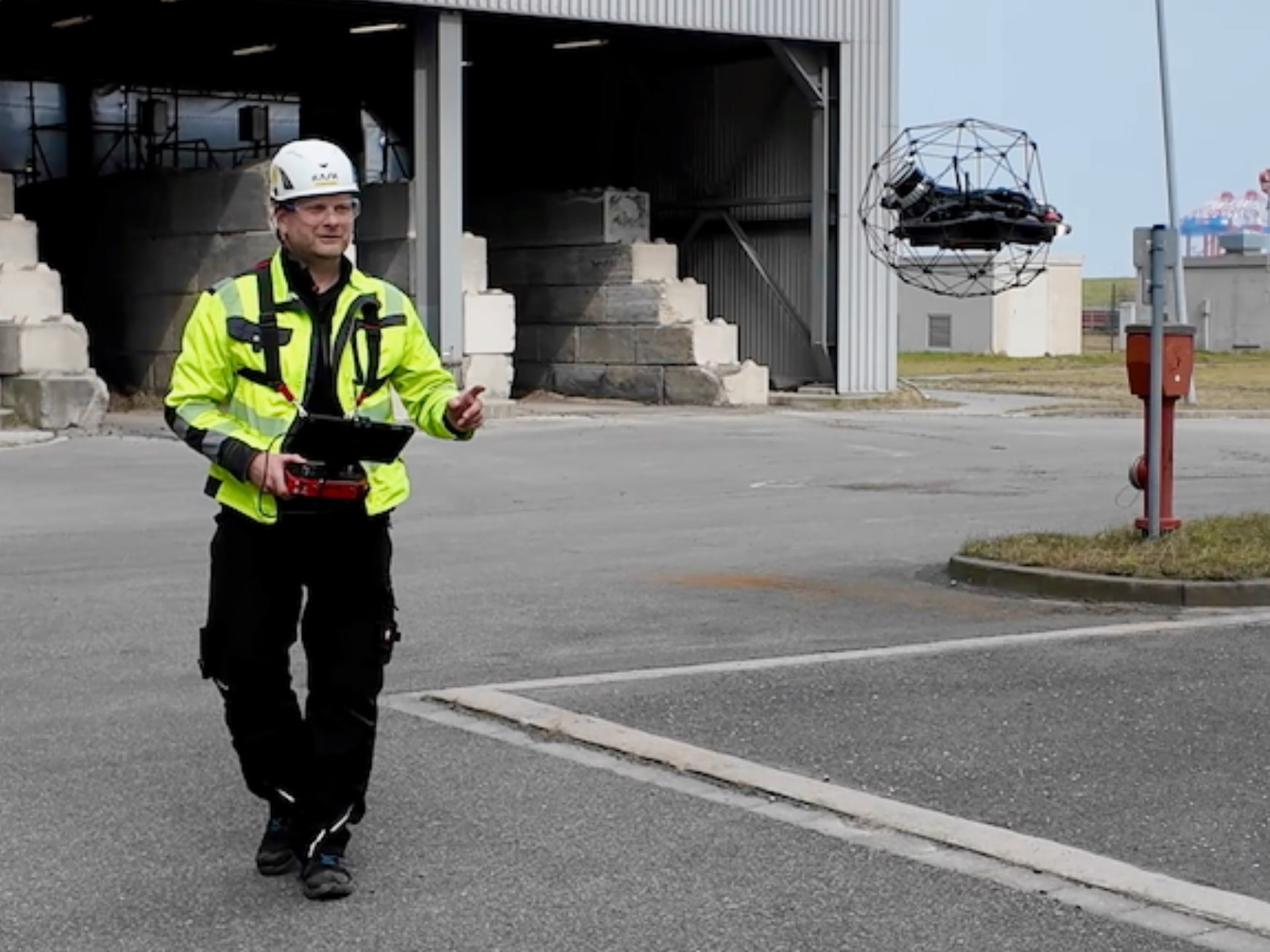 Christian
Founder & Drone Pilot
Christian
Founder & Drone Pilot
 Karsten
Project Manager
Karsten
Project Manager
 Philipp
Founder, Operations & Logistics
Philipp
Founder, Operations & Logistics
 Juliana
Drone Pilot
Juliana
Drone Pilot
 Stephan
Operations & Logistics
Stephan
Operations & Logistics
Frequently Asked Questions about Drone Inspection
Is 80% time savings a realistic figure?
Yes – for tank and boiler inspections where the main effort was previously scaffolding erection, this figure is realistic and supported by our project data since 2017. The saving is larger when the plant would otherwise have required a long shutdown. For simpler assets (short chimneys, small silos) the percentage saving may be somewhat lower. We always show you the specific comparison for your plant.
Is drone inspection also possible during ongoing operation?
For exterior inspections (pipe bridges, facades, chimneys exterior) often yes – without any production interruption. For interior inspections (tanks, boilers, silos) the plant must be shut down, cooled and depressurised. But: the shutdown duration is dramatically shorter than with conventional methods, because there is no scaffolding to erect.
What data quality does the drone deliver compared to manual inspection?
4K video from close proximity often shows more detail than the human eye in dark, cramped conditions. LiDAR delivers centimetre-accurate 3D geometry – quantitatively measurable damage extent that a manual inspector can only estimate. Thermography detects hidden hotspots. The combination is typically superior to manual inspection for visual findings – only contact testing (UT wall thickness) requires physical contact or specialist NDT personnel.
How much does a drone inspection cost?
This depends on the asset type, size and inspection scope. As a rough guide: a tank inspection (1,000 m⊃) costs approximately €2,500–6,000 including travel and report. That compares with €15,000–40,000 for a conventional confined space entry with scaffolding. Contact us for a specific quote for your plant.
Does the inspection result meet BetrSichV requirements?
Our inspection documentation is prepared according to the requirements of BetrSichV and DGUV. The findings report, 4K videos and LiDAR data serve as the information basis for the licensed inspector (ZÜS/TÜV). Whether drone inspection replaces the formal inspection appointment depends on the specific inspection obligation – we clarify this together with you and the inspection organisation in advance.
Drone Inspection for Your Plant
Contact us for a free consultation on your inspection. We show you how much time and cost you can save.