
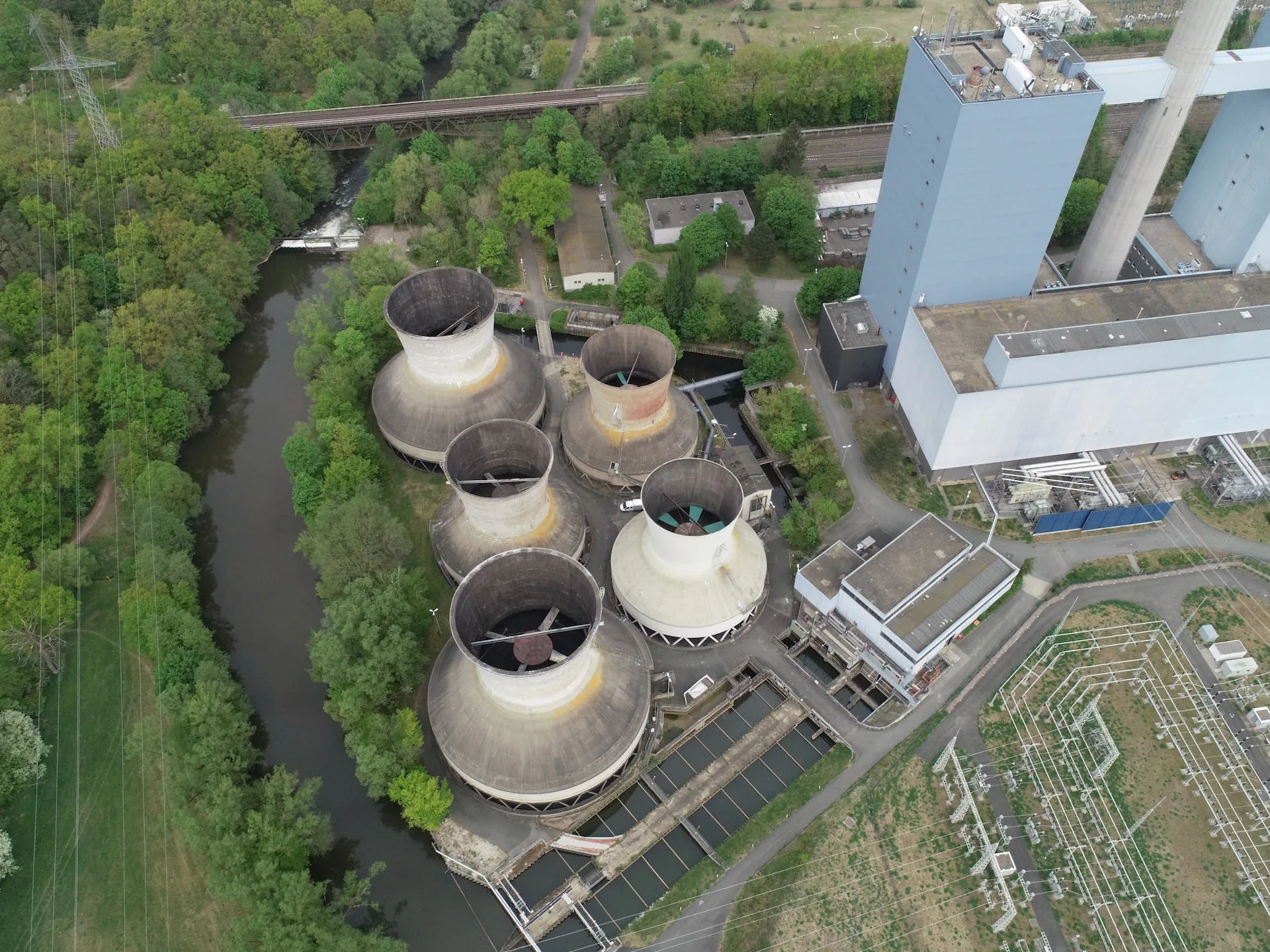
Cooling Tower Inspection by Drone – Natural-Draft & Cell Coolers Without Scaffolding
Cooling towers are among the most challenging structures to inspect. Kopterflug uses a hybrid approach: the DJI Matrice 30T for the exterior concrete shell and crown, the Flyability ELIOS 3 for the interior installed components. Together they cover the complete condition of any cooling tower – without scaffolding, without human entry.
- Exterior inspection at full operation – DJI M30T with 200× zoom and radiometric thermography, no shutdown required
- Interior inspection without scaffolding – ELIOS 3 with 4K + LiDAR + thermography, Zero Human Entry
- LiDAR digital twin – centimetre-accurate 3D model for structural engineers and expert assessors
- Hybrid approach – both systems combined for a complete condition picture
Why Cooling Towers Are Difficult to Inspect
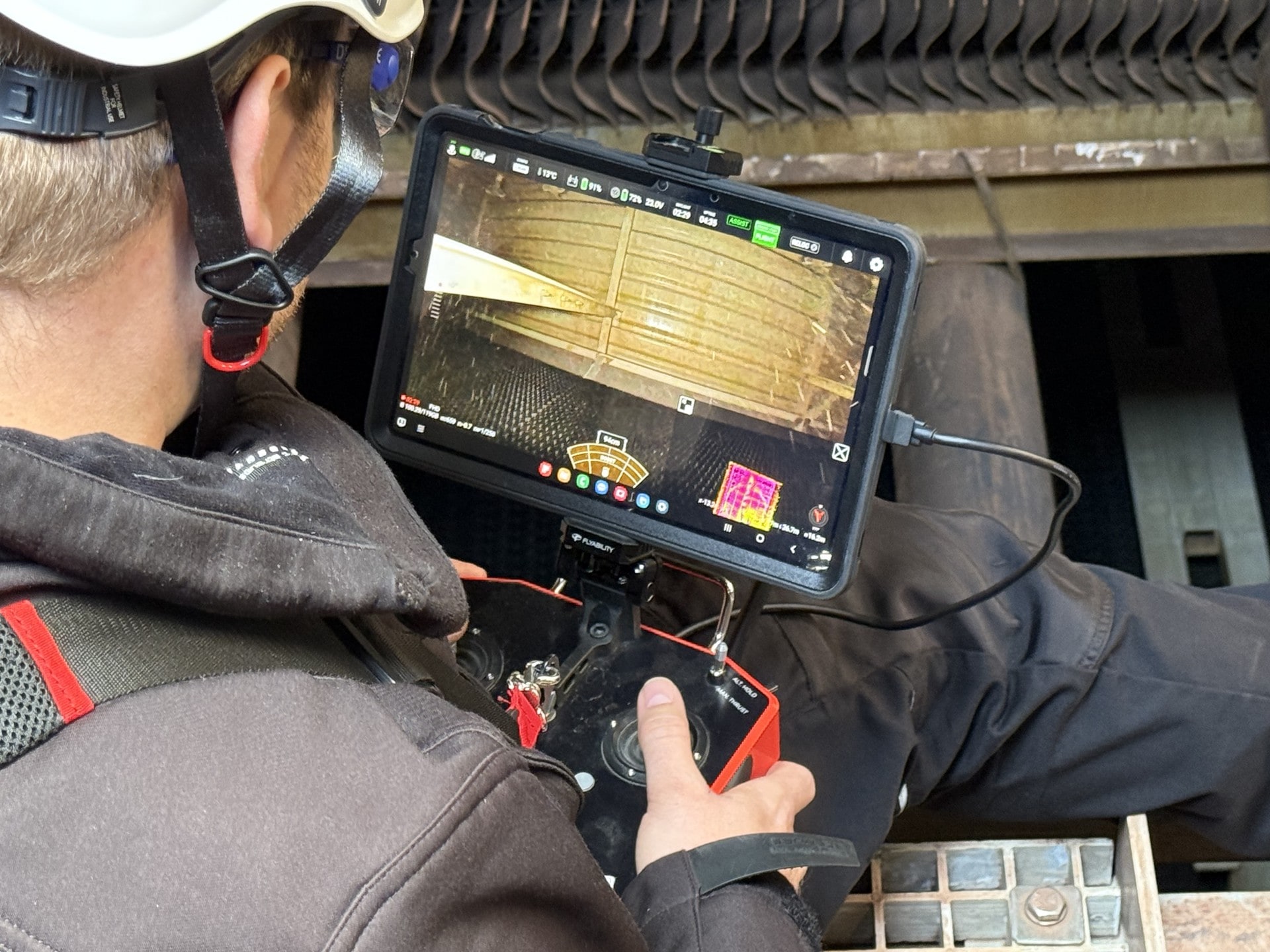
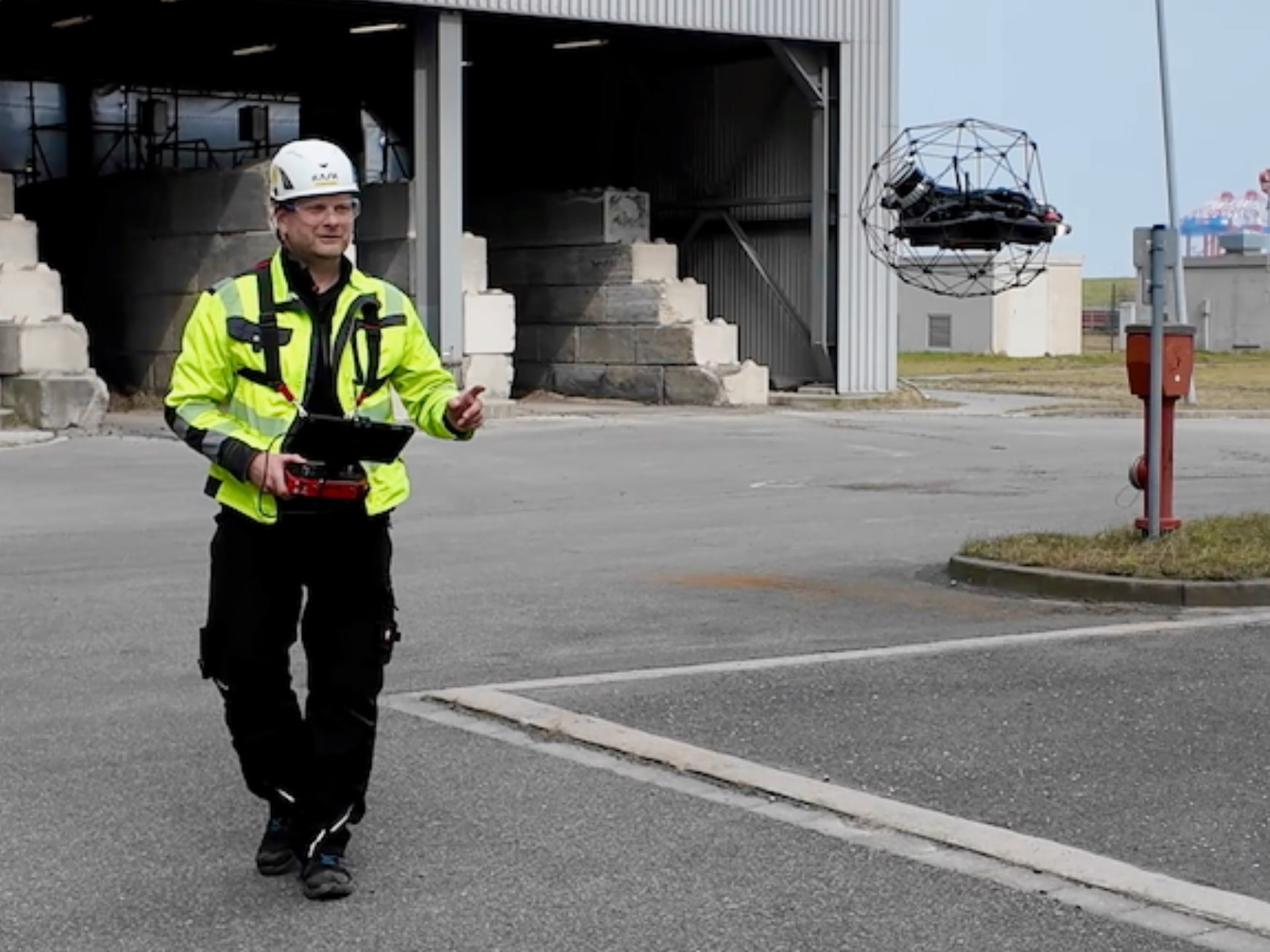
Preparation for a drone inspection in a GRP cell cooler – without scaffolding, without human entry.
Cooling towers are among the largest and geometrically most challenging structures in power generation and process industries. A natural-draft cooling tower can exceed 150 metres in height – and its inspection covers not only the concrete shell but above all the installed components inside: drift eliminators, water distribution, cooling packs, support grids and the concrete shell itself.
At Kopterflug we therefore use a hybrid approach with two drones: the DJI Matrice 30T for the exterior inspection of the concrete shell and crown, and the Flyability ELIOS 3 for the interior inspection of installed components and difficult-to-reach areas.



Our hybrid approach: DJI M30T for the concrete shell from the exterior, ELIOS 3 for installed components and interior areas. Together they capture the complete condition – without scaffolding, without personnel risk.
Exterior Inspection: DJI M30T for Concrete Shell & Crown
The DJI Matrice 30T is our choice for the exterior inspection of large cooling tower structures. With 200× hybrid zoom and radiometric thermography it documents the concrete shell all the way to the crown – from a safe distance, in any weather (IP55).




Key advantage: The exterior inspection with the DJI M30T is possible during full operation – no shutdown required.
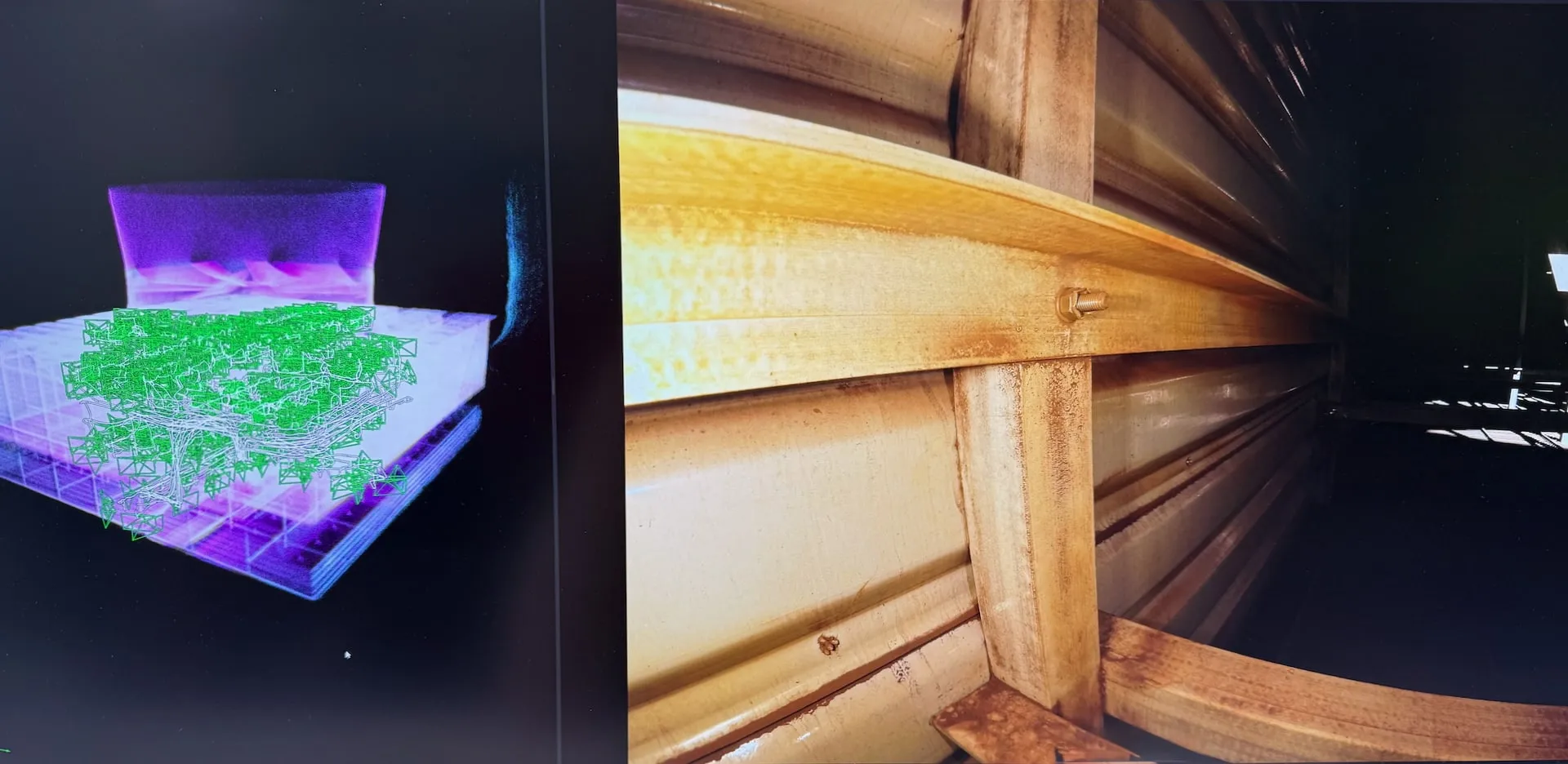
Interior Inspection: ELIOS 3 for Installed Components & Interior Areas
For inspection inside the cooling tower the Flyability ELIOS 3 is deployed – the collision-protected indoor drone with 4K camera, LiDAR and thermography. It flies from the collection basin across the fill packs up to the support column ring and documents everything without personnel entry.



Key advantage: No internal scaffolding, no personnel risk, access to areas unreachable by rope access. Zero Human Entry.
LiDAR 3D Survey: Digital Twin of the Cooling Tower
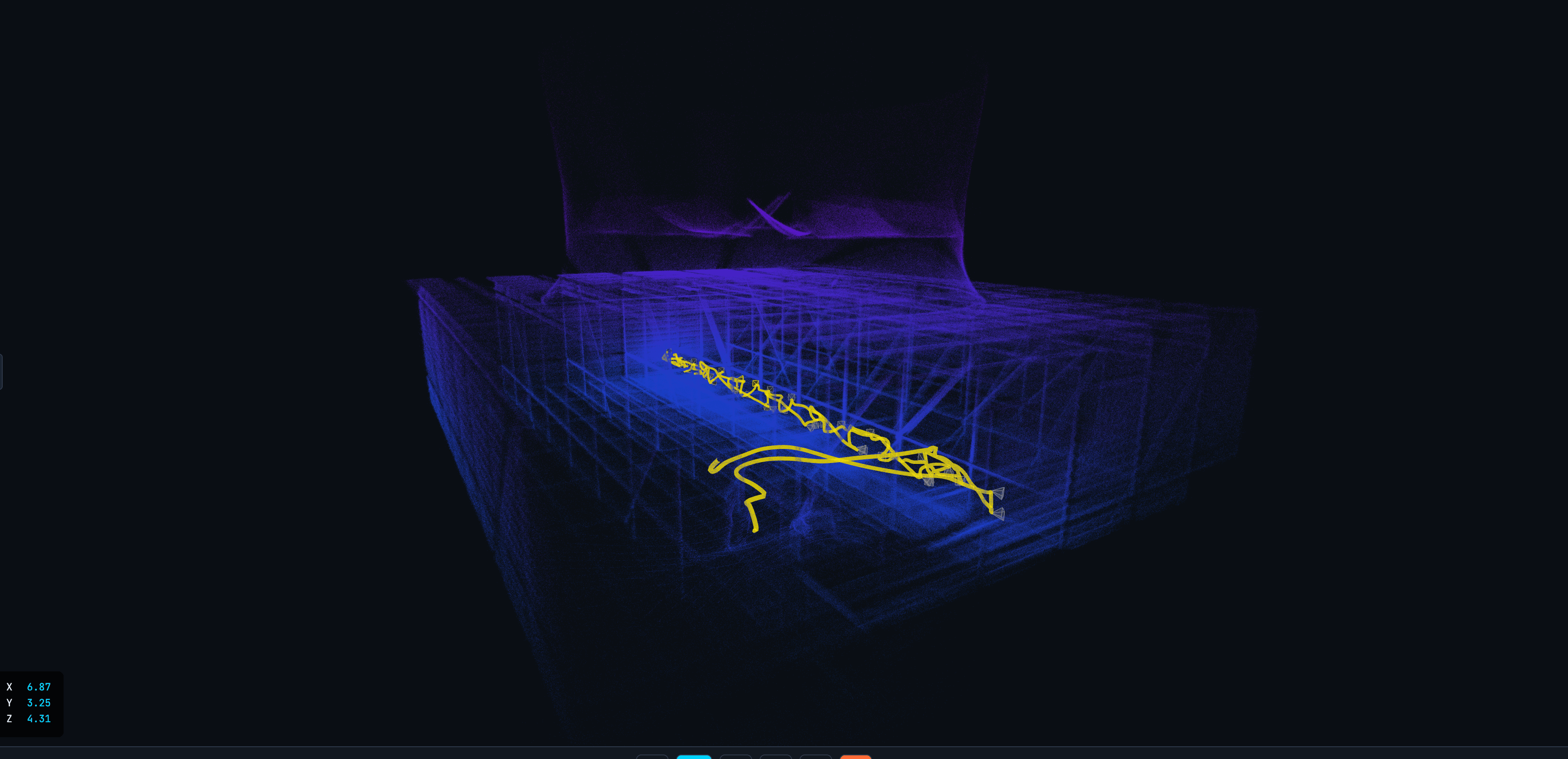
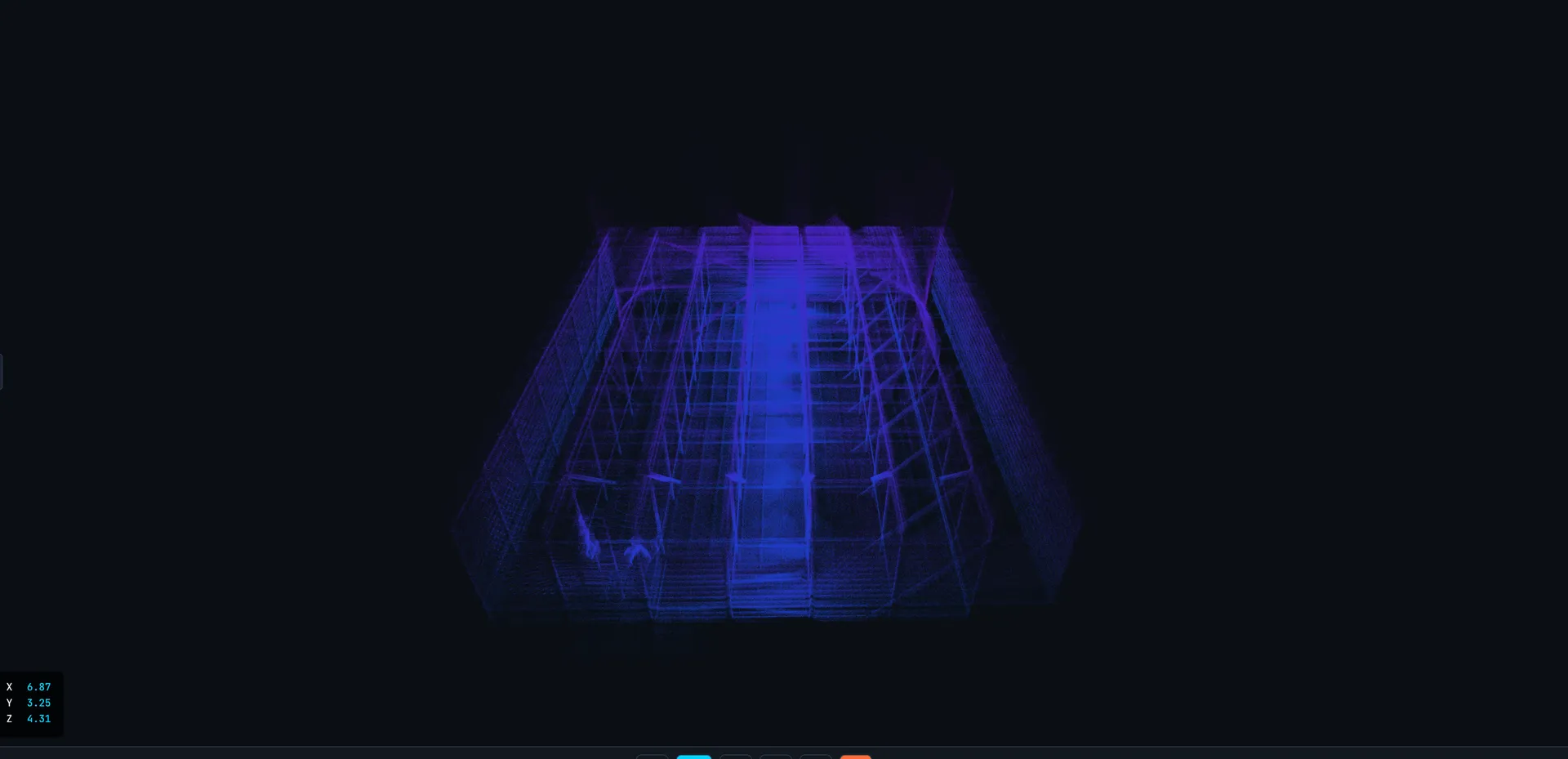
LiDAR 3D scan of a mechanical-draft cooling tower – coloured point cloud
The LiDAR sensor of the ELIOS 3 (centimetre-range precision) captures the complete geometry of the cooling tower interior. The result: a Digital Twin for structural engineers, expert assessors and maintenance planners.

The Inspection Workflow: Cooling Tower by Drone
From planning to the finished report – the standardised procedure for a drone-supported cooling tower inspection.
- Preparation: Collect plant data: cooling tower type, height, diameter, last inspection, known damage. Plan shutdown (for interior inspection) and agree safety concept with the operator.
- Exterior Inspection (DJI M30T): Systematic aerial survey of the concrete shell from outside: shell surface, crown, support column ring. 200× zoom for detail shots, thermography for moisture analysis. Possible during full operation.
- Interior Inspection (ELIOS 3): Survey of all interior areas: collection basin, fill level, water distribution, support column ring from inside, inner shell. 4K + LiDAR + thermography. Requires shutdown.
- Evaluation & Inspection Report: Processing with Flyability Inspector: 3D model with coloured texture, damage marking in 3D space, crack width measurement. Results report with localised findings, damage classification and recommendations for action. Export as PDF, .las/.e57 (3D), .mp4 – for expert assessors, structural engineers and operators.
Drone vs. Conventional Cooling Tower Inspection
For detailed testing at identified damage locations, targeted manual access remains necessary – but the drone reduces this effort to a minimum.
| Method | Scope | Key Advantages |
|---|---|---|
| Conventional: Scaffolding / Rope Access | Concrete shell (rope access), column ring (scaffolding), installed components only partially | Direct contact for UT/PT; immediate repair possible |
| DJI M30T: Concrete Shell & Crown (Exterior) | Concrete shell exterior, crown and upper sections, column ring exterior | 200× zoom, radiometric thermography, no shutdown required |
| ELIOS 3: Installed Components & Interior | Installed components, cooling packs, drift eliminators, water distribution, nozzles, inner shell, collection basin | 4K + LiDAR + thermography, collision-protected, Zero Human Entry |
Conclusion: Cooling Towers No Longer Need to Be an Inspection Nightmare
Cooling tower inspection was for decades one of the most demanding inspection projects: scaffolding, height work, long shutdowns – and still often incomplete results.
With the hybrid approach of DJI M30T and ELIOS 3 it becomes a plannable, fast and comprehensive measure: exterior during full operation, interior with minimal shutdown – and both with reproducible data for repeat inspections over years.
Relevant standards: VGB-S-610-00 (Kühlturmbeton), VGB-R 612 (installed components), DIN EN 13084, BetrSichV. Whether the drone is accepted as the sole inspection tool is decided by the expert assessor on a project-specific basis.


Your Contact
Founder & Drone Pilot / Confined Spaces since 2017
“Cooling towers used to be one of the most demanding inspection projects – scaffolding inside a natural-draft tower takes weeks. Today we combine the M30T for the concrete shell from outside with the ELIOS 3 for the installed components from inside. Together we capture the entire condition in a matter of hours rather than weeks.”
Related Services
- Cooling Tower Inspection – Request a Quote – Direct to the service page: request a quote, check feasibility, plan deployment
- Power Plant Inspection – Drone inspections for power plants, cooling towers and energy generation facilities
- Chimney Inspection – Inspecting tall structures from the inside – without scaffolding and without rope access
- Industrial Inspection – Comprehensive industrial inspections with state-of-the-art drone technology for all sectors
- Flyability ELIOS 3 – The collision-safe indoor drone with 4K, LiDAR and thermography in detail
- Chemical Industry Inspection – Drone inspections in chemical plants with special safety requirements
Frequently Asked Questions: Cooling Tower Inspection by Drone
- Which drones are used for cooling towers?
- We deploy two drones: The DJI Matrice 30T for the exterior inspection (concrete shell, crown, support column ring) with 200× zoom and radiometric thermography. The Flyability ELIOS 3 for the interior inspection (installed components, water distribution, cooling packs, inner shell) with 4K, LiDAR and thermography. Together they cover the entire cooling tower.
- Can the exterior inspection take place during full operation?
- Yes – the exterior inspection with the DJI M30T requires no shutdown. The drone flies at a safe distance around the cooling tower and documents the concrete shell by zoom and thermography. Only the interior inspection with the ELIOS 3 requires a shutdown to prevent steam and moisture from impairing visibility and sensors.
- Can the drone also fly in moisture and steam inside the cooling tower?
- To a limited extent. The ELIOS 3 is IP44-rated (splash-protected). In a shut-down cooling tower with residual moisture it functions well. During active operation with heavy steam the visibility is severely reduced and deployment is not practical. We recommend deployment during shutdown or at reduced load.
- How high can the ELIOS 3 fly inside the cooling tower?
- The ELIOS 3 can cover natural-draft towers completely – from the collection basin to the crown. Battery changes take only a few seconds; alternatively we fly tethered (cable-connected) with up to one hour continuous flight time. The GPS-independent SLAM navigation operates unrestricted indoors.
- Does the drone also detect cracks in the concrete?
- Yes, the 4K camera with 16,000 lumen illumination makes cracks, spalling and exposed rebar visible. Crack width can be measured in the 3D model. From outside the M30T also detects cracks and spalling by 200× zoom. For classification to DIN EN 1504 an additional assessment by a specialist is required.
- Is the drone suitable for small cell coolers as well?
- Yes, the ELIOS 3 is approximately 50×45 cm in size and manoeuvres in confined structures as well. Cell coolers with walkable access openings are well suited. For very narrow cooling packs (<60 cm gap) we clarify feasibility in advance based on your plant data.
- What does a cooling tower inspection by drone cost?
- This depends on type, size and inspection scope. In general drone inspection is a fraction of the cost of scaffolding. The exterior inspection alone is particularly cost-efficient since no shutdown is required. We prepare a project-specific quote after a free feasibility check.
Contact – Cooling Tower Inspection Enquiry
We check feasibility free of charge for your cooling tower. Send us type, size and the last inspection report – we will respond with a concrete assessment.