
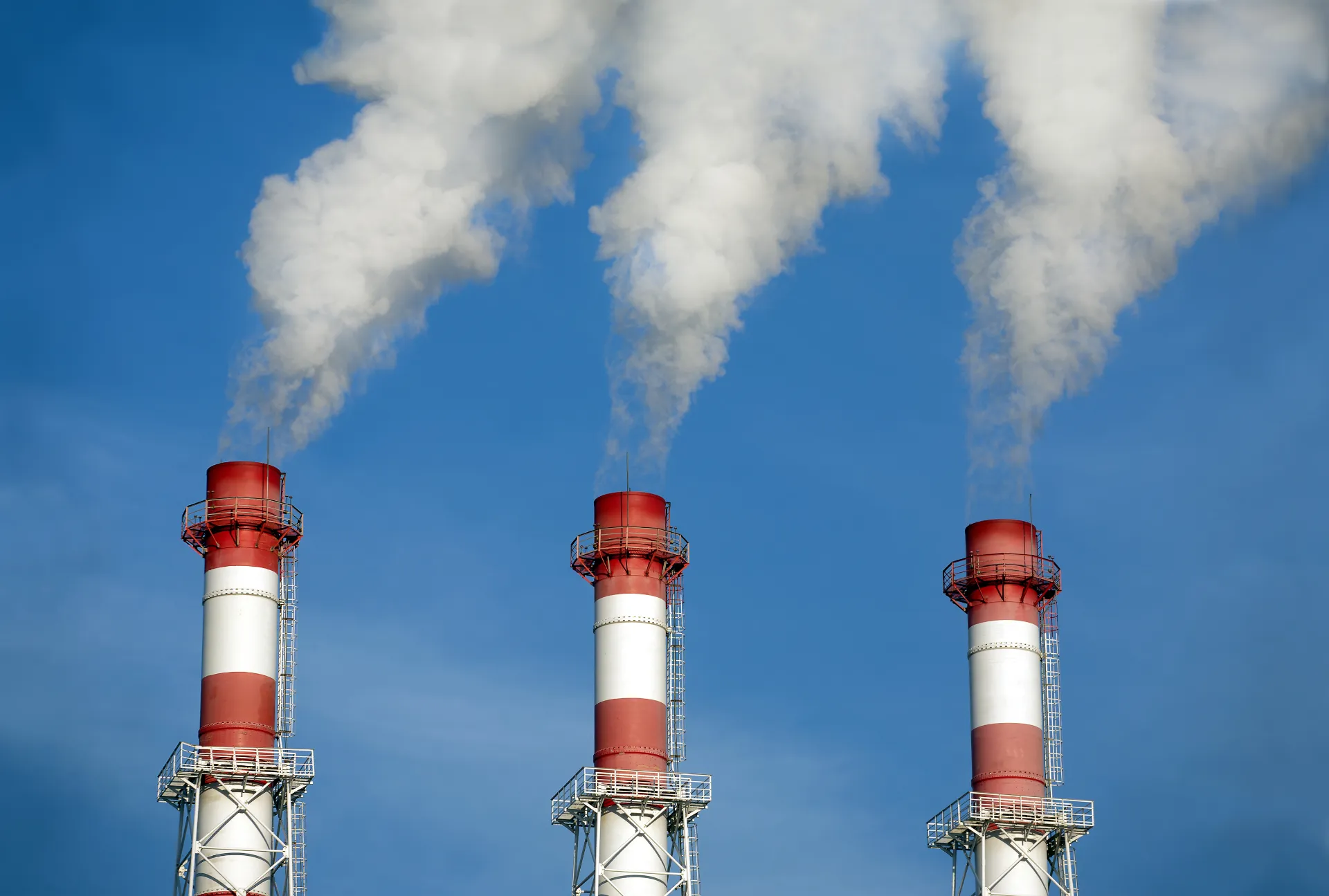
Chimney Inspection by Drone – Inside & Outside Without Scaffolding
ELIOS 3 for the chimney interior walls, Matrice 30T for the outer shell – complete documentation without climbing. This guide explains the technology, typical findings, inspection intervals and the exact inspection procedure.
- No scaffolding, no climbers – combination of two drone systems replaces both
- Exterior: DJI Matrice 30T – 41× optical zoom, 640×512 thermal imaging from ground level
- Interior: ELIOS 3 – cage-protected indoor drone with 4K + LiDAR + thermography
- DIBt-compliant documentation – photographic and LiDAR evidence accepted by inspection bodies
Why Chimneys Are One of the Key Drone Applications
Chimneys and flue stacks are among the classic deployment areas for drone inspection – and for good reason. Conventional inspection methods (scaffolding, climbing, rope access) are extremely laborious for chimneys: scaffolding for a 100-metre industrial chimney takes weeks to erect and costs six-figure sums. Climbing inspection requires certified height workers and is weather-dependent. Interior inspection by abseiling into an active or still-warm flue is technically demanding from a safety perspective.
The drone fundamentally changes this calculation:
Exterior inspection with the DJI Matrice 30T: The camera with 41× optical zoom and 640×512 pixel thermal imaging camera enables detailed recording of the entire outer shell – from base to crown cap – from a safe distance on the ground. The pilot stands on the ground; the drone circles the chimney and documents systematically.
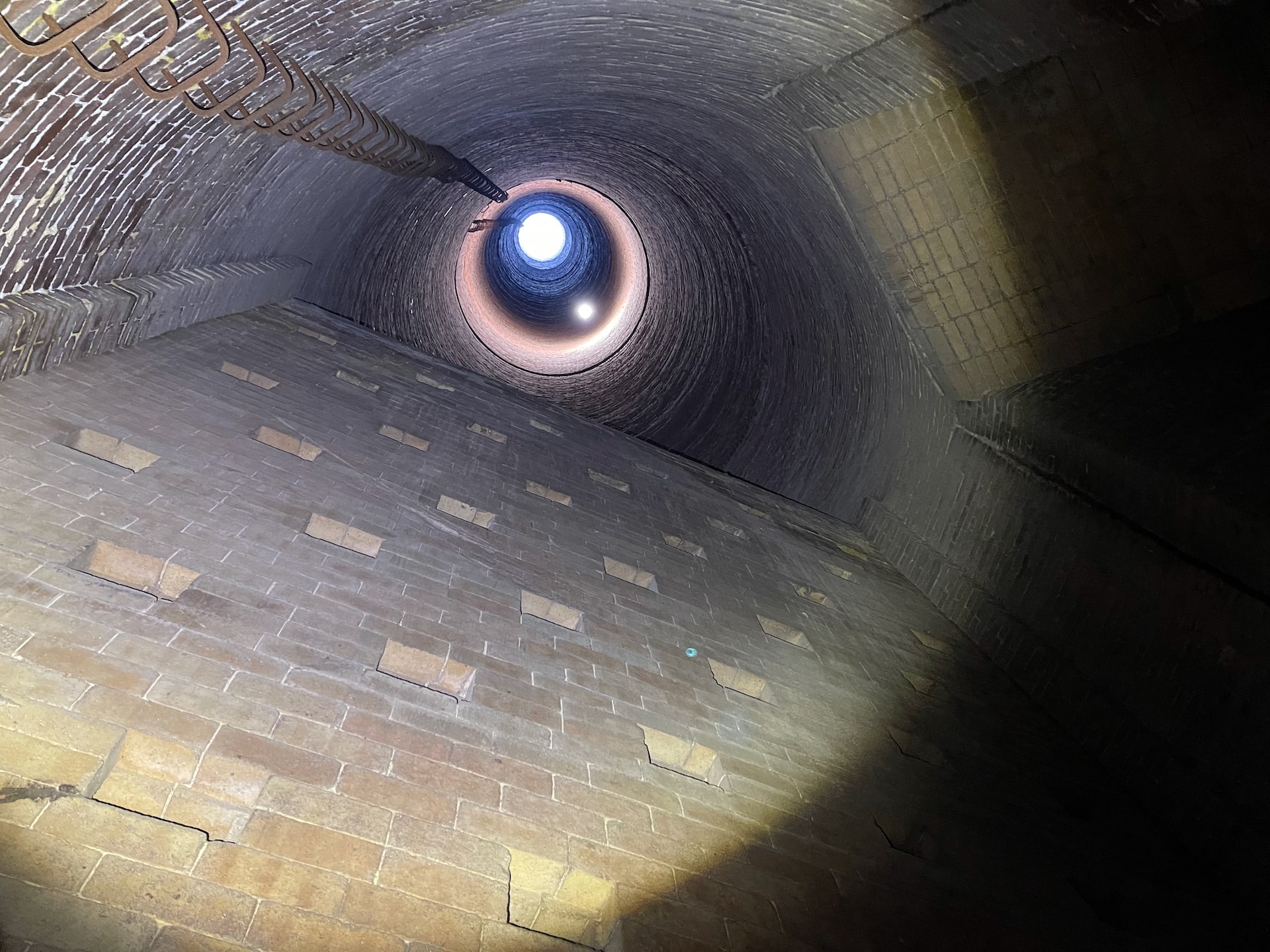
Interior inspection with the ELIOS 3: The cage-protected indoor drone is introduced through a cleaning access, inspection eye or special maintenance opening at the chimney base and rises through the entire chimney shaft under LiDAR-assisted position holding – with 4K camera and optional LiDAR for geometry measurement.
An exterior scaffold for an 80-metre chimney costs more than the entire annual budget of many maintenance departments. The drone makes scaffold-based inspection obsolete in most cases.


Typical Findings in Chimney Inspection
Chimneys are severely stressed by high temperatures, aggressive flue gases (SO&sub2;, HCl, condensate), wind loads and temperature fluctuations. The ELIOS 3 and Matrice 30T capture the complete relevant damage spectrum:




Inspection Intervals per DIBt and Flue Regulations
Chimneys and flues in Germany are subject to statutory inspection obligations that are defined by different regulatory frameworks depending on type of use and plant size:
Industrial chimneys (commercial, >10 m height): The German Institute for Building Technology (DIBt) and state-specific building codes prescribe recurring inspections. The DIBt approval principles for chimneys and DIN EN 13084 (free-standing industrial chimneys) define requirements for condition, structural stability and operational safety. Depending on age, material and operating conditions, inspection intervals of 5–10 years are typical.
Chimneys for heating appliances (domestic flue systems): The chimney sweep master service regulations (Kehrordnungen) of the individual federal states prescribe regular inspections by the district chimney sweep (Bezirksschornsteinfeger). Visual inspection (interior and exterior) forms part of the recurring inspection under § 14 Schornsteinfeger-Handwerksgesetz (SchfHwG).
Power plant and industrial chimneys (special objects): Chimneys in plants requiring a permit (BImSchG plants) are subject to the requirements of the permit and the monitoring requirements of the responsible authority. A drone inspection with complete photographic documentation is recognised as proof of inspection status.
Practical conclusion: In many cases, expert assessors, TÜV/DEKRA inspectors and authorities accept drone documentation as the basis for the recurring inspection. Kopterflug works with authorised inspection bodies on request.
A complete 4K drone documentation with LiDAR geometry is recognised in many German federal states and by appropriate inspection bodies as evidence for recurring chimney inspections.
Procedure for a Professional Chimney Inspection
Kopterflug carries out chimney inspections in a structured two-system approach:


Your Contact

Project Manager
Chimney inspection is one of our core applications – with experience from numerous power plants, cement works and industrial plants since 2017. We work with your chimney builder, expert assessor or district chimney sweep.
Related Services
- Chimney Inspection – Service Page – Chimneys inspected inside and outside without scaffolding and without production stop
- Industrial Inspection Overview – All drone inspection deployment areas in industry at a glance
- Confined Spaces Inspection – Confined spaces inspected safely and without human entry by drone
- Boiler Inspection – Boiler interior walls and fireboxes fully inspected without scaffolding or entry
- Power Plant Inspection – Power plants and energy facilities inspected efficiently and safely by drone
- ELIOS 3 in Power Plants & Chimneys – Field report: Flyability ELIOS 3 in use at power plant structures and chimneys
Frequently Asked Questions: Chimney Inspection by Drone
- Can the drone inspect all chimney types?
- Yes – masonry chimneys, concrete stacks and double-wall metal flues are all inspectable. For the interior inspection the ELIOS 3 requires a cleaning opening or inspection port at the base (approx. 50×50 cm or larger). For very narrow metal flue shafts (<40 cm internal diameter) we clarify feasibility in advance. Exterior inspection with the Matrice 30T is possible for all chimney types from ground level.
- What does a chimney inspection by drone cost compared to scaffolding?
- Typically the drone inspection costs 5–15% of the cost of equivalent external scaffolding. For an 80-metre chimney scaffolding costs €80,000–150,000 and takes weeks to erect. The drone inspection is completed within one working day. We prepare a fixed-price quote after reviewing your chimney details (height, material, last inspection).
- Does the chimney need to be shut down for the drone inspection?
- For the exterior inspection no shutdown is required – the Matrice 30T operates at a safe distance from the outer shell without any effect on chimney operation. For the interior inspection with the ELIOS 3 the chimney must be sufficiently cooled and gas-free. We coordinate the required shutdown window with you and your production planning.
- Is the drone inspection accepted by the chimney sweep or TÜV as a recurring inspection?
- In many cases yes. Our photographic 4K documentation with LiDAR geometry measurement is accepted by an increasing number of expert assessors, TÜV/DEKRA inspectors and authorities as the basis for recurring chimney inspections. We recommend coordinating with the responsible inspection body before the inspection. We are happy to involve your assessor directly in planning.
- How is the LiDAR geometry measurement useful for chimneys?
- The LiDAR scan documents the inner geometry of the chimney shaft in 3D: deviations from circular cross-section, local narrowing, tilt of the shaft axis, spalling volumes. This enables structural engineers to identify geometrical deviations early – and to compare inspection results over years to track progression of damage.
- What happens if the drone finds critical damage?
- We document all findings in our inspection report with precise location data (metric height above base and circumferential position), photographic evidence and a damage classification. For critical findings we highlight these explicitly and recommend concrete next steps – whether targeted manual verification, urgent repair or an expert structural assessment. We do not make independent structural assessments; that remains the responsibility of your chimney builder, structural engineer or expert assessor.
Contact – Chimney Inspection Without Scaffolding
Tell us the height, material (masonry/concrete/metal) and last inspection date – we prepare a quote for interior and exterior inspection by drone.