

Recurring Inspection under BetrSichV – Drones as Inspection Tool
The Betriebssicherheitsverordnung (BetrSichV, German Industrial Safety Regulation) requires operators to have their plant regularly inspected by qualified persons or approved inspection bodies (ZÜS). Drones do not replace the inspector – they change how the inspector obtains data. This article explains the regulatory framework and the drone’s role in it.
- BetrSichV – the central German regulation for safe operation of work equipment and plant subject to supervision
- TRBS 1201 – technical rule specifying type, scope and documentation of recurring inspections
- Drone as tool – not a replacement for the ZÜS, but a data source for the inspector
- Zero-Entry concept – no DGUV confined entry required when no human enters the vessel
What is BetrSichV and Why Does It Affect Every Plant Operator?
The Betriebssicherheitsverordnung (BetrSichV) – German Industrial Safety Regulation – is the central German regulation for the safe operation of work equipment and plant subject to supervision. It obliges employers and operators to have their plant regularly inspected – not in any manner, but according to clearly defined requirements.
Affected are virtually all industrial businesses, as the scope covers:
- Pressure vessels (Druckbehälter): reactors, autoclaves, heat exchangers
- Steam boilers (Dampfkessel): water tube boilers, large water space boilers
- Pressurised pipelines (Rohrleitungen unter Druck)
- Lift systems (Aufzugsanlagen)
- Storage vessels for hazardous substances (Lagerbehälter für Gefahrstoffe): tanks, silos
- Plant in potentially explosive atmospheres (Ex-Anlagen)
Responsibility lies always with the employer/operator. They must observe inspection intervals, organise inspections and document results. Non-compliance risks fines, plant shutdowns and personal liability in the event of an incident.
Recurring Inspections: What is Inspected?
§§ 14, 15 and 16 BetrSichV govern recurring inspections in detail. TRBS 1201 (Technical Rule for Operational Safety – Inspections and Controls of Work Equipment) specifies the type, scope and documentation of these inspections.
Internal inspection, external inspection and strength test at defined intervals. Inspection by ZÜS (approved inspection body) per § 16 BetrSichV.

Regular internal inspection of heating surfaces, tube systems and internals. External inspection of insulation and supporting structure. Inspection intervals per Annex 2 BetrSichV.

Inspection of pressurised pipeline systems – particularly at weld seams, fittings and supports. External visual inspection and if required internal inspection.
Internal inspection of tanks, silos and vessels for hazardous substances. Inspection of tightness, wall thickness, coating and corrosion condition.
Inspection of plant in potentially explosive atmospheres per § 15 BetrSichV. Special requirements for explosion protection documentation and zone classification.
The Drone’s Role in Recurring Inspections
Important: The drone is a tool – not a replacement for the inspector
The mandatory inspection under BetrSichV always requires a qualified person: an approved inspection body (ZÜS – zugelassene Überwachungsstelle – such as TÜV, DEKRA, GTÜ) or a qualified person per TRBS 1203. A drone changes nothing about this.
What the drone changes: how the inspector obtains data.
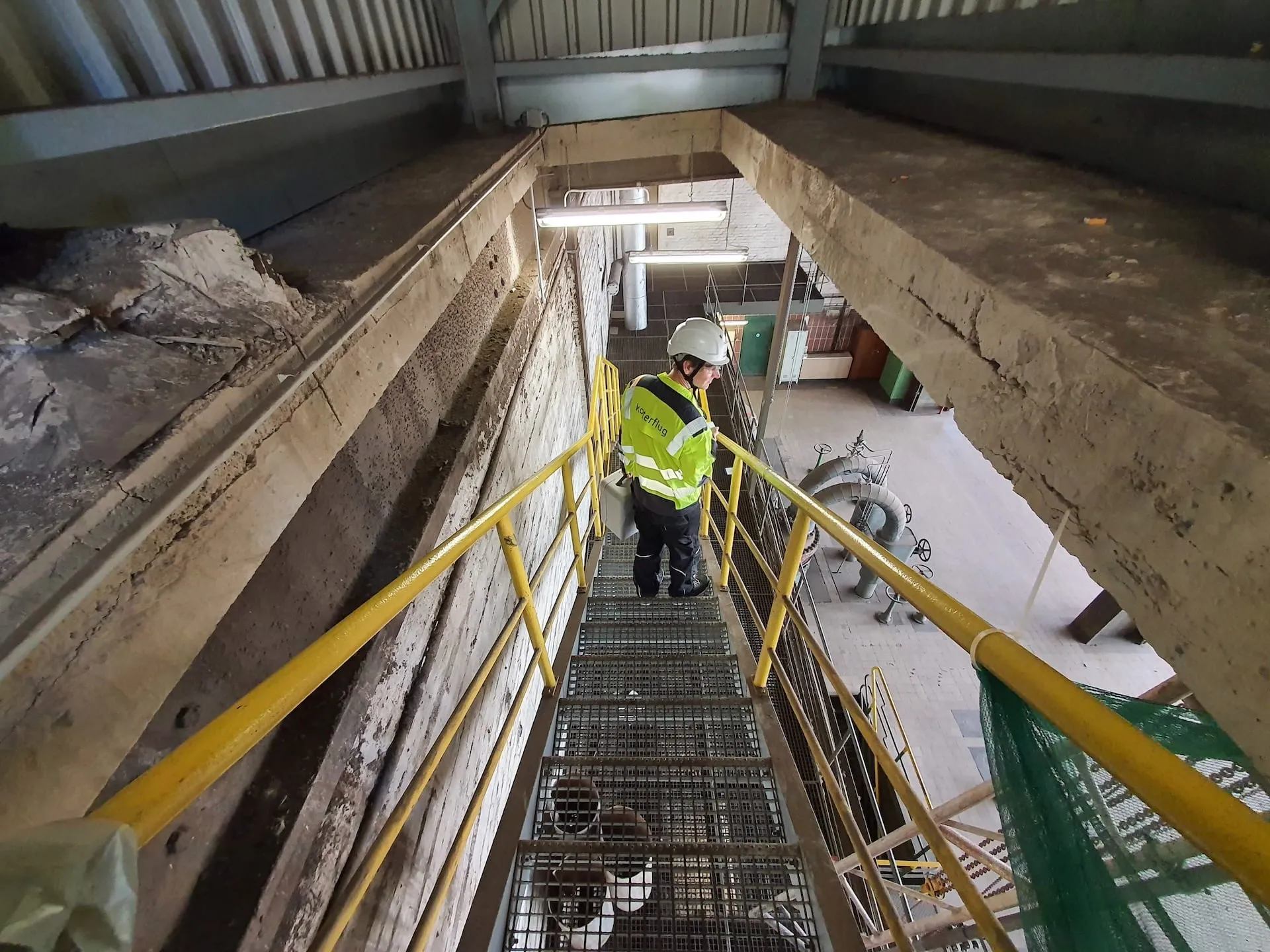
Previously, the internal inspection of a tank or boiler required a human to enter the vessel – with all consequences: scaffolding, draining, cleaning, confined entry permit per DGUV 113-004, rescue chain, breathing apparatus. The drone delivers the same visual data without human entry.
The ZÜS inspector follows the drone flight on a live monitor, can direct the pilot in real time and have specific areas approached on demand. The inspector makes the assessment decision – the drone delivers the data foundation.

The ZÜS or qualified person makes the inspection decision. The drone delivers visual data as the decision foundation.

4K video, high-resolution photos, thermography and LiDAR 3D – the inspector sees everything in real time on the live monitor.
The drone is accepted by most ZÜS as an auxiliary inspection tool – comparable to an endoscope or camera system. Acceptance is growing steadily.
Which Inspections Can the Drone Support?
BetrSichV distinguishes three inspection types for plant subject to supervision. The drone can play a role in each – to varying degrees:

This is where the drone delivers the greatest benefit. Instead of entering the vessel, the ELIOS 3 flies through the manhole opening (from 50 × 50 cm) and documents the entire internal surface in 4K. Corrosion, cracks, coating damage, deposits – all captured visually without human entry.

Inspection of external surfaces, insulation, supporting structures and connections. The drone reaches hard-to-access locations on tall vessels, columns or chimneys – without scaffolding and without rope access.

The strength test itself (e.g. pressure test) cannot be performed by the drone. But it can document the condition before and after the pressure test and deliver visual data for the inspector’s assessment.
Case Study: Internal Inspection of Storage Tank with TÜV
Here is how a recurring internal inspection under BetrSichV runs in practice when Kopterflug performs the drone inspection:
Step 1: Preparation and Coordination
The operator engages the ZÜS (e.g. TÜV) for the recurring inspection. In parallel, Kopterflug is engaged as the drone inspection service provider. In a joint pre-meeting, inspection scope, focus areas and documentation requirements are agreed.
Step 2: On-Site Briefing
On the inspection day, present are: TÜV inspector, Kopterflug pilot, operator representative. The tank is drained, cleaned and gas-freed (freigemessen). The inspector defines the areas to be inspected (floor, shell, roof, nozzles, weld seams).
Step 3: Drone Flight with Live Transmission
The ELIOS 3 flies through the manhole opening into the tank. The TÜV inspector follows the flight on a high-resolution monitor in real time. They can instruct the pilot by radio: “Please approach the nozzle at 3 o’clock more closely” or “Please capture the floor plate weld seam in detail.”
Step 4: Documentation and Handover
After the flight, the inspector receives: 4K video footage, high-resolution images of all relevant areas, optionally a LiDAR 3D model of the tank interior and thermography data. On this basis, the inspector creates their inspection report.
Step 5: Inspection Report by ZÜS
The inspector evaluates the data, creates the inspection report and documents the result of the recurring inspection. The drone data is archived as an attachment to the report.
TRBS 1201 and TRBS 1203 – The Key Technical Rules
The Technical Rules for Operational Safety (TRBS, Technische Regeln für Betriebssicherheit) specify the BetrSichV and reflect the state of the art. For recurring inspections, two TRBS are particularly important:
Defines the type, scope and documentation of all inspections under BetrSichV. It governs which inspection types must be performed, how risk-based interval determination works, and what the inspection report must contain. TRBS 1201 is also the basis for drones being usable as tools for visual inspection.
Defines requirements for persons performing inspections under § 14 BetrSichV: vocational training in the relevant field, operational experience with the equipment to be inspected, and current activity (up-to-date expertise). For plant subject to supervision (pressure equipment, Ex-plant), a ZÜS is required instead of a qualified person.
ZÜS required (§ 15): Pressure equipment from Category I, steam boilers, lifts, certain Ex-plant.
Qualified person sufficient (§ 14): Atmospheric tanks, silos, chimneys, racking systems, cranes.
In both cases, the drone can be used as an inspection tool – the inspection decision remains with the inspector.
Documented Inspection Results by Asset Type
The following results are from published case studies by drone manufacturer Flyability, showing realistic efficiency gains in recurring inspections. All inspection decisions were made by qualified inspectors – the drone provided the data foundation.
FPSO oil tanks: inspection time reduced from 7–10 days to 2 days. Cargo tanks: 90% time saving, 700+ working hours saved. Ballast tanks: complete inspection in under 2 hours.
API-510 inspection in Belgium: Bureau Veritas approved the drone as a formal inspection tool after 15 tests. Oil tanker hull: approx. USD 1M scaffolding cost saving, 10,000+ working hours avoided at height.
Cement plant: UT wall thickness measurement in limestone silo with drone. Mining Oman: 7 storage bunkers (40 m each) inspected – first time without rope access. Grain silos: 95% cost reduction, inspection time from 4 hours to 30 minutes.
Coal-fired power station: 15 flights in 4 hours in superheater, 12+ hours shutdown time saved. Boiler inspection: USD 20,000 saving per deployment. Power plant Ukraine: boiler inspection in 1 hour instead of 1 day.
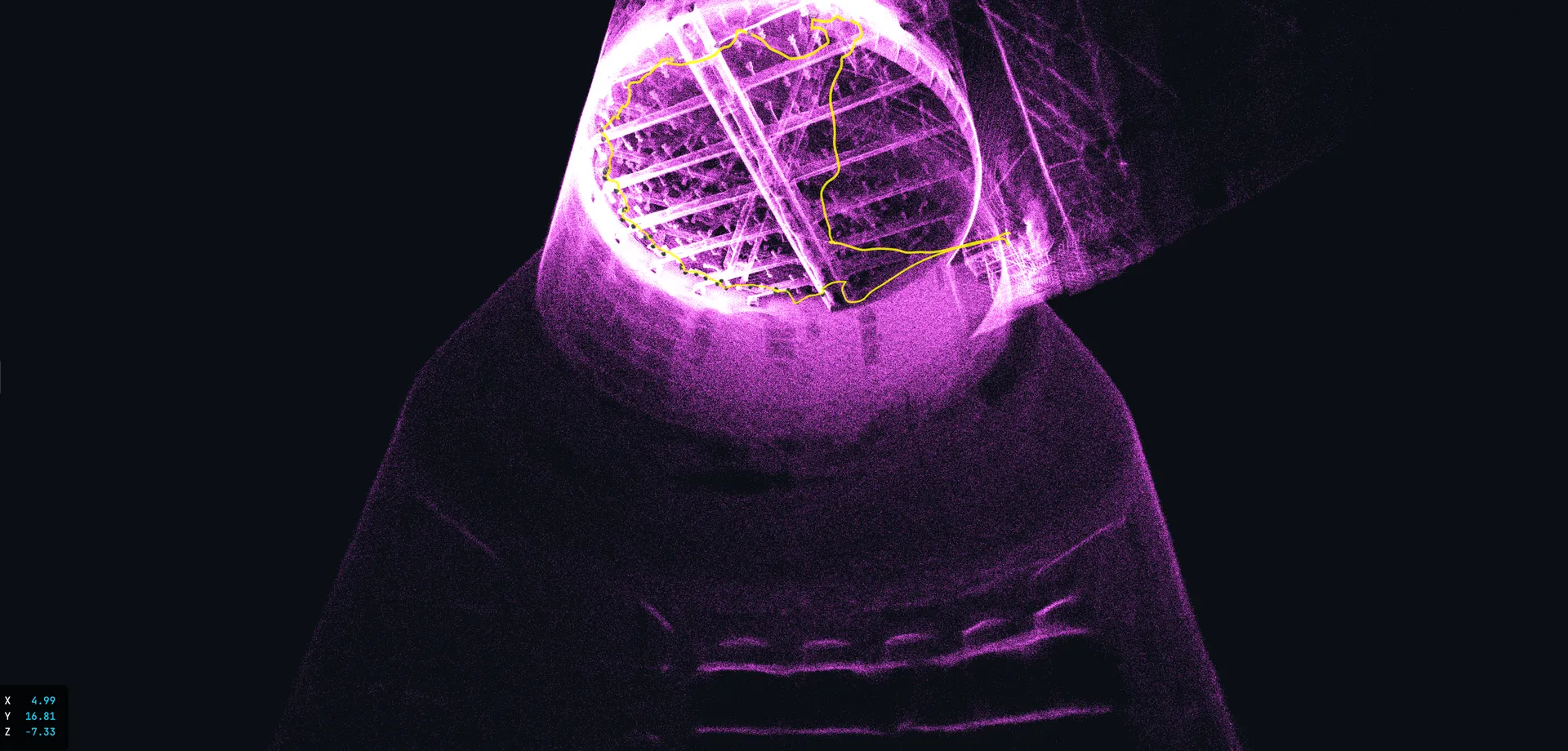
180-m chimney at coal power station: 20% cost saving vs. rope access. 120-m chimney at cement plant: complete inspection with 4K and LiDAR in 1 hour. UT measurements in stack in under 60 minutes.
French water utility: 40% cost reduction per linear metre since 2016. Channel operator: inspection speed increased from 400–600 m/day to 900 m/day. UK channel: 4× faster measurement with LiDAR (half day instead of 3 days).
Limits: When the Drone is Not Enough
For standard UT wall thickness measurement, the probe must be physically placed on the surface. The ELIOS 3 optionally includes a UT payload (ultrasound wall thickness module) – but this requires wall contact and is currently suitable only for certain surfaces.
The pressure test is a physical test where the vessel is subjected to overpressure. No drone can replace this – but the drone can document the condition before and after the test.
Functional testing of safety valves, shut-off valves and burst discs requires mechanical actuation and cannot be performed visually.

Magnetic particle testing (MT, Magnetpulverprüfung), liquid penetrant testing (PT, Eindringprüfung) and eddy current testing (ET, Wirbelstromprüfung) require direct contact. The drone can, however, identify the locations where these methods should be applied.
Conclusion: The Drone Makes Inspections More Efficient, Not Redundant
Recurring inspection under BetrSichV remains what it is: a statutory obligation that must be performed by qualified inspectors. The drone does not change the “whether” – it changes the “how”.
What the drone improves:
- Safety: No human entry into confined spaces – the most common cause of injury in internal inspections is eliminated
- Speed: Internal inspections in hours rather than days – documented examples show 90% time saving in tank inspections
- Costs: Documented savings of USD 20,000 per boiler inspection up to over USD 1M on major projects. Typically 40–80% total cost saving through elimination of scaffolding, rope access and rescue chain
- Data quality: 4K footage, LiDAR 3D models and thermography deliver objective, reproducible data rather than subjective visual impressions
- Documentation: Comprehensive digital documentation for the inspection report, insurers and internal asset management
- Downtime: Shorter plant shutdowns as inspection is completed faster
No human entry into confined spaces. The most common cause of injury in internal inspections can be eliminated in many cases.

Up to 80% cost saving through elimination of scaffolding, rope access, DGUV confined entry and rescue chain.
Internal inspections in hours rather than days – less production loss during turnarounds and revisions.
4K video, high-resolution photos, LiDAR 3D and thermography – objective, reproducible and digitally archivable.
Your Contacts at Kopterflug
Our team has been supporting BetrSichV recurring inspections with drone data since 2017 – in close coordination with TÜV, DEKRA and other inspection bodies.
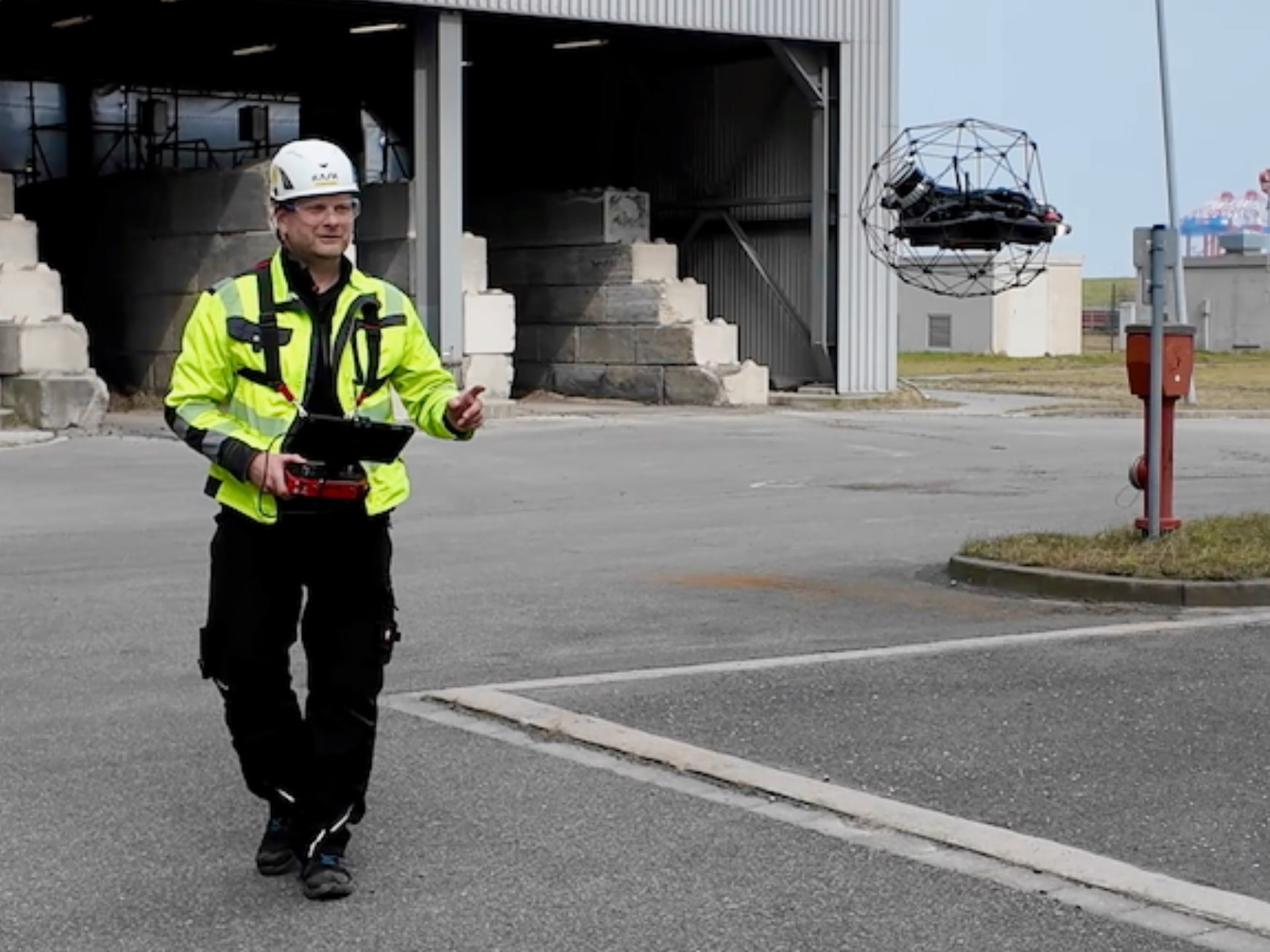 Christian Engelke
Founder & Drone Pilot
Christian Engelke
Founder & Drone PilotConfined Spaces since 2017
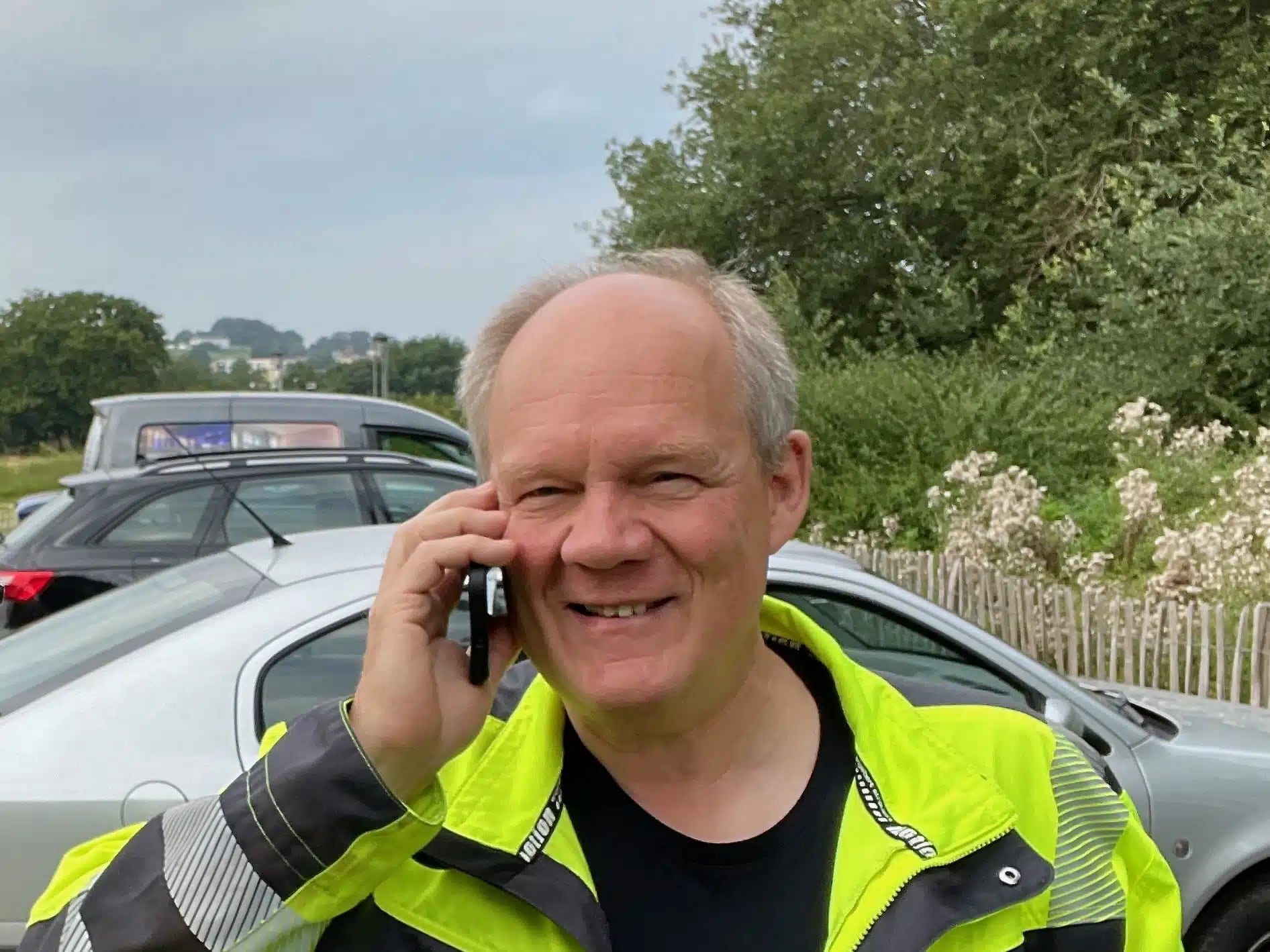 Karsten Lehrke
Project Manager
Karsten Lehrke
Project ManagerDipl.-Ing. Mechanical Engineering
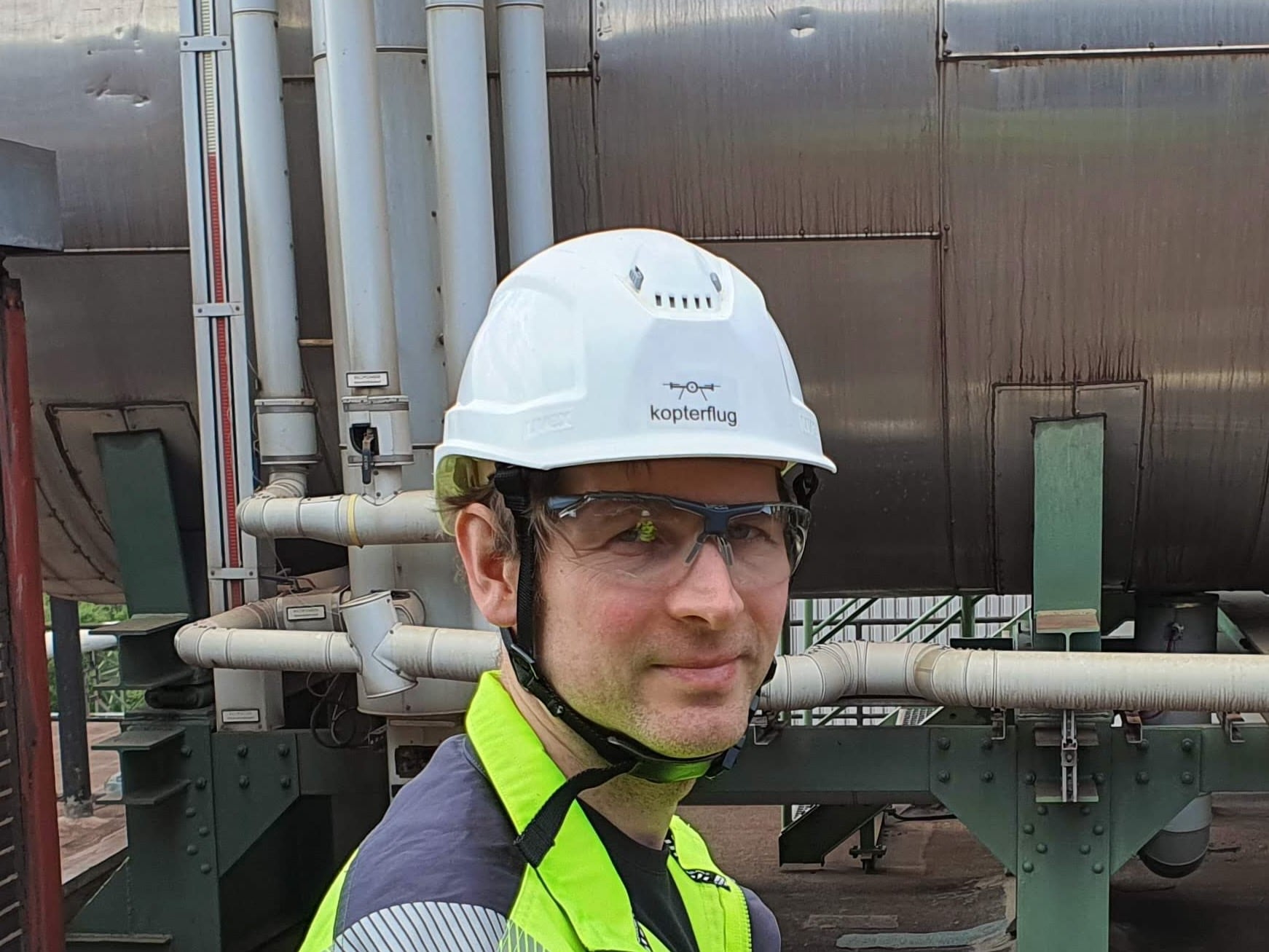 Philipp
Drone Pilot
Philipp
Drone PilotIndustrial Inspection
 Max
Inspection Specialist
Max
Inspection SpecialistData Analysis
 Benjamin
Drone Pilot
Benjamin
Drone PilotField Operations
Related Services
- Tank Inspection – Internal inspection of storage tanks under BetrSichV and API 653
- Boiler Inspection – Recurring inspection of steam boilers under EN 12952 and BetrSichV
- Chimney Inspection – Internal inspection of industrial chimneys without scaffolding
- Confined Spaces Inspection – DGUV 113-004 compliant alternative to human entry
- Silo Inspection – Internal inspection of silos without confined entry
- Industrial Inspection – Comprehensive inspection for all plant types and sectors
- NDT by Drone – VT, thermography and LiDAR in one flight
Frequently Asked Questions
Does TÜV accept drone data as an inspection basis for recurring inspections under BetrSichV?
In practice, drone inspection data is accepted by many ZÜS (TÜV, DEKRA, GTÜ and others) as a basis for internal inspection. The decision lies with the individual inspector. We recommend involving the inspector early in inspection planning – ideally they are present during the drone flight and can direct the pilot in real time.
Does the drone replace the approved inspection body (ZÜS)?
No. The drone is an inspection tool, not a replacement for the ZÜS. Mandatory inspection under BetrSichV must continue to be performed by an approved inspection body or qualified person. The drone delivers the data – the inspector makes the assessment.
Which BetrSichV inspections can the drone support?
Above all the internal inspection under § 16 BetrSichV: the drone captures the entire internal surface of vessels, tanks and boilers in 4K without human entry. External inspections on hard-to-access plant can also be drone-supported. For strength tests (pressure tests), the drone serves as a supplementary documentation tool.
Do I still need a confined entry permit (DGUV 113-004) with drone inspection?
If no human enters the vessel (zero-entry concept), most DGUV requirements fall away: no rescue chain, no breathing apparatus, no safety attendant. However, gas measurement (Gasfreimessung) and coordination with the operator’s safety officer remain required.
Can the drone perform wall thickness measurements (UT)?
The Flyability ELIOS 3 optionally features a UT payload (ultrasound wall thickness module) enabling contact-based wall thickness measurements. This method is currently suitable for certain surfaces and geometries. In many cases the drone is first used for visual inspection and the locations identified, where targeted UT measurements are then performed – whether by drone or manually.
What does drone-supported recurring inspection cost compared to conventional confined entry?
Pure inspection costs are comparable or lower. The decisive advantage lies in the ancillary costs: no scaffolding (often €5,000–30,000), no rope access preparation, no complex DGUV confined entry with rescue chain, significantly shorter plant shutdowns. In total this results in a cost saving of up to 80% compared to conventional confined entry.
Contact Us
We will coordinate together with you and your inspection body how the drone can support your next recurring inspection under BetrSichV – safely, efficiently and in alignment with the inspector.
Inspectomatic GmbH
Im Hollergrund 175A, 28357 Bremen, Germany
+49 421 408 937-0 ·
[email protected]
Source page: /en/knowledge-base/wiederkehrende-pruefung-betrsichv-drohne