
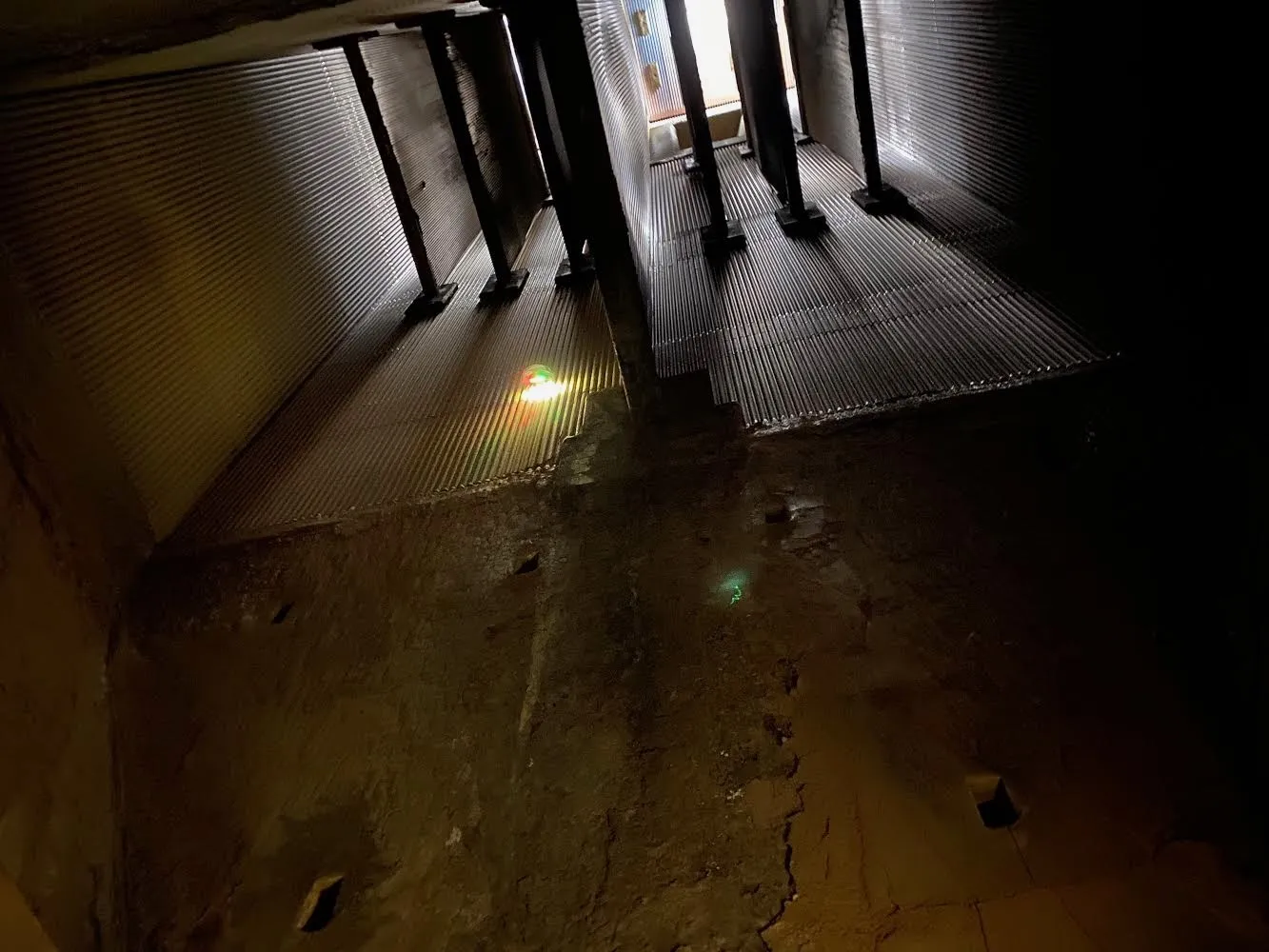
Boiler Inspection by Drone – No Scaffolding, No Human Entry, Downtime in Days Not Weeks
Kopterflug deploys the Flyability ELIOS 3 for water-tube boiler inspections in power plants and heavy industry – without human entry, without scaffolding, without weeks of downtime. Your data for informed decisions: 4K video, thermography and LiDAR point clouds, aligned with EN 12952 and BetrSichV (German Industrial Safety Regulation).
- No scaffolding – drone enters through existing inspection openings (from DN 600)
- No human entry – no confined space entry per DGUV Rule 113-004, no rescue chain
- 4K + Thermography + LiDAR in a single flight
- Documentation aligned with EN 12952 – basis for certified inspectors and BetrSichV compliance
Water-Tube Boiler Inspection with the Flyability ELIOS 3: Specialist for Power Plants
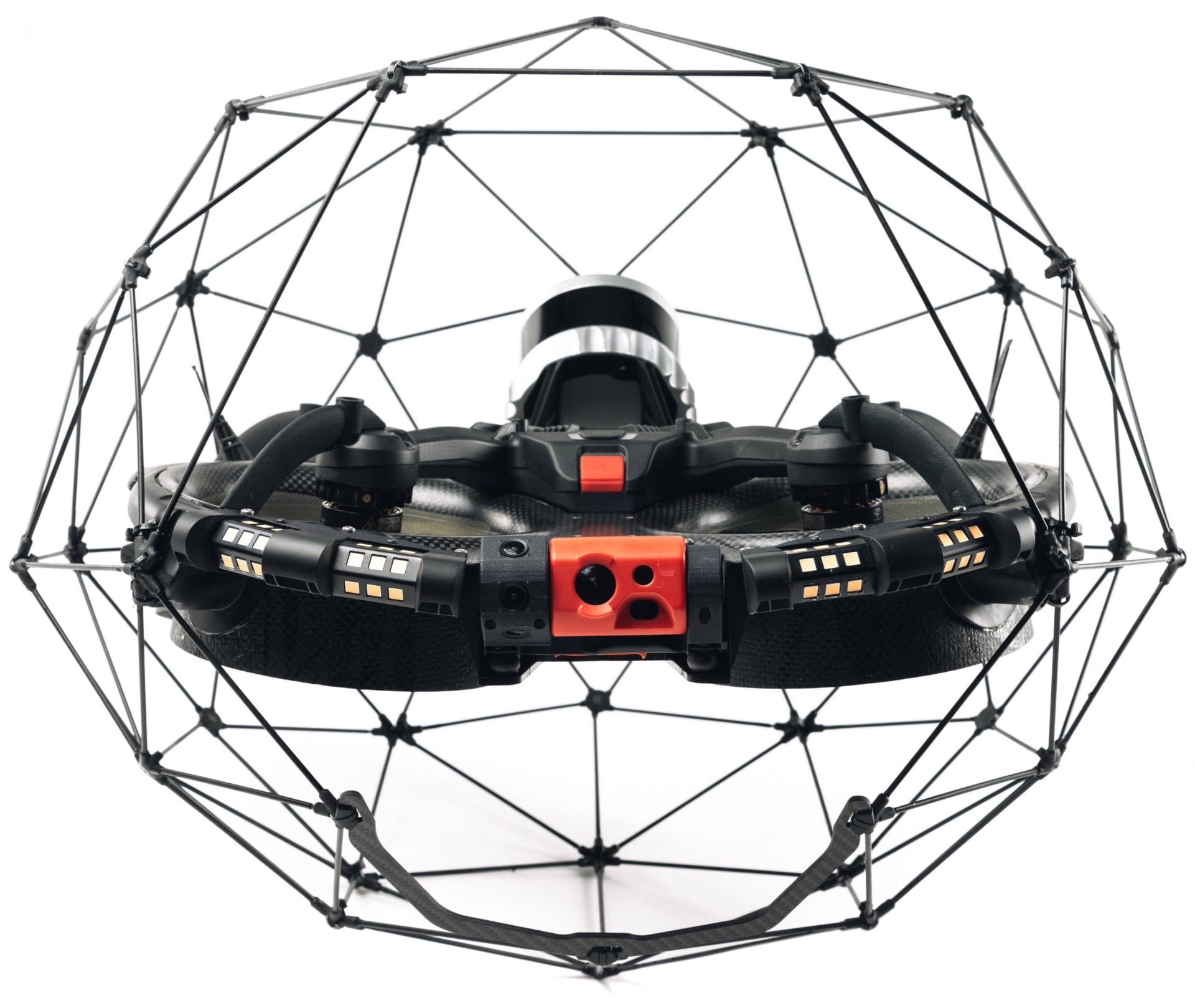
The ELIOS 3 with its collision-safe carbon cage – engineered for the complex geometry of industrial boilers (Wasserrohrkessel).
At Kopterflug we specialise in drone inspections with the Flyability ELIOS 3. We support power plant operators, maintenance teams and inspection bodies in inspecting Wasserrohrkessel (water-tube boilers) – without scaffolding, without human entry, with minimal downtime.
Water-tube boilers in power plants and heavy industry are highly complex systems: evaporator tubes (Verdampferrohre), superheaters (Überhitzer), reheaters (Zwischenerhitzer), economisers (Economizer) and refractory linings (feuerfeste Auskleidungen). The ELIOS 3 delivers 4K footage of tube corrosion, refractory erosion, thermal stresses at superheaters and deposits. Your boiler experts and inspectors assess the findings – we deliver the data.
Where conventional inspections with internal scaffolding can take weeks, we fly through the boiler in a fraction of the time. At power plants where every day of downtime costs tens of thousands of euros, that is a decisive advantage. We have experience working alongside TÜV and DEKRA, produce documentation aligned with EN 12952 (water-tube boiler standard) and BetrSichV, and work closely with your maintenance teams.
Typical damage patterns we inspect for: on Verdampferrohre (evaporator tubes) – ash and fly-ash erosion, high-temperature corrosion and tube-wall thinning. On feuerfeste Auskleidungen (refractory linings) – cracking, spalling and joint opening after thermal cycling, detectable via thermography even below an intact surface. On Überhitzer (superheaters) – creep sag, scale formation and local overheating. On the Economizer – dew-point corrosion from flue-gas condensate and ash deposits that reduce heat transfer.
The Challenges of Inspecting Water-Tube Boilers
Water-tube boilers in power plants are among the most complex inspection objects that exist. High temperatures, confined geometries, hazardous atmospheres and massive deposits make conventional inspections time-consuming, expensive and hazardous.






What the ELIOS 3 Documents in Water-Tube Boiler Inspections
We fly the ELIOS 3 into your water-tube boiler and systematically document all safety-relevant areas aligned with EN 12952 and BetrSichV. The expert assessment is carried out by your boiler engineers and inspectors – we deliver the data:
Evaporator Tubes & Tube Walls (Verdampferrohre & Rohrwände)
4K close-up footage of corrosion, cracks, weld seams, wall thinning and deposits on evaporator tubes. The Verdampferrohre are the heart of the water-tube boiler: damage leads to leaks which, at 150+ bar operating pressure, can cause hazardous operating conditions. Your boiler experts can assess on the basis of our data whether repairs are required.
- Sensors: 4K camera at close range (down to 10 cm), thermography for hotspots and corroded areas, LiDAR for geometric deviations and deformation
- Typical findings: Pitting, wall thinning, weld-seam cracks, deposits, high-temperature corrosion
Superheaters & Reheaters (Überhitzer & Zwischenerhitzer)
Detail footage of tube corrosion, thermal stresses, spring hangers (Federhänger) and supports. Überhitzer operate at 530°C and above – our thermography reveals temperature anomalies and hotspots. Your inspectors assess the risk to operational safety.
- Sensors: 4K footage of tubes and weld seams, thermography for thermal hotspots, documentation of Federhänger and tube supports – including in hard-to-reach areas
- Typical findings: Creep sag, scale formation, local overheating, hanger wear
Refractory Lining & Combustion Chamber (Feuerfeste Auskleidung & Brennraum)
Erosion, cracks, spalling, loose areas, joint opening and anchor damage in the refractory lining. In power-plant water-tube boilers the refractory lining is critical for protecting the tube walls – damage leads to local overheating of evaporator tubes and can cause tube bursts.
- Sensors: 4K camera for cracks and erosion, LiDAR for geometric deviations and deformation, thermography for insulation damage and areas with elevated heat radiation
- Typical findings: Refractory wear, brick spalling, thermal anomalies, anchor damage
Economiser & Feedwater Preheater (Economizer & Speisewasservorwärmer)
Tube condition, corrosion, deposits, leaks and condensate formation. Economisers are often difficult to access and overlooked in conventional inspections. Deposits reduce efficiency; corrosion leads to leaks. We document the current condition – your maintenance team plans the remedial work.
- Sensors: 4K documentation in confined areas where conventional methods cannot reach, thermography for deposits and corroded zones
- Typical findings: Dew-point corrosion, ash deposits, tube leaks
Boiler Drums, Headers & Tube Connections (Kesseltrommeln, Sammler & Rohranschlüsse)
4K footage of weld seams, inlet stubs, drum inner walls and waterside corrosion damage. Boiler drums operate under high working pressure – cracks or corrosion at weld seams can lead to operational failure. Early damage detection is safety-critical and forms the basis for the recurring inspection (wiederkehrende Prüfung) under BetrSichV.
- Sensors: 4K camera for weld-seam cracks and corrosion, LiDAR for geometric deviations and wall-thickness changes, thermography for hotspots and leak indicators
- Typical findings: Weld-seam corrosion, waterside deposits, geometric deformation
At the end we hand over a detailed inspection report specifically for water-tube boilers – with 4K images, thermography evaluation, optional 3D model and a systematic damage overview. Documentation aligned with EN 12952 (water-tube boiler standard) and BetrSichV requirements. Your boiler experts and inspectors assess the findings and make the decisions.
Boiler Types We Inspect
With the Flyability ELIOS 3 we inspect all common types of water-tube boilers – safely, precisely and with minimal downtime:
Power Plant Boiler – Natural Circulation (Kraftwerkskessel, Naturumlauf)
Large boilers in coal, gas and biomass power plants. Inspection of evaporator tubes, superheaters, reheaters, economisers and refractory linings.
- Sensors: Visual, LiDAR, thermography
- Typical issues: Refractory erosion, masonry cracks, evaporator tube corrosion, deposits, superheater damage, spring hanger wear
Heat Recovery Steam Generator (Abhitzekessel / HRSG)
Waste-heat recovery boilers in combined-cycle (GuD) plants. Inspection of tube banks, drums, superheaters and economisers – without scaffolding. Finned tubes (Lamellenrohre) and dew-point zones are particular challenges.
- Sensors: Visual, thermography
- Typical issues: Tube corrosion from condensate, deposits, leaks, thermal stresses, bypass wear
Once-Through Boiler (Zwangdurchlaufkessel)
High-pressure water-tube boilers in power plants with supercritical steam parameters (>221 bar). Inspection of tube systems, combustion chambers and superheaters.
- Sensors: Visual, thermography, LiDAR
- Typical issues: Tube wall damage under extreme conditions, corrosion, weld-seam cracks, wall thinning, deposits
Waste-to-Energy Boiler (Müllverbrennungs-Kessel / MVA)
Water-tube boilers in municipal solid waste incineration plants (MVA – Müllverbrennungsanlage). Inspection of refractory linings, evaporator tubes, superheaters and boiler walls.
- Sensors: Visual, thermography, LiDAR
- Typical issues: Severe corrosion from chlorine (HCl) and sulphur (SOx), refractory erosion, tube damage, slag build-up
D-Type Water-Tube Boiler
Packaged large boiler (D-form) in industrial, gas and oil plants, often with two drums and vertical tube walls. Inspection of combustion chamber, superheaters, economisers and tube banks.
- Sensors: Visual, LiDAR, thermography
- Typical issues: Corrosion on vertical water walls, erosion from high gas velocities, deposits in tube bends, drum weld-seam cracks, thermal non-uniformity
A-Type Water-Tube Boiler
A-shaped packaged boiler in industrial plants with central burner. Inspection of evaporator, superheaters and refractory areas.
- Sensors: Visual, thermography, LiDAR
- Typical issues: Corrosion from process gases, deposits in inclined tubes, drum wear, superheater hotspots, connection leaks
O-Type Water-Tube Boiler
Compact, rounded packaged boiler in industry and medium-sized power plants. Inspection of tube systems, economisers and superheaters.
- Sensors: Visual, LiDAR, thermography
- Typical issues: Corrosion on bent tubes, slag build-up in confined areas, thermal stresses, wall thinning, tube-bend leaks
Babcock & Wilcox Boiler (Bent-Tube)
Classic water-tube boiler with inclined tubes and multiple drums, common in older coal and biomass plants. Inspection of combustion chamber, tube banks and lining.
- Sensors: Visual, thermography, LiDAR
- Typical issues: Refractory erosion, corrosion on inclined tubes, ash deposits, cracks in tube bends, tube hanger wear
Stirling Boiler (Multi-Drum)
Multi-drum water-tube boiler with complex tube loops, mainly in older large plants and biomass power stations. Focus on hard-to-reach areas.
- Sensors: Visual, LiDAR, thermography
- Typical issues: Heavy deposits in tube loops, corrosion from long residence times, thermal fatigue, joint cracks, uneven heat distribution
Grate-Fired Boiler (Rostfeuerungs-Kessel)
Water-tube boilers with grate firing in biomass and waste plants. Inspection of large combustion chambers and tube banks.
- Sensors: Visual, thermography, LiDAR
- Typical issues: Heavy slag formation, corrosion from aggressive ashes, erosion on lower tube rows, chemical attack (HCl/SOx), leaks
Drone vs. Conventional Boiler Inspection
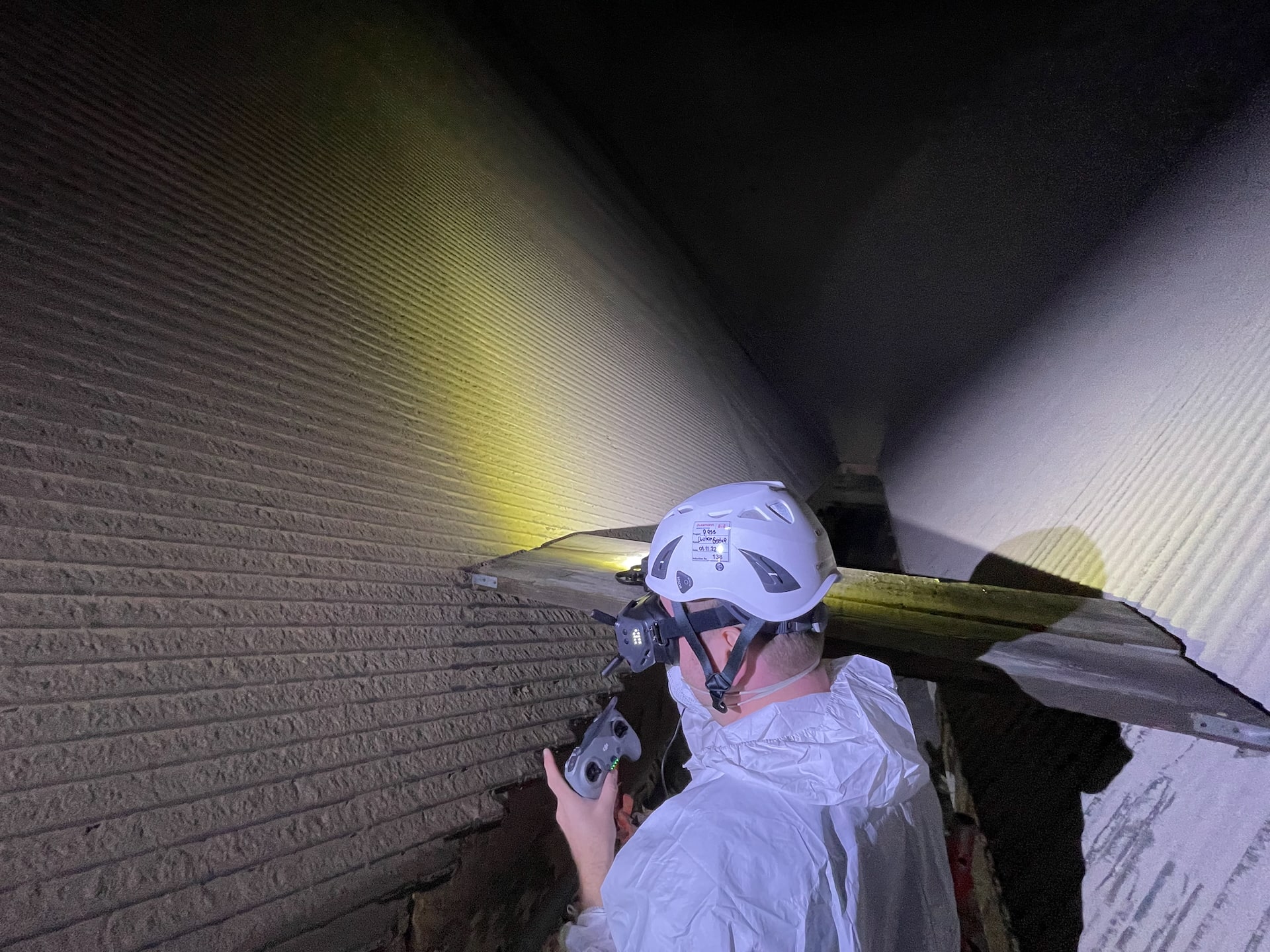
Christian Engelke with video goggles during a boiler inspection in a coal-fired power plant – the team stays outside, the drone flies inside.
| Aspect | Conventional (scaffolding / entry) | Drone – ELIOS 3 |
|---|---|---|
| Access | Internal scaffolding across all levels | Via inspection opening, no scaffolding |
| Downtime | 3–4 weeks | 1–2 weeks |
| Human entry (Personeneinstieg) | Yes – fall hazard, residual heat | No – drone inspects, team stays outside |
| Thermography | Spot measurements, handheld | Full-area coverage, all levels |
| Documentation | Photos & sketches | 4K + LiDAR + thermography, position-referenced |
Why the ELIOS 3 for Water-Tube Boiler Inspection
- No scaffolding (kein Gerüstbau): No weeks of internal scaffolding erection in power-plant boilers. The drone enters through the inspection opening – ready for deployment immediately.
- No human entry (kein Personeneinstieg): No DGUV confined space entry (Befahrung), no heat risk, no respiratory protection. The drone inspects evaporator tubes and superheaters – your team stays outside.
- Minimal downtime: Inspection in hours rather than weeks. At power plants where every day costs tens of thousands of euros, this is decisive.
- Thermography for superheaters (Überhitzer): The thermal camera finds hotspots at superheaters, insulation damage and thermal stresses. The 4K camera documents tube damage. LiDAR measures geometry.
- Significant cost savings: No scaffolding costs, no entry teams, minimal downtime. At power plants, up to 80% cheaper than conventional methods.
- Aligned with EN 12952 and BetrSichV: Documentation structured according to the water-tube boiler standard – as a basis for your certified inspectors (Sachverständige) and BetrSichV compliance.
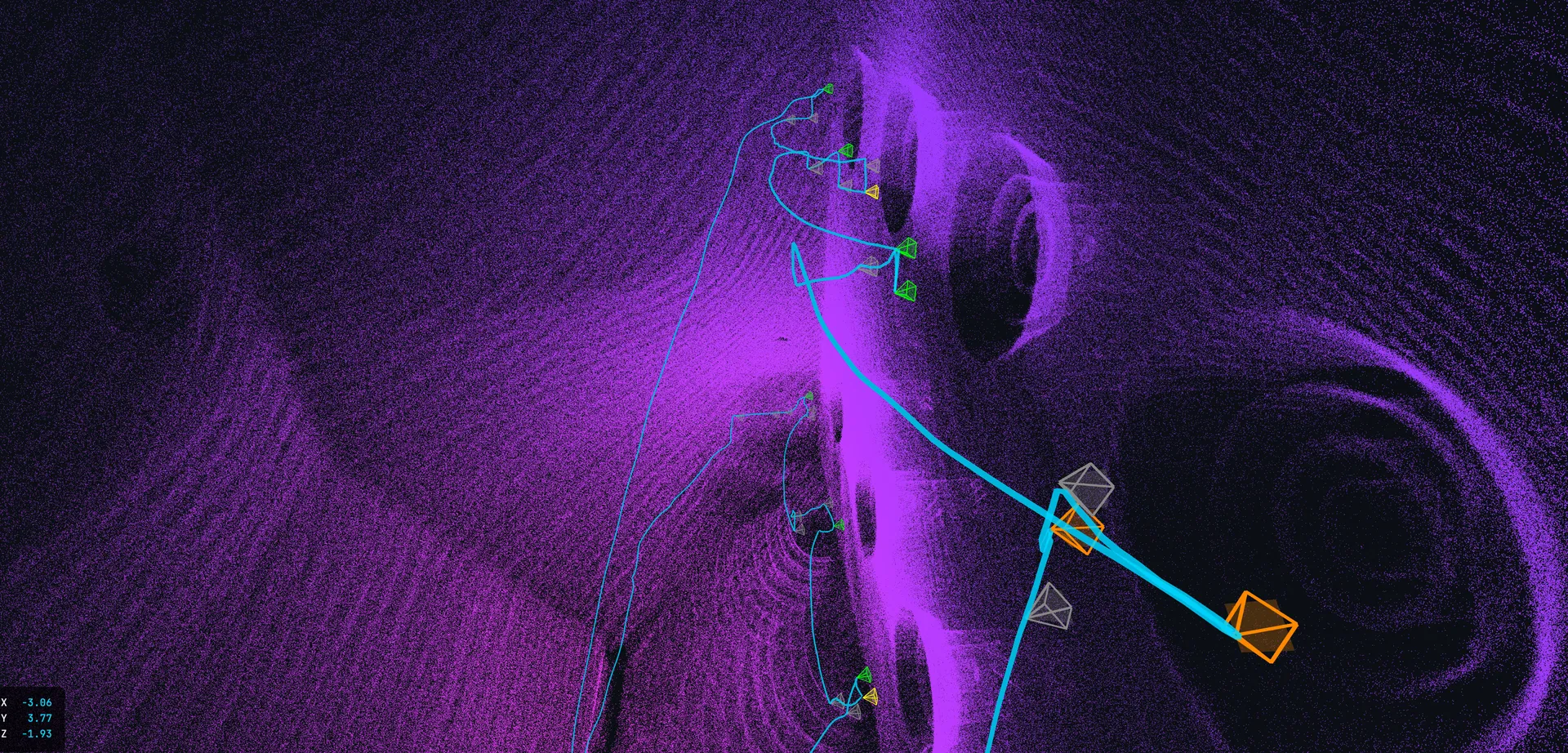
LiDAR 3D point cloud from an ELIOS 3 inspection – centimetre-accurate geometry data of a power-plant boiler burner zone (Brenner).
How a Water-Tube Boiler Inspection Works
Step 1: Initial Consultation (free)
We analyse your requirements: which water-tube boiler type? Which components to inspect? We advise you free of charge on all technical questions – boiler type, access, inspection scope, regulatory requirements.
Step 2: Scheduling & Quotation
You receive a transparent quotation. Together we plan the timing, access, cooling times and safety concept – coordinated with your boiler experts and aligned with your scheduled revision (Revision/Turnaround).
Step 3: On-Site Inspection
Our ELIOS 3 pilots carry out the inspection – significantly faster than conventional methods. TÜV or DEKRA on site if required. Documentation aligned with EN 12952 and BetrSichV.
Step 4: Evaluation & Inspection Report
You receive a detailed report with 4K footage of evaporator tubes, thermography analyses of superheaters, optional 3D models – aligned with EN 12952 and BetrSichV requirements. Structured findings with severity ratings, localisation and recommended action – directly usable by your inspectors and maintenance planning.
Major Industrial Boiler Manufacturers
The boiler market divides into two segments: utility boilers for power generation (often hundreds of MW, supercritical technology) and industrial boilers for process steam and medium capacities. Regardless of manufacturer and year of construction, we document the current condition of your boiler – without scaffolding, without human entry, with the Flyability ELIOS 3.
Your Contacts for Boiler Inspection
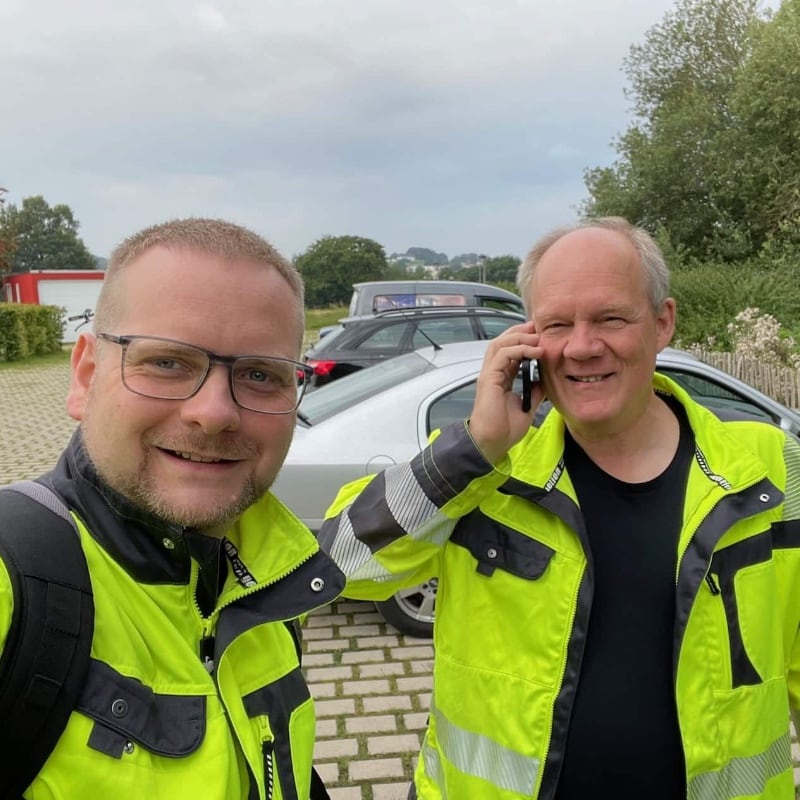
Christian Engelke and Dipl.-Ing. Karsten Lehrke – your direct contacts for water-tube boiler inspection projects.
Since 2017 we have been deploying the ELIOS 3 in power plants and industrial installations. Our pilots know how to navigate in confined boiler geometries and deliver data that meets the standards of certified inspectors. We bring the technology – you bring the boiler expertise.
We advise without sales pressure – including when the honest answer is: the conventional method is better suited for your specific boiler.
Related Services
- Confined Spaces Inspection – Tanks, boilers, silos and shafts without human entry – the primary ELIOS 3 use case.
- Cooling Tower Inspection – Natural-draught and cell coolers by drone – M30T externally, ELIOS 3 for internal fittings.
- Chimney Inspection – Tall vertical structures inspected from inside – without scaffolding and without rope access teams.
- Energy & Power Plant Inspection – Complete power plant inspection: boilers, chimneys, cooling towers.
- Industrial LiDAR Survey – 3D point clouds with the ELIOS 3 Surveying Payload (Ouster OS0-128).
- Industrial Drone Inspection – Overview of all inspection services with ELIOS 3 and complementary systems.
- Flyability ELIOS 3 – Full technical specification of the inspection drone.
Frequently Asked Questions – Water-Tube Boiler Inspection
What is the biggest advantage over conventional boiler inspections?
No scaffolding (Gerüstbau), no human entry (Personeneinstieg). The inspection takes hours instead of days or weeks – with significantly reduced downtime costs and no risk to personnel inside the boiler. The ELIOS 3 enters through existing inspection openings; your team stays outside throughout.
Which water-tube boiler types can be inspected?
All common types: natural-circulation power plant boilers (Naturumlauf-Kraftwerkskessel), heat recovery steam generators (Abhitzekessel / HRSG), once-through boilers (Zwangdurchlaufkessel), waste-to-energy boilers (Müllverbrennungs-Kessel / MVA) as well as industrial A-, D- and O-type boilers, biomass, Babcock & Wilcox, Stirling and grate-fired boilers. We cover the full range regardless of manufacturer.
Does the drone fit through the existing access openings?
Yes. The ELIOS 3 measures approximately 50 × 45 cm and fits through standard manholes from DN 600. In practice, no modification is required. Depending on boiler design, different access points can be used to reach all relevant areas. The decisive factor is always the entry angle and the specific clearance on site.
How long does an inspection take?
Typically a few hours up to a maximum of one to two days including data capture. The main effort of conventional inspections – scaffolding erection and access preparation – is eliminated entirely. Post-processing and the structured findings report are typically delivered within a few working days.
Does the boiler need to be fully cooled down?
Not necessarily to ambient temperature, but the system has a maximum operating temperature of 50°C. The inspection can often begin earlier than a conventional human entry would be possible – depending on temperature and conditions. Inspection is typically integrated into planned revisions or maintenance shutdowns (Revisionen / Turnarounds).
Which standards apply to boiler inspection?
Our documentation is aligned with EN 12952 (water-tube boiler standard), BetrSichV (Betriebssicherheitsverordnung – German Industrial Safety Regulation), DGUV Regel 113-004 (German statutory accident insurance confined space rules) and the TRD (Technische Regeln für Dampfkessel – Technical Rules for Steam Boilers). Assessment is carried out by inspectors (Prüfer), Sachverständige (certified experts) or operators in accordance with the applicable regulations – we deliver the structured data foundation.
What types of damage can be detected?
Typical findings include corrosion on evaporator tubes (Verdampferrohre), erosion of refractory linings (feuerfeste Auskleidungen), superheater damage from thermal stresses, weld-seam cracks, deposits and slag build-up as well as spring hanger (Federhänger) wear. In MVA (waste-to-energy) boilers we frequently find chlorine (HCl) and sulphur (SOx) corrosion. The drone does not replace NDT – it delivers the visual and thermal data basis for prioritising further testing.
Which sensors are used in the boiler inspection?
Depending on scope: 4K camera for high-resolution visual documentation, thermography for detecting thermal anomalies (hotspots, insulation damage), and LiDAR for spatial capture, geometry measurement and 3D point clouds. For most power plant boiler inspections, all three sensor modalities are combined in a single flight.
What data do I receive after the inspection?
A detailed inspection report with 4K close-up footage of evaporator tubes, weld seams and linings, thermography evaluation for hotspots and insulation damage, and optionally LiDAR 3D point clouds for geometry measurement. All findings are systematically documented aligned with EN 12952 and BetrSichV. No raw, uncontextualised video – every finding is traceable by location.
How does the drone navigate inside a boiler?
The ELIOS 3 navigates GPS-free via SLAM technology (Simultaneous Localisation and Mapping) and LiDAR. The collision-robust carbon protective cage allows contact with tubes, walls and internals. With 16,000 lumens of on-board lighting, even the darkest boiler areas are fully illuminated. This makes the system ideal for the cylindrical and complex geometries of Wasserrohrkessel.
Are hard-to-reach areas also accessible?
Yes. Particularly tight tube banks, inter-tube gaps and ceiling areas can be captured – areas that conventionally are only partially accessible or completely inaccessible – without a climbing team, without scaffolding. This is one of the core advantages of the ELIOS 3 over any conventional access method.
Is inspection in hazardous atmospheres possible?
Yes, subject to the applicable risk assessment (Gefährdungsbeurteilung). Because no human entry is required, risk is substantially reduced. The ELIOS 3 is not ATEX-certified and is not approved for Zone 0 – deployment must be assessed case by case. With the optional gas sensor, the ELIOS 3 can monitor gas levels during flight and withdraw if thresholds are exceeded.
Is the drone ATEX-certified?
No. Deployment is carried out on the basis of a risk assessment. In many cases safe operation is possible – particularly because no personnel are exposed and the atmosphere is gas-free measured before entry. We clarify the applicable requirements in advance for each installation.
Do DGUV confined space rules still apply when using drone inspection?
Because the drone inspection involves no human entry (kein Personeneinstieg) into the boiler, the requirements of DGUV Regel 113-004 for the inspection itself do not apply – no gas-free measurement for personnel, no respiratory protection, no rescue chain (Rettungskette). Pilot and assistant remain outside. Whether human entry is required for subsequent repairs is decided by your inspectors on the basis of our data.
Who assesses the identified damage?
Assessment is carried out by the operator, Sachverständige (certified experts) or inspection bodies (e.g. TÜV, DEKRA). We deliver the structured data foundation – the expert judgement lies with your specialists. We provide no unreferenced data dump: our reports come with severity ratings, localisation and recommended action.
How significant is the cost saving potential?
By eliminating scaffolding costs, reducing personnel requirements and shortening downtime, substantial savings are achievable – particularly for large power-plant boilers where every day of standstill can cost tens of thousands of euros. At power plants, savings of up to 80% compared to conventional methods are possible.
Can 3D models or digital twins be created?
Yes. Based on LiDAR data, 3D point clouds can be generated that serve as a digital reference for future comparisons and trend analysis across multiple inspection cycles. Useful for as-built documentation, deformation analysis and supporting RBI (Risk-Based Inspection) programmes.
How is heavy contamination (soot, slag) handled?
The ELIOS 3 is designed for exactly these environments – 16,000 lumens of on-board lighting, collision-safe cage. Depending on the objective, the inspection can take place before or after cleaning – both are possible and deliver different, valuable information about the actual condition of the installation.
Is the method also suitable for biomass or waste-to-energy boilers?
Yes – especially in highly corrosive and contaminated installations the drone inspection offers clear advantages, since critical areas can be safely and comprehensively documented without personnel risk in aggressive atmospheres. MVA (Müllverbrennungsanlage) and biomass boilers are particularly challenging for conventional access methods.
Does drone inspection replace conventional NDT methods such as ultrasonic testing?
No. Visual and thermal inspection complements conventional testing methods and frequently serves as the basis for prioritising further NDT work (ZfP – zerstörungsfreie Prüfung) – not as a replacement. The drone delivers 4K and thermography data; wall thickness measurement requires ultrasonic NDT (UT payload or separate measurement).
What happens if the drone collides or gets stuck?
The ELIOS 3 is collision-protected and purpose-built for confined spaces – light wall contact is tolerable, the drone bounces off and remains stable. Getting stuck is extremely rare: every deployment is carefully planned in advance, critical internals are consciously avoided. We clarify any access concerns before the inspection takes place.
How is a drone inspection started?
After a brief coordination on boiler type, access and inspection objectives, we prepare the deployment concept. Our team then carries out the on-site inspection – including planning, execution and data processing. Typically we can be on site within a few working days. For planned revisions, we recommend early scheduling to make optimal use of the revision window.
When is a drone inside a boiler NOT the best solution?
Steam and residual moisture shortly after shutdown massively impair image quality – the boiler must be sufficiently cooled and dry. In extremely tight tube banks with less than 50 cm clearance, even the ELIOS 3 cannot proceed. And: visual drone inspection provides a solid initial assessment but does not replace metrological materials testing (e.g. ultrasonic wall-thickness measurement – UT). We tell you honestly in advance whether a drone deployment makes sense for your specific boiler – or whether the conventional method would be more effective.
How do I integrate drone inspection into our inspection programme?
Most effectively as a fixed component of your existing maintenance concept (Instandhaltungskonzept): as a pre-inspection before revisions to show precisely where action is needed. As an intermediate inspection between conventional BetrSichV intervals. Or as the documentation basis for your Sachverständigenprüfung (certified expert inspection) per EN 12952. The key: define inspection questions in advance, identify relevant areas, feed results into your systems. A drone inspection without a clear inspection objective delivers images – but not actionable findings.
Are drone recordings sufficient for a reliable condition assessment?
That depends on who evaluates the data. Raw recordings alone are not an inspection. Expert interpretation is what turns images into usable findings: is a discoloration on an evaporator tube corrosion-related? Is a crack at a weld seam structurally relevant? We do not deliver an unreferenced data flood but structured findings reports – with severity rating, localisation and recommended action, directly usable by your inspectors and maintenance planning.
Get in Touch
Have questions about boiler inspection by drone or need a quote for your power plant or industrial installation? Fill out the form below and we will get back to you within 24 hours.