
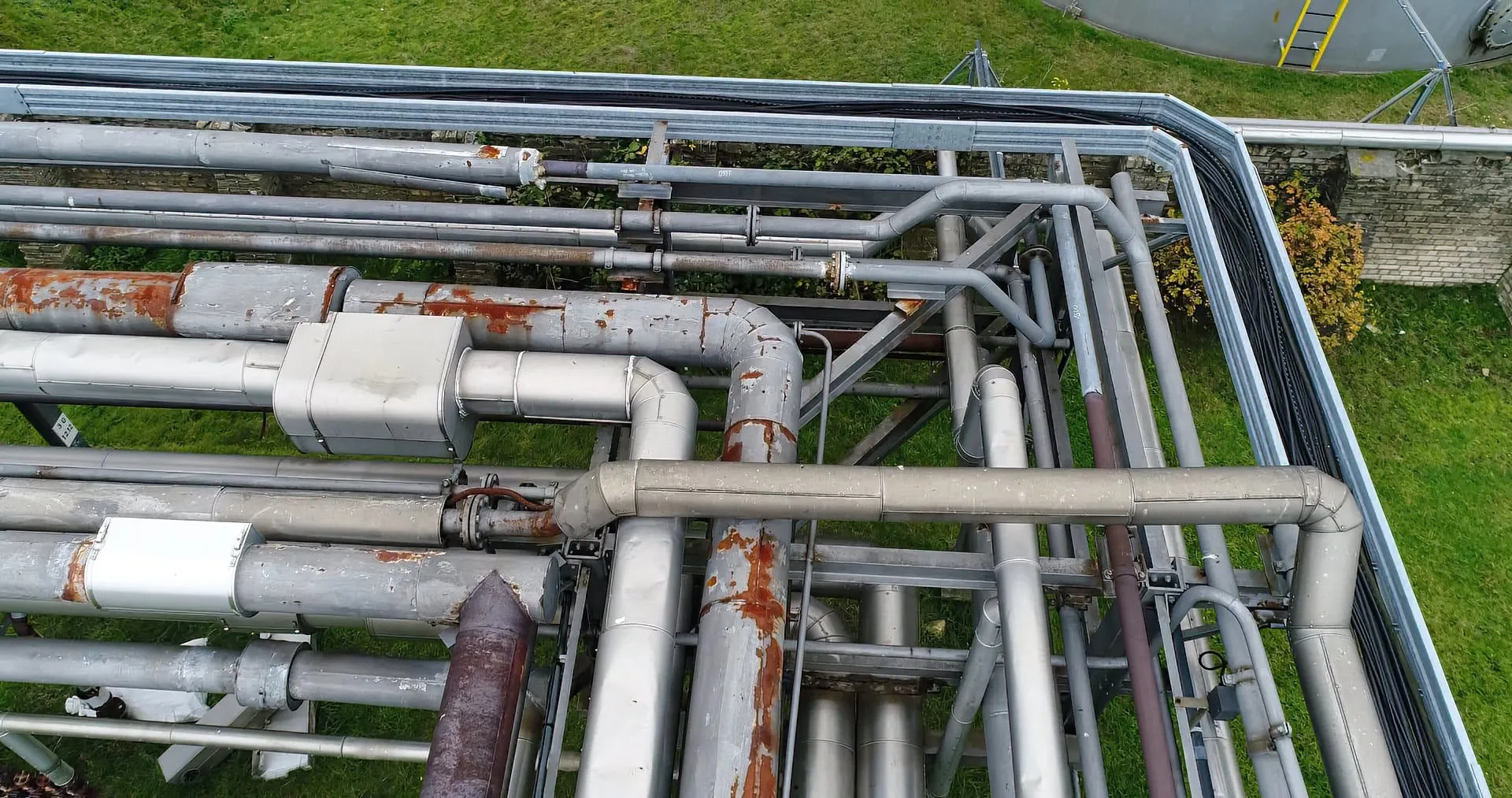
The 11 Most Common Damage Types on Pipe Bridges – and How Drones Improve Inspection
Early detection through aerial inspection with thermography and high-resolution cameras. Kopterflug has been conducting professional drone inspections of pipe bridges since 2017 – without scaffolding, without height work, with 4K, thermography and 3D measurement.
- CUI (Corrosion Under Insulation) detectable via thermography without dismantling
- 60–80% cost savings compared to conventional scaffolding methods
- Several hundred metres of pipe bridge inspectable in one day
Pipe Bridges: The Lifelines of Industry – and Their Weak Points
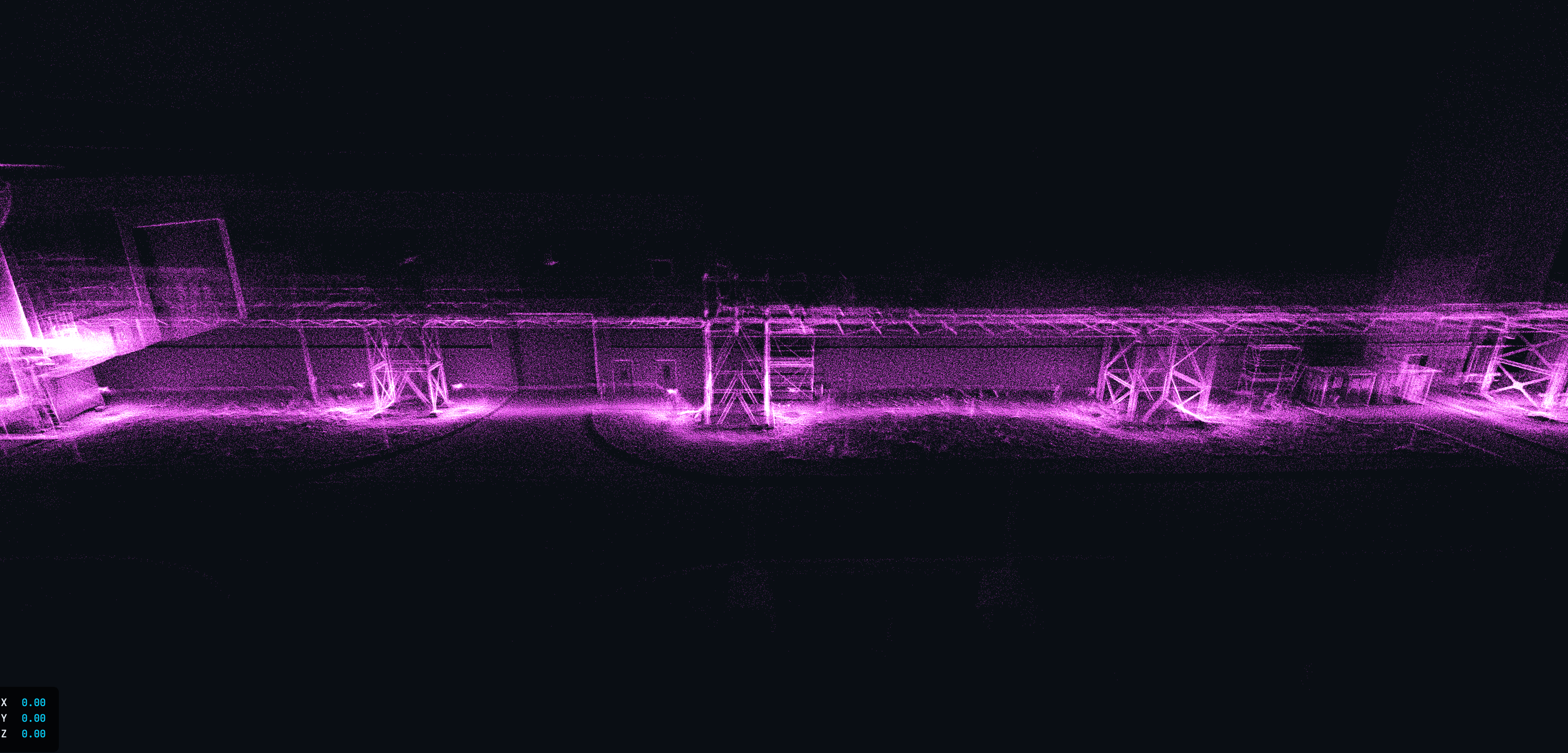
LiDAR 3D scan of a pipe bridge – centimetre-accurate geometry for documentation and maintenance planning.
Pipe bridges transport media, energy and resources through extensive industrial plants – under permanent stress from wind, weather and thermal loading. Classic inspections required scaffolding, aerial platforms or rope access techniques. Drone inspections change this: detailed aerial inspections – precise, safe and cost-efficient.
Why Drones Are the Ideal Solution for Pipe Bridge Inspections


11 Damage Types at a Glance
| Damage Type | Detection Method | Key Benefit |
|---|---|---|
| CUI (Corrosion Under Insulation) | Thermography (DJI M30T) | Detection without dismantling |
| Mechanical Damage | 4K Camera + 3D Scan | Smallest damage visible; 3D measurement possible |
| UV & Weather Damage | 4K Camera + Thermography | Continuous monitoring; trend analysis over years |
| Foundation Problems & Settlement | 3D Measurement + Visual | Aerial overview; early warning system |
| Collision Damage | 4K Camera + 3D Scan | Immediate deployment; no plant shutdown |
| Fatigue Cracks | 4K Camera (Zoom) | Detection before leakage; regular monitoring |
| Insulation Damage | Thermography + Visual | CUI prevention; energy efficiency |
| Chemical Corrosion | 4K Camera + Thermography | Regular screening; extend service life |
| Leaks at Connections | Thermography + 4K Camera | Leak detection without contact |
| Thermal Fatigue | Thermography + 3D Scan | Preventive maintenance; trend analysis |
| Pipe Sagging | 4K Camera (oblique shots) | Detectable from various angles; not visible from ground |
1. Corrosion Under Insulation (CUI) – The Hidden Danger
CUI (Korrosion unter Isolierung) is one of the most severe and hardest to detect damage types on pipe bridges. CUI occurs when moisture penetrates the insulation and attacks the pipe surface. Thermography drones detect temperature differences indicating CUI – without dismantling.
- Causes: Water ingress through damaged or inadequate insulation, condensation from temperature cycling, UV degradation of the insulation jacket
- Drone solution: Thermography sensors record temperature differences that indicate moisture and thus corrosion – without removing insulation
- Important: CUI thermography only works reliably with a temperature differential ≥5 K between pipe and ambient temperature
2. Mechanical Damage from Vibrations
Vibrations from machines, wind and traffic cause cracks, deformations and material fatigue. High-resolution cameras capture even minimal damage. 3D scans make deformations measurable and comparable over time.
3. UV & Weather Damage
UV radiation destroys protective coatings and insulation over time, while extreme temperature fluctuations fatigue the material. Regular drone inspections document the progression and enable continuous trend analysis.
4. Foundation Problems & Settlement
Ground movements, erosion or inadequate foundations endanger the entire pipe bridge. Drone aerial surveys identify shifts early – an early warning system from the aerial perspective that is not possible from the ground.
5. Collision Damage
Vehicles, cranes or construction machinery can damage pipe bridges. Drones enable immediate damage assessment after an incident – without plant shutdown. The entire structure is documented from the air within hours.
6. Fatigue Cracks from Cyclic Loading
Cyclic loads from temperature changes and vibrations create progressive cracks. High-resolution drone cameras with up to 200x zoom detect hairline cracks, weld seam defects and stress cracks early – before they lead to dangerous leakage.
7. Damaged or Worn Insulation
Worn or damaged insulation opens the door to CUI and energy losses. Thermography shows exactly where the insulation has failed – without dismantling. This enables targeted maintenance before extensive CUI damage develops.
8. Corrosion from Aggressive Chemicals in the Air
In industrial environments, particularly in refineries and chemical parks, aggressive chemicals such as sulfur and nitrogen oxides accelerate corrosion massively. Regular drone screening detects early-stage surface corrosion and extends structure service life.
9. Leaks at Connections, Seals and Compensators
Connections and seals are particularly vulnerable to wear and material fatigue. Thermal imaging cameras detect leaks via temperature differences – without contact, from safe distance. Flanged connections, seals and compensators are the typical weak points.
10. Material Fatigue from Temperature Cycles
Constant thermal cycling stresses pipe bridge materials heavily. The continuous expansion and contraction leads to material fatigue, eventually causing cracks, deformations and further structural problems. Thermography and 3D measurement document deformations and crack development for trend analysis over years.
11. Pipe Sagging
Defective or missing pipe supports cause pipe segments to sag between supports. The resulting bending stresses lead to cracks at weld seams and flanged connections. Recognisable from various angles via oblique drone shots – often not visible from the ground at all.
Conclusion: Drone Inspections as Key to Safe Pipe Bridges
Beyond the classic damage types, modern drones today also capture the operational status of valves and fittings along the route – valve position, visible leak indicators and housing corrosion, documented from the air with 200x zoom. Every finding is marked with georeferenced GPS coordinates in the inspection report, so your maintenance team can precisely locate every damage point without additional surveys.
Your Contacts

Related Services
- Industrial Drone Inspection – Professional drone inspections for all industrial plants and sectors.
- Oil & Gas Inspection – Specialised inspections for refineries and pipeline systems.
- Chemical Industry – Drone inspections in chemical plants and industrial parks.
- Energy & Power Plants – Inspection of power plant components and energy infrastructure.
- Tank Inspection – Safe inspection of storage tanks and pressure vessels without human entry.
- Chimney Inspection – Interior and exterior inspection of industrial chimneys without scaffolding.
Frequently Asked Questions
Why is regular drone inspection of pipe bridges important?
Drones enable efficient inspections of pipe bridges that transport critical media and are exposed to extreme loads. Aerial monitoring ensures early damage detection and prevents costly failures through continuous, contactless controls. Damage such as CUI, fatigue cracks or corrosion is detected before it leads to dangerous leakage or structural failure.
What advantages does aerial inspection of pipe bridges offer?
Key advantages: No scaffolding or aerial platforms required (60–80% cost savings), no height work with personnel risk, fast inspection cycles without plant shutdown, high-resolution documentation with thermography and 3D scans, precise early detection of smallest damage, comprehensive digital long-term documentation for trend analyses.
Which damage types do drones detect during pipe bridge inspection?
Drones detect: CUI (corrosion under insulation) via thermography, surface corrosion from aggressive chemicals, mechanical damage and deformations, fatigue cracks from cyclic loading, damaged insulation, leaks at connections and seals, foundation problems and settlement, UV and weather-related material damage, and pipe sagging.
How do drones use thermography sensors for inspection?
Thermography cameras capture temperature differences on the surface and thereby detect: CUI without dismantling, moisture in insulation, leaks from hot or cold pipes, and defective insulation with energy loss. Important: CUI thermography only works reliably with a temperature differential ≥5 K and not too thick, dry insulation.
What drone technology is used for professional pipe bridge inspections?
We use two complementary systems: the DJI M30T for aerial inspection with 200x zoom and radiometric thermography, and the ELIOS 3 for inspection inside accessible pipelines. Both systems complement each other for comprehensive pipe bridge inspection in a single deployment.
At what intervals should drone inspections be carried out?
Recommended intervals: Critical plants (high pressure, toxic media): semi-annually to annually. Standard plants: every 1–2 years. After extreme weather events: special inspections. Upon suspicion of damage: immediate inspection. Regular inspections are more cost-effective than emergency repairs after damage.
How do drones detect corrosion damage on pipe bridges?
Drones use several methods: visual inspection with high-resolution cameras detects surface corrosion and discolouration; thermography detects CUI through temperature differences; 3D scans measure wall thickness changes over time. The combination provides comprehensive corrosion monitoring.
What advantages does digital documentation via drone offer?
Digital documentation enables: comparison of inspection data over years (trend analysis), objective damage documentation without interpretation room, 3D models for precise measurement and planning, georeferenced GPS coordinates for exact damage localisation, and the basis for condition-based maintenance planning.
How do drone inspections increase plant safety?
Safety benefits: No personnel risk in height work, more frequent inspections due to lower effort = earlier damage detection, prevention of unplanned failures through preventive maintenance, reduction of environmental risks through early leak detection, and compliance documentation for safety authorities.
What weather conditions permit drone inspections?
Drone inspections are possible at: wind speeds up to approximately 10–12 m/s (depending on drone model), dry weather (no rain), adequate visibility (no dense fog), temperatures between -10 and +45°C. Thermography works best with sufficient temperature differential between pipe surface and ambient.
Get in Touch
Questions about pipe bridge inspection or would you like a non-binding quote? Fill out the form – we'll get back to you within 24 hours.