
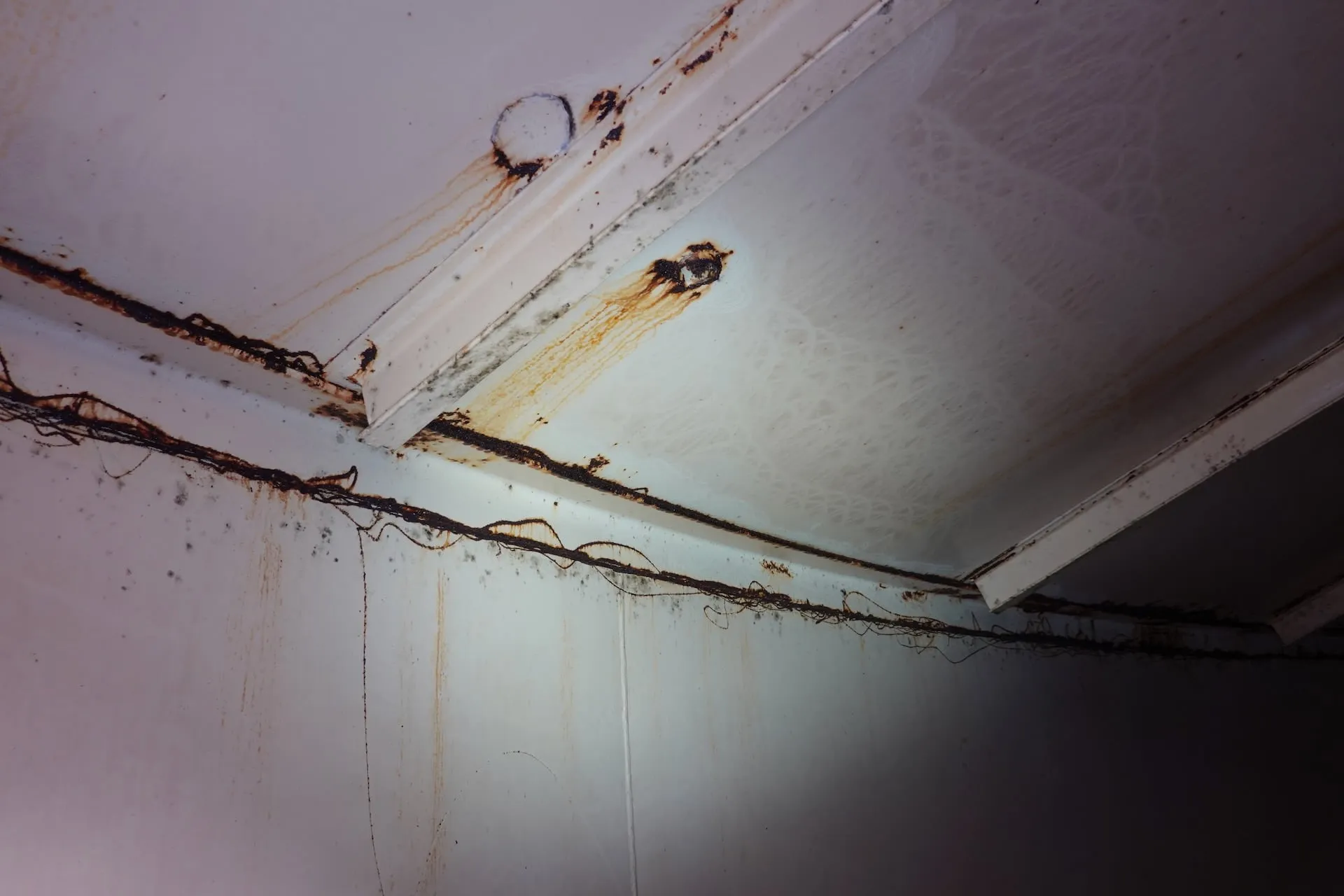
The 8 Most Common Corrosion Types in Industrial Plants
Corrosion causes billions in damage every year. The Flyability ELIOS 3 detects all 8 critical corrosion types – including in hard-to-reach areas such as tank roofs, boiler interiors and pipe systems, without human entry.
- Early detection of all 8 corrosion types
- 4K + Thermography + LiDAR without scaffolding or human entry
- Experience since 2017 – hundreds of inspected plants across Germany
The 8 Corrosion Types at a Glance
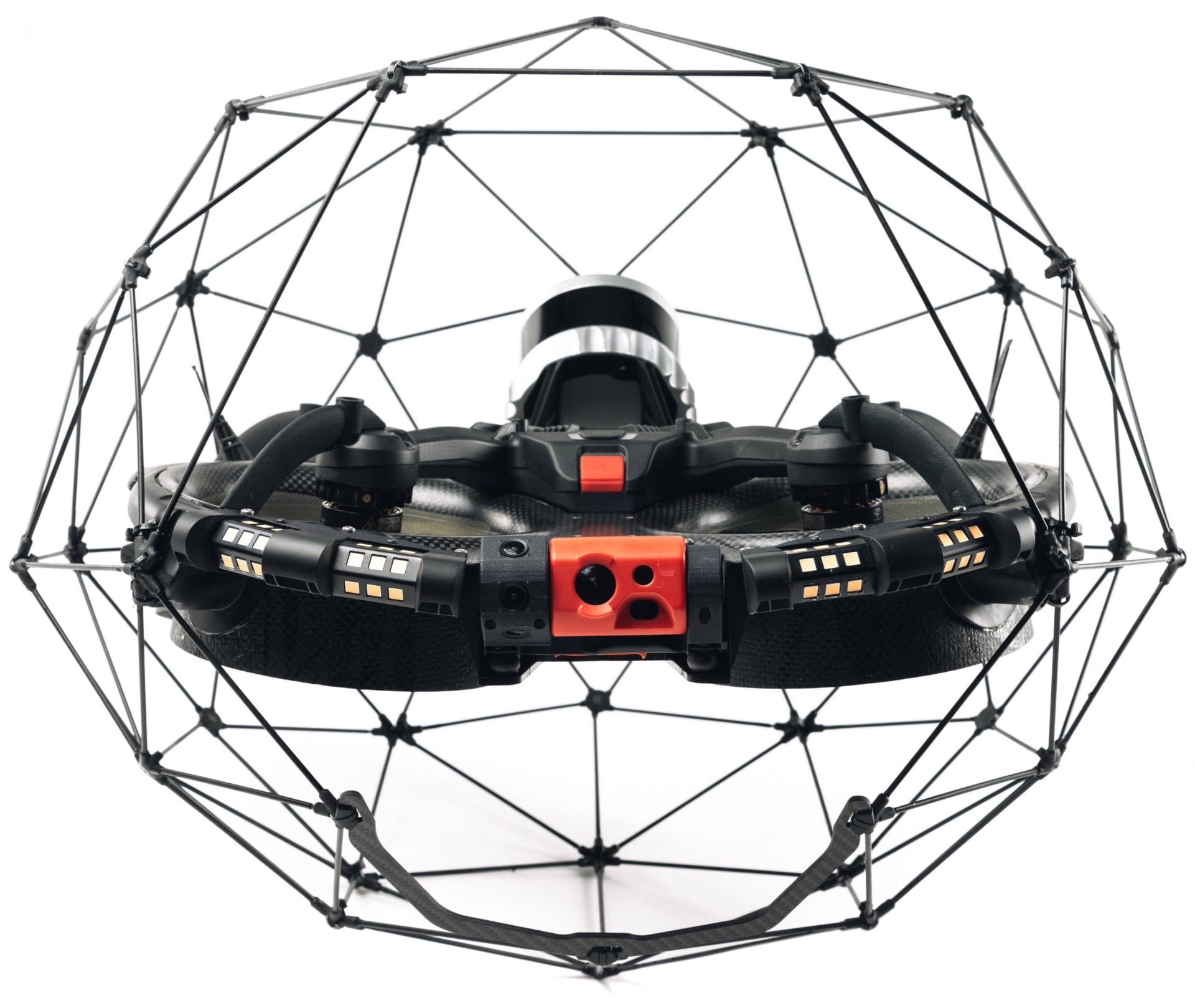
The Flyability ELIOS 3 – detects all 8 critical corrosion types, including in confined spaces, without human entry.
Each corrosion type has specific characteristics and requires targeted inspection. The ELIOS 3 covers the full spectrum: 4K imaging with 16,000-lumen LED, thermography and LiDAR 3D scanning – in tanks, boilers, reactors and shafts. For external inspections the DJI M30T with 200x zoom and infrared complements the system.
| Corrosion Type | Hazard Level | Visible from Outside? | ELIOS 3 Detection |
|---|---|---|---|
| Surface corrosion (Flächenkorrosion) | Medium | Well visible | 4K + LiDAR |
| Pitting (Lochfraßkorrosion) | Very high | Hard to detect | 4K (with good lighting) |
| Crevice corrosion (Spaltkorrosion) | High | Hidden | 4K + Thermography |
| Intergranular corrosion | Very high | Microscopic | 4K (welds) + Thermography |
| Stress corrosion cracking – SCC | Very high | Sudden failure | 4K + LiDAR (deformation) |
| Galvanic corrosion | High | Discoloration | 4K + Thermography |
| MIC (microbial) | High | Biofilms | 4K (biofilm visible) |
| Erosion corrosion | High | Material loss | 4K + LiDAR (wall thickness) |
1. Surface Corrosion (Flächenkorrosion) – The Most Common Threat
Surface corrosion attacks metal surfaces broadly and uniformly. This is the most widespread corrosion type, recognisable by typical rust formation and dull discolouration. It primarily affects unprotected steel structures and exposed pipework.
Critical areas:
- External steel structures
- Unprotected metal cladding
- Exposed pipeline systems
- Boiler outer walls and vessels
Effective prevention: Industrial protective coatings, galvanic treatment, corrosion-resistant materials, regular maintenance and cleaning.
Drone inspection with ELIOS 3: The ELIOS 3 detects early-stage surface corrosion through its 4K camera and 16,000-lumen LED lighting. Regular drone inspections document development via LiDAR 3D models, enabling timely protective measures.
2. Pitting Corrosion (Lochfraßkorrosion) – The Insidious Hazard
Pitting corrosion is one of the most dangerous corrosion forms. It develops locally and penetrates deep into the material – often undetected from outside. Stainless steel is particularly vulnerable when its protective layer is damaged.
Risk areas:
- Chemical plants with chloride exposure
- Process vessels with aggressive media
- Tanks in maritime industrial environments
- Heat exchangers and condensers
Prevention strategies: Corrosion-resistant coatings, sacrifice anodes, systematic monitoring of at-risk areas, media optimisation (pH value, chloride content).
Drone-based detection: The ELIOS 3 enables detailed inspection of tanks and vessels without human entry. Its 4K camera and specialised LED lighting make even the smallest pitting spots visible. LiDAR 3D surveying documents the size and depth of corrosion spots for precise damage documentation.
3. Crevice Corrosion (Spaltkorrosion) – Hidden Damage at Joints
Crevice corrosion develops insidiously in narrow gaps where lack of oxygen creates aggressive corrosion conditions. Especially critical at connection points and overlaps – barely visible from outside.
Risk zones:
- Bolted pipe connections
- Flange connections and gaskets
- Overlapping metal structures
- Sealing areas on vessels
Targeted prevention: Constructive avoidance of narrow crevices, special sealing materials, regular cleaning of gap spaces, complete sealing of connections.
Innovative inspection: The ELIOS 3 reaches even narrow spaces thanks to its compact design. The optional thermography camera identifies moisture accumulations – the main trigger for crevice corrosion. Precise LiDAR 3D mapping documents critical connection points for systematic monitoring.
4. Intergranular Corrosion – Danger in the Microstructure
Intergranular corrosion destroys metals along their grain boundaries, threatening structural integrity. This microscopic corrosion type is particularly treacherous as it is difficult to detect from outside. It frequently occurs at welds and heat-affected zones, especially with stainless steel and aluminium structures.
Main risks:
- Welds on stainless steel structures
- Heat-affected zones in tanks and boilers
- Heat-treated metal components
- Highly loaded aluminium structures
Prevention: Optimised heat treatment processes, stabilised steel alloys, regular non-destructive testing, avoidance of critical temperature zones.
Drone-based detection: The ELIOS 3 combines high-resolution 4K video with optional thermography for comprehensive inspection. Particularly at welds and heat-affected zones, precise imaging enables early damage detection. LiDAR 3D documentation tracks changes over time for targeted maintenance planning.
5. Stress Corrosion Cracking (Spannungsrisskorrosion / SpRK) – Stress Meets Corrosion
Stress corrosion cracking arises from the dangerous combination of mechanical stress and corrosive attack. This combination can lead to sudden material failure – especially critical at pressure vessels, autoclaves and loaded pipelines.
Vulnerable assets:
- High-pressure vessels and autoclaves
- Chemical process plants
- Loaded pipeline systems
- Load-bearing structures under stress
Prevention: Stress-optimised design, SCC-resistant materials, corrosion protection coatings, regular stress and crack testing.
Drone-based monitoring: The ELIOS 3 enables detailed crack inspection in high-risk areas without human entry. The LiDAR system creates precise 3D models for deformation analysis, while the 4K camera documents the finest cracks. Repeatable inspections track crack development for timely maintenance interventions.
6. Galvanic Corrosion (Galvanische Korrosion) – When Dissimilar Metals Meet
In moist environments, contact between different metals causes galvanic corrosion. The less noble metal becomes the “victim” – a process that can significantly damage industrial plants.
Critical combinations:
- Aluminium-steel connections
- Copper-zinc contacts
- Stainless steel to structural steel transitions
- Metallic flange connections
Protection strategies: Electrical insulation between metals, targeted installation of sacrifice anodes, coating of vulnerable contact points, avoidance of critical metal combinations.
Drone inspection: The ELIOS 3 identifies galvanic corrosion through the combination of visual imaging and optional thermography. At metal transitions especially, the 4K camera enables early damage detection. LiDAR 3D documentation tracks corrosion progression for targeted maintenance planning.
7. Microbiologically Influenced Corrosion (MIC) – Biological Attack
MIC arises from aggressive metabolic products of microorganisms. This biological corrosion type particularly threatens plants in moist environments and leads to localised, deep corrosion damage.
Main risk areas:
- Industrial water systems
- Tank farms and storage vessels
- Cooling water systems
- Areas with biofilm formation
Targeted prevention: Systematic cleaning programmes, biocide treatment of at-risk areas, antimicrobial coatings, regular biofilm monitoring.
Drone-based early detection: The ELIOS 3 detects typical MIC patterns such as biofilms and local corrosion through its 4K camera and specialised lighting. Even in hard-to-access tanks it enables regular inspections for biofilm monitoring. Systematic LiDAR documentation supports effective prevention strategies.
8. Erosion Corrosion (Erosionskorrosion) – The Destructive Double Effect
Erosion corrosion combines mechanical wear through flow with chemical attack. Particularly in high-velocity flow systems this combination leads to aggressive material removal at turbines, pumps and pipelines.
Vulnerable areas:
- Turbines and pump systems
- High-pressure pipelines
- Valves and control fittings
- Heat exchangers and cooling systems
Effective countermeasures: Flow-optimised design, wear-resistant coatings, velocity reduction at risk points, regular wall thickness measurement.
Drone-based inspection: The ELIOS 3 enables detailed inspections of pipe systems and turbine areas without disassembly. The 4K camera documents erosion damage precisely. LiDAR 3D surveying enables wall thickness analysis and deformation detection for targeted maintenance planning.
Conclusion: Systematic Corrosion Monitoring with the ELIOS 3
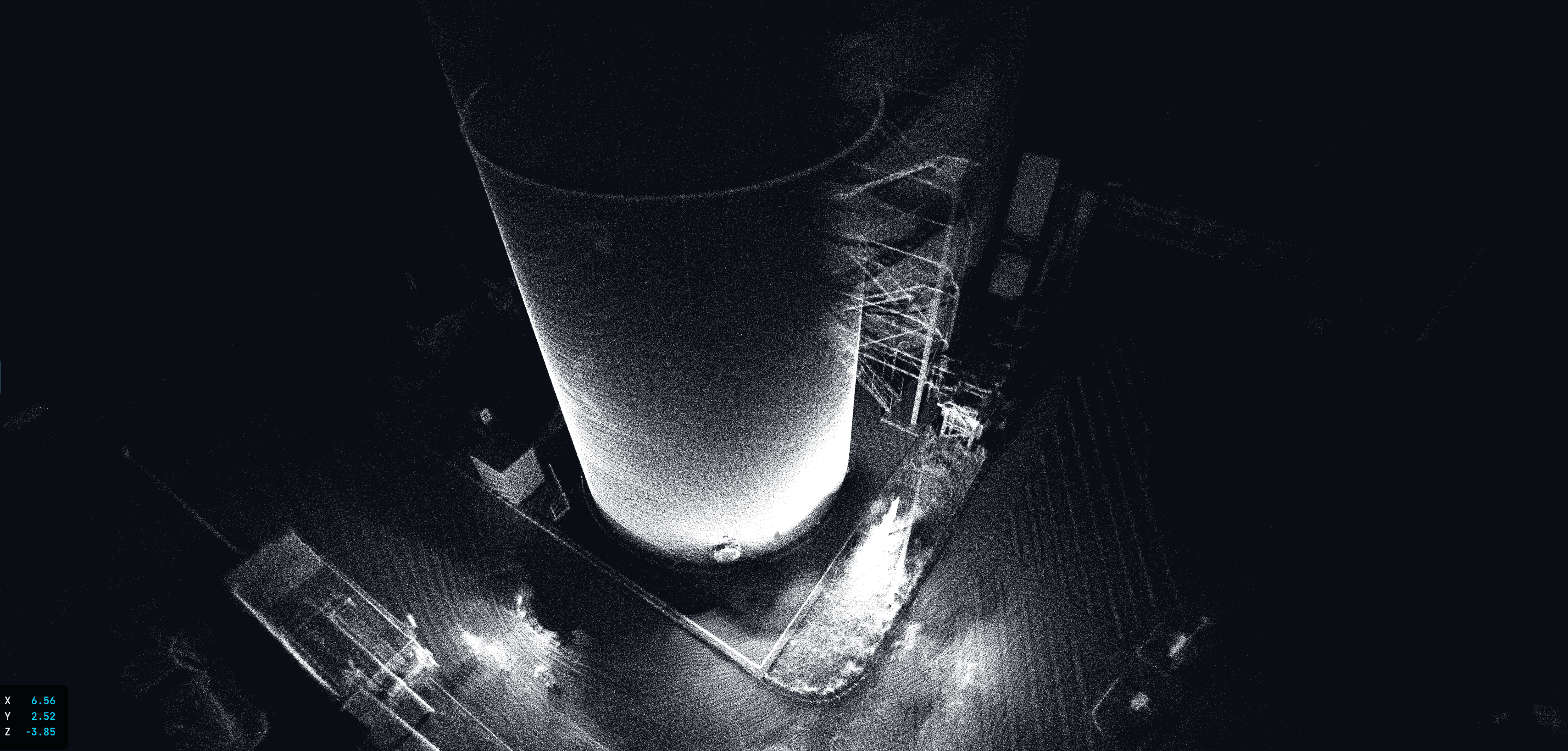
LiDAR 3D scan of an industrial tank – centimetre-accurate geometry for corrosion monitoring and damage documentation.
All eight corrosion types require systematic monitoring. The Flyability ELIOS 3 inspects even hard-to-reach areas without human entry – tanks, boilers, reactors and pipe systems. For external inspections the DJI M30T with 200x zoom and thermography complements the system.
Our expertise since 2017: Hundreds of inspected plants across Germany. We work closely with TÜV, Dekra and other inspection organisations.
Your Contacts for Corrosion Inspection
Dipl.-Ing. Karsten Lehrke and Christian Engelke – your direct contacts for corrosion inspection projects.
“Corrosion presents itself in many forms – from obvious surface corrosion to hidden stress corrosion cracking. The ELIOS 3 allows us to systematically monitor all 8 corrosion types – even in hard-to-reach areas that previously required enormous effort to inspect.”
— Dipl.-Ing. Karsten Lehrke, Project Manager, Kopterflug
Related Services
- Tank Inspection – Tanks and vessels checked for all corrosion types with drone technology.
- Chemical Industry – Corrosion monitoring in chemical plants with aggressive media.
- Oil & Gas Inspection – Corrosion detection in refineries, pipelines and petrochemical plants.
- Boiler Inspection – Boilers checked for corrosion, cracks and material fatigue by drone.
- Confined Spaces Inspection – Corrosion inspections in confined spaces without human entry.
- Industrial Drone Inspection – Comprehensive inspection of industrial plants for damage detection and prevention.
Frequently Asked Questions about Corrosion Types
How do you recognise the first signs of corrosion?
First signs are discolouration, rust spots, surface changes and material loss. The ELIOS 3 with its 4K camera and specialised lighting detects these early warning signals even in hard-to-reach areas such as tank roofs or boiler interiors.
Which parts of a plant are particularly vulnerable to corrosion?
Particularly vulnerable are: welds, transition zones between different materials, areas with standing water, crevices and connections, as well as areas under high mechanical or thermal stress. The ELIOS 3 reaches all these critical points without scaffolding or human entry.
How often should corrosion inspections be conducted?
Depending on the plant, medium and operating conditions, we recommend annual inspections for critical plants and every 2–3 years for non-critical ones. The ELIOS 3 enables more frequent inspections with minimal effort – so you can track corrosion development precisely.
What role does the environment play in corrosion?
Moisture, temperature, chlorides, pH value and oxygen content massively influence corrosion. Maritime environments, chemical processes and fluctuating temperatures accelerate corrosion. Regular drone inspections enable monitoring under all conditions.
How does corrosion detection by drone work?
The ELIOS 3 combines 4K imaging, LiDAR 3D surveying and optional thermography. The camera detects surface corrosion, LiDAR documents wall thickness changes, thermography reveals hidden moisture. All data is documented in a detailed inspection report.
What does neglecting corrosion protection cost?
Corrosion causes billions in damage annually: unplanned downtime, production losses, expensive emergency repairs, environmental damage and safety risks. Regular ELIOS 3 inspections (up to 80% cheaper than conventional methods) prevent these costs through early detection.
Which corrosion types are most dangerous?
Particularly dangerous are: pitting (deep, hard to detect), stress corrosion cracking (sudden failure), MIC (biological, rapid progression) and crevice corrosion (hidden). The ELIOS 3 detects all these types through its multi-sensor technology.
How is a corrosion report created?
After the ELIOS 3 inspection you receive: 4K videos, high-resolution photos, LiDAR 3D point clouds, optional thermography and a detailed report with damage documentation, classification of corrosion types and a systematic finding overview.
How do drones complement conventional inspection methods?
The ELIOS 3 enables visual inspection (VT) without human entry. It complements other NDT methods such as UT (ultrasound), MT (magnetic particle) or PT (penetrant testing) perfectly. For comprehensive corrosion assessment we often combine multiple methods.
What preventive measures protect against corrosion?
Effective measures include: high-quality coatings, cathodic corrosion protection, material selection, constructive measures and above all: regular inspections for early detection. The ELIOS 3 enables systematic monitoring without extensive preparation.
Get in Touch
Have questions about corrosion inspection or need a quote for your plant? Fill out the form below and we’ll get back to you within 24 hours.