
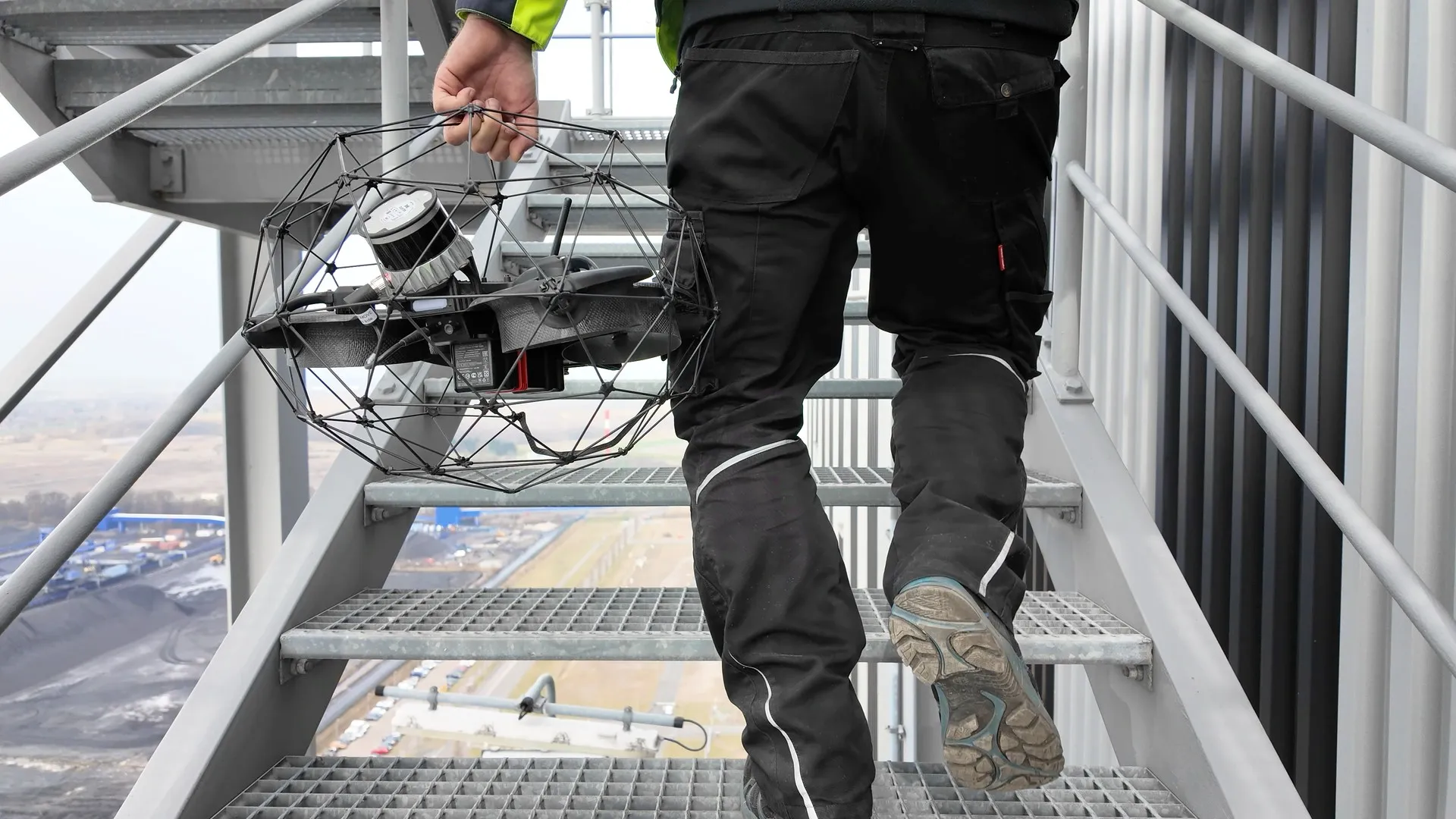
Cost-Benefit Analysis: Drone Inspection vs. Conventional Methods
What you save – and what you get in return. An honest analysis without marketing promises. Based on real project experience since 2017.
Where the Real Costs Lie
The actual inspection (inspector looks around) is only a fraction of total costs. The lion’s share lies in access technology (scaffolding, rope access), safety measures (DGUV, rescue chain) and downtime (production loss). These are precisely the three items that disappear entirely or partially with the drone.
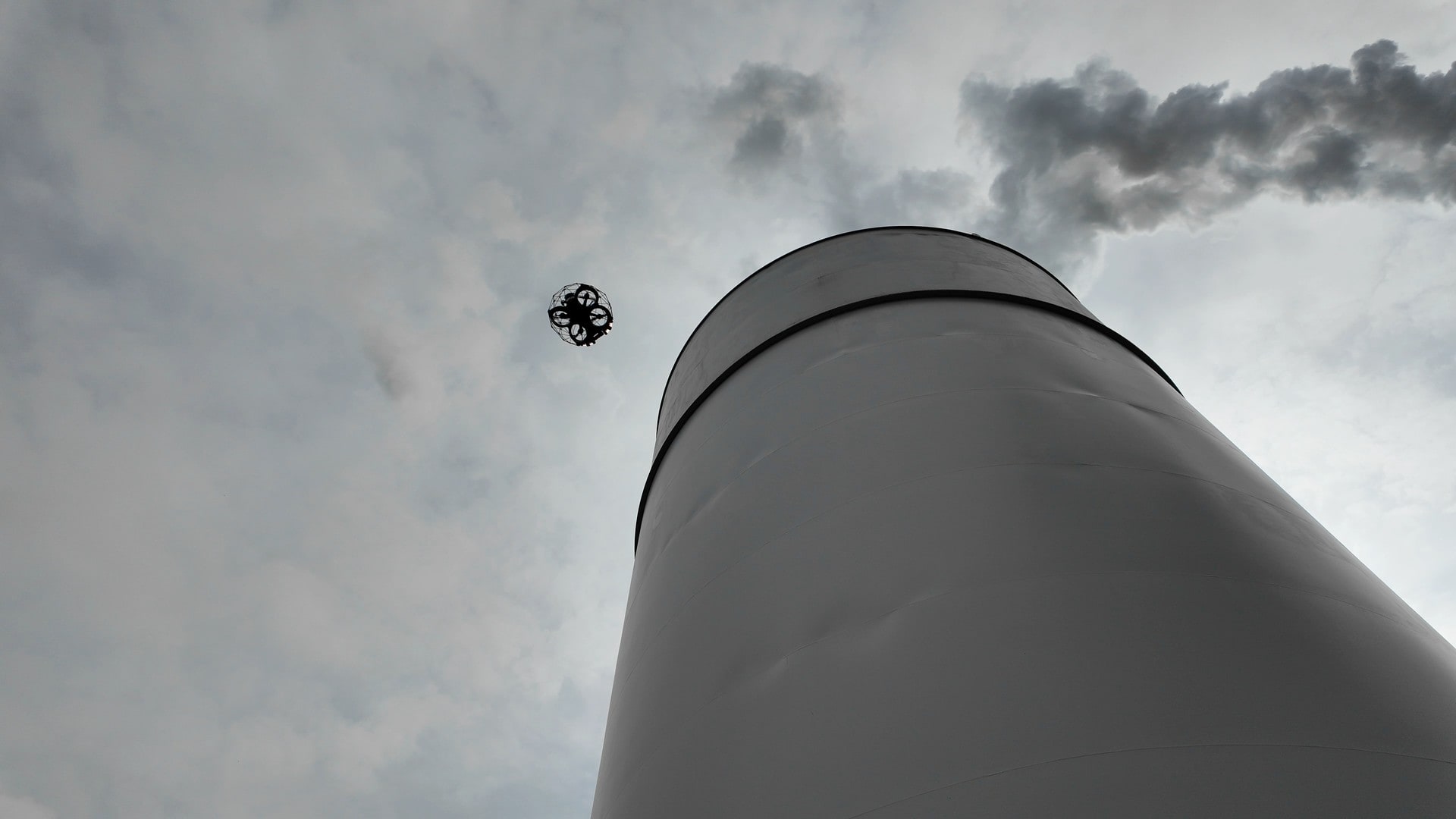
Drone inspection instead of scaffolding – the biggest cost lever.
We do not quote concrete prices – this is a project business. Instead, we show the time structures and where the levers lie.
Conventional vs. Drone: What Disappears, What Remains
The biggest cost drivers of conventional inspection (scaffolding, downtime, safety measures) disappear entirely or partially with the drone.

Drone: Eliminated entirely. Access via manhole is sufficient.

Drone: Gas measurement remains mandatory. No personnel entry = no DGUV confined space effort.
Drone: Hours to a few days. No scaffolding, no personnel entry.

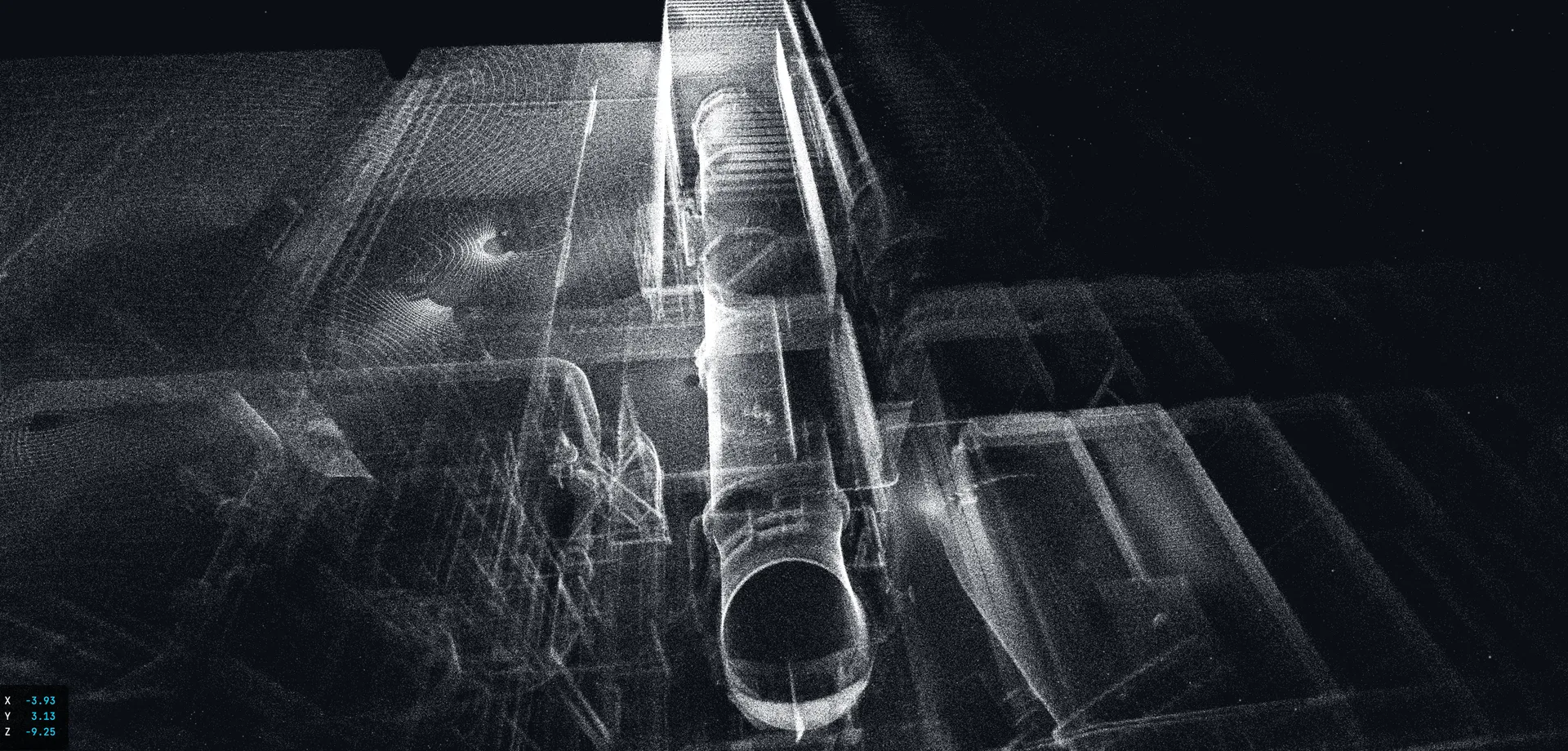
Drone: 4K video, 3D model, thermography – automatic and complete.
Time Comparison: 4 Typical Scenarios
The saving primarily lies in scaffolding (eliminated) and downtime (weeks → days). The actual inspection service is secondary.
| Scenario | Conventional | Drone | Key Benefits |
|---|---|---|---|
| Storage Tank (Ø15m, H12m) Routine internal inspection, steel, heating oil |
2–3 weeks downtime | 2–3 days downtime | No scaffolding; no personnel entry; UT only where needed |
| Water-Tube Boiler (H25m, 8 levels) Revision inspection, heating surfaces and refractory |
3–4 weeks downtime | 1–2 weeks downtime | 75% less scaffolding; scaffolding only at hot spots; thermography across all levels |
| Industrial Chimney (H80m) Internal inspection: lining, tie rods, condensate zones |
3–5 days to weeks | A few hours | No rope access/scaffolding; 100% coverage instead of spot check; thermography over full height |
| Maritime Ballast Tanks Class survey, 10–20 tanks per vessel |
Days to weeks per tank | Hours per tank | No scaffolding/rafting; drastically shorter drydock time; ship back in service faster |
Hidden Cost Drivers Often Overlooked
Cost comparisons often only consider direct costs (scaffolding vs. drone). But there are hidden cost drivers that make the difference even more pronounced:


When the Drone is NOT the Cheaper Option
Honesty is important to us. There are scenarios where the drone offers no cost advantage or is even more expensive:





Our approach: we will honestly tell you whether the drone is the right approach for your case. If not, we will recommend the better alternative.
Expert Opinion
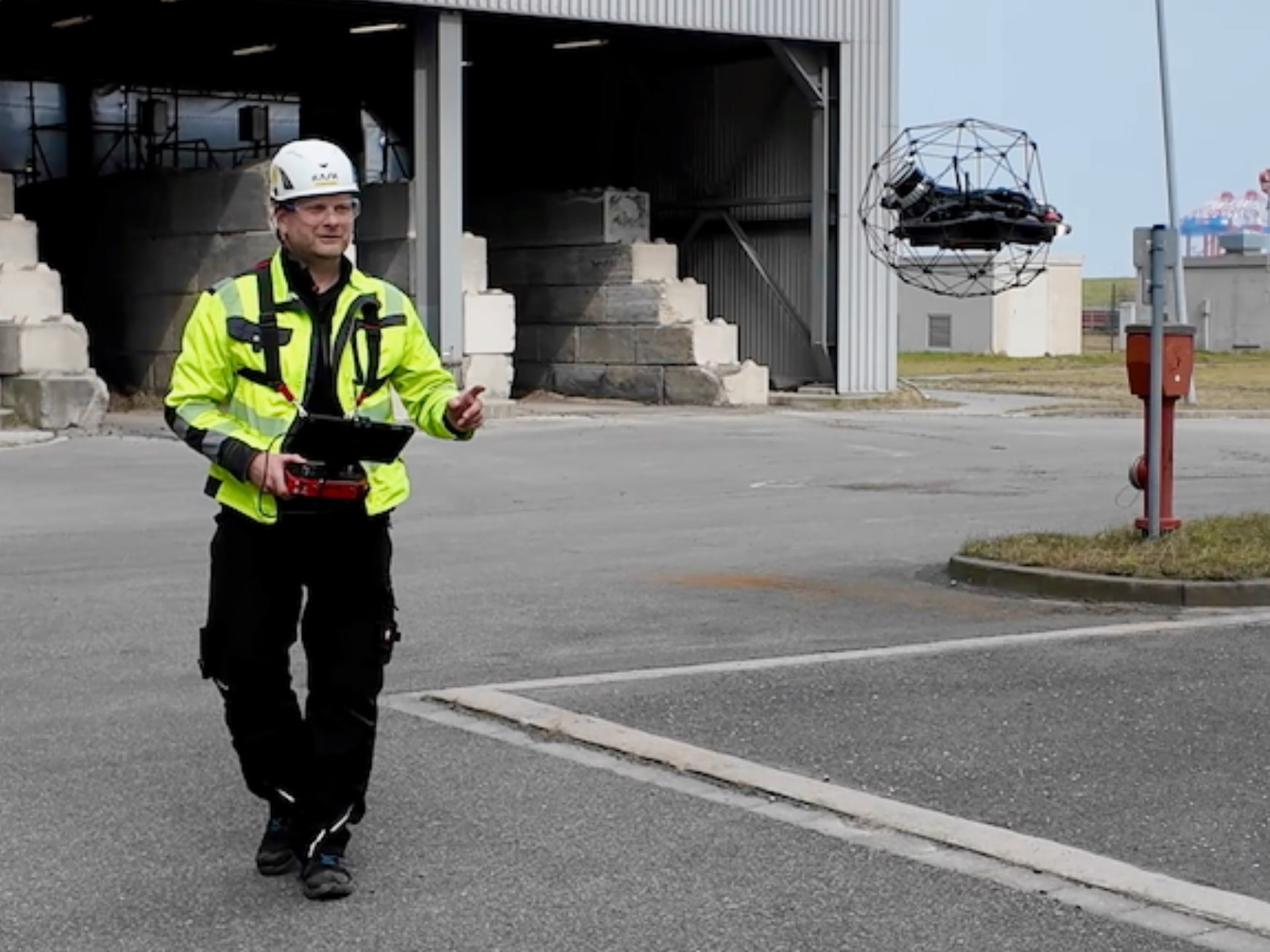
“The biggest saving is not in the inspection service itself – but in the scaffolding that is not erected, and the downtime that takes weeks instead of days. When we deliver the same data by drone in 2 hours that would classically require 2 weeks of preparation, the numbers add up immediately.”
Christian Engelke
Founder, Drone Pilot / Confined Spaces since 2017
Related Services





Frequently Asked Questions
What does a drone inspection cost?
This depends on plant type, size, inspection scope and required payloads (4K, thermography, LiDAR). We provide project-specific quotations after a free feasibility check. What we can say: in the vast majority of cases the drone is cheaper than the scaffolding – and delivers more data at the same time.
How quickly does drone deployment pay for itself?
For plants that conventionally require scaffolding: often on the first deployment. The savings on scaffolding alone frequently exceed the costs of the drone inspection in many cases. Add to this the shorter downtime. For regular inspections (turnarounds, revisions), the effect multiplies.
Are there funding opportunities for drone inspections?
In some cases, investments in innovative inspection technologies may be supported through funding programmes (e.g. digitalisation, occupational safety). This depends on the federal state and sector. We cannot provide funding advice, but recommend contacting the local Chamber of Commerce (IHK) or regional funding agencies.
Are data evaluation costs charged separately?
As a rule, standard evaluation (4K video review, 3D model generation, defect identification) is included in the inspection package. More detailed analyses (precise surveying, CAD export, damage progression tracking) may incur additional charges depending on scope. We state this transparently in the quotation.
How do I compare quotes from different drone service providers?
Look for: which payloads are included (4K only, or also thermography + LiDAR)? Is evaluation included? Which data formats do you receive? Do you get a complete inspection report or just raw video? How much experience does the team have in confined spaces? The cheapest drone is worthless if the data is not suitable for inspection authorities.
Free Cost Comparison for Your Plant
Send us your plant data and current inspection effort – we will provide a non-binding assessment of where the drone saves costs for you and where it does not.