Note: Regulations and standards mentioned on this page (e.g. BetrSichV, DGUV, API 653) refer to German and European frameworks. We are happy to discuss how these relate to your local requirements.
What Does a Drone Inspection Cost? – Price Factors, Comparisons & Savings Potential
Price factors, cost comparisons and savings potential – an honest guide for decision-makers. Operating since 2017.
60–90% cheaper than scaffolding, rope access or personnel entry
6 key price factors explained
When drone inspection does NOT pay off – we say this openly
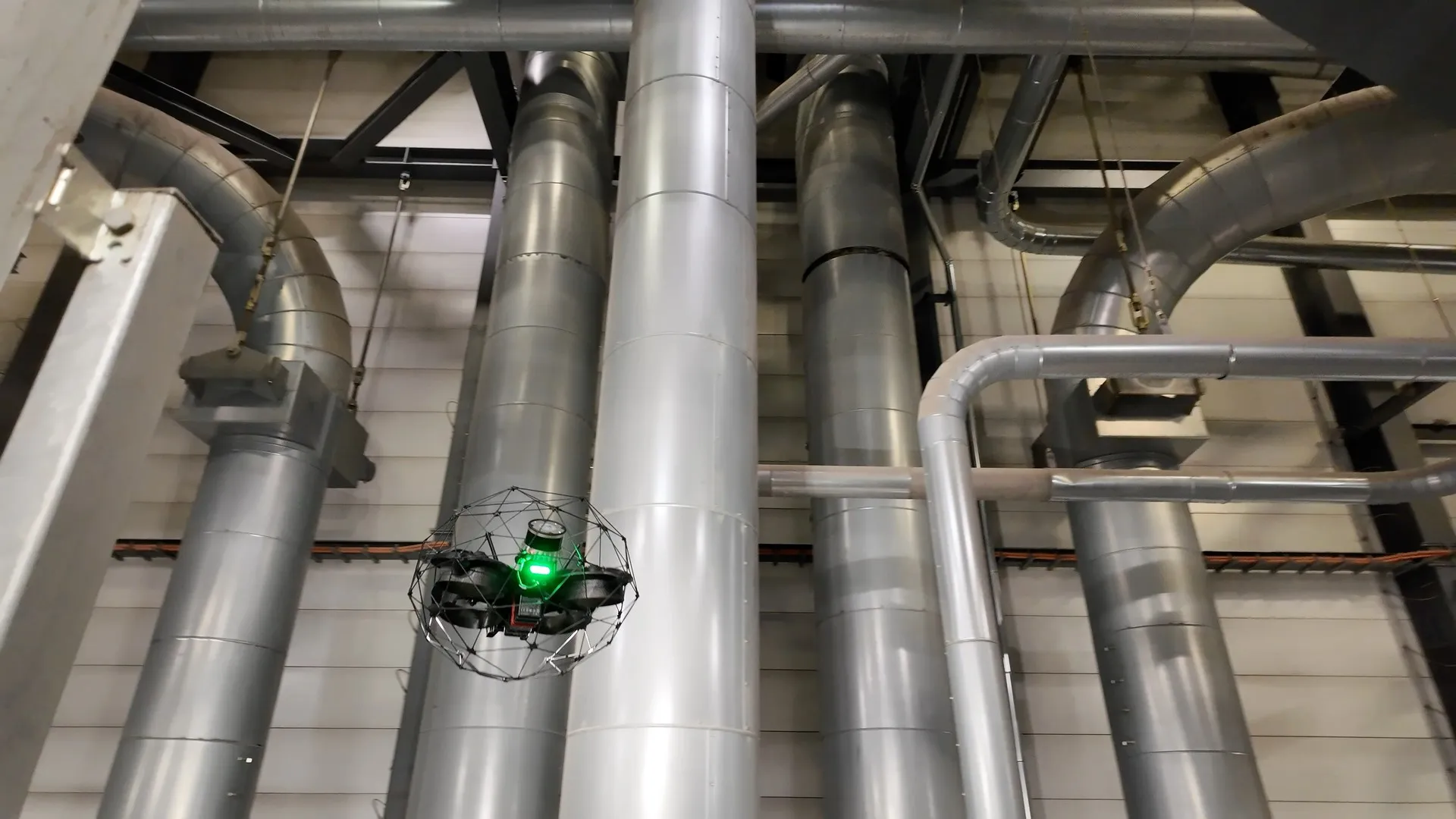
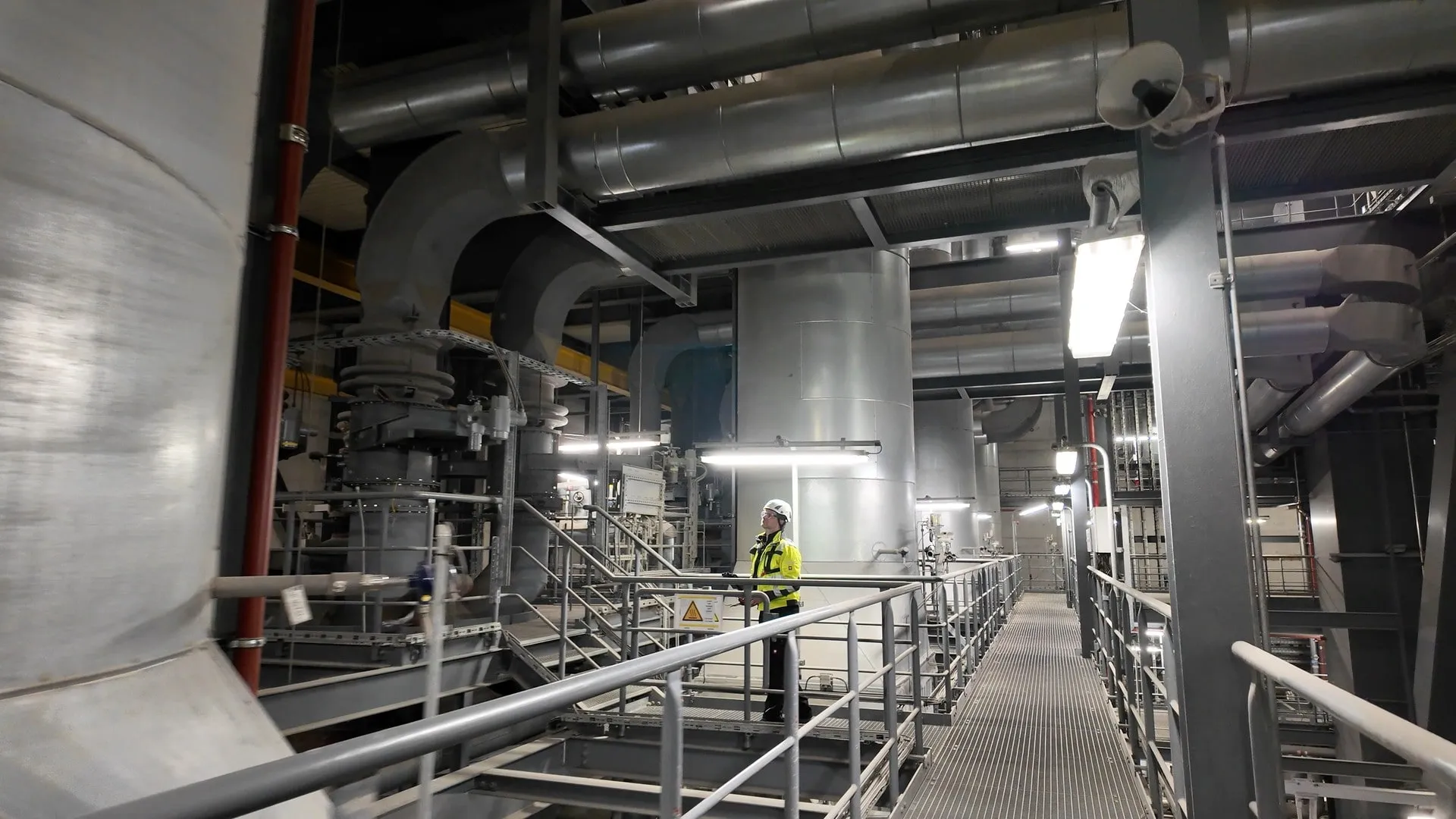
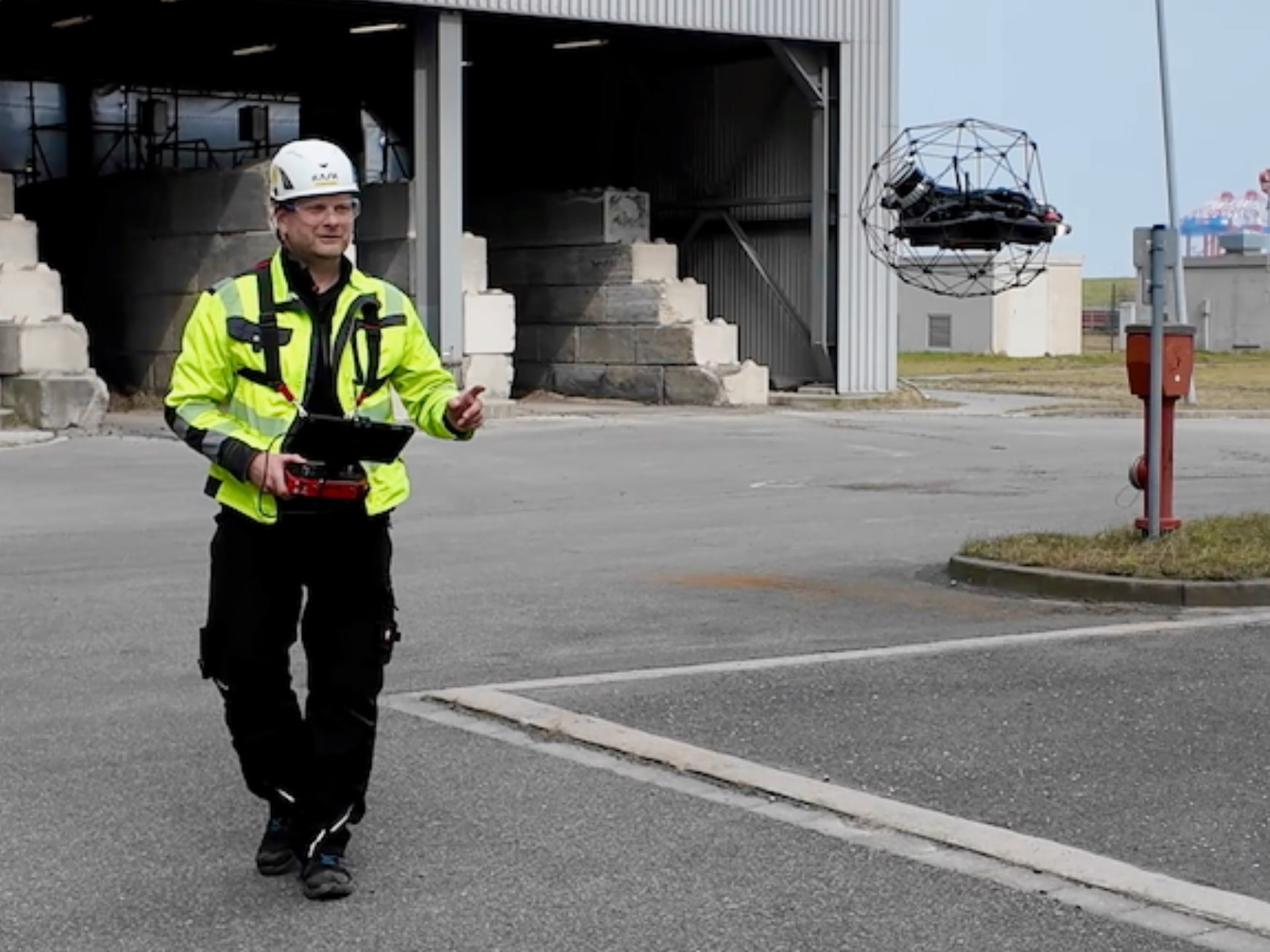
The ELIOS 3 during inspection – no scaffolding, no shutdown.
The question about drone inspection costs is the most frequent one we hear – and it is absolutely justified. Investment decisions in industry require cost transparency. At the same time, the answer is rarely a simple number: costs depend on the plant, the inspection scope and the boundary conditions.
What we can say clearly: in most cases drone-assisted inspection is significantly cheaper than the conventional alternative – scaffolding, industrial climbers or personnel entry under DGUV. The real cost advantage lies not only in the inspection price itself, but in saved ancillary costs: shorter shutdowns, less safety overhead, faster results.
This article gives you a realistic perspective: what determines the price? Where are the greatest savings potentials? And when does drone inspection NOT make sense?
The 6 Most Important Price Factors
The price of a drone inspection is determined by several factors. No two deployments are alike – but these six parameters have the greatest influence on the quote.
Plant Size and ComplexityA single storage tank is different from an intricately built boiler with internals. The larger and more complex the plant, the more flight time, planning and data evaluation is required.
Number of Flights and Inspection PointsAn overview inspection with one flight is quickly done. A detailed inspection with multiple perspectives and systematic coverage of all surfaces requires multiple flights – and thus more time on site.
Sensor Technology: 4K, Thermography, LiDARPurely visual inspection (4K camera) is the base case. Adding thermography (e.g. for CUI screening) increases effort in preparation and evaluation. LiDAR 3D scans for digital twins mean additional data processing.
Travel and LogisticsOur base is Bremen. Deployments in northern Germany are logistically simpler than projects in southern Germany or abroad. For larger projects or framework agreements, the travel component diminishes significantly.
Documentation ScopeA brief inspection report with key findings is standard. A complete findings report with georeferenced damage images, 3D model, thermography evaluation and recommended actions requires significantly more post-processing time.
Accessibility and Safety OverheadIs gas-free measurement required? Are special safety briefings or PPE required? Are there access restrictions or waiting times? These factors affect on-site time – and thus the price.
Cost Comparison: Drone vs. Conventional Methods
The real value of drone inspection shows itself in comparison. The following comparisons are based on our experience from over 500 deployments since 2017 – not theory, but practice.
vs. Scaffolding (Gerüstbau)Scaffolding is the biggest cost driver in conventional inspections. Erection, standby, dismantling – takes days to weeks and costs often a multiple of the actual inspection. Typical savings: factor 5–10. For large tanks or high halls, scaffolding alone can reach five-figure sums – the drone does the inspection in hours.
vs. Industrial Climbers (Industriekletterer)Industrial climbers are more flexible than scaffolding, but expensive to employ and limited in documentation quality. The drone delivers more systematic data (4K video, thermography, LiDAR). Typical savings: factor 3–5.
vs. Elevated Work Platforms (Hubsteiger)Elevated work platforms require hard-standing surfaces, minimum space requirements and have reach limitations. Hire plus personnel plus transport costs add up quickly. The drone is ready in 15 minutes. Typical savings: factor 3–8, depending on height and accessibility.
vs. Personnel Entry (DGUV)Personnel entry into confined spaces per DGUV Rule 113-004 requires gas measurement, safety watchman, rescue concept, medical fitness (G26) and extensive documentation. The preparation alone can exceed the actual inspection effort. Typical savings: 70–90% – plus the eliminated personnel risk.
Typical Cost Ranges by Inspection Type
Every plant is different – relative savings compared to conventional methods vary by asset type.
Storage Tanks (Interior)Here the cost advantage is greatest. Classic: emptying, cleaning, scaffolding, personnel entry per DGUV – a project over days to weeks. With drone: inspection of interior walls, roof underside and floor in a few hours. Savings typically 70–90% vs. the full package.
Boilers and Steam Generators (Kessel und Dampferzeuger)Tight accesses, high temperatures (after cooling), complex geometries. The drone primarily saves set-up times and reduces shutdown. Typically factor 3–6 cheaper than scaffolding inspection with personnel entry.
Chimneys (Schornsteine und Kamine)Interior inspection classically only possible with industrial climbers or abseiling personnel. The drone inspects inside and outside. Typically factor 5–10 cheaper, especially at great heights.
Pipe Bridges and Pipelines (Rohrbrücken und Rohrleitungen)Kilometres of pipe bridges classically require extensive walk-over with elevated work platforms. The drone systematically overflies and documents CUI suspicion via thermography. Typically factor 5–8 cheaper with significantly better area coverage.
Halls and Roof Structures (Hallen und Dachkonstruktionen)Roof trusses, trapezoidal sheets, ventilation ducts – often only reachable with elevated work platform or scaffolding. The drone documents overall condition in one overflight. Typically factor 3–5 cheaper.
Ballast Tanks and Cargo Holds (Ballasttanks und Laderäume)Classically require rafting systems or full scaffolding inside the tank interior – extremely cost-intensive. The drone reduces effort massively. Typically factor 8–15 cheaper, with simultaneously higher coverage.
The Hidden Costs of Conventional Inspection
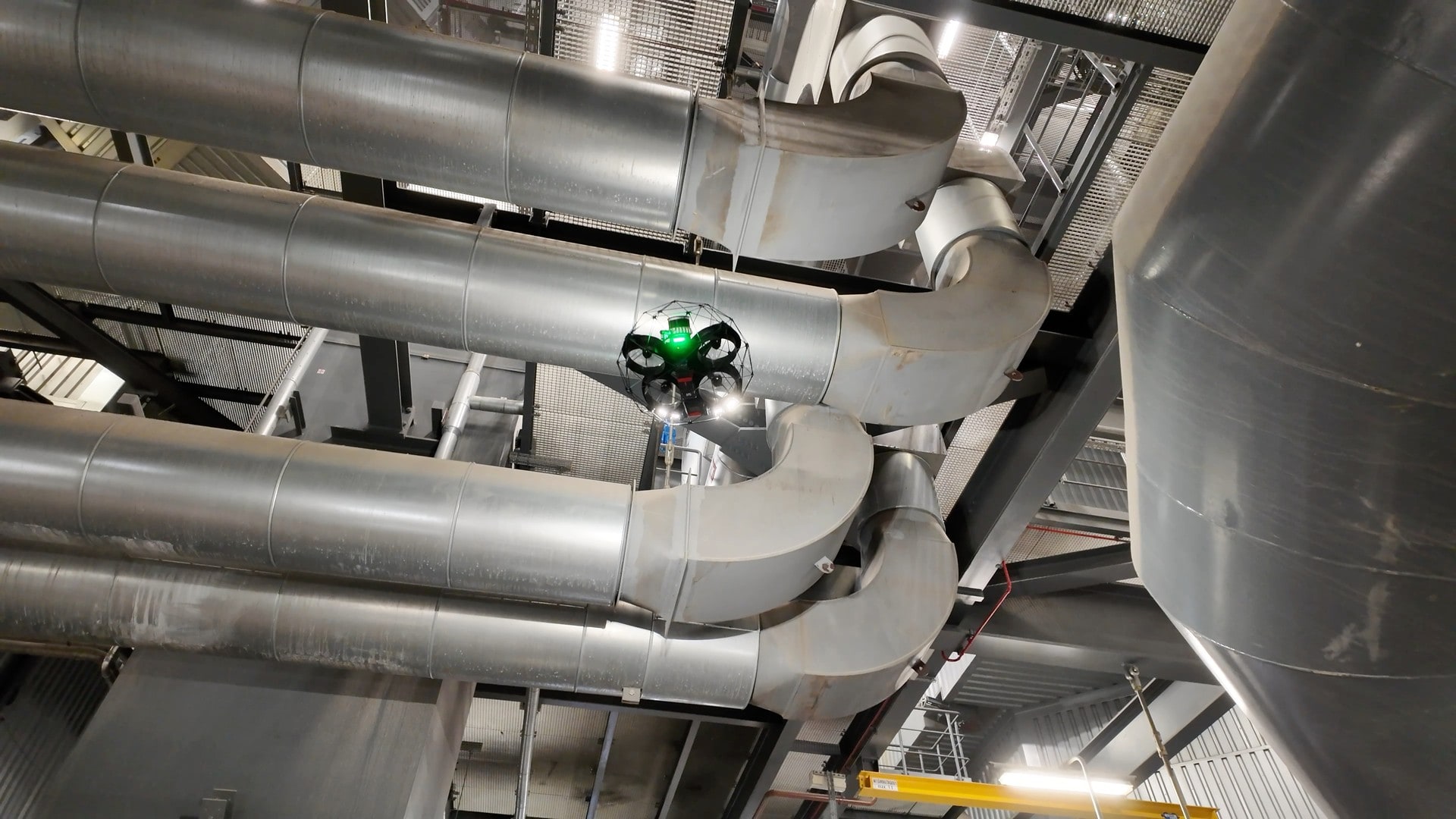
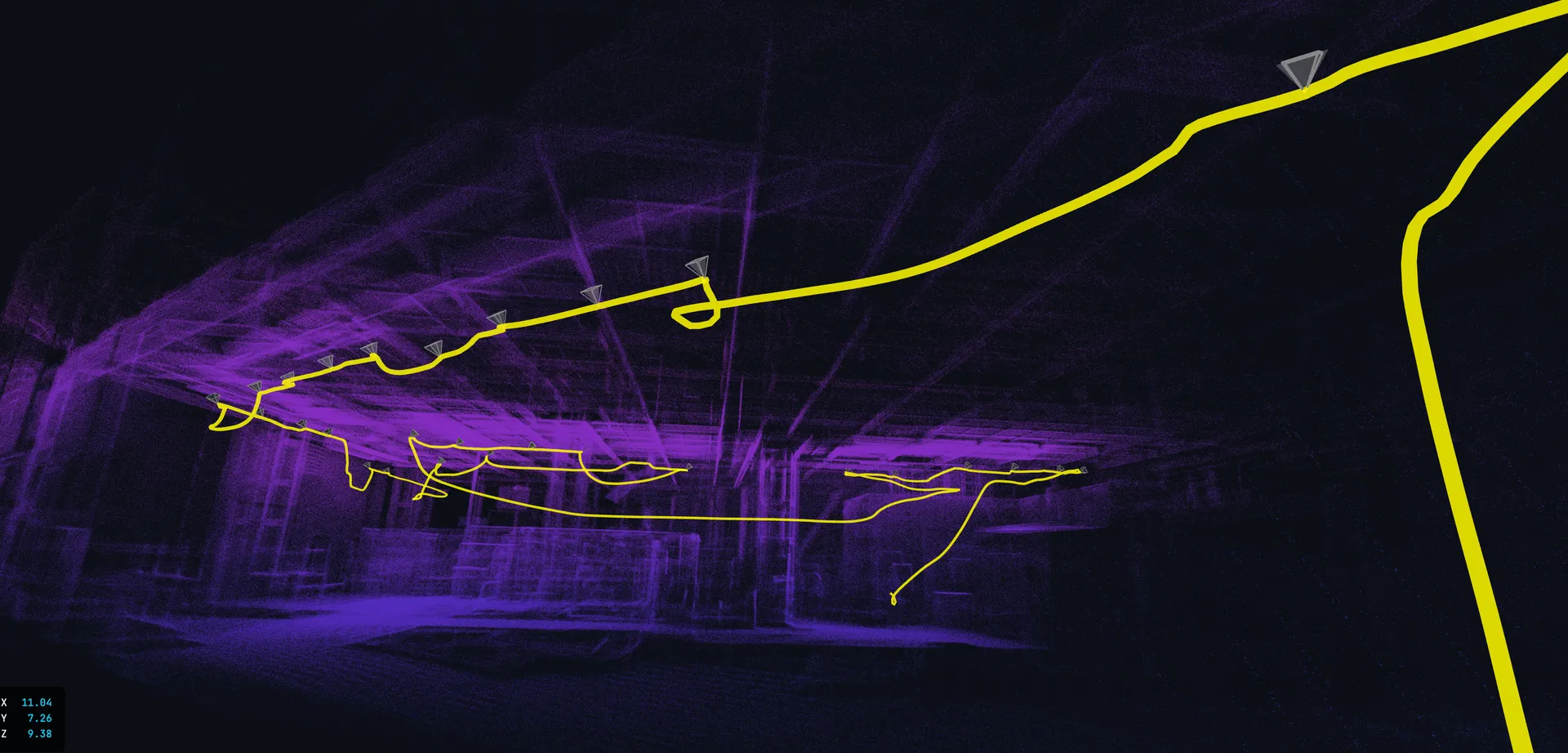
LiDAR documentation of a hall ceiling – comprehensive and without scaffolding overhead.
In cost comparisons, usually only the direct inspection price is considered. The actual total costs of a conventional inspection are often significantly higher – through factors that do not appear in the inspection service provider’s quotation.
Downtime / Production Loss (Stillstandkosten)Every day a plant stands still for an inspection costs money – often five- to six-figure amounts per day. Drone inspection drastically shortens downtime: what takes days with conventional methods is done in hours. In many cases inspection can even occur during live operation.
Preparation Overhead and PlanningScaffolding must be planned, commissioned and coordinated. Entry permits per DGUV require risk assessments, rescue concepts and medical examinations. This planning overhead ties up internal resources for weeks – with drone inspection, preparation reduces to a minimum.
Safety Measures and SecuringPersonnel entry into confined spaces requires safety watchmen, respiratory protection, rescue equipment and trained personnel. These costs rarely appear in the inspection quotation – they fall on the operator. The drone eliminates the personnel risk and thus the bulk of these expenditures.
Post-Processing and DocumentationConventional inspections often deliver handwritten notes, individual photos without context and verbal reports. The drone’s digital documentation (4K video, georeferenced images, 3D models) is not only higher quality – it saves time in post-processing and delivers a solid database for follow-up decisions.
When Drone Inspection Does NOT Pay Off
Honesty is part of our business model. There are situations where drone inspection is not the most economical solution – and we say this openly.
Very Small, Easily Accessible PlantIf a vessel is easily reachable by ladder and the inspection can be done in 30 minutes by visual check, drone deployment is not more economical. Mobilising a specialised drone team has a minimum cost threshold.
Purely Tactile Testing Methods RequiredIf exclusively wall thickness measurements (UT), hardness tests or material samples are required, the drone alone is insufficient. In these cases we recommend a hybrid inspection: the drone locates and prioritises – the tester measures precisely on site.
One-Off Inspection of Very Near SurfacesIf a single, easily reachable weld at 2 metres height is to be tested, a technician with a ladder is faster and cheaper. The drone plays to its strengths with hard-to-access, large-area or repeated inspections.
ATEX Zones Without Gas-Free ClearanceIn potentially explosive areas without confirmed gas-free clearance, the ELIOS 3 cannot be deployed. The drone is not ATEX-certified – the boundary conditions must first be established.
Conclusion: Why the ROI is Usually Clear
In the vast majority of industrial deployment scenarios, drone inspection is not only cheaper – it delivers better data in less time at lower risk. The return on investment results from the sum of advantages:
70–90% Lower Inspection CostsCompared to the total package of scaffolding, safety measures and personnel entry, drone inspection is drastically cheaper in most scenarios.
Minimal Downtime (Stillstandszeiten)Hours instead of days. In many cases inspection during live operation is possible – the single largest cost factor disappears entirely.
Superior Documentation Quality4K video, thermography, LiDAR 3D models – a database that manual inspection cannot deliver. This saves follow-up costs and improves decisions.
No Personnel RiskZero human entry in confined spaces. No safety risk, no DGUV entry process, no occupational health examinations – this is not a cost factor, it is a value factor.
Reproducible ResultsStandardised flight paths and digital documentation enable reliable comparisons over time – damage progression monitoring instead of a snapshot.
“The honest answer to the question ‘What does a drone inspection cost?’ is: significantly less than the alternative – and it delivers more.”
Talk Directly to Our Team
We regularly see clients calculate their actual total inspection costs for the first time – shutdown, scaffolding, safety, post-processing. When these figures are laid out transparently side by side, the decision for the drone is clear in 90% of cases. For the other 10% we say that openly.
Frequently Asked Questions: Costs of Drone Inspection
Is there a flat rate for a drone inspection?
No – and this is no different for conventional inspection methods either. The price depends on plant size, complexity, desired sensor technology and documentation scope. What we offer: after a brief preliminary discussion with plant details we prepare a transparent quote – as a rule within 48 hours.
How much do I concretely save compared to a scaffolding inspection?
In most cases the total costs of drone inspection are 10–30% of the conventional alternative with scaffolding. The exact factor depends on the plant: for large tanks with complex scaffolding the saving is greatest (factor 8–15), for smaller vessels somewhat less (factor 3–5). The decisive point is to compare total costs – including downtime, safety and preparation.
Is drone inspection also worthwhile for small plants?
It depends on the individual case. Mobilising a specialised drone team has a minimum cost threshold. For very small, easily accessible vessels, conventional visual inspection may be more economical. For hard-to-access plants – even small ones – the drone is almost always worthwhile. We advise you honestly on whether the deployment makes sense in your case.
Are the results of a drone inspection accepted by inspection bodies?
Yes. Our inspection reports are accepted by inspection bodies (TÜV, DEKRA etc.), insurers and authorities as a documentation basis. The 4K recordings, thermography data and LiDAR 3D models deliver a documentation quality that manual inspections as a rule do not achieve.
How quickly does drone inspection amortise?
Immediately – because you commission a service, not an investment. You do not buy a drone, you book a specialised inspection service provider. The cost saving compared to the conventional method takes effect from the first deployment. With framework agreements for regular inspections, the terms improve additionally.
Professional inspection with the ELIOS 3 — available nationwide across Germany. Request a consultation
Request a Cost Comparison for Your Asset
Send us your plant details – we prepare a transparent comparison for you: drone vs. conventional inspection. Honest, no obligation and as a rule within 48 hours.











 Christian Engelke
Managing Director & Chief Pilot
Christian Engelke
Managing Director & Chief Pilot
 Karsten Lehrke
Dipl.-Ing., Senior Inspector
Karsten Lehrke
Dipl.-Ing., Senior Inspector
 Philipp
Drone Pilot & Inspector
Philipp
Drone Pilot & Inspector
 Juliana
Project Coordination
Juliana
Project Coordination
 Stephan
Drone Pilot & Inspector
Stephan
Drone Pilot & Inspector