
ELIOS 3 in Power Plants: Boilers, Chimneys and Flue Gas Ducts
GPS-free navigation, collision-safe cage, 4K camera and LiDAR – technology, inspection areas and practical limits explained. Kopterflug has been deploying the ELIOS 3 in power plants since 2017.
The Challenge: Power Plant Inspections
Power plant inspections are among the most complex maintenance activities. Classically: weeks of cool-down, scaffolding erection inside the boiler, human entry with DGUV confined space procedure, long production shutdown. Superheaters, economisers and flue gas ducts are often barely reachable.
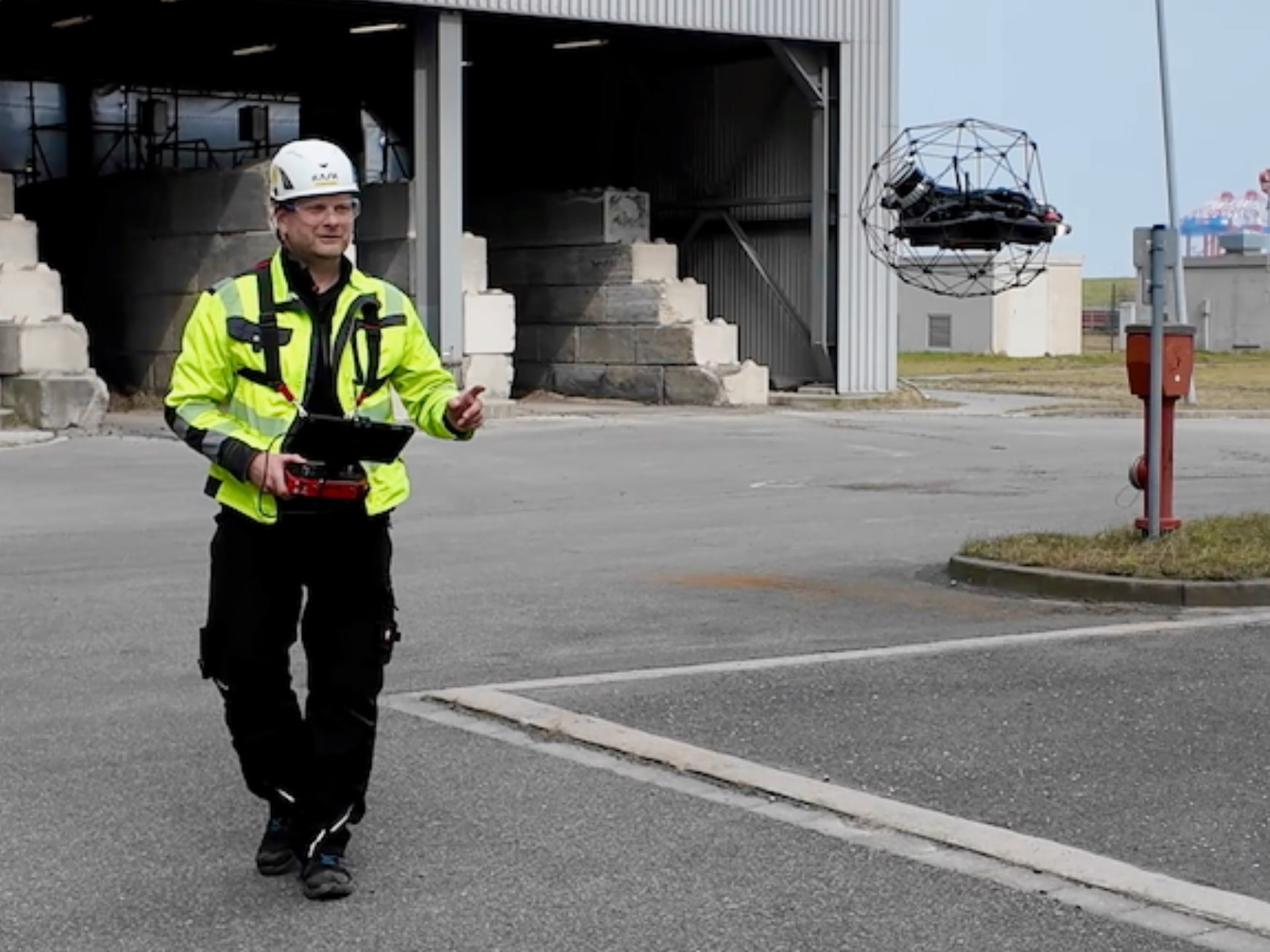
The solution: Flyability ELIOS 3. The ELIOS 3 inspects boilers, chimneys and flue gas ducts without scaffolding and without human entry. The plant must be cooled to ambient temperature – the cool-down time is comparable to what is required for human entry anyway.
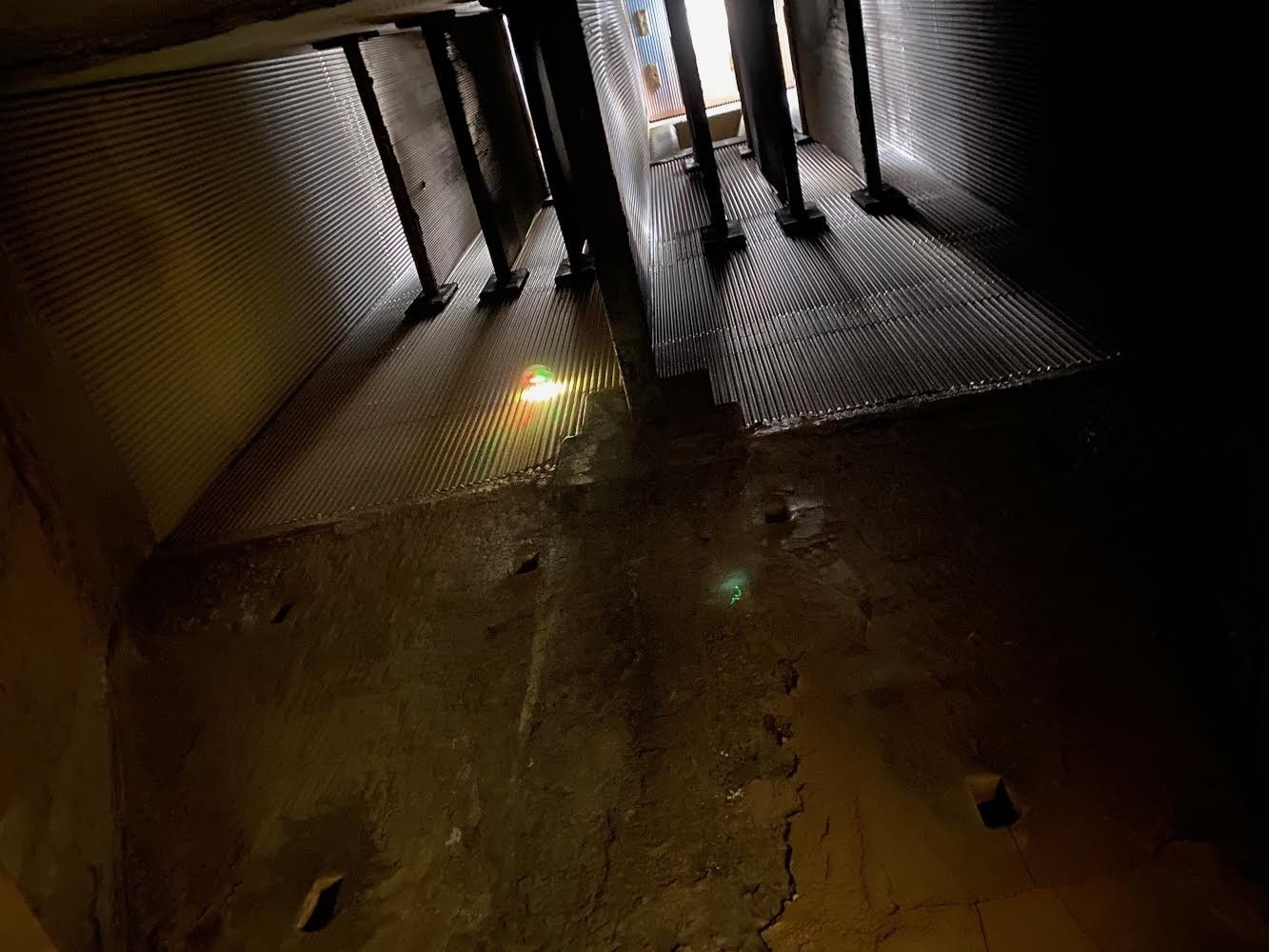
Practical note: in the combustion chamber, deposits and slagging are often the actual problem – the structural substance is frequently more intact than expected. 4K camera, LiDAR and optional thermography deliver reliable data in hours rather than weeks.
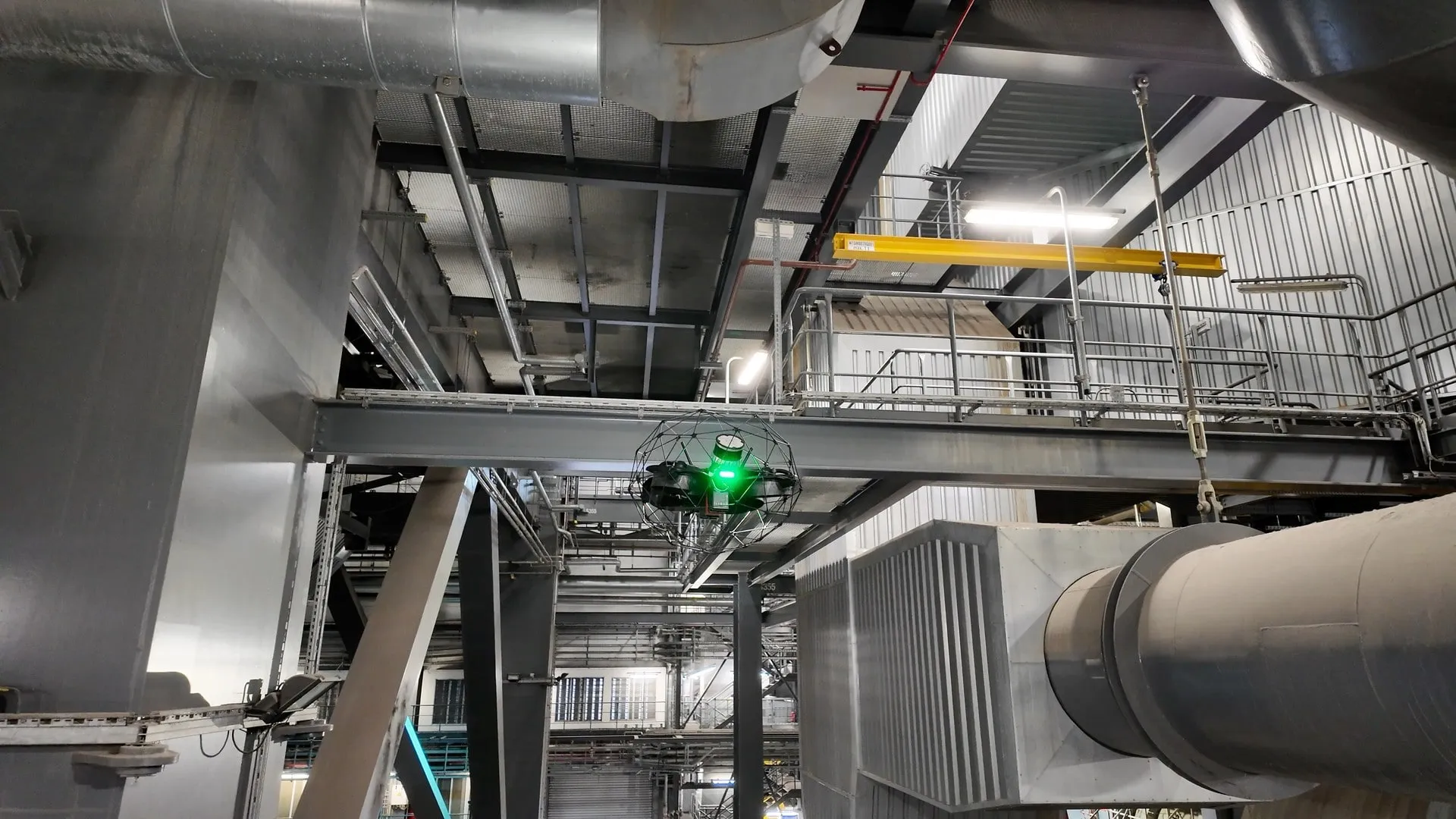
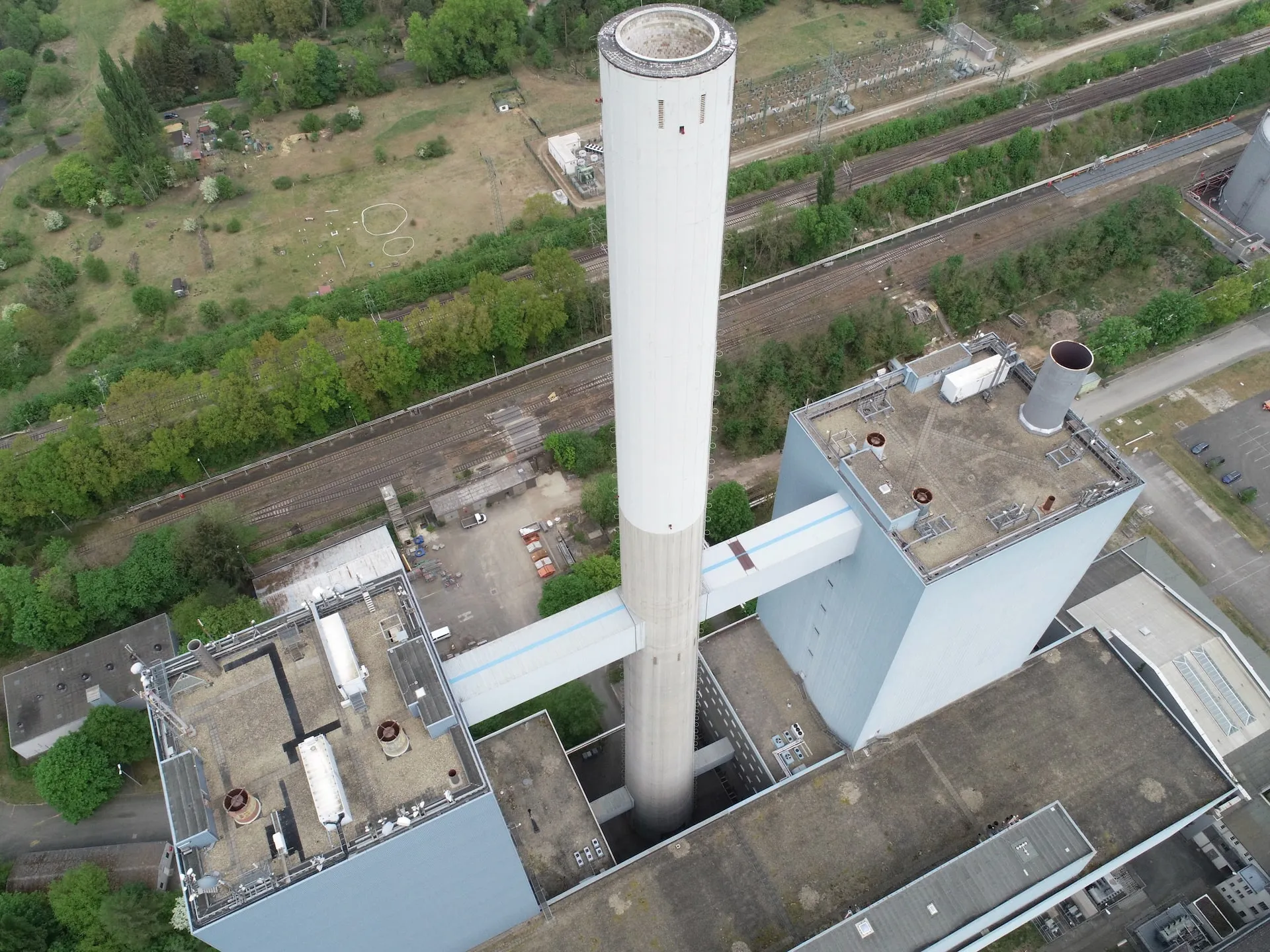
ELIOS 3 in a power plant boiler – inspection without scaffolding and without human entry.
No scaffolding, no human entry – the plant must be cooled to ambient temperature.
Benefits of the ELIOS 3 in Power Plants


Typical Inspection Areas in Power Plants

Use Cases



Technology in Detail
Why the ELIOS 3 is suited for power plants. The ELIOS 3 combines characteristics relevant for power plant inspections in confined, dark and GPS-free environments:

Limits and Restrictions
Where drone inspection reaches its limits. The ELIOS 3 is a proven tool for many power plant inspections – but not a universal cure-all. The following limitations are relevant:
Dust and ash: In heavy dust or ash loading in flue gas ducts and filters, visibility is restricted. This affects both the 4K camera image quality and the precision of LiDAR data. In heavily contaminated areas, preliminary cleaning or realistic expectations about results are recommended.
Flight time and battery management: Flight time under normal conditions is approximately 10 minutes. Large boilers require multiple flights with battery changes – this must be factored into operational planning.
No ATEX certification: The ELIOS 3 is not ATEX-certified and must not be deployed in hazardous areas. For plants or areas with corresponding classification, drone inspection is currently not an option.
Not a substitute for wall thickness measurement: Visual inspection and 3D survey do not replace non-destructive testing (NDT) for wall thickness or crack depth. Drone inspection is typically a first step enabling targeted manual follow-up testing – or making it unnecessary.
Inspection Process
From planning to inspection report
- Pre-flight discussion: Clarify the areas to be inspected, condition requirements, safety concept and scheduling.
- On-site preparation: Confirm access, await cool-down to ambient temperature, set up equipment.
- Inspection: Systematic flight of all relevant areas. Capture of 4K videos, photos, LiDAR data and optional thermography.
- Evaluation & report: Review all footage, identify damage, compile condition assessment and produce detailed inspection report.
From the Field
“During a boiler shutdown in northern Germany, we completed the survey flight within a day – conventionally this would have required two weeks of cool-down plus scaffolding erection. We documented specific damage at superheater transitions that would have been difficult to localise without the 4K footage. Not every inspection yields such clear findings – but in many cases the drone enables a more targeted decision.”
Related Services
- Power Plant Inspection – Comprehensive power plant inspection with minimal downtime by drone.
- Chimney Inspection – Condition survey of chimneys and flue gas ducts without scaffolding.
- Boiler Inspection – Boiler inspection with 4K video and LiDAR without human entry.
- Flyability ELIOS 3 – Collision-safe indoor drone for boilers and chimneys.
- Industrial Inspection – Professional drone inspection for industrial plants across all sectors.
- Confined Space Inspection – Safe inspection of confined spaces without DGUV entry procedure.
Your Contacts
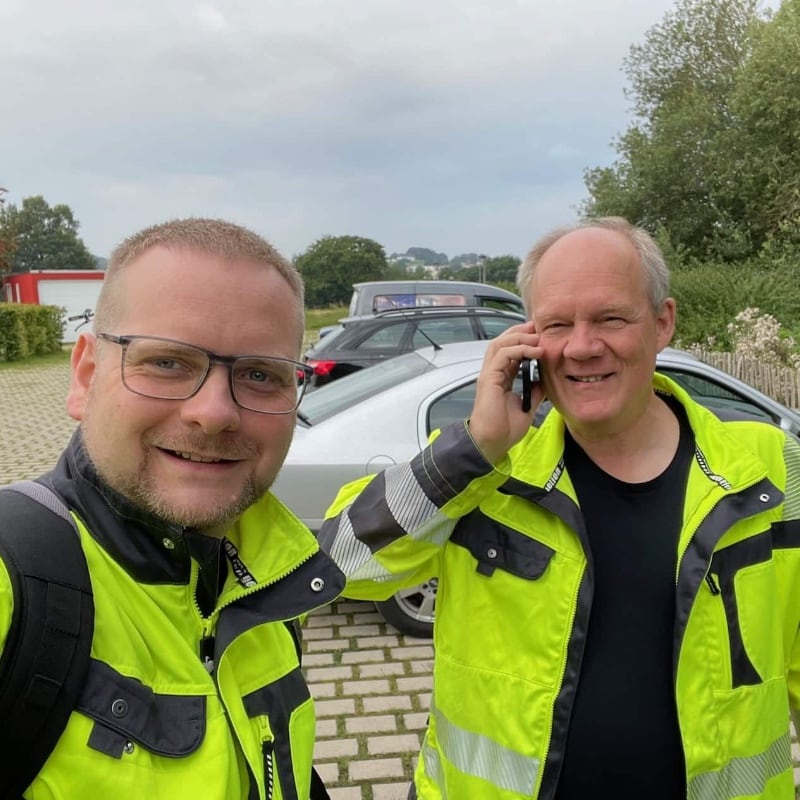
Christian Engelke and Dipl.-Ing. Karsten Lehrke – your direct contacts for power plant and chimney inspection.
 Christian
Founder & Drone Pilot
Christian
Founder & Drone Pilot
 Karsten
Project Manager
Karsten
Project Manager
 Philipp
Founder, Operations & Logistics
Philipp
Founder, Operations & Logistics
 Juliana
Drone Pilot
Juliana
Drone Pilot
 Stephan
Operations & Logistics
Stephan
Operations & Logistics
Frequently Asked Questions about Power Plant Inspection
Does the boiler need to be completely cooled for drone inspection?
Yes – the ELIOS 3 requires ambient temperature. The boiler must therefore be completely cooled, similar to the requirement for human entry. The advantage lies not in the cool-down time, but in the fact that no scaffolding needs to be erected and no human entry organised. Details on deployment planning can be found on our boiler inspection page.
Which areas in the power plant can be inspected?
Combustion chamber, membrane walls, tube walls, superheaters, reheaters, economiser, flue gas ducts, flue gas channels, air preheaters, dust separators, chimney internal lining. The ELIOS 3 also reaches narrow areas between tube bundles. In heavy dust loading in filters or flue gas ducts, visibility is restricted. Further information: power plant drone inspection.
When does drone inspection pay off in a power plant vs. conventional scaffolding?
The drone is particularly worthwhile when three factors converge: hard-to-reach areas (superheaters, economisers, narrow flue gas ducts), high downtime costs and a need for a pre-revision overview. Less suitable: heavy dust/ash loading restricting visibility, or when ATEX classification applies. Our experience since 2017: deployed before the major revision, the drone saves targeted revision effort because it becomes clear exactly where refurbishment is really needed – and where it is not.
Is the inspection quality comparable to human entry?
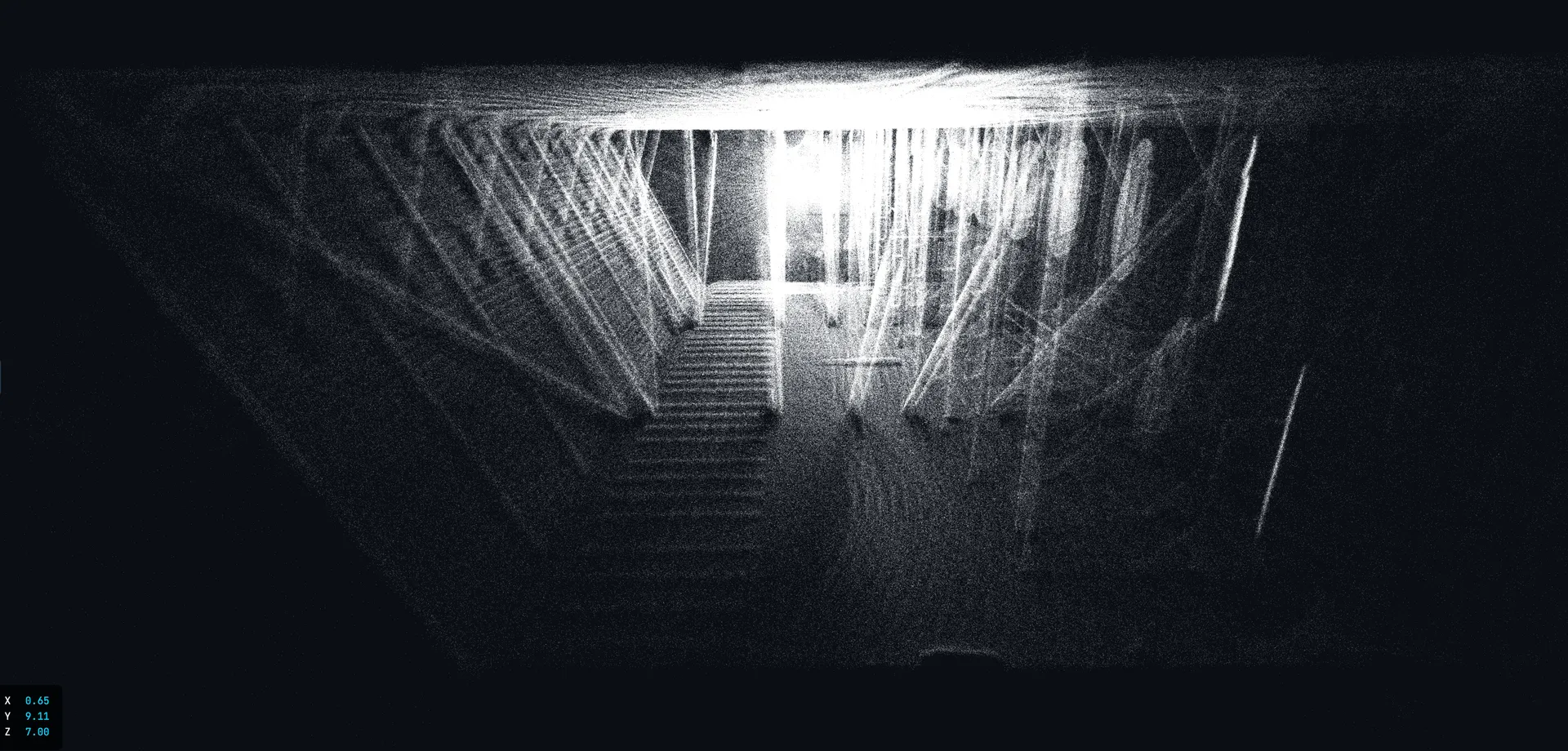
For visual inspection, often comparable or better: 4K resolution shows details that the human eye misses in dark, dusty boilers. LiDAR 3D survey enables deformation analysis. What the drone does not replace: wall thickness measurement, ultrasonic testing or other NDT procedures. It is valuable as a first overview and for targeted preparation of downstream testing.
How long does a typical boiler inspection take?
Depending on boiler size and complexity: on-site preparation in hours, the actual flight duration depending on the number of areas to be inspected. Significantly faster than conventional methods with scaffolding erection (weeks). Multiple boilers per day are possible.
Is drone inspection recognised by TÜV and insurers?
Our inspection reports are aligned with BetrSichV and DGUV requirements. Recognition by TÜV/DEKRA is decided case by case on site. Our experience since 2017: acceptance is continuously growing, especially as a pre-screening tool before targeted conventional inspection.
Is the ELIOS 3 ATEX-certified?
No. The ELIOS 3 is not ATEX-certified and must not be deployed in hazardous areas. For plants or zones with corresponding ATEX classification, drone inspection is currently not an option. For questions about confined spaces without ATEX requirements: confined space inspection.
Questions about Power Plant Inspection?
Contact us for a free consultation. We show you whether and how drone inspection can be sensibly deployed at your next revision.