
Corrosion Monitoring with Indoor Drones
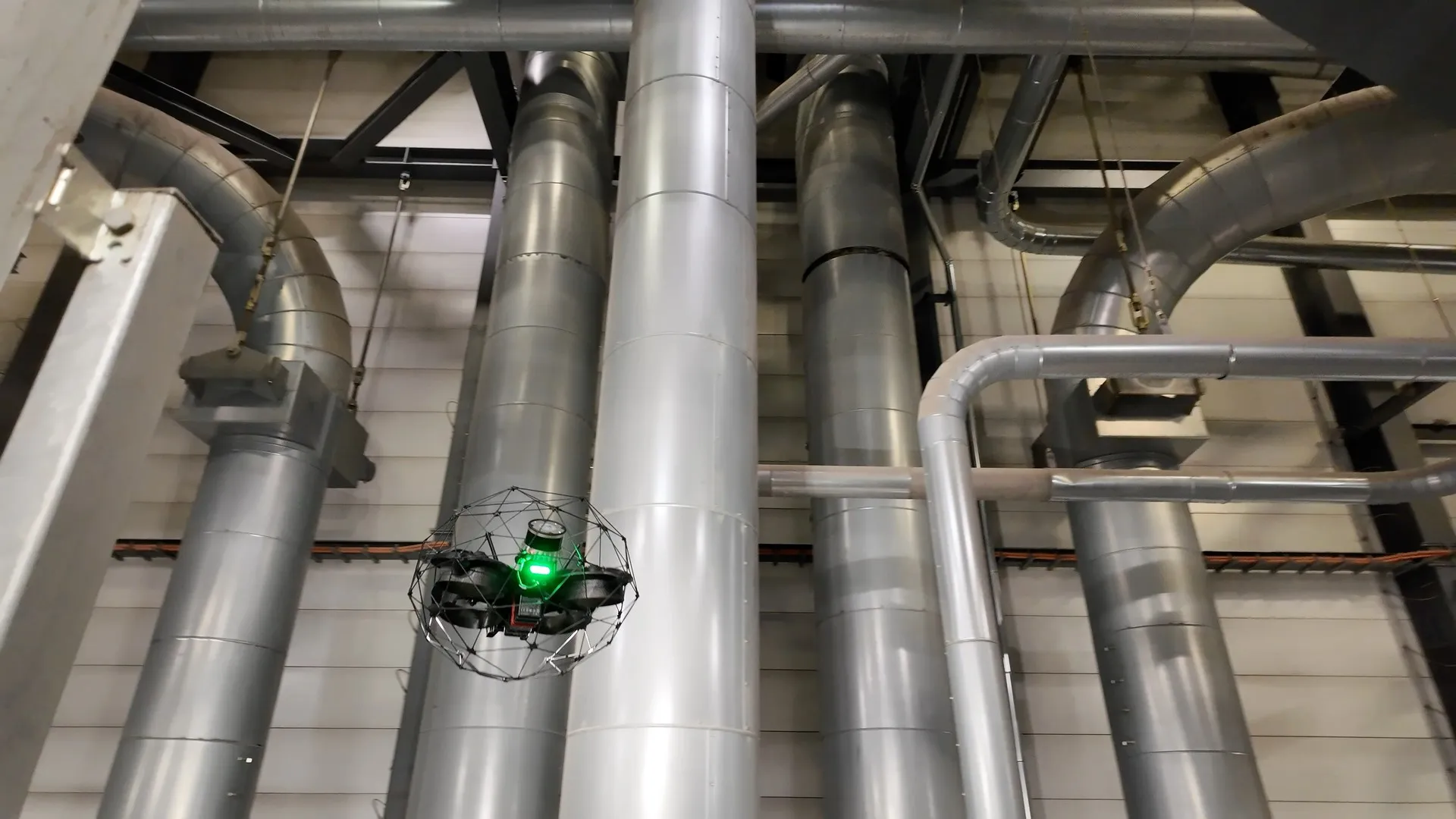
Detect, localise and document corrosion – visually, thermally and geometrically by drone. The ELIOS 3 turns corrosion monitoring from a one-off event into a standard tool. In use since 2017.
Why Corrosion is Industry’s Most Expensive Problem
Corrosion costs German industry billions every year. The problem: it is detected too late – wall thinning, pitting, coating failure through to leaks. The most critical locations are in difficult-to-access places: inner walls of tanks, roof undersides, floor plates, weld seams in confined spaces. Conventionally this means scaffolding, draining, personnel entry – an effort that extends inspection intervals and allows early warning signs to be missed.
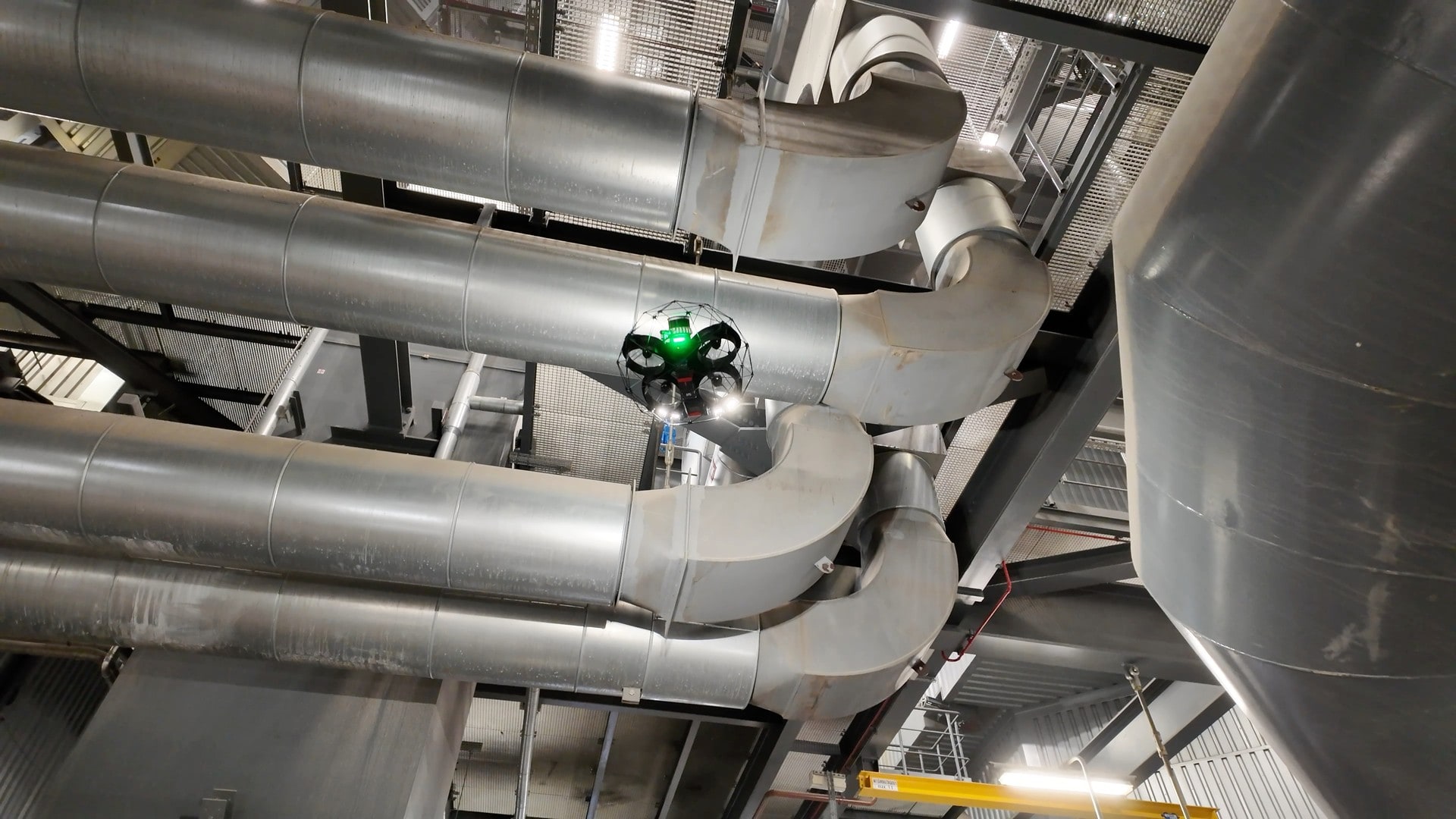
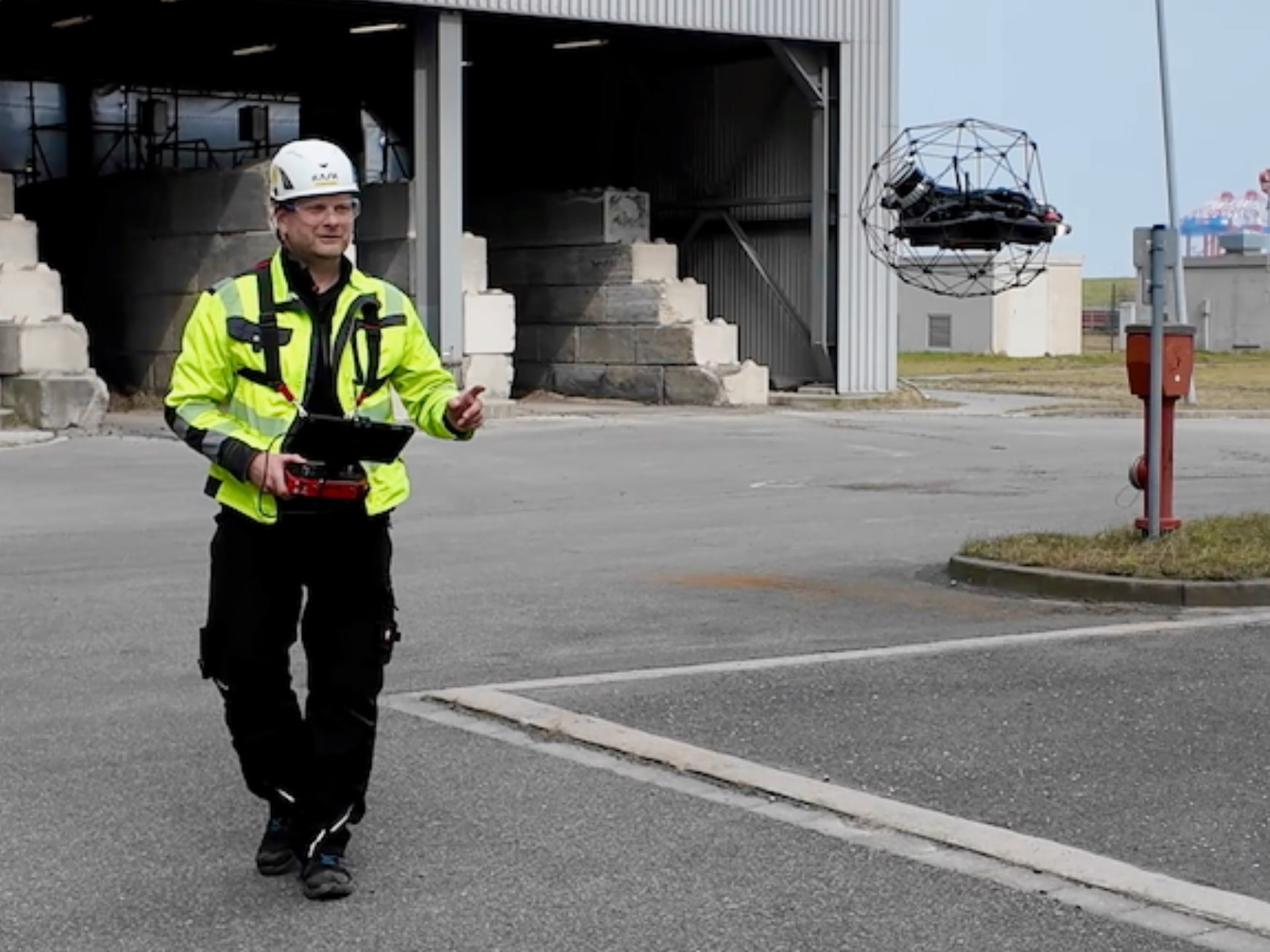
The ELIOS 3 during a corrosion inspection at a pipeline – instead of scaffolding.
The ELIOS 3 changes this fundamentally: corrosion monitoring becomes a standard tool instead of a one-off project.
What the Drone Can Detect
The ELIOS 3 combines three sensor principles to comprehensively record corrosion – visually, thermally and geometrically.

The 8 Most Common Corrosion Types – and How the Drone Finds Them



From Single Image to Monitoring: Damage Progression Tracking
The true strength of the drone shows itself with repeated inspections. Instead of checking in once every few years, the ELIOS 3 enables regular data collection – without the effort of a conventional confined entry. The result is a digital twin that makes corrosion progression documentable over years.
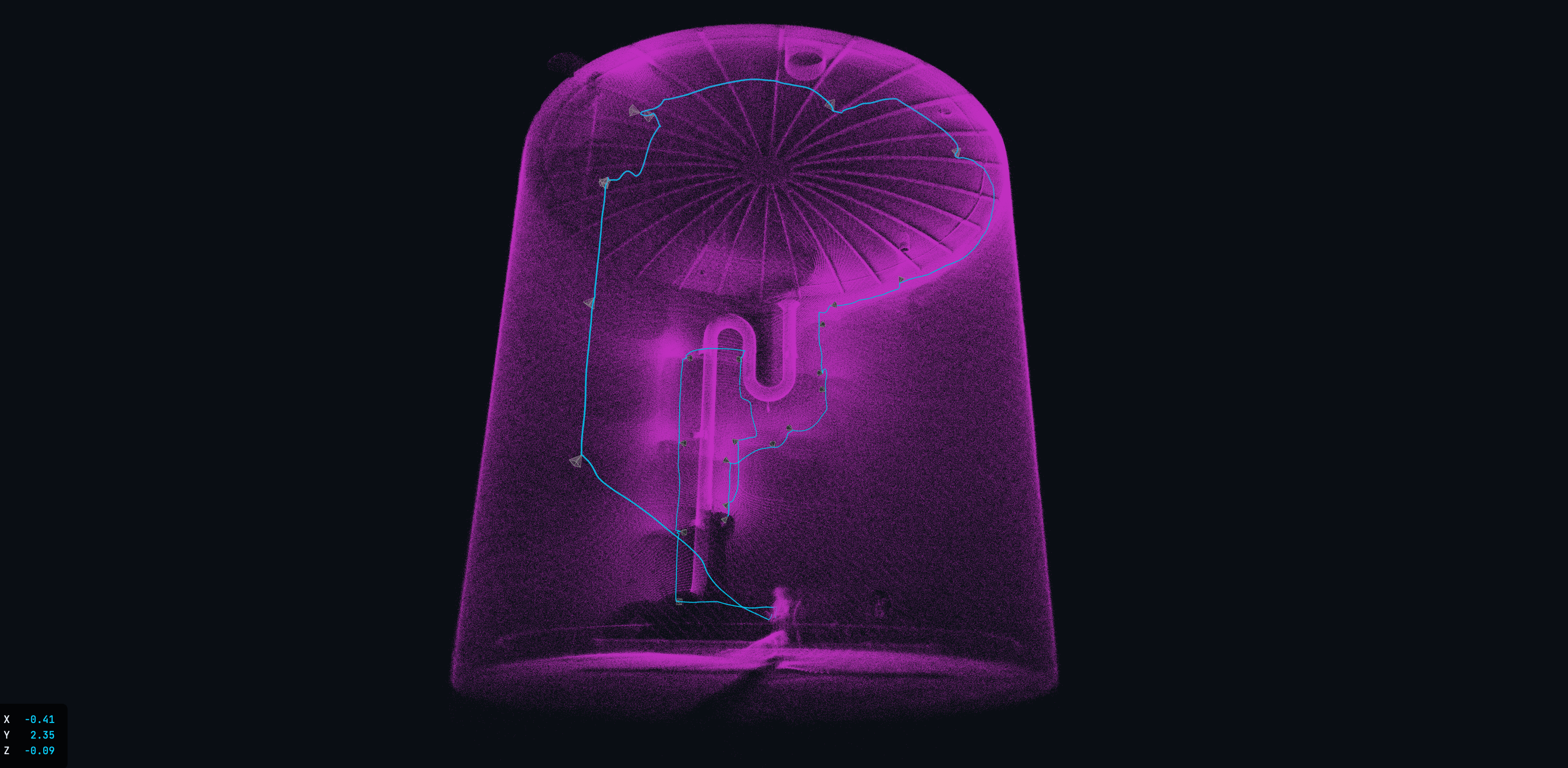
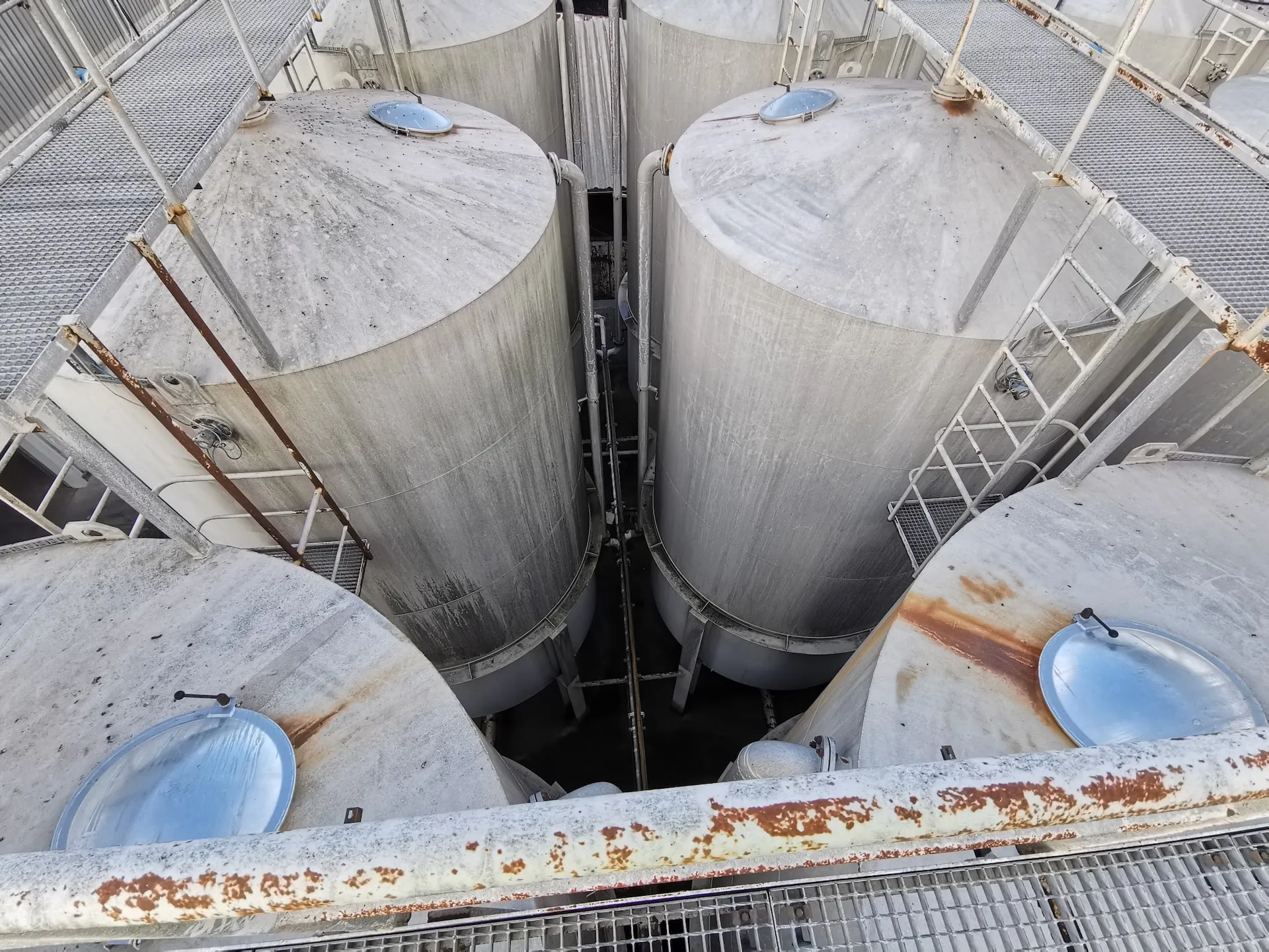
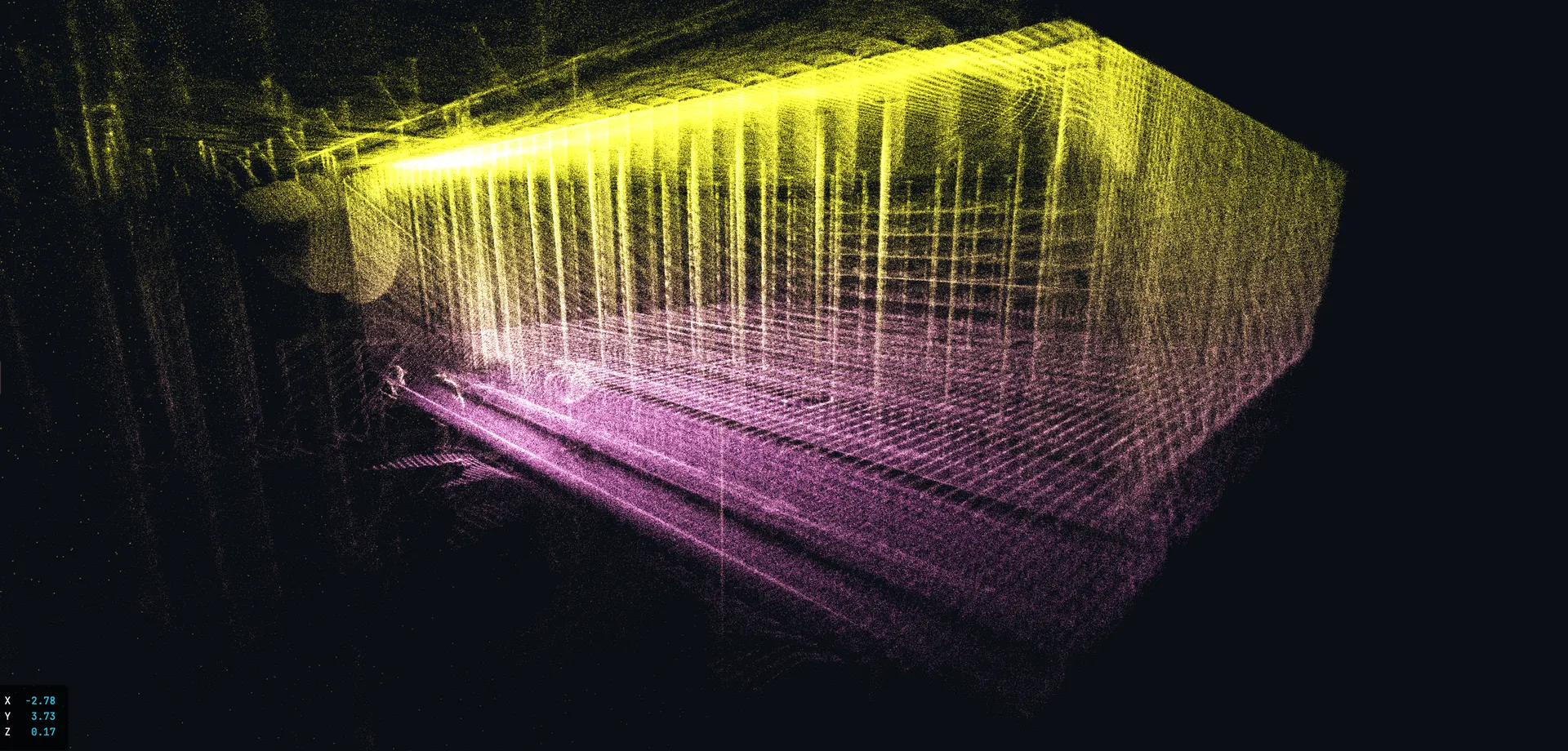
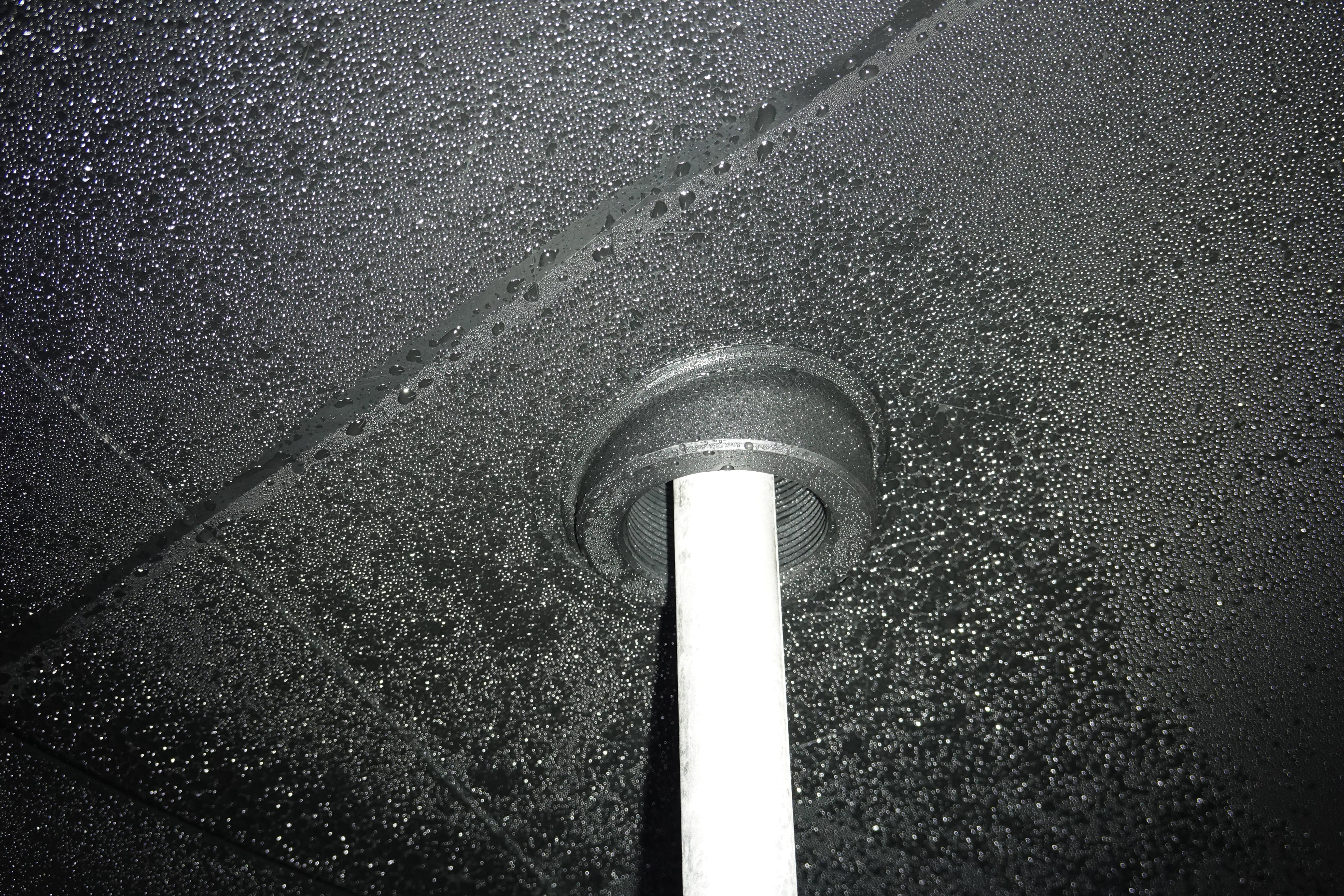
LiDAR 3D scan of a cold condensate tank – basis for damage progression tracking.
- Time Comparison with LiDAR – Through repeated 3D scans of the same plant, changes can be quantified: where has the geometry changed? Where has material been lost? Comparison of two point clouds (e.g. 2024 vs. 2026 inspection) shows corrosion progression in millimetres.
- Time Comparison with 4K Video – Visual comparison of the same surfaces over time. Coating defects documented as scratches in the previous inspection appear as spalling in the next – a clear warning signal.
- Reproducible Flight Paths – Consistent flight paths and standardised recording conditions are a prerequisite. The FlyAware™ navigation of the ELIOS 3 and the real-time 3D map support reproducible flights for reliable comparative data.
Typical Deployment Scenarios: Corrosion Monitoring by Drone


Limits of Drone-Based Corrosion Detection
Honesty is part of our business model. The drone cannot do everything – a hybrid inspection combines the strengths of both methods in these cases:


Relevant Standards for Corrosion Protection and Monitoring

The standards define inspection intervals and scopes. The drone makes it possible to comply with these intervals without the full confined entry effort.
Conclusion: Corrosion Monitoring No Longer Has to Be a Project
Until now, every internal corrosion inspection was a project: draining, cleaning, scaffolding erection, safety measures, personnel entry, documentation – weeks of planning for one day of findings.
With the ELIOS 3, corrosion monitoring becomes a standard tool: quickly deployable, minimally invasive, reproducible. This changes not only the costs – it changes the strategy: from reactive repair to proactive monitoring.


Expert Opinion
“Corrosion doesn’t wait for the next scheduled revision. With the ELIOS 3, we can check in between major inspections regularly – without scaffolding, without DGUV confined entry procedures, without personnel entry. This fundamentally changes the maintenance strategy: from reactive to proactive.”
Christian Engelke
Founder, Drone Pilot / Confined Spaces since 2017
Related Services
Frequently Asked Questions
What is drone-based corrosion monitoring – and how does it differ from conventional inspection?
Drone-based corrosion monitoring refers to the regular, drone-assisted surveillance of plant inner walls and structures for corrosion progression – without scaffolding and personnel entry. The ELIOS 3 combines 4K camera, thermography and LiDAR sensor in a single flight. Unlike a conventional one-off inspection, the drone enables reproducible comparative data: wall changes become measurable in millimetres, damage progression documentable – from reactive repair to proactive monitoring.
Can the drone measure wall thickness?
Yes, with the optional UT payload the ELIOS 3 can carry out wall thickness measurements directly at the surface. The drone flies to the structure, docks and measures residual wall thickness by ultrasound. Alternatively, the drone locates critical areas by VT and thermography – and a UT inspector measures specifically at those points only. This combined method is described in our article on hybrid inspection.
How reliably does the thermal camera detect CUI?
The radiometric thermal camera detects temperature anomalies indicating moisture under insulation. Reliability depends on operating conditions – it works best with the process running (temperature difference between medium and environment). We advise in advance whether thermography is appropriate for your case.
How often should corrosion monitoring by drone be carried out?
This depends on the plant, medium and regulatory requirements. The advantage of the drone: inspection frequency can be increased without incurring the full confined entry effort each time. Many of our clients supplement the regular revision with additional drone flights between major inspections.
Does the drone also detect corrosion under coatings?
Visually, the camera detects coating defects (blistering, spalling, cracking) that indicate underlying corrosion. Thermally, CUI under insulation can be detected. Corrosion under intact coating without thermal anomaly is not detectable, however – here UT measurement remains the method of choice.
What standards apply to corrosion protection and drone inspection?
Relevant standards include DIN EN ISO 8044 (corrosion terms), DIN EN ISO 12944 (coating protection), API 653 for storage tanks and API 510 for pressure vessels. The BetrSichV regulates recurring inspection obligations for notifiable plants. The drone supports inspector-grade documentation for testing organisations and insurers.
Detect Corrosion Early – Without Risk and Shutdown
We assess whether drone-based corrosion monitoring is the right approach for your plant. Send us your plant details – we will respond with an honest assessment.