
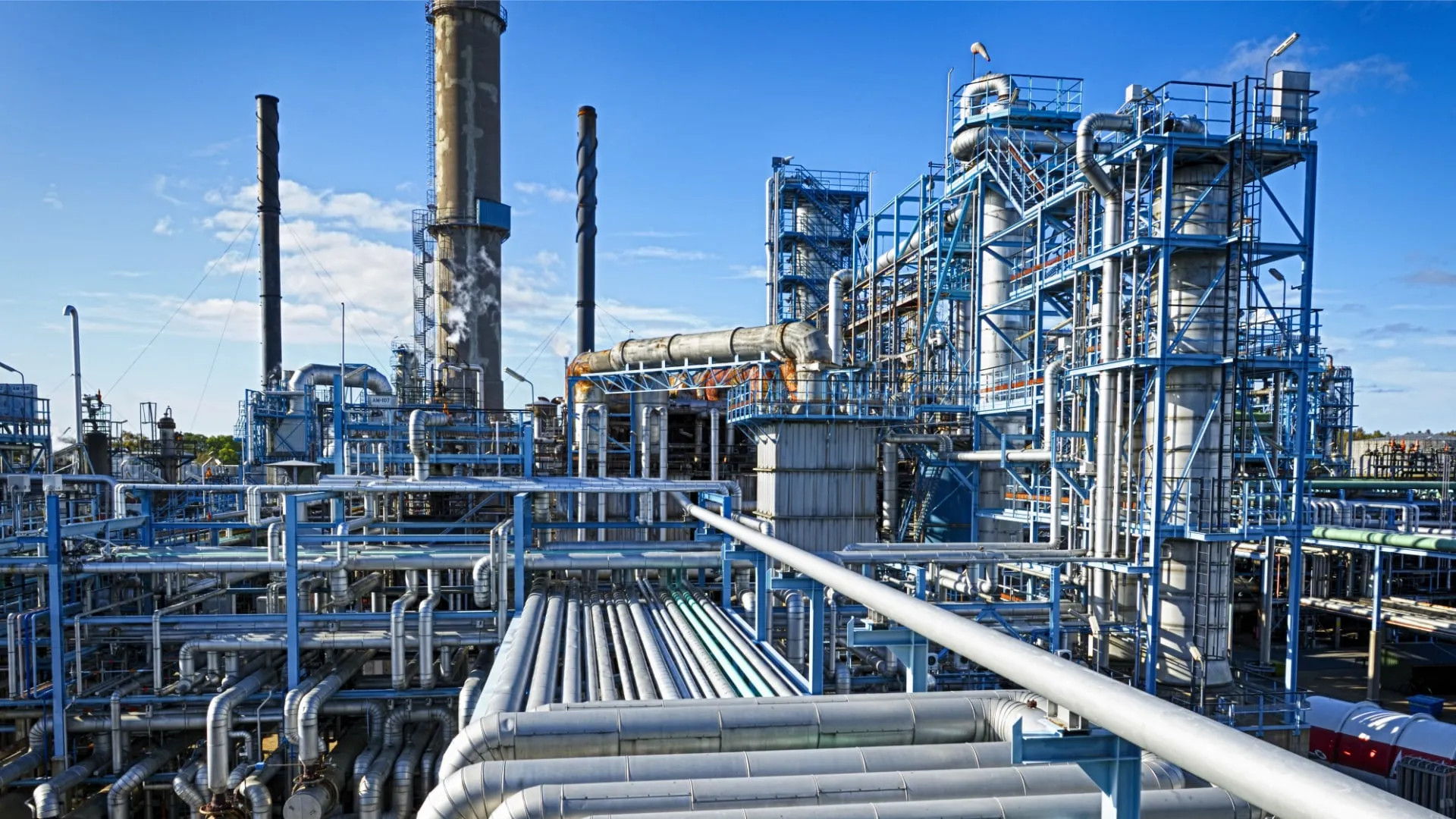
Drone Inspection – Chemical Industry – WITHOUT Entry into Toxic & Contaminated Facilities
Kopterflug inspects reactors, columns, process vessels and storage tanks in the chemical and petrochemical industry – without human entry, without scaffolding, without decontamination of personnel. 4K documentation, thermography and LiDAR 3D scanning in a single flight.
- No human entry – DGUV confined space entry procedures are eliminated
- GPS-free navigation in closed metallic structures (SLAM + LiDAR)
- 4K + Thermography + LiDAR in one flight
- Fully decontaminable – no cross-contamination between plant sections
- Up to 80% cost savings compared to conventional confined space entry
Drone Inspection in Chemical Plants: Safe, Without Entry, with Reliable Data
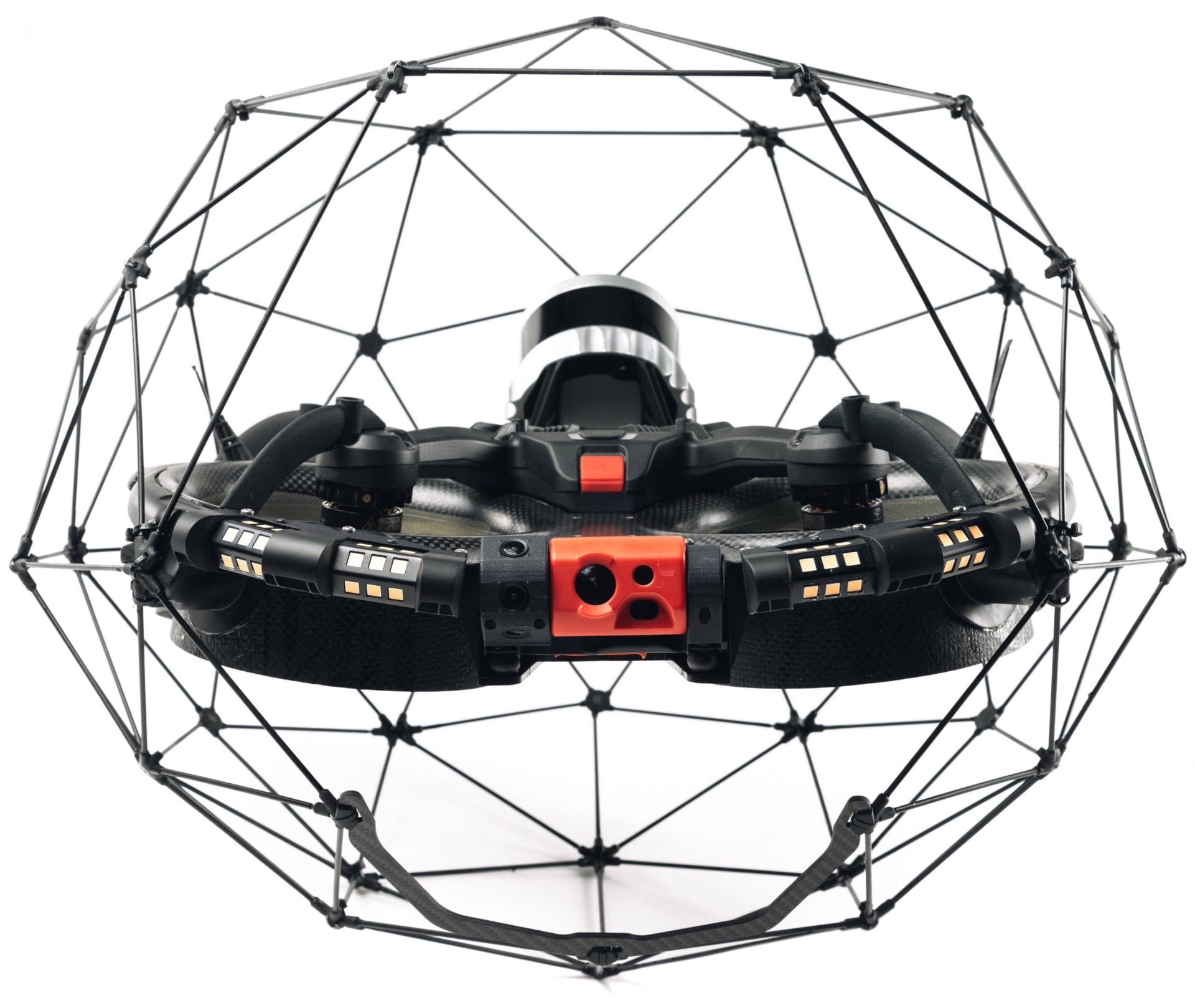
The ELIOS 3 with its collision-safe carbon cage – built for contaminated reactors, columns and process vessels.
Chemical plants are among the most demanding inspection environments: toxic atmospheres, strict explosion protection requirements, narrow gaps between columns and pipelines – and maintenance teams that must keep every shutdown as short as possible. Conventional access requires elaborate gas-free measurements, protective equipment, scaffolding and coordinated lockouts. With the Flyability ELIOS 3, the bulk of this overhead disappears.
The collision-protected drone navigates GPS-independently through reactors, columns, pressure vessels and shafts – delivering 4K video, radiometric thermography and optional LiDAR data without any employee entering the hazardous area. The inspection takes place after gas-free measurement by your HSE department; we coordinate closely with your safety officer.
Typical damage patterns in chemical plants that we specifically inspect for: corrosion and pitting on vessel walls and nozzles from aggressive media, coating damage in reactors and storage tanks, deposits and encrustations in column internals affecting process performance, and cracks and deformations in refractory linings in high-temperature zones. Hotspots on heat exchangers and pipelines are captured via thermography.
Technical assessment of findings remains with your process engineers, TÜV inspectors and DEKRA experts – we deliver the data foundation: 4K images, thermography evaluations and, on request, centimetre-accurate LiDAR point clouds, processed ready for CAD and BIM.
What We Inspect in the Chemical Industry
Chemical plants are highly complex and often contaminated. We inspect all safety-critical assets – without human entry, without decontamination:



What We Document During Chemical Plant Inspections
We fly the ELIOS 3 into your plant and systematically document all safety-relevant areas. Technical assessment is handled by your process engineers and inspectors – we deliver the data:
Reactors & Stirred Vessels
What we check: Wall corrosion, coating damage, cracks at internals and nozzles, condition of agitators and heating coils.
Why it matters: Reactors are pressure vessels per BetrSichV – wall thinning, pitting or coating failure can lead to uncontrolled releases. Early finding documentation secures continued operation.
How we do it: ELIOS 3 navigates through the manhole opening, systematically covering wall sections, internals and nozzles – 4K camera at close range, thermography for hotspots and coating delaminations.
Columns & Distillation Units
What we check: Packings, trays and internals for deposits, corrosion, deformation; condition of deflector plates and nozzles.
Why it matters: Blocked column internals directly impair process efficiency and can lead to pressure build-up. Damage to trays and packings is often only reachable by conventional access with extensive scaffolding.
How we do it: The ELIOS 3 flies column segments top to bottom – even tight areas between internals are fully captured with the 180° field of view of the 4K camera; high-capacity battery or tether for long columns.
Storage Tanks & Process Vessels
What we check: Floor corrosion, wall corrosion including the water-oil interface zone, coating integrity, sediment deposits, nozzles and manhole frames.
Why it matters: Process vessels with aggressive media are particularly corrosion-prone. Wall thinning and coating failure lead to leaks – often in locations unreachable without a drone.
How we do it: Full interior documentation after emptying – ELIOS 3 covers walls, floor and roof interior; thermography detects delaminations and moisture behind the coating.
Heat Exchangers & Pipelines
What we check: Pipe corrosion, hotspots and insulation damage along pipeline routes, condition of pipe bridges and supports.
Why it matters: CUI (Corrosion Under Insulation) and leaking pipeline connections are among the most frequent damage causes in chemical plants – often detected late because the affected areas are inaccessible.
How we do it: DJI M30T with thermography for outdoor pipelines; ELIOS 3 for duct shafts and walkable conduit spaces; thermography evaluation identifies hotspots along runs.
Chimneys, Exhaust Ducts & Flue Gas Systems
What we check: Wall corrosion, cracks and material damage in the interior; condition of internals and expansion joints.
Why it matters: Corroded exhaust ducts can allow pollutant release and are subject to regulatory monitoring obligations. Interior inspection by scaffolding or rope access is costly and time-consuming.
How we do it: ELIOS 3 inspects chimneys and ducts after cooling (<50°C) from the inside – tether power unit for unlimited flight time in long shafts; LiDAR documents geometric deviations.
Shafts, Channels & Underground Infrastructure
What we check: Corrosion, cracks, leaks and deposits in inspection shafts, cable ducts and drainage structures.
Why it matters: Underground shafts are hazardous areas (Confined Space) per DGUV Regel 113-004 – access requires extensive safety measures. The drone documents the condition without human entry.
How we do it: ELIOS 3 navigates autonomously through tight shafts – LiDAR creates cross-sectional profiles, 4K camera documents cracks, deposits and corrosion zones.
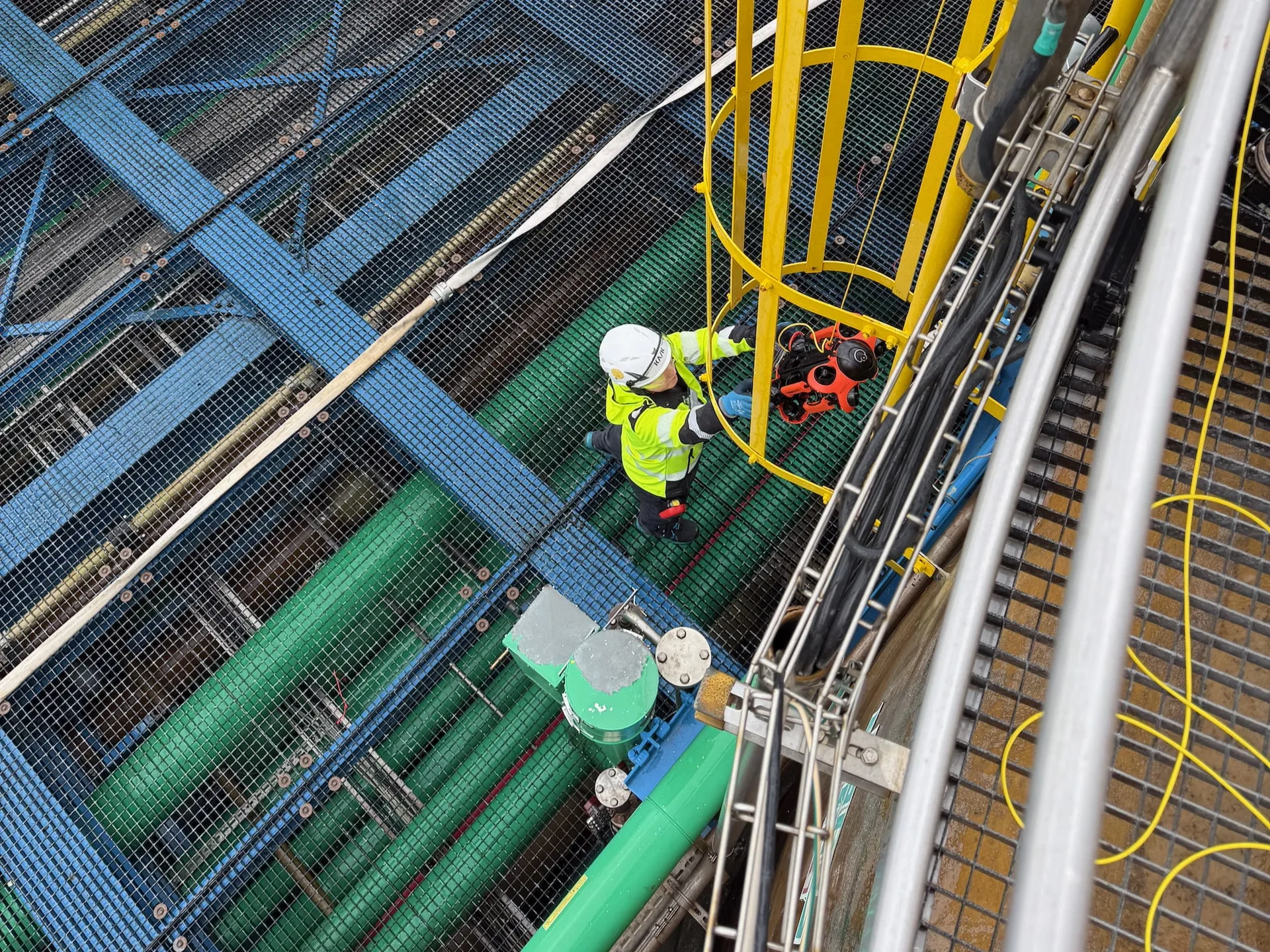
Challenges in the Chemical Industry
Reactors, columns, process vessels – toxic, corrosive, difficult to access. Decontamination + respiratory protection + rescue chain = weeks of lead time. ELIOS 3 inspects in hours – without human entry, with 4K + thermography + LiDAR.




Typical Inspections in the Chemical Industry
With the Flyability ELIOS 3 we inspect process plants without human entry – safely, precisely and with minimal downtime. Deployment after shutdown, gas-free measurement and operational release. Exact localisation in the 3D model:
| Asset | Sensors | Typical Findings |
|---|---|---|
| Reactors & Stirred Vessels | Visual, LiDAR, Thermography | Coating damage, corrosion, cracks in linings, mechanical damage to agitators |
| Columns & Distillation Units | Visual, LiDAR, Thermography | Tray corrosion, packing damage, deposits, structural deformations |
| Process Boilers & Pressure Vessels | Visual, LiDAR, Thermography | Weld seam corrosion, coating damage, cracks, insulation defects |
| Exhaust Scrubbers & Off-Gas Cleaning | Visual, LiDAR | Corrosion, blockage, damage to internals, deposits |
| Storage Tanks & Silos | Visual, LiDAR, Thermography | Corrosion, sediment deposits, leaks, structural damage |
| Water-Filled Process Vessels (ROV) | ROV Visual, ROV Thermography | Corrosion, coating damage, sediment, internal damage, leaks |
| Large-Bore Pipelines & Pipe Bridges | Visual, LiDAR | Corrosion, deposits, coating damage, mechanical damage |
| Heat Exchangers (housing & inlet areas) | Visual, Thermography | Deposits, fouling, corrosion, blockages |
| Agitators & Internals (detail inspection) | Visual, LiDAR | Cracks, loosening, corrosion, mechanical wear |
| Refractory Linings | Visual, Thermography | Cracks, spalling, voids, wear |
| Cooling Towers & Process Cooling (interior) | Visual, Thermography | Biofouling, blocked distribution, corrosion, structural damage |
| Containment Basins & Safety Ponds | Visual | Coating damage, cracks, leaks, corrosion |
| Pre-Startup Inspection (Turnaround Check) | Visual, Thermography | Forgotten foreign objects, incorrectly installed internals, post-maintenance damage |
| Dead Legs & Stagnant Zones | Visual | Deposits, corrosion, product residues, blockages |
Technology in Use for Chemical Plant Inspections
Flyability ELIOS 3 and DJI M30T for contaminated reactors, columns and pipe bridges – without human entry, fully decontaminable.
- ELIOS 3 without human entry in reactors and columns: Contaminated reactors, distillation columns and absorbers are inspected completely without confined space entry permits.
- Fully decontaminable: The ELIOS 3 is decontaminated after each deployment in contaminated areas – no cross-contamination between plant sections.
- DJI M30T for pipe bridges and CUI detection: CUI (Corrosion Under Insulation) on outdoor pipelines and pipe bridges is detected by thermography – without removing insulation.
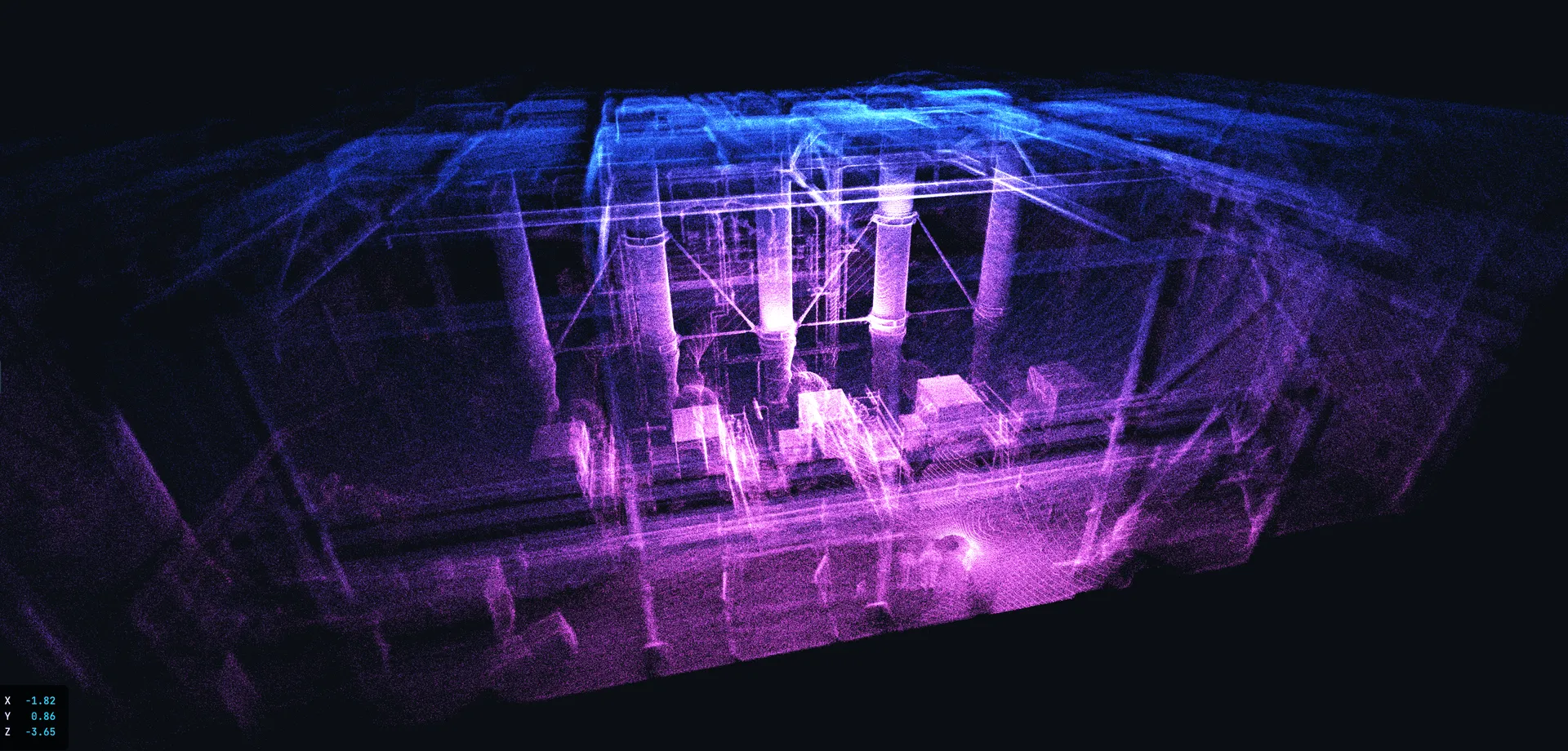
- LiDAR: internals and geometry in columns: 3D measurement captures packings, trays and geometric deviations in columns for maintenance planning.
- Thermography: hotspots and leaks: Thermal images reliably reveal hotspots, leaks and insulation damage on pressure vessels and process pipelines.
- GPS-free navigation in metallic structures: ELIOS 3 SLAM navigation functions in completely enclosed metal vessels without satellite signal – precise and safe.
Your Benefits as a Chemical Company
- No human entry: No DGUV confined space entry, no respiratory protection, no personnel decontamination. Risk to your employees is completely eliminated.
- Minimal downtime: Inspection in a few hours instead of days. No complex preparation for human entry – faster restart.
- Precise damage detection: Thermography reveals leaks and hotspots. LiDAR captures geometry and deformations. 4K video documents every centimetre.
- Cost savings up to 80%: Compared to conventional confined space entry with scaffolding, decontamination and safety overhead, you save up to 80% of costs.
- DGUV-compliant: Our inspections meet DGUV requirements for confined spaces. No human entry = no risk.
- Reproducible inspections: Stored flight paths enable comparison inspections over years. Damage progression becomes measurable and documentable.
- Precise documentation – 4K + Thermography + LiDAR: Coating damage, corrosion, cracks – precisely documented. Thermal camera shows hotspots, LiDAR provides 3D twin for planning.
How the Inspection Works
Step 1: Initial Consultation (free)
We analyse your requirements and advise you free of charge on all technical and organisational questions.
Step 2: Scheduling & Quotation
You receive a transparent quote. Together we plan the timing, access and safety concept.
Step 3: On-Site Inspection
We carry out the inspection with state-of-the-art drone technology – usually within a few hours.
Step 4: Evaluation & Inspection Report
You receive a detailed report with 4K footage, 3D models, thermography analyses and a systematic findings overview.
Standards & Compliance for the Chemical Industry
Our inspections meet the highest safety and documentation standards of the chemical industry:
- DGUV Confined Spaces (DGUV Regel 113-004): No human entry required – eliminating all risks and requirements for confined space entry per DGUV.
- BetrSichV (Industrial Safety Regulation): Our documentation is structured per BetrSichV for pressure vessels and technical plant equipment.
- IEC 61511: Functional safety for safety-instrumented systems in the process industry – our data supports your safety instrumented system documentation.
- Customer-specific safety concepts: Coordination with your HSE team. We comply with all site safety regulations and permit procedures.
- Decontamination protocol: After deployment in contaminated areas, proper decontamination is performed per your specifications.
- EU Drone Regulation: Liability insurance coverage of €5 million.
Your Contacts for Chemical Industry Inspections
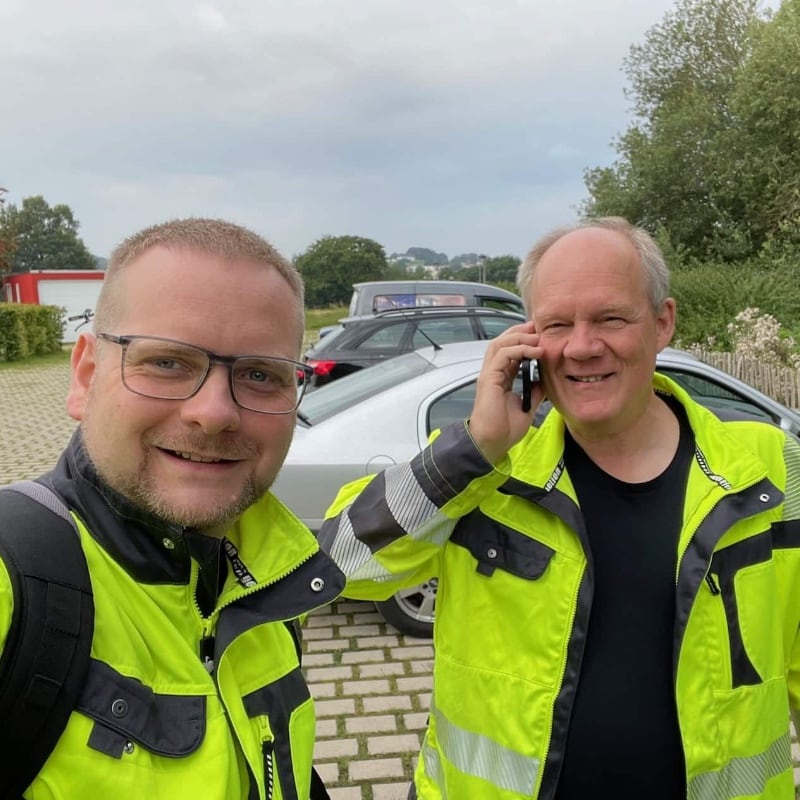
Christian Engelke and Dipl.-Ing. Karsten Lehrke – your direct contacts for chemical plant inspections.
Since 2017, we have been inspecting complex industrial plants – numerous deployments in reactors, columns and process vessels, routinely without human entry into contaminated areas. Highest safety standards, precise documentation, minimal downtime.
Christian Engelke and Dipl.-Ing. Karsten Lehrke are your direct contacts for technical questions – deployment planning, safety concepts, coordination with your HSE team.
Related Services
- Oil & Gas Inspection – Pipelines, reactors and refineries – inspection in potentially explosive areas.
- Tank Inspection – Interior walls, floors and coatings in chemical tanks documented without confined space entry.
- Confined Spaces Inspection – Inspection of tight, hazardous or contaminated interior spaces without human entry.
- Pipe Bridge Inspection – Corrosion and damage on pipe bridges and pipeline systems in the process industry.
- Industrial LiDAR Survey – Precise 3D measurement of plants, columns and complex process structures.
- Nuclear & Power Plant Inspection – Drone inspection under the highest safety requirements in radiation-exposed areas.
Frequently Asked Questions about Chemical Plant Inspections
Which plant components can be covered by drone inspection in the chemical industry?
We inspect all typical confined spaces in chemical plants: reactors, stirred vessels, distillation columns, absorbers, process vessels, storage tanks, heat exchangers and silos. The ELIOS 3 documents coatings, linings, internals, weld seams and corrosion – without human entry into contaminated areas.
How is explosion protection handled during chemical plant inspections?
The ELIOS 3 is not ATEX-certified. Before every deployment we conduct a gas-free measurement with our multi-gas sensor (O&sub2;, LEL, H&sub2;S, CO). The drone may only fly in once a gas-free atmosphere has been confirmed. The inspected component must be shut down, purged and released. We coordinate the safety concept in advance with your HSE team.
Which standards apply to inspections in the chemical industry?
Our documentation aligns with BetrSichV (Industrial Safety Regulation), DGUV Regel 113-004 (work in vessels and confined spaces) and IEC 61511 (functional safety for safety-instrumented systems in the process industry). Since no human entry occurs, DGUV confined space entry requirements are eliminated for the inspection. Your inspectors assess on the basis of our data.
Must the plant be shut down for a drone inspection in the chemical industry?
Yes, the components to be inspected must be taken out of service, emptied, cleaned/purged and cooled down. The ELIOS 3 can only fly in after gas-free measurement and release. The inspection is typically integrated into planned turnarounds or shutdowns to minimise additional downtime.
How long does a drone inspection in the chemical industry take?
A typical drone inspection takes 2–8 hours depending on the plant. Reactors and columns with complex internals tend toward the upper end; simple storage tanks are fully documented in 2–3 hours. For a turnaround with multiple assets, we plan 1–3 days. Compared to conventional confined space entry with scaffolding, DGUV requirements and decontamination, this is a significant time saving.
What damage is typically found in chemical plants?
Typical findings include chemical corrosion on vessel walls, coating damage and delamination, cracks in linings (GRP, rubber, enamel), erosion on internals and packings, deposits in column internals as well as damage to agitators and heating coils. Our 4K footage and thermography also documents hidden damage that is easily missed during conventional inspection.
What data does Kopterflug deliver after a chemical plant inspection?
You receive a detailed inspection report with 4K footage of all documented areas, LiDAR 3D point clouds for geometry measurement and digital twins, and thermography images for hotspots, leaks and insulation defects. All findings are systematically documented with positional reference – as a basis for your maintenance planning.
Can the ELIOS 3 cope with corrosive residues?
The ELIOS 3 is robustly built and can be deployed in environments with residual adhesions and light residues. In heavily contaminated areas the drone can be decontaminated after deployment. Importantly, the area must be purged, degassed and released before the drone flight – the drone does not fly into actively corrosive or toxic atmospheres.
How can drone inspection be integrated into turnarounds?
Drone inspection fits ideally into turnaround schedules: as soon as a component is emptied, purged and cooled down, we can inspect within a few hours – without scaffolding, without DGUV confined space entry. The data is often available to your maintenance teams on the same day. This shortens decision time for repairs and accelerates the overall turnaround.
How does LiDAR help with chemical plant inspection?
LiDAR enables complete 3D capture of reactor and column geometries – independent of lighting or visibility conditions. This allows documentation of deformations, wall changes and internal geometries, and comparison across multiple inspection cycles. We offer LiDAR-based 3D capture as a standalone service – more at our Industrial LiDAR Survey page.
Can thermography detect leaks or hotspots in chemical plants?
Yes, as a supplementary method. The ELIOS 3 thermography camera makes temperature differences visible – for example at leaking flange seals, insulation defects or thermal anomalies in vessel walls. Thermography is an indicator method: it provides evidence for further investigation, but does not replace non-destructive testing (NDT) per standard.
Can deposits and fouling be detected with the drone?
Yes, both visually and via LiDAR data. Deposits on floors, fouling on reactor walls or blockages in column packings are clearly visible in 4K video. LiDAR can additionally capture volume and geometry. We conduct comparable inspections ourselves – in tanks & process vessels and silos.
Is the drone suitable for scrubbers and exhaust gas cleaning systems?
Yes. Scrubbers and exhaust gas cleaning systems are among the typical applications: packings, spray nozzles, corrosion-prone areas and internals can be fully documented without scaffolding or human entry.
What happens if the drone bumps into an internal in a reactor or column?
The ELIOS 3 is specifically designed for tight spaces with internals. The carbon protective cage absorbs light collisions; the drone stabilises autonomously. In the event of a flip it returns to upright orientation independently. Light contact does not cause relevant damage to typical industrial surfaces – the drone's mass and kinetic energy are too low for significant impact on steel walls or concrete surfaces.
Can inspections in chemical plants be repeated and compared?
Yes – this is a key advantage of the LiDAR-based approach. Georeferenced 3D point clouds enable direct comparison between inspection cycles: corrosion progression, wall loss and geometry changes become measurable over several years. This provides a solid basis for condition-based maintenance planning.
Are there limits to drone deployment in chemical plants?
Yes, the most important limits: The ELIOS 3 is not designed for temperatures above 50°C – the plant must be cooled down. It is not ATEX-certified; deployment requires gas-free measurement and operational release. At very tight cross-sections below approx. 50 cm, drone flight is not possible. Contact testing (e.g. wall thickness measurement via UT) requires additional NDT methods.
Are there real-world references from the chemical and process industry?
Yes. Our inspection services in the chemical sector are described on this page as well as for tanks under Tank Inspection. Flyability documents inspections in process vessels and tank installations under their case studies for oil, gas and process industry applications. These show the typical deployment context in which we are also active.
Can pipe bridges and outdoor pipelines in chemical parks be inspected with a drone?
Yes. For pipe bridges, outdoor tanks and insulated outdoor pipelines we deploy the DJI Matrice 30T – with 200x hybrid zoom and radiometric thermography. Flanges, weld seams, corrosion spots and CUI (Corrosion Under Insulation) are documented visually and thermographically – during live operation, without scaffolding. The ELIOS 3 handles interior areas; together both systems cover the entire plant.
Get in Touch
Questions about drone inspection for chemical plants or need a quote? Fill out the form below and we will get back to you within 24 hours.