

Drone Inspection Costs – NO Scaffolding, NO Human Entry, NO Long Lead Times.
In many cases 30 to 90 % cheaper than conventional methods. No rescue concept required. Findings report within 24 hours. Operating since 2017.
- No scaffolding (Gerüst) or rope access
- No confined space entry process (Confined-Space-Entry)
- Shorter shutdowns – often hours instead of days
What Conventional Inspection Really Costs
Most operators know the individual line items – but rarely the total:
- Scaffolding erection & dismantling (Gerüstbau & Abbau) – depending on the asset, €5,000 to €190,000 or more
- Industrial climbers & rope access (Industriekletterer & Seilzugang) – multi-day deployments, high safety overhead
- Confined-space entry (Confined-Space-Entry) – gas-free measurement, PPE, rescue chain, permit processes
- Production shutdown (Produktionsstillstand) – 2 to 5 days, often tens of thousands of euros per day
- Internal coordination – personnel tied up in planning, alignment and supervision
What many underestimate: the biggest effort is not in the inspection itself – it is in the preparation.
- Coordinating multiple trades – scaffolders, climbers, internal permits
- Delays during shutdown – one trade is late, everything shifts
- Responsibility for human entry – including rescue concept (Rettungskonzept) and safety chain
The actual inspection is often the smallest part – the rest is organisation, risk and downtime.
Where the Real Savings Come From
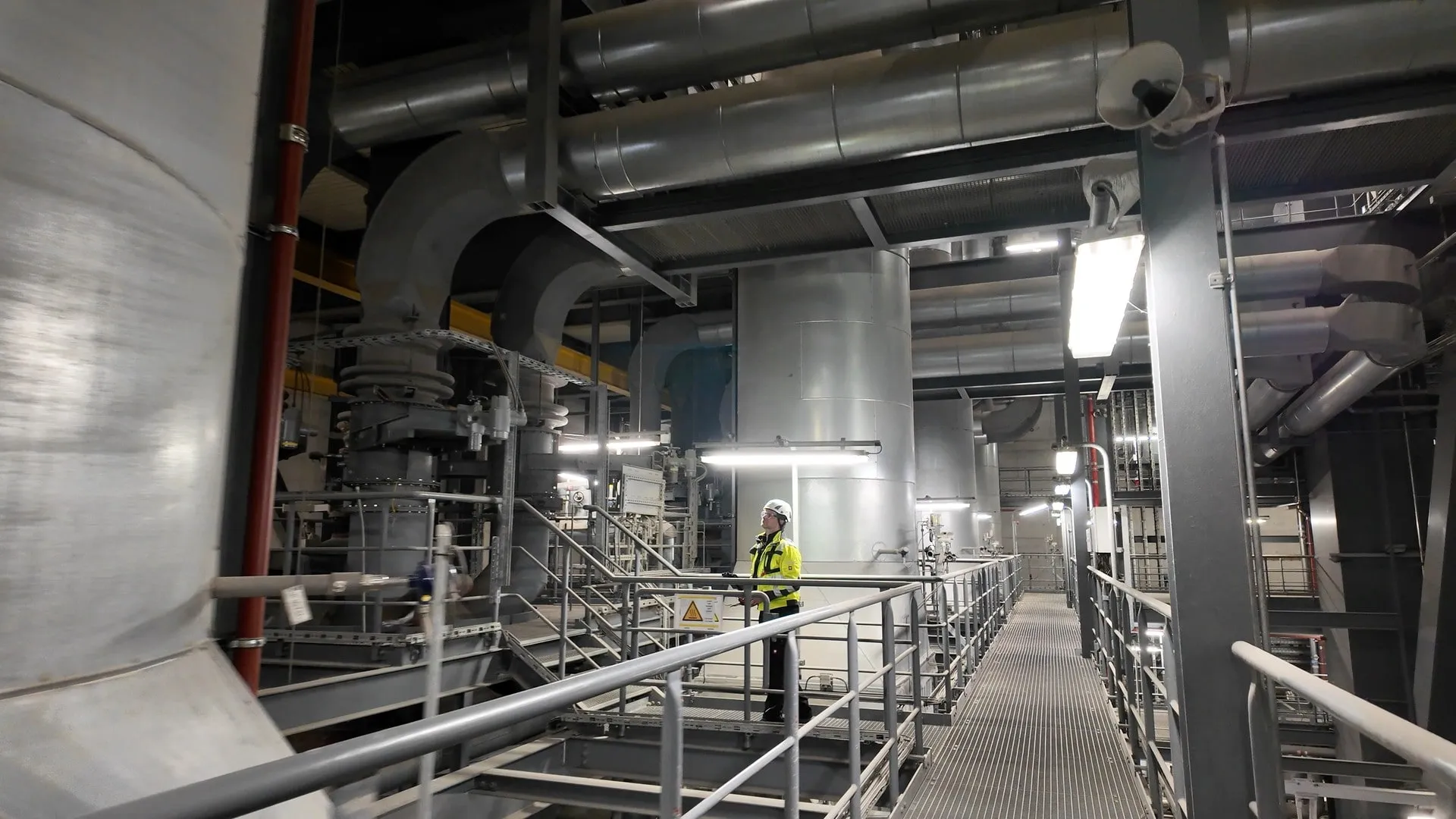
A two-person team at the access hatch – inspection starts within minutes, not days.
The drone does not just replace the inspection itself – it eliminates the largest part of the preparation:
- No access infrastructure → no scaffolding (Gerüst), no rope access (Seilzugang)
- No complex permit processes → no confined-space entry (Confined-Space-Entry), no rescue concept (Rettungskonzept)
- No dependency on multiple trades → less coordination, less delay risk
- Significantly shorter shutdowns → inspection often completed in hours, not days
Typical order of magnitude for cost savings compared to conventional methods – depending on asset type and previous access requirements. Experience base: hundreds of industrial deployments since 2017.
In many projects the biggest saving does not come from the drone flight itself – it comes from these steps being eliminated entirely.
Where Drone Inspection Pays Off Fastest
Wherever access, safety requirements and shutdown time create the greatest overhead.


Direct Comparison: Conventional vs. Drone
Do not compare just quotation totals – compare the entire real-world effort.
| Cost Component | Conventional Inspection | Drone (Kopterflug) |
|---|---|---|
| Access equipment (Zugangstechnik) | Scaffolding or rope access: €5,000–190,000 depending on asset | Eliminated entirely |
| Personnel effort | 3–8 people, multiple days on site | 2 people, usually under 1 day |
| Safety overhead | Gas-free measurement, PPE, rescue concept (Rettungskonzept), permits | Technical assessment and flight planning – handled entirely by us |
| Shutdown duration (Stillstandsdauer) | 2–5 days, often full plant shutdown | 0.5–2 days, often possible in parallel with other work |
| Project complexity | Multiple trades, high coordination overhead, delay risk | One service provider, clear workflow, plannable |
| Documentation | Limited by accessibility | 4K video, images, optional thermography and 3D models |
| Total savings | – | Typically 30–90 % cheaper |
The greatest savings come not from the drone flight itself – but from the elimination of scaffolding (Gerüst), rescue chain (Rettungskette) and coordination overhead.
When Conventional Inspection Makes More Sense
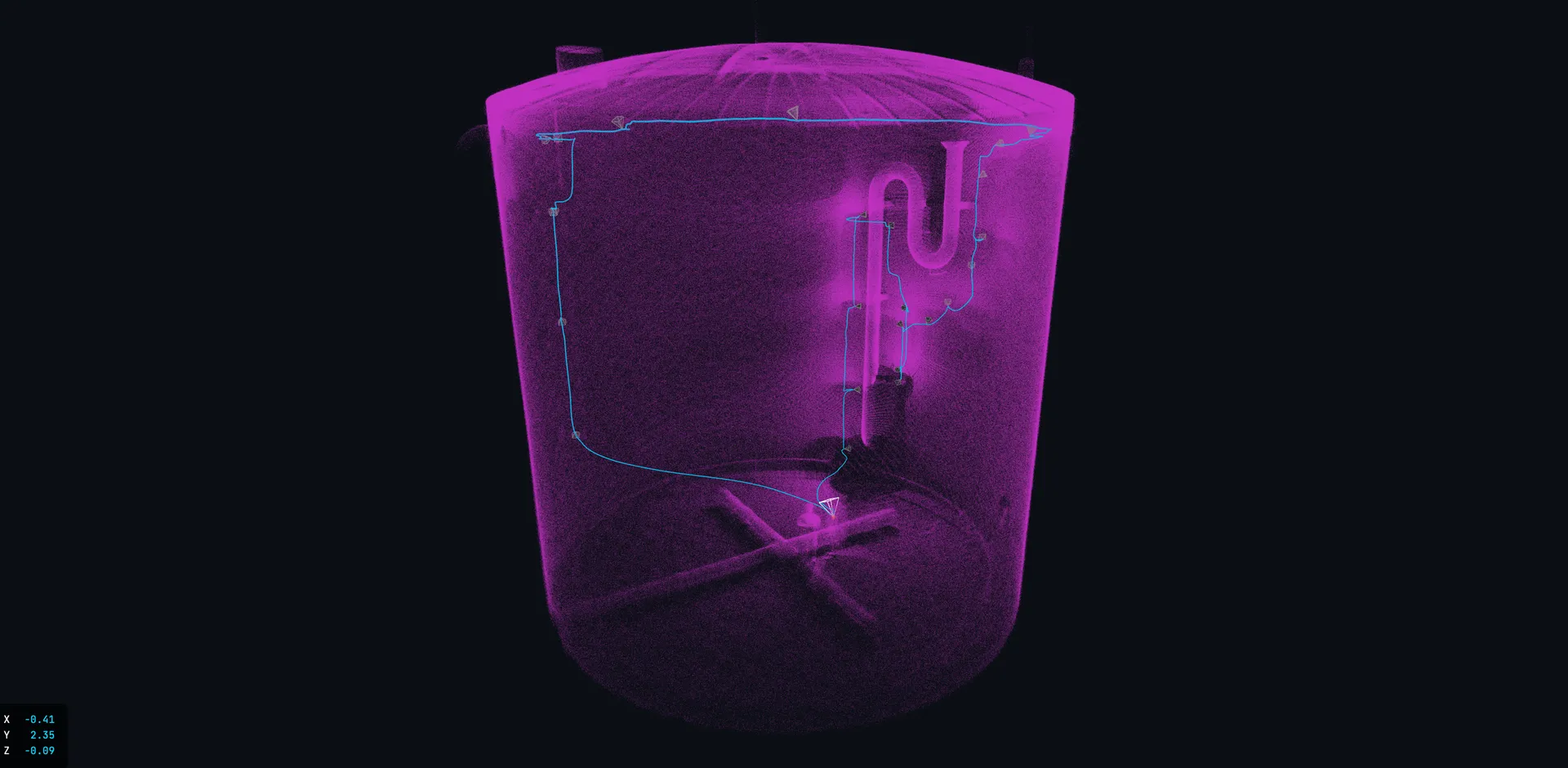
LiDAR 3D point cloud of a steel tank interior – centimetre-accurate geometry documentation without human entry.
We tell you clearly when a drone inspection offers no advantage – or is technically not possible:
- Access diameter below DN 600 – the ELIOS 3 requires a minimum opening of 50 × 50 cm. Narrower pipes or ducts cannot be flown.
- ATEX zones without gas-free clearance – the ELIOS 3 is not ATEX-certified. Deployment only after confirmed explosion-protected atmosphere.
- Temperatures above 50 °C – for boilers and furnaces: inspection only possible after cooling to below 50 °C.
- Contact-based NDT methods required (kontaktgebundene ZfP) – ultrasonic testing (UT), magnetic particle testing (MT) and other contact methods cannot be replaced by drone. These require NDT partners.
- Legally mandated physical inspection by a certified person – where physical presence is mandatory, the drone supplements the inspector but does not replace them.
- Asset already fully accessible – if scaffolding is already in place and a shutdown is planned regardless, the cost advantage often disappears.
In these cases we recommend conventional methods, or combine drone and conventional approaches – depending on what makes economic sense.
From Enquiry to Inspection
Direct contact – no detours.

What We Need for an Estimate
This is all we need for a reliable initial assessment:
- Asset type
- Dimensions
- Access situation
- Inspection objective
- Timeframe
Talk Directly to Our Team
We give realistic effort assessments – and will tell you honestly if a conventional method makes more sense for your situation.
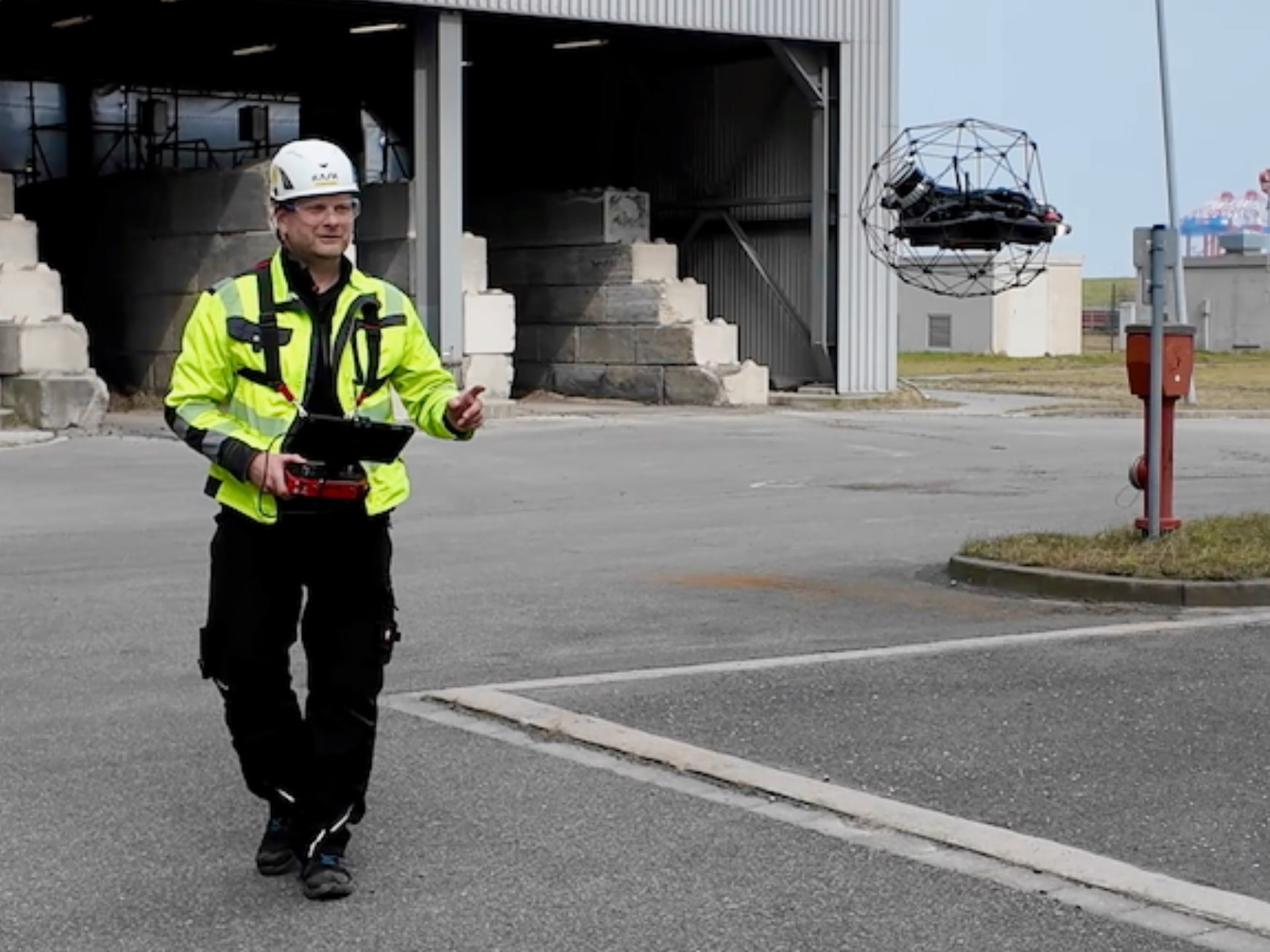 Christian Engelke
Managing Director & Chief Pilot
Christian Engelke
Managing Director & Chief Pilot
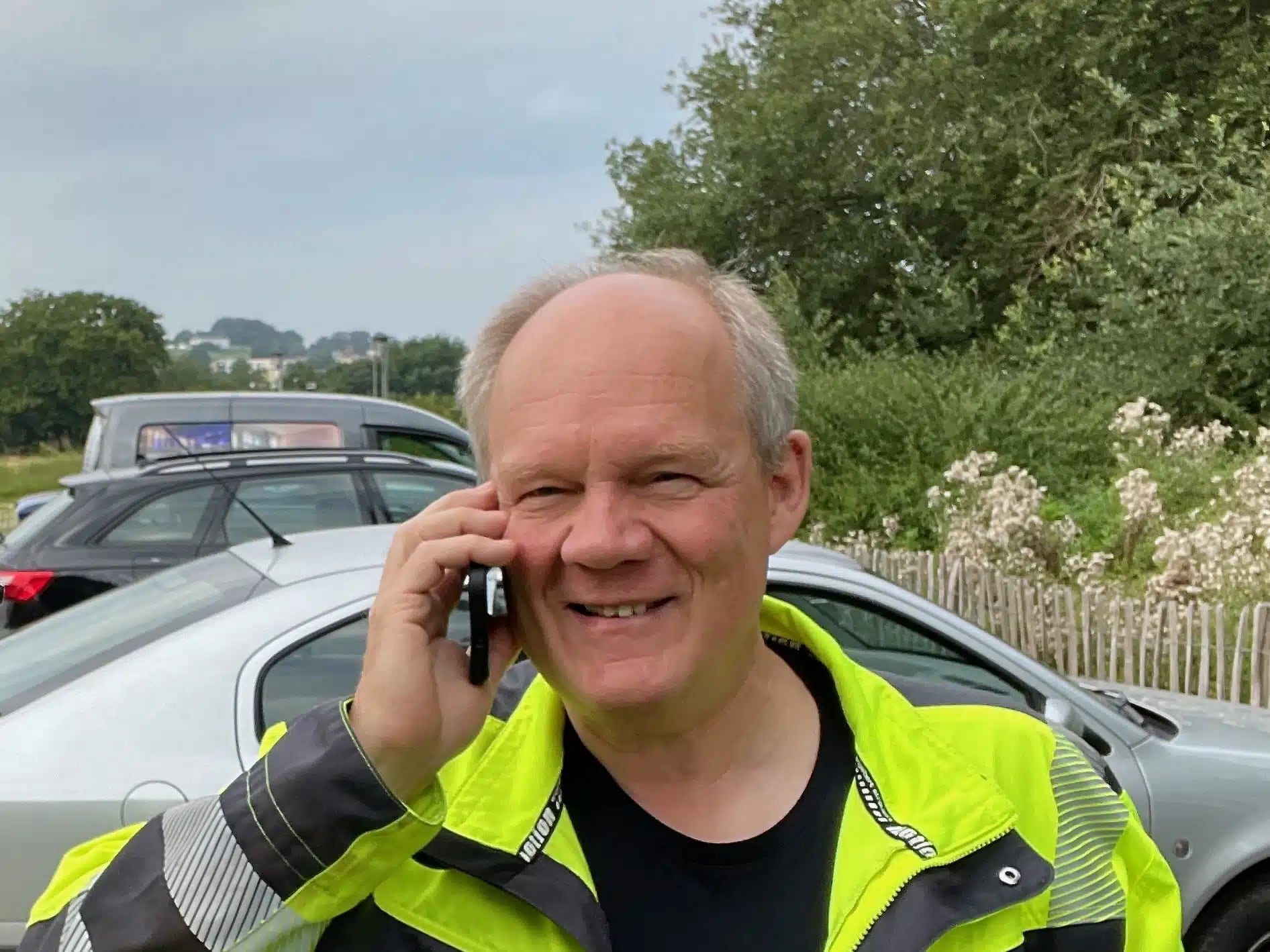 Karsten Lehrke
Dipl.-Ing., Senior Inspector
Karsten Lehrke
Dipl.-Ing., Senior Inspector
 Philipp
Drone Pilot & Inspector
Philipp
Drone Pilot & Inspector
 Juliana
Project Coordination
Juliana
Project Coordination
 Stephan
Drone Pilot & Inspector
Stephan
Drone Pilot & Inspector
Related Services
- Tank Inspection (Tankinspektion) – Tanks and storage vessels without human entry – no scaffolding, no rescue concept, completed in hours rather than days.
- Boiler Inspection (Kesselinspektion) – Boilers and pressure vessels: highest safety overhead with conventional entry – greatest savings potential.
- Silo Inspection (Siloinspektion) – Dust, bulk material, narrow access – classically complex, with drone plannable and fully documented.
- Confined Spaces – Shafts, channels and restricted spaces without DGUV entry process – no rescue concept, no entry risk.
- Condition Documentation (Zustandsdokumentation) – What the client receives after inspection: 4K video, findings list, PDF report, optional LiDAR and thermography.
- Industrial Drone Inspection – Overview of all deployment areas and technologies – from ELIOS 3 to underwater ROV.
Frequently Asked Questions: Costs & Effort
What does a drone inspection cost compared to conventional inspection?
In most cases drone inspection is 30 to 90 % cheaper than conventional entry methods – the exact figure depends on asset type and previous access overhead. The greatest savings effect is not in the drone flight itself, but in the elimination of scaffolding (Gerüst), rope access (Seilzugang), confined-space entry process (Confined-Space-Entry) and multi-day shutdown. For a reliable estimate we need asset type, dimensions and access situation. Contact us for a free initial assessment.
Which cost items are eliminated entirely with drone inspection?
Drone inspection regularly eliminates: scaffolding erection & dismantling (Gerüstbau und -abbau) (depending on asset, €5,000 to €190,000), industrial climbers or rope access, confined-space entry with gas-free measurement, PPE and rescue chain, and several days of production shutdown for coordination and infrastructure. Additionally, the internal coordination overhead for multiple trades is avoided. Experience base: hundreds of industrial deployments since 2017.
How long does a drone inspection take compared to conventional methods?
Conventional entry methods often require 2 to 5 days of shutdown – purely for scaffolding erection, coordination, entry process and dismantling. Drone inspection is in most cases completed within a few hours, maximum 1–2 days, including preparation and data backup. The findings report is available within 24 hours of the deployment.
Does the asset need to be shut down for drone inspection?
For interior inspections (tanks, boilers, silos, shafts) a brief shutdown is required – but significantly shorter than with conventional methods, since no scaffolding is erected and no entry process is initiated. For exterior areas the DJI Matrice 30T can be deployed during live operation. Interior temperatures must be below 50 °C – boilers and furnaces must therefore have cooled to operating temperature.
Is drone inspection permitted under BetrSichV and DGUV?
Yes. The BetrSichV (German Industrial Safety Ordinance) prescribes the inspection obligation, not the method. The drone is a legitimate data-collection method. Since no human entry occurs, the requirements of DGUV Rule 113-004 for the inspection itself do not apply. Our documentation is regularly used by TÜV inspectors and authorised experts as an assessment basis. On request, we align scope and format with your inspector in advance.
Which assets offer the greatest economic benefit from drone inspection?
The greatest economic lever comes wherever access equipment, safety overhead and shutdown are the biggest cost drivers: tanks and storage vessels, boilers and pressure vessels, confined spaces, chimneys, and pipelines of sufficient diameter. Particularly efficient: when multiple objects can be inspected in a single turnaround (Turnaround), sharing mobilisation time.
When is drone inspection not practical or not possible?
Drone inspection is not suitable when: access diameter is below DN 600 (minimum opening 50 × 50 cm required), ATEX zones without gas-free clearance (ELIOS 3 is not ATEX-certified), interior temperatures above 50 °C, or when contact-based NDT methods (kontaktgebundene ZfP-Verfahren) such as ultrasonic or magnetic particle testing are mandatory. In these cases we recommend conventional methods or a combination of both.
What do we receive concretely after drone inspection?
You receive a structured findings report (Befundbericht) containing: 4K video and photos of all captured areas, a position-referenced findings list (Befundliste) with type and severity of each anomaly, recommended actions, and optionally thermography evaluation and a LiDAR 3D point cloud for geometry and deformation evidence. The data package is audit-proof and directly usable by TÜV inspectors and authorised experts. More: Condition Documentation.
How quickly can a drone inspection be scheduled?
In urgent cases – e.g. unplanned shutdown or imminent revision – we are often on site within a few working days. This is a significant advantage over conventional methods that require scaffolding logistics, diver teams or multi-day lead times. For planned inspections we recommend a little lead time for coordination with your inspector.
Is the data accepted by TÜV and DEKRA inspectors?
Yes. Our documentation is regularly used by TÜV, DEKRA and authorised experts as an assessment basis. Kopterflug provides the data – assessment and acceptance rest with the respective inspector, oriented to BetrSichV, API 653 or the applicable standard. On request, we align report format and scope with your inspector in advance.
How many people are on site during a drone deployment?
We operate as a standard two-person team: pilot and assistant (Pilot und Assistent). The assistant handles safety check, communication and data backup – this significantly improves quality and reliability compared to solo operation. For complex assets or multiple objects in a single deployment, the team can be expanded to three people.
How is the price for a drone inspection structured?
The price consists of deployment fee, flight time and documentation effort. The deployment fee covers travel, equipment and preparation. Flight time depends on asset size and complexity. Documentation – findings report with 4K imagery, findings list and recommended actions – is included in the standard scope. Additional services such as LiDAR 3D models or thermography are quoted separately.
Are there volume discounts for multiple assets or regular inspections?
Yes. When multiple objects are inspected in a single deployment (e.g. during a turnaround), travel and mobilisation costs are shared – significantly reducing the unit price per asset. For framework agreements with regular inspection intervals we offer special conditions. Contact us directly – we calculate transparently based on your specific requirements.
Are travel costs included in the quote?
Our base is in Bremen, and we operate throughout Germany. Travel costs are transparently listed in the quote and depend on the distance to the deployment site. For projects with multiple assets or multi-day deployments, travel costs are significantly reduced in proportion. For the greater Northern Germany area, only a small travel surcharge typically applies.
How do I calculate the ROI of a drone inspection for my company?
ROI is derived from the comparison of total costs: conventional inspection vs. drone. Do not just compare quotation prices – also factor in scaffolding costs, shutdown days (production loss per day), personnel effort for coordination and safety measures. In practice, the drone deployment often pays for itself through a single saved shutdown day alone. On request, we provide a comparative calculation for your specific asset.
Are there hidden costs with drone inspection?
No. Our quote covers deployment planning, execution, data backup and findings report – with no additional charges. Special services such as thermography, LiDAR 3D modelling or extended report formats are clearly communicated in advance and quoted separately. There are no costs for scaffolding, rescue concepts or additional safety measures – these items are eliminated entirely with drone inspection.
What does the thermography or LiDAR add-on cost?
Thermography and LiDAR are optional additional services quoted separately per project. The ELIOS 3 features an integrated thermal camera and a LiDAR sensor – the additional effort therefore lies mainly in data evaluation and report preparation. Thermography is particularly suitable for detecting insulation damage and leaks; the LiDAR point cloud provides precise geometry capture and deformation evidence.
How does the price scale for particularly large or complex assets?
For large assets such as tanks exceeding 10,000 m³ or complex geometries (e.g. reactors with numerous internals), the effort for flight time and documentation increases – but proportionally far less than with conventional methods. Scaffolding costs for such assets would increase disproportionately, whereas the drone excels through agility and access efficiency. For large assets the relative savings are particularly high.
Is a framework agreement worthwhile for recurring inspections?
For operators with regular inspection intervals – such as annual tank inspections or scheduled boiler revisions – a framework agreement is economically sensible. You benefit from predictable costs, priority scheduling and reduced unit prices. We also document the development of findings over time, enabling better maintenance planning.
What is the typical saving on shutdown costs?
Production shutdowns cost between €5,000 and over €100,000 per day depending on industry and asset. Drone inspection typically reduces shutdown time from 2–5 days to a few hours or at most 1–2 days. The reduction by 1–3 shutdown days alone often exceeds the entire cost of the drone deployment. This lever is particularly significant in the process industry and energy sector.
Can I deduct drone inspection as a tax-deductible maintenance expense?
Drone inspection is a regular operating expense for maintenance and inspection and is fully deductible – analogous to conventional inspection services. You receive a proper invoice with VAT stated. Whether the cost is allocated to maintenance, inspection costs or operational safety depends on your internal cost structure – consult your accounting department.
What does it cost if the drone inspection has to be aborted?
If a deployment cannot be carried out as planned – for example due to insufficient cooling or missing gas-free clearance – we clarify the conditions transparently in advance. Typically only travel and proportional mobilisation costs are incurred. To avoid such situations, we coordinate the technical prerequisites in detail with you beforehand.
Estimate Drone Inspection Costs for Your Asset
Individual cost estimate within 24 hours – without an on-site visit. Operating since 2017.