
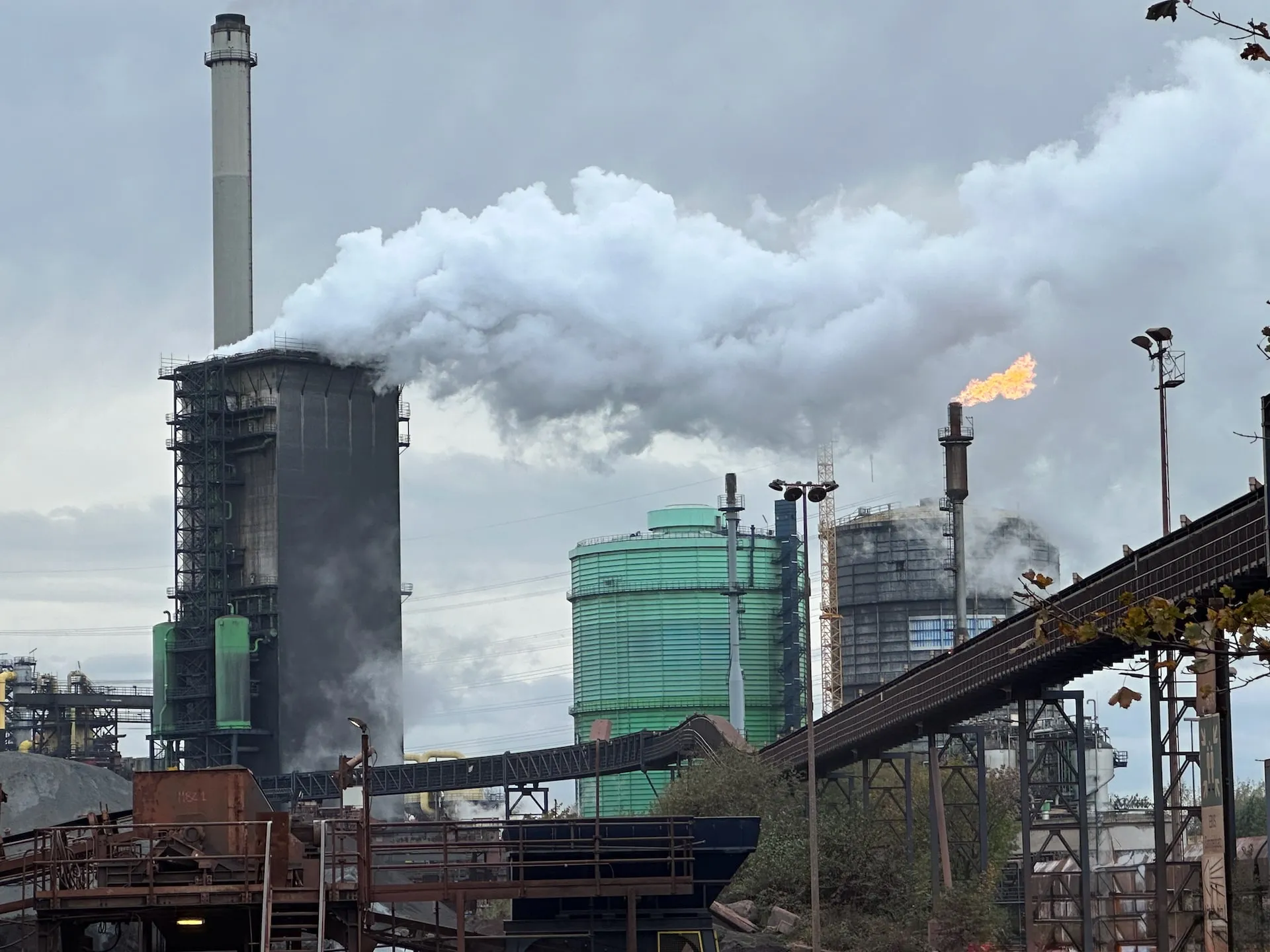
Heavy Industry Drone Inspection – Without Scaffolding, Without Human Entry
Kopterflug inspects steel plants, foundries and cement works using the Flyability ELIOS 3 – blast furnaces, chimneys, industrial furnaces and silos without personnel entry, without scaffolding. 4K, thermography and LiDAR in a single flight. Operating since 2017.
- No human entry – the drone flies in, your team stays outside
- 4K + Thermography + LiDAR in a single flight
- Drastically reduced downtime – inspection in hours instead of weeks
- DGUV- and BetrSichV-aligned documentation
What We Inspect in Heavy Industry
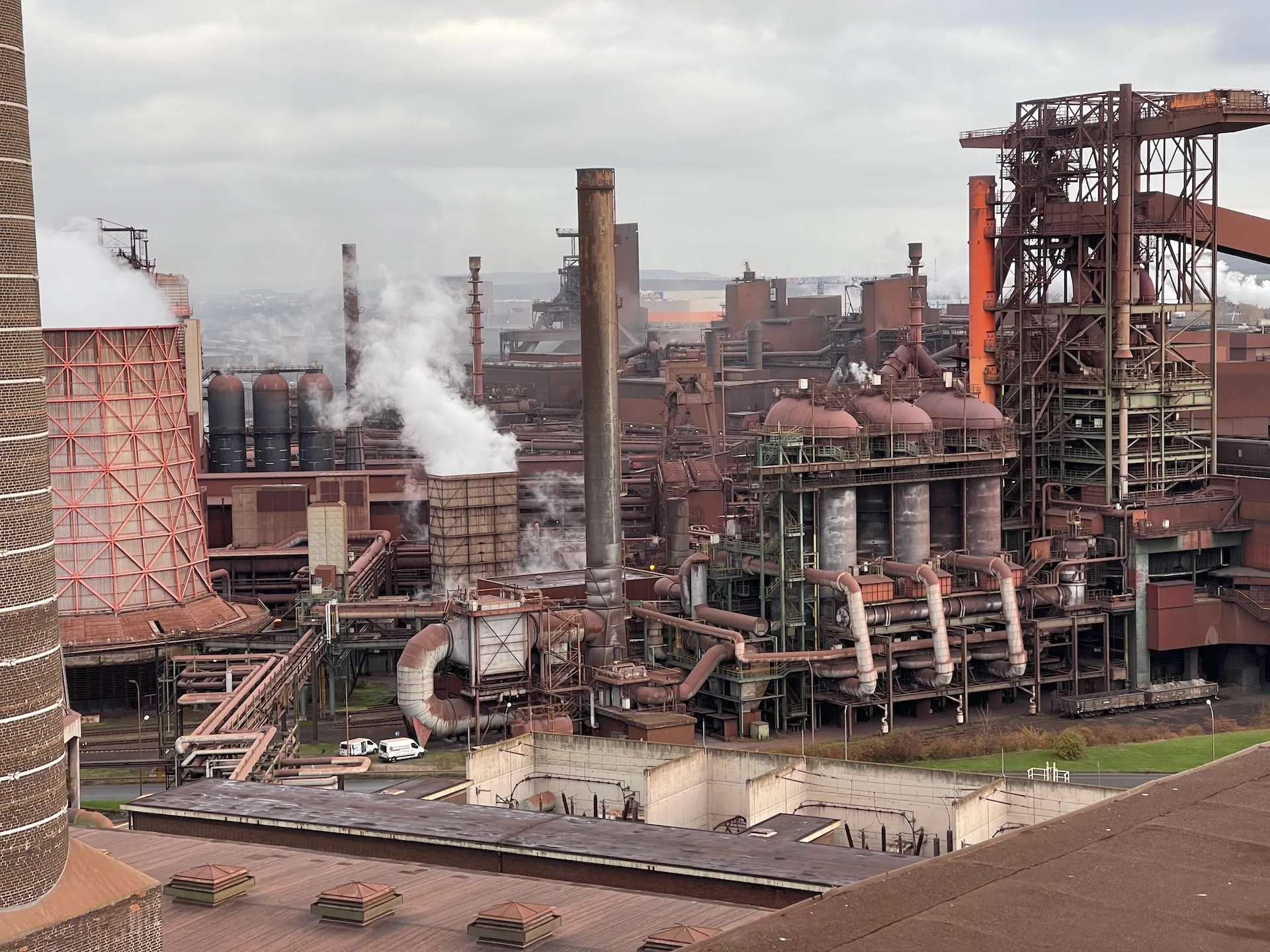
Steel plants, foundries and cement works operate under extreme conditions. We inspect all safety-critical assets – without scaffolding, without human entry:

Heavy Industry: Where Inspection Is Hardest – and Most Important
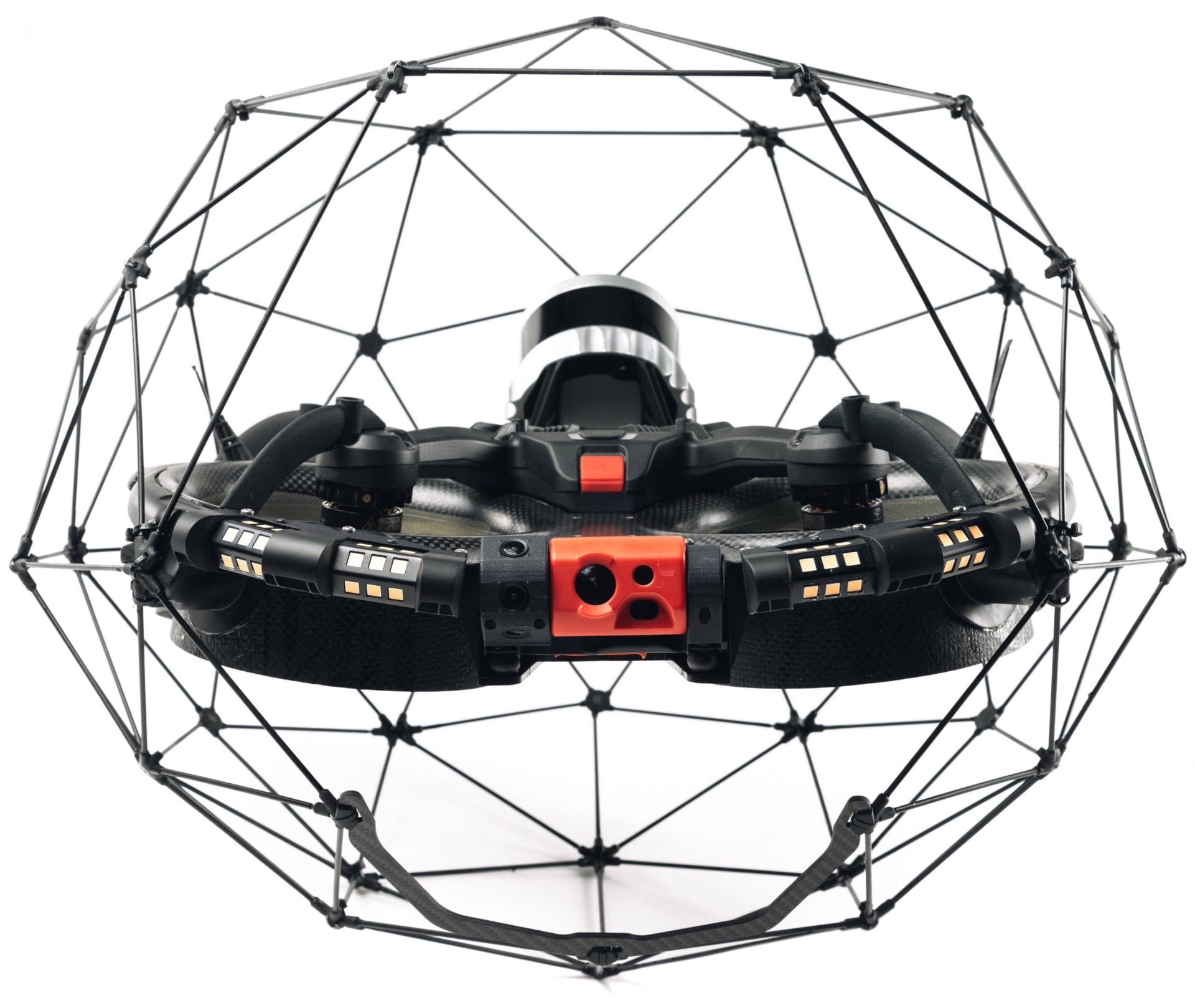
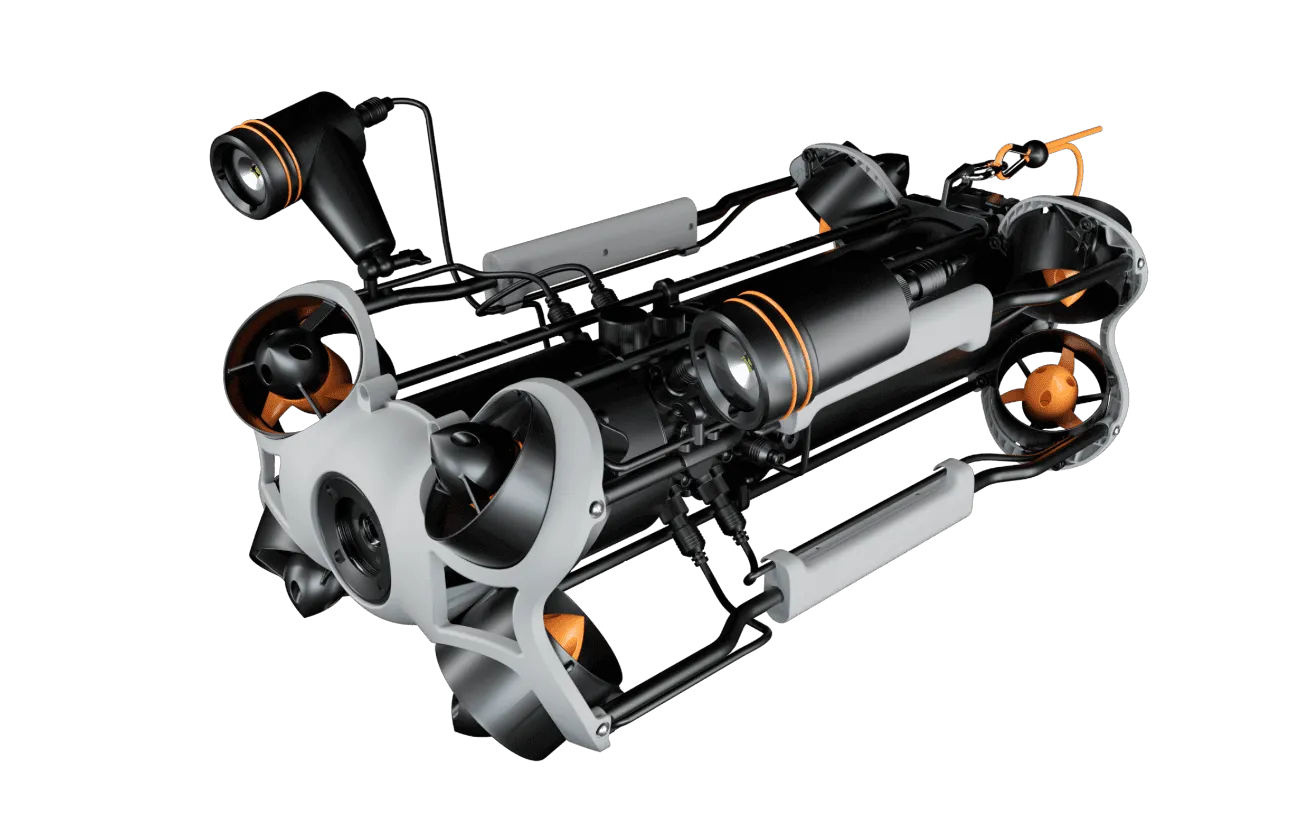
The ELIOS 3 with collision-safe carbon cage – engineered for extreme industrial conditions: dust, darkness, confined spaces.
No industrial sector places higher demands on inspection technology than heavy industry. Steel plants, smelting works, cement plants and aluminium smelters operate assets under extreme conditions: temperatures up to 1,600°C, toxic process gases such as CO and SO⊂2;, refractory linings with complex wear patterns – and production pressure that forces inspection downtime to an absolute minimum.
Conventional methods – scaffolding, rope access, confined space entry with respiratory protection – are particularly costly and time-intensive in heavy industry. Blast furnace shutdowns cost, depending on the installation, thousands to tens of thousands of euros per hour. Every day of scaffolding erection is a day with no iron or steel produced.
The Flyability ELIOS 3 fundamentally changes this calculation: we fly into cooled blast furnaces, chimneys, industrial furnaces and silos – without scaffolding, without human entry, without weeks of preparation. 4K video, thermography and LiDAR 3D deliver the data your maintenance planners need to schedule lining replacements precisely rather than by calendar.
What the ELIOS 3 Documents in Heavy Industry
We fly the ELIOS 3 into blast furnaces, chimneys, industrial furnaces and silos and systematically document all safety-relevant structures. The technical assessment is carried out by your maintenance planners and certified inspectors – we deliver the data:
Blast Furnaces & Converters
What we capture: 4K footage of refractory lining, wear on bricks and masonry, cracks, spalling, thermal damage to cooling plates and tuyeres. Thermography for detecting hotspots and thermal anomalies in the lining.
Why it matters: The lining of a blast furnace determines its campaign duration. Uncontrolled wear can lead to breakouts and unplanned shutdowns. Your maintenance planners assess based on our data whether repairs or a complete relining are required – targeted, not by calendar.
How we do it: 4K camera for detailed images of lining damage and cracks, thermography for hotspots and thermal anomalies, LiDAR survey (centimeter accuracy) to capture the wear profile and detect geometry changes in the lining.
Chimneys & Flue Gas Ducts
What we capture: Condition of masonry, liner pipes, steel casing and linings. Documentation of corrosion, sooting, cracks, erosion from aggressive flue gases. Thermography for detecting leaks and insulation damage.
Why it matters: Industrial chimneys in steel plants and cement works are exposed to extreme thermal and chemical stress. Damage to liner pipes or linings can compromise safe operation. Your certified inspectors assess on the basis of our documentation what measures are required.
How we do it: The ELIOS 3 flies vertically into chimneys – without scaffolding, without climbers. 4K camera with 16,000 lumens documents masonry and liner pipes. LiDAR captures the geometry of the chimney cross-section. Thermography shows insulation defects and thermal anomalies.
Industrial Furnaces & Combustion Chambers
What we capture: Refractory linings in heat treatment furnaces, melting furnaces and combustion chambers. Wear, cracks, spalling, hotspots. Condition of burners, heating coils and internals. Thermography for detecting thermal weak points.
Why it matters: Refractory linings in industrial furnaces wear continuously under extreme thermal stress. Early detection of damage enables targeted repairs instead of unplanned shutdowns. Your furnace engineers and maintenance experts plan the optimal repair time based on our data.
How we do it: 4K detail footage of linings and internals after cooling, thermography for hotspots and thermal anomalies, LiDAR survey (centimeter accuracy) to document the wear profile and detect deformations.
Silos & Storage Vessels
What we capture: Condition of inner linings, corrosion, deposits, bridging, caking, deformations on walls and discharge cones. Documentation of coating damage and structural anomalies in cement silos, coke silos and raw material vessels.
Why it matters: Bridging and caking impair material flow and can cause production failures. Corrosion and lining damage threaten structural integrity. Your engineers assess based on our documentation whether cleaning, repair or replacement is required.
How we do it: The ELIOS 3 flies into the silo from above and documents the entire interior – without entry. 4K camera for detail footage, LiDAR survey (centimeter accuracy) to capture fill levels, caking and geometry changes.
At the end you receive a detailed inspection report – with 4K images, thermography evaluation, LiDAR point cloud and 3D model. Documentation aligned with DGUV and BetrSichV requirements. Your maintenance planners and certified inspectors assess the findings and plan next steps.
The Challenge in Heavy Industry
Blast furnaces, chimneys, industrial furnaces – extremely hot, toxic, difficult to access. Human entry requires DGUV measures, weeks of scaffolding, enormous downtime. The ELIOS 3 inspects in hours – without human entry, with 4K + thermography + LiDAR.





Typical Inspection Use Cases in Heavy Industry
With the Flyability ELIOS 3 we inspect safety-critical assets – precisely, safely and with minimal downtime. Downtime costs thousands of €/hour – we reduce inspections from days/weeks to hours:
Why ELIOS 3 Instead of Human Entry?
Heavy industry inspections are particularly demanding and cost-intensive. The ELIOS 3 reduces risk, time and costs:
- No human entry required: No climbers, no respiratory protection wearers, no rescue chain. Your team stays outside. Drone flies in.
- Significantly reduced downtime: Scaffolding = weeks. Drone = hours. Minimal production loss. Every hour of downtime costs thousands of €.
- Comprehensive documentation: 4K footage, 3D models, thermography. Precise reports for planning and compliance. Archived in audit-proof format.
- Up to 80% cost savings: No scaffolding, no climbing team, minimal downtime. Overall costs can be significantly reduced compared to conventional inspection.
- Thermography early warning: Hotspots in refractory linings become visible by thermography before they lead to breakouts or unplanned shutdowns. Targeted repair instead of emergency response.
- DGUV- & BetrSichV-aligned documentation: Complete inspection report with 4K findings, 3D model and thermography. Archived in audit-proof format – as basis for certified inspector sign-offs and recurring inspections.
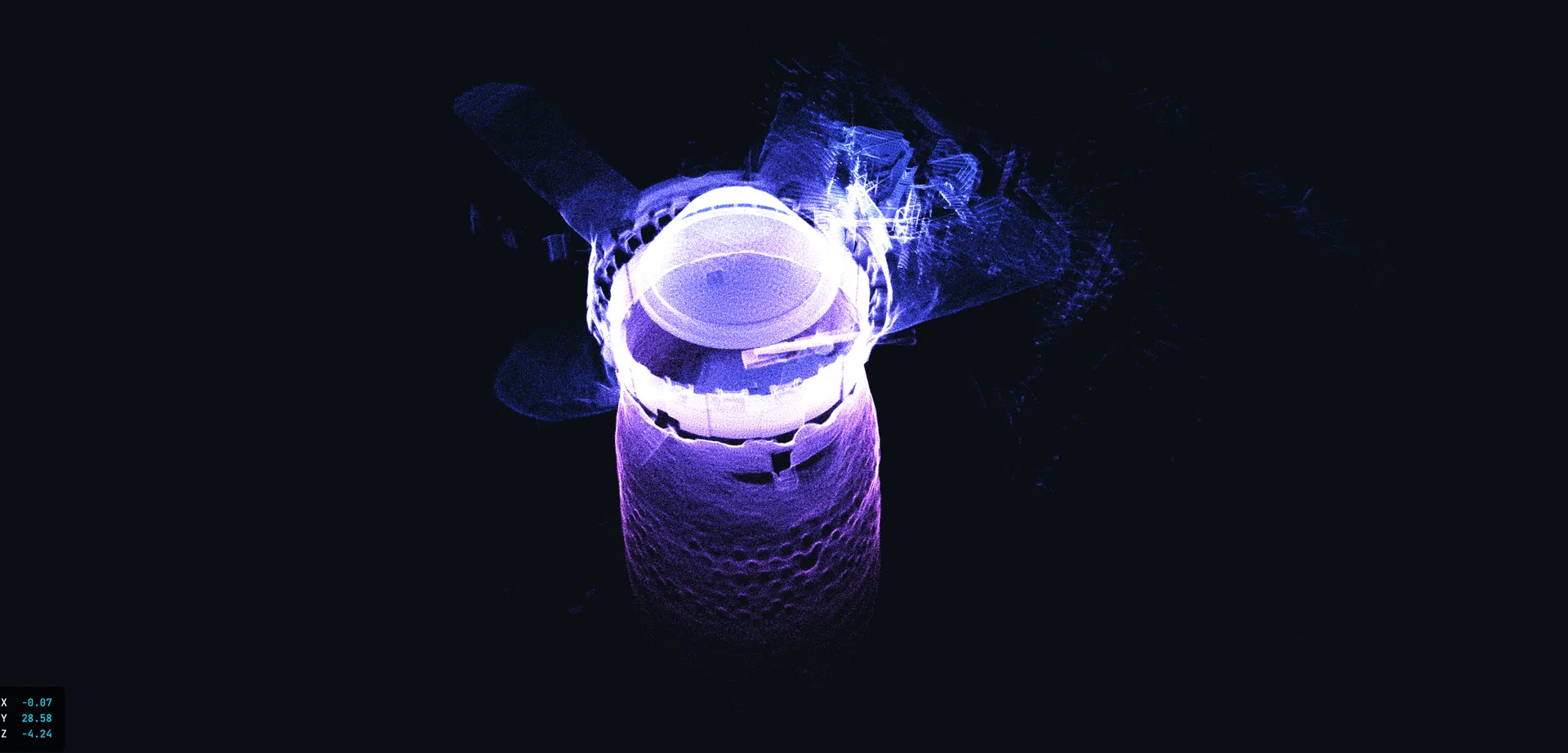
LiDAR 3D point cloud of a blast furnace – centimeter-accurate geometry data for wear documentation and maintenance planning.
Inspection Process
From enquiry to report – structured, fast, no surprises:
Step 01: Initial Phone Assessment
We discuss the installation, access routes, potential hazardous substances and your inspection requirements.
Step 02: Quotation + Scheduling
You receive a transparent quotation including on-site time, report scope and sensors.
Step 03: On-Site Inspection
We arrive with the ELIOS 3 and fly into blast furnaces, chimneys and furnaces. Live feed for your experts on site. Always a minimum team of two.
Step 04: Report + 3D Model
4K videos, thermography footage, 3D model, findings. Archived in audit-proof format.
Complementary Systems
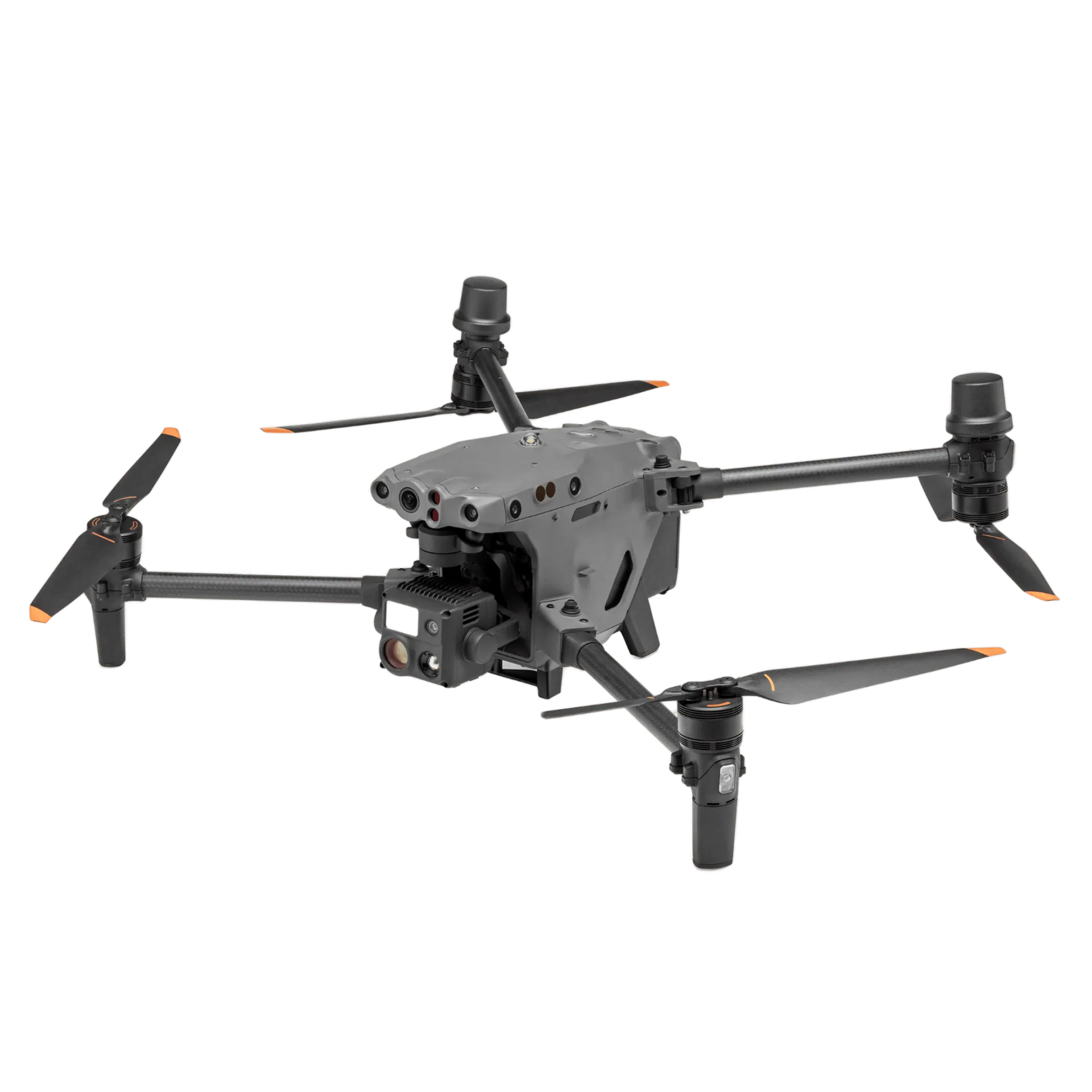
The ELIOS 3 inspects blast furnaces, converters and industrial furnaces from the inside. The DJI Matrice 30T complements for hall roofs, chimneys and exterior structures.
Heavy Industry Locations in Germany
Germany was a pioneer of industrialisation in the 19th century – with the Ruhr region as its heartland. The steel industry today produces approx. 35–40 million tonnes per year. Many installations are decades old and require regular inspection of blast furnaces, converters, chimneys and refractory linings. Exactly where we come in.
- Ruhr Region: Birthplace of German heavy industry since 1758 (St. Antony foundry). Today: thyssenkrupp in Duisburg, HKM in Dortmund. Blast furnaces, converters, coking plants – installations with 50+ years of operation.
- Salzgitter & Northern Germany: Salzgitter AG (founded 1937) with ~7 million t/year. ArcelorMittal in Bremen (~3–4 million t/year). Integrated steelworks with blast furnaces, rolling mills and energy plants.
- Saarland: Saarstahl and Dillinger Hütte – one of Europe's oldest ironworks (founded 1685). Special steels and heavy plates. Installations with centuries of operating history.
- Eastern Germany: ArcelorMittal Eisenhuettenstadt (founded 1950 as GDR steel combine, ~2–3 million t/year). Modernised after 1990, but inspection requirements for ageing structures remain.
- Non-Ferrous Metals: Aurubis in Hamburg (Europe's largest copper smelter), TRIMET Aluminium in Essen. Melting furnaces, electrolysis plants and foundries with extreme operating conditions.
These installations are 30 to 100+ years old – regular inspection of refractory linings, load-bearing structures and exhaust systems is mandatory. The ELIOS 3 inspects after cooling, without scaffolding and without human entry.
Your Contacts for Heavy Industry Inspections
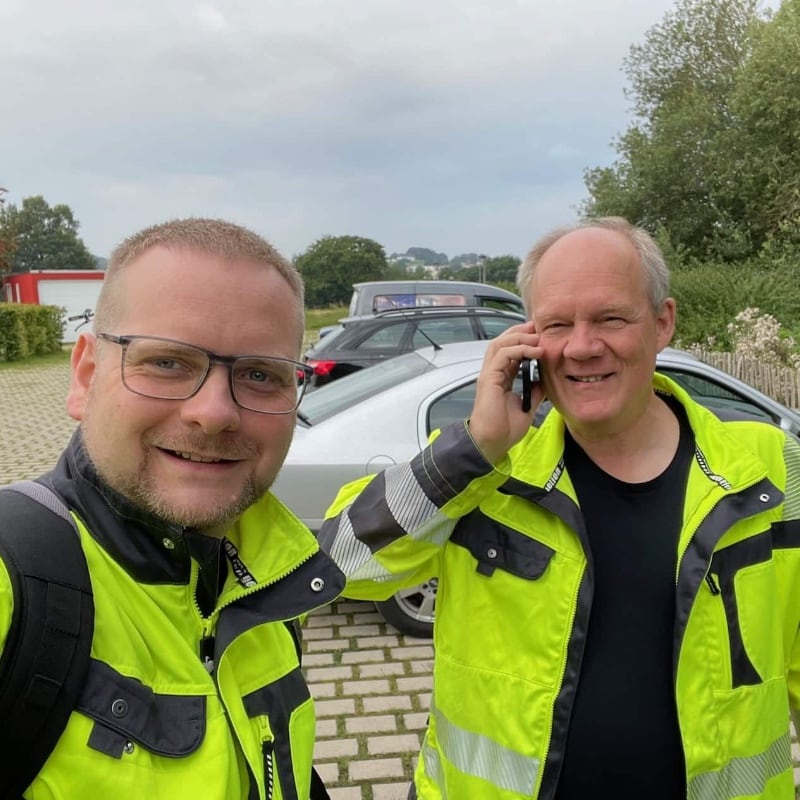
Christian Engelke and Dipl.-Ing. Karsten Lehrke – your direct contacts for heavy industry drone inspection projects since 2017.
Since 2017, we have been inspecting heavy industry installations in Germany – blast furnaces, chimneys, industrial furnaces, silos. Experience from numerous inspections in demanding industrial environments. No human entry. The two-person team is our standard for maximum safety and efficiency.
Related Inspection Services
- Cooling Tower Inspection – Cooling towers in steel and smelting plants – M30T exterior, ELIOS 3 for internals.
- Boiler Inspection – Steam boilers, waste heat boilers and combustion chambers – 4K + LiDAR without scaffolding.
- Tank Inspection – Vessels and tanks – without draining, without scaffolding.
- Confined Spaces – Confined spaces without human entry – ELIOS 3 for all confined space objects.
- Pipe Bridge Inspection – CUI detection, corrosion and thermography on pipe bridges.
- Industrial Inspection Overview – Comprehensive industrial inspections with state-of-the-art drone technology.
Frequently Asked Questions
Is drone inspection in heavy industry legally permitted in steel plants and cement works?
Yes, deployment is generally possible when carried out within the operational risk assessment and applicable regulations (e.g. BetrSichV, DGUV). Drones are primarily used to avoid dangerous human entries. More on the technology: ELIOS 3 at Kopterflug.
Is the drone suitable for blast furnaces or industrial furnaces?
Yes, but only during shutdown and after sufficient cooling to below 50°C. Typical applications are inspection of refractory linings, documentation of wear, and detection of spalling and cracks. More on the technology: ELIOS 3 at Kopterflug.
Can thermography detect damage or hotspots?
Thermography can reveal temperature anomalies, insulation issues and potential weak points – it is used complementary to visual inspection. In refractory linings of blast furnaces and industrial furnaces, thermography helps detect hotspots early before they lead to breakouts or unplanned shutdowns.
How does LiDAR help with inspections in furnaces or chimneys?
LiDAR enables the creation of 3D models and precise capture of geometries at centimeter accuracy. This allows wear profiles to be documented and changes quantitatively compared across multiple inspections.
How accurate are LiDAR measurements?
The ELIOS 3 delivers LiDAR data with centimeter accuracy – suitable for geometric assessments and wear profiles. Very fine surface defects are assessed in practice through the combination of high-resolution image data and targeted proximity of the camera to the object.
How long does a drone inspection in heavy industry take?
This depends strongly on the object – size, geometry and desired level of detail determine flight time. In practice, drone inspections can be completed significantly faster than conventional methods with scaffolding or climbing teams.
Do chimney inspections require scaffolding or climbers?
In many cases, no. The ELIOS 3 can fly inside chimneys – without scaffolding, without a climbing team. Whether this is feasible in a specific case depends on the inspection objective, geometry and accessibility.
Can the drone fully survey tall chimneys?
There are practical examples for tall chimneys and stacks – the specific feasibility always depends on geometry, signal connection and deployment concept. A blanket statement on maximum heights cannot be made. We assess this in advance for each project.
Is the drone suitable for exterior inspections of chimneys or towers?
For exterior inspections we use the DJI Matrice 30T. With 200x hybrid zoom and radiometric thermography it documents chimneys exteriors, hall roofs, blast furnace outer walls and industrial buildings – from a safe distance, without scaffolding, during live operations. The ELIOS 3 handles interiors; the M30T the exterior. Together both systems cover the entire installation.
What damage can be detected in chimneys?
Typical findings include deposits and soiling, corrosion on the steel casing, cracks and spalling in masonry or liner pipes, and sooting from aggressive flue gases. Thermography additionally reveals insulation defects and thermal anomalies.
Is the drone suitable for silos and bunkers?
Yes, particularly for detecting bridging, caking and geometry changes. The ELIOS 3 flies into the silo from above and documents the entire interior without entry. LiDAR captures fill levels and caking.
Is the image quality sufficient for a sound damage assessment?
The ELIOS 3 features a high-resolution 4K camera with 16,000 lumens of illumination. Decisive for image quality are the distance to the object, the chosen perspective and lighting conditions – all controlled by the pilot's targeted navigation. The technical damage assessment itself is carried out by your maintenance experts and certified inspectors based on our data.
Can the drone be used in dusty and harsh environments?
Yes, the ELIOS 3 has been specifically developed for industrial environments with dust, dirt and confined spaces. The carbon protective cage also permits light contact with walls and internals.
What happens if the drone touches the installation?
Light contact is constructively accounted for by the carbon protective cage – the drone can touch walls and remains stable. Each deployment is nevertheless planned to avoid contact with sharp-edged or critical structures wherever possible.
Can inspections be repeated and compared?
Yes, through 3D point clouds and systematically documented inspection areas, changes can be quantitatively compared across campaigns. This makes wear progression measurable and enables predictive maintenance instead of calendar-based inspections.
Is the data usable for maintenance and planning?
Yes – particularly for condition assessment, maintenance planning and documentation. 4K footage, LiDAR point clouds and thermography data provide your maintenance planners and certified inspectors with the basis for targeted repair decisions.
How much can production downtime be reduced?
Practical examples show significant advantages over conventional methods with scaffolding or climbing teams. The actual effect is always project-dependent – geometry, access situation and required sensors determine the effort.
Are there practical examples from heavy industry?
Yes, particularly from cement plants, power plant installations and chimney structures. Flyability documents applications at casestudies/chimney-tower-inspection and further industrial examples in the Flyability Case Studies overview.
What role do electromagnetic interferences play in steel plants?
In metallic and energy-intensive installations, electromagnetic influences (EMI) can occur that affect flight operations. This requires careful deployment planning and experience in dealing with such environments. We account for this in our mission planning.
How often should heavy industry installations be inspected?
This depends on the installation, intensity of use and current condition. In practice, inspections frequently take place before planned shutdowns for condition assessment, after anomalies or incidents, and as part of regular condition checks under BetrSichV and DGUV. The drone makes it possible to also use short-notice inspection windows within planned revisions.
Can the M30T capture hall roofs and exterior facades of steel plants?
Yes. The DJI Matrice 30T documents hall roofs, rooflights, exterior facades and industrial chimneys from outside – with 200x zoom and thermography. Heat losses, insulation damage and roof damage are detectable without scaffolding or aerial work platforms. Deployment is also possible during live plant operations.
Does the heavy industry installation need to be shut down for drone inspection?
For interior inspections (blast furnaces, furnaces, chimneys), a shutdown and cooling to below 50°C is required – but not a lengthy plant stoppage. Exterior inspections with the DJI M30T are possible during live operations. Compared to conventional scaffolding, drone inspection significantly reduces downtime.
What data do we receive after the drone inspection in heavy industry?
You receive a structured inspection report with 4K video footage, thermography evaluation (hotspots, insulation defects), LiDAR point cloud as a 3D model and a findings report with positional references. The data is archived in audit-proof format and suitable as a basis for certified inspector sign-offs under BetrSichV.
Get in Touch
Questions about heavy industry drone inspection or need a quote for your project? Fill out the form below and we will get back to you within 24 hours.