Note: Regulations and standards mentioned on this page (e.g. BetrSichV, DGUV, API 653) refer to German and European frameworks. We are happy to discuss how these relate to your local requirements.
Inspection Intervals for Industrial Plants – Overview by Plant Type
When is the next recurring inspection due – and who may carry it out? Inspection intervals in Germany follow BetrSichV, TRBS and the operator’s risk assessment. This overview covers the most important plant types with their typical intervals, inspection types and ZÜS obligation.
BetrSichV maximum intervals – legally binding upper limits
ZÜS obligation by plant type – when TÜV/DEKRA is required
Drone as inspection tool – which inspection types can it support?
Documentation obligations – retention requirements and drone data
Every operator of industrial plants in Germany faces the same question: When is the next recurring inspection due – and who may carry it out?
The answer is not trivial. Inspection intervals result from the interplay of:
Betriebssicherheitsverordnung (BetrSichV) as the core regulation
Technische Regeln für Betriebssicherheit (TRBS) as the specification
Risk assessment of the operator as the individual basis
Maximum intervals from Annex 2 and 3 of the BetrSichV as absolute upper limits
The intervals are never fixed. They result from the risk assessment under § 3 BetrSichV. The maximum intervals from the ordinance must never be exceeded however – even if the risk assessment indicates lower risk.
All intervals stated are maximum intervals (status March 2026). At elevated risk (aggressive media, high temperatures, corrosive conditions) shorter intervals may be required.
Disclaimer: This article is for general information purposes. The content has been carefully researched but does not replace legal advice. Inspectomatic GmbH accepts no liability for accuracy, completeness or currency. The authoritative texts are always the current versions of the ordinances at gesetze-im-internet.de and baua.de.
Overarching Legal Bases
BetrSichV – Core Regulation§ 14: Recurring inspections of work equipment. § 15: Inspection of überwachungsbedürftige Anlagen by ZÜS. § 16: Inspection before commissioning and after changes. Annex 2: maximum intervals for pressure equipment, lifts, Ex-zone plants. Annex 3: maximum intervals for cranes, forklift trucks, racking.
TRBS – Technical Rules (BAuA)TRBS 1201: type, scope, intervals and documentation of inspections. TRBS 1201 Part 1: inspections in Ex-zone areas. TRBS 1203: requirements for competent persons. TRBS 1111: risk assessment (basis for all intervals).
DGUV – Accident PreventionDGUV Regel 113-004: vessels, silos and confined spaces. DGUV Vorschrift 3: electrical equipment and operating resources. DGUV Information 208-043: racking safety. DGUV Information 213-062: pressure tests of vessels.
Inspection Intervals by Plant Type – Overview
The following overview shows maximum intervals for recurring inspections of the most important industrial plant types. Actual intervals may be shorter due to the risk assessment.
Pressure Vessels & Pressure EquipmentLegal basis: BetrSichV Annex 2 No. 4+5; AD 2000; DIN EN 13445. Inspection types: internal inspection, external inspection, pressure test. Maximum intervals: Internal: 5 years · Pressure test: 10 years · External: 2–5 years. ZÜS required: Yes — Cat. I and above. Drone applicable: Yes — internal and external VT.
Storage Tanks & Atmospheric TanksLegal basis: BetrSichV Annex 2 No. 4; TRGS 509; DIN EN 14015; API 653 / EEMUA 159. Inspection types: visual + UT wall thickness, corrosion, floor scan, tightness. Maximum intervals: Internal: 5–10 years · With hazardous substances: 2–5 years. ZÜS required: Partially — often competent person sufficient. Drone applicable: Yes — core area for drone inspection.
Steam & Hot-Water BoilersLegal basis: BetrSichV Annex 2 No. 4; DIN EN 12952; DIN EN 12953. Inspection types: internal inspection, pressure test, safety valves. Maximum intervals: Internal: 3 years · Pressure test: 6–9 years. ZÜS required: Yes — always. Drone applicable: Yes — internal inspection of heating surfaces and tube systems.
Pressure PipeworkLegal basis: BetrSichV Annex 2 No. 4; DIN EN 13480; AD 2000 HP 30. Inspection types: internal/external, UT wall thickness, tightness test, pressure test. Maximum intervals: Pressure test: 5–10 years · Shorter for corrosive media. ZÜS required: Yes — Cat. I and above. Drone applicable: Yes — external inspection of pipe bridges and routes.
Silos, Bunkers & Bulk VesselsLegal basis: BetrSichV § 14; DGUV Regel 113-004; TRGS 510; DIN EN 1991-4. Inspection types: visual, structural, wear, dust explosion protection. Maximum intervals:1–5 years (risk-based, often annual with dust explosion risk). ZÜS required: Rarely — usually competent person. Drone applicable: Yes — core area, avoids human entry per DGUV 113-004.
Chimneys, Flares & Flue Gas SystemsLegal basis: BetrSichV § 14; state building codes; DIN EN 13084; VDI 6200. Inspection types: visual, corrosion, structural stability, lining. Maximum intervals:1–3 years (often annual at high temperatures). ZÜS required: Rarely — competent person, partly building authority. Drone applicable: Yes — internal and external inspection without scaffolding.
Plants in Ex ZonesLegal basis: BetrSichV Annex 2 No. 3; TRBS 1201 Pt 1; TRGS 722/724; DGUV Regel 113-001. Inspection types: explosion protection, ignition source analysis, earthing, potential equalisation. Maximum intervals:1–3 years (by Ex zone). ZÜS required: Yes. Drone applicable: Yes — after gas measurement and below explosion limits.
Racking Systems & High-Bay WarehousesLegal basis: BetrSichV § 14; DIN EN 15635; DGUV Information 208-043; FEM 10.2.02. Inspection types: visual, damage classification (green/yellow/red), structural stability. Maximum intervals: Expert inspection: 12 months · Weekly visual checks by staff. ZÜS required: No — competent person (racking inspector). Drone applicable: Yes — aerial racking inspection without mobile elevated work platform.
TRBS in Detail – Technical Rules for Plant Safety
The Technical Rules for Plant Safety (TRBS) are published by the Federal Institute for Occupational Safety and Health (BAuA). They specify the requirements of the BetrSichV and represent the state of the art. Those who comply with the TRBS can assume that they meet the BetrSichV requirements.
TRBS 1201 – Inspections and ControlsThe central Technical Rule for all recurring inspections. Defines inspection types (VT, functional test, metrological), scope, documentation and interval determination. Also the basis for drones as an inspection tool – it defines VT requirements that the drone must fulfil.
TRBS 1201 Part 1 – Inspections in Ex ZonesSpecial rule for inspections in potentially explosive atmospheres. Defines requirements for inspection before initial commissioning in Ex zones, recurring inspection of equipment and protective systems, inspector qualification (Ex knowledge required), documentation in explosion protection document.
TRBS 1203 – Competent PersonsDefines who may perform inspections as a befähigte Person (competent person): vocational training in the relevant field, professional experience with the equipment to be inspected, recent relevant work activity, further training. For überwachungsbedürftige Anlagen (pressure equipment, Ex-zone plants) a ZÜS is required instead.
TRBS 1111 – Risk AssessmentThe risk assessment is the basis for all inspection intervals. It takes into account: type and extent of hazards (medium, pressure, temperature), operating conditions (corrosion, wear, fatigue), experience from previous inspections and incidents, manufacturer specifications and standard requirements. Determined intervals must not exceed BetrSichV maximum intervals.
ZÜS or Competent Person – Who May Inspect?
One of the most frequent questions about recurring inspections: Do I need the TÜV, or does a competent person suffice? The answer depends on the plant type.
ZÜS Required (§ 15 BetrSichV)An authorised inspection body (TÜV, DEKRA, GTÜ etc.) must inspect: pressure equipment from Category I, steam boilers (always), lifts, Ex-zone plants in certain cases. The ZÜS prepares the inspection report, which is submitted to the operator and, if applicable, the authority.
Competent Person Sufficient (§ 14 BetrSichV)A befähigte Person per TRBS 1203 suffices for: storage tanks (atmospheric vessels, no overpressure), silos and bunkers (non-pressure equipment), chimneys and flares (as work equipment), racking systems, pipework below certain thresholds, cranes and hoists.
Drone as Tool for BothRegardless of whether a ZÜS or a competent person inspects: the drone is an inspection tool available to both. The TÜV assessor uses drone data for the internal inspection; the competent person uses drone data for the visual inspection. Kopterflug delivers the data – the inspection decision always rests with the inspector.
Drone as Inspection Tool – Which Inspections Can It Support?
Visual Testing (VT) ✓The main application area of the drone. VT per DIN EN ISO 9712 / DIN EN 13018 covers visual surface inspection for corrosion, cracks, coating damage and deformation. The ELIOS 3 delivers 4K video and high-resolution photos – often in better quality than manual visual inspection.
Thermography ✓The thermal camera of the ELIOS 3 detects temperature differences and identifies hotspots, insulation damage and material defects. Particularly valuable for boiler inspections (detection of defective refractory lining) and pipework inspections (leak localisation).
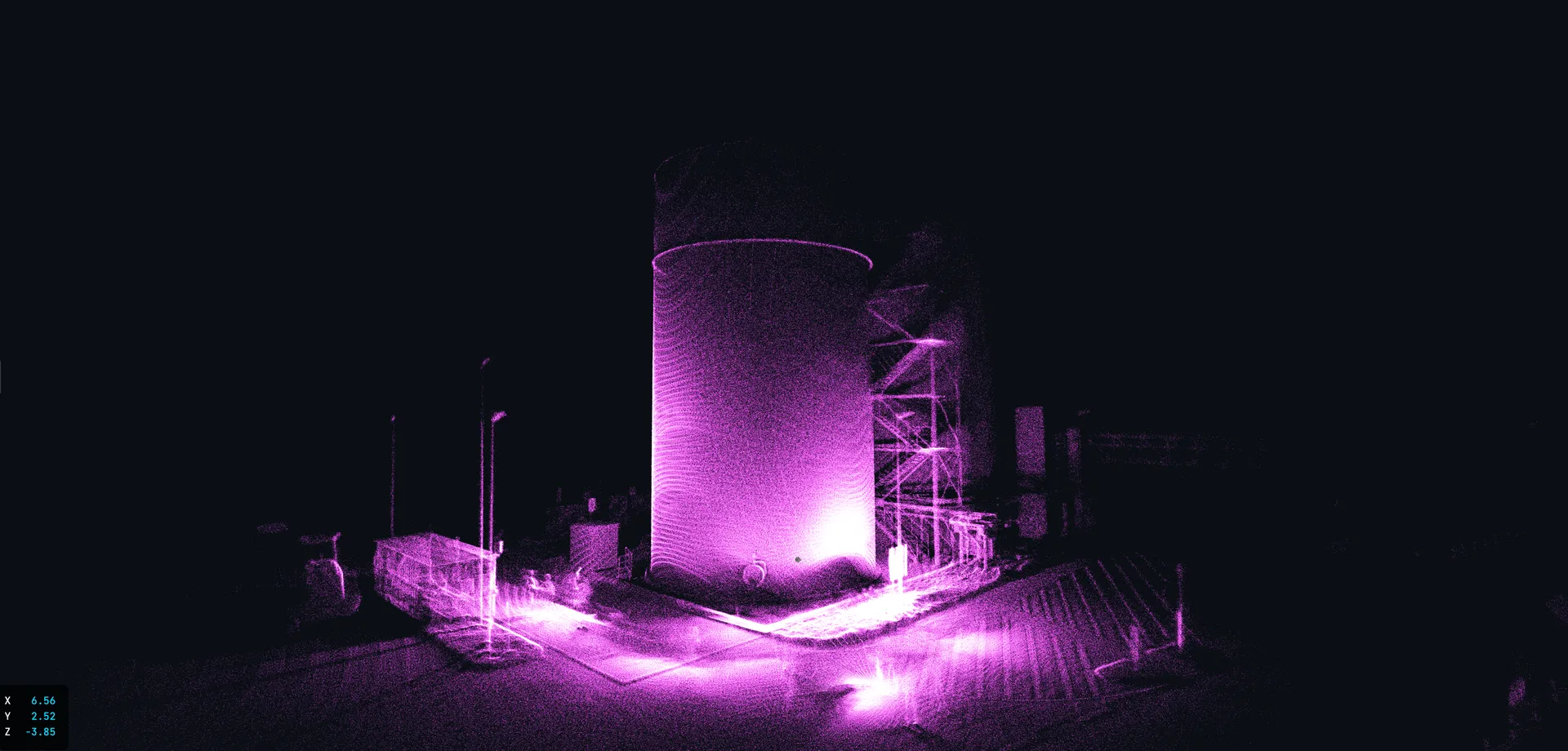
LiDAR / 3D Surveying ✓The LiDAR module of the ELIOS 3 creates precise 3D models of the inspection area. Ideal for documenting deformations, subsidence and geometric deviations – e.g. in tank floors or silo structures.
UT Wall Thickness ✓ (limited)The ELIOS 3 optionally features a UT payload for contact-based ultrasound wall thickness measurement. Currently suitable for certain surfaces and geometries. In many cases the drone identifies the locations where targeted UT measurements are subsequently carried out.
Pressure Test ✗The hydraulic or pneumatic pressure test is a physical test that no drone can replace. The drone can document the condition before and after the test however.
Contact NDT (MT, PT, ET) ✗Magnetic particle testing, penetrant testing and eddy current testing require direct contact with the surface. The drone can identify the suspect locations where these methods are applied in a targeted manner.
Documentation Requirements
AD 2000 Data SheetsGerman regulations for pressure equipment. Supplements DIN EN standards with national specifics. Particularly relevant: HP 30 (pipework), S-series (special cases). Often used as basis for inspecting older plants.
TRGS 509 / TRGS 510TRGS 509: Storage of liquid hazardous substances in fixed vessels — defines inspection requirements for storage tanks. TRGS 510: Storage of hazardous substances in portable vessels.
Documentation Obligations§ 14 Abs. 6 BetrSichV requires operators to retain inspection records until at least the next inspection + 2 years. Records must contain: result, date, inspector name, scope, identified defects and date of next inspection.
Drone Data as Inspection DocumentationThe drone provides seamless digital documentation: 4K video, high-resolution photos, LiDAR 3D and thermography. These data are archived as annexes to the inspection report and enable comparison inspections at the next recurring inspection.
Conclusion: Know Intervals, Plan Inspections Efficiently
Recurring inspections per BetrSichV are not optional – they are a legal obligation. Knowledge of inspection intervals is the basis for efficient maintenance planning.
Three recommendations for operators:
Keep the risk assessment current: Intervals result from the risk assessment. An outdated assessment can lead to incorrect intervals.
Bundle inspections: When several plants have similar intervals, it pays to combine inspections within a turnaround.
Plan with drones: For internal inspections of vessels, tanks, boilers and silos the drone can drastically reduce preparation effort – no scaffolding, no rope access, no DGUV confined space entry with rescue chain.
SafetyNo human entry into confined spaces – the most common cause of accidents during internal inspections is eliminated.
Cost SavingsDocumented savings of 40–80% compared to conventional entry by eliminating scaffolding and rescue chains.
Shorter ShutdownsInternal inspections in hours rather than days – less production loss during revisions and turnarounds.
Your Contact
Dipl.-Ing. Karsten Lehrke
Project Manager We support our customers in planning recurring inspections with drone support – from interval determination through to the inspection report for the ZÜS.
Related Services
Tank Inspection – Internal inspection of storage tanks per BetrSichV and API 653
Boiler Inspection – Recurring inspection of steam boilers per EN 12952/12953
Confined Spaces – Inspection of confined spaces without human entry – DGUV 113-004
Silo Inspection – Internal inspection of silos and bunkers without confined space entry
Chimney Inspection – Internal and external inspection of industrial chimneys
Who sets the inspection intervals for recurring inspections?
The inspection intervals are set by the operator within the framework of their risk assessment (§ 3 BetrSichV). The BetrSichV specifies maximum intervals in Annex 2 and 3 that must not be exceeded. TRBS 1201 specifies how risk-based interval determination should be carried out. For überwachungsbedürftige Anlagen the ZÜS sets the date of the next inspection in the inspection report.
What happens if an inspection interval is exceeded?
Exceeding an inspection interval is an administrative offence under § 22 BetrSichV. Fines of up to €25,000 may be imposed. More seriously: in the event of an accident at a plant not inspected on time, the operator is personally liable. Insurers may refuse to pay. In the worst case a shutdown order from the supervisory authority may follow.
Can a drone completely replace the recurring inspection?
No. The drone is an inspection tool, not a replacement for the assessor or the competent person. The required inspection must be carried out and assessed by a qualified person. The drone delivers the data basis – particularly for the internal visual inspection, where it makes human entry into the vessel unnecessary.
Do ZÜS like TÜV and DEKRA accept drone data as an inspection basis?
In practice drone inspection data is accepted as an inspection basis for the internal inspection by many ZÜS. The decision rests with the individual assessor. We recommend involving the assessor early – ideally present on site during the drone flight to direct the pilot in real time.
What is the difference between ZÜS and a competent person?
A ZÜS (authorised inspection body) such as TÜV, DEKRA or GTÜ is a state-accredited organisation that may inspect überwachungsbedürftige Anlagen (pressure equipment, lifts, Ex-zone plants). A competent person per TRBS 1203 is an individual with the appropriate training, experience and specialist knowledge who may inspect other work equipment (tanks, silos, racking). Which inspection requires which inspector follows from § 14 and § 15 BetrSichV.
Can inspection intervals be extended?
In principle yes – intervals result from the risk assessment. If the operator can demonstrate on the basis of previous inspection results and operating experience that there is a lower risk, intervals can be adjusted within the maximum limits. The maximum intervals from BetrSichV Annex 2/3 are however absolute and cannot be extended.
Contact – Plan Recurring Inspection with Drone
Together with you and your inspection authority, we clarify how the drone can support your next recurring inspection – efficiently, safely and in compliance with standards.