
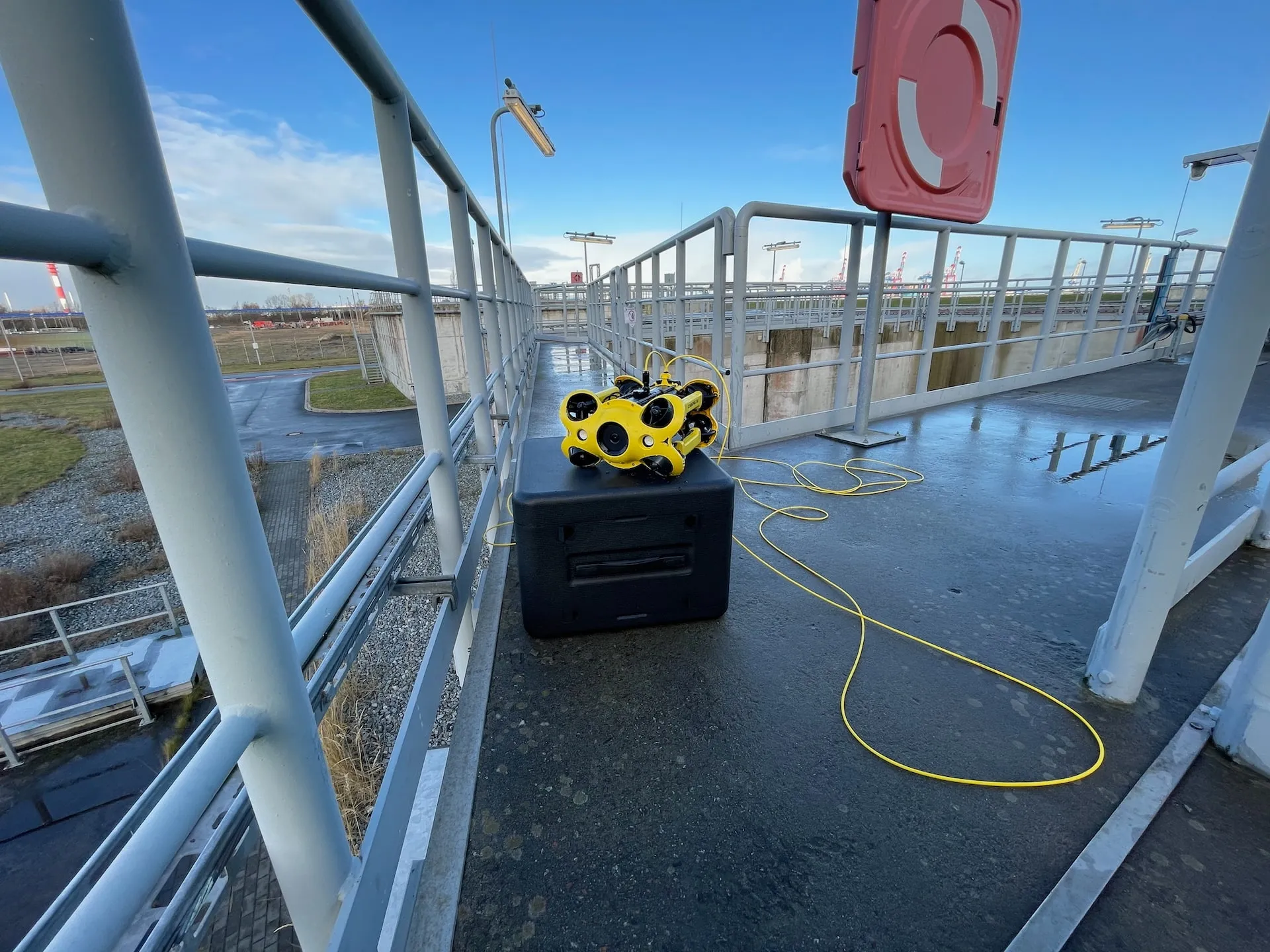
Underwater Inspection by ROV – Without Divers, Without Draining
Kopterflug deploys the Chasing M2 Pro Max – a compact industrial ROV (Remotely Operated Vehicle) – for underwater inspections of tanks, ship hulls, harbor structures and cooling water inlets. No divers, no draining, no operational shutdown. Your team stays above water and controls via tether from the surface.
- No divers – no confined space entry
- 4K + 8,000 lumens in complete darkness and turbid water
- Up to 200 m depth – 360° omnidirectional with 8 vectored thrusters
Underwater Inspection: What Is Really Below the Water Surface?
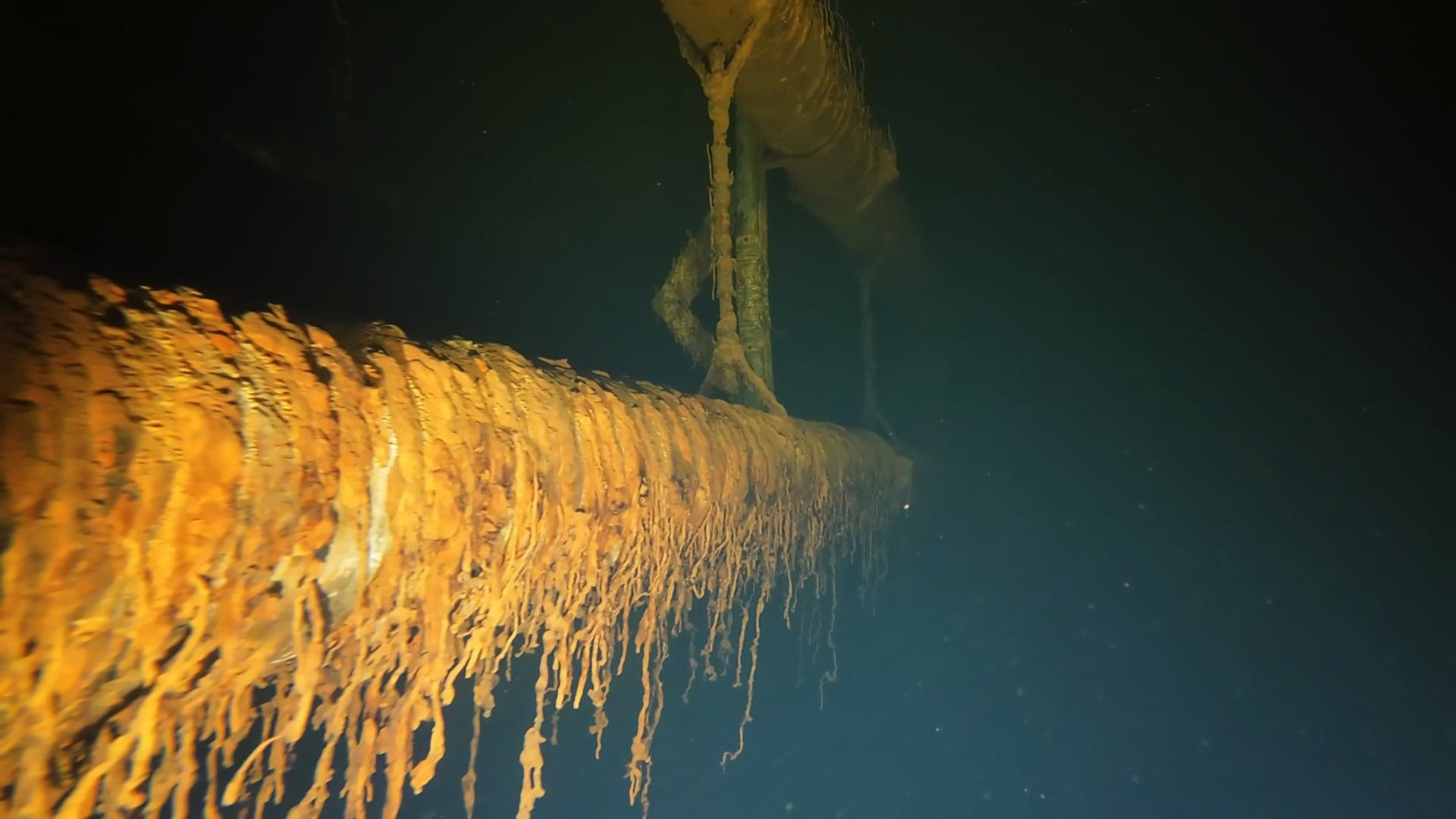
Tank floors, ship hulls, sheet pile walls and cooling water inlets have one thing in common: the critical zone lies below the water surface – and conventional inspection methods end at the waterline. Divers are expensive, dangerous and in many industrial environments simply not permitted. Draining costs time, money and lost production.
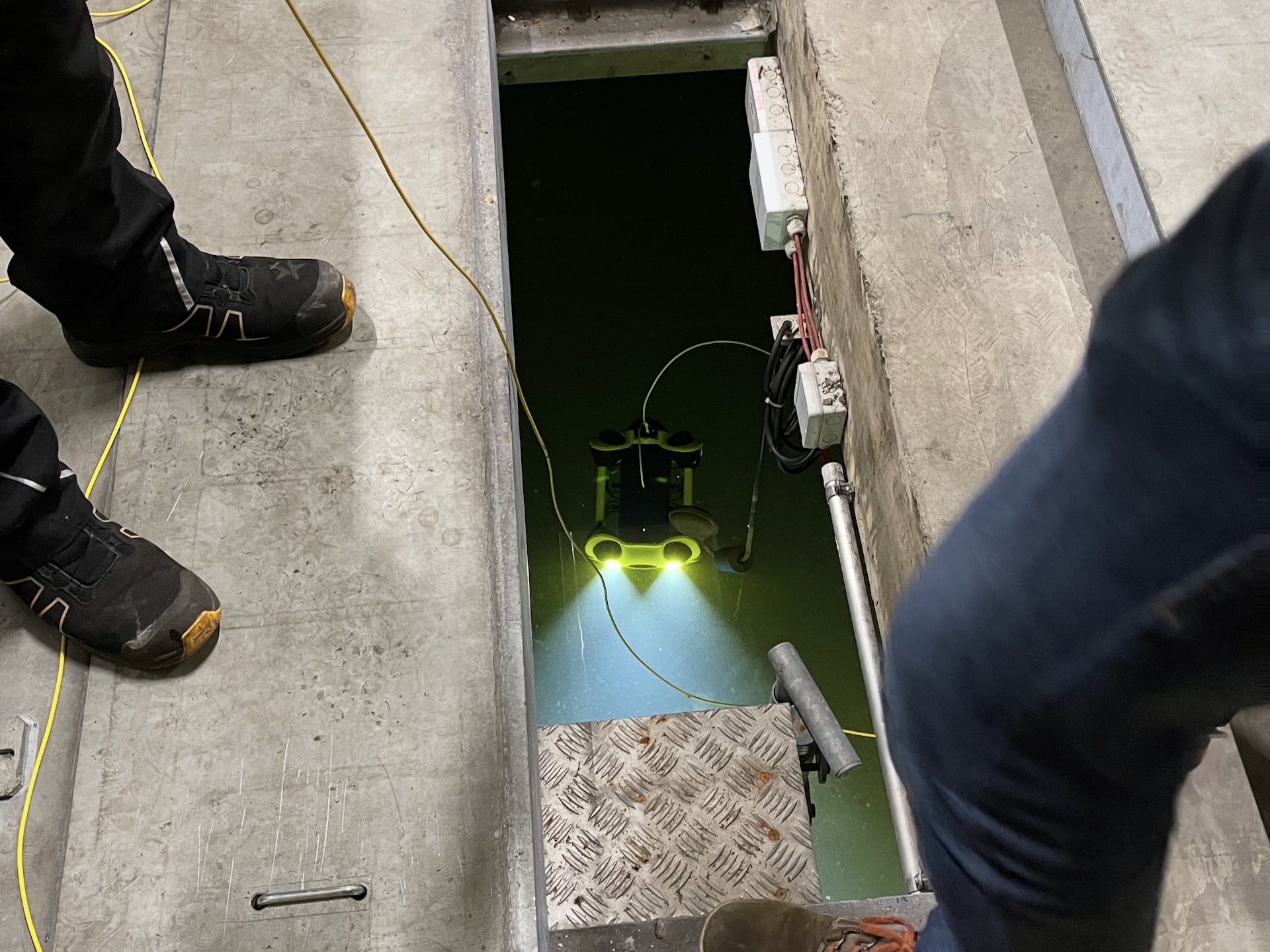
Kopterflug deploys the Chasing M2 Pro Max – an industrial ROV with 4K camera, 8,000 lumens floodlight and 8 vectored thrusters for full maneuverability down to 200 m depth. The ROV dives in – your team stays outside and controls via tether from the surface.
We deliver 4K video documentation and structured findings reports from the underwater zone – as a basis for maintenance planning, insurance documentation and decisions on repair or continued operation. In combination with our condition documentation using ELIOS 3 and M30T, we cover your entire facility: inside, outside and underwater.
Why Underwater Areas Stay Undocumented Without an ROV
Corrosion, deposits and structural damage develop preferentially where no one looks regularly – below the water surface.
Divers: Expensive, Dangerous, Limited
Industrial divers are cost-intensive and in many facilities not deployable due to oxygen deficiency, contamination or confined geometries. Underwater visibility is often poor.
Draining Is Not an Option
Draining tanks, sprinkler systems and harbor basins means operational interruption, disposal effort and weeks of lead time. In many cases inspections are simply skipped as a result.
Damage Stays Invisible – Until It Is Too Late
Corrosion on tank floors, fouling on ship hulls, sheet pile damage and inlet sediments develop gradually. Without inspection they only become visible at failure.
Zero Visibility Makes Conventional Inspections Useless
Turbidity from silt, algae, suspended matter or industrial waste often reduces visibility to under 30–50 cm. With zero visibility, a diver inspection yields only tactile information – or nothing at all. Many operators forgo inspections entirely: black video footage does not justify a diver deployment.

No Statutory Inspection Requirement
Unlike bridges or offshore platforms, many tanks, cooling water circuits, sheet pile walls or inlet channels have no fixed inspection intervals or obligations. Without pressure from authorities, insurers or auditors, underwater inspection quickly ends up on the “nice-to-have” list – and gets cut when budgets are tight.
No Baseline, No Trend Monitoring
Earlier inspections – if conducted at all – are often only subjective diver protocols without photos, video or measurements. Without reproducible documentation, no one knows whether a crack is new or was there 10 years ago. This makes trend monitoring impossible.
Technical Accessibility & Geometry
Narrow pipes, gratings, ladders, strong currents or turbulence zones – divers simply cannot reach everywhere physically. Many areas are inaccessible to humans: inside heat exchanger bundles, tight pump sumps or heavily obstructed structures. Conventional diving methods fail completely here.
False Sense of Security
Facilities have been operating for 20–40 years without known major underwater damage – a deceptive signal. No acute pain drives inspections to be perceived as unnecessary cost centers rather than risk reduction. Often there is no clear “owner” of underwater infrastructure: Is maintenance responsible? Safety? Environment?

High Preparation & Follow-Up Effort
Permits, work releases, hazard assessments, safety concepts, emergency plans – even for small inspections an entire safety and logistics system must be mobilized. Added to this: decontamination, waste disposal, report writing. Total effort escalates quickly.
What You Receive
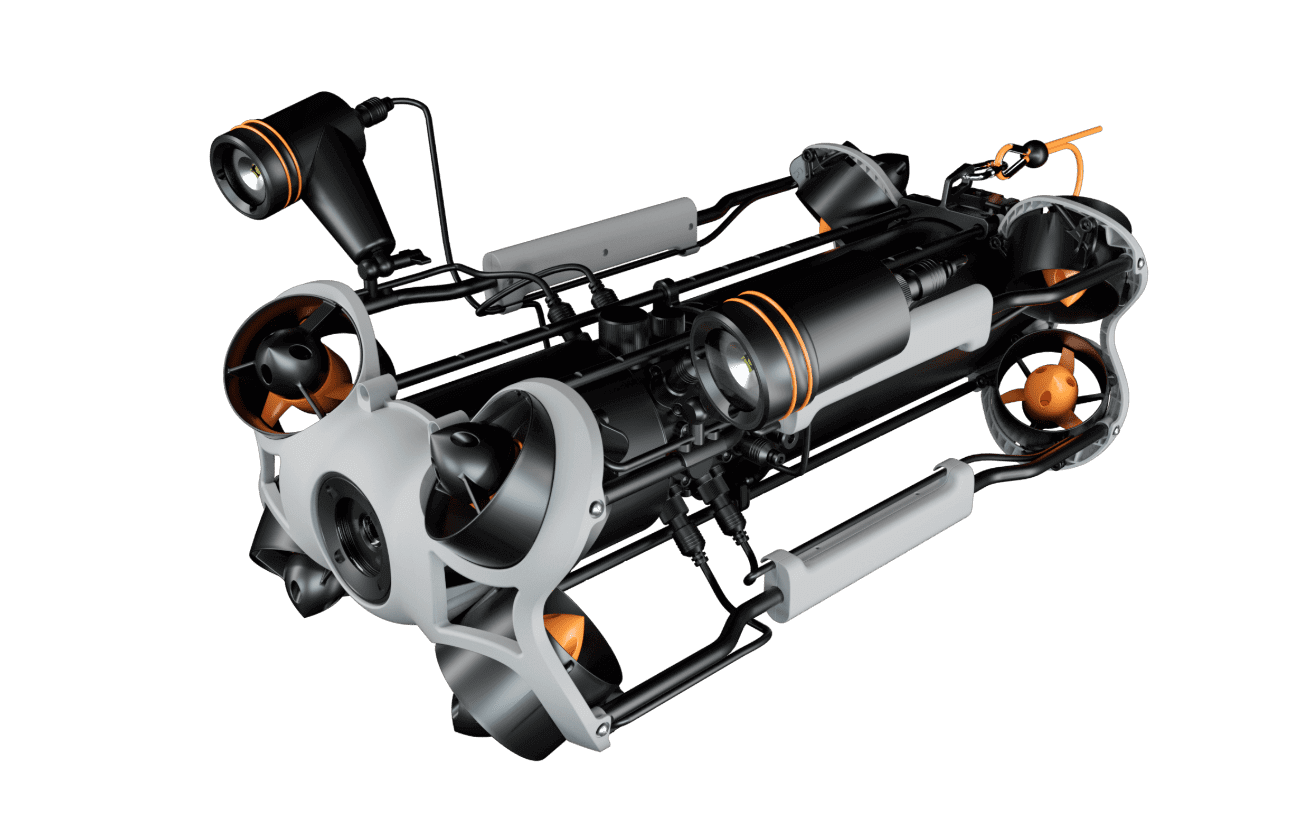
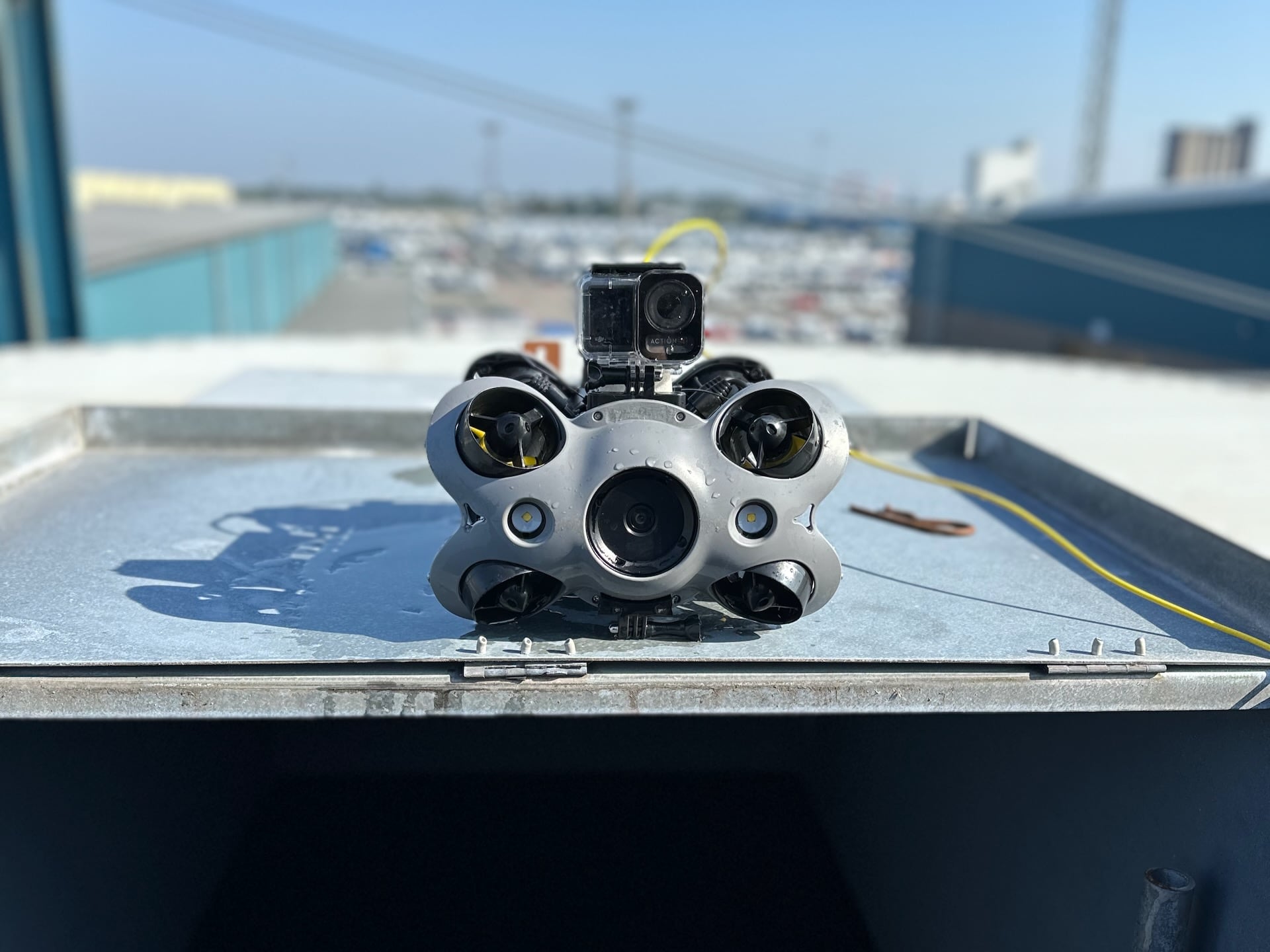
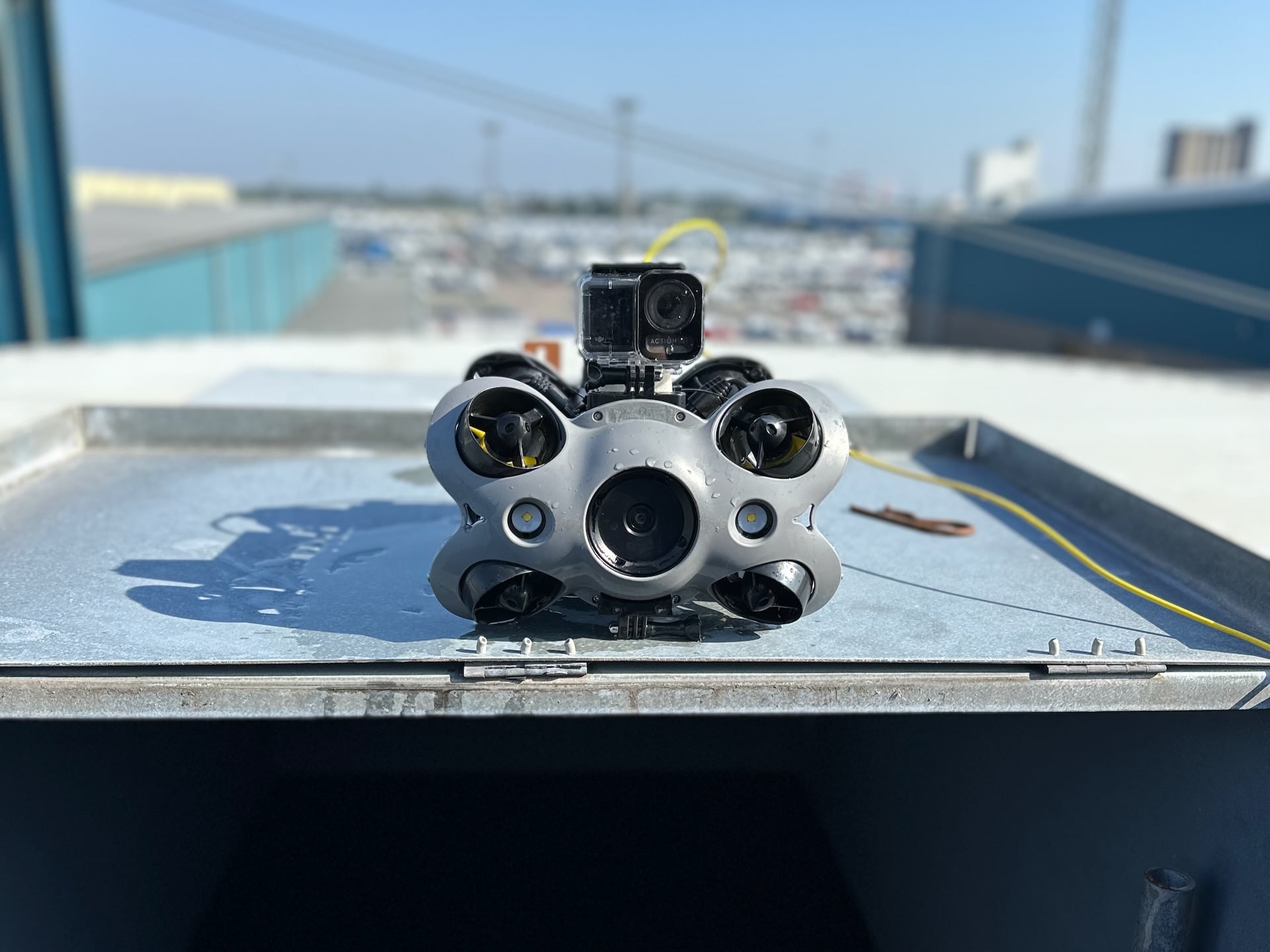
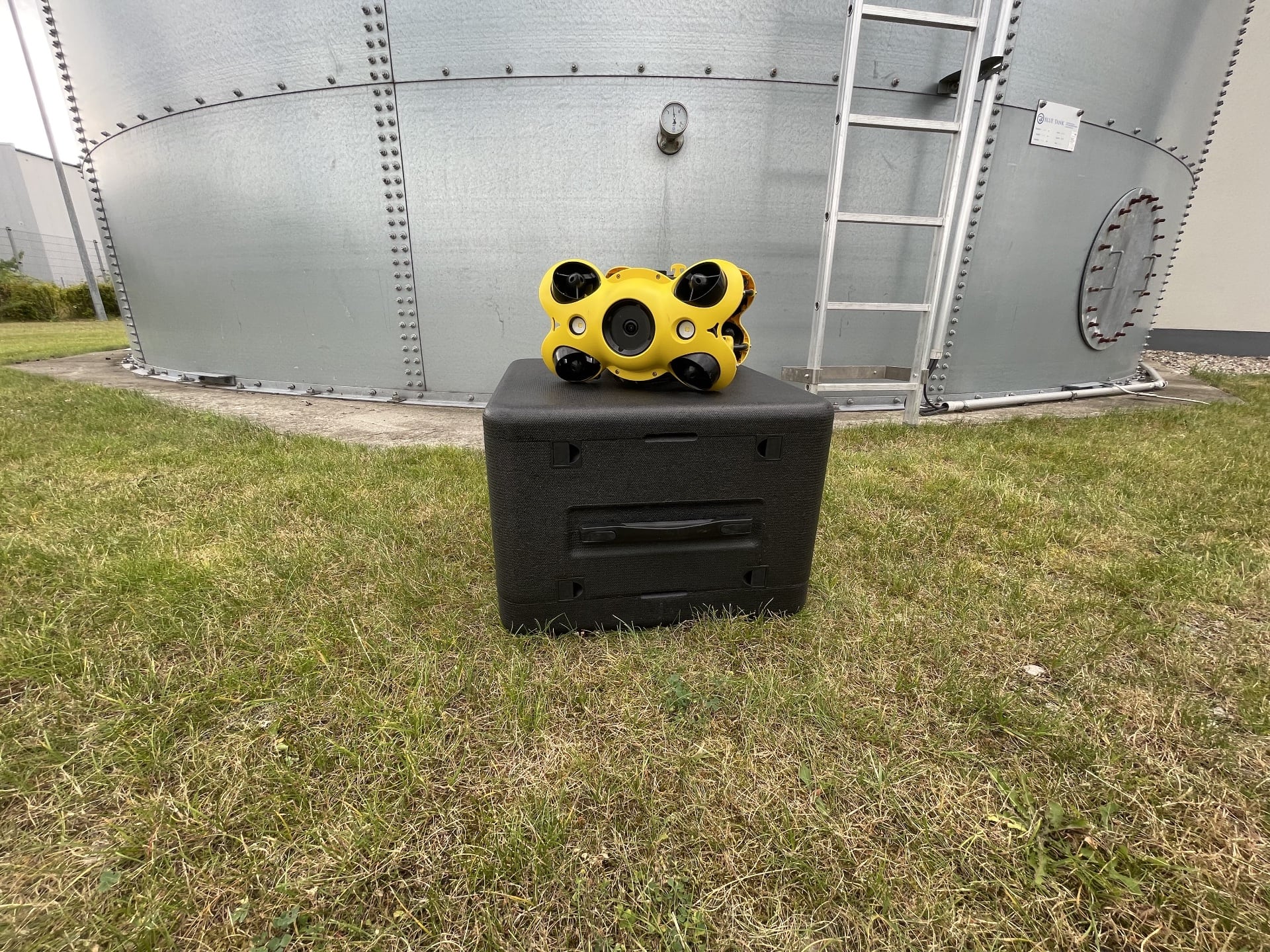
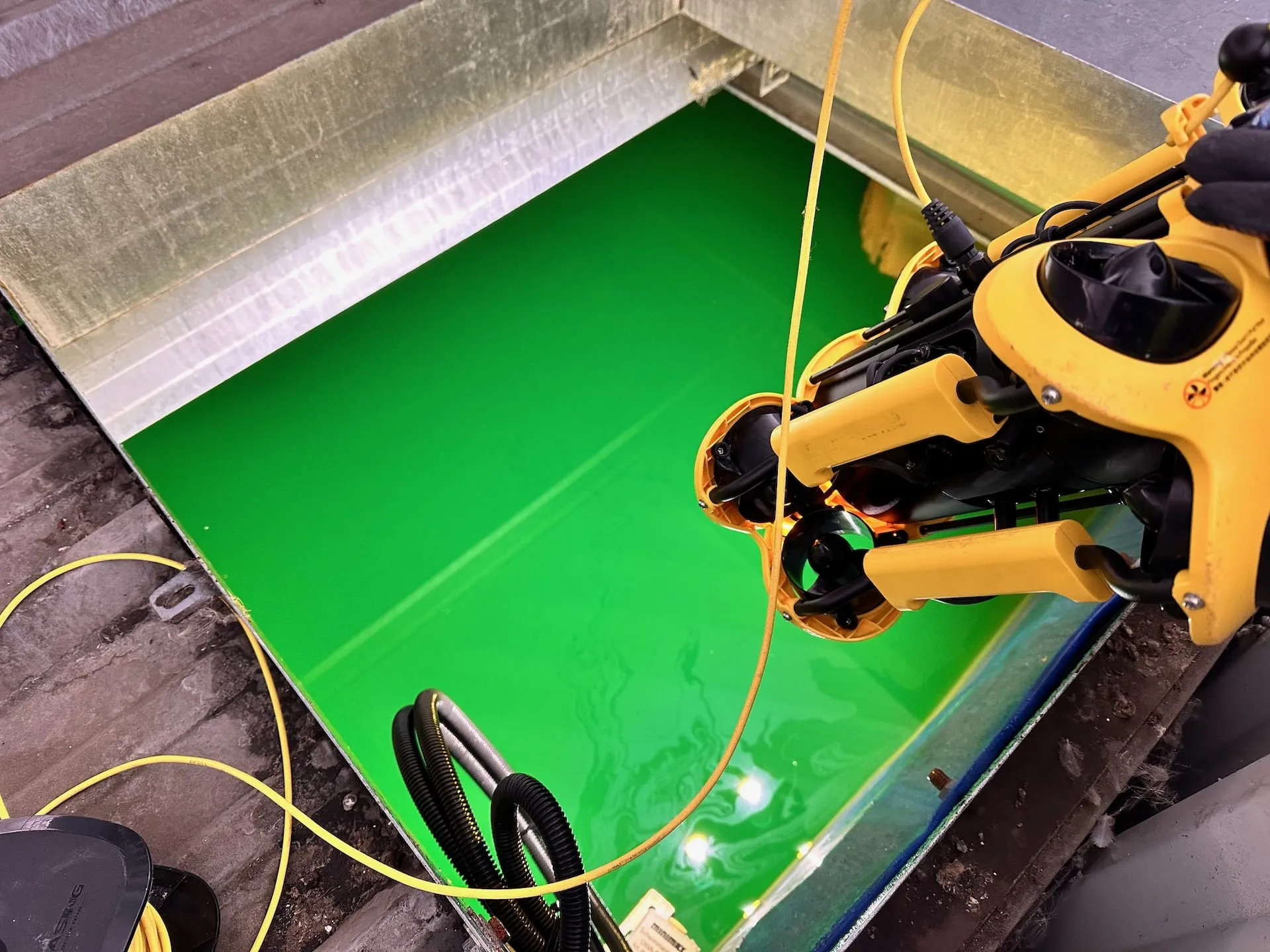
The Chasing M2 Pro Max – our primary system for underwater inspections. 4K, 8,000 lumens, 200 m depth, 8 vectored thrusters.
Complete visual inspection of the underwater zone – with structured findings report:
- 4K video footage underwater: Comprehensive documentation of tank floors, wall lower edges, ship hulls and structures – with 8,000 lumen floodlight even in complete darkness.
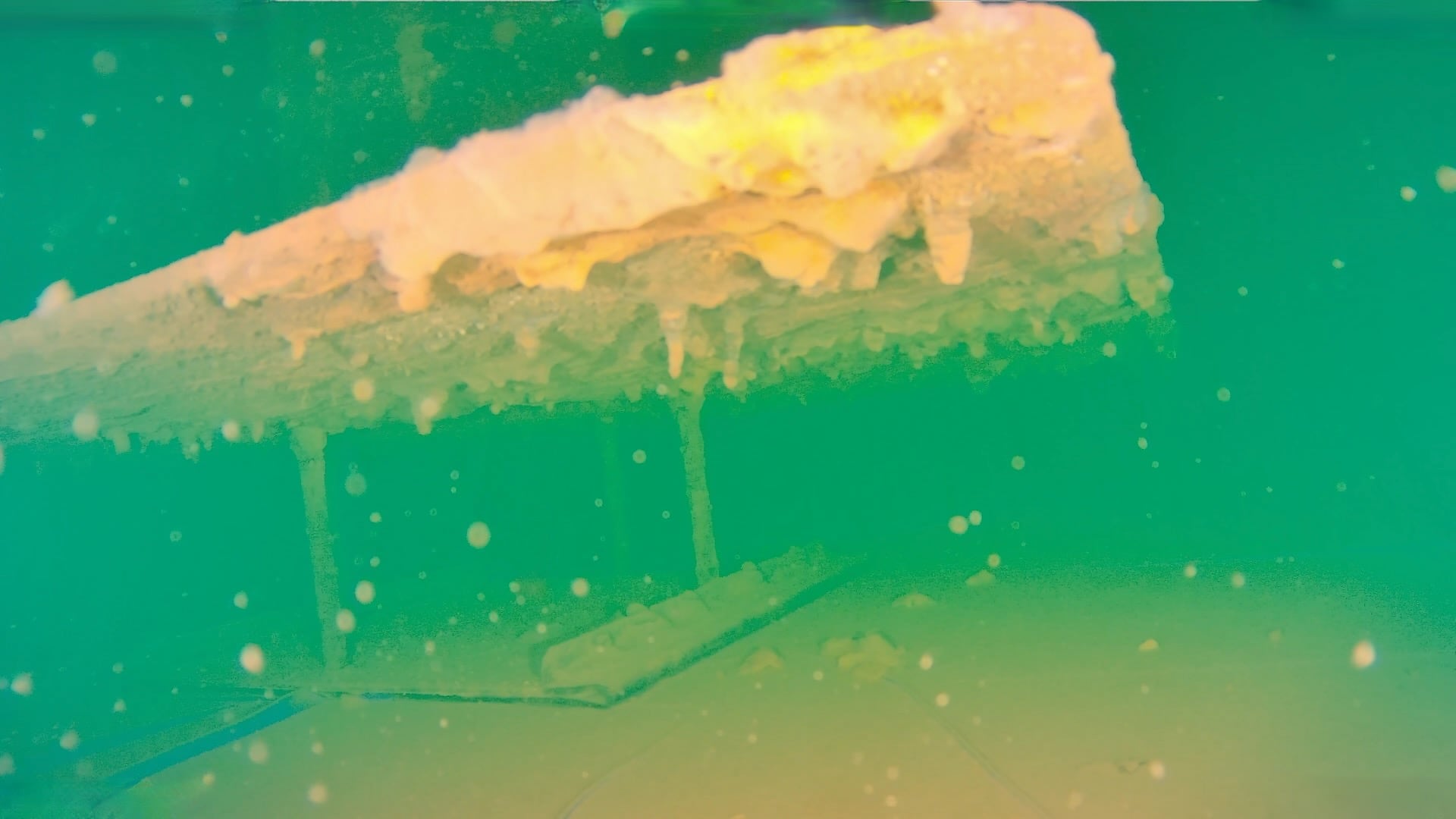
- Corrosion and damage recording: Systematic findings capture: pitting, surface corrosion, coating damage, weld defects, cracks and structural anomalies.
- Sediment and deposit assessment: Detection and documentation of sediment layers, fouling, buildup and deposits – basis for cleaning planning and maintenance.
- Structured findings report: Findings list with 4K image evidence, position description, damage classification and action recommendations – audit-ready and suitable for certified inspectors.
Technology: ROV & Complementary Systems
The Chasing M2 Pro Max is our primary system for underwater inspections. ELIOS 3 covers adjacent aerial zones; DJI M30T provides exterior and overview access.

Chasing M2 Pro Max – Underwater to 200 m Depth
4K UHD camera, 8,000 lumens, 8 vectored thrusters for precise positioning. Dive depth to 200 m. Inspects tank floors, harbor basins, clarification tanks, pipelines and ship keels without divers and without draining.
ELIOS 3 – Adjacent Aerial Zones & Mixed Vessels
GPS-free SLAM navigation for vessel sections above the waterline. Combinable with ROV deployment for complete vessel inspection (air + water) without draining and without human entry. The ELIOS 3 is the collision-safe indoor drone for confined spaces.
DJI M30T – Surface Access & Overview
Exterior inspection of water structures, quay walls, dolphins and harbor infrastructure. 200× zoom and thermography for structural condition monitoring without scaffolding or watercraft.
Live Transfer & Video Documentation
Direct live image on monitor for the client on site. 4K video recording of all findings with timestamp. Findings report with image excerpts and depth data – as a basis for remediation planning or insurance documentation.
Equipment Overview: Complementary Systems for Exterior Structures
The Chasing M2 Pro Max is our primary system for underwater inspections. DJI Matrice 30T and LiDAR scanners complement for exterior structures and precise structural surveys.
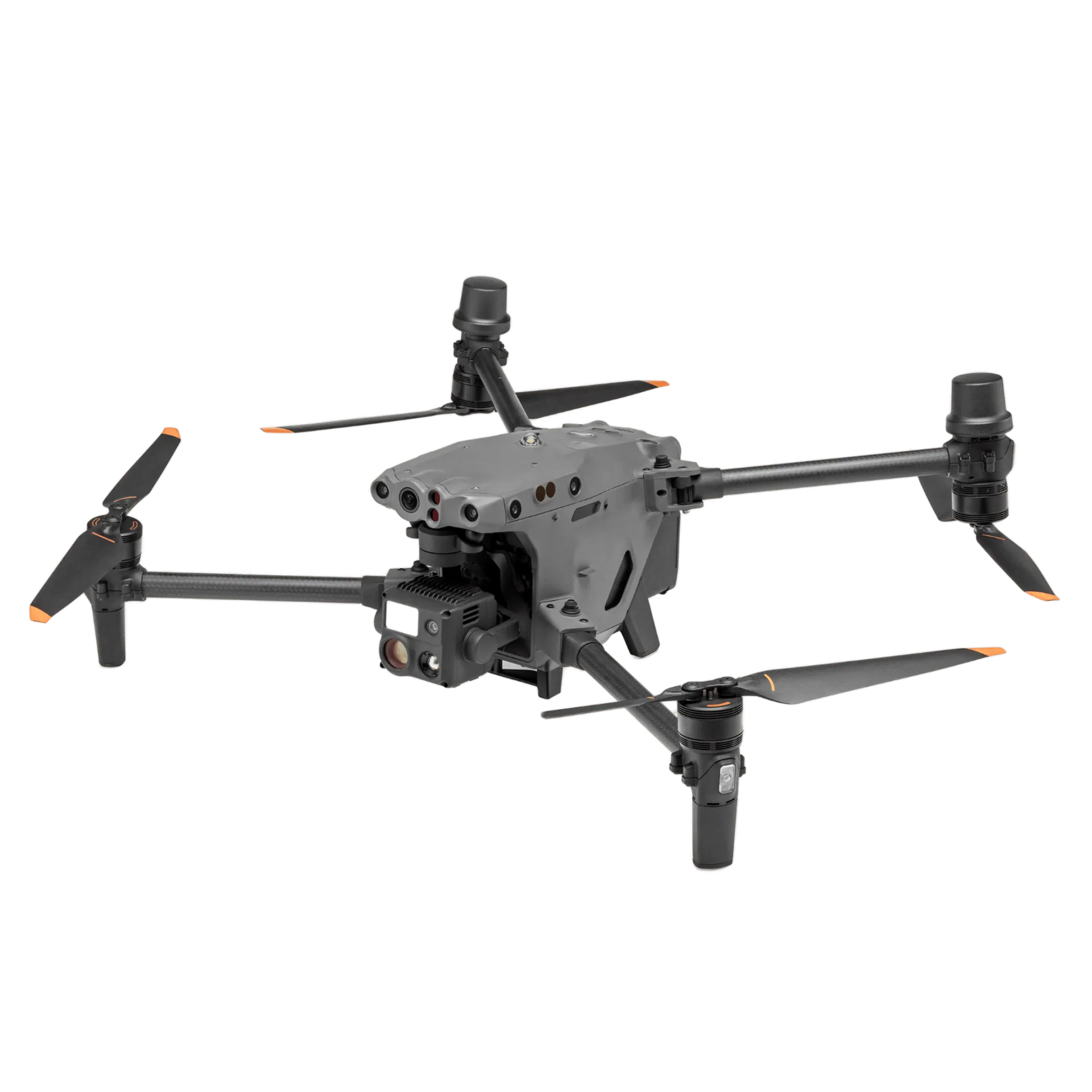
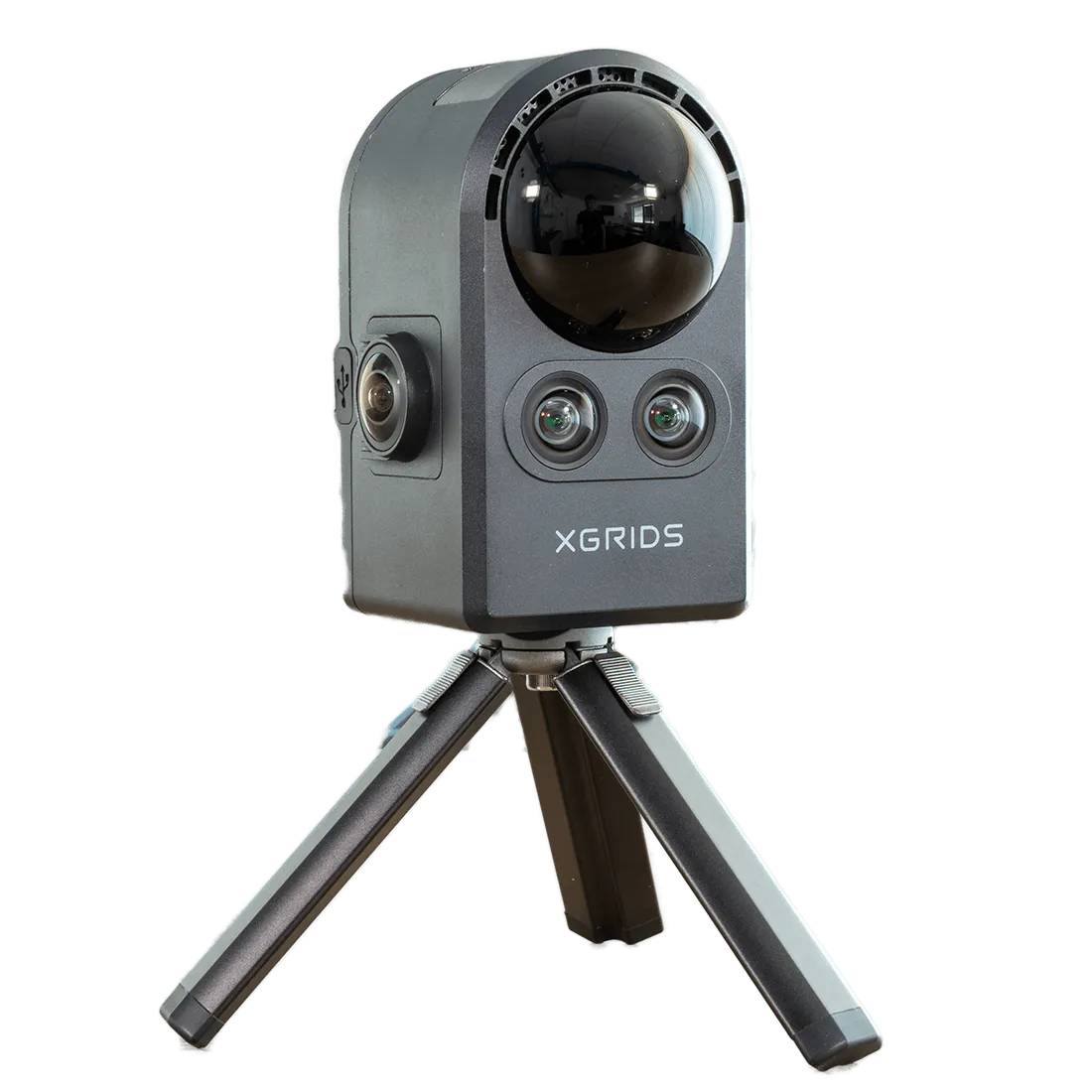
DJI Matrice 30T: Exterior shots and access documentation before the dive. Overview of structures above the waterline.
LiDAR Scanner (handheld): 3D point clouds for as-built documentation and spatial surveys of structures and infrastructure.
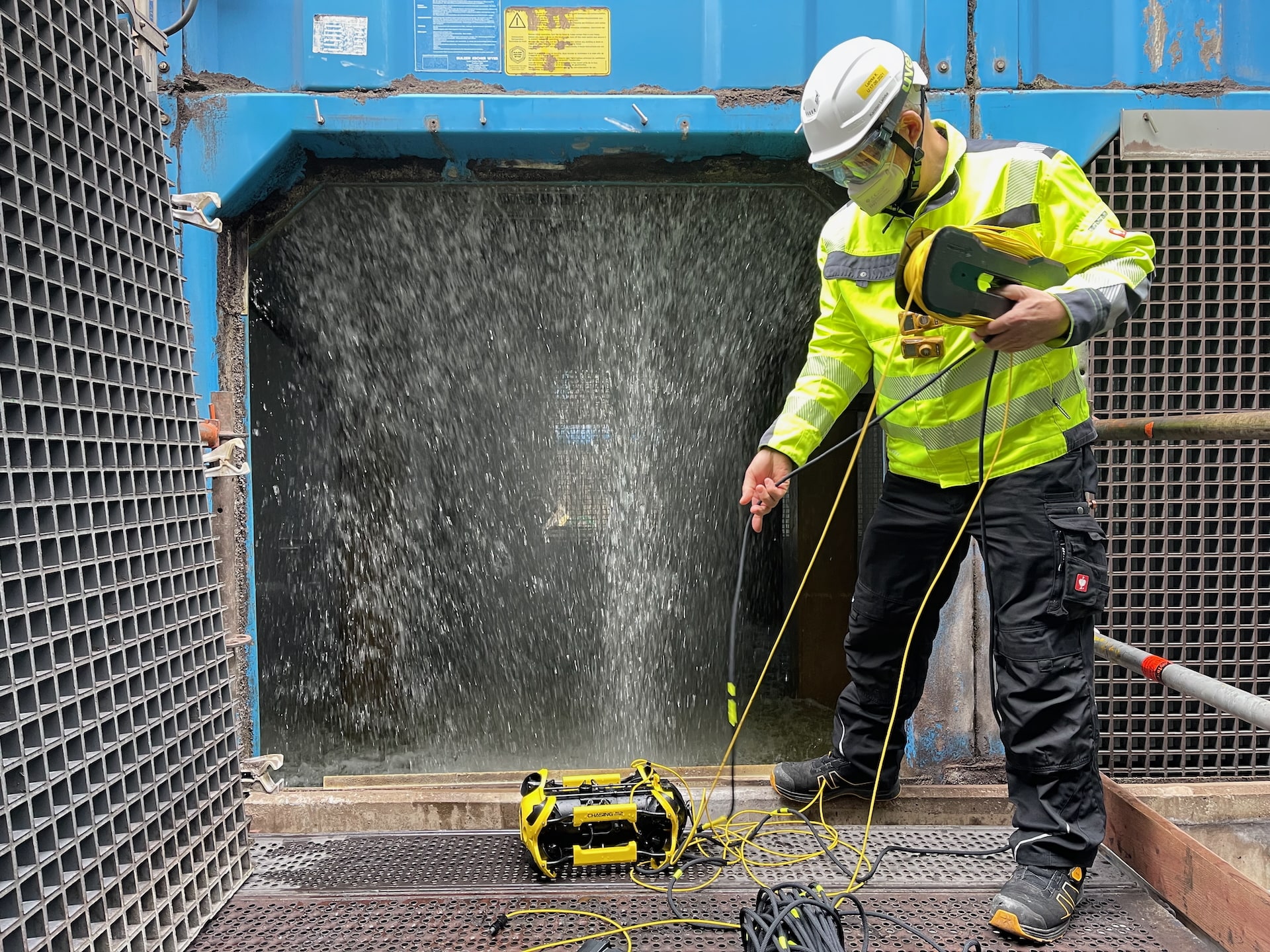
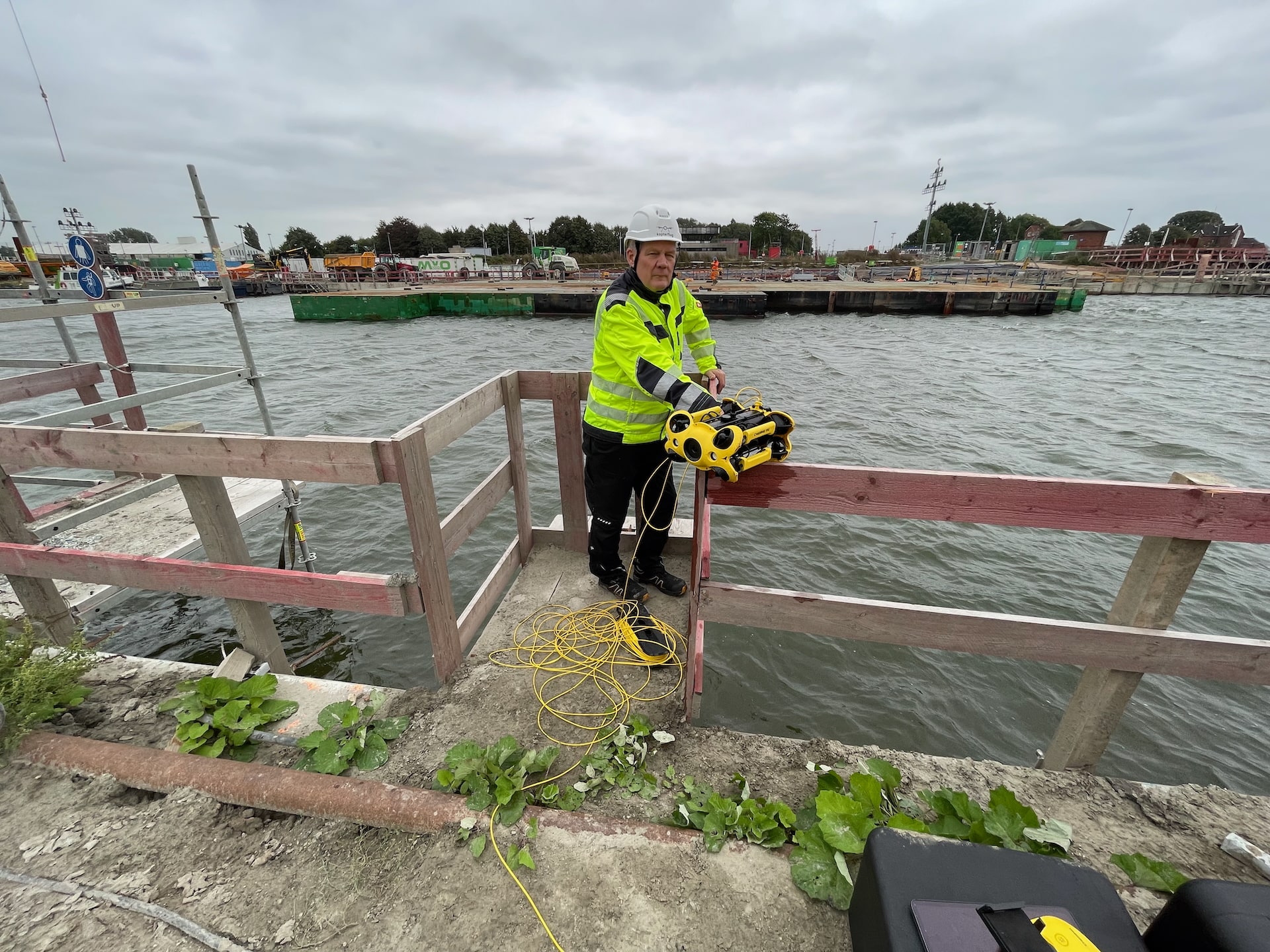
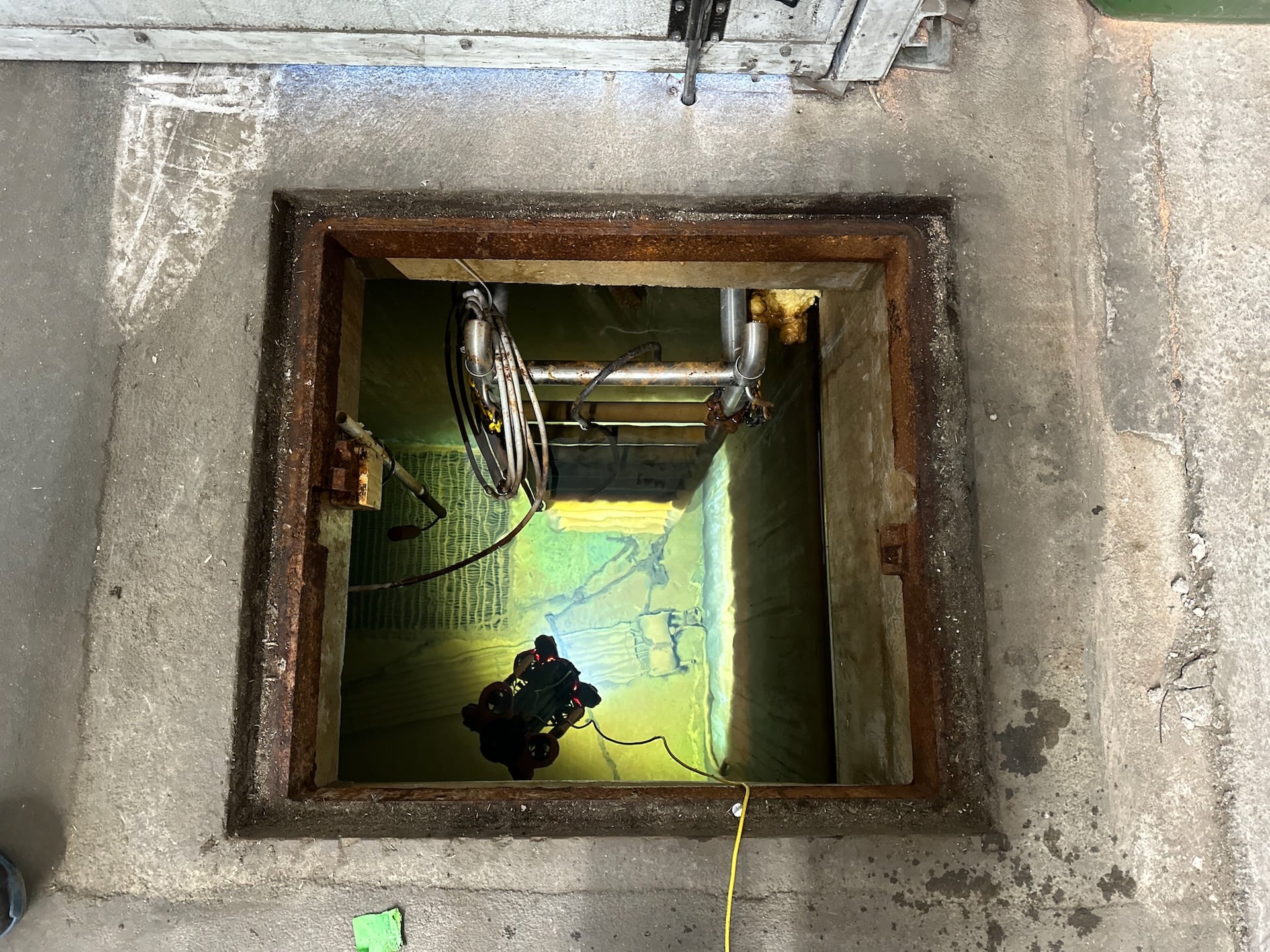
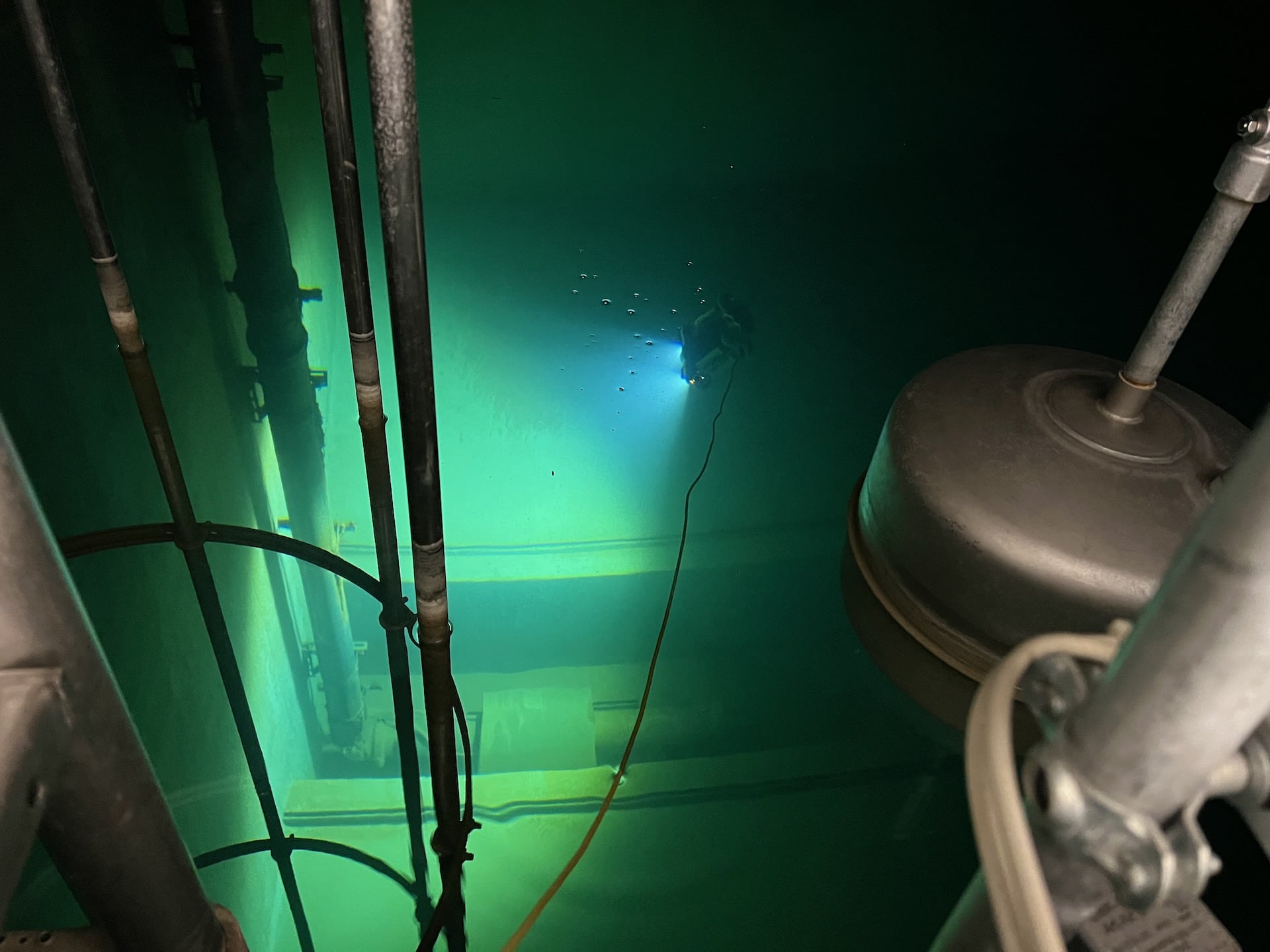
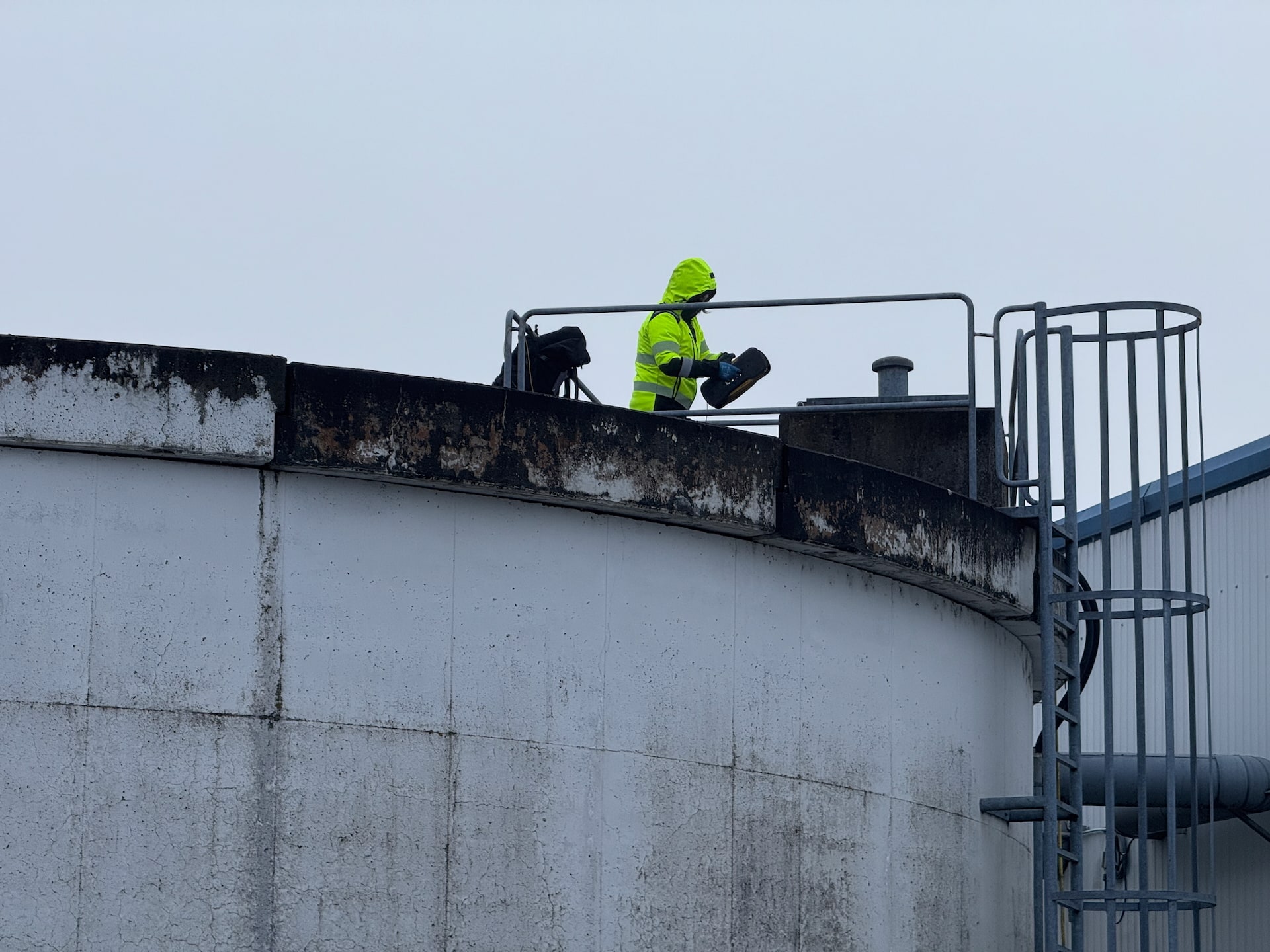
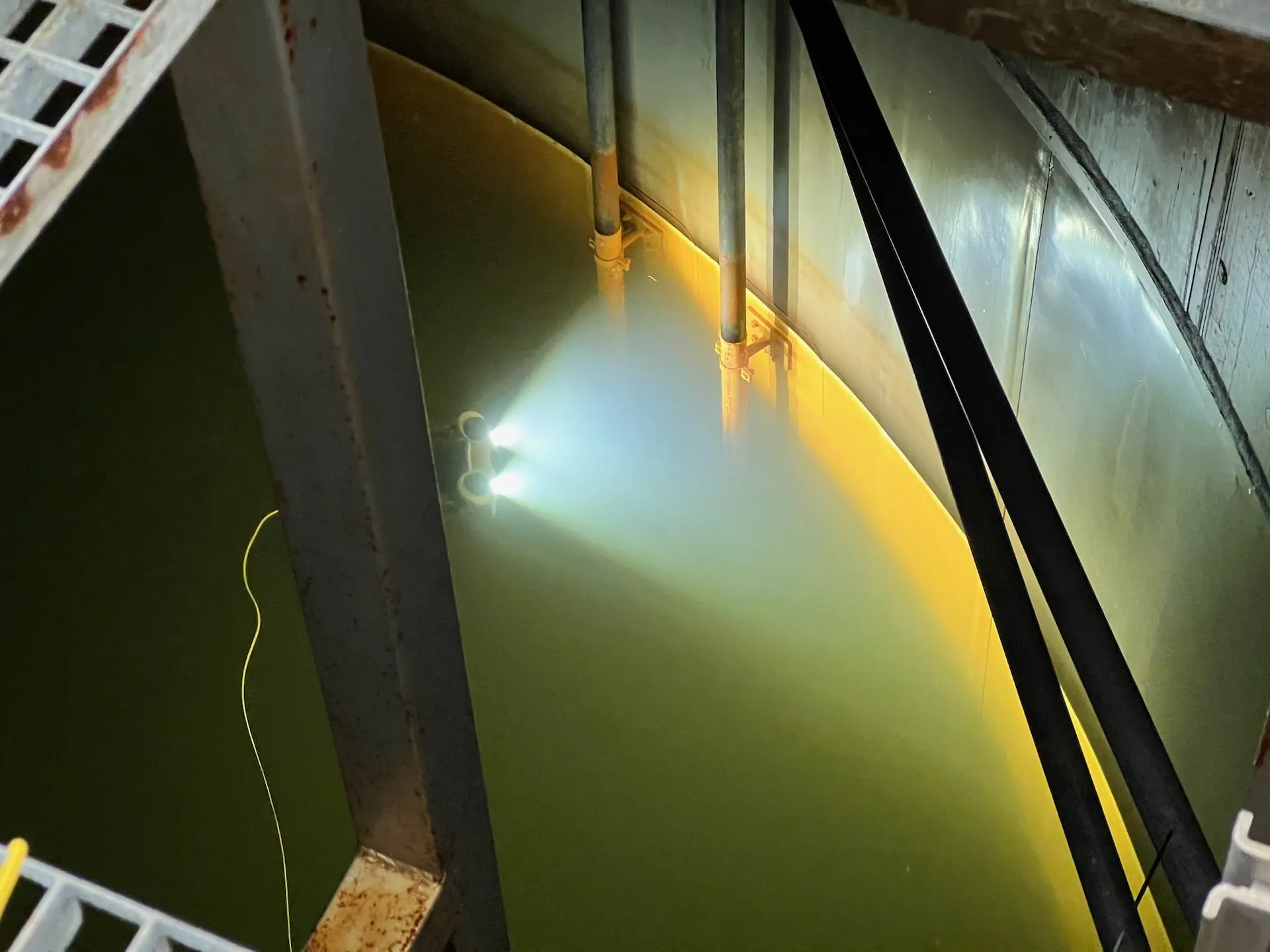
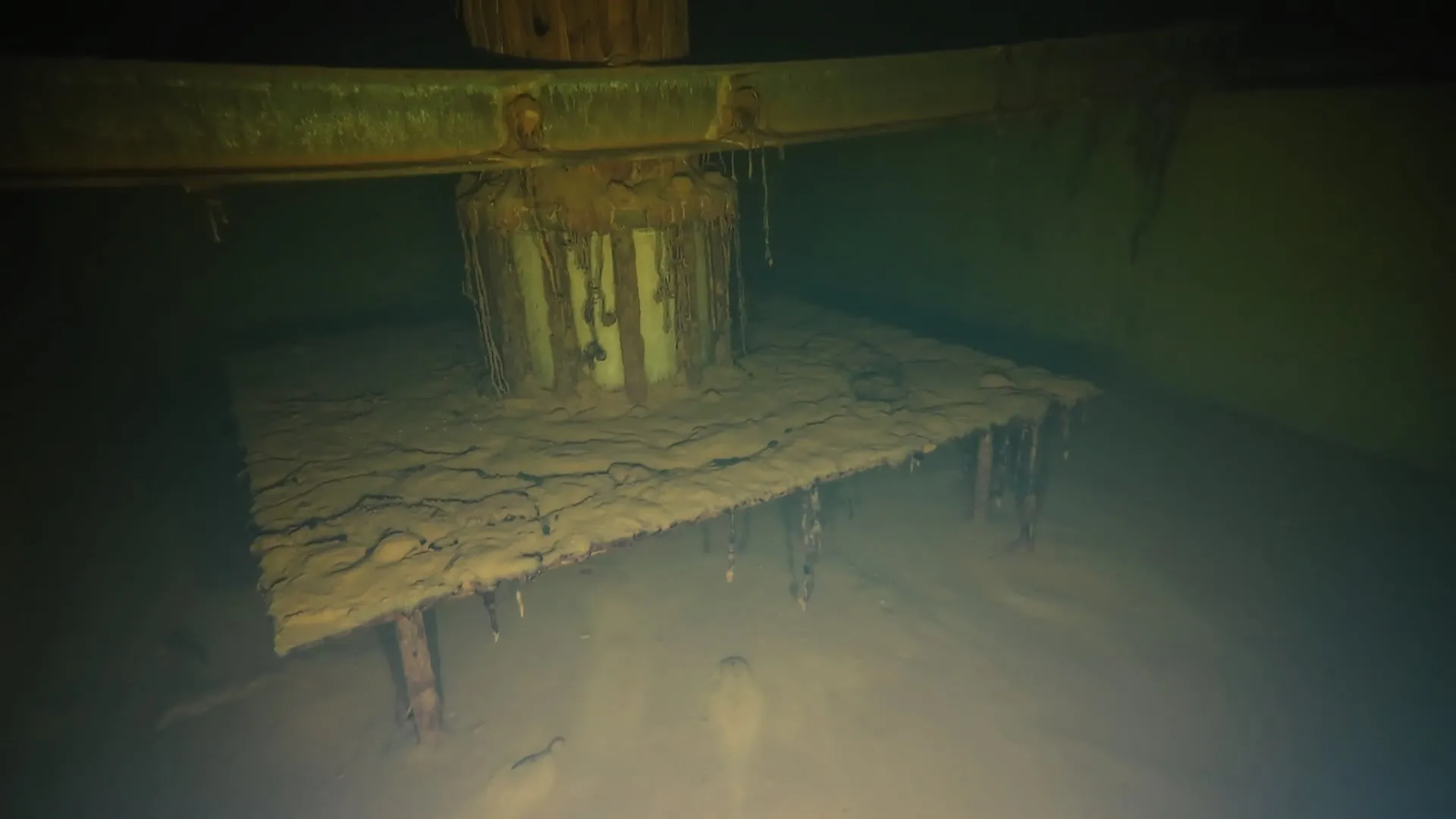
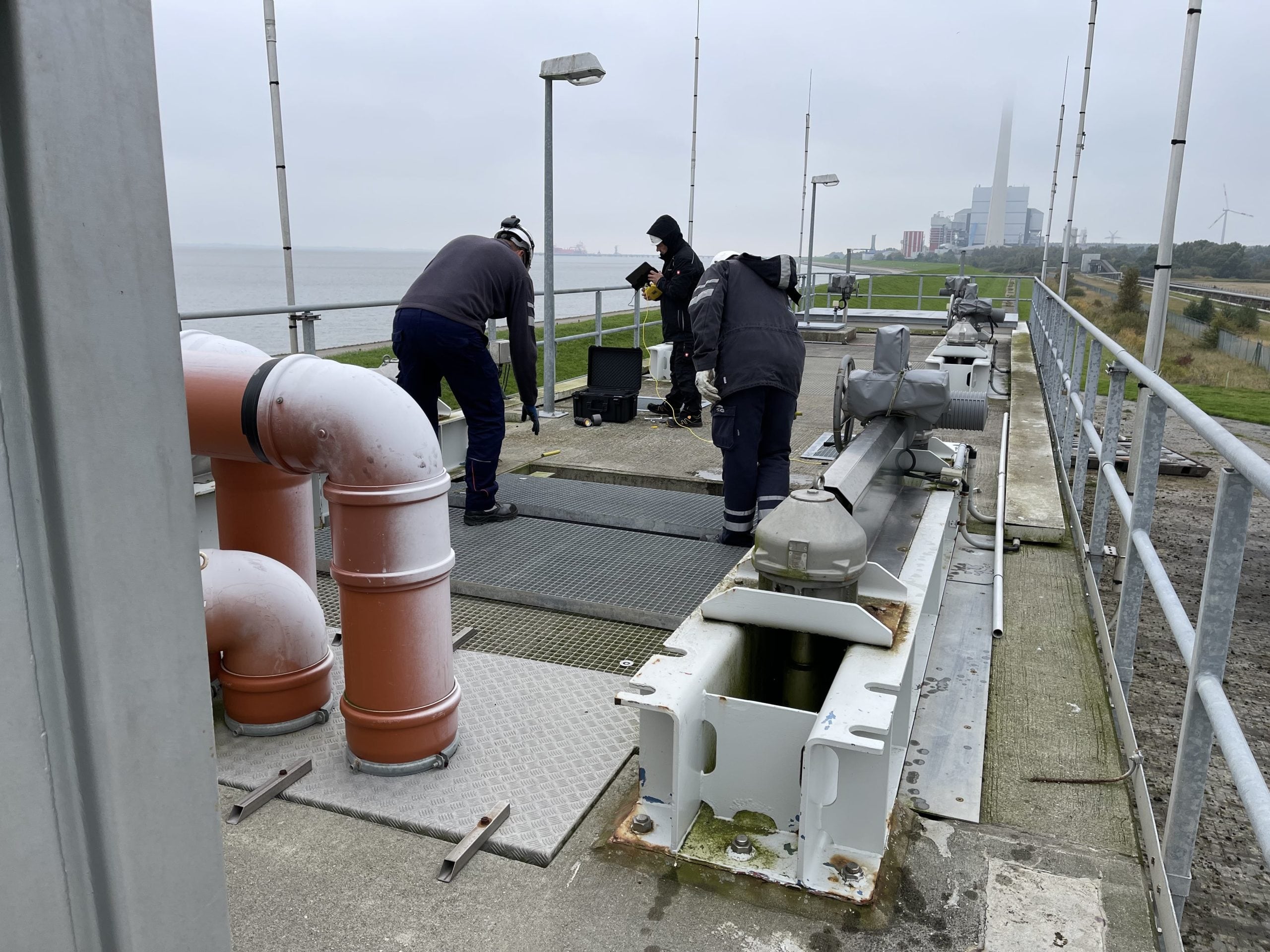
Kopterflug in Action
What We Document During ROV Underwater Inspections
The Chasing M2 Pro Max works where no diver and no conventional equipment can go – underwater, without draining, without operational interruption. What we systematically capture:
Tank Floors & Wall Lower Edges
What we check: Floor corrosion (pitting, surface corrosion), coating damage, weld seams at tank floor, sediment depth, MIC (microbiologically induced corrosion), wall corrosion in the water phase.
Why it matters: The tank floor is the most corrosion-vulnerable zone – standing water, sediment and MIC accelerate attack significantly. Conventional inspection requires complete draining, cleaning and DGUV-compliant entry. The ROV inspects at full tank – without shutdown.
How we do it: The Chasing M2 Pro Max systematically traverses the tank floor – the 4K camera with powerful LED lighting documents corrosion spots and coating damage. Pilot controls from outside via tether cable.
Sprinkler Tanks & Fire Water Basins (Sprinklertanks & Löschwasserbecken)
What we check: Floor corrosion, fouling (Bewuchs), sediment deposits, coating damage to tank walls and floor, condition of fittings (suction pipes, float valves).
Why it matters: VdS CEA 4001 and EN 12845 mandate regular tank inspections. Draining means failure of the fire suppression system and potentially fire brigade standby. The ROV inspects with full tank – fire protection stays active.
How we do it: ROV underwater inspection without draining – 4K documentation of all floor surfaces and accessible wall areas. Report aligned with VdS CEA 4001 / EN 12845 requirements.
Drinking Water Tanks & Elevated Reservoirs (Trinkwasserbälter & Hochbehälter)
What we check: Coating condition (food-grade suitability), cracks in concrete shell, sediment deposits on floor, corrosion of metallic fittings.
Why it matters: DVGW W 300 mandates regular inspections. Coating damage can cause microbial contamination. ROV inspection without draining significantly reduces supply interruptions and enables more frequent inspection cycles.
How we do it: ROV traverses vessel floor and wall areas – 4K documentation without contamination of the drinking water. DVGW-compliant procedure, coordinated with your water supply.
Harbor Structures, Sheet Pile Walls & Quay Structures (Hafenbauwerke, Spundwände & Kaikonstruktionen)
What we check: Corrosion on steel sheet piles (pitting, surface corrosion, through-corrosion), fouling, mechanical damage from ship berthing, condition of anchors and anchorages.
Why it matters: Harbor structures are heavily exposed to corrosion in the underwater zone – conventional diver inspections are cost-intensive and weather-dependent. The ROV operates in poor visibility and strong currents where divers cannot be deployed.
How we do it: Chasing M2 Pro Max dives along the sheet pile wall – systematic capture of the underwater zone with 4K and floodlight. Optional: drone above for the above-water zone.
Ship Hulls & Ballast Tanks (Schiffsrümpfe & Ballasttanks)
What we check: Coating damage to underwater ship (antifouling), corrosion on hull plates and weld seams, fouling, condition of seacocks and keel blocks, internal corrosion in ballast tanks.
Why it matters: Classification rules (IACS, Lloyd's, DNV) require regular hull inspections. Drydocking costs thousands of euros per day. The ROV inspects in the water – as pre-inspection or as substitute for routine walkthroughs in ballast tanks.
How we do it: ROV systematically traverses the hull – 4K documentation of antifouling condition and weld seams. For ballast tank interiors: ROV inserted via manhole, no DGUV-compliant entry required.
Result: 4K underwater inspection report with systematic photo documentation of all relevant areas – prepared for your inspectors, insurers and authorities. No diver, no draining, no shutdown.
Typical Applications
Wherever water blocks access to inspection – and draining is not an option:
1. Tank Floors & Wall Lower Edges (Tankböden & Wandunterkanten)
Storage and process vessels with water phase, drinking water tanks, sprinkler tanks. Corrosion on the floor and wall lower edge – inspectable without draining.
- Sensors: 4K, floodlight
- Typical findings: Pitting, surface corrosion, coating damage, sediment deposits, weld seam defects
2. Sprinkler Tanks & Fire Water Basins
Fire protection stays active – no draining, no failure of the suppression system. Inspection of tank floor and internal wall surfaces underwater.
- Sensors: 4K, floodlight
- Typical findings: Floor corrosion, fouling (Bewuchs), sediment, coating damage
3. Ship Hulls & Hulls
Hull inspection underwater in the harbor basin – without drydock, without slipway. Detection of fouling, corrosion, damage and anode condition.
- Sensors: 4K, floodlight
- Typical findings: Fouling (Bewuchs), paint and coating damage, dents, corrosion, anode wear
4. Harbor Structures & Sheet Pile Walls (Hafenstrukturen & Spundwände)
Sheet pile walls (Spundwände), quay walls (Kaimauern), dolphins (Dalben) and underwater foundations. Structural inspection without divers – even in turbid or contaminated water.
- Sensors: 4K, floodlight
- Typical findings: Corrosion, structural damage, fouling, erosion, crevice corrosion
5. Cooling Water Inlets & Channels (Kühlwassereinläufe & Kanäle)
Power plant and industrial cooling systems with underwater inlets, screens (Rechen) and channels. Inspection for blockages, fouling and corrosion.
- Sensors: 4K, floodlight
- Typical findings: Fouling, sediment, blockages, corrosion, deformation
6. Wastewater Plants & Process Basins (Kläranlagen & Prozessbecken)
Aeration tanks, secondary clarifiers (Nachklärbecken), digestion tanks (Faulbehälter) and process basins in water treatment. Inspection of wall condition, fittings and floor sediment.
- Sensors: 4K, floodlight
- Typical findings: Wall corrosion, fitting damage, sediment volumes, cracks
7. Wastewater Systems: Culverts, Siphons, Pumping Stations, Retention Basins (Abwassersysteme)
Underwater inspection in sewer channels (Abwasserkanäle), inverted siphons (Düker), pumping stations (Pumpwerke) and stormwater retention basins (Regenrückhaltebecken) – without vessel entry, without draining. Condition capture of floor, wall and fittings even in turbid or contaminated medium.
- Sensors: 4K, floodlight
- Typical findings: Deposits, cracks, infiltration, corrosion, collapses, fouling
ROV vs. Divers vs. Draining
Why the Chasing M2 Pro Max is the most economical solution:
| Aspect | Conventional (divers / draining) | Chasing M2 Pro Max ROV |
|---|---|---|
| Preparation | Draining (days to weeks) or mobilizing a dive team | No draining, no dive team – immediate deployment |
| Safety | Dive accident risk, decompression time, safety diver required | No diver in the water – no drowning risk, no decompression |
| Reach | Diver has limited maneuverability in confined structures | Narrow shafts, corners, overhangs – omnidirectional, 360° |
| Documentation | Visibility impaired by turbulence, limited lighting | 4K video, 8,000 lumens – clear footage even in turbid water |
| Operational interruption | Draining + cleaning + refilling = days to weeks of downtime | No draining, no refilling – operation resumes directly after inspection |
| Depth | Divers: max. 50 m (compressed air), cost-intensive | Up to 200 m diving depth |
Why Underwater Inspection by ROV
- No diver, no human entry – DGUV-compliant (DGUV-konform): Since no personnel enters the water or vessel, the typical confined space risks (oxygen deficiency, contamination, confined geometry) are eliminated. ROV deployment is DGUV-compliant – without additional permits for human entry.
- No draining necessary: Tanks, sprinkler systems and basins remain filled. No production downtime, no disposal effort, no weeks of lead time for draining and recommissioning.
- 4K + 8,000 lumens: Clear footage even in complete darkness and turbid water. Sony CMOS sensor with f/1.8 and electronic image stabilization for shake-free findings documentation.
- 360° maneuverability to 200 m: 8 vectored thrusters enable omnidirectional control – even in narrow inlets, under overhangs and in confined tank areas down to 200 m depth.
- Reproducible & comparable: Systematic traversal with documented findings positions. Follow-up inspection at the same locations – corrosion progress and damage development traceable over years. Ideal basis for condition-based maintenance instead of rigid inspection intervals.
- Modular sensors: 5 integration ports for sonar, water sampling, grippers and additional sensors – tool-free mounting, adapted to your inspection task.
How Your Underwater Inspection Works
Step 1: Initial Consultation & Scope Definition (Erstgespräch & Scope-Klärung)
We discuss asset, water depth, access situation and findings objective – and give an honest assessment of whether and how ROV deployment is technically appropriate.
Step 2: Offer & Scheduling
Transparent fixed-price offer. No long lead time – ROV deployments are significantly faster to plan than dive deployments or draining operations.
Step 3: On-Site Inspection
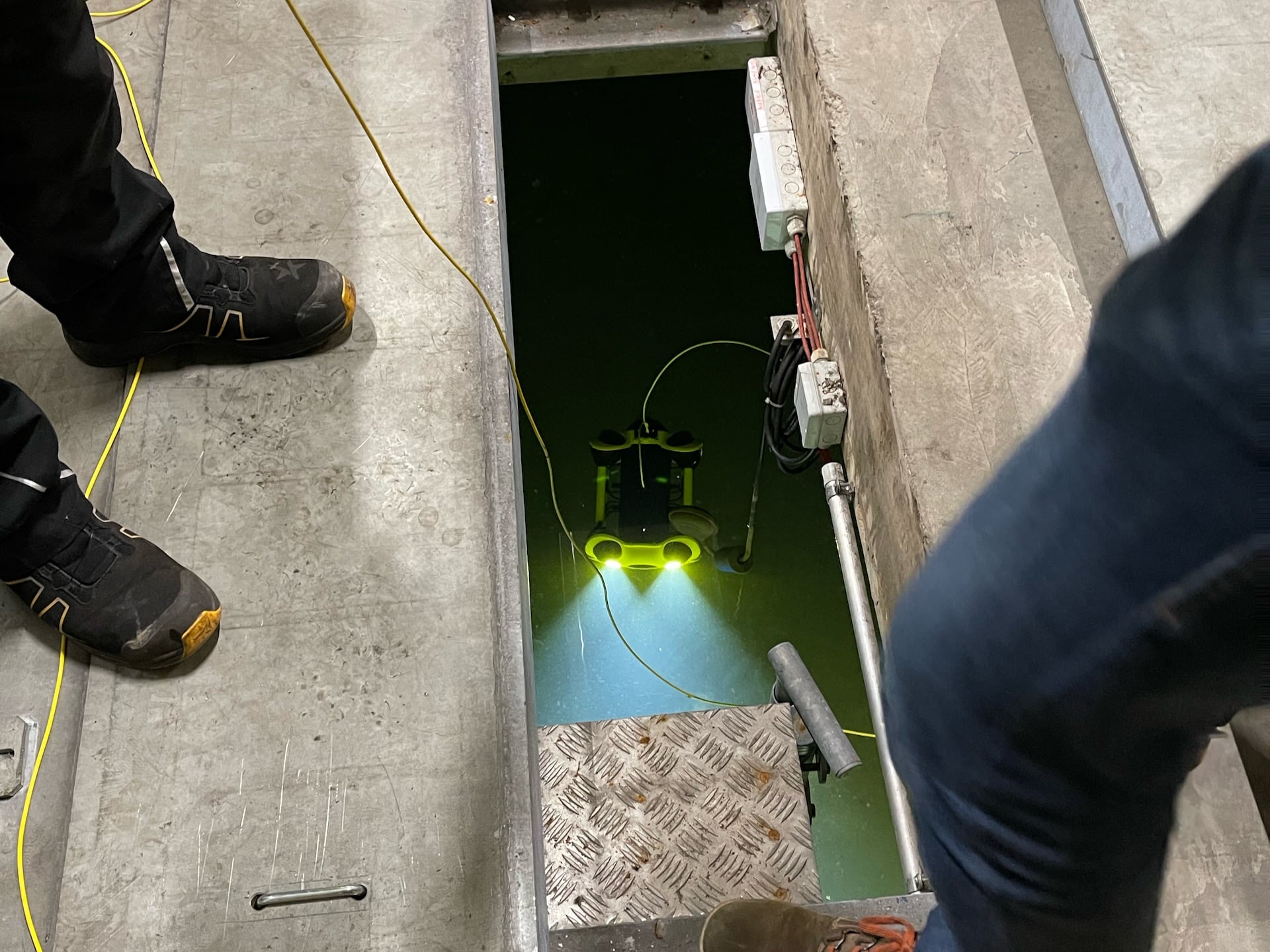
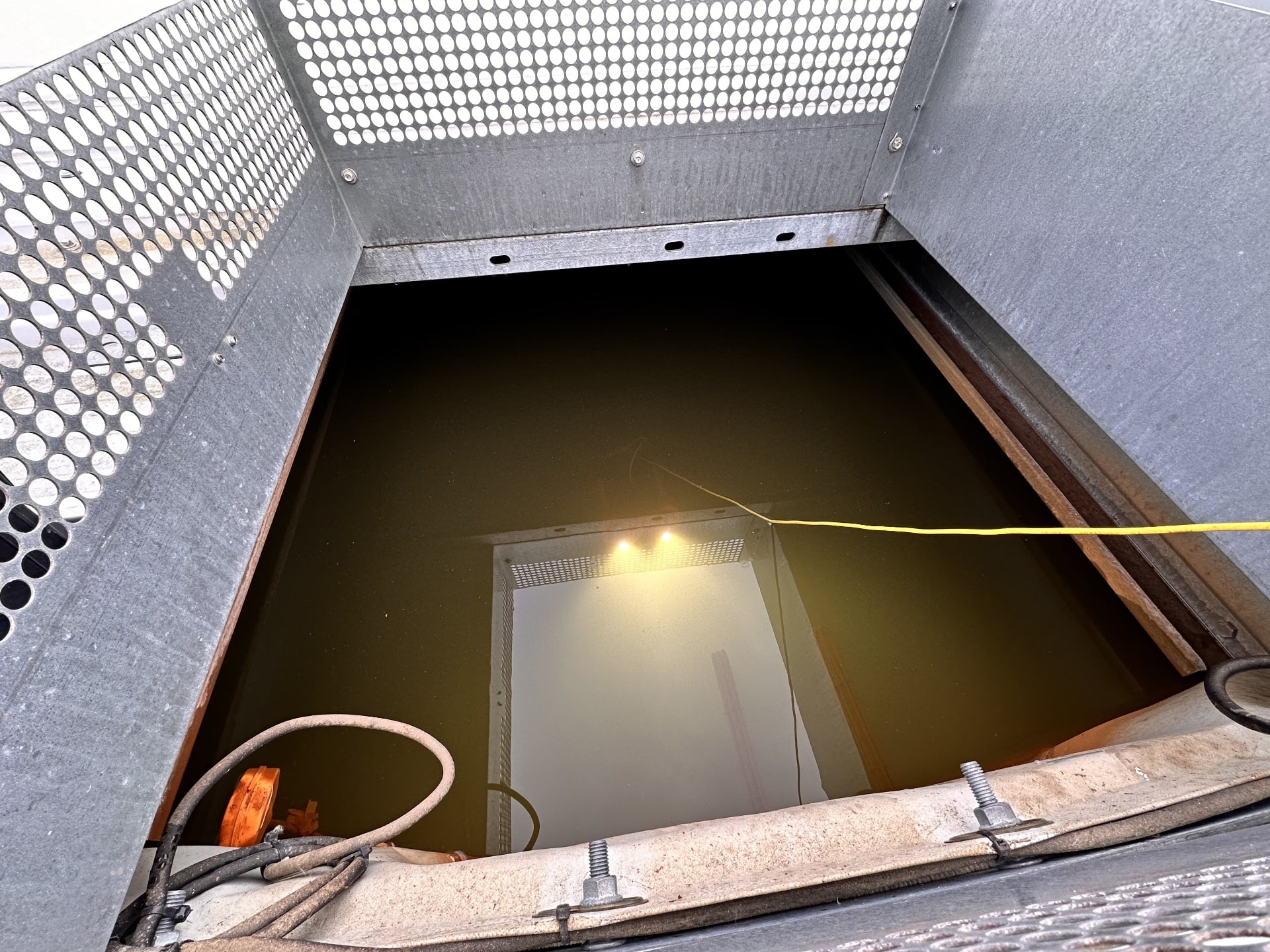
Our team conducts the underwater inspection systematically. The ROV is controlled via tether; the pilot sees the live image in 4K – complete traversal without divers.
Step 4: Findings Report & Handover (Befundbericht & Übergabe)
You receive the structured findings report (Befundbericht) with 4K image evidence, findings list, position descriptions and action recommendations – audit-ready and suitable for certified inspectors.
Relevant Standards & Regulations
Diving work is among the most heavily regulated activities in industry. Deploying ROVs shifts the inspection completely out of the hazard zone – it no longer constitutes diving work within the meaning of DGUV Vorschrift 40 (German statutory accident insurance regulation for diving). As a result, the dive team, rescue concepts and medical requirements are eliminated, while the inspection is conducted safely and efficiently from outside.
| Regulation | Title | Relevance for ROV Deployment |
|---|---|---|
| DGUV Vorschrift 40 | Taucherarbeiten (Diving Work) | Governs use of divers in commercial operations. With ROV deployment the diving regulation is completely eliminated – no diver, no regulation. |
| DGUV Regel 105-002 | Tauchen mit Leichttauchgeräten (Diving with light equipment) | Detailed regulations on equipment, qualification and operating conditions for scuba diving. Not applicable with ROV deployment – reduces effort and liability risks for the operator. |
| DGUV Information 213-055 | Tauchen in kontaminierten Gewässern (Diving in contaminated water) | Special protection requirements for contaminated water. The ROV takes over the inspection without human deployment – relevant for wastewater vessels, industrial facilities and contaminated water bodies. |
| ArbSchG | Arbeitsschutzgesetz (Occupational Health and Safety Act) | Obliges employers to conduct hazard assessments (Gefährdungsbeurteilung). Deploying an ROV instead of divers eliminates major hazards and significantly simplifies documentation obligations. |
| BetrSichV | Betriebssicherheitsverordnung (Industrial Safety Regulation) | Governs inspection obligations for equipment requiring monitoring (e.g. pressure vessels, tanks). Our documentation provides the basis for expert inspections per BetrSichV. |
| DGUV Grundsatz G31 | Tauglichkeit für Überdruckarbeiten (Fitness for pressurized work) | Occupational health screening for divers. With ROV deployment no personnel work under pressure – G31 obligation eliminated. |
| VdS CEA 4001 / FM Global 2-81 | Sprinkler tanks & fire water | Inspection without draining possible. ROV documents floor and walls as basis for the inspector. Fire protection stays active throughout. |
| DVGW W 300 | Trinkwasserbehälter (Drinking water tanks) | ROV inspection of the water body without draining. Hygiene-compliant procedure. |
| API 653 | Storage tanks | Underwater inspection of tank floor and wall as basis for accredited inspectors. |
| ATEX / Explosionsschutz | Explosion protection (if applicable) | For tanks with ignitable media or explosive atmospheres, ATEX requirements apply. We verify in advance whether deployment under the given atmosphere is permissible. |
Your Contacts for Underwater Inspection
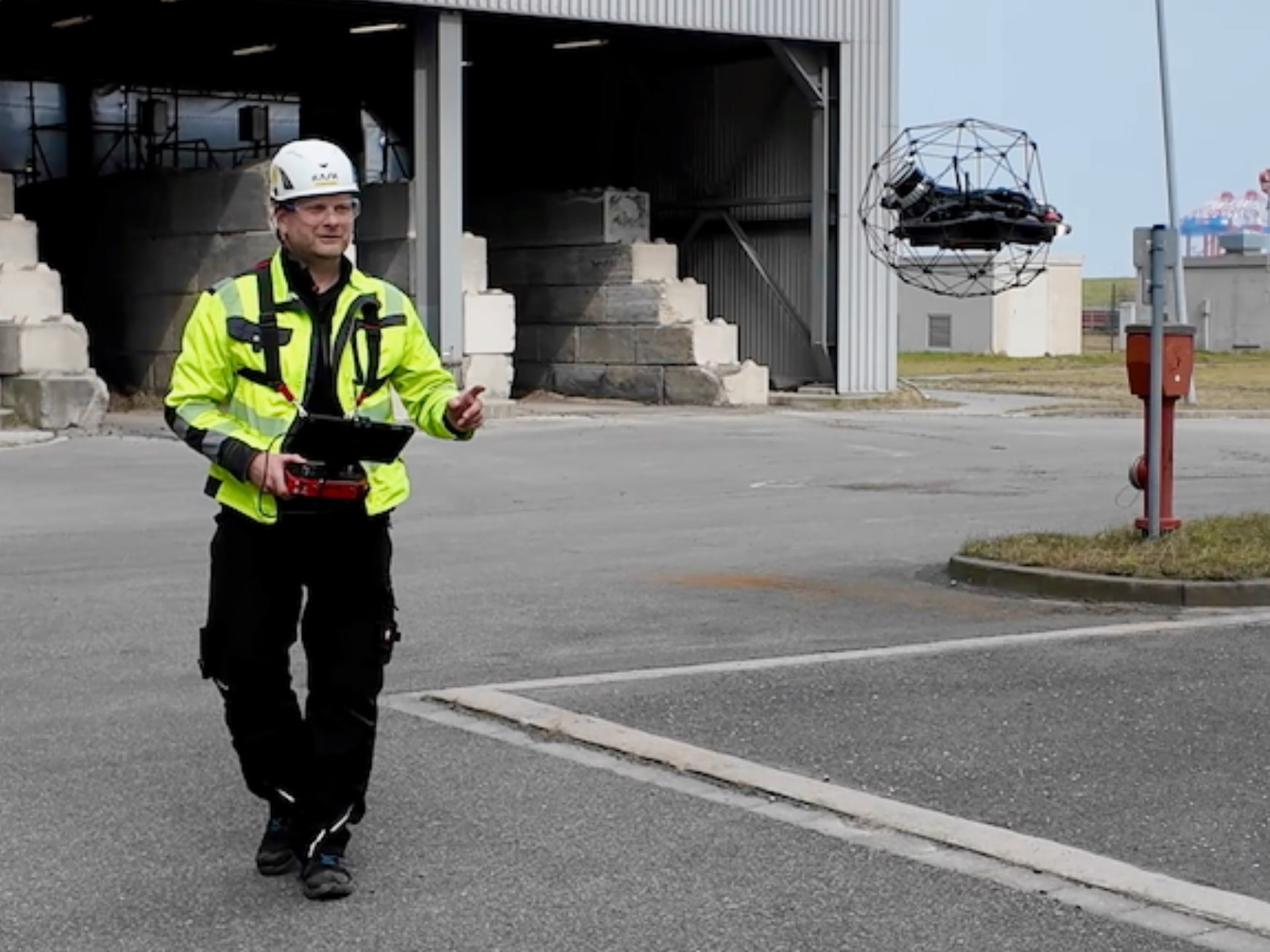
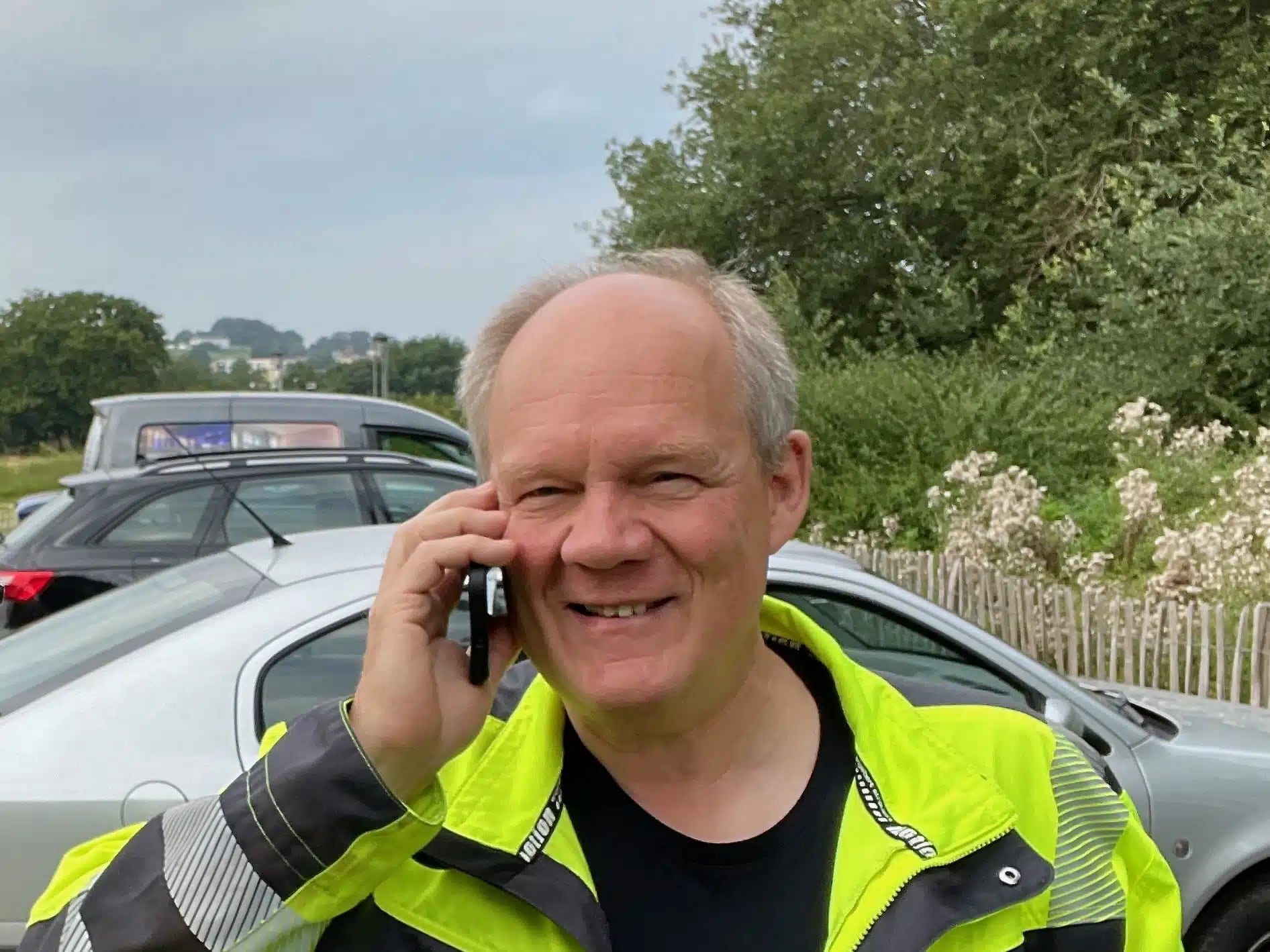
Christian Engelke and Dipl.-Ing. Karsten Lehrke advise you directly – no call center, no detours. We deploy the Chasing M2 Pro Max in industrial facilities and know the requirements from practical experience. Contact us – including for unusual access situations.
Related Services
- Condition Documentation – ELIOS 3, M30T and ROV – complete facility coverage: inside, outside and underwater.
- Tank Inspection – Inner walls, floors and ceilings – without human entry.
- Sprinkler Tank Inspection – Without draining, fire protection stays active.
- Confined Spaces Inspection – ELIOS 3 for above the waterline: tanks, boilers, silos without human entry.
- Industrial LiDAR Survey – 3D point clouds for planning and digital twins.
- Industrial Drone Inspection – All inspection methods: drone, ROV and combined deployments.
Frequently Asked Questions
Why an underwater drone instead of divers?
In many industrial environments, diving is simply not possible – due to oxygen deficiency, contamination, confined geometry or missing safety infrastructure. Even where diving would be possible, an ROV is often faster, cheaper and delivers better image documentation: 4K versus a handheld camera, no time spent on diver logistics. We have been active in industrial inspection since 2017 and deploy the right technology for the access – the Chasing M2 Pro Max for underwater, ELIOS 3 for confined spaces above the waterline, and the DJI M30T for exterior overviews.
Does the facility need to be drained for the underwater inspection?
No – this is the decisive advantage. The Chasing M2 Pro Max dives into the filled facility. Tanks, sprinkler systems, harbor basins and wastewater plants (Kläranlagen) remain in operation. No draining, no disposal, no production downtime. For sprinkler tanks (Sprinklertanks), fire protection stays active throughout the entire inspection.
How deep can the underwater drone dive?
The Chasing M2 Pro Max can be deployed to 200 m water depth – significantly deeper than virtually any industrial requirement. More relevant in practice is the tether length: standard up to 200 m horizontal reach. For tanks, sprinkler basins and harbor structures, diving depth is generally not a limiting factor.
How well does the underwater drone see in turbid water?
The 8,000 lumen floodlight and the f/1.8 Sony sensor deliver usable footage even in turbid water – better than a diver with a hand lamp. In very heavy turbidity (e.g. stirred-up sediment), visibility can be limited. We discuss the actual water condition with you in advance and give an honest assessment of expected image quality.
What happens if the underwater drone gets snagged?
The ROV is connected to a tether that serves as a recovery line at all times – it cannot be lost. The 8 vectored thrusters allow reversing and rotation in place. Where there is a risk of snagging, deployment is planned so that confined areas are traversed with sufficient clearance. We discuss the facility geometry in advance.
For which facility types is underwater inspection by ROV suitable?
Tank floors and wall lower edges of storage and process tanks, sprinkler tanks (Sprinklertanks) and fire water basins (Löschwasserbecken), ship hulls in harbor basins, sheet pile walls (Spundwände) and quay walls (Kaimauern), cooling water inlets in power plants (Kraftwerke), secondary clarifiers (Nachklärbecken) and process basins in wastewater plants, as well as underwater pipelines and structures.
What does an underwater inspection cost?
Costs depend on facility size, water depth, findings scope and report format. Typical deployments fall in the low to mid four-figure range. We prepare a transparent fixed-price offer based on your specifications – no surprises.
How quickly can an underwater drone deployment be scheduled?
Significantly faster than diver deployments or draining operations. If the facility is accessible, we are typically on site within a few working days. No lead time for diver logistics, no authority permits for human entry. Contact us directly – including for short-notice requests.
Is the underwater drone deployment DGUV-compliant (DGUV-konform)?
Yes. Since no personnel enters the vessel or dives, the typical requirements in the confined space area are eliminated – such as oxygen monitoring, contamination protection or special rescue provisions for human entry. The Chasing M2 Pro Max is controlled entirely from outside. This significantly simplifies the organizational effort and makes deployment possible even where human entry is subject to permits or simply not permissible.
Can sediment be detected during underwater drone inspection?
Yes – sediment layers, floor deposits, fouling (Bewuchs) and biofilms are generally clearly visible and are documented. Exact measurement of layer thicknesses is not possible with the ROV alone. For quantitative sediment analysis, supplementary methods are required – we discuss this with you in advance.
Can leaks or damage be detected underwater?
Visible damage such as corrosion spots, coating damage, tears, wash-outs and structural anomalies can be documented. Active leaks can often be identified via flow patterns or visible turbidity effects. For deeper material analysis or exact wall thickness measurements, additional methods are required – ROV deployment is a visual inspection (Sichtinspektion), not a substitute for non-destructive material testing (zerstörungsfreie Prüfung, ZfP).
How long does a typical underwater inspection take?
Depending on tank size, geometry and required findings scope, typically between 30 minutes and several hours. Since neither draining nor special access preparation is needed, the inspection can generally begin immediately upon arrival – significantly faster than alternatives using divers or draining.
Can underwater drone inspections be repeated and compared?
Yes – this is a key advantage of ROV inspection for maintenance planning (Instandhaltungsplanung). The same areas can be revisited in follow-up inspections. With documented video and findings lists, the condition history can be traced over time: is a corrosion spot growing? Is the sediment volume changing? This is the basis for condition-based maintenance (zustandsbasierte Instandhaltung) rather than rigid intervals.
How frequently should an underwater inspection be conducted?
This depends on the facility, the medium and regulatory requirements. Annual or biennial intervals are typical – or additional inspections following special events (pressure surges, contamination suspicion, known damage). Our recommendation: condition-based rather than by rigid calendar. We advise you on a sensible inspection cycle for your specific facility.
When is the underwater drone not suitable – and what are the limitations?
The Chasing M2 Pro Max is a visual inspection system (Sichtinspektion) – it does not deliver wall thickness measurements, ultrasonic testing or exact dimensional chains. For quantitative material findings, supplementary NDT (non-destructive testing, zerstörungsfreie Werkstoffprüfung) methods are required. Further limitations: very narrow pipelines under approximately 30 cm diameter, extremely strong currents, closed vessels without sufficient access opening for the ROV. In very heavy turbidity (stirred-up sediment), image quality is reduced. We clarify in the initial consultation whether ROV deployment is appropriate for your specific situation – and openly recommend an alternative when another method is a better fit.
What do we need to prepare for an underwater inspection?
In general very little – this is a key advantage. We need: an access point with sufficient opening size for the ROV (min. approx. 20 cm), information on water depth and vessel geometry, notes on the medium (drinking water, process water, contaminated), and your inspection focus (tank floor, walls, fittings). No draining, no special permits for human entry, no specialized safety infrastructure. We clarify all details in the initial consultation – contact us.
Does the underwater drone have sonar or additional sensors?
The Chasing M2 Pro Max is primarily a visual inspection system with a 4K camera and 8,000 lumen lighting. Optionally, additional sensors such as sonar modules or thickness gauges can be attached via the modular mounting points. For most industrial scenarios – tank floors, sprinkler basins, harbour structures – the visual inspection already delivers all decision-relevant findings.
Can the underwater drone also be used in saltwater or aggressive media?
Yes – the Chasing M2 Pro Max is designed for use in both fresh water and saltwater. For aggressive or contaminated media (acids, alkalis, oil-water mixtures) we check the chemical compatibility with the housing materials in advance. After deployments in contaminated waters the ROV is cleaned and decontaminated according to the hygiene protocol.
How are the results of the underwater inspection documented and delivered?
You receive a structured findings report with 4K video recording, individual frame captures of the relevant finding locations, depth data and an assessment of the visual condition. The report is available as a PDF and serves as the basis for expert evaluations, insurance documentation or your internal maintenance planning. On request we also deliver the complete raw material.
Does the underwater drone stir up sediment and thereby reduce visibility?
The eight vectored thrusters of the Chasing M2 Pro Max enable very precise, slow navigation with minimal thrust effort. This stirs up significantly less sediment than conventional ROVs or divers with fin propulsion. With known sediment layers we traverse the tank floor at an adjusted speed and distance to maintain visibility conditions.
Can the underwater drone also inspect cooling towers and cooling water circuits?
Yes – cooling water basins, cooling tower catch basins and cooling water intakes at power plants are among the typical deployment areas. The ROV documents corrosion, deposits, biofilm and structural damage on concrete components underwater. In combination with the ELIOS 3 drone we can also inspect the air space above the waterline – for a complete condition assessment without scaffolding and without personnel entry.
Is a combined inspection above and below water possible?
Yes – this is exactly one of our strengths as an inspection service provider with multiple systems. For vessels with both air and water zones we deploy the ELIOS 3 for the dry area above the waterline and the Chasing M2 Pro Max for the underwater area. The result is a complete condition documentation of the entire vessel – without draining and without personnel entry.
Get in Touch
Questions about underwater inspection by ROV or need a quote for your project? Fill out the form below and we will get back to you within 24 hours.