
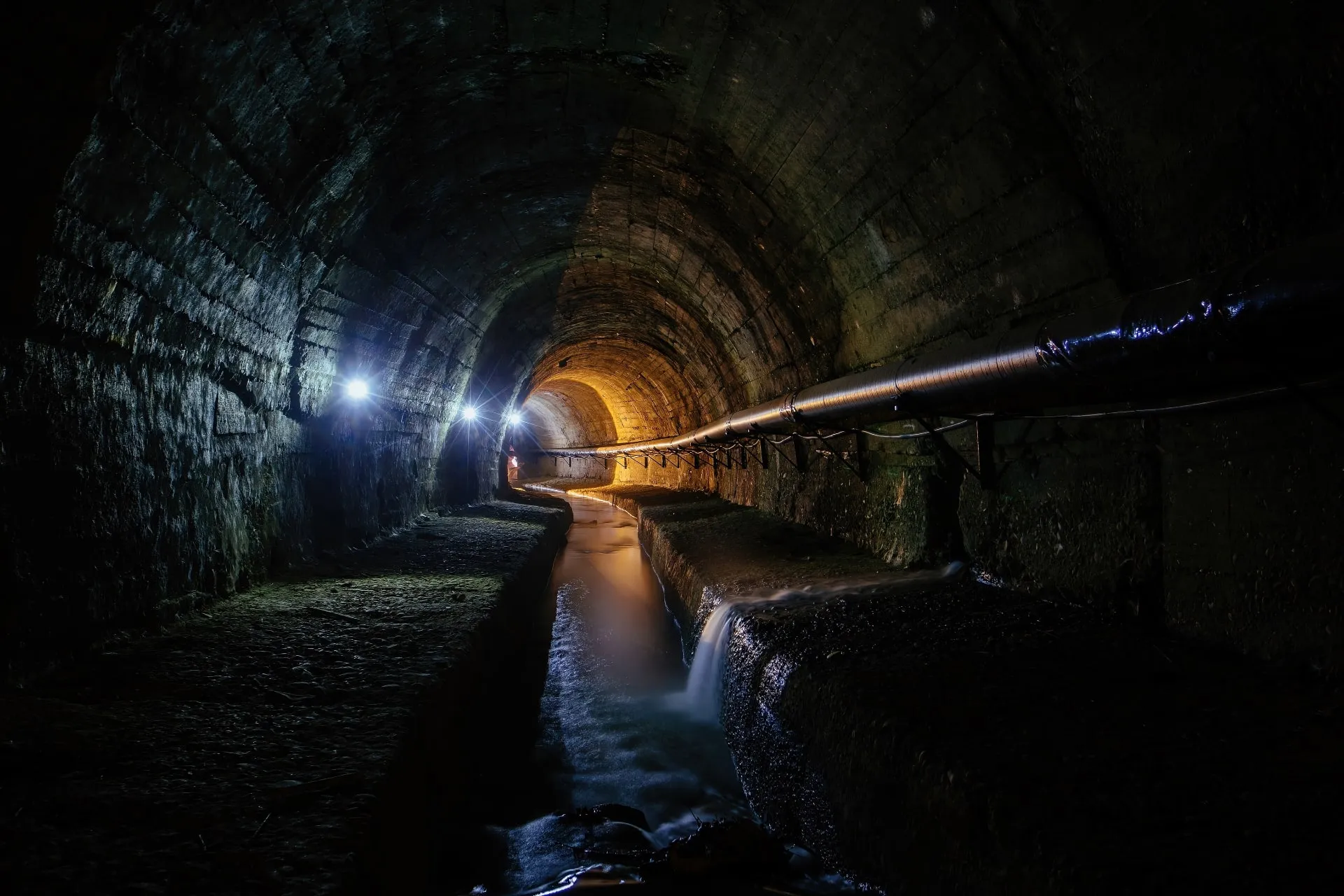
Sewer Inspection by Drone – Without Entry, Without Confined Space Access
Kopterflug inspects DN-1200 sewers, shafts and pump stations with the Flyability ELIOS 3 – without human entry, without DGUV confined space procedures, without traffic closures. 360° documentation from invert to crown, 4K + LiDAR + thermography in a single flight.
- No human entry – no DGUV confined space permit required
- Full 360° crown inspection – the blind spot of conventional CCTV
- 4K + LiDAR + thermography in one flight
- Up to 80% cost savings vs. conventional manned entry
DN 1200 – The Boundary Between CCTV and Drone
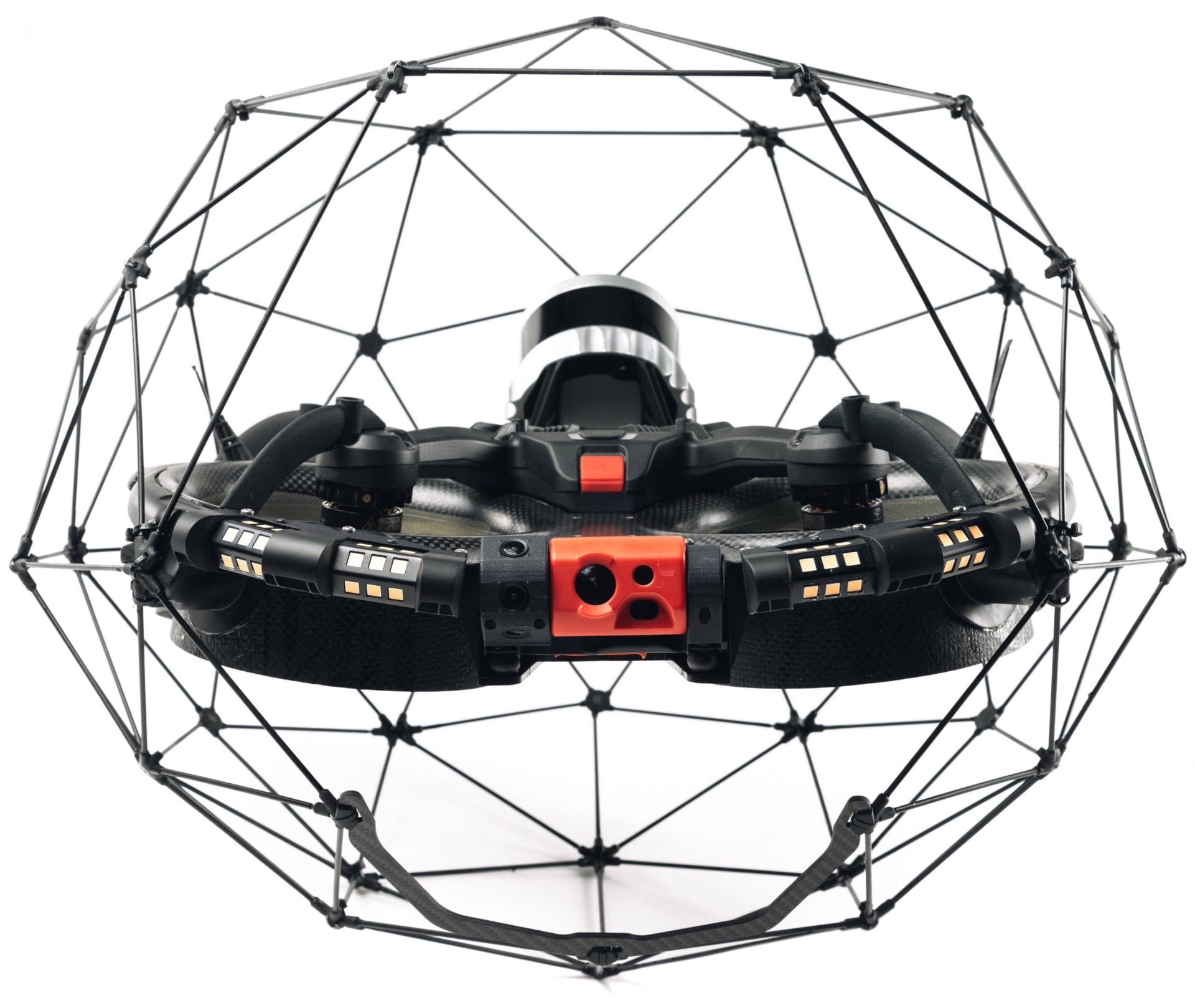
The ELIOS 3 navigates GPS-free through DN-1200 sewers – from shaft to shaft, without anyone entering.
DN 1200 – 1,200 mm internal diameter – marks the transition zone between conventional TV inspection and drone inspection. From this profile size, human entry is technically possible under DGUV rules but dangerous. At the same time, the drone is already deployable here: the Flyability ELIOS 3 requires a clear cross-section of at least 1.2–1.5 m and can navigate safely in DN-1200 sewers – provided residual water levels and sediment buildup leave sufficient clearance. The ELIOS 3 flies from the shaft through the sewer and captures the condition 360° from invert to crown – without anyone having to enter.
In DN-1200 profiles the typical damage patterns concentrate particularly heavily: Biogenic sulphuric acid corrosion (BSA) in the crown area – through H⊂2;S oxidation on the concrete ceiling – is the most frequent and critical damage pattern. Classical CCTV cameras barely reach the crown at DN 1200. The ELIOS 3 flies freely through the cross-section and captures crown, springline and invert in 4K. Additionally there is cracking at joints and lateral connections, infiltration at leaking joints, and in older profiles joint washout in stoneware or concrete.
For drainage operators and municipalities, the drone at DN 1200 represents a clear economic alternative to costly manned entry: no safety guard, no breathing apparatus, no traffic closure for hours-long rescue chain setup – instead a compact two-person team working from the shaft rim.
Challenges in Large-Profile Sewer Inspection
DN-1200 sewers are classified as accessible – but are dangerous. H⊂2;S gases, oxygen deficiency, confined spaces and complex DGUV logistics make classical manned entry a significant risk.





Technologies Used – Large-Profile Sewers & Drainage
ELIOS 3 – Deployment from DN 1200 (≥120 cm Ø)
GPS-free SLAM navigation in gravity-flow sewers. Collision tolerance for irregular invert shapes and lateral connections. 4K + thermography + LiDAR in one flight. DN 1200 is the lower deployment limit – subject to sufficient free cross-section. No human entry into H⊂2;S-laden, O⊂2;-deficient or health-hazardous atmospheres.
DJI M30T – Shaft Heads & Inlet Structures
Visual inspection of manhole covers, inlet structures and stormwater retention basins from the air. 200× zoom for detailed images without climbing at the shaft head.
Handheld LiDAR – Accessible Sections & Shaft Depths
Ground-level 3D cross-section capture in accessible DN-1200 sewer sections. Geometry, invert level and profile deformation directly from the point cloud – no tripod, spontaneous deployment.
DIN EN 13508 & ATV-DVWK-Compliant Documentation
Defect classification and findings documentation to sewer standards. 4K imagery and georeferenced findings list as basis for rehabilitation planning and regulatory documentation.
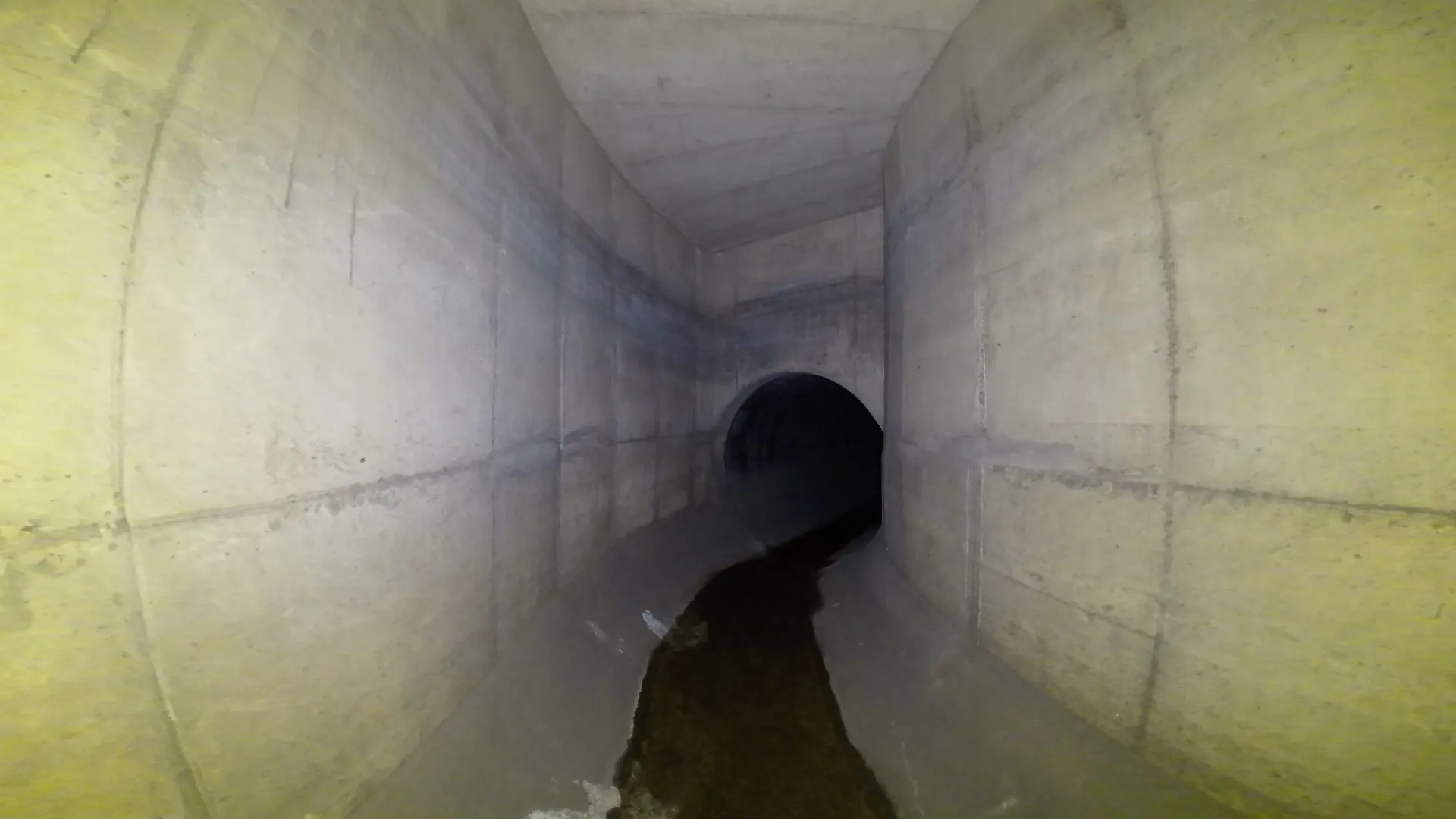
The ELIOS 3 during large-profile sewer inspection – 360° from invert to crown without human entry.
Applications in the Large-Profile Sewer Network
1. DN-1200 Main Collectors & Sewers
Inspection of main collectors and large pipes in the DN-1200 range. The drone delivers complete 360° documentation – especially the crown area that classical CCTV cameras cannot reach. Georeferenced scans and WinCan integration for precise defect localisation.
- Sensors: Visual, LiDAR, 3D-mapping
- Typical findings: Crown corrosion (BSA), cracks, lateral leakages, root ingress, deposits, structural damage
2. Special Structures & Pump Stations
Inspection of pump chambers, screen installations, shafts and complex structures – including difficult geometries without human entry. Georeferenced 3D scans. IP44-protected for wet environments.
- Sensors: Visual, LiDAR, 3D-mapping
- Typical findings: Corrosion, deposits, structural damage, wear on fittings
3. Stormwater Retention Basins & Storage Structures
After heavy rainfall or during operation, structures can be quickly assessed. Sediment distribution and conspicuous areas can be documented to support decisions on cleaning or maintenance.
- Sensors: Visual, LiDAR, 3D-mapping
- Typical findings: Deposits, sediment buildup, corrosion, cracks, coating damage
4. Overflow Structures & Throttle Sections
Mechanical components such as gates or flaps can be visually inspected. The drone enables targeted inspection of hard-to-reach areas without complex access structures.
- Sensors: Visual, LiDAR
- Typical findings: Blockages, corrosion, mechanical damage, deposits
5. Water-Filled Sections & Special Structures (ROV)
Inspect flooded sewer sections, siphons, stormwater overflow basins and storage structures without emptying – ROV inspection without divers. Fully document invert, walls and fittings.
- Sensors: ROV visual
- Typical findings: Sediment deposits, corrosion, cracks, leakages, fitting damage
6. Siphons & Crossings
Inspection of underground crossings under roads, railway lines or waterways – often long, hard-to-access sections with varying water levels. ROV deployed where CCTV crawlers fail.
- Sensors: ROV, visual
- Typical findings: Sediment buildup in invert, deposits on lower soffit, erosion, cross-section narrowing, infiltration
7. Mixed Operations – Large-Profile (ELIOS 3 + ROV)
Sewer sections with varying water levels – combination of ELIOS 3 (above, dry crown) and ROV (below, flooded invert). 360° full capture without human entry. Our strongest USP against classical methods.
- Sensors: ELIOS 3, ROV, LiDAR
- Typical findings: Crown corrosion (above), sediment buildup (below), leakages at transition zones, combined damage patterns
8. Shaft Structures & Drop Shafts
Deep shafts with complex geometry – drop constructions, fittings and wall areas fully documented. ELIOS 3 flies vertically without human entry.
- Sensors: Visual, LiDAR
- Typical findings: Cracks, spalling, corrosion on fittings, damage to drop constructions
9. Junctions, Nodes & Collectors
Complex sewer geometries with multiple inlets and outlets. LiDAR captures complete 3D geometry – flow-dead zones and geometric ambiguities become visible.
- Sensors: Visual, LiDAR, 3D-mapping
- Typical findings: Flow-dead zones, deposits, leakages at connections, geometric ambiguities
10. Crown & Soffit Area
Targeted inspection of the upper sewer area – the classic blind spot of CCTV crawlers. Biogenic sulphuric acid corrosion originates exactly here and is regularly missed during classical TV inspection.
- Sensors: Visual, LiDAR
- Typical findings: Biogenic sulphuric acid corrosion (BSA), cracking, material loss, exposed reinforcement
What We Document in Sewer & Drainage Infrastructure
We fly the ELIOS 3 into sewers, shafts and special structures and systematically document the structural condition. Specialist assessment is carried out by your structural inspectors and engineering firms – we deliver the data:
Large-Profile Sewers & Accessible Collectors
Cracks, pipe damage, root ingress, deposits, spalling, joint damage and material displacement. Undivided collector pipes put groundwater and soils at risk. Cracks and joint openings are well captured by CCTV in smaller profiles – from ≥150 cm diameter the ELIOS 3 is faster and more complete.
Shafts & Shaft Structures
Wall corrosion, cracks, joint displacement, condition of step irons, frame covers and inlet areas. Shafts are confined spaces under DGUV Regel 113-004 – entry requires complex safeguarding. At the same time they are frequent weak points as gas pressure and condensate permanently stress the structure.
Siphons, Storage Canals & Stormwater Retention Structures
Deposits, invert corrosion, cracks in the structural fabric, condition of shut-off devices and inlet structures. Storage canals and siphons are hydraulically critical – deposits and invert failure significantly reduce retention capacity. Inspections are classically associated with high operational effort.
Pump Stations & Inlet Structures
Condition of shaft and inlet structures, corrosion on fittings, deposits and growth in inlet areas. Pump stations are safety-critical structures – corrosion and blocked inlets can lead to overflows.
Your Benefits with Large-Profile Inspections
- No human entry: No DGUV confined space permit, no rescue chain, no infection risk. Risk to your staff is eliminated entirely – even in tight DN-1200 profiles.
- Drastically reduced costs: Up to 80% cheaper than classical manned entry with safety guards, ventilation and traffic management.
- Complete crown capture: The BSA-affected crown area is captured in 4K – something classical CCTV cameras barely achieve at DN 1200. Damage is detected earlier.
- Fast inspection: Several hundred metres of DN-1200 sewer per day inspectable – without weeks of preparation for manned entry.
- DGUV-compliant: Our inspections fulfil DGUV requirements for confined spaces. No human entry = no risk.
- Precise 3D data: LiDAR point clouds enable geometry capture, surveying and repeat inspections of the DN-1200 profile over years.
Classical Sewer Inspection vs. Drone in Large-Profile
| Aspect | Classical (CCTV / manned entry) | Drone (ELIOS 3) |
|---|---|---|
| Access | DGUV manned entry with rescue chain | Launch from shaft, no entry |
| Time required | 1–2 weeks | 1–2 days |
| Human entry | Yes – asphyxiation, H⊂2;S, infection, confinement | No |
| Crown capture | CCTV: barely reachable at DN 1200 | 360° – invert, walls, crown |
| Documentation | Crawler video + paper report | 4K + LiDAR 3D + thermography |
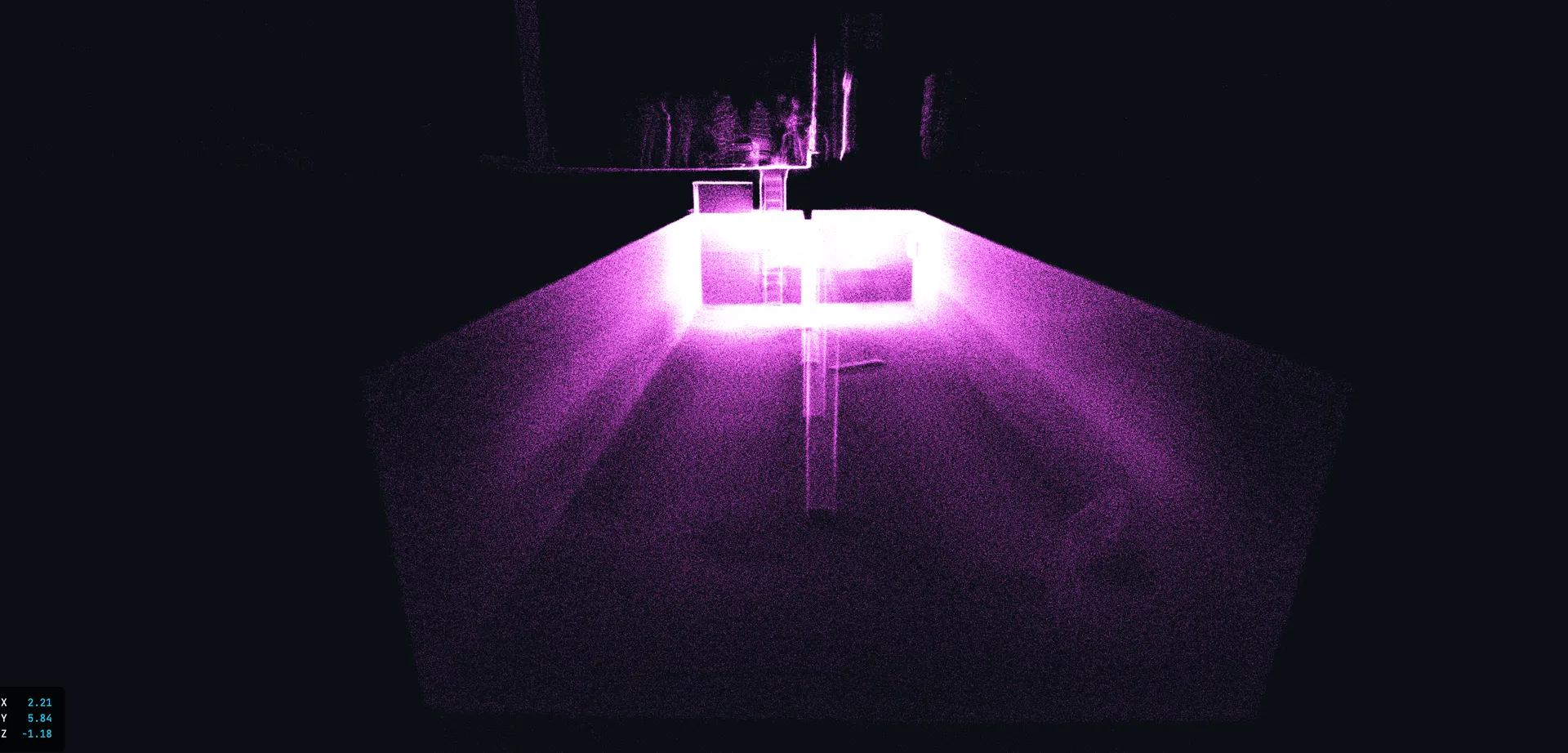
LiDAR 3D scan of a stormwater retention basin – geometry, deformation and sediment levels in one flight.
How the Large-Profile Inspection Works
Step 1: Initial Consultation (free)
We analyse your DN-1200 installation and advise you at no cost on all technical and organisational questions – including clarification of whether the free cross-section allows drone deployment.
Step 2: Scheduling & Quotation
You receive a transparent quotation. Together we plan timing, access and safety concept for your DN-1200 section.
Step 3: On-Site Inspection
We carry out the inspection using state-of-the-art drone technology – usually within a few hours.
Step 4: Analysis & Inspection Report
You receive a detailed report with 4K recordings, 3D models, thermography analyses and a systematic findings overview.
Standards & Compliance
- DGUV Confined Spaces: No human entry required – all risks and requirements for manned entry under DGUV are eliminated, even for tight DN-1200 profiles.
- DIN EN 13508-2: Our documentation follows the standards for sewer inspection and condition classification.
- Decontamination protocol: After deployment, professional decontamination of the drone to hygiene standards is carried out.
- EU Drone Regulation: Insurance cover €5 million.
Your Contacts for Sewer Inspection
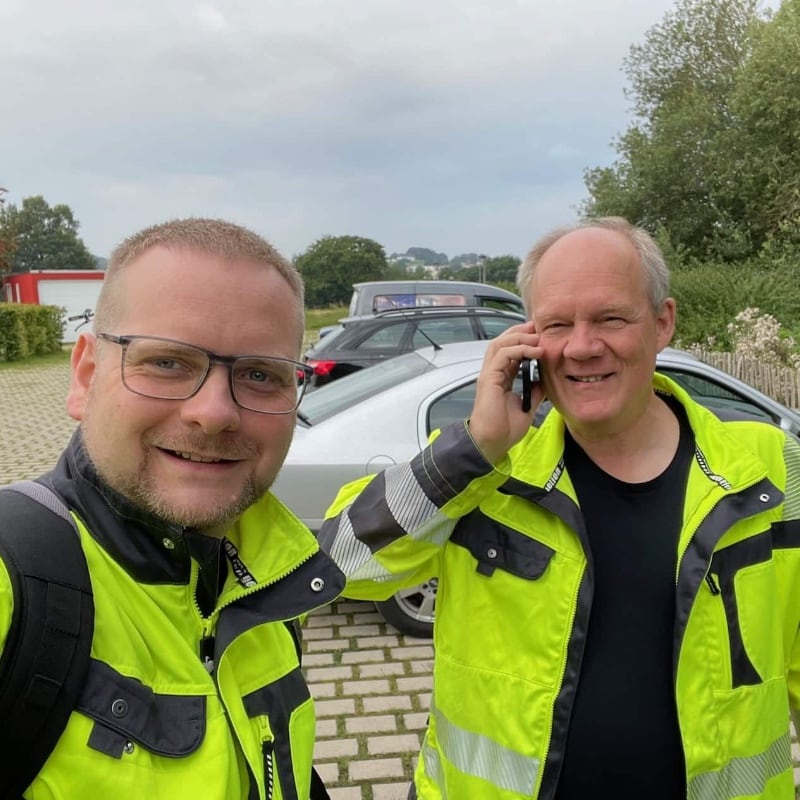
Christian Engelke and Dipl.-Ing. Karsten Lehrke – your direct contacts for sewer inspection projects.
Since 2017, we have been deploying drones in industrial installations and drainage infrastructure. We understand the requirements of drainage operators: precise documentation, minimal operational effort, maximum safety. As a rule, no human entry into hazardous DN-1200 sewers.
Related Services
- Confined Spaces Inspection – Tanks, boilers, silos and shafts without human entry.
- Underwater ROV Inspection – Flooded sewer sections, siphons and stormwater basins without divers.
- Industrial LiDAR Survey – 3D point clouds for geometry, deformation analysis and digital twins.
- Tank Inspection – Storage and process tanks without human entry.
- Condition Documentation – Structured asset documentation for maintenance planning.
- Industrial Drone Inspection – Overview of all inspection services.
Frequently Asked Questions – Drone Sewer Inspection
How does drone sewer inspection work in large-profile sewers?
The Flyability ELIOS 3 is suitable for DN-1200 sewers. It flies through main collectors, special structures, stormwater overflow basins and pump stations, documenting 360° from invert to crown – unlike CCTV cameras which only capture the invert area at DN 1200. Particularly suitable for sewers where classical manned entry is dangerous and costly.
From what sewer diameter can the drone be deployed?
The ELIOS 3 requires a free cross-section of at least approx. 1.2–1.5 m. DN 1200 corresponds to 1,200 mm internal diameter – that is the lower limit. Deployment is possible when residual water levels and sediment buildup leave sufficient clearance. We clarify this during the initial consultation. Smaller profiles than DN 1200 are not our deployment area.
Which standards apply to sewer inspection?
Our documentation follows the requirements of DWA-M 149-2 (condition survey and assessment), EN 13508-2 (coding system for optical inspection) and the respective self-monitoring regulations (SüwVO) of the federal states. Results can be integrated into common sewer database systems.
How does drone sewer inspection differ from classical CCTV inspection?
Classical TV inspection (CCTV) only captures the invert area at DN 1200 – the crown area remains largely uncaptured. The ELIOS 3 flies freely and documents 360° – invert, walls and crown. Additionally it provides LiDAR 3D point clouds for geometry surveying. BSA crown damage, lateral leakages and collapses become visible for the first time.
Can the drone fly in partially filled large-profile sewers?
Yes, the ELIOS 3 can fly above the water surface in partially filled DN-1200 sewers. It documents the dry area above the waterline – walls, crown and connections. At higher fill levels the remaining clearance in DN 1200 is limited – we clarify this in advance. For fully flooded sections an underwater ROV is used instead.
What about gas hazards in large-profile sewers (H⊂2;S, methane, oxygen deficiency)?
Sewer gases such as hydrogen sulphide (H⊂2;S), methane and oxygen deficiency are the main reason why manned entry into DN-1200 sewers is so dangerous. The ELIOS 3 flies without human entry – your team stays above at the shaft. As the drone is not ATEX-certified, a gas-free measurement is carried out before deployment. Risk to your staff is eliminated entirely.
What data is delivered after sewer inspection?
We deliver 4K video recordings, high-resolution photos and LiDAR 3D point clouds of the sewer interior. Documentation shows cracks, collapses, root ingress, corrosion, displacement and deposits. Data is prepared for condition classification per EN 13508-2 and can be imported into WinCan or similar systems.
Is DGUV equipment for manned entry still required?
No, that is precisely the advantage. Since no human entry into the DN-1200 sewer takes place, the requirements of DGUV Regel 113-004 are eliminated: no rescue chain, no breathing apparatus, no safety guard, no gas meters for companions. The pilot controls the ELIOS 3 from the shaft opening – safely at the surface.
Can the drone reliably detect damage in the crown area of large-profile sewers?
Yes – and that is particularly valuable at DN 1200. Ground-guided CCTV cameras barely or not at all capture the crown at DN 1200. The ELIOS 3 flies freely through the cross-section and documents crown and soffit in 4K. Biogenic sulphuric acid corrosion (BSA), which attacks preferentially in the crown area, becomes reliably visible.
Does the sewer need to be taken out of service for drone inspection?
Generally no. The ELIOS 3 flies during operation – with sufficient free cross-section above the water surface. A full shutdown is only necessary when the residual water level leaves insufficient clearance. We clarify this individually during the initial consultation.
How long does a drone inspection of DN-1200 sewers take?
Depending on section length, access situation and number of shafts, we inspect several hundred metres per day. A typical deployment with 2–4 sections takes 1–2 working days – compared to 1–2 weeks lead time for a classical DGUV manned entry.
Can detected sewer defects be precisely located?
Yes. The ELIOS 3 uses SLAM-based positioning and LiDAR 3D point clouds. Findings are georeferenced – defects such as cracks, collapses or BSA areas can be precisely located in the sewer. Data is compatible with WinCan and similar sewer database systems.
Can LiDAR detect deformations or settlement in the sewer?
Yes. The LiDAR sensor of the ELIOS 3 captures the complete sewer geometry as a 3D point cloud. Deformations, settlements or cross-section changes can be precisely measured and directly compared in follow-up surveys.
Is the drone suitable for stormwater retention basins and pump stations?
Yes, exactly here the ELIOS 3 shows its strengths. Stormwater retention basins, pump stations and similar special structures are confined, wet and often not safely accessible. The drone documents corrosion, deposits, coating damage and structural anomalies without human entry.
Can long large-profile sewer sections be flown with the drone?
Yes, but not unlimited from a single entry point. In practice, longer DN-1200 sections are processed segmentally from multiple shafts. The ELIOS 3 enables inspection of several hundred metres per day. Flyability documents examples of sewer deployments at Veolia Sewer Inspections.
Can the drone detect infiltration or moisture?
Yes, very well visually. Efflorescence, calcium deposits, moisture areas and drip traces can be clearly documented and located in 4K recordings. This complements the structural LiDAR capture with a qualitative damage assessment.
How is the drone introduced into the sewer?
Normally via existing shafts or structural openings. Launch is from outside – no human entry is required. The pilot controls the ELIOS 3 from the shaft rim. This is a key safety advantage: the team remains at the surface at all times.
Can the drone get stuck in the sewer?
The risk is very low due to the collision-safe design. The ELIOS 3 tolerates wall contact and returns autonomously to stable flight attitude after a flip. Nevertheless, all deployments are planned with a clear retrieval and safety concept.
Can drone sewer inspections be repeated and compared?
Yes – this is a particular advantage of the LiDAR-based approach. Through georeferenced 3D point clouds, follow-up inspections can be directly compared with earlier conditions. Changes in geometry, wall thickness or damage extent in the DN-1200 profile become quantifiable over multiple years. This provides a solid basis for condition-based maintenance planning.
Can the data be integrated into sewer database systems such as WinCan?
Yes. The inspection data can be exported and further processed in common sewer database systems. The evaluation software GrayMatter Inspector enables structured findings capture and data export.
Are there real-world references for drone sewer inspection?
Yes. Flyability documents deployments with Veolia (large-profile sewers and sewer sections) and Underground Vault Inspections (underground structures, chambers, overflow structures). These references show the typical deployment area in which we are also active.
Get in Touch
Questions about drone sewer inspection or need a quote for your DN-1200 project? Fill out the form and we'll respond within 24 hours.