
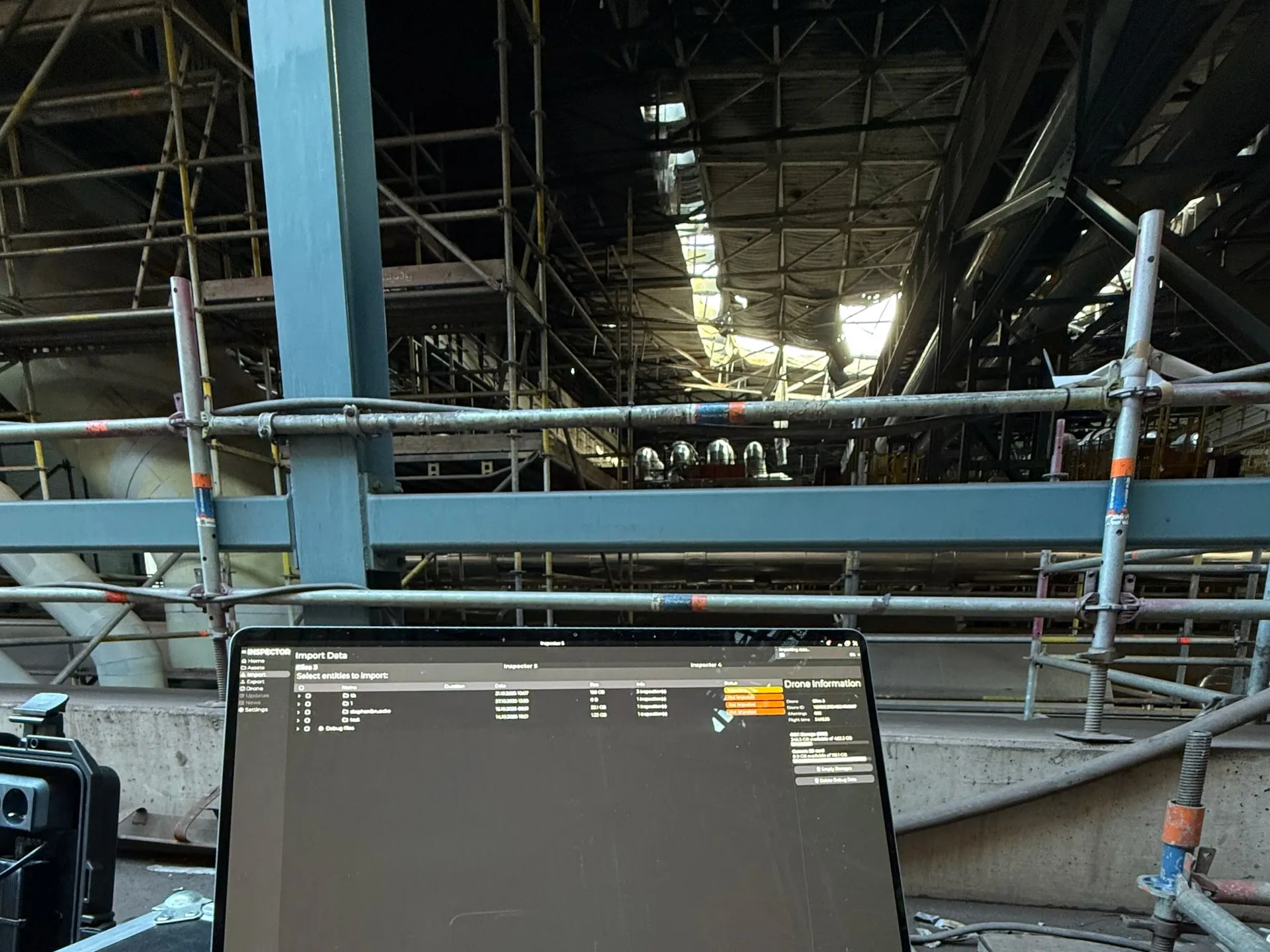
Emergency & Incident Response by Drone – WITHOUT additional personnel at risk, WITHOUT long lead times.
Mobile response team with drones and sensor technology. Situational assessment for tank incidents, hazardous material releases and explosions – on site within hours where capacity allows.
- No additional personnel in hazard zones
- Live video + thermography from the first flight
- Nationwide deployment – mobile, 24/7 reachable
When We Deploy
In serious industrial accidents every minute counts – and every unnecessary person in the hazard zone is an avoidable risk. Kopterflug deploys with a fully equipped response team by vehicle or aircraft to your site:
- Tank incident – ruptured tank, crack in the tank shell, uncontrolled product release
- Hazardous material release – acid spill, chemical leakage, gas cloud on the plant site
- Explosion & secondary damage – situation assessment after blast wave, fire reconnaissance, damage capture in inaccessible areas
- Major fire with access restrictions – thermographic monitoring, fire-seat localisation, support for the plant fire brigade
- Release of dangerous substances (CBRN situation) – documentation without personnel entry into contaminated areas
- Collapse & debris situations – structural capture and damage assessment after explosion or collapse, flying unstable areas without personnel at risk
The result: a complete situational picture from the air and from the interior – without putting additional responders in danger.
Why Drones Are Decisive in Emergency Response
Conventional situational assessment in an emergency means: personnel in protective equipment working their way through contaminated, unstable or burning terrain. The drone does this in minutes – without sending a single additional person into the hazard zone:
- Immediate situational picture – 4K live video and thermography from the very first flyover
- No entry into contaminated areas – ELIOS 3 flies into tanks, vessels and buildings without human entry
- Real-time thermography – fire seats, heat nests and release points visible at night or through smoke
- Gas detection combinable – for atmospheric measurements when equipped with corresponding sensor systems
- Documentation for insurers & authorities – complete image and video documentation from the first moment of deployment, audit-proof
- No DGUV confined entry process – no rescue crew, no PPE chain required for the drone itself
Experience base: Kopterflug has been working in critical industrial facilities since 2017 – incidents, contaminated spaces and CBRN-like situations are part of our deployment spectrum.
Your Advantages in Drone Emergency Response
Fast situational picture. No additional risk. Complete documentation.
Typical Deployment Scenarios
From tank release to explosion aftermath – drones deliver the situational picture that enables decisions.
Comprehensive Scenario Reference
The following overview shows the specific damage events for which drones can be deployed as reconnaissance and documentation tools. It is not exhaustive – every emergency has its own conditions. The key principle: wherever a person cannot safely enter or fly to, a drone can deliver the situational picture.
Industry & Chemical Plants
- Ruptured storage tank with acid (e.g. sulphuric acid) – release into containment bund with overflow risk
- Leakage on a pipeline system carrying liquid chlorine
- Uncontrolled release of ammonia from a refrigeration system
- Flange failure on a reactor with organic solvents
- Explosion of a gas-air mixture in a production hall (without secondary fire)
- Overpressure in a pressure vessel with release of flammable gas
- Leakage at a silo with toxic powder (e.g. phosphorus compounds)
- Heat exchanger incident with release of hot thermal oil
- Release of hydrogen sulphide (H₂S) from a wastewater treatment plant
- Leakage at a tank farm for liquid hydrocarbons
- Chemical release through a defective pump in a petrochemical plant
- Release of hydrochloric acid from a storage line
- Leakage of highly concentrated hydrogen peroxide
- Rupture of a pipeline carrying acrylonitrile
- Release of liquid nitrogen with oxygen displacement
- Reactor incident with uncontrolled polymerisation reaction
- Leak on a pipeline for hazardous intermediates
- Overfilling of a tank with subsequent benzene release
- Defective valve on a gas storage for propane/butane
- Corrosion-induced failure of an acid line in an electroplating facility
Shipping & Tank Vessels
- Leakage in the cargo tank of a chemical tanker (e.g. acid or alcohol)
- Ballast tank incident with release of heavy-oil residues
- Release of liquefied natural gas (LNG) through valve failure on a gas tanker
- Leak in the cargo pipeline of a product tanker carrying petrol/diesel
- Overpressure in a tank with subsequent gas release (ammonia tanker)
- Refrigeration unit incident on a gas tanker with refrigerant release
- Corrosion-induced crack in the hull of a chemical tanker
- Leakage during transfer of dangerous liquids in port
- Release of sulphuric acid from a tanker through a defective pump
- Inland tanker incident with release of liquid chlorine
Power Plants
- Leakage in the steam system of a coal or gas power plant with hot steam release
- Transformer incident with release of insulating oil
- Release of cooling water with chemical additives (e.g. corrosion inhibitors)
- Defect on a gas turbine burner with uncontrolled gas release
- Leak in the flue gas cleaning system with ammonia release
- High-voltage switchgear incident with oil release
- Release of biogas from a biogas plant within a power plant complex
- Overheating and leakage in a heat exchanger of a district heating plant
- Defective pressure vessel in a steam power plant with steam release
- Hydraulic oil leakage in a hydropower plant (e.g. at turbine control)
Infrastructure (Pipelines, Networks, Tunnels)
- Leakage on a natural gas pipeline with methane release
- Crude oil pipeline incident with release onto surrounding terrain
- Rupture of a district heating line with hot water release
- Ingress of industrial chemicals into a drinking water line through backflow
- Defect on a high-voltage pylon with insulating oil release
- Wastewater pressure line incident with release of sewage sludge/gases
- Leakage on a CO₂ pipeline (e.g. from a CCS facility)
- Overpressure in a tunnel ventilation system with exhaust gas release
- Bridge bearing incident with release of hydraulic fluid
- Leak in an underground fuel line at a tank facility
How an Emergency Deployment Works
From the initial call to the situational picture – as fast as possible.
The Response Team & Equipment
Kopterflug does not deploy a drone alone – but a fully equipped response team:
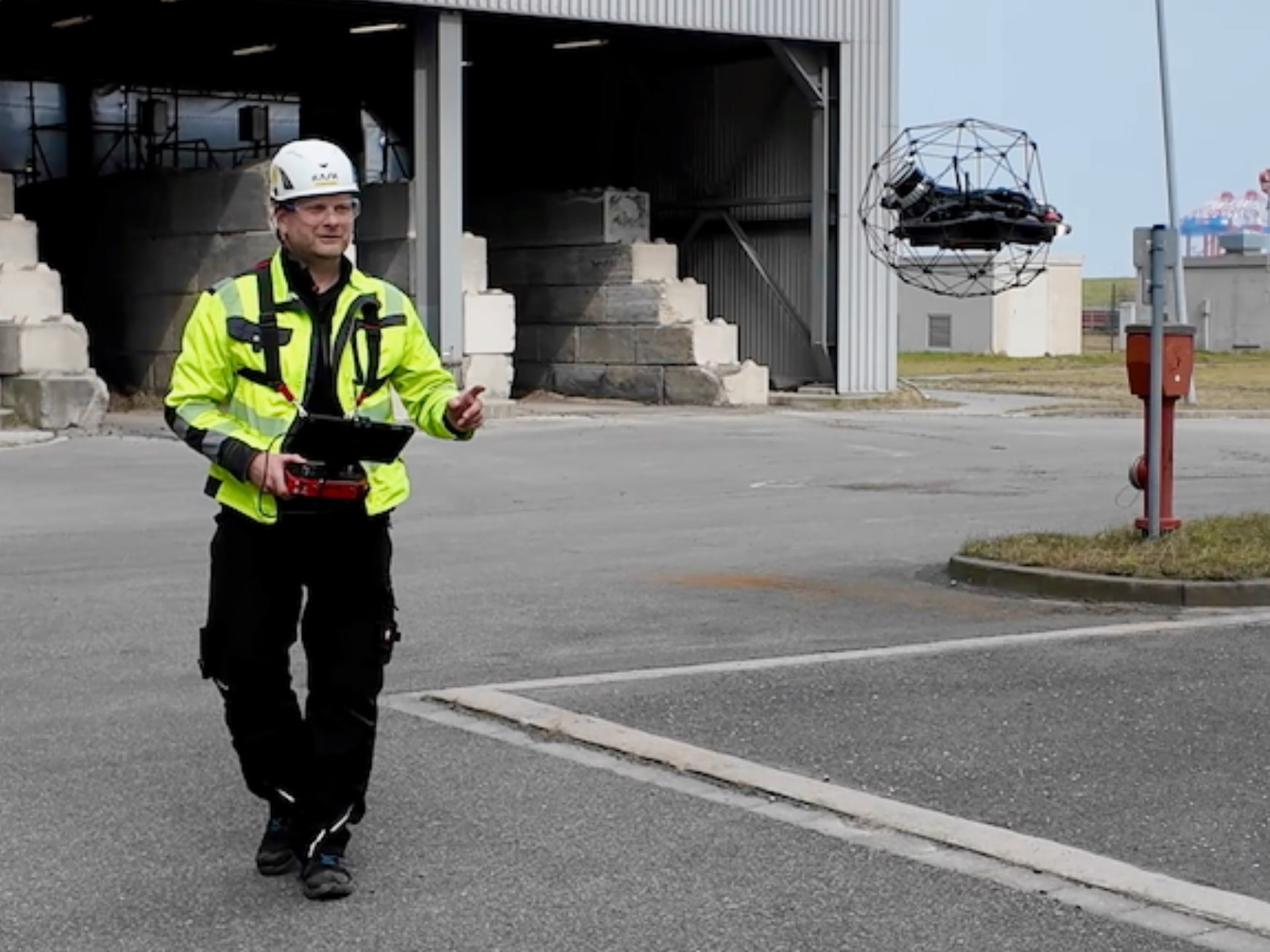
- ELIOS 3 (Indoor) – collision-safe inspection drone for interior reconnaissance, tanks, halls and contaminated confined spaces
- DJI Matrice 30T (Outdoor) – multi-purpose industrial drone with 4K camera, 200× zoom and thermography for exterior flights and situational overview
- Thermographic analysis – fire seats, heat nests and product releases
- Pilot & assistant – two persons for reliable operation under stress conditions: one flies, one coordinates and secures
- On-site data backup – footage is secured immediately and available directly after the deployment
On request and by arrangement: coordination with the plant fire brigade, plant management or external response units directly on site.
Talk Directly with the Team
No hold music, no ticket system. In emergencies you need direct contact – and that is what you get.
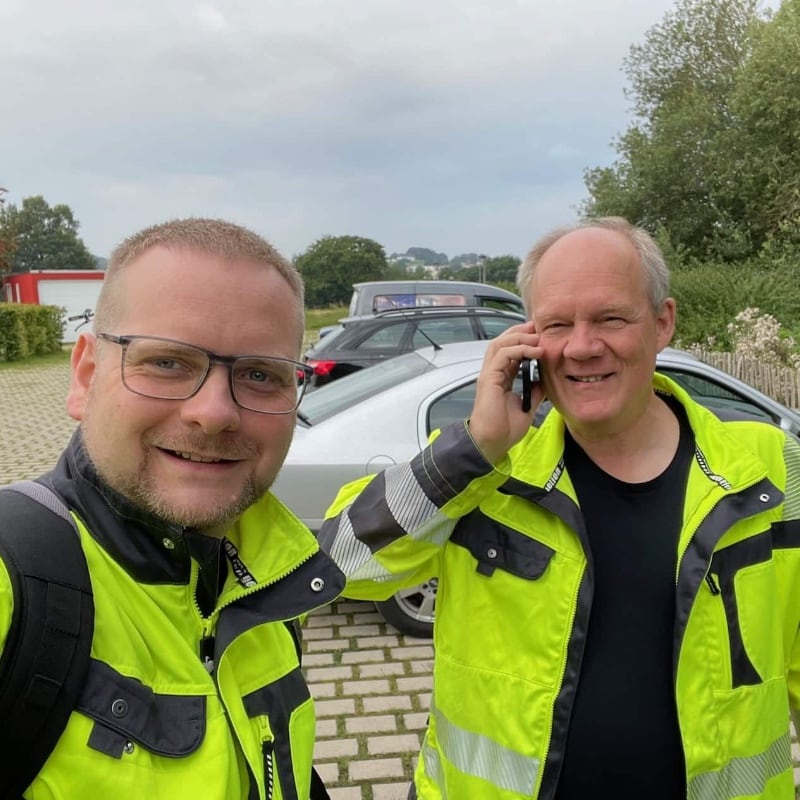
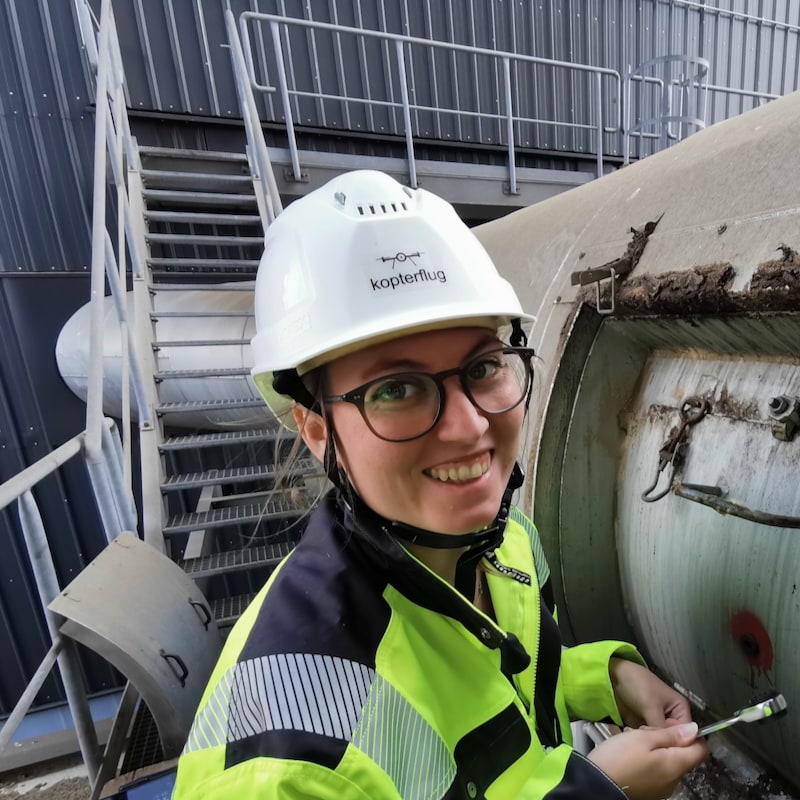
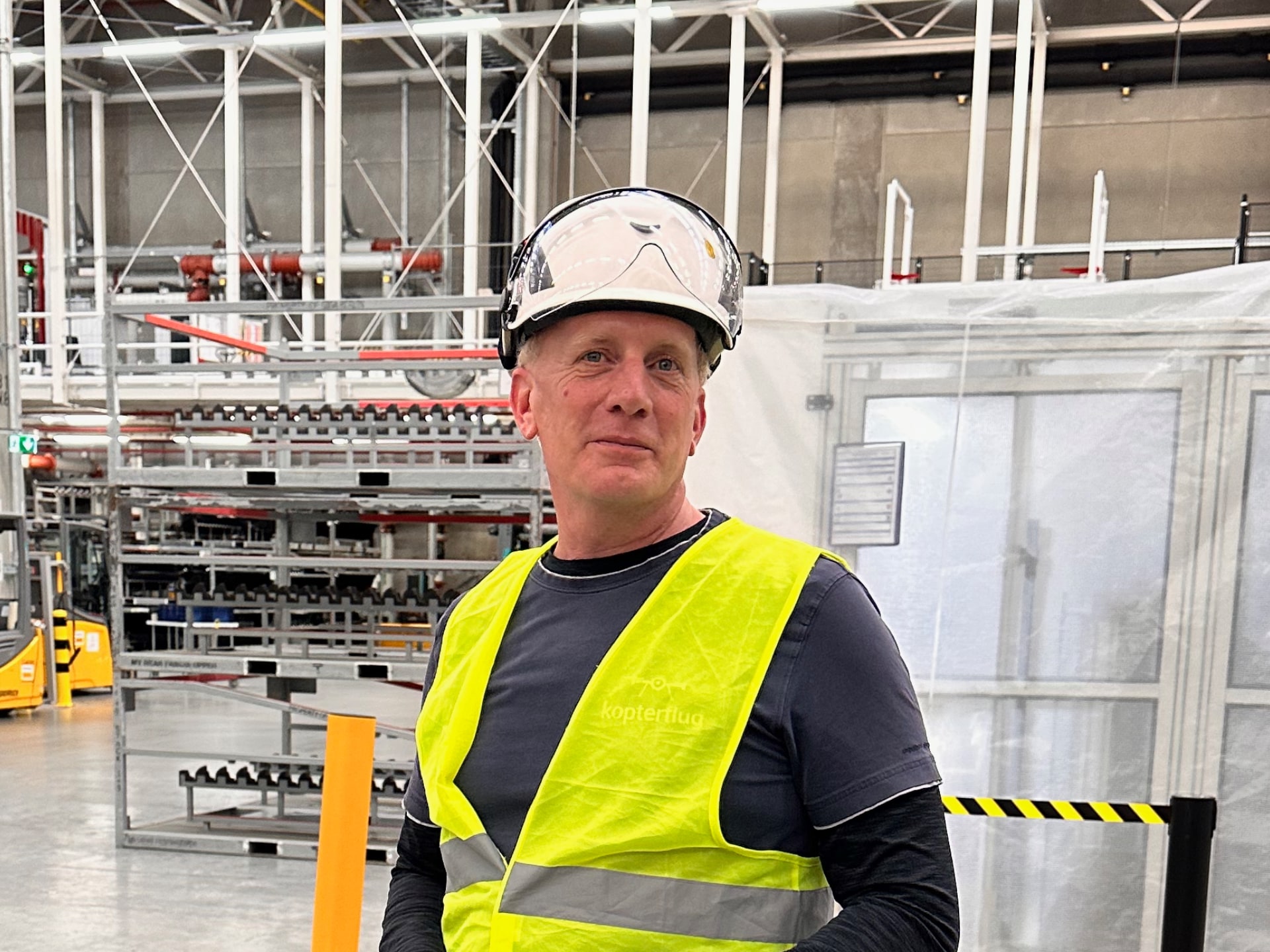
Christian Engelke and Dipl.-Ing. Karsten Lehrke – the team that plans and carries out the deployment.

Related Services
- Tank Inspection – Tanks and storage vessels without human entry – no scaffolding, no rescue concept, in hours rather than days.
- Confined Spaces – Shafts, channels and tight spaces without DGUV confined entry – no rescue concept, no entry risk.
- Drone Inspection: Oil & Gas – Tanks, refineries, pipelines – inspection under operating conditions, without human entry.
- Drone Inspection: Chemical Industry – Reactors, columns and process vessels without human entry – also in contaminated areas.
- Condition Documentation – What you receive after the deployment: 4K video, findings list, PDF report – audit-proof and authority-compliant.
- Industrial Drone Inspection – Overview of all deployment areas and technologies – from ELIOS 3 to underwater ROV.
Frequently Asked Questions
How quickly can the response team deploy?
This depends on team availability, distance and the initial deployment factors. After a brief clarification of the situation – facility type, damage type, location – we can deploy within a few hours if capacity is available. Depending on distance, we travel by vehicle or aircraft. We are not an emergency service with a guaranteed response time, but we clarify availability and travel immediately at first contact.
Which drones are deployed in emergency response?
Depending on the scenario, we deploy two systems: The Flyability ELIOS 3 for interior reconnaissance – it flies collision-safe into tanks, vessels, halls and contaminated confined spaces. The DJI Matrice 30T for exterior flights – with 4K camera, 200× zoom and thermography for situational overview, fire monitoring and incident assessment. Both systems are included in a standard deployment.
Can the drone fly into contaminated or toxic areas?
Yes. The ELIOS 3 is a closed system and flies into contaminated, gas-laden and heavily soiled environments – without any person having to enter. Important: The ELIOS 3 is not ATEX-certified. In potentially explosive atmospheres (ATEX zone), it may only be deployed after gas-free measurement and confirmation of a safe atmosphere. This assessment is made by you as the operator – we advise you accordingly.
How does the drone team support the plant fire brigade?
The drone team works directly with the incident command: live video and thermography are transmitted to the incident leadership. This allows the plant fire brigade to localise fire seats, identify spread paths and deploy responders more precisely – without sending personnel into unsecured areas. We coordinate directly with your incident commander on site.
What do we receive after the deployment?
You receive a complete data package: 4K video and thermography images of all reconnoitred areas and a structured findings documentation with time stamps. The raw data is available immediately after the deployment. The processed PDF report for insurers, authorities and expert witnesses is typically delivered within a few days.
Can the drone also operate at night or in restricted visibility?
Yes. The DJI Matrice 30T has powerful thermography and can be deployed at night and in smoke. The ELIOS 3 has its own lighting and can fly in complete darkness. Limitation: Sufficient GPS signal or a structured environment for position stabilisation is required depending on the system – we clarify this with you before deployment.
Are special permits required for drone deployment in an emergency?
We clarify this on a case-by-case basis. Kopterflug holds all necessary licences (A2 certification, EU operator number). Whether and which permits are required for outdoor flights at the specific deployment location depends on the location, airspace and circumstances – we verify this as part of deployment preparation.
Can the team work in parallel with an active fire brigade operation?
Yes, provided the incident command coordinates and approves it. Drone operations and fire brigade deployment are not mutually exclusive – on the contrary: the drone delivers the situational picture that makes the operation efficient in the first place. We integrate into the existing incident structure and operate under the instruction of the on-site incident commander.
What does an emergency deployment cost?
This depends on distance, deployment duration and systems deployed. We provide a clear estimate in the initial conversation. In an acute emergency: Contact us directly – the cost question is handled in parallel to deployment preparation so that no time is lost.
Is the response team also reachable at weekends and on public holidays?
Yes, our phone is generally reachable outside regular business hours too. Emergencies do not follow office hours – so you can contact us in the evening, at weekends and on public holidays. Whether an immediate deployment is possible depends on current team availability, which we clarify directly at first contact.
How does coordination with the professional fire brigade or external emergency services work?
We integrate into the existing incident structure and operate exclusively upon clearance from the incident commander. The drone team coordinates flight altitudes, flight zones and time windows directly with the incident commander. Live video and thermography data can be displayed on a monitor on site for the incident management team – so the drone situational picture is directly integrated into the decision-making process.
Is the documentation sufficient for an insurance claim?
Yes. Our documentation comprises time-stamped 4K videos, high-resolution photos and thermography images of all reconnoitred areas. This material is audit-proof and is accepted by insurers, expert witnesses and authorities as evidence. On request we produce a structured PDF report with a findings list that can be forwarded directly to your loss adjuster.
Can the drone be deployed inside a burning building?
In actively burning areas with open flame, deployment is not possible – the heat would damage the drone. However, the ELIOS 3 can fly into heavily smoke-filled, hot and smouldering areas as long as there is no direct flame exposure. It is especially suited for post-fire reconnaissance: locating embers, capturing structural damage and identifying re-ignition risks via thermography.
How quickly is the first situational picture available after arrival?
From experience, the first usable situational picture is ready within 10 to 15 minutes of arrival at the deployment site. The drone is set up, launched and immediately delivers live video and thermography to the ground monitor. The incident command receives a current picture of the damage situation before any of their own personnel need to advance into the hazard zone.
What range does the drone have in outdoor operations?
The DJI Matrice 30T has an operational range of several kilometres and a flight time of approx. 40 minutes per battery. For emergency deployments we carry sufficient spare batteries to cover extended monitoring phases. The ELIOS 3 for interior operations has a flight time of approx. 9 minutes per battery – multiple batteries are included in a standard deployment here too.
Can the drone footage be used as evidence in court?
Yes. All recordings are provided with time stamps and GPS coordinates and are stored unaltered. The raw data is tamper-proof and can be used as evidence in legal disputes, insurance disputes or regulatory proceedings. On request we provide a sworn statement regarding the authenticity of the recordings.
What happens if the drone is damaged during an emergency deployment?
The ELIOS 3 is designed to be collision-safe and built for use in harsh environments – minor collisions with walls or obstacles are part of normal operation. Should a system actually be damaged by extreme conditions, this risk does not transfer to the client. We carry replacement systems.
How large is the response team that comes on site?
In a standard deployment, a two-person team arrives: a certified drone pilot and a deployment assistant who coordinates, secures and manages the data transmission. For complex situations or parallel indoor and outdoor operations, the team can be expanded to three or four people – we clarify this during deployment planning.
Can the drone also be deployed underwater or in flooded areas?
The ELIOS 3 and the Matrice 30T are aerial drones and are not suitable for underwater use. For flooded areas, ballast tanks or water-bearing plant components, we alternatively offer the deployment of an underwater ROV. Whether such a system is useful in an emergency deployment is clarified during deployment preparation.
What data is transmitted in real time during the deployment?
Both systems transmit live video in real time to the ground monitor. The Matrice 30T additionally delivers a live thermography image and zoom recordings. The incident command can follow the live picture directly on site on a separate screen. Forwarding the livestream to remote locations – such as a corporate headquarters – is technically possible and can be set up on request.
Does the operator need to carry out gas-free measurement before drone deployment?
For outdoor flights, no gas-free measurement is generally required. For indoor flights with the ELIOS 3 in potentially explosive areas: the ELIOS 3 is not ATEX-certified, so the operator must confirm that no explosive atmosphere is present before the drone is deployed. This assessment lies with the operator – we support you with the coordination.
How is the deployment readiness of the equipment ensured?
All deployment systems are maintained, checked and fully charged after every deployment. Drones, batteries, sensors and accessories are organised in transport-ready deployment cases. This means the team is always ready to deploy at short notice with complete equipment – without preparation time for the technology.
Request Emergency Drone Deployment
Mobile response team with drones and sensor technology – nationwide availability. Direct contact, no ticket system. Fill in the form and we will get back to you immediately.