
Visual Testing (VT) by Drone – Indirect Inspection to ISO 17637
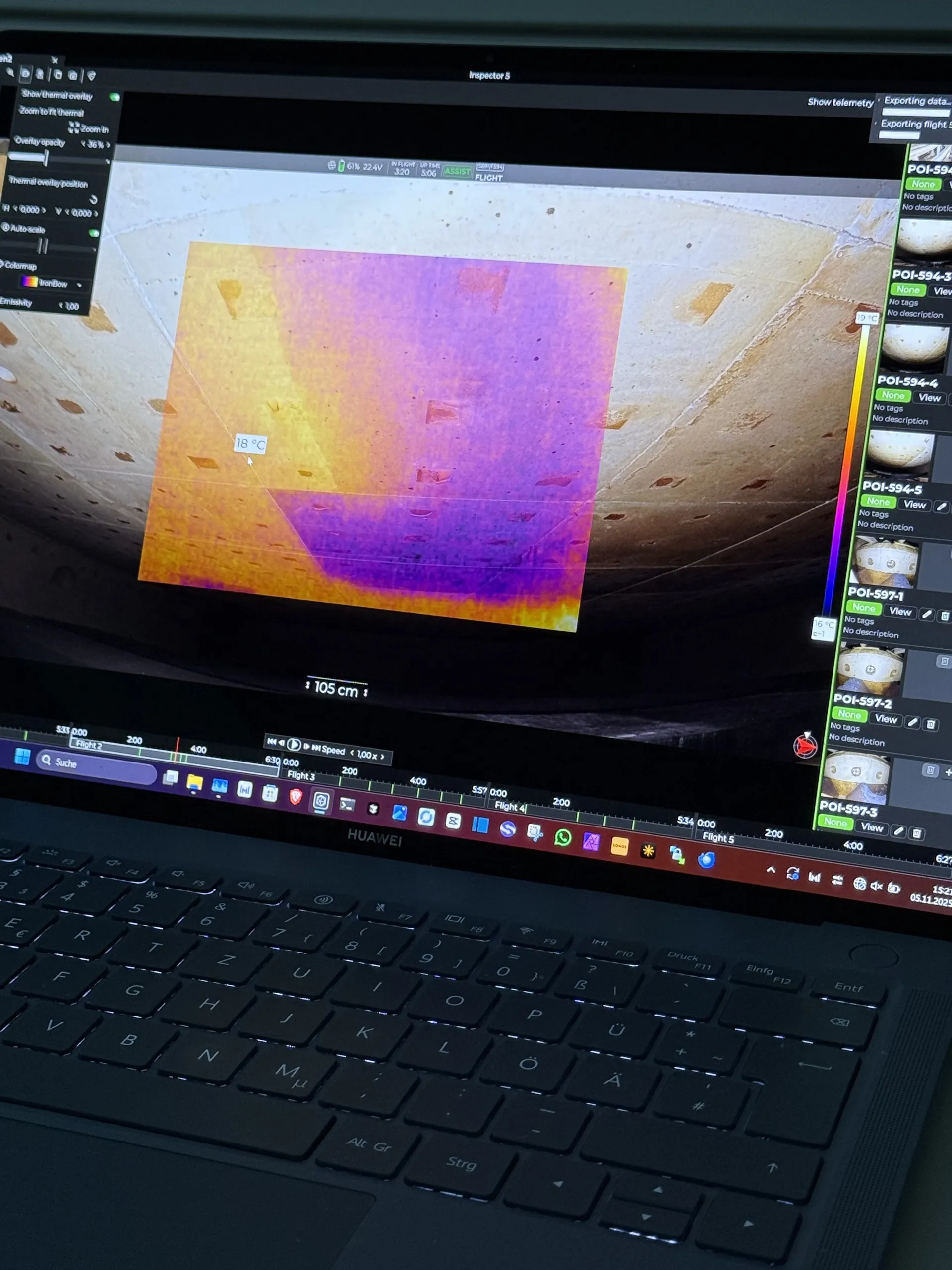
Kopterflug deploys the Flyability ELIOS 3 for indirect visual testing (Sichtprüfung VT) of industrial facilities – without scaffolding, without confined space entry, and fully documented to ISO 17637. Weld seams, corrosion, coating conditions and structural damage captured in 4K without human entry.
- Indirect VT to ISO 17637 – 4K camera + 16,000 lm LED exceeds standard illumination requirements
- No confined space entry – drone enters through openings from 50 × 50 cm
- Combined VT + Thermography + LiDAR in a single flight
- Available nationwide across Germany for tanks, boilers, chimneys, silos and steel structures
What is Visual Testing (VT)?
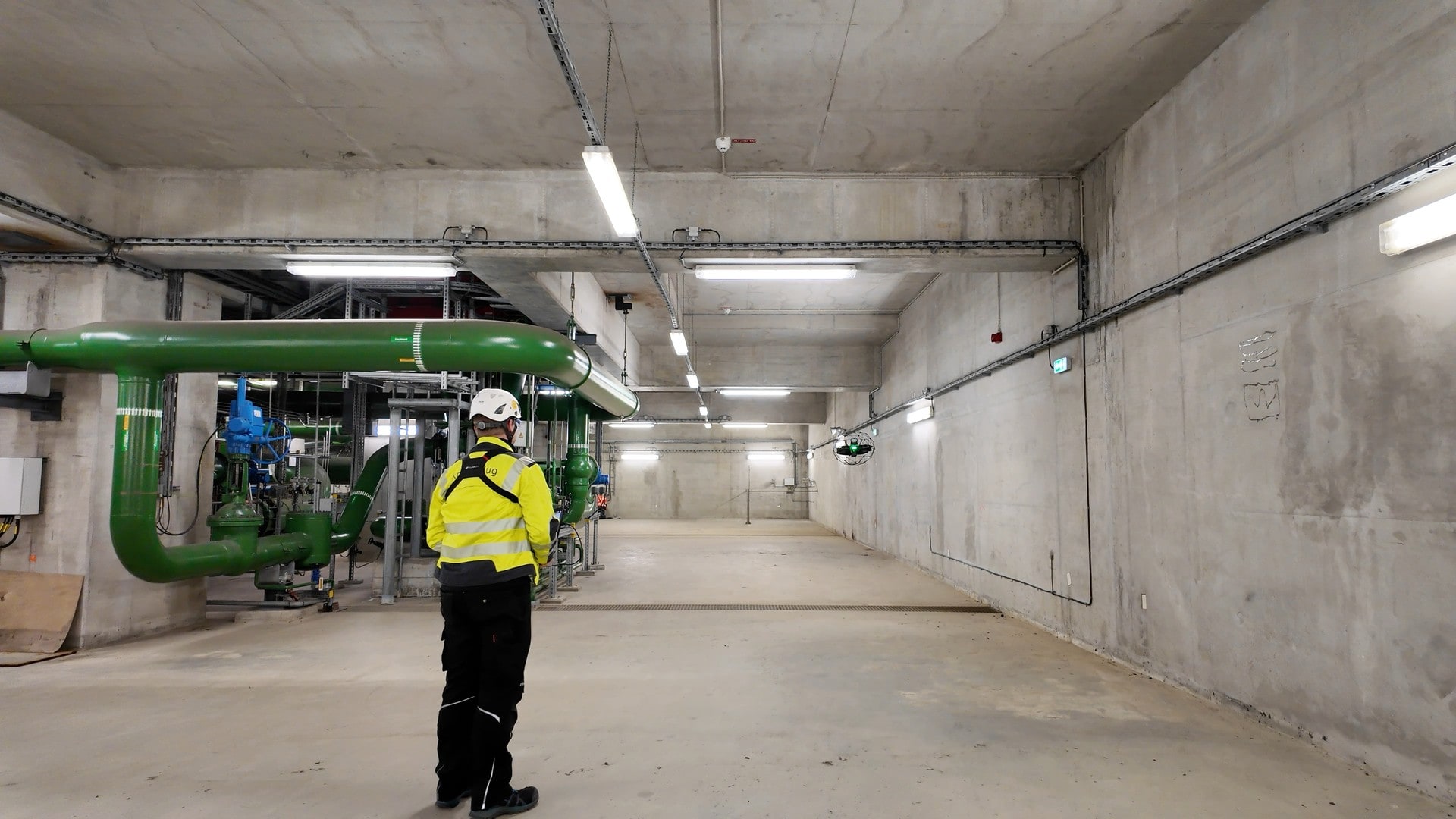
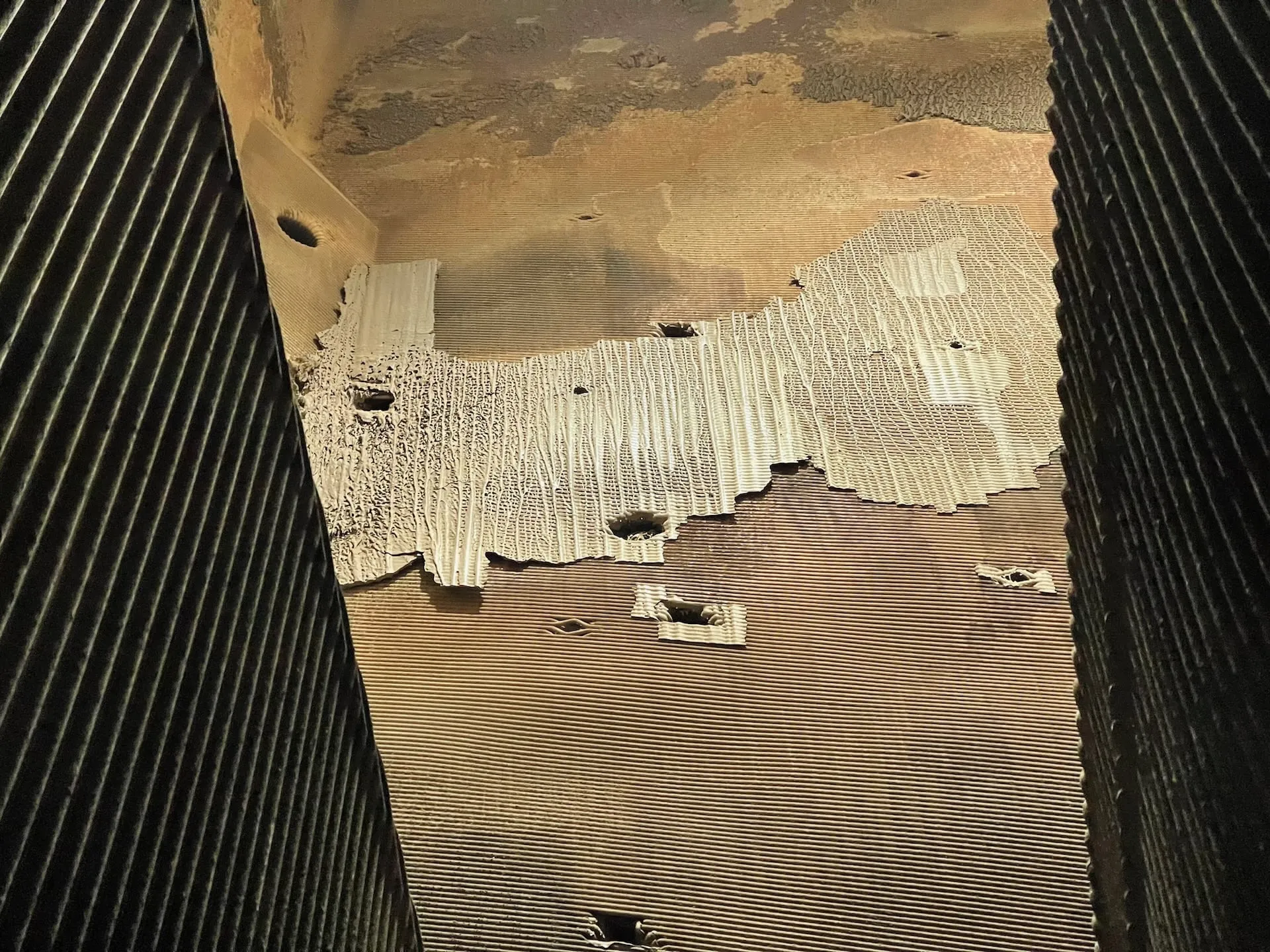
Drone-assisted visual inspection in an industrial facility.
Visual Testing (VT) – the most widely used NDT method
Sichtprüfung (Visual Testing, VT) is the most frequently applied non-destructive testing method in industry – used for detecting cracks, corrosion, weld defects and mechanical damage. ISO 17637 (DIN EN ISO 17637) governs requirements for inspection equipment, viewing distances, documentation and personnel qualification.
A distinction is made between direct VT (inspector on-site, max. 600 mm viewing distance) and indirect VT – via endoscope, camera or drone. The Flyability ELIOS 3 makes indirect visual testing possible even in confined spaces (Confined Spaces) – without any human entry.
Drone Inspection as Indirect VT
Flyability ELIOS 3 for VT to ISO 17637
The Flyability ELIOS 3 is ideal for indirect visual inspections in hard-to-access or hazardous areas – exactly where direct VT (inspector within 600 mm) is not feasible: confined spaces, tanks, boilers, chimneys, silos. The 4K camera with 16,000 lumen LED lighting meets the requirements of ISO 17637 § 5.1 (illumination ≥ 350 lux) and § 5.3 (resolution ≥ 0.5 mm at adequate viewing distance). The drone flies systematically, documents comprehensively, and delivers reproducible footage – directly referenceable in follow-up inspections.

High-resolution imaging (3840×2160) for detailed defect analysis and standard-compliant documentation.
16,000 lumen for optimal lighting even in completely dark confined spaces.

Radiometric thermal camera for hotspot detection, CUI and leakage identification.
Carbon protective cage for safe flight in tight spaces – fits through openings from 50 × 50 cm.
Additional spatial documentation and measurement with precise point clouds.

No scaffolding, no human entry, no confined space rescue chain, minimal downtime.
ISO 17637 – Normative Requirements for Indirect VT
What the standard requires – and what the drone delivers
ISO 17637:2016 (DIN EN ISO 17637) governs non-destructive visual testing of fusion-welded joints. For indirect visual testing (Remote VT using optical aids, cameras, endoscopes or drones), specific requirements apply:
Illumination (§ 5.1): Minimum 350 lux on the test surface – 500 lux recommended. The ELIOS 3 achieves well above 500 lux at 1–2 m distance with its 16,000 lumen LED – standard met.
Resolution (§ 5.3): Detectable defects from 0.5 mm for weld seam inspection. With a 4K camera (3840×2160 pixels), this is guaranteed at an inspection distance ≤ 1.5 m with standard optics. For finer defect categories (hairline cracks), reduce distance accordingly.
Observation angle (§ 5.2): Viewing angle ≥ 30° to test surface. Consistently achievable with skilled flight technique; critical areas are systematically approached from multiple angles.
Indirect VT – permissibility (§ 4.3): ISO 17637 explicitly permits optical aids, cameras and comparable systems provided the required resolution capability is demonstrated. For the ELIOS 3, this proof is documentable through calibration on reference test specimens.
Personnel qualification: VT inspectors must be certified to ISO 9712 (or ASNT SNT-TC-1A). Level 1: execution under supervision. Level 2: independent inspection, evaluation and reporting. Level 3: creation of inspection procedures and training. Kopterflug delivers the image data; defect evaluation by a qualified VT inspector (Level 2/3) remains the responsibility of the operator or their appointed expert.

Standard-compliant VT requires a written inspection procedure (WPS/WT) documenting camera type, resolution, illumination proof, inspection distance, observation angle and acceptance criteria (e.g. to EN ISO 5817 for weld seams).

Test object and applicable standard, inspection scope, equipment used with calibration records, findings with geo-referenced image evidence, defect description and location, assessment to acceptance class, inspector qualification.

Visual Testing detects surface defects. Internal cracks, wall thicknesses and concealed corrosion still require ultrasound (UT), magnetic particle (MT) or liquid penetrant (PT) testing. The drone localises – contact methods follow only where specifically needed.
Application Areas of VT Drone Inspection
Testing of welded joints in tanks, boilers, pipelines and steel structures for cracks, porosity and lack of fusion defects.

Detection of corrosion damage, pitting, generalised surface corrosion on internal surfaces of vessels and plant equipment.

Detection of cracks, spallings, mechanical damage, erosion and wear.

Assessment of coating condition, linings and insulation in industrial facilities.
Condition survey of internals, anchors, brackets and structural elements.

Comprehensive visual documentation for inspection reports, insurers and regulatory authorities.
Asset-Specific Notes

Internal walls, weld seams, floor, floating roof, nozzles – complete VT to TRbF / API 653 / BetrSichV (German Industrial Safety Regulation). 4K video as finding documentation. For pressure vessels under DGRL (Druckgeräterichtlinie, Pressure Equipment Directive): visual inspection is a mandatory component of recurring inspections by an approved inspection body (ZÜS).

Flue gas-side deposits, corrosion, tube walls, drum weld seams – VT to EN 12952 / EN 12953 / TRD (German Pressure Vessel Code). The drone systematically covers the entire firebox. Finding localisation for targeted UT follow-up. Combination with thermography for heat losses.
Lining inspection, crack detection, anchor corrosion – internal VT without climbers. A 50-metre chimney covered in 4–6 hours. Thermography for heat transmission and masonry defects. Documentation for approved inspection body or operator self-monitoring.

Cement, clinker and grain silos: wall corrosion, crack patterns, anchors. Under DGUV 113-004 (German rules for confined space entry), human entry must be avoided where an equivalent inspection can be performed – drone VT meets this criterion. Results are documentable to BetrSichV standard.
External (DJI M30T) and internal (ELIOS 3) inspection combinable. Weld seam inspection at connections, corrosion on beams, bolt condition. Documentation to EN 1090 / DGUV guidelines for steel structures.
Duct inspections, process pipelines, cooling water channels – VT of internal surfaces for corrosion, deposits and damage. Complement to conventional camera crawlers with higher manoeuvrability and illumination quality.
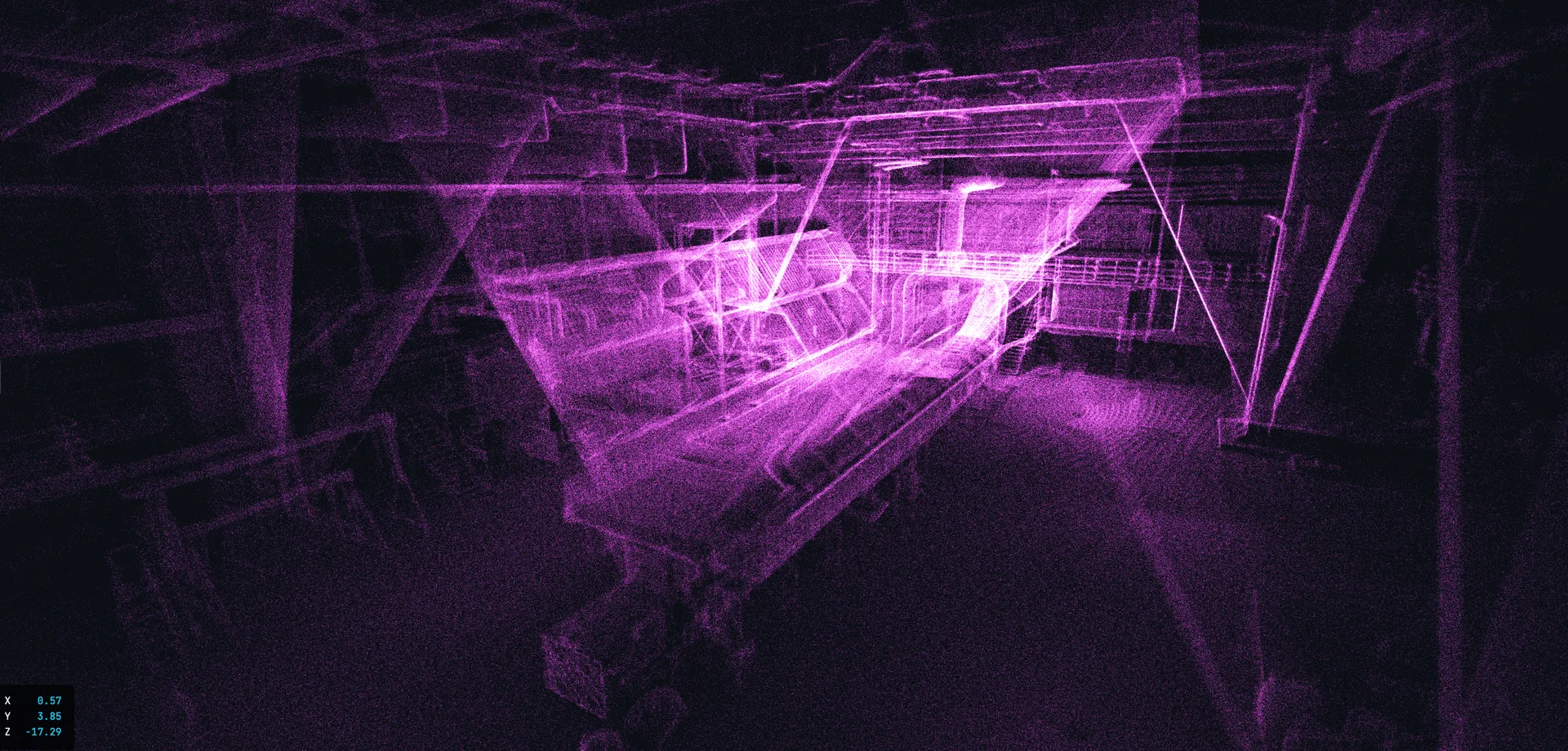
Limits & Combinations
Know the limits – combine strategically
Drone visual inspection is a surface inspection method. Internal cracks, wall thicknesses and concealed corrosion still require contact methods (UT, MT, PT). The drone’s strength: it pinpoints critical locations precisely, so contact inspection is only needed at targeted spots.
Detection of moisture ingress, hotspots and insulation defects via radiometric thermal camera.
Wall thickness measurement and material testing by ultrasound – the drone localises, the inspector measures at targeted points.
3D measurement and deformation analysis with precise point clouds for complete condition assessment.
Inspection Process
From planning to inspection report
Clarification of testing requirements to ISO 17637, definition of areas to be inspected and defect categories.
Systematic coverage of all relevant areas with 4K camera and LED illumination. Capture of high-resolution photos and video.
Review of all footage by experienced inspectors. Identification and classification of surface defects.
Detailed report with images, defect classification, condition survey and finding documentation to ISO 17637.
Your Contacts at Kopterflug
Our team has been performing drone-based visual inspections in confined spaces and industrial facilities since 2017.
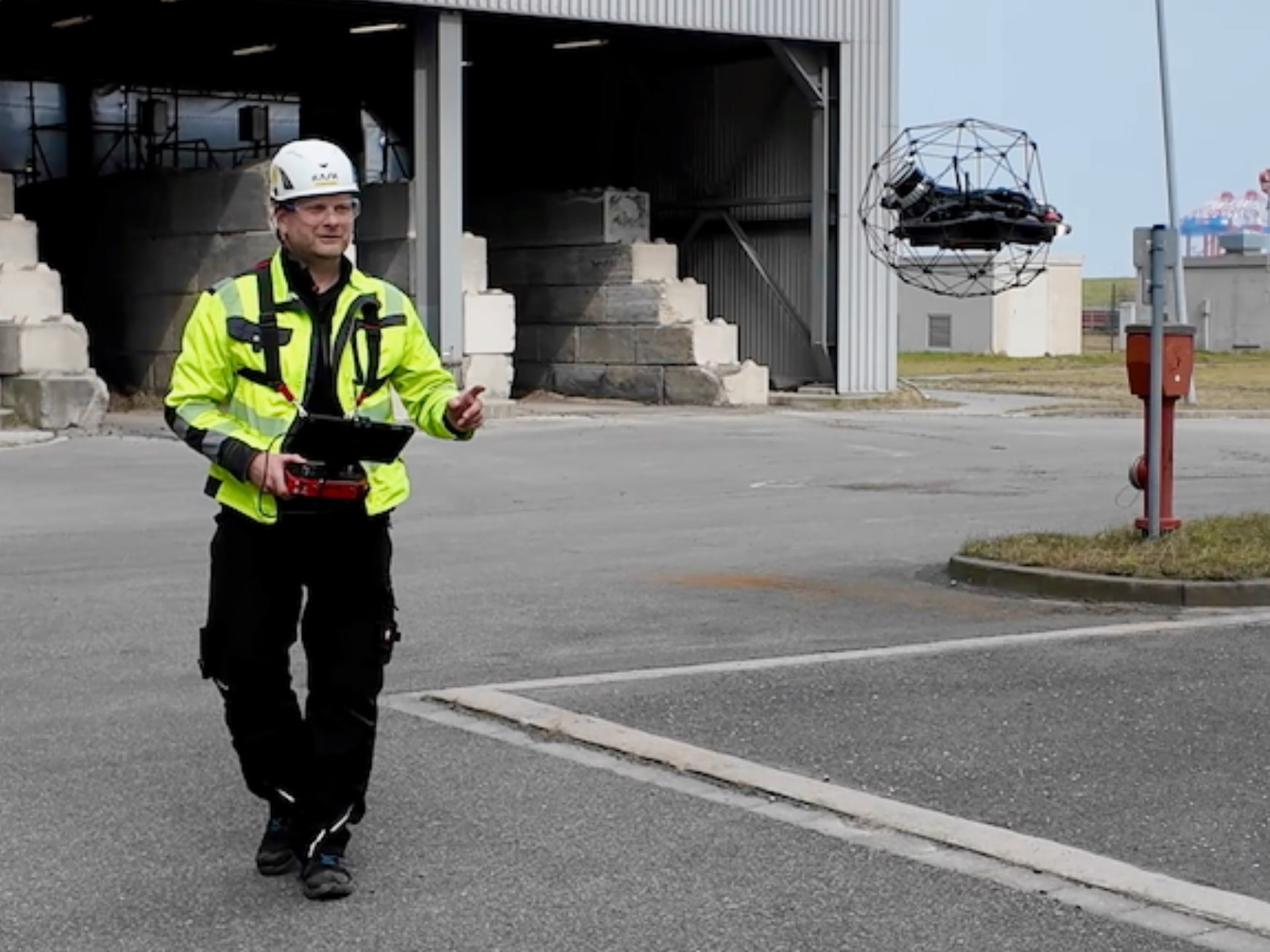 Christian Engelke
Founder & Drone Pilot
Christian Engelke
Founder & Drone PilotConfined Spaces since 2017
 Karsten Lehrke
Project Manager
Karsten Lehrke
Project ManagerDipl.-Ing. Mechanical Engineering
 Philipp
Drone Pilot
Philipp
Drone PilotIndustrial Inspection
 Max
Inspection Specialist
Max
Inspection SpecialistData Analysis
 Benjamin
Drone Pilot
Benjamin
Drone PilotField Operations
Related Services
- Industrial Drone Inspection – Comprehensive drone inspection for all industrial sectors
- Confined Spaces Inspection – Safe inspection of enclosed spaces without human entry
- Flyability ELIOS 3 – The collision-safe indoor drone for confined spaces
- Tank Inspection – Professional tank inspection inside and out without scaffolding
- Boiler Inspection – Water tube boilers and steam generators safely inspected by drone
- Chimney Inspection – Chimneys inspected internally by drone without scaffolding
- Non-Destructive Testing (NDT) by Drone – VT, thermography and LiDAR in a single flight
- Thermography in Industrial Inspection – CUI, hotspots and leakage detection
Frequently Asked Questions
Is indirect VT by drone compliant with ISO 17637?
ISO 17637 explicitly permits indirect visual testing using optical aids, cameras and comparable systems – provided the required resolution capability (≥ 0.5 mm) and minimum illumination (≥ 350 lux) are demonstrated. The ELIOS 3 meets both requirements technically (4K, 16,000 lumen). Whether a specific inspection body (TÜV, DEKRA) accepts remote VT by drone is decided on a project-specific basis. Acceptance is growing steadily.
Does drone VT replace the qualified VT inspector?
No. The drone is an inspection tool, not a replacement for the qualified inspector. The ELIOS 3 delivers the visual data – the evaluation, defect classification and reporting to ISO 17637 remains the responsibility of a qualified VT inspector (Level 2 or 3 per ISO 9712). Kopterflug provides the data foundation; the inspector makes the assessment.
Which defects can drone VT reliably detect?
Drone VT reliably detects surface defects: cracks, corrosion, pitting, coating damage, spallings, mechanical damage, deposits and weld seam defects visible on the surface. It cannot detect internal cracks, wall thinning (requires UT) or defects concealed beneath intact coatings. For those, hybrid inspection combining drone VT with targeted contact methods is recommended.
What opening size does the ELIOS 3 require?
The ELIOS 3 fits through openings from approximately 50 × 50 cm. Standard manholes (DN 600) are sufficient. For smaller openings, we assess feasibility on a case-by-case basis – sometimes the drone cage can be partially folded or a different entry route used.
Can drone VT be used for BetrSichV recurring inspections?
Yes, as an inspection tool. The Betriebssicherheitsverordnung (BetrSichV, German Industrial Safety Regulation) requires recurring inspections of pressure-bearing equipment by an approved inspection body (ZÜS, e.g. TÜV, DEKRA). The drone can be used as a data-collection tool during these inspections – the ZÜV inspector follows the flight on a live monitor and makes the inspection decision. Drone data does not replace the ZÜS inspection; it supports it.
How quickly are inspection results available?
4K video footage and initial visual findings are available immediately after the flight – the maintenance manager or expert can make decisions the same day. LiDAR 3D models and full inspection reports take a few working days. For critical decisions, we provide prioritised preliminary assessments of the most important findings.
Contact Us
Tell us about your inspection requirement. We will assess whether drone-based VT is suitable for your facility – free of charge and without obligation.
Inspectomatic GmbH
Im Hollergrund 175A, 28357 Bremen, Germany
+49 421 408 937-0 ·
[email protected]
Source page: /en/knowledge-base/sichtpruefung-vt-drohne