
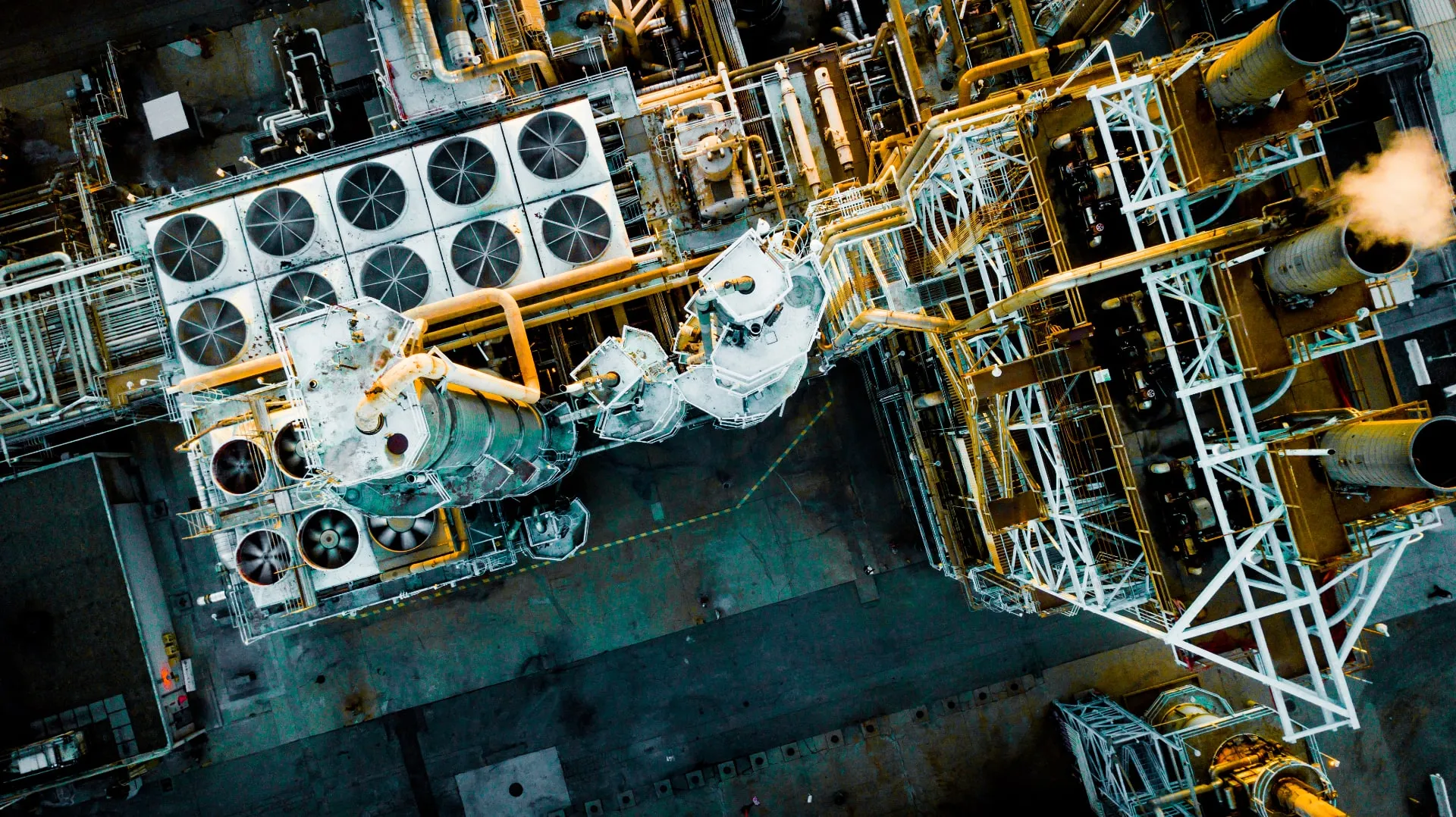
Drone Inspection Oil & Gas – No Scaffolding, No Human Entry, Inside & Outside
Kopterflug deploys the Flyability ELIOS 3 in oil & gas facilities for internal inspection of tanks, columns, separators and shafts – without scaffolding, without human entry into confined spaces, without extended downtime. The DJI M30T inspects flares, pipe racks and external tanks during live operation. Since 2017.
- No human entry – pilot stays outside the asset
- 4K + Thermography + LiDAR in a single deployment
- Optional UT payload for georeferenced wall thickness measurements
- ELIOS 3 not ATEX-certified – deployed only after gas-free measurement
Oil & Gas: Inspection Where No One Goes
Oil & gas facilities face intense pressure: tight turnaround windows, strict safety requirements and costly confined space entry into tanks, columns, separators and shafts. Corrosion, wall thinning, deposits and hard-to-reach interior areas are a constant challenge – in refineries, offshore facilities and tank farms alike.
Conventional entry requires scaffolding, respiratory protection, a rescue chain and extensive DGUV permits. Every hour of downtime costs money – H&sub2;S hazards, oxygen deficiency and explosive atmospheres increase risk for inspection teams significantly. Without regular condition data, maintenance remains guesswork.
The Flyability ELIOS 3 flies into drained, cleaned and gas-free measured tanks, columns and shafts – without human entry, without scaffolding. 4K video, thermography and LiDAR 3D provide precise documentation. The optional UT payload enables additionally georeferenced wall thickness measurements on steel components. Flyability positions the ELIOS 3 exactly for these applications at flyability.com/oil-and-gas-drones.
What We Inspect in Oil & Gas Facilities
Oil & gas facilities are extremely hazardous – H&sub2;S, explosion risk, oxygen deficiency. We inspect critical assets without human entry, within the agreed safety and permit framework:

Services: ELIOS 3 Inspection Without Human Entry
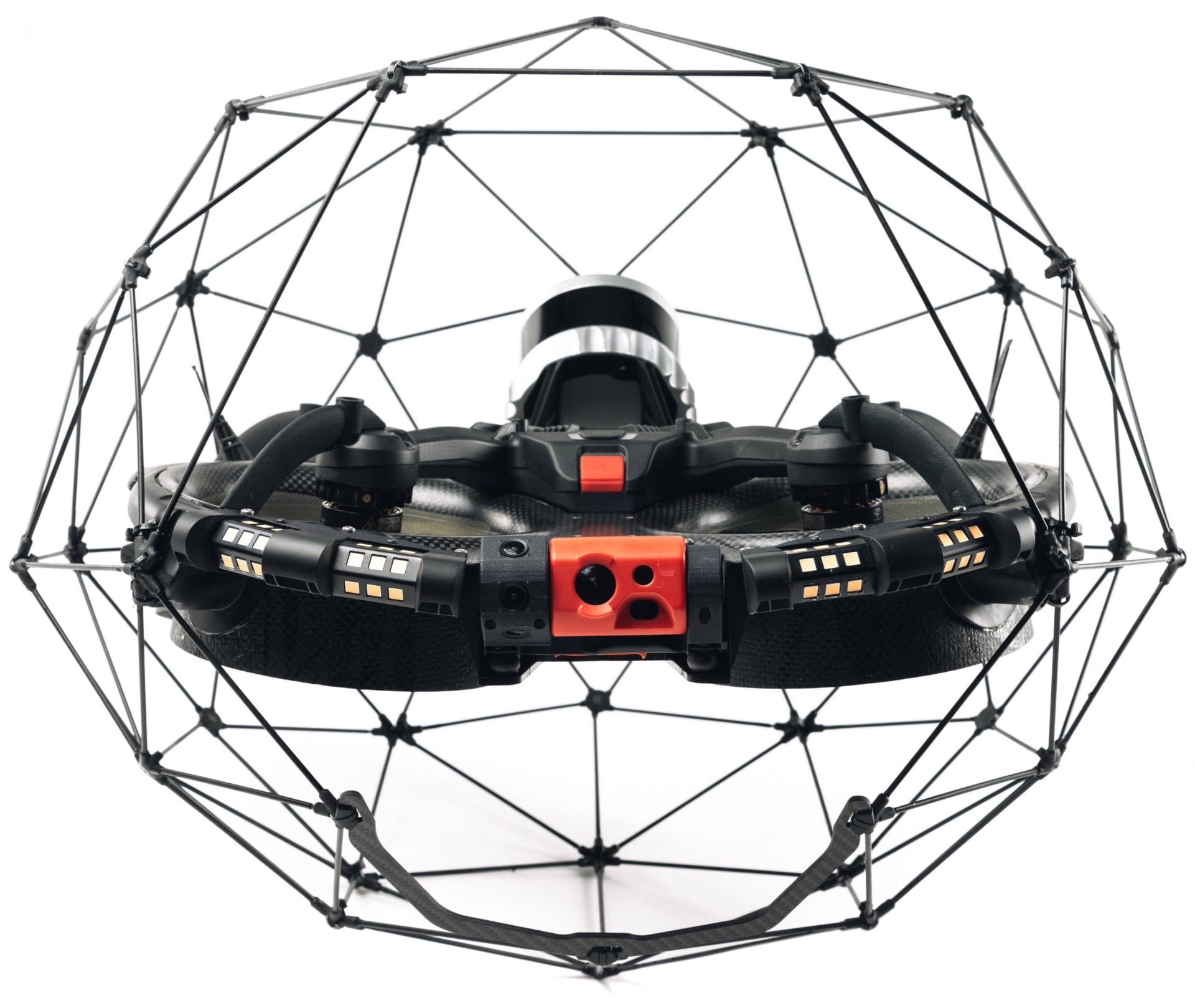
The Flyability ELIOS 3 with its collision-safe carbon cage – built for confined industrial environments in oil & gas.
Our services:
- Confined Spaces Inspection – Tanks, boilers, shafts, pipes – everywhere that human entry is dangerous or impossible
- 4K + Thermography + LiDAR – Visual inspection, thermal imaging for hotspots and 3D point clouds for digital twins
- No scaffolding, no rope access, no human entry – Drastically reduced downtime and costs – in many cases human entry is eliminated entirely
- Professional documentation – Detailed inspection reports with 4K footage, thermography analysis and precise 3D models to industry standards
Complementary Systems
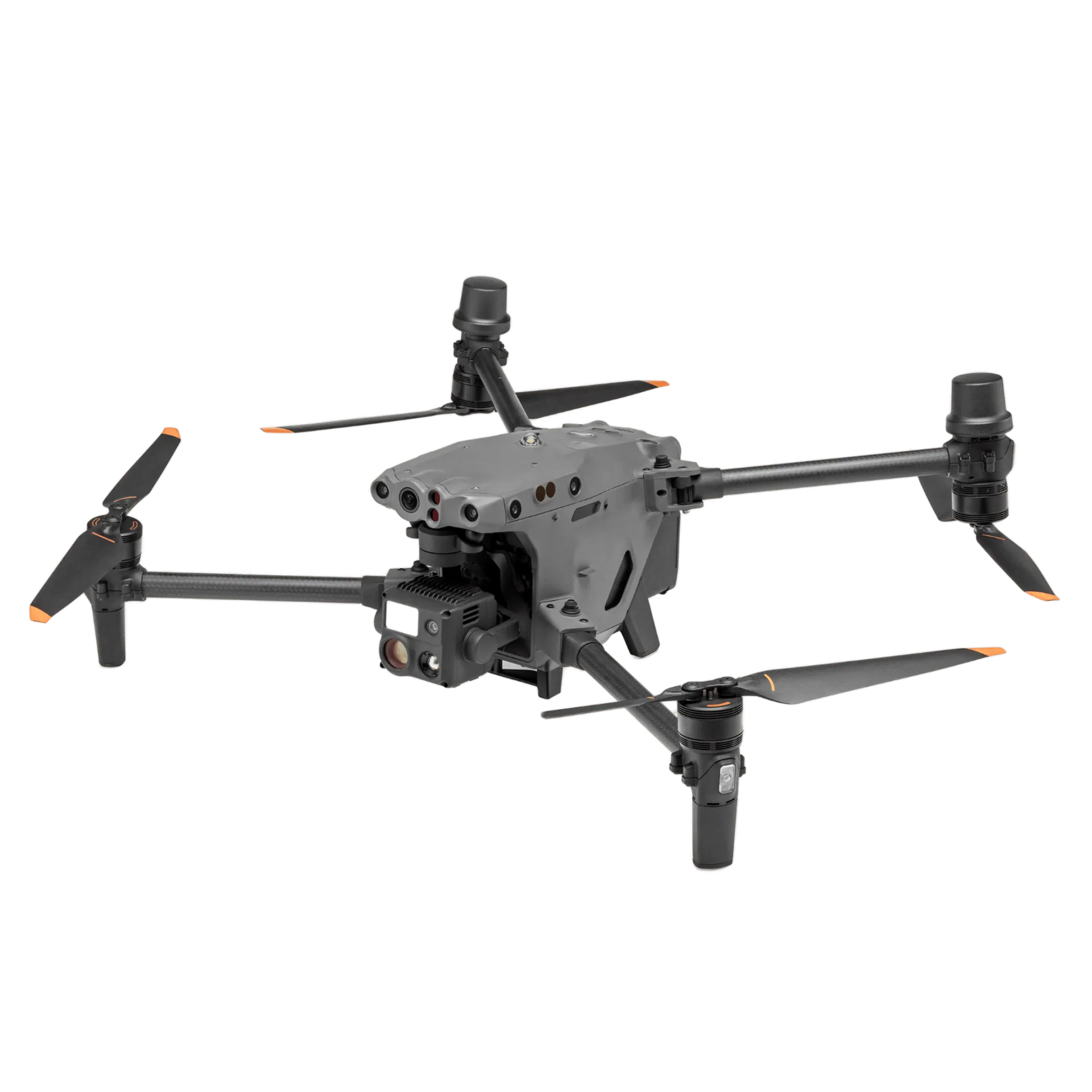
The ELIOS 3 inspects tanks, columns and vessels from the inside. The DJI Matrice 30T complements for flares, pipe racks and external tanks during live operation.
What the ELIOS 3 Documents in Oil & Gas Facilities
We fly the ELIOS 3 into tanks, columns, separators and shafts, systematically documenting all safety-relevant structures. Technical assessment is performed by your maintenance planners and certified inspectors – we deliver the data:
Storage Tanks & Crude Oil Tanks
4K footage of floors, walls, floating roofs, coatings and weld seams. Thermography for temperature anomalies and leak indications. LiDAR 3D for geometry documentation. UT payload for point wall thickness measurements on steel areas.
Why it matters: Corrosion and wall thinning in tanks are often invisible until failure. Regular condition data enables predictive maintenance. Your certified inspectors assess our documentation to determine whether repairs or coating renewals are required.
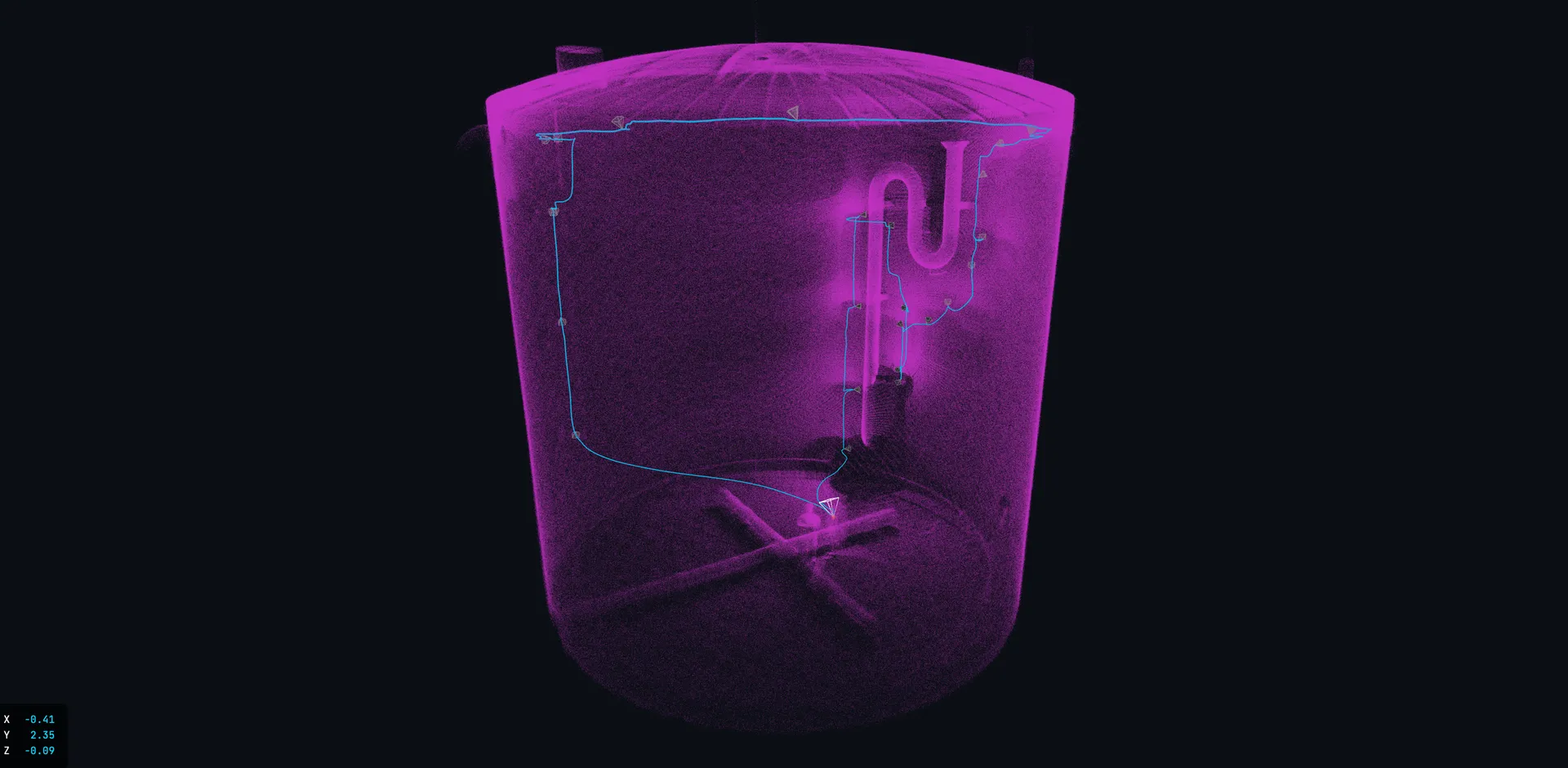
How we do it: The ELIOS 3 flies after draining, cleaning and gas-free measurement through the tank. GPS-independent SLAM navigation. 4K camera with 16,000 lumens, thermography and optional UT payload for georeferenced wall thickness measurements.
Columns & Distillation Towers
Condition of trays, packings, distribution systems and internals. Corrosion on walls and internals, blockages, structural anomalies. 4K for detail shots, thermography for thermal indications.
Why it matters: Blocked or corroded trays and packings significantly reduce process efficiency. Early detection enables targeted repairs in the planned turnaround instead of unplanned emergency shutdowns.
How we do it: The ELIOS 3 flies vertically through columns and navigates GPS-independently in narrow installation areas. 4K camera documents trays and packings, thermography shows temperature anomalies.
Separators, Shafts & Pump Stations
Internals, separator surfaces, deposits, corrosion. Structural integrity of walls, floors and connections. Visual inspection without human entry in H&sub2;S-laden or oxygen-deficient areas.
Why it matters: Separators and shafts are among the most hazardous confined spaces in oil & gas. No human entry significantly reduces risk for the inspection team – the pilot stays outside.
How we do it: Entry through standard openings or manholes. GPS-independent navigation, 16,000 lumen lighting for complete illumination. The optional Flammable Gas Sensor warns of gas concentrations as an additional safety layer.
At the end you receive a detailed inspection report – with 4K images, thermography evaluation, LiDAR point cloud and optional UT wall thickness values. Your maintenance planners and certified inspectors assess the findings and plan next steps.
Challenges in Oil & Gas Inspections
Tanks, columns, shafts – explosive, toxic, hard to access. H&sub2;S gases, oxygen deficiency, Ex zones. Entry requires extensive safety measures. The ELIOS 3 inspects without human entry – safe, fast, precise.

Hydrocarbons, H&sub2;S, oxygen deficiency. Entry requires respiratory protection, Ex protection, rescue chain. ELIOS 3 flies into drained and cleaned assets – pilot stays outside.

Conventional entry requires scaffolding, respiratory protection, rescue chain, DGUV permit. Every hour of downtime = tens of thousands. Drone eliminates human entry.

Weld seam corrosion, pitting, structural weak points – often detected too late. 4K + LiDAR documents precisely, thermography reveals leaks.

Oil, paraffin, sludge, asphaltenes – tanks and columns are rarely "clean". These residues obscure critical areas and severely impede visual inspection. Drones deliver usable images even under difficult conditions.

Deposits in columns, heat exchangers and pipelines reduce efficiency and throughput. They often remain undetected for long periods. With the drone, problematic areas become visible early.

Trays, packings, demisters, tube bundles – many areas cannot be seen from scaffolding. Conventional inspection remains incomplete. ELIOS 3 reaches hidden areas and delivers complete data.

Damage is often discovered only during entry. Result: extended shutdowns, additional work, rising costs. Pre-inspection with drone creates planning certainty.

Tall tanks, narrow shafts, damaged internals – entry is technically and safety-wise demanding. Drone completely eliminates personnel risk.

Single images and subjective assessments are not enough for complex facilities. Unclear data leads to conservative (costly) decisions. 4K + LiDAR provides solid decision bases.
Changes over time are difficult to track. Corrosion and damage develop unnoticed. Datasets enable genuine trend analysis.

Scaffolding contractors, safety services, rope access, inspectors – many parties, high complexity. Drones reduce interfaces and significantly simplify the process.

Turnarounds are tightly scheduled – every delay costs significant money. Drones deliver fast results and relieve pressure on critical time windows.
Kopterflug in Action
Our team on the job – directly on site.
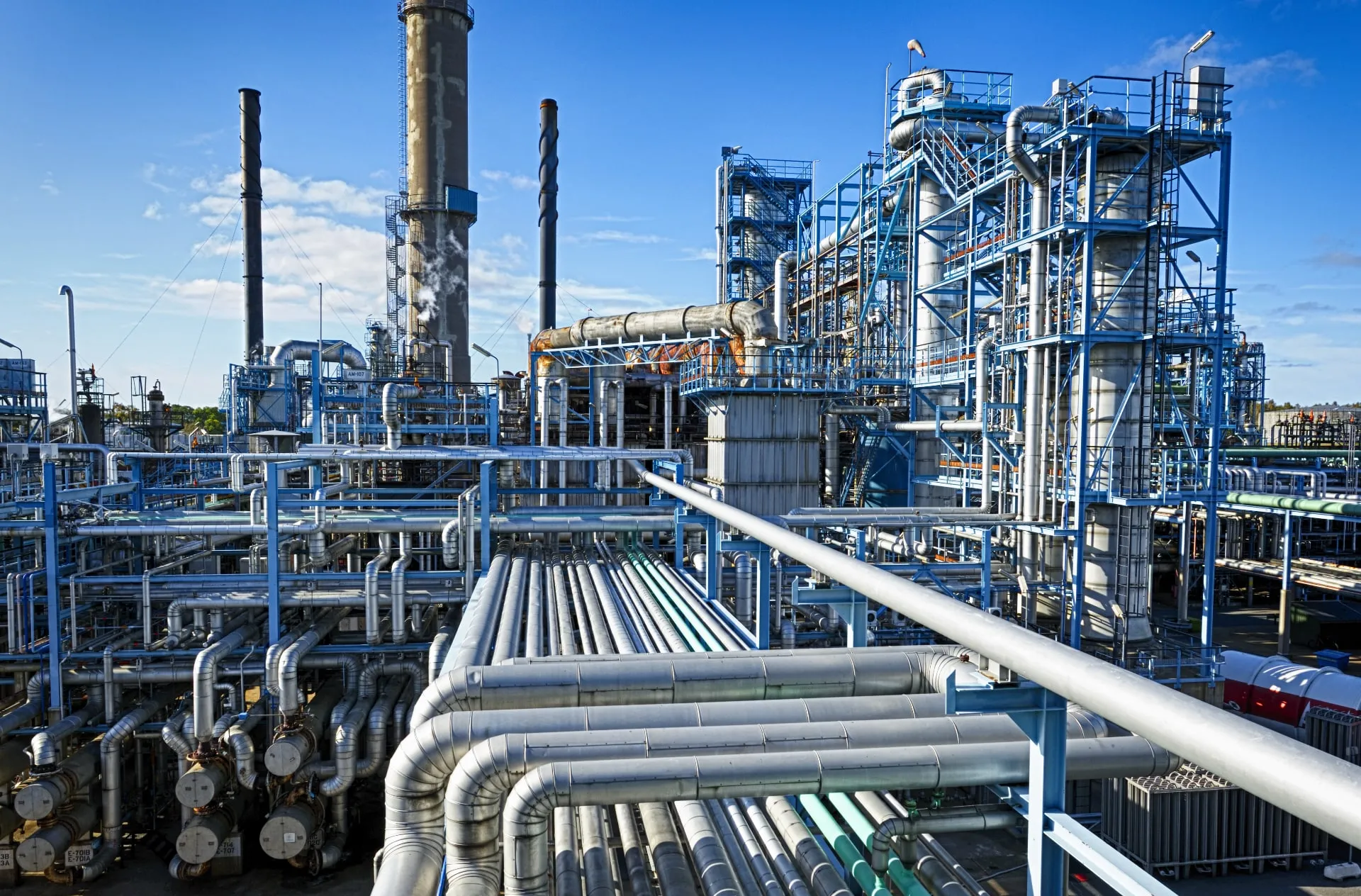
Drone inspection oil & gas – refinery aerial view
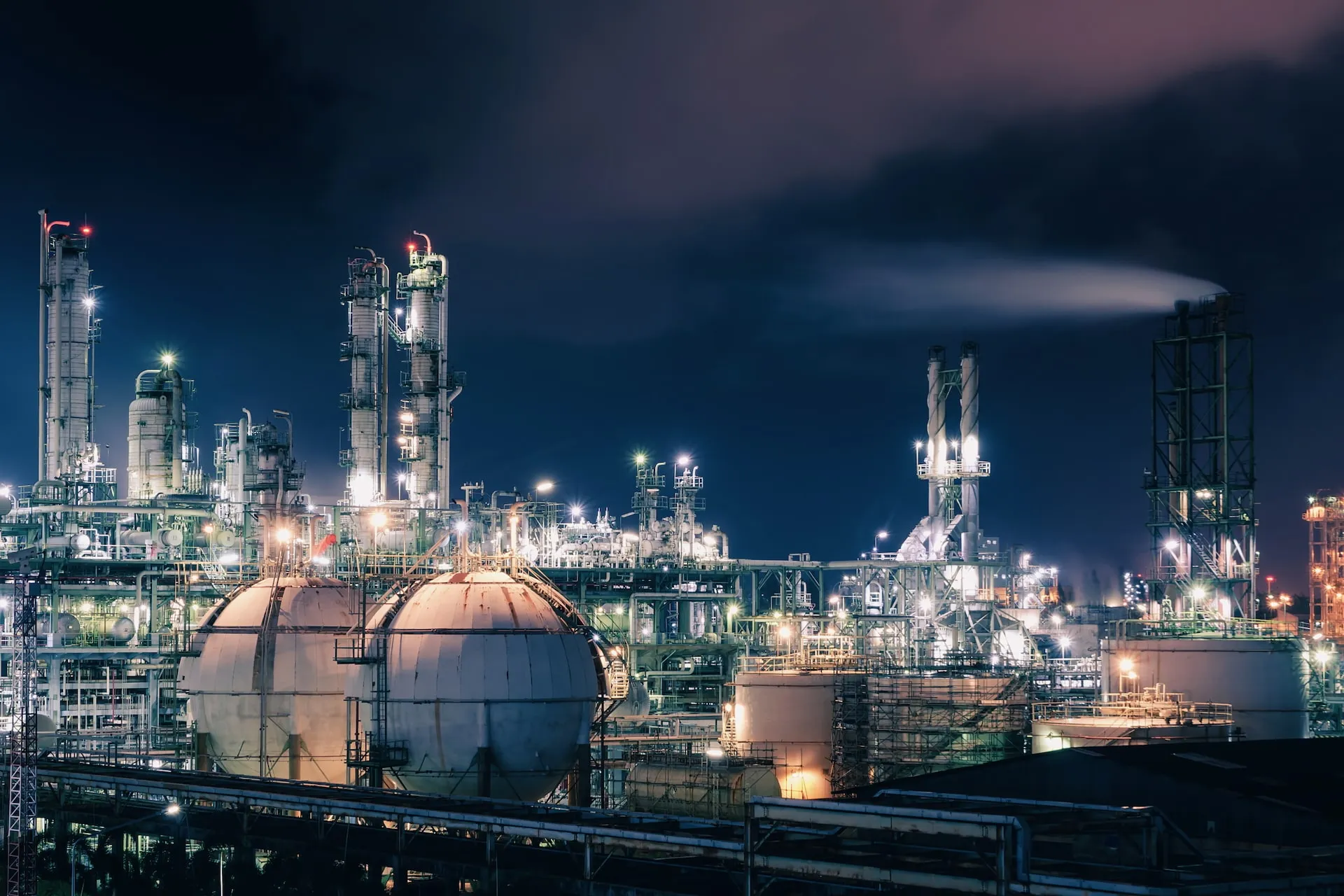
Drone inspection oil & gas – petrochemical plant
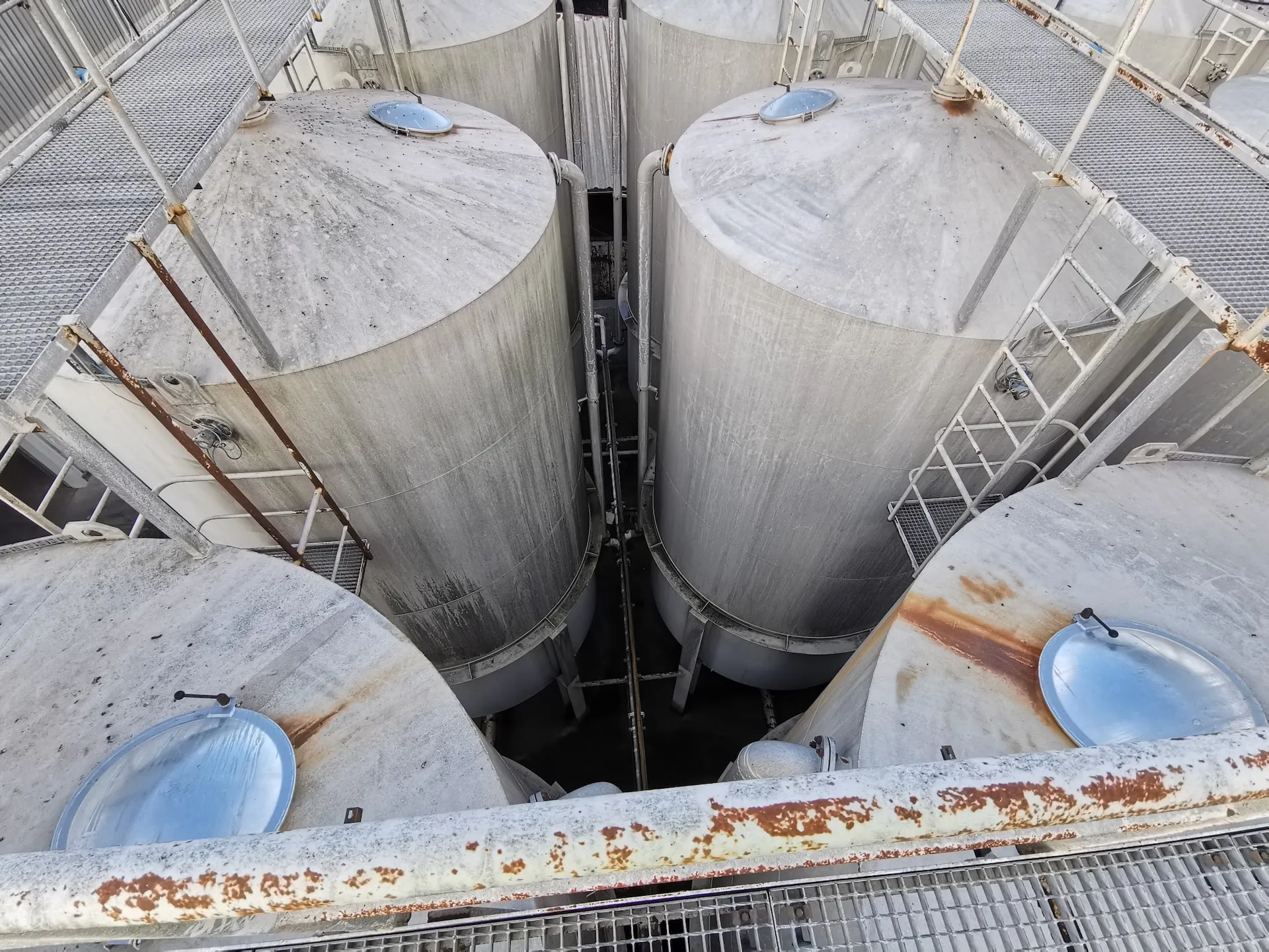
Corrosion and ageing damage on oil & gas storage tanks
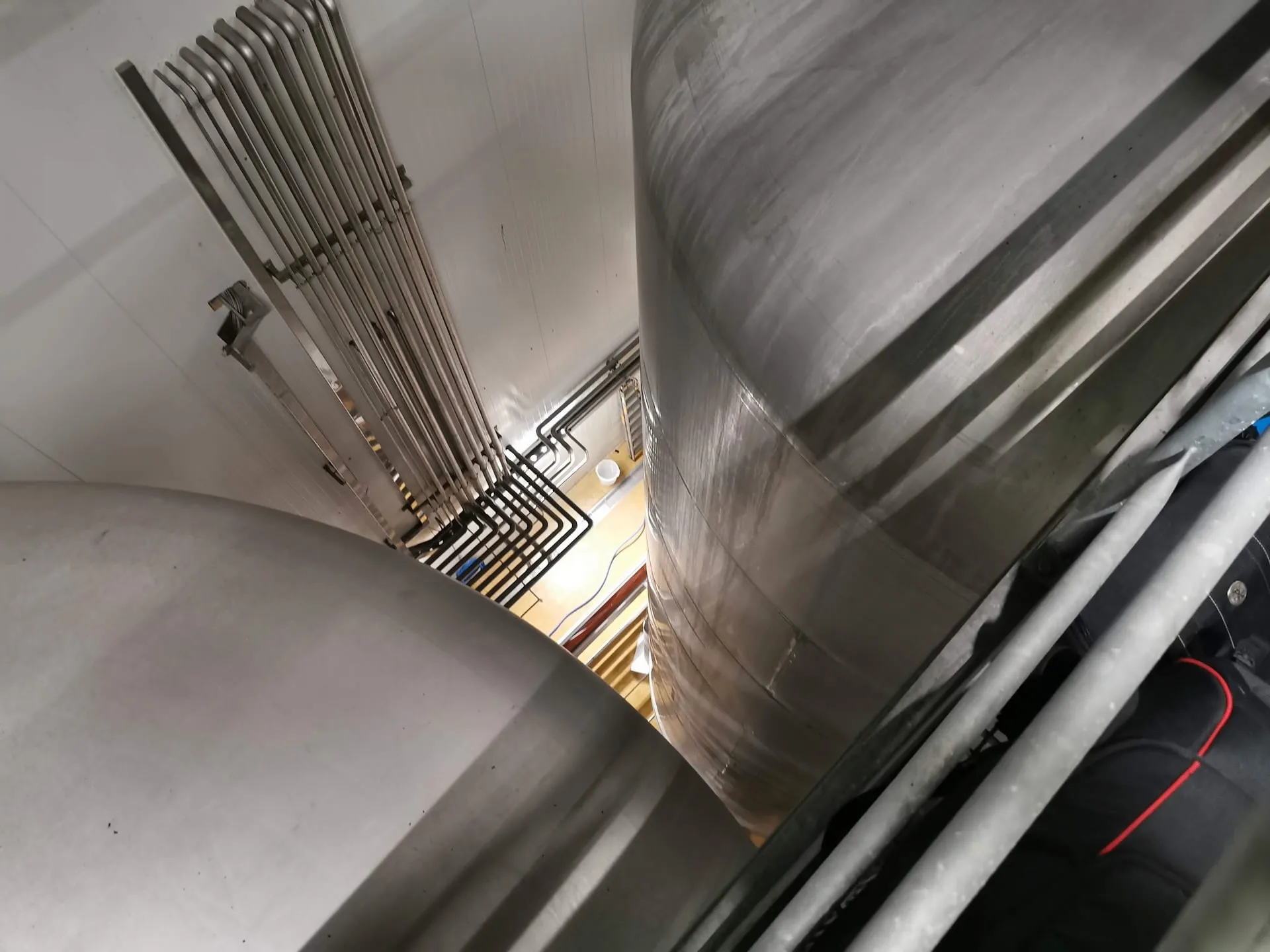
Tank inspection by drone – storage tank from outside
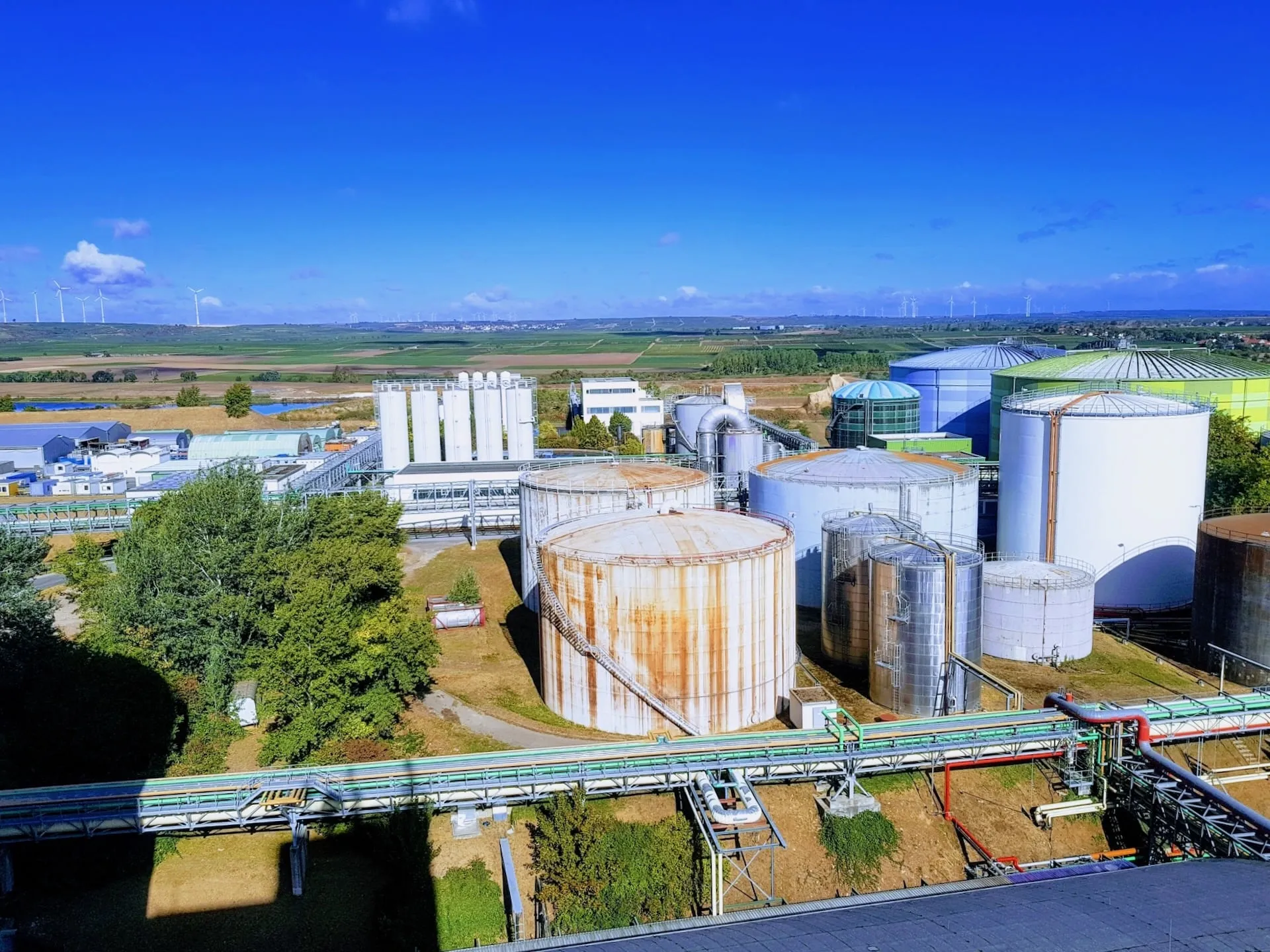
Storage tanks in oil & gas refinery
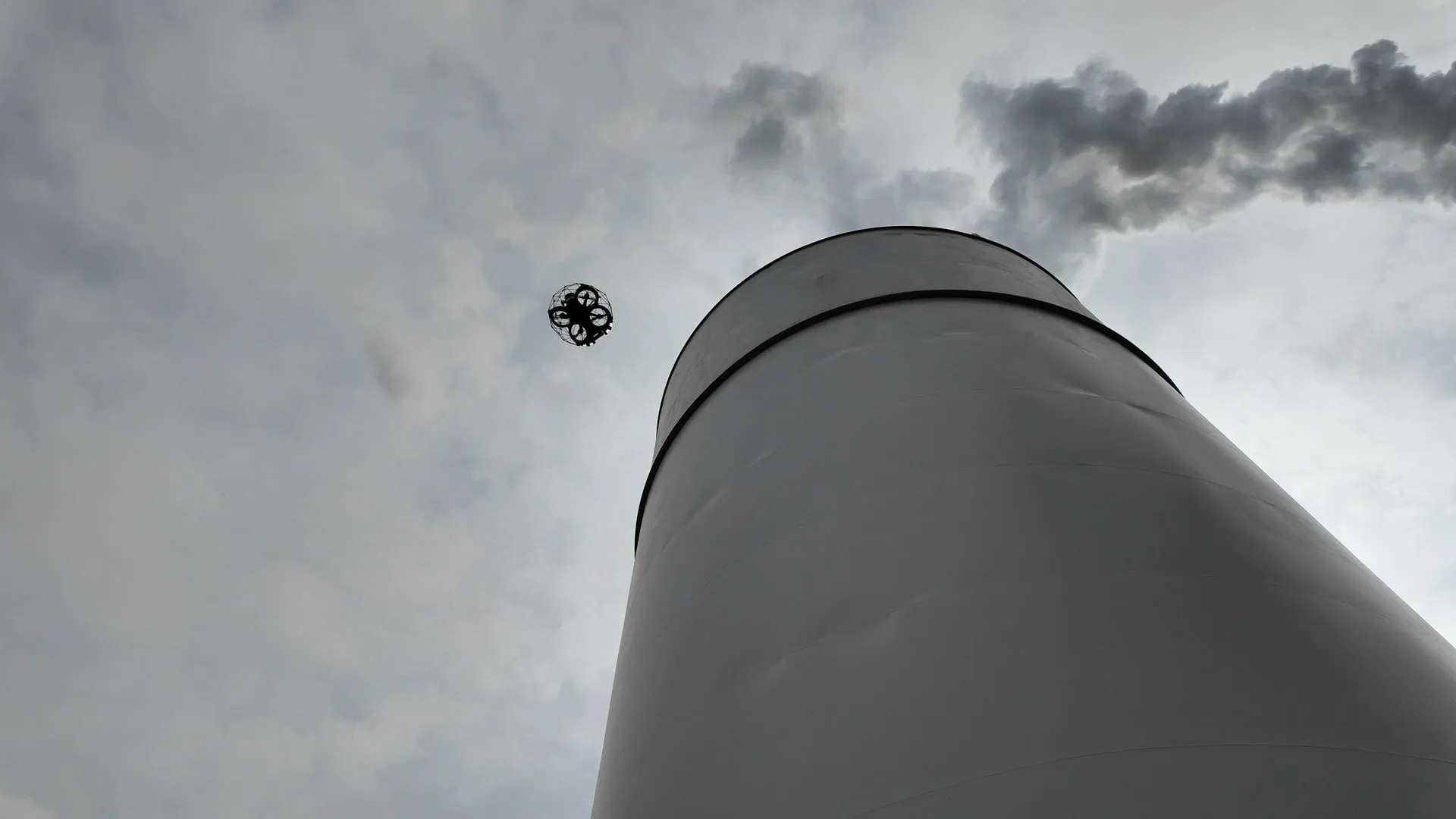
ELIOS 3 drone inspection at external tank
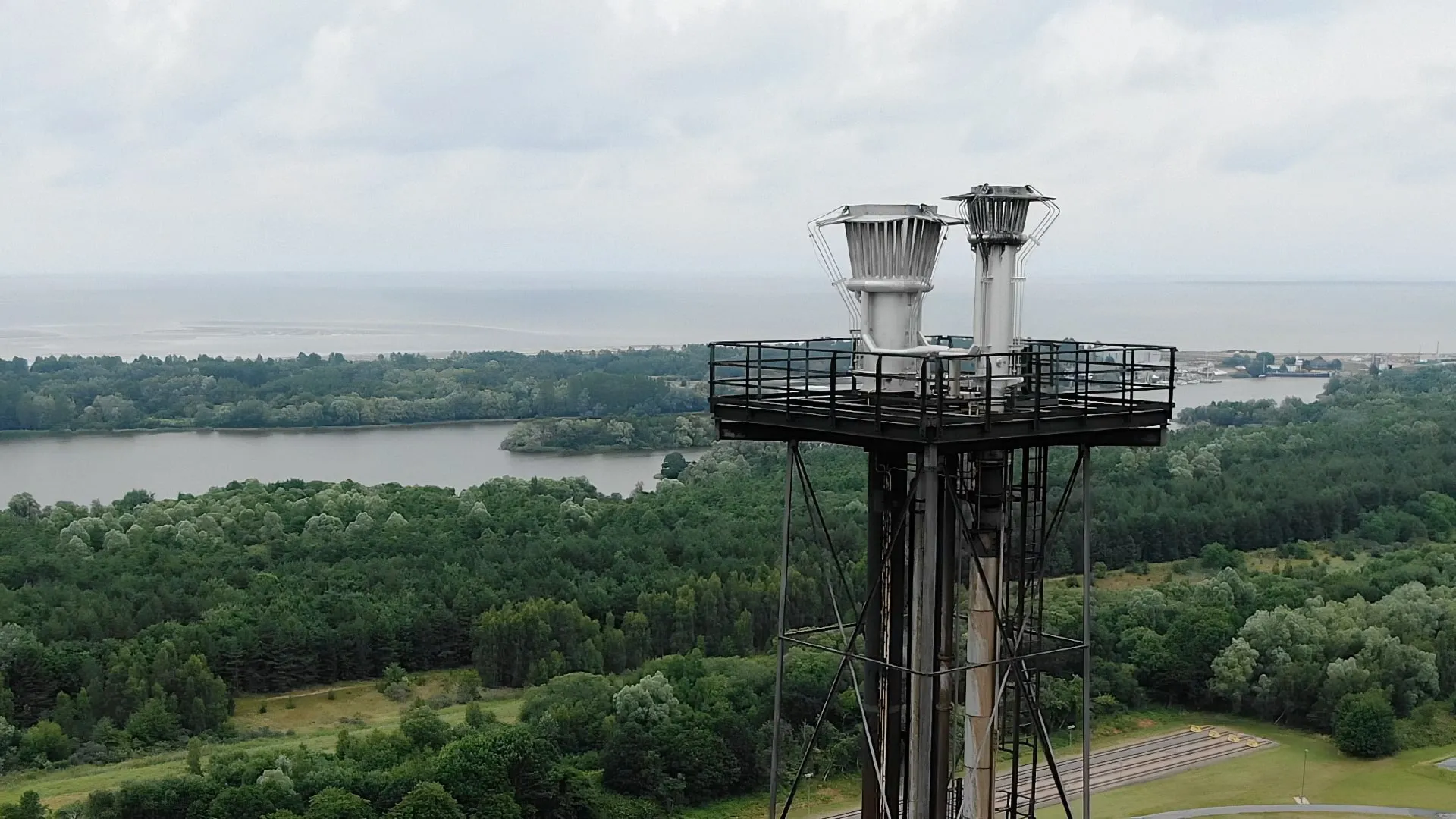
High flare in refinery – inspection by drone
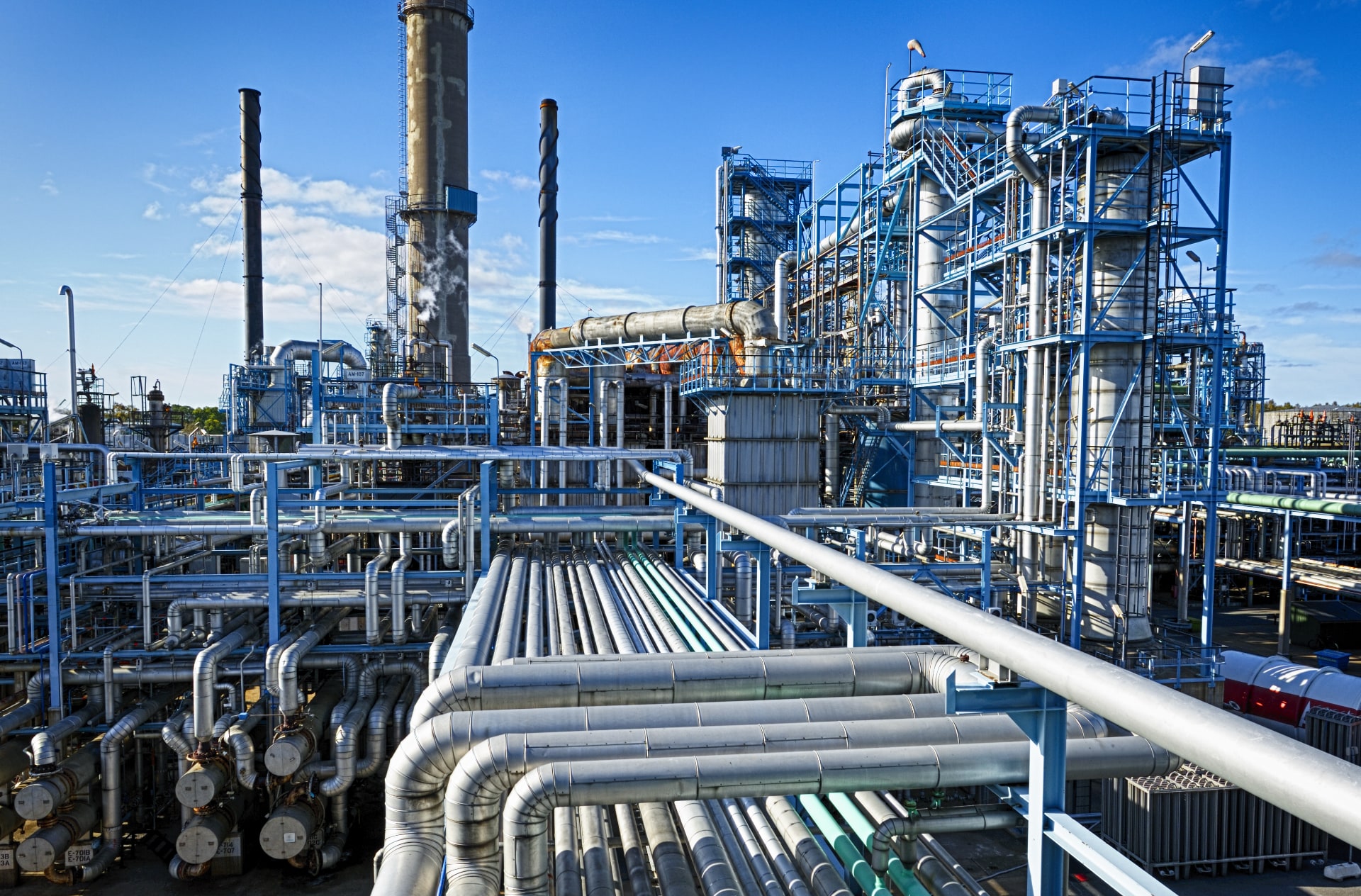
Typical Inspections in Oil & Gas
With the Flyability ELIOS 3 we inspect critical assets without human entry – safe, precise and with minimal downtime. Drastically reduced inspection times, targeted UT wall thickness measurements on steel components:
Crude Oil Tanks, Storage Tanks & Separators
Targeted UT wall thickness measurements, corrosion documentation, visual mapping. Optional Flammable Gas Sensor as an additional safety layer (not an ATEX substitute). Without scaffolding, without human entry – after draining, cleaning and gas-free measurement.
- Sensors: Visual, LiDAR, UT (wall thickness), Thermography, Gas sensor (warning)
- Typical findings: Floor corrosion, wall thinning, floating roof damage, sediment deposits
Distillation Columns, Pipe Racks & Flares
Distillation columns, crackers, splitters, pipe racks and flare structures without scaffolding. Trays, packings, distribution systems, pipeline supports. Pipe racks: corrosion at flanges, weld seams, hangers and insulation damage – visual and by thermography.
- Sensors: Visual, LiDAR, Thermography
- Typical findings: Tray corrosion, packing damage, distribution system blockage, pipe support corrosion, flare tip damage, insulation damage
Stacks & Chimneys
Internal inspection of stacks and exhaust stacks after shutdown – wall condition, corrosion, deposits and structural anomalies. External inspection during live operation with DJI M30T.
- Sensors: Visual, Thermography, LiDAR
- Typical findings: Inner wall corrosion, masonry damage, deposits, thermal anomalies
Process Vessels & Reactors
Walls, floors, lids, internals and weld seams after shutdown. Thermography for hotspots and insulation defects, LiDAR for 3D geometry. Targeted UT wall thickness measurements in critical areas optionally combinable.
- Sensors: Visual, LiDAR, Thermography
- Typical findings: Corrosion, coating damage, cracks in linings, insulation defects, wall thinning
Separators & Phase Separators
Inspection of internals, separator surfaces and deposits without human entry.
- Sensors: Visual, LiDAR
- Typical findings: Blockage, corrosion, damage to internals, sediment deposits
Water-Filled Tanks & Offshore Structures (ROV)
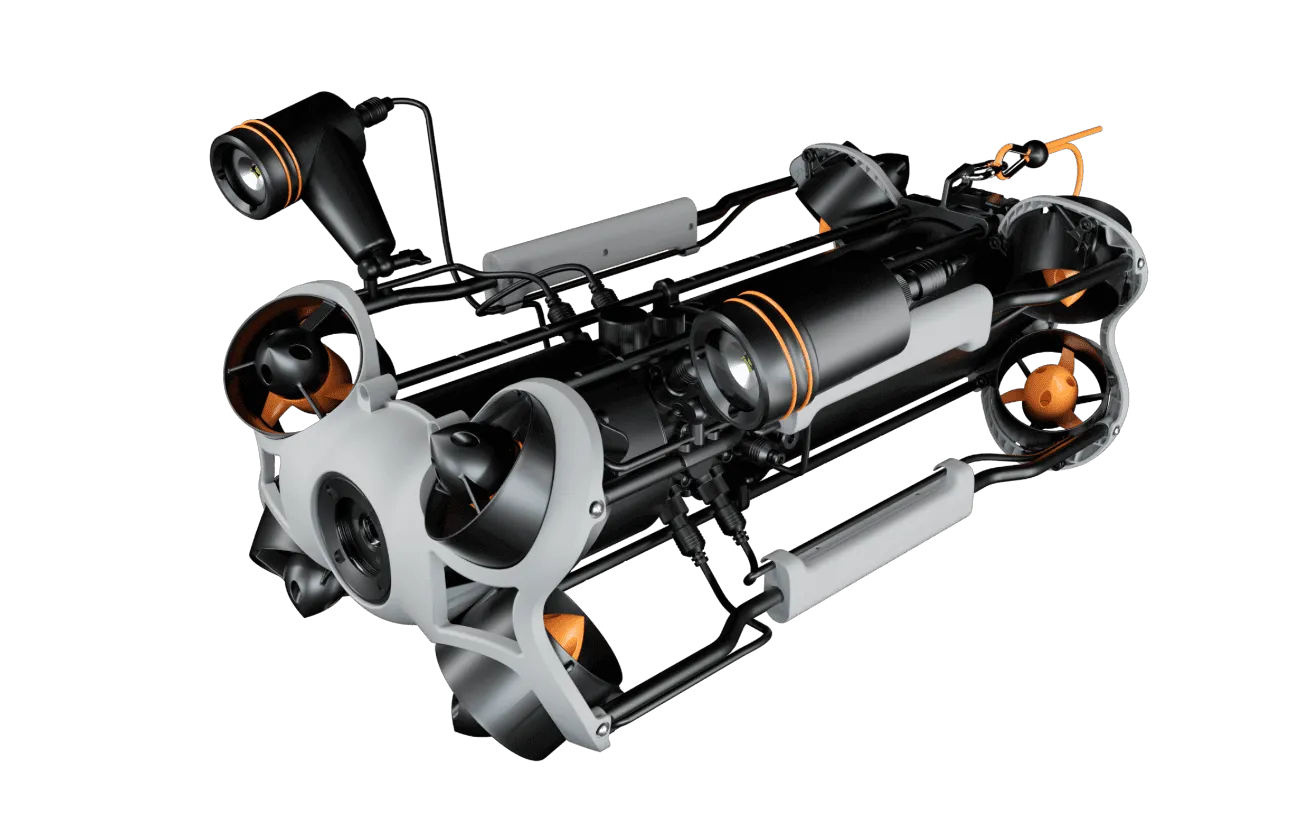
Ballast water tanks on FPSOs, water injection tanks, cooling and fire water vessels inspected without draining and without divers. Hull areas, floor and internals fully documented.
- Sensors: ROV
- Typical findings: Corrosion, coating damage, sediment deposits, anode wear, structural damage
Fired Heaters & Process Furnaces
Inspection of radiant and convection sections after shutdown – tube bundles, burner zones and linings without scaffolding. Corrosion, deformations, thermal damage and deposits fully documented.
- Sensors: Visual, Thermography, LiDAR
- Typical findings: Coking on tubes, tube sagging and bowing, hotspots, lining wear, flame damage
Amine Units & Gas Sweetening Plants
Inspection of columns, absorbers and regenerators – particularly corrosion-critical systems with aggressive media residues.
- Sensors: Visual, LiDAR
- Typical findings: Amine corrosion, cracking, packing damage, distribution system problems
Sulfur Recovery Units (SRU / Claus Plants)
Inspection of reactors, combustion chambers and pipelines after shutdown and gas-free measurement.
- Sensors: Visual, Thermography
- Typical findings: Sulfur deposits, corrosion, blockages
FCC Units (Fluid Catalytic Cracking)
Regenerators, reactors and cyclones after shutdown – condition of internals, catalyst structures and walls. Drone maps complex internal architecture GPS-independently and documents defects in 3D model.
- Sensors: Visual, Thermography, LiDAR
- Typical findings: Cyclone erosion, wall wear, cracks in internals, deposits
Scrubbers, Absorbers & Wash Columns
Gas scrubbers and chemical separation systems – internal inspection of packings, trays and internals without human entry.
- Sensors: Visual, LiDAR
- Typical findings: Blocked packings, deposits, corrosion, damaged internals
Large-Diameter Pipelines (≥ DN 1000)
Internal inspection of large pipelines and collection channels. LiDAR quantifies deposits and cross-sectional narrowing.
- Sensors: Visual, LiDAR
- Typical findings: Deposits, cross-sectional narrowing, corrosion, mechanical damage
Knock-Out Drums & Slug Catchers
Large liquid/gas separators – inspection of internals, floor and wall areas after draining and permit.
- Sensors: Visual, LiDAR
- Typical findings: Sediment build-up, corrosion, damaged internals, blockages
Tank Roofs (interior) & Floating Roof Structures
Inspection of roof underside and internal structures of fixed-roof and floating-roof tanks. Corrosion and seal system damage detected early.
- Sensors: Visual, Thermography
- Typical findings: Corrosion, leaks, seal system damage, structural problems
Cable & Utility Infrastructure in Refineries
Inspection of cable ducts, utility shafts and underground infrastructure in refineries. ELIOS 3 navigates through narrow areas without human entry.
- Sensors: Visual, LiDAR
- Typical findings: Corrosion, water ingress, damaged cables, deposits
Large Pressure Vessels (walk-in, large volume)
Inspection of large walk-in pressure vessels after shutdown. UT wall thickness measurement targeted, combinable with 4K documentation.
- Sensors: Visual, UT (targeted), LiDAR
- Typical findings: Corrosion, wall thickness loss, cracks, coating damage
Flare Gas Lines & Flare Knock-Out Systems
Not just the flare tip, but the complete gas routing – internal and external inspection of flare gas lines and knock-out vessels after permit.
- Sensors: Visual, Thermography
- Typical findings: Deposits, leaks, corrosion, thermal anomalies
Your Advantages as an Oil & Gas Operator




How the Oil & Gas Drone Inspection Works
- Initial Consultation – We analyse your requirements and advise you free of charge on all technical and organisational questions.
- Scheduling & Proposal – You receive a transparent proposal. Together we plan timing, access and safety concept.
- On-Site Inspection – We carry out the inspection with state-of-the-art drone technology – usually in a few hours.
- Analysis & Inspection Report – You receive a detailed report with 4K footage, 3D models, thermography analyses and systematic findings overview.
Your Contacts for Oil & Gas Inspections
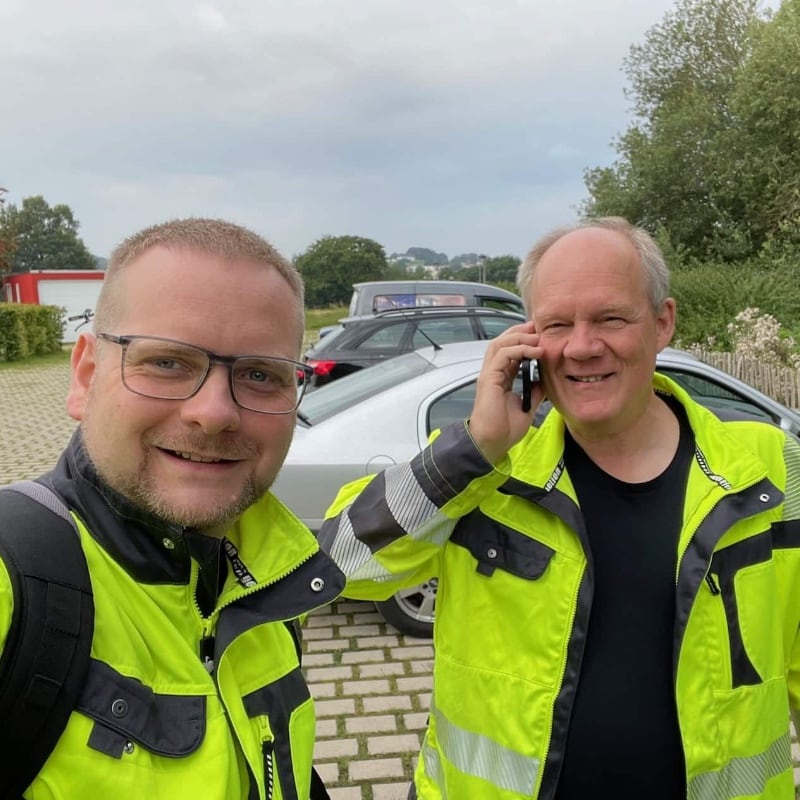
Christian Engelke and Dipl.-Ing. Karsten Lehrke – your direct contacts for oil & gas projects.
Long-standing experience in complex industrial environments. We understand the special requirements of the oil & gas industry – highest safety standards, minimal downtime, precise documentation.
From refineries in Hamburg, Karlsruhe (MiRO) and Ingolstadt via natural gas facilities in Oldenburg and Emden to tank farms in Bremen – we inspect oil & gas facilities nationwide.
Related Services
- Cooling Tower Inspection – Process coolers in refineries and chemical parks – hybrid approach M30T + ELIOS 3.
- Flare Inspection – High flares without scaffolding – DJI M30T during live operation.
- Tank Inspection – Tanks and vessels without draining – ELIOS 3 for the interior.
- Pipe Rack Inspection – CUI detection and corrosion mapping on pipe racks.
- Confined Spaces – Narrow spaces without human entry – ELIOS 3 for all confined space assets.
- Chemical Industry – Reactors, columns and process vessels in the chemical industry.
Frequently Asked Questions about Oil & Gas Inspections
Is the ELIOS 3 ATEX-certified?
No – this must be stated clearly: The ELIOS 3 is not ATEX-certified and is not designated as an intrinsically safe system. Flyability does offer an optional Flammable Gas Sensor that can warn of 14 common flammable gases with a resolution of 0.1% LEL. This sensor increases operational safety but does not replace an Ex assessment, any permit or standard safety procedures. Details are described by Flyability at flyability.com/flammable-gas-sensor.
Can the drone be used in tanks or columns despite this?
Yes, in principle – but only within a properly agreed safety and permit framework. Flyability shows exactly such applications in tanks, FPSO tanks, separators and further oil & gas assets. The operational permit, gas-free measurement and safety concept are always prerequisites.
How does the drone reduce risk in H&sub2;S, oxygen-deficient or Ex environments?
The greatest advantage: the inspection can take place without human entry. The pilot stays outside the asset – risk from oxygen deficiency, H&sub2;S or explosive atmospheres is significantly reduced for the team. In Flyability's FPSO case study, an oil tank was captured with only two people and four flights while the pilot remained safely outside. The optional Flammable Gas Sensor complements safety as a warning function – but does not replace gas-free measurement and standard safety measures.
Can tank inspections be supported with UT wall thickness measurement?
Yes. Flyability offers a UT payload for the ELIOS 3 enabling targeted wall thickness measurements including A-scans. The system is designed as a flying UT device for hard-to-reach areas – tanks, steel structures, pipe racks. Georeferenced measurement points enable trend analysis across campaigns.
Is the drone suitable for API- or EEMUA-aligned tank inspections?
The drone can provide a very good data foundation – visual, 3D-geometric and with targeted UT measurements. Flyability describes the UT payload explicitly for spot thickness measurements in tanks and hard-to-access steel areas. Whether the data fully meets all requirements of a standard or a certified inspector in a specific project depends on the inspection objective and respective testing regime.
How accurate are wall thickness measurements with the UT payload?
Flyability describes high-resolution A-scans and refers to a comparison test with manual measurement devices. The drone is well suited for location-referenced wall thickness measurements in hard-to-reach areas. The exact suitability depends on material, geometry and inspection objective – prior coordination with your certified inspector is recommended.
How long does a typical tank inspection take?
This depends on the tank, degree of contamination and inspection objective. In Flyability's FPSO case study, a complete inspection of an oil tank was described with only two people in a few flights – significantly faster than conventional methods. Flyability emphasises considerable time advantages in multiple examples.
Can the drone be used in distillation columns and narrow process areas?
Yes, this is exactly what the platform is designed for. Flyability lists distillation columns, tanks, pipe racks and further hard-to-access assets as typical application fields. GPS-independent SLAM navigation enables stable flights even in long, narrow column sections.
Does thermography really help with tanks and columns?
Yes, as a complementary method. Thermography can reveal temperature anomalies, insulation problems or conspicuous process areas. It does not replace further technical assessment but provides important indications for finding prioritisation. Flyability lists thermography as a component of the ELIOS 3 system for oil & gas applications.
How does LiDAR help with tanks and shafts?
LiDAR is particularly valuable for 3D mapping, orientation and geometry documentation. In Flyability's FPSO case study, a complete 3D point cloud of the tank was generated after four flights – allowing corrosion spots and anomalies to be located in spatial context and compared across campaigns.
Must a tank be inerted or extensively prepared before drone deployment?
This depends on the asset and safety concept. The drone and gas sensor do not replace operational permits, Ex assessments or standard safety procedures. Required gas-free measurement, draining and cleaning remain operator-side prerequisites.
How significantly does downtime reduce compared to conventional entry?
Flyability cites considerable savings in concrete case studies: 96% cost reduction in an oil depot case, 40% cost reduction in an FPSO inspection and 600,000 USD savings in COT inspections. The actual effect is always project-dependent – but the elimination of scaffolding, rescue chains and long preparation times is considerable in many cases.
What happens if the drone bumps into narrow tanks or columns?
The ELIOS 3 is designed as collision-resilient. The carbon protective cage allows light contact with walls and internals – the drone remains stable. It additionally has return-to-signal functions for critical situations. Contacts should still be avoided; every deployment needs clear abort criteria.
Can inspections be repeated and changes compared?
Yes. Flyability explicitly positions the ELIOS 3 for 3D point clouds and repeatable documentation in hard-to-access interiors. For tanks and columns, this is particularly valuable when corrosion or wall thickness losses are to be tracked quantitatively across multiple campaigns.
Can the data be used for technical assessments and reports?
Yes – primarily as a visual and geometric decision foundation. Flyability describes 4K video, LiDAR point clouds and UT data for exactly this purpose. Whether the data fully meets a specific compliance or inspection process depends on the project, standard and certified inspector.
Is the drone suitable for shafts, separators and pump stations?
Yes. Flyability shows exactly such applications in hard-to-access vessels, separators and shafts. The decisive advantage: no personnel entry required, the team stays outside the asset. Particularly relevant in H&sub2;S-laden or confined areas.
What permits and licences are needed for drone inspections in oil & gas facilities?
Indoor flights in industrial facilities (tanks, columns, shafts) do not fall under EU drone regulations – no aviation authority permit is required. The flight permit is issued by the facility operator, not the authority.
Outdoor flights (M30T for flares, external tanks, pipe racks) are subject to EU drone regulations: drone pilot licence (EU Remote Pilot Certificate, A2 licence or higher), registration and liability insurance are mandatory.
ATEX & Hot Work Permit: In oil & gas facilities, a site hot work permit is mandatory for work near Ex zones – including drone inspections. The ELIOS 3 is not ATEX-certified and flies exclusively after gas-free measurement, outside active Ex zones.
Are there real references from the oil & gas industry?
Yes. Flyability publishes concrete references from FPSO tanks, COT inspections, separators, pipe racks and further applications. An overview is available at casestudies/tag/oil-gas and flyability.com/oil-and-gas-drones.
How economical is the method compared to scaffolding and conventional entry?
The greatest economic benefit comes from less human entry, less preparation and shorter downtimes. Flyability cites depending on the case study: 40% cost reduction in FPSO inspections, 96% in an oil depot case and 600,000 USD savings in COT inspections. The actual effect is always project-dependent.
How often should tanks and columns be inspected?
This depends on usage, medium, age and maintenance concept. The drone is particularly suitable for condition-based inspections between major overhauls: rapid visual and 3D data, supplemented by targeted UT measurements, without extended downtime.
What does drone inspection oil & gas deliver – which assets does the ELIOS 3 inspect?
We inspect storage tanks, columns, reactors, separators, shafts, pipe racks and chimneys in refineries, tank farms and offshore facilities. The ELIOS 3 fits through standard manholes and navigates GPS-independently in completely dark, enclosed areas.
Does the facility have to be taken out of service for drone inspection?
Not necessarily – it depends on the asset and inspection area. Internal flights in tanks and columns require draining, cleaning and gas-free measurement. External flights with the DJI M30T (flares, external tanks, pipe racks) are possible during live operation. Drone deployment significantly reduces downtime compared to conventional entry.
What damage can be detected during drone inspection oil & gas?
4K camera, thermography and LiDAR cover different damage patterns: corrosion, pitting and wall thinning (visual + UT payload), hotspots, CUI and leak points (thermography), deformations and geometry deviations (LiDAR point cloud), deposits and fouling (visual + LiDAR) and coating damage and weld seam anomalies (4K). Technical assessment of findings is performed by your maintenance planners and certified inspectors.
What data do we receive after oil & gas drone inspection?
You receive a detailed inspection report with: 4K video and high-resolution still images of all inspected areas, thermography evaluation with temperature anomalies and hotspot identification, LiDAR 3D point cloud for geometry documentation and trend analysis and optionally georeferenced UT wall thickness measurements. All data is systematically prepared and directly usable for your maintenance planning.
Does drone inspection fully replace scaffolding or human entry?
In many cases yes – for visual inspection, thermography and 3D geometry documentation, human entry is eliminated entirely. The pilot stays outside the asset. For mechanical repairs, sampling or certain inspection methods, entry is still required. However, the drone significantly reduces the scope of necessary entries and makes expensive scaffolding for inspection superfluous in most cases.
Can flares and high flares be inspected during live operation?
Yes. With the DJI Matrice 30T we inspect flares and high flares during live operation: burner tip, pilot burners, line routing and thermal anomalies – from safe distance, without shutdown, without rope access climbers. The 200x hybrid zoom enables detail shots even from great distances.
Can the M30T capture external tanks and pipe racks in oil & gas facilities?
Yes. The DJI Matrice 30T documents external tank walls, coatings, pipe racks and pipeline crossings with 200x zoom and thermography – including CUI detection. During live operation, without scaffolding. The ELIOS 3 handles internal inspection of tanks and columns; the M30T the outer shell.
Get in Touch
Questions about drone inspection for oil & gas? Need a quote for your refinery, tank farm or offshore project? Fill out the form below and we'll get back to you within 24 hours.